Dans les industries manufacturières réglementées, tenue de dossiers numériques ne sont plus de simples fichiers utilisés pour stocker des données. Ils sont devenus des sources de preuves traçables.
Pour pharmaceutique, nutraceutique, dispositif médical, et entreprises de fabrication sous contrat, les enregistrements électroniques et les signatures électroniques sont essentiels pour garantir la sécurité de la production, maintenir l'assurance qualité, et éviter les perturbations coûteuses causées par des changements de formulation ou des ajustements de paramètres de processus. Comme les États-Unis. la réglementation a évolué, 21 Partie CFR 11 la conformité est progressivement devenue une exigence obligatoire plutôt qu’un investissement facultatif.
Pour de nombreux fabricants, en particulier les petites et moyennes entreprises, la mise en œuvre de solutions de validation du système et de gestion des données conformes peut sembler coûteuse et complexe. Par conséquent, deux questions clés sont souvent soulevées en premier: quand est-ce que 21 Partie CFR 11 entrer en vigueur, et qu'est-ce que c'est 21 Partie CFR 11 conformité?
Ce guide complet propose 21 Partie CFR 11 expliqué en détail. Nous explorerons ce qu'est 21 Partie CFR 11, qui doit s'y conformer, ses principales exigences, et comment y parvenir 21 Partie CFR 11 conformité de manière pratique et rentable.
Principaux enseignements
- Quand est-ce que 21 Partie CFR 11 entrée en vigueur et son contexte historique.
- Qu'est-ce que 21 Partie CFR 11 dans l'industrie pharmaceutique.
- Qui a besoin 21 Partie CFR 11 conformité dans divers secteurs.
- Cœur 21 Partie CFR 11 exigences relatives aux dossiers, signature, accéder, et pistes d'audit.
- Comment se conformer 21 Partie CFR 11 pas à pas.
- Comment partie 11 un équipement conforme prend en charge la production pharmaceutique et nutraceutique.
1. Quand est-ce que 21 Partie CFR 11 Entrer en vigueur?
Selon le site officiel de la FDA, 21 Partie CFR 11 est entré en vigueur en août 20, 1997.
Qu'est-ce qui a motivé la publication de ce règlement? Ses origines résident dans la transition majeure des archives papier vers les systèmes informatisés.. Précédemment, dossiers de production pharmaceutique, rapports de laboratoire, et des documents de qualité ont été en grande partie créés, signé, et stocké sur papier. À mesure que les échelles de production se sont élargies, de simples enregistrements papier ne pouvaient plus répondre aux besoins d’une documentation rapide et d’une récupération immédiate des données, amener les entreprises à adopter des systèmes numériques.
Pour assurer la fiabilité de ces nouveaux systèmes, le 21 code des règlements fédéraux partie 11 liens 21 CFR 11 enregistrements électroniques signatures électroniques à une surveillance réglementaire stricte. Quand les entreprises utilisent les données numériques pour appuyer les décisions soumises à la réglementation FDA, ces données doivent être exactes et sécurisées, ainsi que traçable et récupérable lors des inspections de la FDA.
2. Qu'est-ce que 21 Partie CFR 11?
Définition de 21 Partie CFR 11
À la base, qu'est-ce que 21 Partie CFR 11? C'est une réglementation établie par les États-Unis. FDA qui dicte la manière de gérer les signatures des dossiers électroniques.
Pour comprendre 21 Partie CFR 11 règlements, considérez la surveillance historique par la FDA des classeurs verrouillés, surveiller qui les a gérés et suivre qui a ouvert ou modifié leur contenu. Alors que ces classeurs ont évolué vers des systèmes numériques, la FDA a introduit ces 21 Partie CFR 11 des lignes directrices pour garantir que les systèmes sont correctement contrôlés et que les données restent sécurisées.
Quels types de dossiers sont couverts?
21 Partie CFR 11 les enregistrements électroniques peuvent inclure:
- Enregistrements de lots électroniques
- Dossiers de fabrication
- Dossiers de contrôle qualité
- Journaux de fonctionnement de l'équipement
- Résultats des tests de laboratoire
- Dossiers de nettoyage et d’entretien
- Dossiers de formation
- Enregistrements de contrôle des modifications et d’écarts
Il est à noter que cette réglementation ne s'applique pas à tous les fichiers numériques; cela s'applique uniquement lorsque les dossiers électroniques sont utilisés pour répondre aux exigences de la FDA en matière de tenue de dossiers.
Quelles industries doivent se conformer?
Exigences de conformité en vertu 21 Partie CFR 11 peut s’appliquer à un large éventail d’entités, y compris pharmaceutique, complément alimentaire, et fabricants de dispositifs médicaux, ainsi que des organisations de fabrication sous contrat, laboratoires d'essais, et les entreprises exportant des produits réglementés par la FDA vers les États-Unis.
Par conséquent, des questions telles que “Fait 21 Partie CFR 11 s'applique aux dispositifs médicaux?” et “Qu'est-ce que 21 Partie CFR 11 couverture?” sont critiques; le principe fondamental régissant l'applicabilité de la règle est que les exigences de conformité sont déclenchées chaque fois que des systèmes électroniques sont utilisés pour prendre en charge des enregistrements ou des approbations soumises aux exigences d'intégrité des données de la FDA..
3. Pourquoi était-ce 21 Partie CFR 11 Introduit?
21 Partie CFR 11 a été introduite parce que la fabrication numérique créait à la fois une nouvelle efficacité et de nouveaux risques de non-conformité..
21 Partie CFR 11 est apparu en réponse aux gains d’efficacité et aux nouveaux risques de non-conformité associés à la fabrication numérique. Alors que l'industrie passait des documents papier aux systèmes numériques, la FDA devait établir des réglementations garantissant la fiabilité des enregistrements électroniques; cette règle s'applique aux enregistrements réglementés par la FDA qui sont créés, modifié, entretenu, archivé, récupéré, ou transmis par voie électronique.
L’objectif principal de la règle est de protéger 21 Partie CFR 11 l'intégrité des données et empêcher la falsification ou la falsification en exigeant que les systèmes comportent des pistes d'audit, agissant un peu comme un “boîte noire” qui enregistre la véritable séquence des événements. Lors des inspections FDA, les régulateurs examinent les enregistrements électroniques des lots, partie 11 Exigences en matière de piste d'audit, contrôles d'accès des utilisateurs, et 21 Partie CFR 11 signatures électroniques conformes; ces documents historiques complets servent de pierre angulaire pour la conformité réglementaire, qualité du produit, et la confiance du client.
4. Qui a besoin 21 Partie CFR 11 Conformité?
Toutes les entreprises n’ont pas besoin du même niveau de contrôle, mais de nombreux fabricants réglementés par la FDA devraient évaluer qui a besoin 21 Partie CFR 11 conformité en fonction de leurs systèmes et de leur marché.
Fabricants de médicaments
Pour 21 Partie CFR 11 industrie pharmaceutique, systèmes d'enregistrement électronique impliquant des informations sur les lots, Contrôle de qualité, journaux d'équipement, ou des approbations de mise en production sont généralement requises pour se conformer aux 21 Partie CFR 11. Cependant, une fois que les enregistrements électroniques remplaceront officiellement les enregistrements papier, cette obligation de conformité devient obligatoire plutôt que facultative.
Fabricants de compléments alimentaires
Si un fabricant de compléments alimentaires traite la production, qualité, ou des enregistrements de lots par voie électronique et que le produit est destiné à la vente aux États-Unis, la partie CFR 11 la conformité est susceptible de s'appliquer.
Fabricants de dispositifs médicaux
Pour ceux qui demandent 21 Partie CFR 11 s'applique aux dispositifs médicaux, la réponse est oui lorsque les enregistrements électroniques répondent aux exigences du système qualité de la FDA.
Organisations de fabrication sous contrat
Les directeurs marketing ont souvent besoin d'une partie FDA CFR solide 11 conformité car ils servent plusieurs clients et sont soumis à des audits clients fréquents.
Entreprises exportant vers les États-Unis
Même si le fabricant est situé en dehors des États-Unis, conformité à la partie 11 les exigences sont généralement toujours requises à condition que les produits soient vendus aux États-Unis. et les enregistrements électroniques concernent les activités réglementées par la FDA.
5. Que sont 21 Partie CFR 11 Exigences?
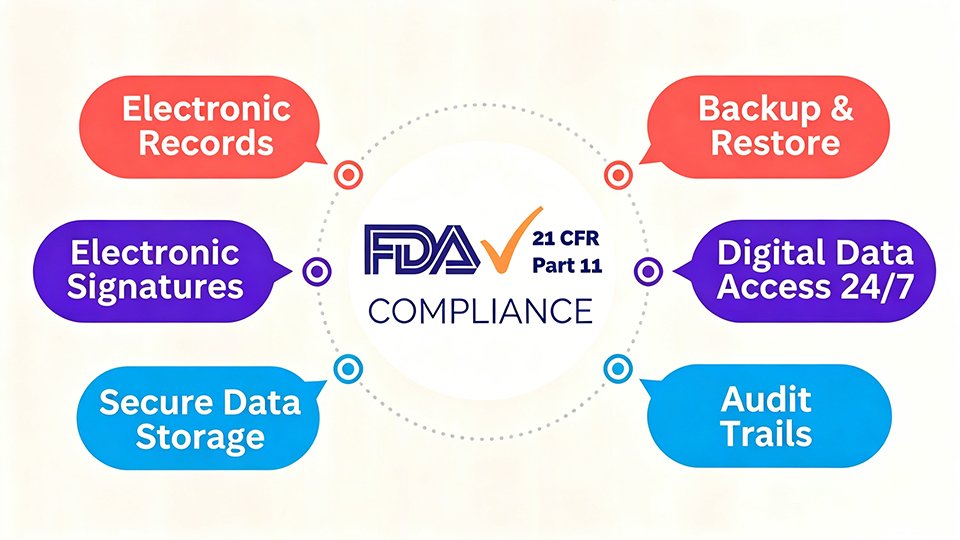
Bien, selon le document, quels sont exactement les 21 Partie CFR 11 exigences? La réponse peut être regroupée en plusieurs contrôles pratiques. Exigences de conformité en vertu 21 Partie CFR 11 se concentrer sur cinq domaines clés: enregistrements électroniques, signatures électroniques, pistes d'audit, contrôles d'accès des utilisateurs, et conservation et récupération des dossiers.
Dossiers électroniques
21 Partie CFR 11 les exigences relatives aux enregistrements électroniques stipulent que les enregistrements électroniques doivent être exacts, complet, sécurisé, lisible, et récupérable. Les entreprises doivent maintenir une conservation appropriée des enregistrements et un stockage sécurisé des données.
Signatures électroniques
Les signatures électroniques FDA partie 11 doivent établir clairement l'identité et la responsabilité, afficher le nom du signataire, l'horodatage, et le sens de l'action (par ex., “approbation de libération”) pour garantir qu'elles ont la même validité juridique que les signatures manuscrites.
Pistes d'audit
Le fonctionnement de la piste d'audit dans les équipements pharmaceutiques est une question courante. Les pistes d'audit enregistrent automatiquement toutes les actions critiques, y compris la création, modification, effacement, approbation, et changements de système, pour assurer la traçabilité. Si les données de poids d’un lot sont modifiées 500 kg à 510 kg, le journal d'audit enregistre le modificateur, le moment du changement, et les valeurs avant et après la modification, faciliter l'analyse des causes profondes.
Contrôles d'accès des utilisateurs
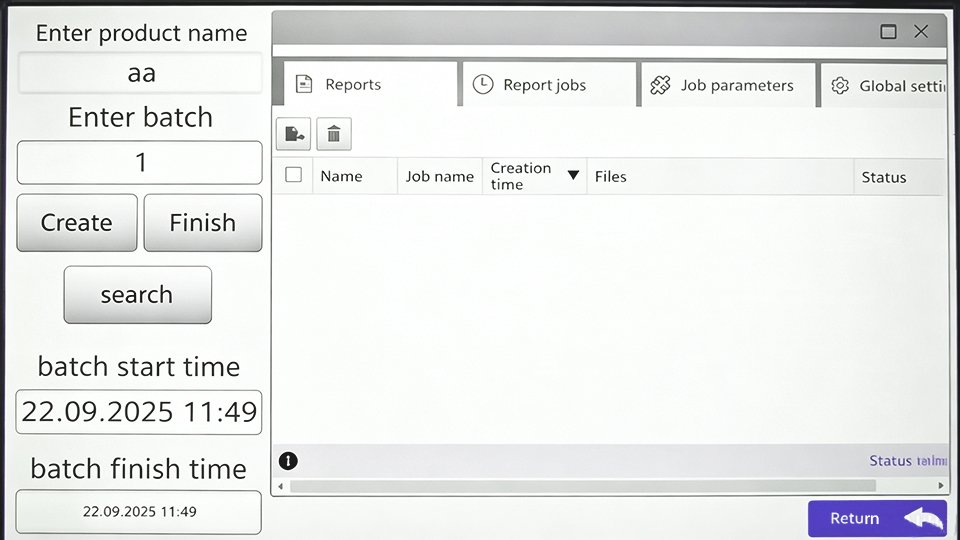
Les contrôles d'accès garantissent que seul le personnel autorisé peut effectuer des actions spécifiques grâce à la protection par mot de passe et à la gestion des autorisations., en utilisant l'authentification multifacteur et le principe du moindre privilège.
Conservation et récupération des enregistrements
Les dossiers doivent rester facilement accessibles tout au long de la période de conservation mandatée par la FDA.; le fait de ne pas récupérer les données rapidement au cours d'un audit est considéré comme une violation grave de la conformité.
6. Comment se conformer 21 Partie CFR 11
Assurer la conformité est une préoccupation majeure pour la plupart des entreprises pharmaceutiques et de produits de santé.. Dans cette section, nous explorerons le sujet en profondeur, couvrant des étapes de mise en œuvre spécifiques, problèmes potentiels, et solutions correspondantes.
Étape 1 – Conduite A 21 Partie CFR 11 Évaluation de la conformité
Vous devriez commencer par comparer tous les systèmes qui créent, modifier, magasin, récupérer, ou transmettre des enregistrements électroniques réglementés par la FDA contre 21 Partie CFR 11 lignes directrices pour les produits pharmaceutiques. L'évaluation doit inclure la validation, piste d'audit, contrôle d'accès des utilisateurs, signatures électroniques, conservation des dossiers, et la sécurité.
Suivez le 21 CFR 11 une liste de contrôle de conformité peut accélérer votre processus.
Étape 2 – Valider les systèmes informatisés
UN 21 Partie CFR 11 le système conforme doit passer par une validation pour prouver qu’il fonctionne comme prévu. En pratique, la validation doit être effectuée sous la forme d’une séquence structurée d’actions:
1. Définir et évaluer la portée et les risques du système
Commencez par documenter clairement ce que le système est censé faire et identifiez où se situe le risque.. Par exemple, un machine de remplissage de capsules doit enregistrer le poids de remplissage, vitesse, et numéro de lot.
2. Tester et vérifier les performances du système
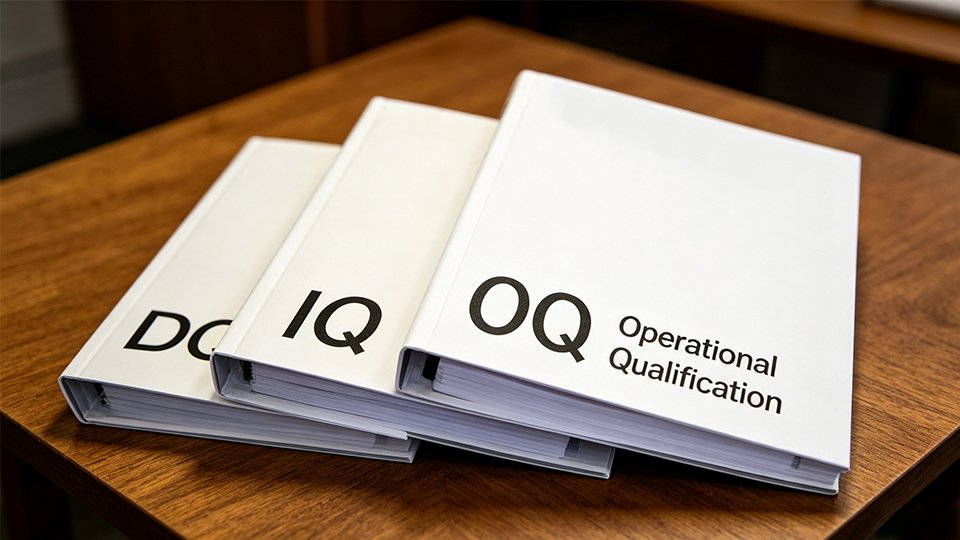
Suivant, effectuer des tests structurés en utilisant IQ, QO, et PQ. Cette évaluation consiste à vérifier si le système fonctionne comme prévu.
3. Document, Approuver, et garder le contrôle
Enfin, toutes les activités de validation doivent être documentées, examiné, et approuvé avant la sortie du système.
Étape 3 – Implémenter la fonctionnalité de piste d’audit
Vous devez garantir l’intégrité de la fonction de piste d’audit, confirmer que le système stocke et enregistre les données en toute sécurité, tels que les horodatages et les modifications, et permet une récupération précise. Prenons l'exemple de l'ajustement des paramètres de la machine de remplissage de gélules: une fois qu'un opérateur modifie les paramètres de remplissage, le système capture automatiquement les anciennes et les nouvelles valeurs, l'identifiant de l'opérateur, et l'horodatage.
Étape 4 – Établir des contrôles de signature électronique
Pour répondre aux attentes de la FDA en matière de signature électronique, chaque utilisateur doit avoir une identité unique. Les signatures électroniques doivent être liées à des enregistrements spécifiques et ne doivent pas être copiées ou réaffectées.
Étape 5 – Contrôler l’accès des utilisateurs
Utiliser l'accès basé sur les rôles. Différents rôles doivent avoir des autorisations différentes. Pour les administrateurs, ils ont toujours les autorisations supérieures, alors que les opérateurs n'ont que des autorisations partielles.
7. Machines d'emballage Ruida: Fournir des machines conformes aux normes FDA et GMP
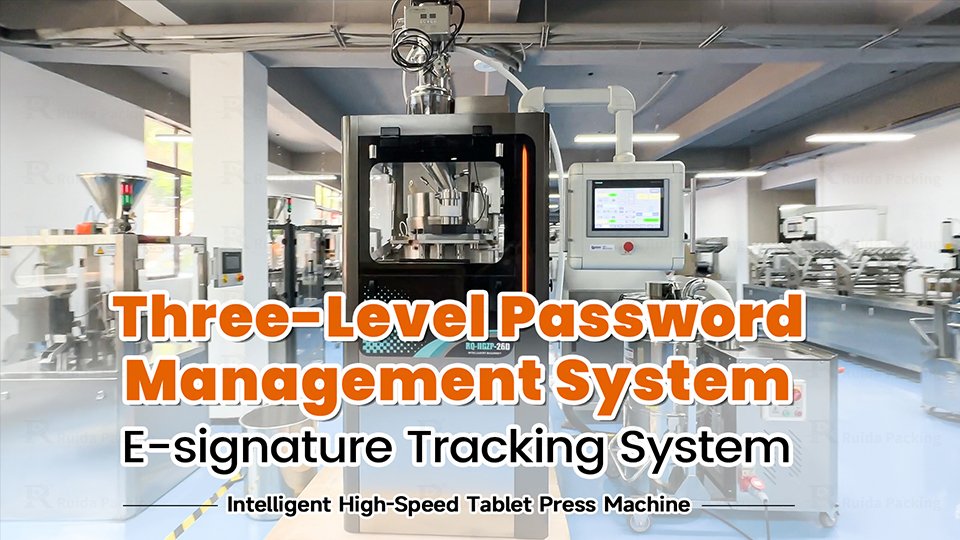
Parfois même si les fabricants sont prêts à équiper leurs machines d'un système de piste d'audit, toutes les machines ne le supportent pas. Emballage Ruida, collaborer avec des sociétés pharmaceutiques renommées, dont UCB et US Pharma, s'engage sans aucun doute à développer une partie 11 matériel conforme. Nos machines sont prises en charge par CE, GMPc, OIN, et certificats associés. Selon les besoins des clients, Ruida peut également fournir 21 Partie CFR 11 solution de surveillance pour les équipements de production et de conditionnement.
Ruida soutient également fabrication pharmaceutique avec des détails pratiques sur le service:
- Matériaux certifiés: 304 acier inoxydable pour les pièces sans contact et acier inoxydable 316L pour les pièces en contact.
- Services de mise en service à distance et sur site, avec des centres après-vente en Amérique du Nord et à Hong Kong.
- Complet guidage de la machine: Manuels, guide d'opération, documents d'entretien, et vidéos après-vente.
- QI, QO, Documentation PQ: Prise en charge facultative des documents de validation, IR BLANC PQ, et documentation de conformité.
Pour la planification des fabricants 21 Partie CFR 11 conformité, le choix d'un équipement doté d'options prêtes à être conformes peut réduire les coûts de modification futurs et faciliter la préparation des audits.
8. Conclusion
En repensant à quand est-ce que 21 Partie CFR 11 entrer en vigueur, nous pouvons voir à quel point cela a profondément façonné l'industrie depuis 1997. Depuis le 20 août de l'année, cette réglementation constitue une norme sur la façon dont les entreprises réglementées par la FDA doivent gérer les données électroniques. Aujourd'hui, 21 Partie CFR 11 la conformité a été une priorité et une préoccupation pour de nombreux fabricants de produits pharmaceutiques et nutra, et tu ferais mieux de t’y préparer. Pas seulement la validation, mais aussi les machines.
9. FAQ
T1: Est 21 Partie CFR 11 Obligatoire?
Oui, bien sûr. Mais cela ne convient pas à tous les systèmes d'enregistrement électronique. Il est obligatoire lorsque des enregistrements électroniques ou des signatures électroniques sont utilisés pour répondre aux exigences de la FDA..
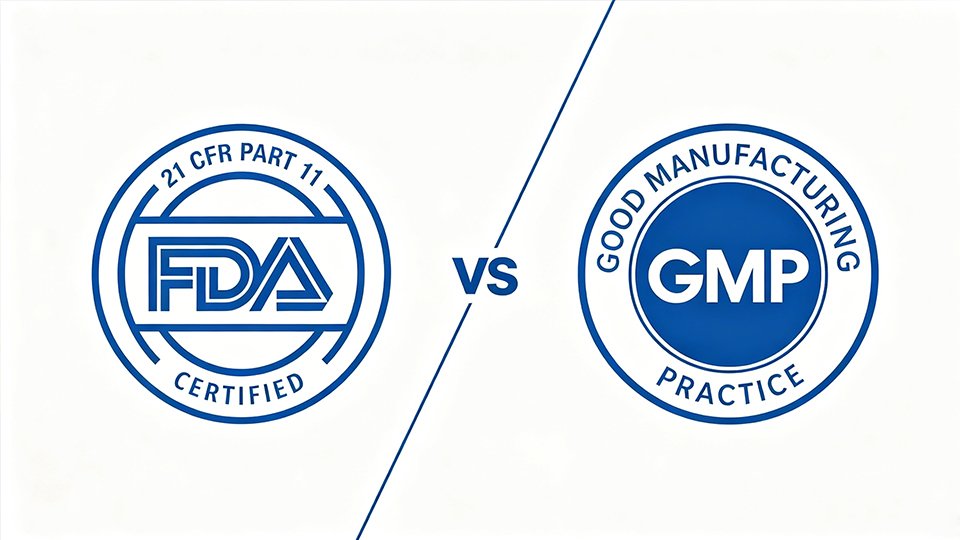
Q2: Où le BPF et 21 CFR Partie 11'La différence réside dans?
Bien, ils ont des objectifs différents. GMP se concentre sur la qualité des produits, alors que 21 Partie CFR 11 se concentre sur les enregistrements électroniques et les signatures électroniques.
Q3: Chaque machine pharmaceutique a-t-elle besoin d'une pièce 11 Conformité?
Non. Une machine a besoin d'une pièce 11 considération lorsqu'il crée, magasins, modifie, ou transmet des enregistrements électroniques réglementés. Les équipements purement mécaniques peuvent ne pas nécessiter le même niveau de contrôle.
Q4: Qu'est-ce qu'une piste d'audit?
Une piste d'audit consiste à enregistrer toutes les actions effectuées sur le système, montrant l'action exacte, temps, et tout changement.
Q5: Comment puis-je savoir si l'équipement prend en charge une pièce 11 Exigences?
Vous pouvez vérifier s'il prend en charge les pistes d'audit, contrôle d'accès des utilisateurs, signatures électroniques, stockage sécurisé des données, exportation d'enregistrement, et documents de validation. Mais pour faire simple, il suffit d'aller demander aux fournisseurs de machines avant l'achat.
Réferences
[1] NOUS. Administration des aliments et des médicaments: Partie 11, Dossiers électroniques; Signatures électroniques — Portée et application
[2] Code électronique des réglementations fédérales: 21 Partie CFR 11 — Dossiers électroniques; Signatures électroniques[3] Registre fédéral: Dossiers électroniques; Règle finale sur les signatures électroniques, Publié en mars 20, 1997
[3] Registre fédéral: Dossiers électroniques; Règle finale sur les signatures électroniques, Publié en mars 20, 1997