Bisakah kamu sistem inspeksi melepuh benar-benar mendeteksi setiap cacat kritis yang Anda harapkan ditemukan?
Untuk produsen farmasi dan nutraceutical, menginstal a mesin pengemas blister tidak berarti semuanya. Anda juga perlu membuktikan bahwa proses pemeriksaan kemasan blister dapat secara konsisten mengidentifikasi produk cacat dan segera menolaknya. Sistem pemeriksaan mesin kemasan blister modern mungkin menggunakan kamera, optik, perangkat lunak, dan penolakan otomatis, namun satu hal yang pasti adalah penginstalan tidak membuktikan bahwa sistem berfungsi sebagaimana mestinya. Oleh karena itu, pengujian tantangan sangat penting untuk memberikan bukti.
Panduan ini menjelaskan apa yang dimaksud dengan pemeriksaan kemasan melepuh, cara kerja sistem pemeriksaan mesin blister pack, apa yang sebenarnya dibutuhkan oleh cGMP dan CE, cacat mana yang harus ditantang, dan cara melakukan uji tantangan untuk pemeriksaan lepuh.

Paket Lepuh
Poin Penting
- Gambaran umum tentang kemasan lepuh farmasi dan pemeriksaan kemasan melepuh
- Komponen utama dan alur kerja mesin pengepakan melepuh
- Perbedaan antara kepatuhan mesin CE dan inspeksi kemasan cGMP
- Tes tantangan khas yang digunakan untuk memverifikasi sistem inspeksi melepuh
- Metode 7 langkah praktis untuk melakukan tes tantangan kemasan melepuh
- Bagaimana menetapkan kriteria penerimaan pemeriksaan lepuh tanpa bergantung pada tingkat kelulusan universal yang sewenang-wenang
1. Apa Itu Paket Blister Untuk Pengobatan?
Sebelum membahas pemeriksaan kemasan blister, berguna untuk memahami apa yang sebenarnya sedang diperiksa.
A paket melepuh untuk pengobatan adalah paket berbasis unit di mana tablet individual, kapsul, atau cairan ditempatkan ke dalam rongga yang terbentuk dan ditutup dengan bahan penutup. Dalam kemasan blister farmasi, kondisi paket berkaitan dengan perlindungan dan identifikasi produk.
Struktur Paket Blister
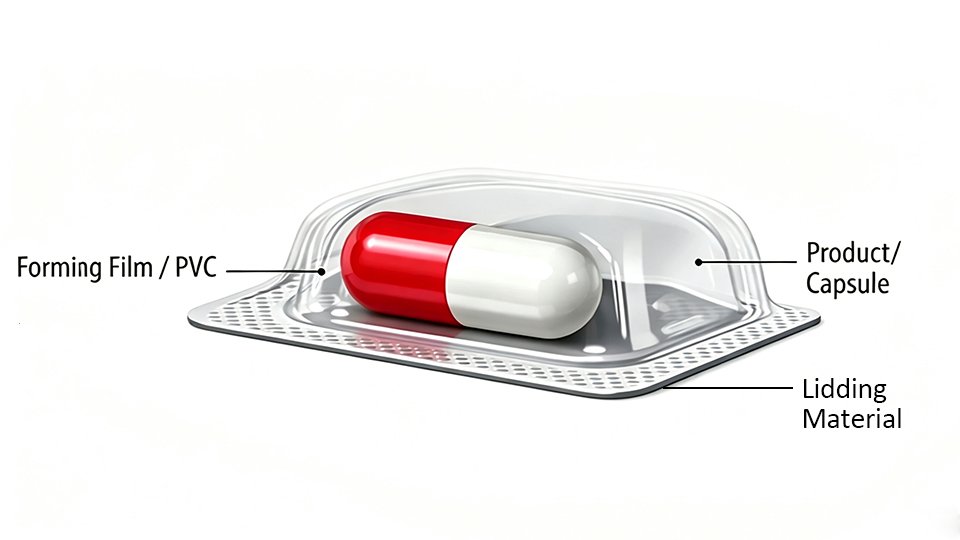
Struktur Paket Blister
Paket blister yang khas dapat berisi:
- Membentuk Film: Bahan umum termasuk PVC dan PET, tergantung pada properti produk.
- Rongga Produk: Rongga yang terbentuk berisi tablet atau kapsul pil.
- Penutup Foil: Umumnya aluminium foil, digunakan untuk menutup rongga.
Struktur akhir dapat bervariasi tergantung pada bahan filmnya, ukuran produk, dan bentuk cetakannya. Alu-PVC and Alu-Alu adalah bentuk kemasan melepuh yang paling umum digunakan dalam kemasan lepuh farmasi.
Struktur dan fungsinya melampaui makna kemasan melepuh, dan cara menentukan struktur akhir kemasan blister terutama berkaitan dengan strategi merek perusahaan. Bab-bab berikut akan mendalami proses kerja mesin pengemas melepuh untuk memperdalam pemahaman Anda tentang pemeriksaan kemasan melepuh.
2. Bagaimana Cara Kerja Mesin Blister Packing?
Mesin melepuh mengubah foil tipis dan film PVC menjadi lembaran melepuh jadi dengan rongga yang terbentuk melalui serangkaian proses.
Urutan produksi yang khas dapat diringkas sebagai:
Pengumpanan Film PVC → Pembentukan → Pengumpanan Produk → Inspeksi → Penyegelan → Pengkodean → Lekukan → Pemotongan → Penolakan
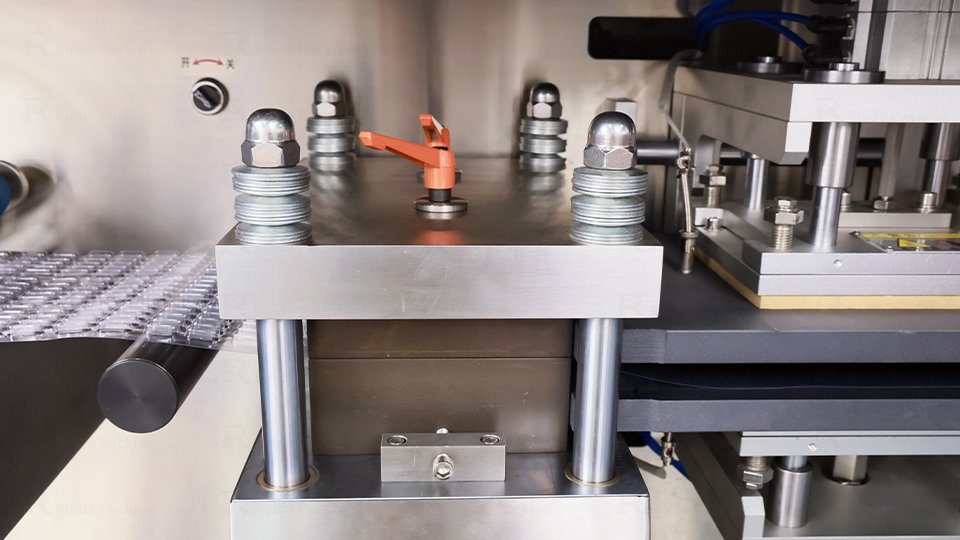
Stasiun Pembentuk Lepuh
Tergantung pada bahannya, posisi pemeriksaan dapat berubah. Untuk kemasan blister Alu-Alu, sistem inspeksi kamera lubang jarum dipasang antara stasiun pembentuk dan stasiun pengumpanan produk untuk memeriksa apakah ukuran lubang kecil pada film melepuh Alu-Alu berada dalam batas yang ditentukan. Hal ini karena tablet yang dikemas dalam lepuh Alu-Alu biasanya memerlukan integritas penyegelan yang ketat dan perlindungan cahaya. Sedangkan untuk tablet atau kapsul Alu-PVC melepuh, kamera untuk pemeriksaan kemasan melepuh akan dipasang tepat setelah tempat pemberian pakan untuk memeriksa cacat tablet dan kapsul selama pemeriksaan produk kemasan melepuh.
Untuk membuatnya lebih intuitif, berikut ini adalah tabel untuk merujuk pada bagian-bagian yang tepat dari mesin melepuh.
Komponen Utama Mesin Blister Packing
Tabel1- Komponen Utama dan Fungsi Terkait Mesin Blister Packing
| Komponen | Fungsi Utama |
|---|---|
| Unit Pengumpanan Film | Memberi makan bahan pembentuk PVC |
| Stasiun Pembentuk | Menciptakan gigi berlubang |
| Sistem Pengumpanan Produk | Menempatkan produk ke dalam rongga |
| Sistem Inspeksi | Mendeteksi cacat tablet dan kapsul |
| Stasiun Penyegelan | Mengikat bahan aluminium ke jaring yang terbentuk |
| Sistem Pengkodean | Mencetak nomor atau tanggal batch |
| Sistem Indentasi | Menciptakan garis-garis yang mudah sobek pada kemasan blister |
| Stasiun Pemotongan | Pisahkan lembaran melepuh yang sudah jadi |
| Sistem Penolakan | Menghapus produk yang cacat |
Skala produksi yang berbeda menggunakan model mesin blister yang berbeda. Untuk laboratorium, mereka mungkin menggunakan mesin pengepakan melepuh yang dioperasikan dengan tangan atau mesin pembuat lepuh di laboratorium. Untuk produksi batch kecil, yang mungkin digunakan oleh pabrik mesin pengepakan melepuh semi-otomatis di mana pemberian produk secara manual diperlukan. Ketika kapasitas kemasan blister sudah habis 2000 lembar/jam, mesin pengepakan melepuh otomatis menggantikan yang manual. Perlu dicatat bahwa ada dua jenis mesin pengepakan melepuh otomatis: tipe pelat datar dan tipe roller.
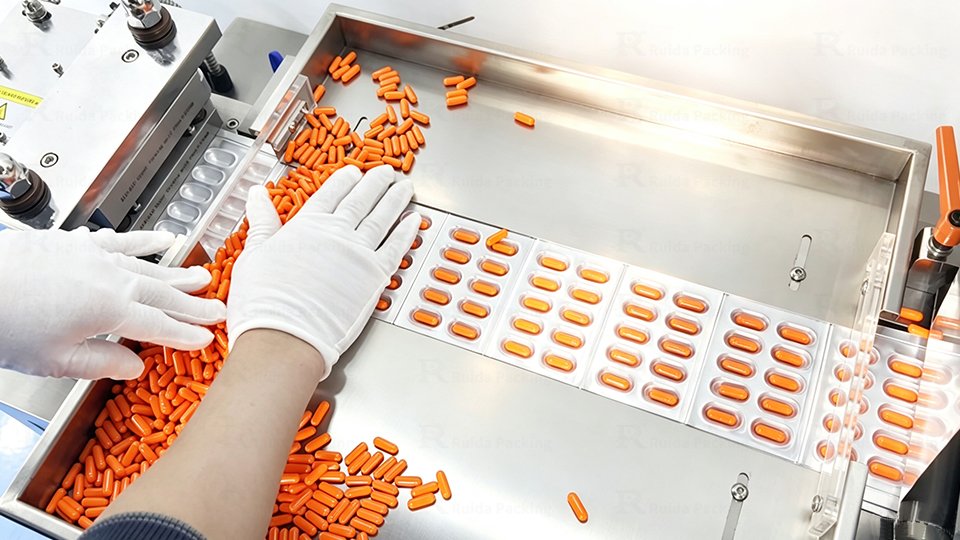
Pengumpanan Manual Mesin Blister Packing
A mesin pengepakan melepuh pelat datar umumnya dikaitkan dengan produksi intermiten, sementara mesin dengan output lebih tinggi mengubah stasiun penyegelan intermiten menjadi bentuk kontinu, dan itu adalah mesin blister tipe roller.
3. Apa yang Dibutuhkan CE dan cGMP untuk Kemasan Blister?
Untuk negara-negara anggota Uni Eropa, dan Amerika Serikat, CE dan cGMP kadang-kadang disebutkan bersama-sama, tetapi mereka menangani hal yang berbeda. Dalam praktiknya, pemeriksaan kemasan melepuh berkaitan erat dengan pengendalian cGMP, sedangkan CE terutama berkaitan dengan mesin itu sendiri.
Apa Arti CE Untuk Mesin Blister Packing?
Persyaratan CE terutama berkaitan dengan kesesuaian dan keamanan mesin yang ditempatkan di pasar Eropa. Peraturan Mesin UE 2023/1230 menetapkan persyaratan kesehatan dan keselamatan untuk mesin dan dijadwalkan untuk diterapkan mulai 20 Januari 2027.
Untuk mesin pengepakan melepuh, pertimbangan yang relevan dapat mencakup:
- Keamanan mesin dan pengurangan risiko
- Penjaga pelindung
- Perhentian darurat
- Keamanan listrik dan mekanik
- Dokumentasi teknis
- Penilaian kesesuaian
- Pengoperasian dan pemeliharaan yang aman
Karena itu, lebih akurat jika dikatakan bahwa CE berlaku untuk kesesuaian dan keamanan mesin, daripada mengklaim bahwa CE sendiri yang menentukan kualitas farmasi dari setiap kemasan blister.
Apa yang Dibutuhkan cGMP?
cGMP sangat menekankan pengendalian produksi dan pengemasan farmasi.
Untuk bahan kemasan, 21 CFR 211.122 mengharuskan produsen untuk menetapkan prosedur yang mencakup bidang-bidang seperti penerimaan, identifikasi, penyimpanan, penanganan, contoh, penyelidikan, dan pengujian. Bahan-bahan tersebut juga harus diperiksa atau diuji sebelum digunakan, dengan hasil yang relevan didokumentasikan dengan baik.
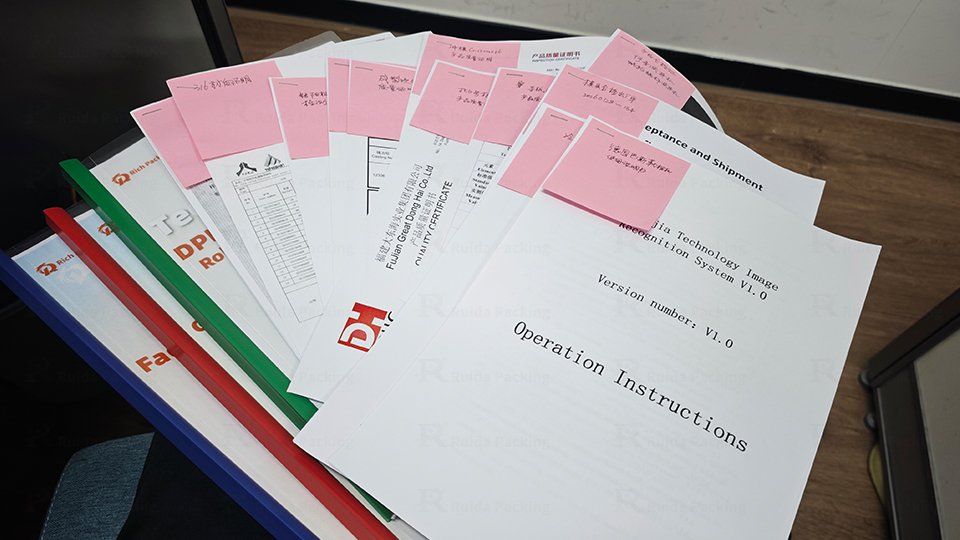
Satu Set Dokumentasi 4Q Lengkap
Sementara itu, 21 CFR 211.130 memerlukan prosedur pengemasan yang membantu memastikan bahan yang digunakan benar dan membantu mencegah campur aduk atau kontaminasi silang. Area pengemasan dan bahan juga harus diperiksa sesuai kebutuhan, dengan cek ini dicatat.
Jadi, dalam hal pemeriksaan kemasan cGMP, mempertaruhkan kamera hanyalah salah satu bagian dari teka-teki. Yang benar-benar penting adalah apakah seluruh proses melepuh dapat terkendali, dicatat dengan benar, dan mampu menangkap atau mencegah kesalahan yang signifikan. Ini juga mengapa pengendalian kualitas kemasan melepuh harus dipertimbangkan bersamaan dengan validasi pemeriksaan lepuh.
4. Apa Itu Sistem Inspeksi Mesin Blister Pack?
Sistem inspeksi mesin kemasan blister adalah pengaturan inspeksi otomatis yang dirancang untuk mengidentifikasi produk yang telah ditentukan sebelumnya, kemasan, pencetakan, atau cacat penampilan selama produksi lepuh.
Sistem inspeksi mesin kemasan blister yang umum mungkin mencakup:
- Kamera industri
- Penerangan
- Lensa inspeksi paket melepuh
- Optik inspeksi paket melepuh
- Perangkat keras akuisisi gambar
- Perangkat lunak visi
- PLC/HMI
- Mekanisme penolakan
- Fungsi alarm dan perekaman data
Kamera mengambil gambar, perangkat lunak mengevaluasinya berdasarkan kriteria inspeksi yang telah ditentukan sebelumnya, yang perlu ditetapkan berdasarkan mempelajari beberapa sampel kemasan blister. Sistem akan mengirimkan sinyal ke mekanisme penolakan ketika lepuh yang cacat teridentifikasi. Nanti, silinder penolakan menerima sinyal dan bekerja ketika lepuh tablet yang cacat muncul.
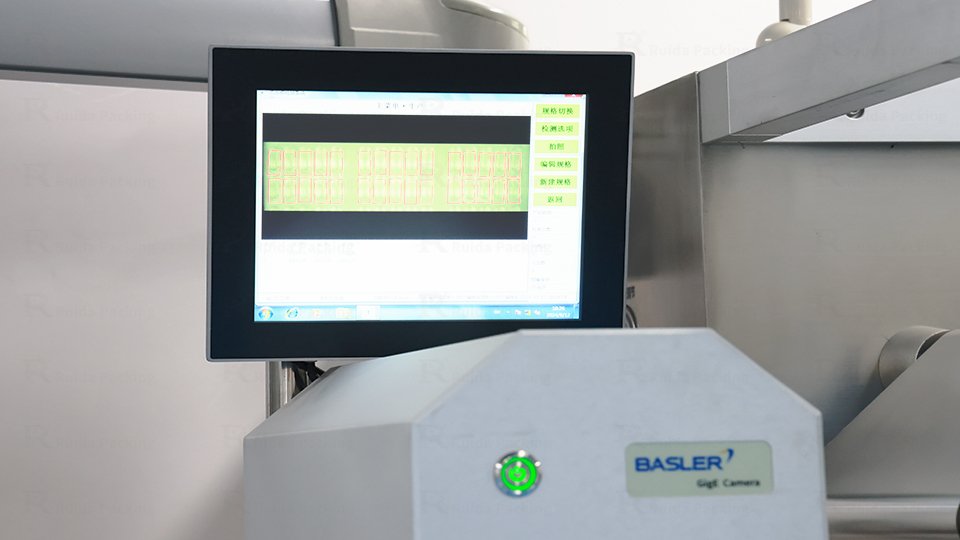
Sistem Inspeksi Mesin Blister Pack
Sistem modern juga dapat menggunakan AI untuk pemeriksaan kemasan kemasan farmasi atau visi komputer untuk meningkatkan pengenalan bentuk kompleks dan variasi tampilan. Pemeriksaan kualitas paket Blister dengan visi komputer dapat membantu mengidentifikasi cacat visual yang telah ditentukan sebelumnya, namun AI tidak boleh diperlakukan sebagai pengganti validasi. Fungsi inspeksi masih memerlukan persyaratan yang ditentukan, skenario pengujian, dan kriteria penerimaan.
Apa yang Dapat Dideteksi oleh Sistem Inspeksi Blister?
Jadi, jenis cacat apa yang dapat dideteksi oleh sistem penglihatan untuk pemeriksaan kemasan melepuh? Tabel berikut akan memberi Anda penjelasan konkrit mengenai hal tersebut cacat lepuh yang mungkin disertakan dalam pemeriksaan produk kemasan melepuh.

Berbagai Jenis Cacat Lepuh
Table 2-Common Defects of the Blister Packs
| Jenis Cacat | Typical Example |
|---|---|
| Product Defect | Missing tablet or capsule |
| Filling Defect | Empty cavity |
| Position Defect | Product incorrectly positioned |
| Foreign Material | Visible unwanted material |
| Product Appearance | Broken or visibly damaged tablet |
| Forming Defect | Abnormal blister cavity |
| Foil Defect | Wrinkle or visible damage |
| Coding Defect | Unclear batch or date code |
It is important to note that different blister defects require different inspection systems. Sistem inspeksi penglihatan, usually installed before sealing and before batch or expiry date printing, can check missing tablets or capsules, rongga kosong, incorrect product positioning, visible product damage, foreign material, Dan membentuk cacat. A separate printing inspection system is used to check batch numbers, tanggal kadaluwarsa, and other printed information after coding. Untuk kemasan blister Alu-Alu, a dedicated pinhole inspection system can detect pinholes in the aluminum foil, while a blister pack leak tester is used to detect leaks that cannot be identified by visual inspection.
5. What Are Challenge Tests For Blister Pack Inspection?
A blister pack challenge test is a controlled quality check designed to verify whether an inspection system and machine can reliably detect and reject predefined defective blisters. It intentionally introduces a known defect into an otherwise acceptable production process to determine whether the inspection system detects and rejects it.
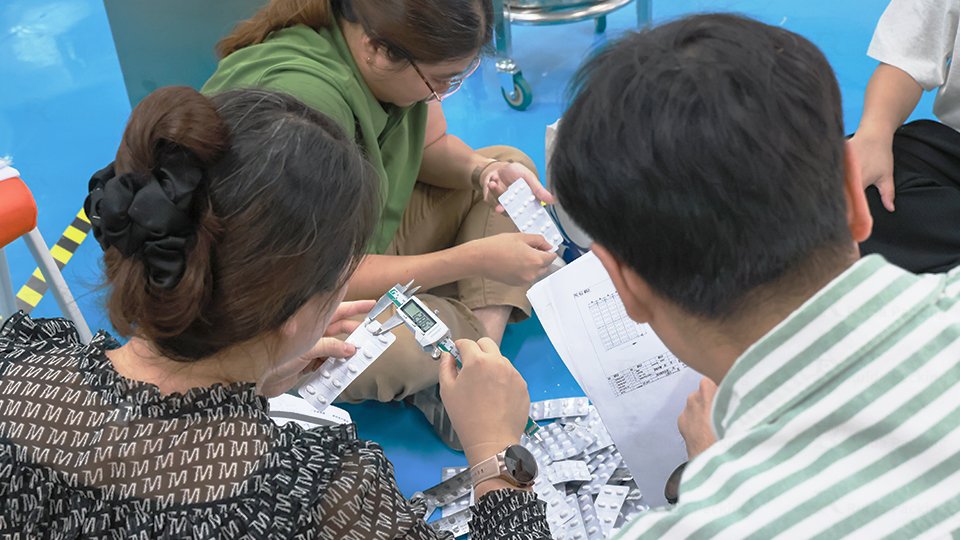
Inspection of Blister Pack
Typical blister pack challenge test items include:
- Missing tablet or capsule/ Empty cavities
- Wrong products/ Different colors or shapes
- Stained tablet
- Broken or visibly damaged product
- Missing print
- Incorrect batch/date code
Namun, not every blister defect can be detected by vision inspection.
Misalnya, sistem pemeriksaan kemasan melepuh berbasis kamera dapat mengidentifikasi tablet atau kapsul yang tampak tidak lengkap, namun kebocoran mikroskopis mungkin memerlukan metode integritas paket khusus. USP <1207> membahas jaminan integritas paket dan pemilihan, validasi, dan penggunaan metode uji kebocoran. Ini berarti pengujian kebocoran kemasan melepuh dan pemeriksaan visual kemasan melepuh harus diperlakukan sebagai fungsi pemeriksaan yang berbeda.
Meskipun sistem pemeriksaannya berbeda, prinsip tes dasarnya sama: Dengan sengaja memperkenalkan kesalahan yang diketahui dan mengamati respons sistem, produsen dapat mengkonfirmasi bahwa kamera, fungsi inspeksi, dan mekanisme penolakan berfungsi sebagaimana mestinya.
6. Cara Melakukan Tes Tantangan Inspeksi Paket Blister?
Berikut ini akan menunjukkan cara melakukan uji tantangan untuk pemeriksaan lepuh.
Melangkah 1: Tentukan Ruang Lingkup Inspeksi
Sebelum pengujian, mendefinisikan dengan jelas apa yang diharapkan dapat dideteksi oleh sistem inspeksi mesin kemasan blister.
Misalnya:
- Kehadiran produk
- Penampilan produk seperti ada noda atau pecah
- Kondisi rongga melepuh
- Kondisi foil
- nomor batch. pengkodean
- Cacat lain yang telah ditentukan sebelumnya
Jika garis pengemasan memiliki sistem inspeksi pencetakan terpisah, cacat pengkodean seperti nomor batch yang hilang atau tidak jelas harus diuji oleh sistem itu. Persyaratan harus terhubung ke URS, persyaratan produk, dan strategi validasi. Lampiran GMP UE 11 menyatakan bahwa Spesifikasi Persyaratan Pengguna harus didasarkan pada penilaian risiko yang terdokumentasi dan dampak GMP dan tetap dapat ditelusuri melalui siklus hidup sistem.
Melangkah 2: Siapkan Sampel Yang Baik Dan Cacat
Siapkan sampel baik yang memenuhi syarat bersama dengan sampel cacat yang diketahui.
Setiap sampel tantangan harus mewakili cacat yang jelas. Cacat tersebut harus didokumentasikan sehingga tim penguji mengetahui secara pasti apa yang diharapkan dapat diidentifikasi oleh sistem inspeksi lepuh.
Tergantung pada tujuan tes, produsen dapat menggunakannya:
- Maket: Kemasan simulasi atau komponen produk, biasa digunakan selama pengaturan peralatan dan pengujian awal.
- Placebo: Sampel yang meniru tampilan produk sebenarnya tanpa mengandung obat aktif.
- Produk Aktual: Tablet atau kapsul asli yang memberikan kondisi produksi paling representatif.
Contoh tantangan yang umum mungkin termasuk:
- rongga kosong
- tablet bernoda
- tablet atau kapsul tidak lengkap
- produk yang salah
- kode yang hilang
Tujuannya bukan untuk menciptakan kegagalan acak. Hal ini untuk menantang fungsi inspeksi tertentu dan mendukung validasi inspeksi melepuh.
Melangkah 3: Jalankan Dalam Kondisi Produksi yang Ditentukan
Pengujian harus dilakukan dalam kondisi yang telah ditentukan, bukan hanya menempatkan sampel yang cacat di depan kamera stasioner.
Sebelum pengujian, pastikan mesin blister dalam keadaan bersih, dipelihara dengan baik, dikalibrasi, dan dalam kondisi kerja normal. Parameter yang relevan seperti produk, format melepuh, kecepatan mesin, kondisi makan, resep pemeriksaan, pengaturan kamera, penerangan, suhu, dan tekanan harus diperiksa dan dicatat sesuai dengan persyaratan pengujian.
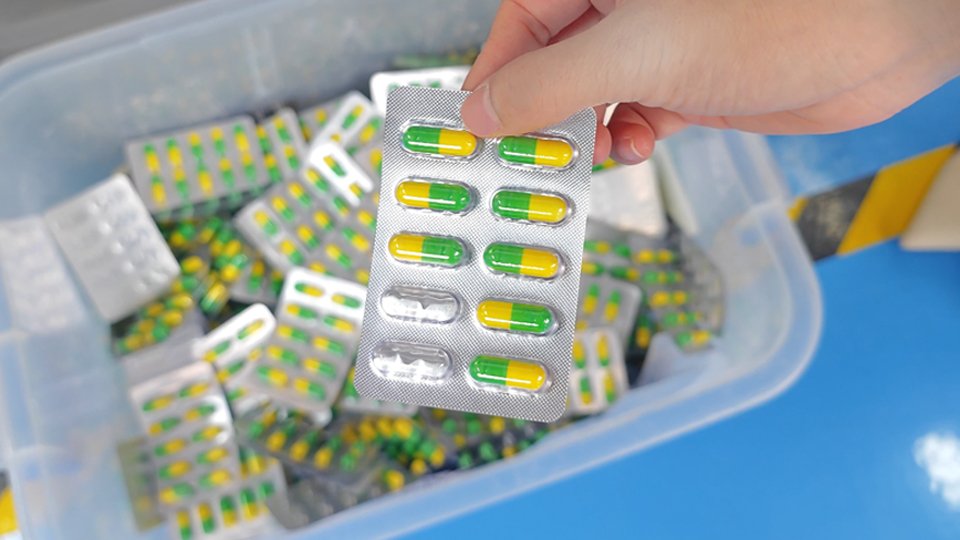
kemasan melepuh dengan kapsul yang hilang
Hal ini membantu memastikan bahwa hasilnya mencerminkan lingkungan produksi sebenarnya.
Catat parameter yang relevan seperti:
- Produk
- Format melepuh
- Kecepatan mesin
- Resep inspeksi
- Pengaturan kamera
- Kondisi pencahayaan
- Parameter mesin yang relevan
Hal ini menjadikan pengujian mewakili produksi aktual dan mendukung validasi inspeksi lepuh.
Melangkah 4: Perkenalkan Satu Cacat yang Ditentukan Sekaligus
Jalankan setiap sampel tantangan melalui proses normal.
Misalnya:
Kapsul Hilang → Inspeksi → Deteksi → Tolak
Kemudian:
Cetakan Hilang → Inspeksi → Deteksi → Tolak
Menguji kategori cacat individual memudahkan untuk mengidentifikasi fungsi inspeksi mana yang berfungsi dan mana yang memerlukan penyesuaian.
Melangkah 5: Verifikasi Fungsi Deteksi dan Tolak
Deteksi saja tidak cukup. Sistem inspeksi harus mengidentifikasi lepuh yang rusak dan memicu tindakan penolakan yang benar.
Setelah penolakan, lepuh juga harus diperiksa secara visual untuk memastikan bahwa sampel cacat yang benar telah dikeluarkan.
Lepuh yang baik harus dipantau pada saat yang bersamaan. Sistem inspeksi yang salah menolak produk yang memenuhi syarat mungkin juga memerlukan penyelidikan dan penyesuaian lebih lanjut.
Melangkah 6: Catat Hasilnya
Semua hasil tes tantangan harus didokumentasikan dan dievaluasi. Catatan biasanya harus mencakup:
- Tanggal tes
- Model mesin
- Produk
- Kelompok
- Resep inspeksi
- Cacat tantangan
- Jumlah sampel
- Nomor terdeteksi
- Nomor ditolak
- Pengamatan penolakan palsu
- Operator
- QA atau persetujuan orang yang bertanggung jawab
Hasilnya harus ditinjau untuk mengetahui variasinya, kegagalan yang berulang, atau pola lainnya. Jika cacat yang telah ditentukan sebelumnya tidak terdeteksi atau ditolak sesuai kebutuhan, Analisis Akar Penyebab harus dilakukan untuk mengidentifikasi sumber masalah dan menentukan tindakan perbaikan yang tepat.
Melangkah 7: Ulangi Sesuai Protokol Validasi
Frekuensi pengujian tantangan harus ditentukan dalam SOP dan protokol validasi yang berlaku. Tergantung prosedur yang telah ditetapkan, pengujian dapat dilakukan pada awal batch baru dan diulangi setelah kejadian seperti penghentian mesin yang berkepanjangan, kalibrasi, perubahan parameter, atau pemeliharaan.
Tujuannya adalah untuk menunjukkan bahwa fungsi inspeksi tidak hanya berhasil secara kebetulan saja, tetapi bekerja secara konsisten di bawah kondisi yang ditentukan.
Cara Menentukan Apakah Tes Tantangan Telah Lulus?
Uji tantangan berhasil bila sistem inspeksi memenuhi kriteria penerimaan inspeksi lepuh yang telah ditentukan sebelumnya untuk setiap item pengujian. Kriteria ini harus ditetapkan dalam URS, penilaian risiko, dan protokol validasi sebelum pengujian.
Misalnya:
- Empty cavity: 100% rongga kosong yang telah ditentukan sebelumnya terdeteksi dan ditolak.
- Tablet rusak atau ternoda: 100% sampel tantangan terdeteksi dan ditolak dengan benar.
- Produk salah: Setiap sampel produk salah yang telah ditentukan sebelumnya terdeteksi dan ditolak.
- Lepuh yang bagus: Jumlah penolakan palsu tetap berada dalam batas yang dapat diterima yang telah ditentukan sebelumnya.
- Fungsi tolak: Setiap lepuh cacat yang terdeteksi berhasil dikeluarkan dari aliran produksi.
- Catatan data: Semua hasil tes dicatat dan dilacak dengan benar.
Untuk cacat kritis, kriteria penerimaan biasanya adalah bahwa cacat yang ditentukan harus terdeteksi dan ditolak dengan benar. Jumlah sampel yang tepat, tingkat deteksi, dan batas penolakan palsu harus ditentukan terlebih dahulu sesuai dengan persyaratan produk dan validasi.
7. Bagaimana Ruida Packing Mendukung Validasi Inspeksi Paket Blister
Dengan lebih dari 10 pengalaman bertahun-tahun dalam mesin pengemasan farmasi dan nutraceutical, Ruida Packing menyediakan solusi kemasan blister yang didukung oleh SGS, ISO, dan kredensial terkait SA8000, bersama dengan validasi praktis dan dukungan purna jual.
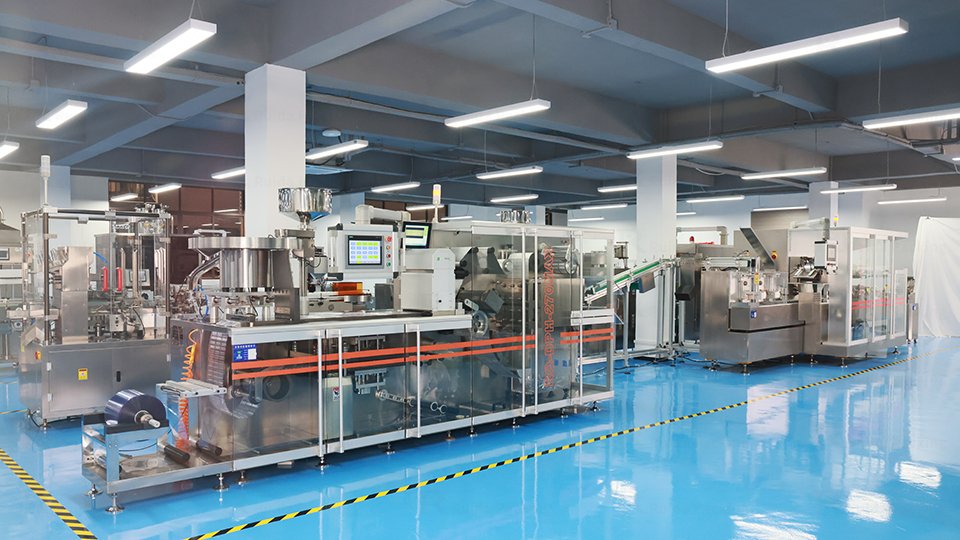
Lini Mesin Roller Blister
Untuk produsen yang bekerjasama dengan kami, kami menyediakan:
Kontrol Bahan Yang Ketat: Bagian kontak produk menggunakan SS 316 baja tahan karat, dengan sertifikat material yang tersedia untuk ketertelusuran.
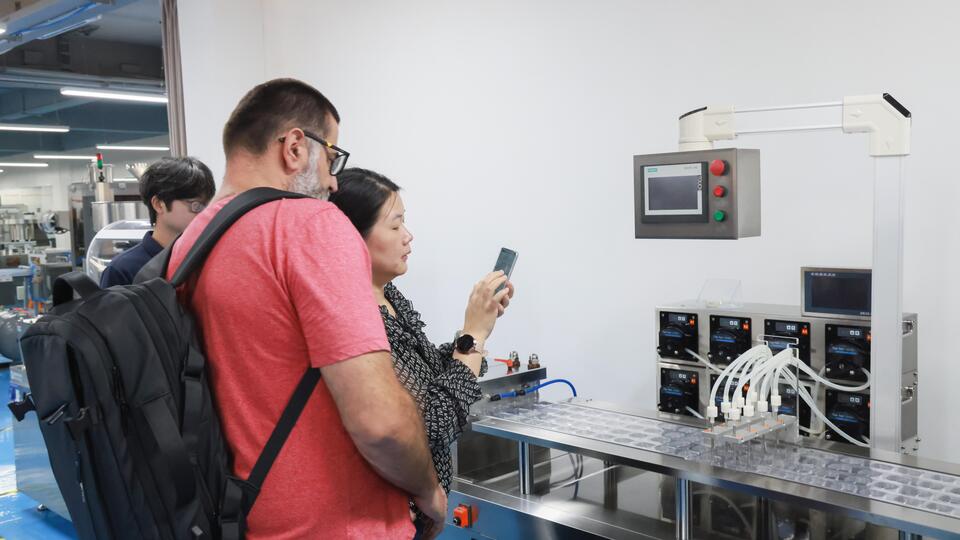
Dukungan Validasi: Menyediakan dokumentasi SAT dan 4Q dan mendukung klien dengan tes tantangan inspeksi paket melepuh dan video pengujian referensi.
Kualitas & Kepatuhan: Peralatan dirancang dengan mempertimbangkan CE dan persyaratan kualitas yang relevan, mendukung produksi farmasi dan nutraceutical.
Layanan Purna Jual Global: Mendirikan pusat layanan di Amerika Utara, Hongkong, dan Irlandia, menyediakan instalasi, commissioning, pelatihan, dan dukungan purna jual.
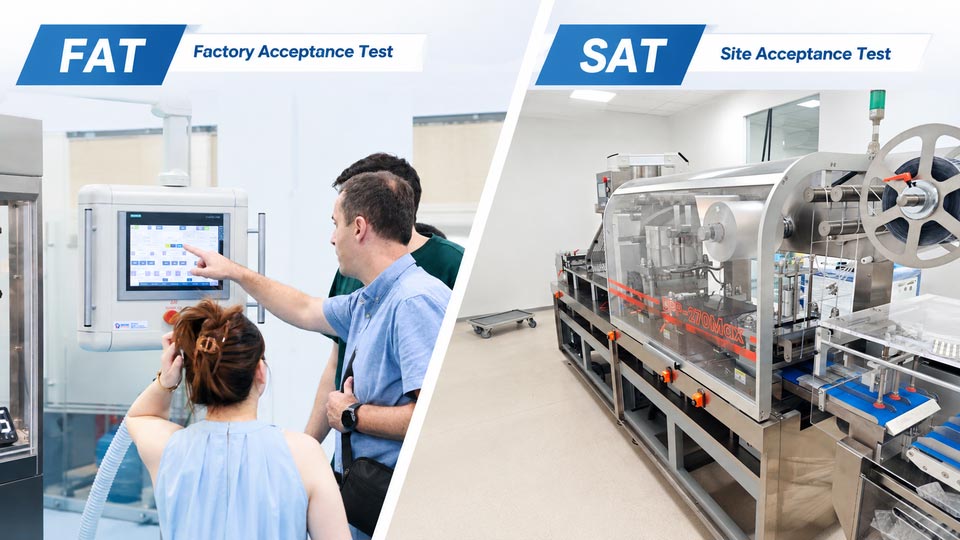
Dari solusi lini pengemasan hingga FAT dan SAT, Ruida Packing mendukung klien selama proses implementasi peralatan.
8. Kesimpulan
Proses pemeriksaan kemasan blister yang andal bergantung pada lebih dari sekadar pemasangan kamera. Sistem harus dikonfigurasi dengan benar dan diuji tantangannya untuk memastikan cacat terdeteksi, ditolak, dan dicatat sesuai kebutuhan.
Sistem inspeksi mesin kemasan blister yang tervalidasi memberikan bukti terdokumentasi bahwa proses inspeksi berjalan secara konsisten dan memenuhi persyaratan yang telah ditentukan sebelumnya.
9. FAQ
Q1: Apa Itu Sistem Inspeksi Mesin Blister Pack?
Ambil sistem inspeksi mesin kemasan melepuh sebagai “mata” dari jalur pengepakan melepuh. Kamera menangkap setiap lepuh, sementara pencahayaan, optik, dan perangkat lunak membantu mengidentifikasi cacat yang telah ditentukan sebelumnya. Ketika masalah ditemukan, unit penolakan menghilangkan lepuh dari aliran produksi.
Q2: Cacat Apa yang Dapat Dideteksi oleh Sistem Inspeksi Blister?
Itu tergantung pada konfigurasi sistem. Contoh umum termasuk gigi berlubang, tablet atau kapsul hilang atau salah tempat, tablet bernoda atau pecah, membentuk cacat, dan masalah foil yang terlihat
Q3: Apa Itu Uji Tantangan Dalam Kemasan Farmasi?
Ini pada dasarnya adalah pengujian terkontrol untuk melihat apakah sistem inspeksi dapat “menemukan masalahnya.” Blister cacat yang diketahui dimasukkan ke dalam proses produksi, dan operator memeriksa apakah sistem mengenalinya dan mengirimkannya ke unit penolakan seperti yang diharapkan.
Q4: Bagaimana Anda Melakukan Tes Tantangan Untuk Inspeksi Paket Blister?
Tentukan ruang lingkup inspeksi, menyiapkan sampel yang baik dan cacat, menetapkan kondisi produksi, memperkenalkan cacat yang diketahui, memverifikasi deteksi dan penolakan, mencatat hasilnya, dan ulangi pengujian sesuai dengan protokol validasi yang disetujui.
Q5: Bisakah Kamera Mendeteksi Kebocoran Blister Pack?
Belum tentu. Sistem penglihatan dapat mendeteksi cacat penyegelan atau pengemasan yang terlihat, tetapi kebocoran paket mikroskopis mungkin memerlukan uji kebocoran lepuh yang sesuai atau metode pengujian integritas paket lainnya.
Referensi
[1] KITA. FDA / eCFR, 21 Bagian CFR 211 — Praktik Manufaktur yang Baik Saat Ini untuk Obat Jadi, termasuk pengendalian pengemasan dan pelabelan. 21 Bagian CFR 211
[2] KITA. FDA / eCFR, 21 CFR §211.122 - Pemeriksaan Bahan Dan Kriteria Penggunaan.
[3] KITA. FDA / eCFR, 21 CFR §211.130 - Operasi Pengemasan dan Pelabelan.
[4] Komisi Eropa, Volume EudraLex 4 — Pedoman UE untuk Praktik Manufaktur yang Baik. Volume EudraLex 4
[5] Komisi Eropa, Lampiran GMP UE 11 — Sistem Komputerisasi.