
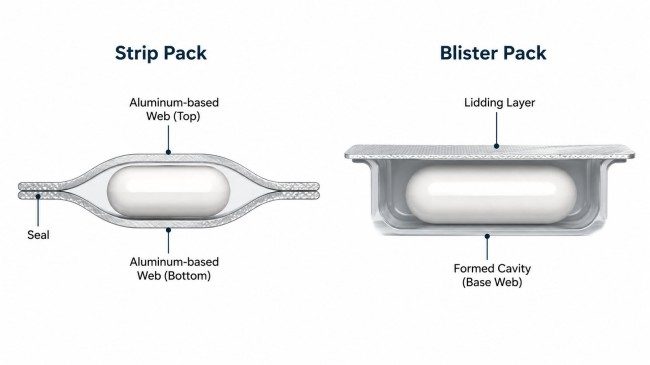
Strip packaging is a packaging method in which tablets, viên nang, or similar solid products are enclosed between two flexible packaging webs. Trong ứng dụng dược phẩm, these webs are often aluminum-based foils or laminates. The two layers come together around each product and are sealed in the surrounding area, creating separate sealed units along a continuous strip.
This format is used when manufacturers need individually enclosed products in a compact package. The final level of protection depends on the complete packaging structure, chất lượng niêm phong, đặc tính sản phẩm, và điều kiện bảo quản. The words “strip pack” alone do not define moisture, ôxy, or light barrier performance.
To make a strip pack, two packaging webs are unwound and guided through the machine while tablets or capsules are fed between them. The webs are brought together, sealed around each product, advanced in a controlled sequence, and cut into the required strip size. Understanding this sequence also makes it easier to see what a máy đóng gói dạng dải actually controls and how strip packaging differs from đóng gói vỉ.
What Is Strip Packaging and What Does a Strip Pack Look Like?
MỘT strip pack consists of a tablet, viên nang, or similar solid product positioned between two flexible packaging layers. The layers are sealed together around the product so that each unit remains individually enclosed.
Several units can remain connected in one longer strip, or the material can be cut into smaller strips according to the required pack configuration. The package is normally relatively flat because the flexible webs follow the general shape of the enclosed product.
The key structural feature is that the product is enclosed directly between the two webs. Strip packaging does not begin by forming a separate pocket for every tablet or capsule.
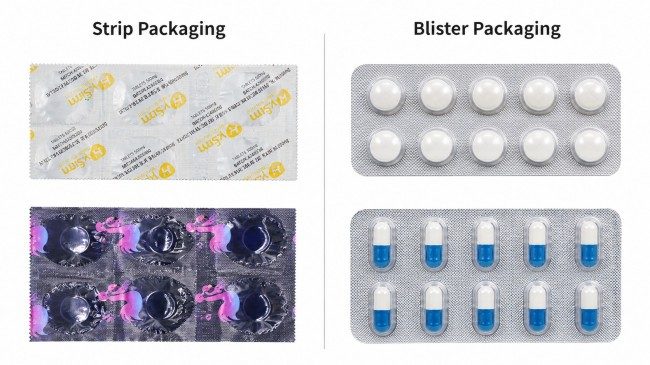
That is the main difference between a strip pack and a conventional blister pack. Trong bao bì vỉ, a forming web is shaped into cavities first. The products are placed into those cavities, and a lidding material is then sealed over them. In strip packaging, the product sits between two webs while the material surrounding it is sealed.
A finished strip pack therefore combines three basic elements:
- the tablet or capsule being packaged;
- two flexible packaging webs surrounding the product;
- the sealed area that separates and encloses each unit.
This structure can be adapted to different products and pack layouts, but product dimensions, vật liệu đóng gói, thiết kế trung chuyển, sealing arrangement, and machine settings still need to work together.
Gói dải được thực hiện như thế nào? The Strip Packaging Process Step by Step
Commercial strip packaging is usually a continuous process. The two packaging webs move through the line while products are fed, enclosed, niêm phong, advanced, and cut in a synchronized sequence.
1. Unwind and Guide the Packaging Webs
Two rolls of packaging material are mounted on the machine and guided toward the sealing area.
Stable web tension and tracking help keep both layers aligned before they meet around the product. When printed material is used, registration control keeps the print pattern aligned with the intended pack and cut positions.
2. Feed Tablets or Capsules Into Position
The feeding system separates products and directs them toward the correct locations between the two webs.
Tablet dimensions, kích thước viên nang, tình trạng bề mặt, fragments or dust, tốc độ sản xuất, and pack layout all affect feeding behavior. The aim is for each product to reach the sealing area in the correct position without unnecessary impact or compression.
Feeder design therefore needs to match the product rather than treating every tablet or capsule as if it will behave in the same way.
3. Bring the Two Webs Around the Product
Sau khi cho ăn, the two packaging webs converge around the tablet or capsule.
The product occupies the space between the webs, while the surrounding material provides the area needed for sealing. Product spacing and the intended pack layout determine how much material remains between adjacent units.
There is no separate forming station creating blister cavities before filling. This is the step that gives strip packaging its characteristic structure.
4. Seal the Webs Around Each Product
The paired webs pass through the sealing section, where heat and pressure activate the sealable layers around each product.
Seal quality depends on several interacting factors:
- vật liệu đóng gói;
- nhiệt độ niêm phong;
- áp lực ;
- thời gian liên lạc;
- tốc độ máy;
- web condition;
- vị trí sản phẩm.
Increasing sealing temperature alone is not a reliable solution to a weak seal. If pressure distribution, material compatibility, thời gian liên lạc, or web alignment is unsuitable, the problem can remain or another problem can appear.
For flexible barrier materials, seal strength can be evaluated with established test methods such as ASTM F88/F88M, which measures the force required to separate a sealed interface.
5. Cool and Stabilize the Sealed Material
Sau khi niêm phong, the web continues through the line while the sealed areas cool and stabilize.
Cooling requirements depend on the packaging material, điều kiện niêm phong, tốc độ sản xuất, and machine design. Trong sản xuất liên tục, heat management around the sealing area also helps maintain stable operating conditions over longer runs.
6. Advance, Register, and Prepare the Strip for Cutting
The sealed web is pulled forward in a controlled movement.
Traction needs to remain synchronized with the upstream and downstream stations. Depending on the pack design, this stage can also include batch coding, printed-mark registration, vết lõm, or preparation of tear-opening areas.
Accurate web movement matters because downstream stations work from the position of the material they receive. If the web position drifts, the final print or cut position can drift as well.
7. Cut the Strip and Collect Trim
The continuous sealed material is cut into the required strip length or pack format.
Trim generated by the selected layout can be collected separately so it does not interfere with finished packs. The completed strips are then ready for inspection and downstream operations such as cartoning.
The complete process can be summarized as:
unwinding → feeding → positioning → sealing → cooling → traction and registration → cutting
Each stage performs a different function, but the finished strip pack depends on these stages working together.
How Does a Strip Packing Machine Control the Process?
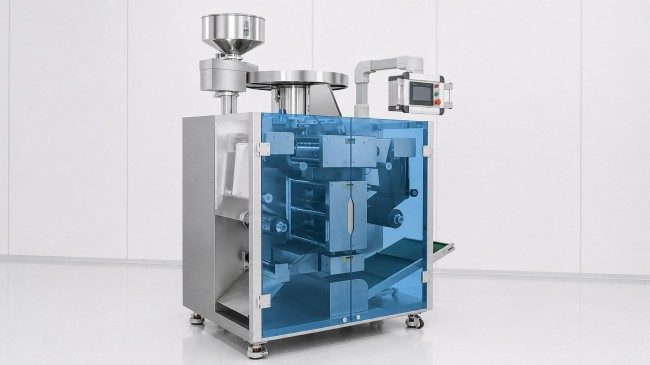
A strip packaging machine, also referred to in some markets as a double soft aluminium packing machine, coordinates the mechanical and thermal operations needed to turn loose tablets or capsules and two continuous packaging webs into finished strip packs.
Four areas have a particularly strong influence on production.
Feeding and Product Positioning
The feeding section controls how products enter the web path.
Poor feeding can lead to off-center products, missed positions, or product damage before sealing. Product flow, feeder adjustment, kích thước sản phẩm, fragments or dust, and operating speed should therefore be considered together when a feeding problem appears.
Sealing Conditions
The sealing section applies the heat and pressure required for the selected material structure.
The correct operating range depends on the film or laminate, tốc độ máy, thời gian liên lạc, áp lực , and pack layout. The objective is to create a suitable seal without unnecessarily stressing either the packaging material or the enclosed product.
Web Traction and Synchronization
Traction moves the sealed web through the downstream stations.
Consistent web movement supports product spacing, printed registration, vết lõm, và cắt. A visible cutting-position problem can therefore originate earlier in the material path rather than at the cutter itself.
Cooling and Cutting
Cooling supports the sealed material before final cutting, while the cutting system separates the continuous web into the specified pack format.
Servo-controlled cutting provides precise control over the cutting action, but accurate positioning still depends on stable traction and registration upstream.
Common symptoms can often be traced back to several related process areas rather than a single machine setting:
| Production symptom | Areas to check first |
| Product is off-center | cho ăn, dòng sản phẩm, thời gian, web position |
| Product is damaged | Feeding path, xử lý, sealing-zone setup |
| Seal is weak or uneven | Vật liệu, nhiệt độ, áp lực , thời gian liên lạc, web condition |
| Print or cut position drifts | Sự đăng ký, lực kéo, độ căng của mạng, đồng bộ hóa |
| Sealing changes during a long run | Heating balance, làm mát, hành vi vật chất, tốc độ máy |
Ruida Packing’s RD-SAP-300L automatic strip packing machine combines feeding, film traction, niêm phong, sự đăng ký, cắt, and waste recovery in one continuous process. Its design also addresses practical issues such as product misalignment, con dấu yếu, product damage, and cutting inconsistency during strip packaging production.
Strip Packaging Materials and Product Applications
Strip packaging is commonly used for tablets and capsules, but product type alone does not determine whether the format is suitable.
Product dimensions, fragility, sensitivity to moisture or light, required shelf life, opening method, điều kiện bảo quản, vật liệu đóng gói, and production environment all influence the final specification.
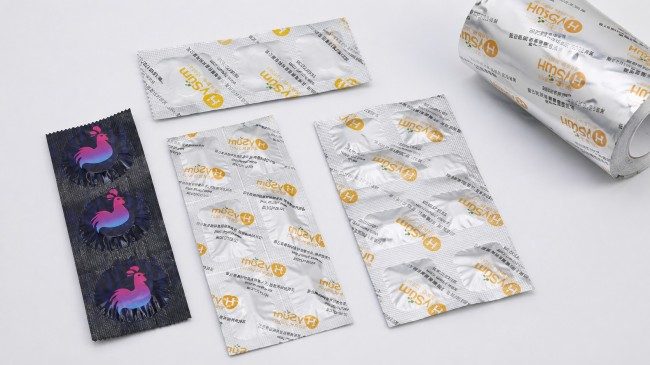
Flexible strip packs can use heat-sealable polymer films, laminated structures, or aluminum-based laminates. The sealable layers need to work with the intended sealing process, while the complete structure needs to provide the barrier performance established for the packaged product.
Độ ẩm, ôxy, and light barrier performance depends on the complete material structure, độ dày, seal design, manufacturing quality, và điều kiện bảo quản.
Cho bao bì dược phẩm, the complete packaging system also needs to be compatible with the product. FDA guidance on container-closure systems addresses characteristics such as protection, khả năng tương thích, sự an toàn, and performance, while USP General Chapter <659> covers packaging and storage requirements.
Strip Packaging vs Blister Packaging: sự khác biệt là gì?
Strip packaging and blister packaging can both provide individually enclosed tablets or capsules, but their package structures and production sequences are different.
| Nhân tố | Strip Packaging | Bao bì vỉ |
| Basic structure | Product enclosed between two flexible webs | Product placed inside a formed cavity |
| Cavity forming | No separate cavity-forming stage | Cavities are formed before filling |
| Typical profile | Relatively flat | Raised cavities |
| Product visibility | Often limited with opaque laminates | Transparent forming webs can show the product |
| Material options | Flexible films and laminates, including aluminum-based structures | Thermoformed plastic structures or cold-form aluminum systems |
| Core process | Feed → seal → advance → cut | Form → feed → seal → advance → cut |
| Product accommodation | Flexible webs surround the product | Cavity geometry is designed around the product |
Neither format is automatically better.
Strip packaging is a practical option when the required product protection can be achieved with a suitable flexible material structure and the pack format fits the production and downstream packaging plan.
Blister packaging is useful when a defined cavity is preferred, when product visibility is valuable, or when a thermoformed or cold-form blister structure better matches the required barrier and presentation needs.
For products sensitive to moisture or light, the decision should be based on the complete packaging system rather than the words dải, mụn rộp, nhựa, hoặc nhôm. Material structure, con dấu toàn vẹn, product compatibility, điều kiện bảo quản, kiểm soát sản xuất, and downstream handling all contribute to package performance.
The production equipment also differs. A strip packing machine focuses on feeding products between two webs, niêm phong, lực kéo, và cắt. MỘT máy đóng gói vỉ adds a forming stage before product feeding, which changes both the machine layout and the packaging sequence.
Strip packaging is therefore understood as both a package structure and a manufacturing process. A finished strip pack is created through material selection, cho ăn sản phẩm, niêm phong, controlled web movement, làm mát, and cutting working together.
Những câu hỏi thường gặp
-
What is strip packaging?
Strip packaging encloses a tablet, viên nang, or similar solid product between two flexible packaging webs. The webs are sealed around each product to create individually enclosed units along a strip.
-
How are strip packs made?
Two packaging webs are unwound and guided through a strip packing machine while tablets or capsules are fed between them. The webs are sealed around the products, advanced through the line, and cut into the required strip format.
-
What is the difference between strip packaging and blister packaging?
Strip packaging encloses the product directly between flexible webs. Blister packaging first forms a cavity, places the product inside it, and then seals the cavity with a lidding material.
-
Can both tablets and capsules be packed in strip packs?
Đúng. Tablets and capsules can both use strip packaging when the feeder, product spacing, vật liệu đóng gói, sealing arrangement, and pack format are suitable for the product.
-
What does a strip packing machine do?
A strip packing machine coordinates product feeding, chuyển động mạng, niêm phong, làm mát, registration or indentation where required, cắt, and trim handling to produce finished strip packs.
-
Is strip packaging suitable for moisture-sensitive tablets?
It can be when the selected material structure and seal provide the required moisture barrier for the product and its intended storage conditions. Suitability should be evaluated using the complete packaging system rather than the strip format alone.
Tham khảo
- CHÚNG TA. Cục Quản lý Thực phẩm và Dược phẩm. Hệ thống đóng thùng chứa để đóng gói thuốc và sinh phẩm dành cho người: Hướng dẫn cho ngành.
- Dược điển Hoa Kỳ. USP General Chapter <659>, Packaging and Storage Requirements.
- Tổ chức Y tế Thế giới. Hướng dẫn về bao bì cho sản phẩm dược phẩm, WHO Technical Report Series No. 902, Phụ lục 9.
- Quốc tế ASTM. ASTM F88/F88M, Phương pháp thử nghiệm tiêu chuẩn về độ bền bịt kín của vật liệu rào chắn linh hoạt.