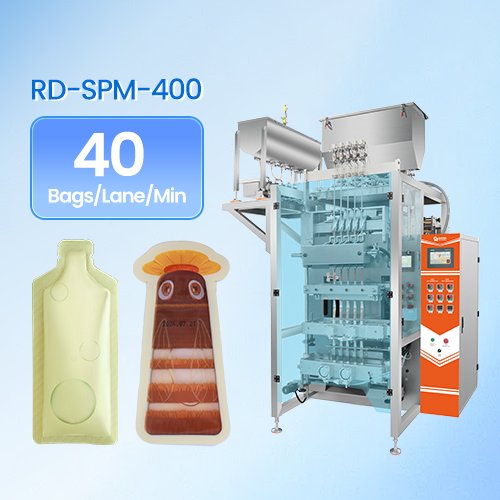
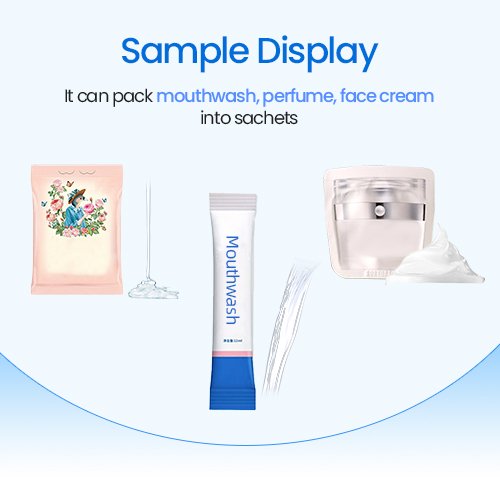
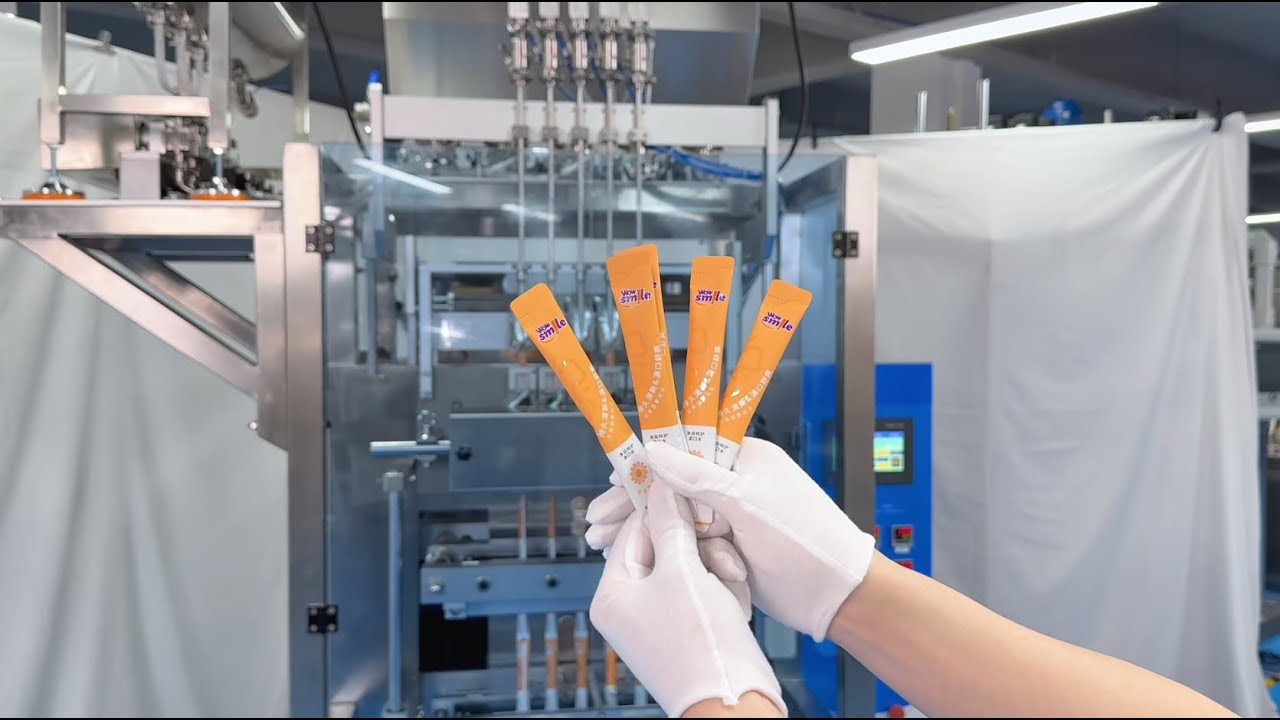
A liquid stick pack machine is a fully automatic packaging system specifically designed to fill liquid products into individual sachets (stick packs). Its core functionality lies in the integration of forming, filling, and sealing (FFS) into a continuous, synchronized process. Below is a structured overview covering working principles, application scenarios, filling accuracy, and customized pump selection.
1. Working Principle
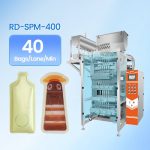
Liquid stick pack machines typically adopt a vertical form-fill-seal (VFFS) configuration. The complete workflow is as follows:
1.1. Film Unwinding and Forming
Packaging film (usually laminated film) is unwound from a roll mounted on an air shaft. A web alignment system ensures precise tracking. The film is then shaped into a cylindrical tube by a forming collar.
1.2. Longitudinal Sealing
A vertical sealing unit (back seal or three-side seal) heat-seals the overlapping edges of the film, forming a continuous tubular structure.
1.3. Bottom Sealing and Filling
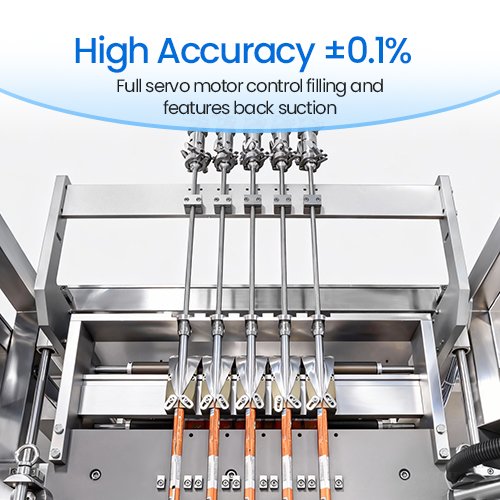
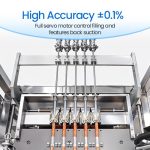
The horizontal sealing unit first seals the bottom of the tube, creating an open-top pouch. At this stage, the metering pump is activated, delivering a precise volume of liquid through a filling nozzle into the pouch. To prevent dripping, the nozzle is typically equipped with a suck-back or anti-drip valve.
1.4. Top Sealing and Cutting
After filling, the horizontal sealing unit performs a second sealing action to close the top of the sachet. Simultaneously, the finished stick pack is cut from the continuous film. Tear notches can be added if required.
1.5. Product Discharge
Finished sachets are discharged via a conveyor or collected using a counting system.
The entire process is controlled by a PLC (Programmable Logic Controller), with servo-driven systems ensuring precise synchronization between film feeding and filling operations, resulting in stable speed and consistent output.
2. Application Scenarios
Due to their portability, hygiene, and cost efficiency, liquid stick pack machines are widely used across multiple industries:
| Industry | Typical Products | Packaging Advantages |
| Food & Beverage | Ketchup, honey, juice, salad dressing, liquid coffee, milk | Single-use portions, convenient, extended shelf life |
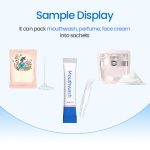
| Personal Care | Shampoo, shower gel, conditioner, wet wipes solution | Ideal for hotel amenities, travel kits, sample packs |
| Pharmaceutical & Healthcare | Oral liquids, syrups, eye drops, mouthwash | Sterile packaging, precise dosing, GMP compliance |
| Industrial & Chemical | Lubricants, adhesives, cleaning agents, agrochemicals | Small-dose packaging, reduced waste, ease of use |
3. Filling Accuracy
Filling accuracy is a critical performance indicator for liquid stick pack machines and is influenced by material properties, pump type, and environmental conditions.
Accuracy Range
Standard machines: ±0.5% to ±1%
High-precision applications (pharmaceuticals): up to ±0.1% with ceramic piston pumps
Key Influencing Factors
Viscosity: High-viscosity liquids may adhere to surfaces, requiring suck-back mechanisms for accuracy. Low-viscosity liquids are prone to dripping and require anti-drip valves.
Temperature Stability: Temperature-sensitive materials (chocolate, hot-filled juices) require controlled conditions, as fluctuations affect volumetric accuracy.
Pump Consistency: Wear of seals and the stability of check valves directly impact repeatability and dosing consistency.
4. Customized Pump Selection
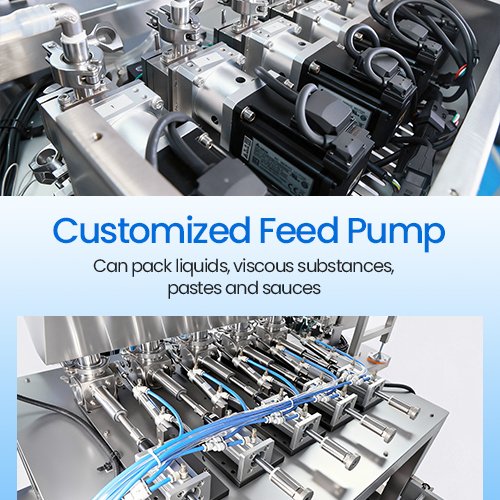
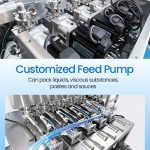
The feeding pump is the core execution component of the machine. Its selection determines compatibility with different liquid characteristics such as viscosity, corrosiveness, particle content, and hygiene requirements.
4.1 Peristaltic Pump
Suitable for: Low to medium viscosity liquids, including those with fine particles (fruit jam, ketchup, pulp beverages)
Working Principle: Fluid is transported by compressing and releasing a flexible tube via rotating rollers.
Customization Options: Tube diameter and pump head selected based on flow rate
Tube materials: Silicone (food-grade), Fluoroelastomer (corrosion-resistant), Tygon (oil-resistant)
Advantages: Fluid only contacts the tube, eliminating cross-contamination; Easy cleaning—simply replace the tube
Low cleaning and changeover cost
Limitations: Tubing is a consumable with higher long-term cost; Limited pressure, not suitable for high-viscosity materials
4.2 Piston Pump (Plunger Pump)
Suitable for: Medium to high viscosity liquids without large particles (shampoo, syrups, thick sauces)
Working Principle: A reciprocating piston draws in and discharges liquid through check valves.
Customization Options
Material selection: SUS316L stainless steel for standard applications; Ceramic pistons or PTFE seals for corrosive liquids
Seal design: Hard seals for particle-containing materials to reduce wear
Anti-viscosity design: Heating devices can be added to nozzles for highly viscous fluids
Advantages: High filling pressure, Good accuracy (±0.5%), Suitable for high-speed production
Limitations: More complex structure, Cleaning and maintenance require more effort, Seals need periodic replacement
4.3 Ceramic Pump
Suitable for: High-value, highly corrosive, abrasive, or sterile materials (pharmaceutical oral liquids, enzymes, high-acidity juices)
Working Principle: Similar to piston pumps, but both piston and cylinder are made from zirconia ceramic.
Customization Options: Filling range (1 ml to 50 ml); Compatibility with SIP (Steam-In-Place) sterilization; Temperature-controlled jackets for anti-crystallization (salt solutions)
Advantages: Exceptional wear resistance (5–10× longer lifespan than metal pumps); No metal ion contamination; Meets stringent food and pharmaceutical safety standards
Limitations: Higher initial investment; Fragility requires careful handling and maintenance
5. Customization Process
Typically, the machine manufacturer will conduct laboratory testing based on samples provided by the customer. These tests evaluate viscosity, solid content, corrosiveness, and temperature sensitivity. Based on the results, the optimal pump type, material configuration, and filling parameters are determined, resulting in a fully customized filling system solution.