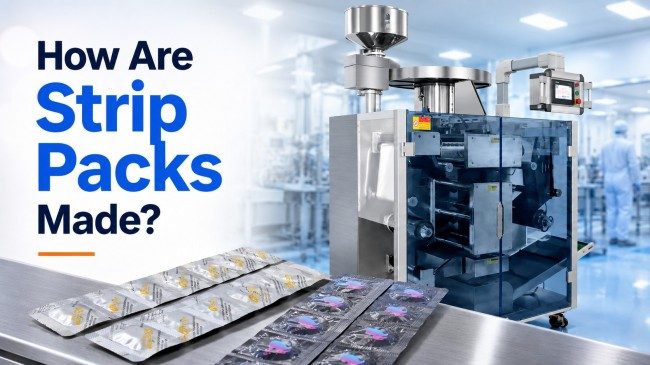
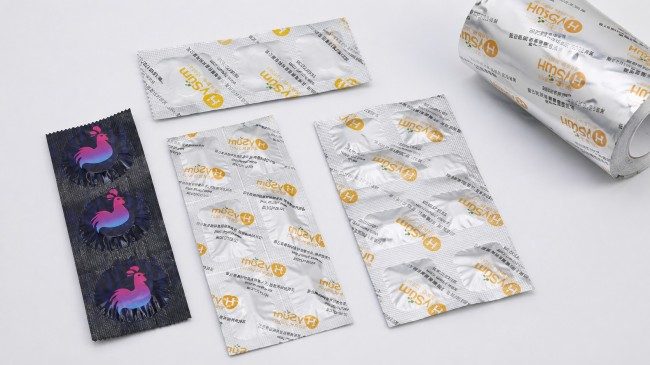
แถบบรรจุภัณฑ์ เป็นวิธีการบรรจุแบบเม็ด, แคปซูล, หรือผลิตภัณฑ์ที่เป็นของแข็งที่คล้ายกันถูกปิดอยู่ระหว่างแผ่นบรรจุภัณฑ์แบบยืดหยุ่นสองแผ่น. ในการใช้งานด้านเภสัชกรรม, ใยเหล่านี้มักเป็นฟอยล์หรือลามิเนตที่ทำจากอลูมิเนียม สองชั้นมารวมกันรอบผลิตภัณฑ์แต่ละชิ้นและปิดผนึกไว้ในพื้นที่โดยรอบ, สร้างหน่วยปิดผนึกแยกกันตามแถบต่อเนื่อง.
รูปแบบนี้ใช้เมื่อผู้ผลิตต้องการผลิตภัณฑ์แบบแยกส่วนในบรรจุภัณฑ์ขนาดกะทัดรัด. ระดับการป้องกันขั้นสุดท้ายขึ้นอยู่กับโครงสร้างบรรจุภัณฑ์ที่สมบูรณ์, คุณภาพการปิดผนึก, ลักษณะผลิตภัณฑ์, และสภาพการเก็บรักษา. คำว่า "strip pack" เพียงอย่างเดียวไม่ได้กำหนดความชุ่มชื้น, ออกซิเจน, หรือประสิทธิภาพของกำแพงกั้นแสง.
เพื่อทำเป็นแพ็คแถบ, ใยบรรจุภัณฑ์สองอันจะถูกคลายออกและนำทางผ่านเครื่อง ขณะที่ป้อนแท็บเล็ตหรือแคปซูลระหว่างกัน. ใยถูกนำมารวมกัน, ปิดผนึกรอบผลิตภัณฑ์แต่ละชิ้น, ขั้นสูงในลำดับการควบคุม, และตัดให้ได้ขนาดแถบที่ต้องการ. การทำความเข้าใจลำดับนี้ยังช่วยให้มองเห็นได้ง่ายขึ้นอีกด้วย เครื่องบรรจุแถบ ควบคุมได้จริงและแตกต่างจากบรรจุภัณฑ์แบบแถบอย่างไร บรรจุภัณฑ์แบบพุพอง.
Strip Packaging คืออะไร และ Strip Pack มีลักษณะอย่างไร?
เอ แพ็คแถบ ประกอบด้วยแท็บเล็ต, แคปซูล, หรือผลิตภัณฑ์ที่เป็นของแข็งที่คล้ายกันซึ่งวางอยู่ระหว่างชั้นบรรจุภัณฑ์ที่ยืดหยุ่นสองชั้น. ชั้นต่างๆ ถูกผนึกไว้รอบๆ ผลิตภัณฑ์ เพื่อให้แต่ละยูนิตปิดล้อมแยกกัน.
หลายยูนิตสามารถเชื่อมต่ออยู่ในแถบยาวเส้นเดียวได้, หรือสามารถตัดวัสดุเป็นแถบเล็กๆ ตามการกำหนดค่าแพ็คที่ต้องการ. โดยปกติแล้วบรรจุภัณฑ์จะค่อนข้างแบนเนื่องจากใยที่ยืดหยุ่นจะยึดตามรูปทรงทั่วไปของผลิตภัณฑ์ที่ปิดสนิท.
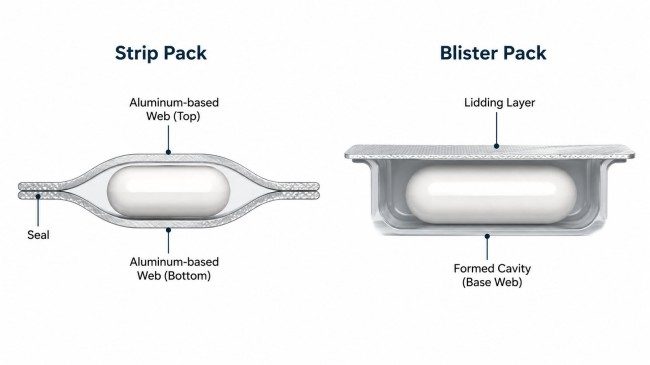
คุณลักษณะทางโครงสร้างที่สำคัญคือผลิตภัณฑ์ถูกปิดไว้ระหว่างใยทั้งสองโดยตรง. บรรจุภัณฑ์แบบแถบไม่ได้เริ่มต้นด้วยการสร้างช่องแยกสำหรับแท็บเล็ตหรือแคปซูลทุกอัน.
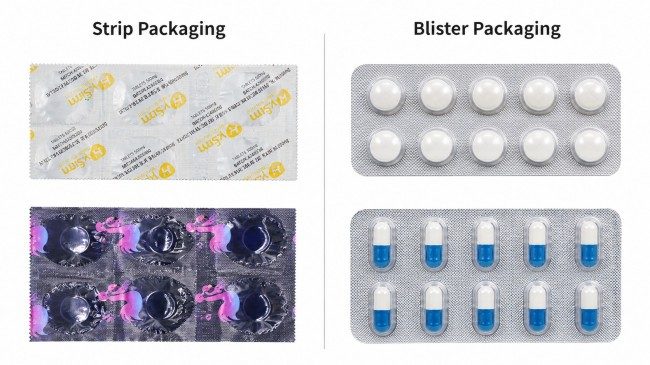
นั่นคือข้อแตกต่างหลักระหว่างสตริปแพ็คและบลิสเตอร์แพ็คทั่วไป. ในบรรจุภัณฑ์พุพอง, ใยที่ขึ้นรูปแล้วจะถูกสร้างเป็นโพรงก่อน. ผลิตภัณฑ์จะถูกวางลงในช่องเหล่านั้น, จากนั้นจึงปิดผนึกวัสดุที่ใช้ปิดทับไว้. ในบรรจุภัณฑ์แบบแถบ, ผลิตภัณฑ์ตั้งอยู่ระหว่างใยสองเส้นในขณะที่วัสดุที่อยู่รอบๆ ถูกผนึกไว้.
แพ็กแถบสำเร็จรูปจึงรวมองค์ประกอบพื้นฐานสามประการเข้าด้วยกัน:
- แท็บเล็ตหรือแคปซูลที่กำลังบรรจุอยู่;
- ใยบรรจุภัณฑ์แบบยืดหยุ่นสองเส้นที่อยู่รอบผลิตภัณฑ์;
- พื้นที่ปิดผนึกที่แยกและล้อมรอบแต่ละยูนิต.
โครงสร้างนี้สามารถปรับให้เข้ากับผลิตภัณฑ์และเค้าโครงบรรจุภัณฑ์ที่แตกต่างกันได้, แต่ขนาดสินค้า, วัสดุบรรจุภัณฑ์, การออกแบบเครื่องป้อน, การจัดเรียงการปิดผนึก, และการตั้งค่าเครื่องยังต้องทำงานร่วมกัน.
Strip Packs ทำขึ้นมาได้อย่างไร? กระบวนการบรรจุภัณฑ์ Strip ทีละขั้นตอน
ทางการค้า แถบบรรจุภัณฑ์ มักเป็นกระบวนการต่อเนื่อง. ใยบรรจุภัณฑ์ทั้งสองผืนจะเคลื่อนผ่านสายการผลิตในขณะที่ป้อนผลิตภัณฑ์, ที่แนบมา, ปิดผนึก, ขั้นสูง, และตัดเป็นลำดับแบบซิงโครไนซ์.
1. ผ่อนคลายและนำทางเว็บบรรจุภัณฑ์
วัสดุบรรจุภัณฑ์สองม้วนถูกติดตั้งอยู่บนเครื่องและนำทางไปยังพื้นที่ปิดผนึก.
ความตึงของรางและการติดตามที่มั่นคงช่วยให้ทั้งสองชั้นอยู่ในแนวเดียวกันก่อนที่จะมาบรรจบกันรอบๆ ผลิตภัณฑ์. เมื่อใช้วัสดุพิมพ์, การควบคุมการลงทะเบียนช่วยให้รูปแบบการพิมพ์สอดคล้องกับตำแหน่งการบรรจุและการตัดที่ต้องการ.
2. ป้อนแท็บเล็ตหรือแคปซูลให้เข้าที่
ระบบป้อนจะแยกผลิตภัณฑ์และนำผลิตภัณฑ์ไปยังตำแหน่งที่ถูกต้องระหว่างรางทั้งสอง.
ขนาดแท็บเล็ต, ขนาดแคปซูล, สภาพพื้นผิว, เศษหรือฝุ่น, ความเร็วในการผลิต, และรูปแบบการบรรจุล้วนส่งผลต่อพฤติกรรมการป้อนอาหาร. จุดมุ่งหมายคือเพื่อให้แต่ละผลิตภัณฑ์เข้าถึงพื้นที่ปิดผนึกในตำแหน่งที่ถูกต้องโดยไม่มีแรงกระแทกหรือแรงอัดที่ไม่จำเป็น.
การออกแบบตัวป้อนจึงต้องสอดคล้องกับผลิตภัณฑ์ แทนที่จะปฏิบัติต่อแท็บเล็ตหรือแคปซูลทุกตัวราวกับว่ามันจะทำงานในลักษณะเดียวกัน.
3. นำใยทั้งสองมาพันรอบผลิตภัณฑ์
หลังจากให้อาหารแล้ว, ใยบรรจุภัณฑ์ทั้งสองมาบรรจบกันรอบแท็บเล็ตหรือแคปซูล.
สินค้าใช้พื้นที่ระหว่างใย, ในขณะที่วัสดุโดยรอบให้พื้นที่ที่จำเป็นสำหรับการปิดผนึก. ระยะห่างของผลิตภัณฑ์และเค้าโครงแพ็คที่ต้องการจะกำหนดจำนวนวัสดุที่เหลืออยู่ระหว่างหน่วยที่อยู่ติดกัน.
ไม่มีสถานีขึ้นรูปแยกต่างหากที่สร้างโพรงพุพองก่อนทำการเติม. นี่คือขั้นตอนที่ทำให้บรรจุภัณฑ์แถบมีลักษณะเฉพาะ.
4. ปิดผนึกใยรอบๆ ผลิตภัณฑ์แต่ละชิ้น
ใยที่จับคู่จะผ่านส่วนการปิดผนึก, โดยที่ความร้อนและความดันจะกระตุ้นชั้นปิดผนึกรอบๆ ผลิตภัณฑ์แต่ละชิ้น.
คุณภาพของซีลขึ้นอยู่กับปัจจัยปฏิสัมพันธ์หลายประการ:
- วัสดุบรรจุภัณฑ์;
- อุณหภูมิการปิดผนึก;
- ความดัน;
- เวลาติดต่อ;
- ความเร็วเครื่อง;
- สภาพเว็บ;
- ตำแหน่งผลิตภัณฑ์.
การเพิ่มอุณหภูมิการซีลเพียงอย่างเดียวไม่ใช่วิธีแก้ปัญหาที่เชื่อถือได้สำหรับการซีลที่อ่อนแอ. ถ้าเป็นการกระจายแรงดัน, ความเข้ากันได้ของวัสดุ, เวลาติดต่อ, หรือการวางตำแหน่งรางไม่เหมาะสม, ปัญหาอาจยังคงอยู่หรือปัญหาอื่นอาจปรากฏขึ้น.
สำหรับวัสดุกั้นที่ยืดหยุ่น, ความแข็งแรงของซีลสามารถประเมินได้ด้วยวิธีการทดสอบที่กำหนดไว้ เช่น ASTM F88/F88M, ซึ่งวัดแรงที่จำเป็นในการแยกส่วนต่อประสานที่ปิดผนึก.
5. ทำให้วัสดุที่ปิดผนึกเย็นลงและทำให้เสถียร
หลังจากปิดผนึกแล้ว, ใยจะต่อเนื่องไปตามเส้นในขณะที่บริเวณที่ปิดสนิทจะเย็นและมั่นคง.
ข้อกำหนดในการทำความเย็นขึ้นอยู่กับวัสดุบรรจุภัณฑ์, เงื่อนไขการปิดผนึก, ความเร็วในการผลิต, และการออกแบบเครื่องจักร. ในการผลิตอย่างต่อเนื่อง, การจัดการความร้อนรอบๆ พื้นที่ซีลยังช่วยรักษาสภาพการทำงานที่มั่นคงตลอดการทำงานที่ยาวนานขึ้น.
6. ก้าวหน้า, ลงทะเบียน, และเตรียมแถบสำหรับการตัด
ใยที่ปิดสนิทจะถูกดึงไปข้างหน้าด้วยการเคลื่อนไหวที่ควบคุมได้.
การยึดเกาะจะต้องยังคงซิงโครไนซ์กับสถานีต้นน้ำและปลายน้ำ. ขึ้นอยู่กับการออกแบบแพ็ค, ขั้นตอนนี้อาจรวมถึงการเข้ารหัสแบบแบตช์ด้วย, การลงทะเบียนเครื่องหมายพิมพ์, การเยื้อง, หรือการเตรียมพื้นที่เปิดน้ำตา.
การเคลื่อนที่ของรางที่แม่นยำมีความสำคัญเนื่องจากสถานีปลายน้ำทำงานจากตำแหน่งของวัสดุที่พวกเขาได้รับ. หากตำแหน่งเว็บลอยไป, ตำแหน่งการพิมพ์หรือการตัดขั้นสุดท้ายสามารถเลื่อนไปได้เช่นกัน.
7. ตัดแถบและรวบรวม Trim
วัสดุปิดผนึกอย่างต่อเนื่องถูกตัดเป็นความยาวแถบหรือรูปแบบแพ็คที่ต้องการ.
การตัดเล็มที่สร้างโดยเค้าโครงที่เลือกสามารถรวบรวมแยกกันได้ จึงไม่รบกวนแพ็คที่เสร็จแล้ว. แถบที่เสร็จสมบูรณ์จะพร้อมสำหรับการตรวจสอบและการดำเนินงานขั้นปลาย เช่น การบรรจุกล่อง.
กระบวนการที่สมบูรณ์สามารถสรุปได้ดังนี้:
คลี่คลาย → การให้อาหาร → การวางตำแหน่ง → การปิดผนึก → การระบายความร้อน → การฉุดลากและการลงทะเบียน → การตัด
แต่ละขั้นตอนจะทำหน้าที่ที่แตกต่างกัน, แต่ชุดแถบสำเร็จรูปนั้นขึ้นอยู่กับขั้นตอนการทำงานร่วมกันเหล่านี้.
เครื่องบรรจุแถบควบคุมกระบวนการอย่างไร?
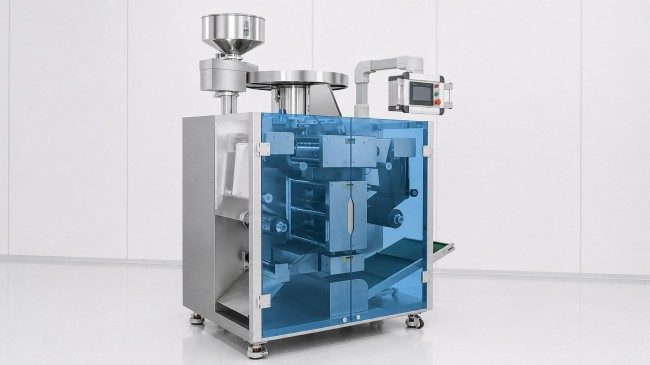
เครื่องบรรจุแถบ, ในบางตลาดยังเรียกอีกอย่างว่าเครื่องบรรจุอลูมิเนียมอ่อนสองชั้น, ประสานงานการดำเนินงานทางกลและความร้อนที่จำเป็นในการเปลี่ยนเม็ดยาหรือแคปซูลที่หลวมและแผ่นบรรจุภัณฑ์ต่อเนื่องสองแผ่นให้เป็นชุดแถบสำเร็จรูป.
สี่ด้านมีอิทธิพลอย่างมากต่อการผลิต.
การให้อาหารและการวางตำแหน่งผลิตภัณฑ์
ส่วนการป้อนจะควบคุมวิธีที่ผลิตภัณฑ์เข้าสู่เส้นทางเว็บ.
การให้อาหารที่ไม่ดีอาจทำให้ผลิตภัณฑ์อยู่นอกศูนย์กลางได้, พลาดตำแหน่ง, หรือสินค้าเสียหายก่อนปิดผนึก. การไหลของผลิตภัณฑ์, การปรับตัวป้อน, ขนาดผลิตภัณฑ์, เศษหรือฝุ่น, และความเร็วในการทำงานจึงควรพิจารณาร่วมกันเมื่อเกิดปัญหาการป้อน.
เงื่อนไขการปิดผนึก
ส่วนการปิดผนึกจะใช้ความร้อนและความดันที่จำเป็นสำหรับโครงสร้างวัสดุที่เลือก.
ช่วงการทำงานที่ถูกต้องขึ้นอยู่กับฟิล์มหรือลามิเนต, ความเร็วเครื่อง, เวลาติดต่อ, ความดัน, และการจัดวางแพ็คของ. วัตถุประสงค์คือเพื่อสร้างการปิดผนึกที่เหมาะสมโดยไม่ต้องเน้นวัสดุบรรจุภัณฑ์หรือผลิตภัณฑ์ที่แนบมาโดยไม่จำเป็น.
การลากเว็บและการซิงโครไนซ์
แรงฉุดจะเคลื่อนแผ่นใยที่ปิดสนิทผ่านสถานีปลายน้ำ.
การเคลื่อนไหวของเว็บที่สม่ำเสมอรองรับการเว้นระยะห่างของผลิตภัณฑ์, การลงทะเบียนพิมพ์, การเยื้อง, และการตัด. ปัญหาตำแหน่งการตัดที่มองเห็นได้อาจเกิดขึ้นตั้งแต่ต้นในเส้นทางวัสดุ แทนที่จะเกิดที่ตัวเครื่องตัดเอง.
การระบายความร้อนและการตัด
การระบายความร้อนรองรับวัสดุที่ปิดผนึกก่อนการตัดขั้นสุดท้าย, ในขณะที่ระบบตัดแยกรางต่อเนื่องเป็นรูปแบบแพ็คที่กำหนด.
การตัดที่ควบคุมด้วยเซอร์โวให้การควบคุมการตัดที่แม่นยำ, แต่การวางตำแหน่งที่แม่นยำยังคงขึ้นอยู่กับการยึดเกาะที่มั่นคงและการลงทะเบียนต้นทาง.
อาการทั่วไปมักจะสืบย้อนกลับไปถึงกระบวนการที่เกี่ยวข้องหลายส่วน แทนที่จะเกิดจากการตั้งค่าเครื่องเพียงเครื่องเดียว:
| อาการการผลิต | พื้นที่ที่ต้องตรวจสอบก่อน |
| สินค้าอยู่นอกศูนย์ | การให้อาหาร, การไหลของผลิตภัณฑ์, เวลา, ตำแหน่งเว็บ |
| สินค้าเสียหาย | เส้นทางการให้อาหาร, การจัดการ, การตั้งค่าโซนการปิดผนึก |
| ซีลอ่อนหรือไม่สม่ำเสมอ | วัสดุ, อุณหภูมิ, ความดัน, เวลาติดต่อ, สภาพเว็บ |
| พิมพ์หรือตัดตำแหน่งดริฟท์ | การลงทะเบียน, แรงฉุด, ความตึงเครียดของเว็บ, การซิงโครไนซ์ |
| การซีลเปลี่ยนแปลงในระยะยาว | สมดุลความร้อน, ระบายความร้อน, พฤติกรรมทางวัตถุ, ความเร็วเครื่อง |
เครื่องบรรจุแถบอัตโนมัติ RD-SAP-300L ของ Ruida Packing ผสมผสานการป้อนเข้าด้วยกัน, การยึดเกาะของฟิล์ม, การปิดผนึก, การลงทะเบียน, การตัด, และการนำของเสียกลับมาใช้ใหม่ในกระบวนการเดียวต่อเนื่องกัน. การออกแบบยังกล่าวถึงปัญหาในทางปฏิบัติ เช่น การวางแนวผลิตภัณฑ์ที่ไม่ตรง, แมวน้ำที่อ่อนแอ, ความเสียหายของผลิตภัณฑ์, และตัดความไม่สอดคล้องกันระหว่างการผลิตบรรจุภัณฑ์แบบแถบ.
ลอกวัสดุบรรจุภัณฑ์และการใช้งานผลิตภัณฑ์
บรรจุภัณฑ์แบบแถบมักใช้กับยาเม็ดและแคปซูล, แต่ประเภทผลิตภัณฑ์เพียงอย่างเดียวไม่ได้กำหนดว่ารูปแบบจะเหมาะสมหรือไม่.
ขนาดสินค้า, ความเปราะบาง, ความไวต่อความชื้นหรือแสง, อายุการเก็บรักษาที่ต้องการ, วิธีการเปิด, สภาพการเก็บรักษา, วัสดุบรรจุภัณฑ์, และสภาพแวดล้อมการผลิตล้วนมีอิทธิพลต่อข้อกำหนดขั้นสุดท้าย.
แพ็คแถบยืดหยุ่นสามารถใช้ฟิล์มโพลีเมอร์ปิดผนึกด้วยความร้อนได้, โครงสร้างลามิเนต, หรือลามิเนตที่ทำจากอลูมิเนียม. ชั้นที่ปิดผนึกได้จะต้องทำงานร่วมกับกระบวนการปิดผนึกที่ต้องการ, ในขณะที่โครงสร้างที่สมบูรณ์จำเป็นต้องให้ประสิทธิภาพของสิ่งกีดขวางที่กำหนดไว้สำหรับผลิตภัณฑ์บรรจุภัณฑ์.
ความชื้น, ออกซิเจน, และประสิทธิภาพของกั้นแสงขึ้นอยู่กับโครงสร้างของวัสดุที่สมบูรณ์, ความหนา, การออกแบบซีล, คุณภาพการผลิต, และสภาพการเก็บรักษา.
สำหรับ บรรจุภัณฑ์ยา, ระบบบรรจุภัณฑ์ที่สมบูรณ์จะต้องเข้ากันได้กับผลิตภัณฑ์ด้วย. คำแนะนำของ FDA เกี่ยวกับระบบการปิดภาชนะบรรจุกล่าวถึงคุณลักษณะต่างๆ เช่น การป้องกัน, ความเข้ากันได้, ความปลอดภัย, และประสิทธิภาพ, ในขณะที่บททั่วไปของ USP <659> ครอบคลุมข้อกำหนดด้านบรรจุภัณฑ์และการเก็บรักษา.
บรรจุภัณฑ์แบบแถบเทียบกับบรรจุภัณฑ์แบบพุพอง: ความแตกต่างคืออะไร?
ลอกบรรจุภัณฑ์และบรรจุภัณฑ์พุพอง ทั้งสองสามารถให้ยาเม็ดหรือแคปซูลแบบปิดแยกกันได้, แต่โครงสร้างบรรจุภัณฑ์และลำดับการผลิตแตกต่างกัน.
| ปัจจัย | แถบบรรจุภัณฑ์ | บรรจุภัณฑ์แบบพุพอง |
| โครงสร้างพื้นฐาน | ผลิตภัณฑ์ล้อมรอบด้วยใยที่ยืดหยุ่นสองอัน | สินค้าวางอยู่ในช่องที่ขึ้นรูปแล้ว |
| การขึ้นรูปโพรง | ไม่มีขั้นตอนการเกิดโพรงแยกจากกัน | ฟันผุจะเกิดขึ้นก่อนการเติม |
| โปรไฟล์ทั่วไป | ค่อนข้างแบน | ฟันผุยกขึ้น |
| การมองเห็นผลิตภัณฑ์ | มักจำกัดด้วยลามิเนตทึบแสง | ใยขึ้นรูปโปร่งใสสามารถแสดงผลิตภัณฑ์ได้ |
| ตัวเลือกวัสดุ | ฟิล์มยืดหยุ่นและลามิเนต, รวมถึงโครงสร้างที่ทำจากอลูมิเนียม | โครงสร้างพลาสติกขึ้นรูปด้วยความร้อนหรือระบบอลูมิเนียมขึ้นรูปเย็น |
| กระบวนการหลัก | ฟีด → ซีล → ล่วงหน้า → ตัด | แบบฟอร์ม → ฟีด → ซีล → ล่วงหน้า → ตัด |
| ที่พักสินค้า | ใยยืดหยุ่นล้อมรอบผลิตภัณฑ์ | รูปทรงของโพรงได้รับการออกแบบมารอบๆ ผลิตภัณฑ์ |
ไม่มีรูปแบบใดที่ดีกว่าโดยอัตโนมัติ.
บรรจุภัณฑ์แบบแถบเป็นทางเลือกที่ใช้งานได้จริงเมื่อสามารถบรรลุการปกป้องผลิตภัณฑ์ตามที่ต้องการด้วยโครงสร้างวัสดุที่ยืดหยุ่นที่เหมาะสม และรูปแบบบรรจุภัณฑ์ที่เหมาะกับการผลิตและแผนการบรรจุภัณฑ์ขั้นปลายน้ำ.
บรรจุภัณฑ์พุพองมีประโยชน์เมื่อต้องการช่องที่กำหนดไว้, เมื่อการมองเห็นผลิตภัณฑ์มีคุณค่า, หรือเมื่อโครงสร้างพุพองแบบเทอร์โมฟอร์มหรือแบบเย็นตรงกับความต้องการด้านสิ่งกีดขวางและการนำเสนอที่ดีกว่า.
สำหรับผลิตภัณฑ์ที่ไวต่อความชื้นหรือแสง, การตัดสินใจควรขึ้นอยู่กับระบบบรรจุภัณฑ์ที่สมบูรณ์มากกว่าคำพูด เปลื้องผ้า, ฟองน้ำ, พลาสติก, หรือ อลูมิเนียม. โครงสร้างวัสดุ, ความสมบูรณ์ของซีล, ความเข้ากันได้ของผลิตภัณฑ์, สภาพการเก็บรักษา, การควบคุมการผลิต, และการจัดการดาวน์สตรีมล้วนส่งผลต่อประสิทธิภาพของแพ็คเกจ.
อุปกรณ์การผลิตก็แตกต่างกัน. เครื่องบรรจุแถบมุ่งเน้นไปที่การป้อนผลิตภัณฑ์ระหว่างสองผืน, การปิดผนึก, แรงฉุด, และการตัด. ก เครื่องบรรจุภัณฑ์แบบฟอยล์กันชื้น เพิ่มขั้นตอนการขึ้นรูปก่อนป้อนผลิตภัณฑ์, ซึ่งเปลี่ยนทั้งเค้าโครงเครื่องและลำดับการบรรจุ.
บรรจุภัณฑ์แบบแถบจึงเป็นที่เข้าใจกันว่าเป็นทั้งโครงสร้างบรรจุภัณฑ์และกระบวนการผลิต. แพ็คแถบสำเร็จรูปถูกสร้างขึ้นโดยการเลือกใช้วัสดุ, การให้อาหารผลิตภัณฑ์, การปิดผนึก, ควบคุมการเคลื่อนไหวของเว็บ, ระบายความร้อน, และการทำงานร่วมกันในการตัด.
คำถามที่พบบ่อย
-
บรรจุภัณฑ์แบบแถบคืออะไร?
แถบบรรจุภัณฑ์ล้อมรอบแท็บเล็ต, แคปซูล, หรือผลิตภัณฑ์ที่เป็นของแข็งที่คล้ายกันระหว่างแผ่นบรรจุภัณฑ์แบบยืดหยุ่นสองแผ่น. ใยถูกผนึกรอบๆ ผลิตภัณฑ์แต่ละชิ้นเพื่อสร้างหน่วยปิดแยกกันตามแถบ.
-
แถบแพ็คทำอย่างไร?
ใยบรรจุภัณฑ์สองเส้นจะถูกคลายออกและนำทางผ่านเครื่องบรรจุแบบแถบ ในขณะที่มีการป้อนเม็ดยาหรือแคปซูลระหว่างกัน. ใยถูกผนึกไว้รอบผลิตภัณฑ์, ก้าวหน้าผ่านสาย, และตัดเป็นรูปแบบแถบที่ต้องการ.
-
อะไรคือความแตกต่างระหว่างบรรจุภัณฑ์แบบแถบและบรรจุภัณฑ์แบบพุพอง?
แถบบรรจุภัณฑ์ปิดล้อมผลิตภัณฑ์โดยตรงระหว่างแผ่นใยที่มีความยืดหยุ่น. บรรจุภัณฑ์พุพองจะก่อตัวเป็นโพรงก่อน, วางผลิตภัณฑ์ไว้ข้างใน, จากนั้นปิดช่องด้วยวัสดุปิดฝา.
-
สามารถบรรจุทั้งเม็ดและแคปซูลเป็นแพ็คแถบได้?
ใช่. แท็บเล็ตและแคปซูลสามารถใช้บรรจุภัณฑ์แบบแถบเมื่อป้อน, ระยะห่างของผลิตภัณฑ์, วัสดุบรรจุภัณฑ์, การจัดเรียงการปิดผนึก, และรูปแบบแพ็คเหมาะสมกับสินค้า.
-
เครื่องบรรจุแถบทำหน้าที่อะไร?
เครื่องบรรจุแถบจะประสานงานการป้อนผลิตภัณฑ์, การเคลื่อนไหวของเว็บ, การปิดผนึก, ระบายความร้อน, การลงทะเบียนหรือการเยื้องตามที่จำเป็น, การตัด, และการจัดการตัดแต่งเพื่อผลิตแพ็คแถบสำเร็จรูป.
-
เป็นบรรจุภัณฑ์แบบแถบเหมาะสำหรับยาเม็ดที่ไวต่อความชื้น?
อาจเป็นได้เมื่อโครงสร้างวัสดุและซีลที่เลือกไว้มีคุณสมบัติกั้นความชื้นที่จำเป็นสำหรับผลิตภัณฑ์และสภาวะการเก็บรักษาที่ต้องการ. ความเหมาะสมควรได้รับการประเมินโดยใช้ระบบบรรจุภัณฑ์ที่สมบูรณ์ แทนที่จะใช้รูปแบบแถบเพียงอย่างเดียว.
เอกสารอ้างอิง
- เรา. สำนักงานคณะกรรมการอาหารและยา. ระบบปิดภาชนะสำหรับบรรจุภัณฑ์ยาและชีววิทยาของมนุษย์: คำแนะนำสำหรับอุตสาหกรรม.
- เภสัชตำรับของสหรัฐอเมริกา. บททั่วไปของ USP <659>, ข้อกำหนดด้านบรรจุภัณฑ์และการจัดเก็บ.
- องค์การอนามัยโลก. แนวปฏิบัติเกี่ยวกับบรรจุภัณฑ์สำหรับผลิตภัณฑ์ยา, ชุดรายงานทางเทคนิคของ WHO หมายเลข. 902, ภาคผนวก 9.
- ASTM อินเตอร์เนชั่นแนล. ASTM F88/F88M, วิธีทดสอบมาตรฐานสำหรับความแข็งแรงของซีลของวัสดุกั้นที่ยืดหยุ่น.