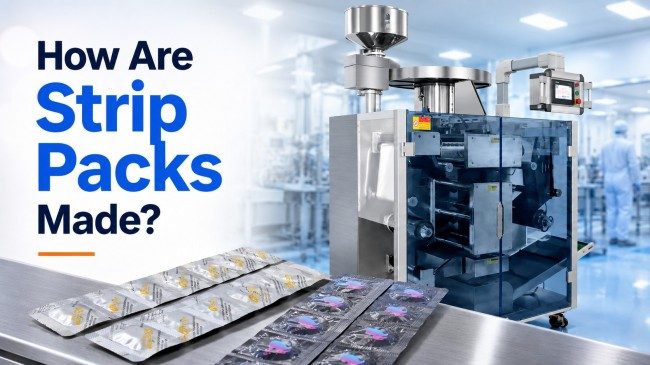
Embalagem em tira é um método de embalagem no qual os comprimidos, cápsulas, ou produtos sólidos semelhantes são encerrados entre duas redes de embalagens flexíveis. Em aplicações farmacêuticas, essas teias geralmente são folhas ou laminados à base de alumínio. As duas camadas se unem em torno de cada produto e são seladas na área circundante, criando unidades seladas separadas ao longo de uma faixa contínua.
Este formato é usado quando os fabricantes precisam de produtos embalados individualmente em um pacote compacto. O nível final de proteção depende da estrutura completa da embalagem, qualidade de vedação, características do produto, e condições de armazenamento. As palavras “strip pack” por si só não definem a umidade, oxigênio, ou desempenho de barreira luminosa.
Para fazer um pacote de tiras, duas teias de embalagem são desenroladas e guiadas através da máquina enquanto comprimidos ou cápsulas são alimentados entre elas. As teias são reunidas, selado em torno de cada produto, avançou em uma sequência controlada, e corte no tamanho de tira necessário. Compreender esta sequência também torna mais fácil ver o que é um máquina de embalagem de tiras realmente controla e como a embalagem em tiras difere embalagem blister.
O que é uma embalagem em tiras e como é uma embalagem em tiras?
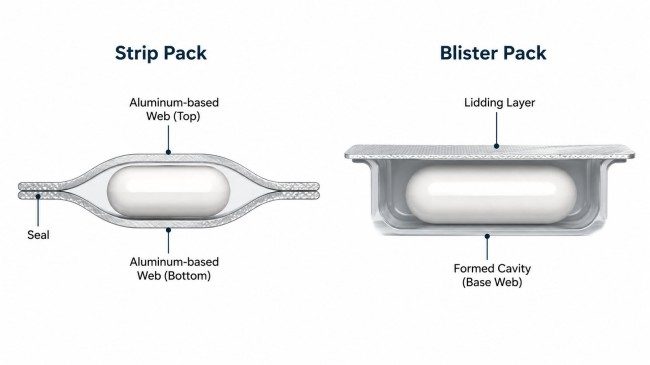
UM pacote de tiras consiste em um tablet, cápsula, ou produto sólido semelhante posicionado entre duas camadas de embalagem flexível. As camadas são seladas em torno do produto para que cada unidade permaneça individualmente fechada.
Várias unidades podem permanecer conectadas em uma faixa mais longa, ou o material pode ser cortado em tiras menores de acordo com a configuração necessária da embalagem. A embalagem é normalmente relativamente plana porque as teias flexíveis seguem o formato geral do produto fechado.
A principal característica estrutural é que o produto é colocado diretamente entre as duas teias. A embalagem em tira não começa formando um bolso separado para cada comprimido ou cápsula.
Essa é a principal diferença entre uma embalagem em tiras e uma embalagem blister convencional. Em embalagem blister, uma teia de formação é moldada primeiro em cavidades. Os produtos são colocados nessas cavidades, e um material de cobertura é então selado sobre eles. Em embalagem de tira, o produto fica entre duas teias enquanto o material ao seu redor é selado.
Um pacote de tiras acabado combina, portanto, três elementos básicos:
- o comprimido ou cápsula sendo embalado;
- duas redes de embalagens flexíveis que envolvem o produto;
- a área selada que separa e envolve cada unidade.
Esta estrutura pode ser adaptada a diferentes produtos e layouts de embalagens, mas dimensões do produto, material de embalagem, projeto do alimentador, arranjo de vedação, e as configurações da máquina ainda precisam funcionar juntas.
Como são feitas as embalagens de tiras? O processo de embalagem em tiras passo a passo
Comercial embalagem em tira geralmente é um processo contínuo. As duas teias de embalagem se movem pela linha enquanto os produtos são alimentados, fechado, selado, avançado, e corte em uma sequência sincronizada.
1. Desenrole e guie as teias de embalagem
Dois rolos de material de embalagem são montados na máquina e guiados em direção à área de vedação.
A tensão e o rastreamento estáveis da banda ajudam a manter ambas as camadas alinhadas antes de se encontrarem ao redor do produto. Quando material impresso é usado, o controle de registro mantém o padrão de impressão alinhado com a embalagem pretendida e as posições de corte.
2. Coloque os comprimidos ou cápsulas na posição
O sistema de alimentação separa os produtos e os direciona para os locais corretos entre as duas teias.
Dimensões do tablet, tamanho da cápsula, condição da superfície, fragmentos ou poeira, velocidade de produção, e o layout da embalagem afetam o comportamento alimentar. O objetivo é que cada produto chegue à área de vedação na posição correta, sem impactos ou compressões desnecessárias..
Portanto, o design do alimentador precisa corresponder ao produto, em vez de tratar cada comprimido ou cápsula como se eles se comportassem da mesma maneira..
3. Traga as duas teias ao redor do produto
Depois de alimentar, as duas redes de embalagem convergem em torno do comprimido ou cápsula.
O produto ocupa o espaço entre as teias, enquanto o material circundante fornece a área necessária para vedação. O espaçamento dos produtos e o layout pretendido da embalagem determinam quanto material resta entre as unidades adjacentes.
Não há estação de formação separada para criar cavidades de bolhas antes do enchimento. Esta é a etapa que confere à embalagem em tiras sua estrutura característica.
4. Sele as teias ao redor de cada produto
As teias emparelhadas passam pela seção de vedação, onde o calor e a pressão ativam as camadas seláveis ao redor de cada produto.
A qualidade do selo depende de vários fatores que interagem:
- material de embalagem;
- temperatura de vedação;
- pressão;
- tempo de contato;
- velocidade da máquina;
- condição da web;
- posição do produto.
Aumentar a temperatura de vedação por si só não é uma solução confiável para uma vedação fraca. Se a distribuição de pressão, compatibilidade de materiais, tempo de contato, ou o alinhamento da web é inadequado, o problema pode permanecer ou outro problema pode aparecer.
Para materiais de barreira flexíveis, a resistência da vedação pode ser avaliada com métodos de teste estabelecidos, como ASTM F88/F88M, que mede a força necessária para separar uma interface selada.
5. Resfrie e estabilize o material selado
Depois de selar, a teia continua através da linha enquanto as áreas seladas esfriam e estabilizam.
Os requisitos de resfriamento dependem do material da embalagem, condições de vedação, velocidade de produção, e projeto de máquinas. Em produção contínua, o gerenciamento de calor ao redor da área de vedação também ajuda a manter condições operacionais estáveis durante períodos mais longos.
6. Avançar, Cadastre-se, e prepare a tira para corte
A teia selada é puxada para frente em um movimento controlado.
A tração precisa permanecer sincronizada com as estações a montante e a jusante. Dependendo do design do pacote, esta etapa também pode incluir codificação em lote, registro de marca impressa, recuo, ou preparação de áreas de abertura de rasgo.
O movimento preciso da banda é importante porque as estações a jusante trabalham a partir da posição do material que recebem. Se a posição da web mudar, a posição final de impressão ou corte também pode variar.
7. Corte a tira e colete a guarnição
O material selado contínuo é cortado no comprimento de tira ou formato de embalagem necessário.
Os cortes gerados pelo layout selecionado podem ser coletados separadamente para não interferir na finalização dos pacotes. As tiras concluídas ficam então prontas para inspeção e operações subsequentes, como embalagem.
O processo completo pode ser resumido como:
desenrolamento → alimentação → posicionamento → vedação → resfriamento → tração e registro → corte
Cada estágio desempenha uma função diferente, mas o pacote de tiras finalizado depende desses estágios trabalhando juntos.
Como uma máquina embaladora de tiras controla o processo?
Uma máquina de embalagem de tiras, também referida em alguns mercados como máquina de embalagem dupla de alumínio macio, coordena as operações mecânicas e térmicas necessárias para transformar comprimidos ou cápsulas soltas e duas redes de embalagem contínua em embalagens de tiras acabadas.
Quatro áreas têm uma influência particularmente forte na produção.
Alimentação e Posicionamento do Produto
A seção de alimentação controla como os produtos entram no caminho da web.
A má alimentação pode levar a produtos descentralizados, posições perdidas, ou danos ao produto antes de selar. Fluxo de produto, ajuste do alimentador, dimensões do produto, fragmentos ou poeira, e a velocidade de operação devem, portanto, ser consideradas em conjunto quando surgir um problema de alimentação.
Condições de vedação
A seção de vedação aplica o calor e a pressão necessários para a estrutura do material selecionado.
A faixa operacional correta depende do filme ou laminado, velocidade da máquina, tempo de contato, pressão, e layout do pacote. O objetivo é criar uma vedação adequada sem forçar desnecessariamente o material da embalagem ou o produto fechado..
Tração e sincronização da Web
A tração move a teia selada através das estações a jusante.
O movimento consistente da web suporta o espaçamento do produto, registro impresso, recuo, e corte. Um problema visível na posição de corte pode, portanto, originar-se mais cedo no caminho do material e não na própria fresa.
Resfriamento e Corte
O resfriamento suporta o material selado antes do corte final, enquanto o sistema de corte separa a trama contínua no formato de pacote especificado.
O corte servocontrolado fornece controle preciso sobre a ação de corte, mas o posicionamento preciso ainda depende de tração estável e registro a montante.
Common symptoms can often be traced back to several related process areas rather than a single machine setting:
| Production symptom | Areas to check first |
| Product is off-center | Alimentação, fluxo de produto, tempo, web position |
| Product is damaged | Feeding path, manuseio, sealing-zone setup |
| Seal is weak or uneven | Material, temperatura, pressão, tempo de contato, condição da web |
| Print or cut position drifts | Cadastro, tração, tensão da teia, sincronização |
| Sealing changes during a long run | Heating balance, resfriamento, comportamento material, velocidade da máquina |
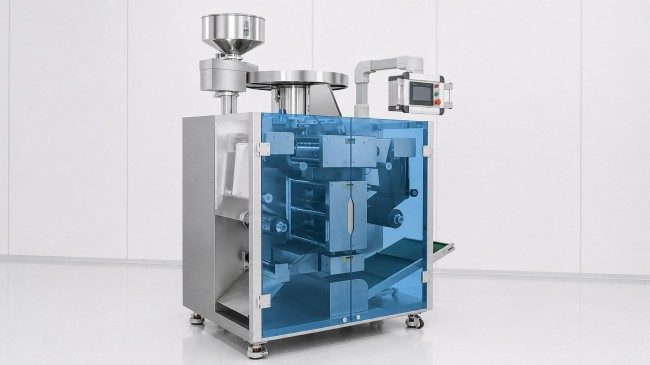
Ruida Packing’s RD-SAP-300L automatic strip packing machine combines feeding, film traction, vedação, registro, corte, and waste recovery in one continuous process. Its design also addresses practical issues such as product misalignment, selos fracos, product damage, and cutting inconsistency during strip packaging production.
Strip Packaging Materials and Product Applications
Strip packaging is commonly used for tablets and capsules, mas o tipo de produto por si só não determina se o formato é adequado.
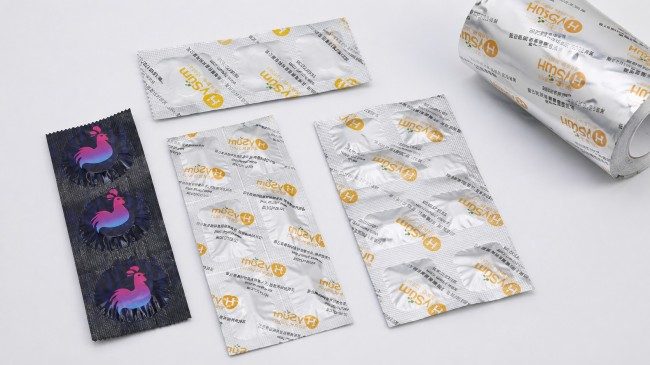
Dimensões do produto, fragilidade, sensibilidade à umidade ou luz, prazo de validade necessário, método de abertura, condições de armazenamento, material de embalagem, e o ambiente de produção influenciam a especificação final.
Pacotes de tiras flexíveis podem usar filmes de polímero termosseláveis, estruturas laminadas, ou laminados à base de alumínio. As camadas seláveis precisam funcionar com o processo de vedação pretendido, enquanto a estrutura completa precisa fornecer o desempenho de barreira estabelecido para o produto embalado.
Umidade, oxigênio, e o desempenho da barreira luminosa depende da estrutura completa do material, grossura, projeto de vedação, qualidade de fabricação, e condições de armazenamento.
Para embalagens farmacêuticas, o sistema completo de embalagem também precisa ser compatível com o produto. A orientação da FDA sobre sistemas de fechamento de contêineres aborda características como proteção, compatibilidade, segurança, e desempenho, enquanto o Capítulo Geral da USP <659> cobre requisitos de embalagem e armazenamento.
Embalagem em tira versus embalagem em blister: Qual é a diferença?
Embalagem em tira e embalagem em blister ambos podem fornecer comprimidos ou cápsulas embalados individualmente, mas suas estruturas de embalagem e sequências de produção são diferentes.
| Fator | Embalagem em tira | Embalagem blister |
| Estrutura básica | Produto encerrado entre duas redes flexíveis | Produto colocado dentro de uma cavidade formada |
| Formação de cavidade | Nenhum estágio separado de formação de cavidade | As cavidades são formadas antes do preenchimento |
| Perfil típico | Relativamente plano | Cavidades elevadas |
| Visibilidade do produto | Muitas vezes limitado com laminados opacos | Teias formadoras transparentes podem mostrar o produto |
| Opções de materiais | Filmes e laminados flexíveis, incluindo estruturas à base de alumínio | Estruturas plásticas termoformadas ou sistemas de alumínio moldados a frio |
| Processo central | Alimentação → selar → avançar → cortar | Forma → alimentação → selar → avançar → cortar |
| Alojamento do produto | Teias flexíveis cercam o produto | A geometria da cavidade é projetada em torno do produto |
Nenhum dos formatos é automaticamente melhor.
A embalagem em tiras é uma opção prática quando a proteção necessária do produto pode ser alcançada com uma estrutura de material flexível adequada e o formato da embalagem se adapta ao plano de produção e embalagem posterior.
A embalagem blister é útil quando uma cavidade definida é preferida, quando a visibilidade do produto é valiosa, ou quando uma estrutura de blister termoformado ou a frio atende melhor à barreira exigida e às necessidades de apresentação.
Para produtos sensíveis à umidade ou luz, a decisão deve ser baseada no sistema de embalagem completo e não nas palavras tira, bolha, plástico, ou alumínio. Estrutura material, integridade do selo, compatibilidade do produto, condições de armazenamento, controles de fabricação, e o manuseio downstream contribuem para o desempenho do pacote.
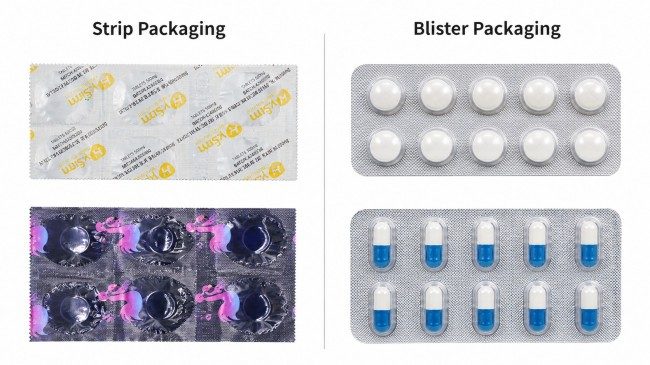
O equipamento de produção também difere. Uma máquina embaladora de tiras concentra-se na alimentação de produtos entre duas teias, vedação, tração, e corte. UM máquina de embalagem blister adiciona um estágio de formação antes da alimentação do produto, que altera tanto o layout da máquina quanto a sequência de embalagem.
A embalagem em tiras é, portanto, entendida tanto como uma estrutura de embalagem quanto como um processo de fabricação.. Um pacote de tiras acabado é criado através da seleção de materiais, alimentação do produto, vedação, movimento controlado da web, resfriamento, e corte trabalhando juntos.
Perguntas frequentes
-
O que é embalagem em tira?
A embalagem em tira envolve um comprimido, cápsula, ou produto sólido semelhante entre duas redes de embalagens flexíveis. As teias são seladas em torno de cada produto para criar unidades fechadas individualmente ao longo de uma tira.
-
Como são feitos os pacotes de tiras?
Duas teias de embalagem são desenroladas e guiadas através de uma máquina de embalagem de tiras enquanto comprimidos ou cápsulas são alimentados entre elas. As teias são seladas ao redor dos produtos, avançou pela linha, e corte no formato de tira necessário.
-
Qual é a diferença entre embalagem em tira e embalagem em blister?
A embalagem em tiras envolve o produto diretamente entre telas flexíveis. A embalagem blister primeiro forma uma cavidade, coloca o produto dentro dele, e então sela a cavidade com um material de cobertura.
-
Os comprimidos e as cápsulas podem ser embalados em embalagens de tiras?
Sim. Comprimidos e cápsulas podem usar embalagens de tiras quando o alimentador, espaçamento entre produtos, material de embalagem, arranjo de vedação, e o formato da embalagem são adequados ao produto.
-
O que uma máquina de embalagem de tiras faz?
Uma máquina embaladora de tiras coordena a alimentação do produto, movimento da web, vedação, resfriamento, registro ou recuo quando necessário, corte, e manuseio de aparas para produzir embalagens de tiras acabadas.
-
A embalagem em tira é adequada para comprimidos sensíveis à umidade??
Pode ser quando a estrutura e a vedação do material selecionado fornecem a barreira de umidade necessária para o produto e as condições de armazenamento pretendidas.. A adequação deve ser avaliada usando o sistema de embalagem completo e não apenas o formato da tira.
Referências
- NÓS. Administração de Alimentos e Medicamentos. Sistemas de fechamento de contêineres para embalagens de medicamentos e produtos biológicos humanos: Orientação para a Indústria.
- Farmacopeia dos Estados Unidos. Capítulo Geral da USP <659>, Requisitos de embalagem e armazenamento.
- Organização Mundial de Saúde. Diretrizes sobre embalagens para produtos farmacêuticos, Série de relatórios técnicos da OMS nº. 902, Anexo 9.
- ASTM Internacional. ASTM F88/F88M, Método de teste padrão para resistência de vedação de materiais de barreira flexíveis.