...

>

What Are Softgel Capsules? Fish Oil, Vitamin D, and How They’re Made

What Are Softgel Capsules? Fish Oil, Vitamin D, and How They’re Made

目次

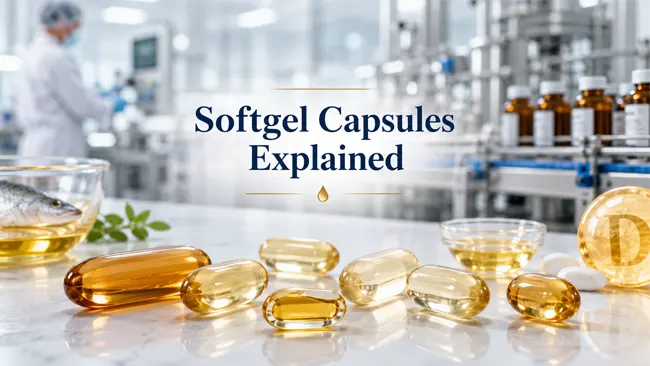
Softgel capsules are one-piece capsules formed around a liquid, 油性, サスペンション, or semi-solid fill. They are widely used for products such as fish oil, vitamin D, omega-3, CoQ10, vitamin E, and botanical oils, where the formulation is prepared and dosed in a flowable form.

Their structure differs from that of hard capsules and compressed tablets. A softgel shell is formed, 満たされた, 封印された, and cut during the same encapsulation cycle. The capsules then pass through drying, conditioning, 検査, sorting, and packaging before they become finished retail products.

The final result depends on shell formulation, fill viscosity, capsule dimensions, drying conditions, surface properties, and packaging format. These factors also influence how the finished softgels move through counting channels, blister feeders, ボトル, sealing stations, および箱詰め装置.

Fish oil and vitamin D are familiar examples, but the same manufacturing principles apply to many liquid-filled softgel products. The following sections focus on dosage-form structure, 生産, and packaging rather than health effects, treatment, or dosing advice.

What Are Softgel Capsules?

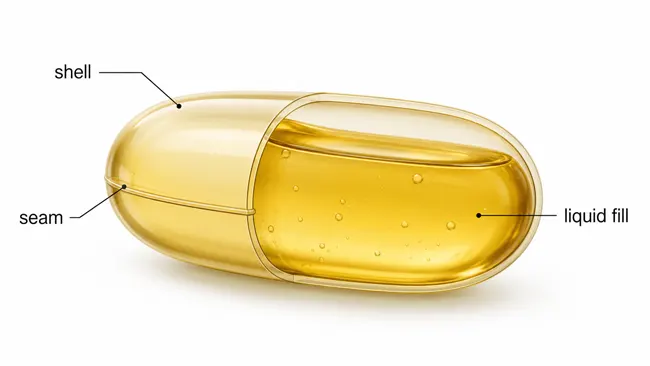
ソフトジェルカプセル, also known as softgels or soft gelatin capsules, are sealed, one-piece capsules designed to hold liquid, 油性, サスペンション, paste-like, or semi-solid formulations.

Unlike hard capsules, which normally consist of a separate body and cap, softgels are created from two flexible shell ribbons. The fill material is dosed between the ribbons while rotary dies shape, シール, and cut each capsule. This process encloses the fill inside a single unit with a continuous seam.

A finished softgel consists of two main components:

成分関数Main Production Considerations
Capsule shellForms the outer sealed structure and contains the fill材料, 弾性, 厚さ, 水分レベル, 色, 乾燥挙動
Fill formulationHolds the liquid, 油, サスペンション, or semi-solid blendViscosity, 均一, 温度, air content, 投与精度, and shell compatibility

Traditional softgel shells are commonly prepared from gelatin, 精製水, and a plasticizer such as glycerin or sorbitol. Colorants and opacifiers can also be included when the product design requires them. Non-gelatin systems are available for products developed around vegetarian positioning or specific formulation needs.

The shell needs enough flexibility to form uniform ribbons and sufficient strength to seal around the fill. Its moisture content must also remain within the required range during drying and storage. Shell thickness and elasticity influence seam quality, capsule firmness, および下流の処理.

The fill formulation is prepared separately. It can range from a low-viscosity oil to a thicker suspension or semi-solid blend. Its physical properties affect pumping, 投薬, 封印, and the required capsule volume.

Common softgel shapes include round, 楕円形, oblong, tube-shaped, and twist-off designs. Size and geometry are selected according to fill volume, product presentation, 生産要件, and final packaging format.

After drying, capsule shape, dimensions, surface friction, and shell firmness influence movement through hoppers, チャンネルを数える, blister cavities, and transfer systems. Packaging tests should therefore use finished samples rather than nominal capsule dimensions alone.

Why Are Fish Oil and Vitamin D Commonly Seen in Softgel Form?

Fish oil, vitamin D, omega-3, CoQ10, vitamin E, and botanical oils are frequently sold in softgel form because these product categories commonly use oil-based or liquid formulations.

The softgel process divides a flowable formulation into individual sealed units. The shell is formed around the fill during encapsulation instead of being manufactured first and filled later.

The term liquid fill covers more than thin liquids. It can include:

  • Liquid blends
  • Suspensions
  • Paste-like fills
  • Semi-solid formulations

The choice of softgel size and shape depends on the required fill volume and its physical properties. A higher fill volume generally requires a larger capsule, while a thicker suspension requires suitable pumping and dosing control.

Familiar product names do not provide enough information for equipment selection. Fish oil softgels from two manufacturers can differ in size, shell composition, surface condition, fill viscosity, and packaging format. The same applies to vitamin D softgels and other liquid-filled capsules.

Manufacturing and packaging decisions should therefore be based on confirmed product specifications and actual samples. Health benefits, 投与量, and individual suitability are separate questions and should be determined from the product label and qualified professional guidance.

Softgel Capsules vs Hard Capsules and Tablets

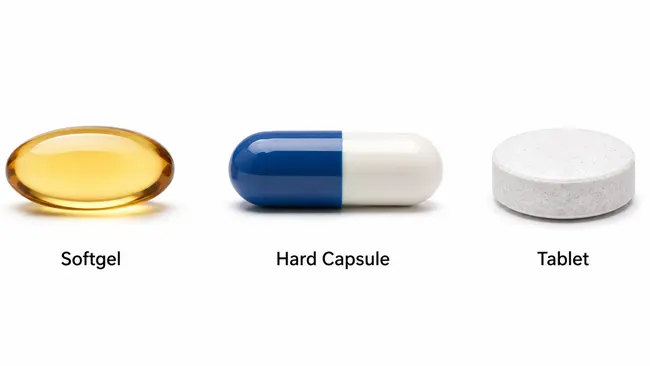
ソフトジェル, ハードカプセル, and tablets can contain pharmaceutical or supplement formulations, but they follow different production routes.

Hard capsules normally use a two-piece shell consisting of a body and cap. The empty shells are manufactured first and later filled with powder, 顆粒, ペレット, or a compatible liquid formulation.

Tablets are formed by compressing a prepared powder or granule blend with punches and dies. Softgel capsules are formed, 満たされた, 封印された, and cut during one encapsulation cycle.

形式Typical ContentsBasic Production MethodCommon Packaging
SoftgelOil, 液体, サスペンション, 半固体Flexible ribbons form and seal around the fillボトル, 水ぶくれ, カートン
Hard capsule粉, 顆粒, ペレット, selected liquidsEmpty body and cap are filled and closedボトル, 水ぶくれ, カートン
錠剤Compressed powder or granulesBlend is compressed using tablet toolingボトル, 水ぶくれ, カートン

Their upstream machinery is also different. Tablet production can include granulation, ブレンドする, 圧縮, コーティング, and dedusting. Hard-capsule production uses capsule filling, 閉店, polishing, そして検査. Softgel production requires shell preparation, fill preparation, カプセル化, 乾燥, conditioning, そして並べ替え.

Some packaging equipment can handle all three formats, but the feeding and transfer settings are not identical. Softgels have curved surfaces and varying levels of friction. Hard capsules are lightweight and require controlled handling. Tablets have rigid surfaces but vary widely in shape and coating.

The package format, product dimensions, surface properties, count per pack, and required output should guide the final machine configuration.

Comparison of a softgel capsule, hard capsule, and compressed tablet

How Are Softgel Capsules Made?

Commercial softgel manufacturing normally follows six connected stages.

A commercial softgel production line usually includes a gelatin melting tank, a fill preparation tank, a softgel capsule machine, tumble drying equipment, secondary drying systems, and inspection equipment. The central unit is the softgel encapsulation machine, which forms the shell ribbons, meters the liquid fill, seals each capsule, and cuts it in one continuous cycle.

1. Shell Mass Preparation

Gelatin or another shell-forming material is mixed with water, 可塑剤, and any approved color or opacity components. The mixture is processed under controlled temperature and mixing conditions.

The prepared shell mass must form consistent ribbons and create a reliable seam during encapsulation. Gelatin type, plasticizer ratio, 温度, 水分, and fill-shell compatibility influence the finished shell.

Vegetarian softgel systems use alternative shell materials such as modified starches, carrageenan, or other suitable polymers. Their processing temperatures, viscosities, and drying behavior can differ from conventional gelatin systems.

2. Fill Preparation

The liquid or semi-solid fill is mixed separately until it reaches the required uniformity. Production controls commonly cover:

  • Viscosity
  • 温度
  • Mixing time
  • Air content
  • Ingredient distribution
  • Holding and transfer conditions

分離, 閉じ込められた空気, or large viscosity changes can interfere with dosing accuracy. The fill also needs to remain compatible with the shell during production and storage.

3. Rotary Die Softgel Encapsulation Machine

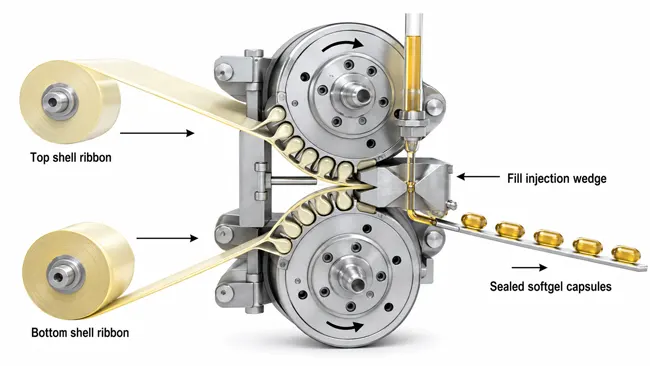
Most commercial production uses a rotary die softgel encapsulation machine. The shell mass is cast into two continuous ribbons and guided toward rotating dies.

A heated injection wedge delivers the fill between the ribbons. The dies form the capsule shape, enclose the required fill volume, seal the seam, and cut the capsule from the surrounding material.

Ribbon thickness, die alignment, wedge temperature, fill volume, and machine speed are controlled together. Poor coordination can result in irregular dimensions, weak seams, fill variation, or leakage.

Rotary die softgel encapsulation process with shell ribbons and liquid fill

4. Drying and Conditioning

Freshly formed capsules contain moisture and have a softer shell. They first pass through tumble dryers, where moving air removes part of the moisture while the capsules continue rotating.

Secondary drying takes place on trays, in tunnels, or in temperature- and humidity-controlled rooms. Drying continues until the shell reaches the specified condition.

The correct endpoint depends on shell formulation, カプセルサイズ, fill composition, 気流, 温度, and humidity. Capsules that remain too soft can stick together or deform during packaging. Excessive drying can reduce shell flexibility and affect handling.

5. Inspection and Sorting

Dried capsules are checked for:

  • Shape and dimensions
  • Seam condition
  • 表面欠陥
  • 漏れ
  • Color consistency
  • Foreign material
  • Printing quality, where applicable

Units outside the accepted specification are removed before packaging. Consistent capsules travel more reliably through counting channels and blister feeders.

6. 最終包装

Accepted softgels are transferred to bottle, 水膨れ, or carton packaging according to the commercial product design.

Manufacturing and packaging specifications should be coordinated early. Capsule dimensions must fit the selected bottle neck, counting channel, blister cavity, and carton. Early confirmation reduces tooling changes and repeated packaging adjustments.

How Are Softgel Capsules Packaged?

Bottle packaging and blister packaging are two common routes. Cartoning can follow either format.

Bottle Packaging

Bottle packaging is widely used for fish oil softgels, vitamin D softgels, omega-3 products, and other supplements sold in larger quantities.

A complete capsule counting and bottling line can include:

1. bottle unscrambler

2. カプセル計数機

3. 重量チェッカー

4. 乾燥剤インサーター

5. キャッピングマシン

6. 誘導シール機

7. labeling machine and coding machine

8. 箱詰め機

The counting section must be tested carefully. Softgel shape and surface affect how the product moves through the hopper and feeding channels. Round capsules roll differently from oblong products, while surface tack can reduce feeding consistency.

Channel width, vibration, sensor position, discharge timing, and bottle-neck diameter should be matched to the product. A machine’s rated speed does not guarantee the same output for every softgel size.

Actual production samples allow engineers to check counting accuracy, capsule movement, stop-start stability, and the condition of the product after it passes through the machine.

ブリスター包装

Blister packaging places individual capsules into formed cavities and seals them with lidding material. The line normally performs forming, 餌やり, 封印, コーディング, パンチング, そして退院.

The cavity design must match capsule width, 長さ, height, and curvature. The cavity should hold the product securely without pressing against the shell.

Feeding method is equally important. Oval and oblong capsules can require controlled orientation before entering the cavity. Round capsules require stable transfer so they do not roll away from the filling position.

Depending on the required barrier and product design, manufacturers can select formats such as Alu-PVC or Alu-Alu blister packaging. Material selection should follow the product’s validated packaging requirements rather than a general assumption that one structure fits every softgel.

箱詰め

Cartoning places a bottle, ブリスターカード, or group of packs into an outer carton. The machine can also handle leaflet insertion, コーディング, carton closing, そして検査.

The cartoner is selected after the primary package is finalized. Bottle dimensions, blister-card size, carton board, 閉鎖スタイル, リーフレット形式, and target output all affect the final layout.

A properly coordinated line keeps the upstream bottle or blister output within the cartoner’s feeding and speed range.

What Should Buyers Check Before Choosing Softgel Packaging Equipment?

The most useful equipment proposal begins with product samples and confirmed packaging specifications.

Capsule characteristics

Provide finished samples showing the intended:

  • Size and shape
  • Shell firmness
  • Surface condition
  • Dimensional tolerance
  • Printing or color requirements

Samples taken directly from the finished drying and conditioning process provide more useful test results than prototype shells or nominal dimensions.

Bottle or blister specifications

ボトル包装用, confirm the bottle size, neck diameter, count per bottle, キャップタイプ, ホイル, label dimensions, and coding position.

For blister packaging, confirm the forming material, lidding material, cavity layout, forming depth, blister-card size, and batch-coding requirements.

Output and changeover

A line running one product for long production campaigns has different priorities from a line switching among several softgel sizes and package formats.

Where frequent changeovers are expected, buyers should examine adjustment time, change parts, アクセスの清掃, recipe storage, and operator requirements.

Inspection requirements

Inspection points can include:

  • Count verification
  • Empty-bottle detection
  • Cap presence
  • Foil-seal checks
  • Label and code inspection
  • Blister-cavity inspection
  • Carton and leaflet verification

For a softgel packaging project, Ruidapacking can configure automatic capsule counting machines, capsule bottle filling lines, ブリスター包装機, and cartoning machines around the finished product samples and final package specifications.

The objective is to match feeding, 数える, 封印, 検査, and changeover requirements to the product instead of placing every softgel into the same standard machine configuration.

結論は

Softgel capsules are one-piece sealed units designed for liquid, 油性, サスペンション, and semi-solid fills. Fish oil and vitamin D are familiar examples, while the same format is used across a wider range of pharmaceutical and supplement products.

Production includes shell preparation, fill preparation, rotary die encapsulation, 乾燥, conditioning, 検査, そして並べ替え. The finished capsules can then be counted into bottles, placed into blister cavities, and transferred to cartoning equipment.

Stable packaging depends on the physical product and the selected package. Capsule dimensions, 形, surface condition, shell firmness, bottle or blister specifications, 出力, and inspection requirements should all be confirmed before equipment selection. Testing with finished samples provides the strongest basis for configuring a reliable softgel packaging line.

よくある質問

Are softgel capsules the same as hard capsules?

いいえ. Softgels are one-piece sealed capsules formed around a liquid or semi-solid fill. Hard capsules normally consist of a separate body and cap that are manufactured first and filled later.

What is inside a softgel capsule?

The fill can be an oil, liquid blend, サスペンション, paste, or semi-solid formulation. Its composition depends on the product. The term “liquid fill” describes the physical format rather than a health effect.

Why are fish oil and vitamin D sold as softgels?

These product categories commonly use oil-based or liquid formulations. Softgel manufacturing divides the flowable fill into sealed individual units. Product use and dosage should follow the label and qualified professional guidance.

How are softgel capsules made?

The main stages are shell preparation, fill preparation, processing on a rotary die softgel encapsulation machine, 乾燥, conditioning, 検査, sorting, そして最終梱包.

Can softgel capsules be counted into bottles?

はい. A bottling line can count and fill the capsules, cap the bottle, apply a foil seal, add a label and code, inspect the pack, and place it into a carton when required.

Can softgel capsules be blister packed?

はい. The cavity shape, forming depth, feeding system, sealing material, and tooling must be matched to the finished capsule dimensions and physical condition.


参考文献

1. Naharros-Molinero A, 他. “Shell Formulation in Soft Gelatin Capsules: Design and Development.” PMC / Pharmaceutics.

https://pmc.ncbi.nlm.nih.gov/articles/PMC11468233/

2. GELITA. “Softgels: Between Tradition and Trend.”

https://www.gelita.com/en/knowledge/blog/softgels-between-tradition-and-trend

共有:

メッセージを送信

関連記事

ご要望をお聞かせください

    見積もり依頼

      *当社はお客様の機密性を尊重し、すべての情報は保護されます。