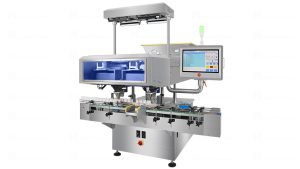

Alt: Effervescent Tablets Shedding Fine Dust
Introduction
On many effervescent tablet packaging lines, operators can judge the shift just by looking at the tablet counter. Fine powder gradually builds up around the counting channel and sensor area. Before long, the first alarm appears and someone walks over to clean the counting unit again. On some effervescent tablet counting lines, this happens every 10 to 15 minutes throughout the shift, quietly taking away more than an hour of production time each day.
Most problems begin when airborne powder reaches the detection area inside the tablet counter. Standard optical counting equipment often struggles once dust starts collecting around the sensors, leading to unstable counts and repeated stoppages. A counting machine designed for dusty effervescent products can maintain more reliable counting performance during longer production runs. In this article, we’ll look at why effervescent dust creates counting problems, what those interruptions cost manufacturers, and how one Russian pharmaceutical plant solved the issue with a dust-resistant counting solution.
Why Effervescent Dust Creates Counting Problems
On many effervescent tablet packaging lines, airborne powder gradually becomes a direct production problem once it begins affecting the tablet counter and counting equipment during continuous operation. It directly affects the accuracy and stability of the entire counting system Production teams usually notice the issue first near the feeding channel and sensor area, where powder from effervescent tablets gradually builds up during normal tablet counting operation.
Why Effervescent Tablets Produce So Much Dust
Effervescent tablets are naturally more fragile than coated tablets or capsules. Their formulations usually contain sodium bicarbonate and citric acid, ingredients designed to dissolve rapidly in water. To achieve that fast reaction, the tablets remain relatively porous and brittle.
As the tablets move through vibratory channels and feeding trays, friction between products causes tiny particles to break away from the surface. These particles quickly become airborne powder that spreads throughout the packaging line.
This dust settles everywhere—on machine covers, conveyors, guide rails, and most critically, on the sensors inside the tablet counting machine. In effervescent production, dust generation is unavoidable. The challenge for most production lines is maintaining stable counting accuracy after several hours of airborne powder exposure inside the counting equipment.
How Dust Affects Counting Accuracy
Most traditional tablet counters rely on infrared photoelectric sensors inside the counting channel. When tablets pass through the optical beam, the system records each interruption as one count. In effervescent tablet production, airborne powder quickly interferes with these sensors and reduces counting accuracy during continuous operation.
Dust interferes with this process in two major ways.
First, powder gradually builds up on the sensor lens. As the layer thickens, the light beam becomes weaker or distorted, reducing detection reliability.
Second, airborne particles can trigger false readings because the infrared sensor cannot always distinguish floating powder from an actual tablet. This often leads to unstable counts, overfills, or missing tablets during high-speed production.
At that point, the counting machine either stops for cleaning or continues running while producing inaccurate fills. Neither option is acceptable in pharmaceutical manufacturing.
On many lines, operators end up cleaning sensors every few minutes just to keep the automatic counting machine operational. Over time, these repeated interruptions lower productivity, increase labor demands, and create unnecessary frustration on the production floor.
For this reason, many effervescent manufacturers are gradually replacing traditional optical sensors with camera-based counting systems. Visual counting technology uses high-speed cameras instead of simple infrared detection, allowing the machine to identify real tablets more accurately even under heavy dust conditions.
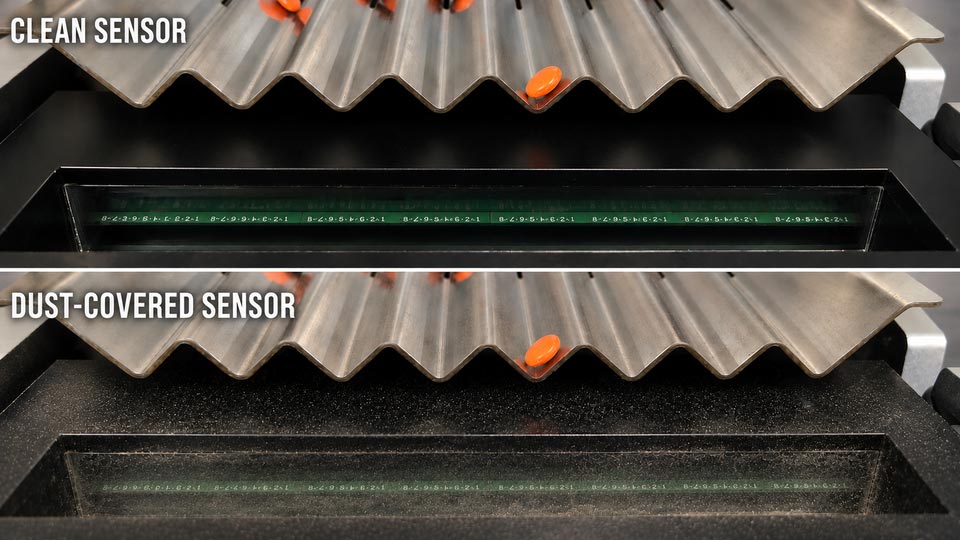
Alt: Clean Versus Dust-Covered Optical Sensor
The Hidden Cost of Dust in Tablet Packaging
Dust-related counting issues affect far more than machine cleanliness and annoying operators. They impact compliance, production efficiency, waste levels, and overall equipment effectiveness, every shift bleeds money!
Compliance Risks from Inaccurate Counts
During GMP inspections, investigators focus on whether the tablet counter can maintain stable count accuracy throughout the full production run, including under dusty operating conditions.Pharmaceutical manufacturers must ensure every bottle contains the exact labeled quantity. When dust interferes with the counting unit, count accuracy becomes unstable.
A customer opens a bottle, finds 28 tablets instead of 30, and files a complaint. A batch recall may follow.
During GMP inspections, repeated counting deviations raise questions about process reliability and packaging control. Regulators expect pharmaceutical packaging systems to maintain consistent performance regardless of environmental conditions. The FDA has repeatedly emphasized that data integrity and fill accuracy are essential GMP requirements.
The investigator traces the issue back to your counting equipment. What started as dust on a lens becomes a compliance finding.
In many facilities, the issue is not operator performance. The problem is simply that the tablet counter was never designed for high-dust applications.
Downtime, Waste, and OEE Losses
Frequent cleaning interruptions dramatically reduce production efficiency.
Consider a packaging line that stops every 15 minutes for sensor cleaning. If each stop lasts only three minutes, the line loses nearly 90 minutes of runtime during a single eight-hour shift. That is 20% of the shift gone.
These short interruptions—often called micro-stoppages—can severely reduce overall equipment effectiveness (OEE) while remaining difficult to track accurately.
Dust also increases waste. False rejects may remove good tablets from production, while inaccurate counts create additional inspections and rework.
The difference between a standard counter and a dust-resistant counting machine can be substantial.
| Metric | Standard Counter | Dust-Optimized Counting Machine |
| Cleaning stops per shift | 20–30 | 2–4 |
| Lost production time | 60–90 minutes | 10–15 minutes |
| False reject rate | 2–5% | <0.1% |
| Operator interventions per hour | 3–4 | 0.2–0.5 |
For high-volume effervescent production, these numbers translate directly into operating costs and delivery performance.
Case Study: How a Russian Pharmaceutical Plant Solved Its Dust Problem
A pharmaceutical manufacturer in Russia faced many of the same challenges common in effervescent tablet production.
Their existing tablet counting machine struggled with heavy powder buildup. Sensors clogged repeatedly, product flow became unstable, and operators constantly stopped the line for cleaning.
The Original Problem
According to the production manager, the line required sensor cleaning approximately every 15 minutes. Dust caused repeated alarms, uneven feeding, and inaccurate counts.
Operators spent more time maintaining the counting equipment than managing production.
The company eventually replaced the original machine with a Ruida Packing RD-DSL-16Pro automatic counting machine equipped with high-speed camera detection technology designed for dusty effervescent tablet production environments.
The 15-Minute Dust Trial
The customer asked to run the counting machine directly with actual effervescent tablets from the production line rather than using standard sample products.
The test conditions were simple:
- Continuous operation for 15 minutes
- No manual cleaning
- No operator intervention
- Real effervescent tablets only
The new automatic counting machine completed the trial without a single stoppage. Sensors remained stable, bottle flow stayed smooth, and count accuracy matched production requirements throughout the run.
For the customer, this demonstrated that the equipment could maintain reliable effervescent tablet counting under actual factory conditions—not just in a clean demonstration environment.

Russian clients visit Ruida Packing
Why the New Counting System Performed More Reliably During Dust Exposure
Several engineering improvements allowed the new counting system to operate successfully in a dusty environment.
Camera-Based Detection
Traditional infrared photoelectric sensors are highly sensitive to airborne powder inside effervescent tablet counting equipment. The Ruida Packing RD-DSL-16Pro counting machine used high-speed camera detection to identify the actual shape, size, and contour of each tablet instead of relying only on beam interruption signals.
Because the camera system analyzed actual tablet images rather than simple light interruptions, floating powder created far fewer false counts during continuous production.
The camera system could also identify broken or chipped effervescent tablets before they entered the bottle, helping operators reduce defective product entering final packaging.
Compared with the previous counting system, the upgraded machine maintained more stable counting accuracy during extended operation under visible airborne powder conditions.
The feeding system also reduced tablet friction during conveying, which helped lower additional powder generation inside the counting channel.
Stable Low-Dust Feeding
The feeding system was tuned to handle fragile effervescent tablets without creating excessive friction or additional dust. Smooth product movement reduced friction and minimized dust generation inside the machine.
Consistent feeding also improved counting stability and reduced tablet breakage.
Integrated Packaging Line Control
The complete packaging line operated as a synchronized system rather than separate standalone machines.
Bottle movement, tablet feeding, and conveyor speeds remained coordinated throughout production. Built-in monitoring sensors detected bottle jams or abnormal flow conditions immediately.
Even during longer production runs, bottle movement, tablet feeding, and counting performance remained noticeably more stable than on the previous counting line.
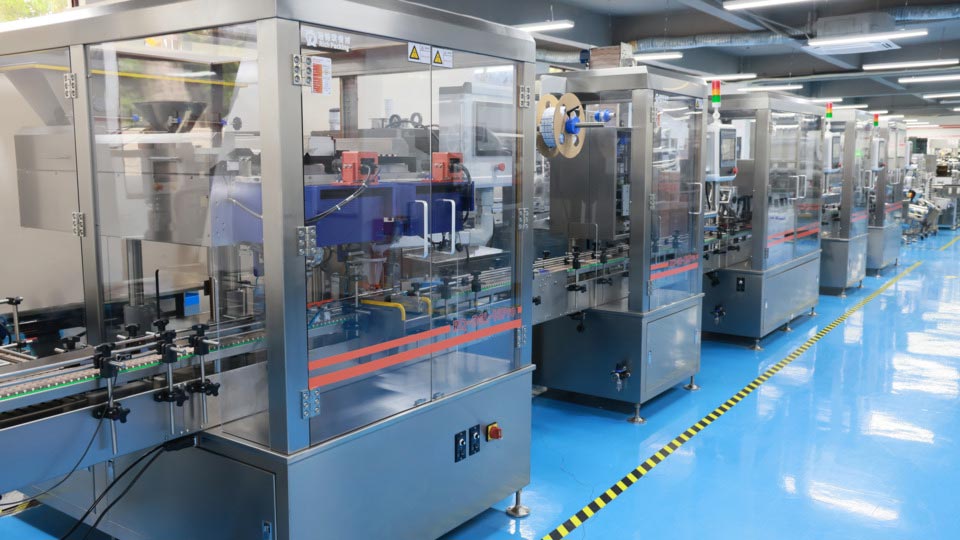
Alt: Ruida Packing counting line
Fast Cleaning and Quick Changeovers Matter
Even the best tablet counter still requires regular cleaning during effervescent production. In real production environments, operators care less about whether cleaning is required and more about how fast they can get the line running again.
The upgraded system used a modular, tool-free structure that allowed operators to remove contact parts quickly for cleaning and maintenance.
Instead of spending 20 to 30 minutes disassembling the machine, operators completed cleaning procedures in only a few minutes.
Format changes also became much faster. Switching between tablet sizes or product formats required only simple tooling adjustments rather than lengthy mechanical setup.
For manufacturers running multiple SKUs, faster product changeovers help production teams reduce idle packaging time between different effervescent tablet batches.
5 Features Every Effervescent Tablet Counter Should Have
Production teams evaluating a new tablet counter for effervescent tablet counting usually pay close attention to several operational areas that directly affect long-term line stability.
1. Real Dust-Resistance Testing
Always test the equipment using your actual tablets. A reliable tablet counter should maintain stable performance under real production dust conditions.
2. Smooth Line Integration
The counting system should synchronize properly with conveyors, cappers, and bottle handling equipment to prevent bottlenecks and jams.
3. Stable Feeding for Fragile Tablets
A properly designed feeding system minimizes tablet friction, reduces breakage, and lowers dust generation during operation.
4. Tool-Free Cleaning Access
Daily cleaning should be fast and simple. Quick-release components and modular access reduce downtime while helping operators maintain GMP compliance.
5. Intelligent Monitoring Systems
Modern automatic tablet counters should include jam detection, bottle monitoring, and fault alarms that identify problems before they interrupt production.
Conclusion
Dust is unavoidable in effervescent tablet production, but constant downtime and inaccurate counts are not.
A standard tablet counter may struggle in high-powder environments, leading to repeated cleaning stops, unstable counts, and lower production efficiency. Dust-resistant counting machines used on effervescent tablet packaging lines are typically expected to continue operating with stable counting accuracy even after extended exposure to airborne powder.
The experience of the Russian pharmaceutical plant demonstrates how the right counting equipment can dramatically improve line stability, reduce operator intervention, and support accurate tablet counting throughout production.
For manufacturers looking to improve effervescent tablet counting, selecting equipment designed specifically for dusty applications is one of the most important investments they can make.
FAQ
1. Why do effervescent tablets create so much dust?
Effervescent tablets are naturally brittle and porous, which causes powder to break away during handling and transport.
2. What type of counting machine works best for dusty products?
Camera-based tablet counting machines with dust-resistant designs and stable feeding systems perform best in high-powder environments.
3. How can I test whether a counter can handle effervescent dust?
Request a live production trial using your own tablets under real operating conditions without manual cleaning during the test.
4. Can one counting machine handle different tablet sizes?
Yes. Modern automatic counting machines support multiple product formats with quick-change tooling and recipe-based controls.
5. How often should a tablet counter be cleaned in effervescent production?
Cleaning frequency depends on product characteristics and machine design, but tool-free systems significantly reduce cleaning time and maintenance effort.
References
U.S. Food and Drug Administration. Guidance for Industry: Q7A Good Manufacturing Practice Guidance for Active Pharmaceutical Ingredients. https://www.fda.gov/regulatory-information/search-fda-guidance-documents/guidance-industry-q7a-good-manufacturing-practice-guidance-active-pharmaceutical-ingredients
“How Micro-Stoppages Distort OEE Calculations.” Global Electronic Services, March 2026. https://gesrepair.com/how-micro-stoppages-distort-oee-calculations/