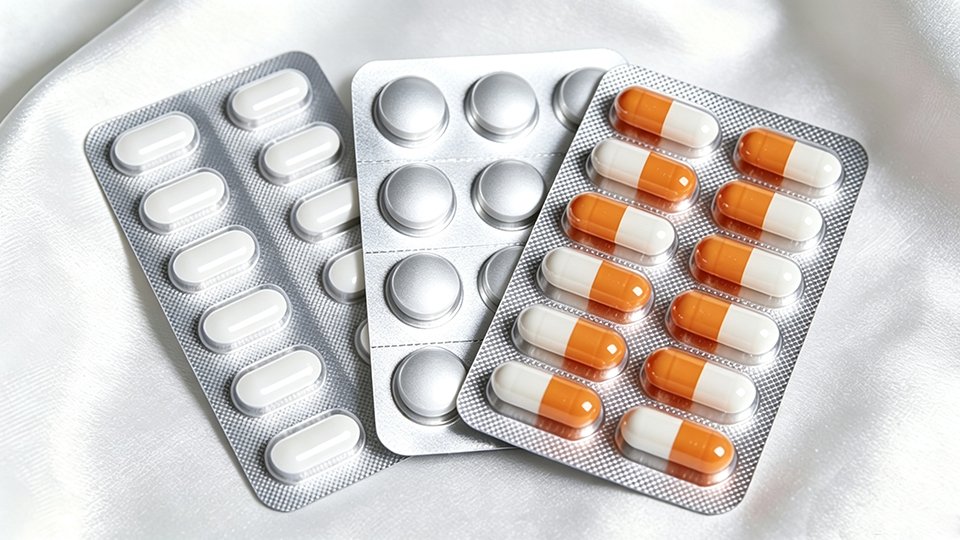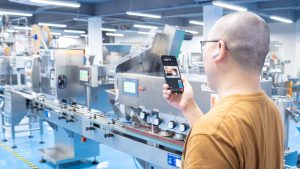

Alt: Bruistabletten die fijn stof afstoten
Invoering
Op veel bruistabletverpakkingslijnen, operators kunnen de verschuiving beoordelen door alleen maar naar de tablet -teller. Fijn poeder hoopt zich geleidelijk op rond het telkanaal en het sensorgebied. Het duurde niet lang, het eerste alarm klinkt en er komt iemand langs om de boel schoon te maken teleenheid opnieuw. Op wat bruisend tablet tellen lijnen, dit gebeurt iedere 10 naar 15 minuten gedurende de dienst, stilletjes meer dan een uur productietijd per dag wegnemen.
De meeste problemen beginnen wanneer poeder in de lucht het detectiegebied binnenin bereikt tablet -teller. Standaard optisch telapparatuur heeft vaak moeite zodra er stof rond de sensoren begint te verzamelen, wat leidt tot onstabiele tellingen en herhaalde onderbrekingen. A telmachine ontworpen voor stoffige, bruisende producten kunnen betrouwbaardere telprestaties behouden tijdens langere productieruns. In dit artikel, we zullen kijken waarom bruisend stof telproblemen veroorzaakt, wat die onderbrekingen de fabrikanten kosten, en hoe een Russische farmaceutische fabriek het probleem oploste met een stofbestendige teloplossing.
Waarom bruisend stof telproblemen veroorzaakt
Op veel bruistabletverpakkingslijnen, poeder in de lucht wordt geleidelijk een direct productieprobleem zodra het de productie begint te beïnvloeden tablet -teller en telapparatuur tijdens continu gebruik. Het heeft rechtstreeks invloed op de nauwkeurigheid en stabiliteit van het geheel telsysteem Productieteams merken het probleem meestal als eerste op in de buurt van het invoerkanaal en het sensorgebied, waar poeder vandaan bruistabletten wordt geleidelijk opgebouwd tijdens het normale tellen van tabletten.
Waarom bruistabletten zoveel stof produceren
Bruistabletten zijn van nature kwetsbaarder dan omhulde tabletten of capsules. Hun formuleringen bevatten meestal natriumbicarbonaat en citroenzuur, ingrediënten die zijn ontworpen om snel in water op te lossen. Om die snelle reactie te bereiken, de tabletten blijven relatief poreus en bros.
Terwijl de tabletten door trilkanalen en voerbakken bewegen, wrijving tussen producten zorgt ervoor dat kleine deeltjes loskomen van het oppervlak. Deze deeltjes veranderen snel in poeder in de lucht dat zich door de verpakkingslijn verspreidt.
Dit stof zet zich overal neer – op de machinekappen, transportbanden, geleiderails, en vooral kritisch, op de sensoren in de tablettelmachine. In bruisende productie, stofontwikkeling is onvermijdelijk. De uitdaging voor de meeste productielijnen is stabiel blijven telnauwkeurigheid na enkele uren blootstelling aan poeder in de lucht in de telapparatuur.
Hoe stof de telnauwkeurigheid beïnvloedt
Meest traditioneel tablettellers vertrouw op infrarood foto-elektrische sensoren in het telkanaal. Wanneer tablets door de optische straal gaan, het systeem registreert elke onderbreking als één telling. Bij de productie van bruistabletten, poeder in de lucht interfereert snel met deze sensoren en vermindert telnauwkeurigheid tijdens continu bedrijf.
Stof verstoort dit proces op twee belangrijke manieren.
Eerst, poeder hoopt zich geleidelijk op op de sensorlens. Naarmate de laag dikker wordt, de lichtbundel wordt zwakker of vervormd, vermindering van de detectiebetrouwbaarheid.
Seconde, Deeltjes in de lucht kunnen valse metingen veroorzaken, omdat de infraroodsensor drijvend poeder niet altijd kan onderscheiden van een echte tablet. Dit leidt vaak tot onstabiele tellingen, overvult, of ontbrekende tablets tijdens productie op hoge snelheid.
Op dat punt, de telmachine stopt voor reiniging of blijft draaien terwijl er onnauwkeurige vullingen worden geproduceerd. Geen van beide opties is aanvaardbaar in de farmaceutische industrie.
Op veel lijnen, Operators maken uiteindelijk om de paar minuten sensoren schoon, alleen maar om de sensor te behouden automatische telmachine operationeel. Na verloop van tijd, deze herhaalde onderbrekingen verlagen de productiviteit, de vraag naar arbeid vergroten, en voor onnodige frustratie op de productievloer zorgen.
Om deze reden, Veel bruisende fabrikanten vervangen geleidelijk de traditionele optische sensoren door op camera's gebaseerde telsystemen. Visuele teltechnologie maakt gebruik van hogesnelheidscamera's in plaats van eenvoudige infrarooddetectie, waardoor de machine echte tablets nauwkeuriger kan identificeren, zelfs onder zware stofomstandigheden.
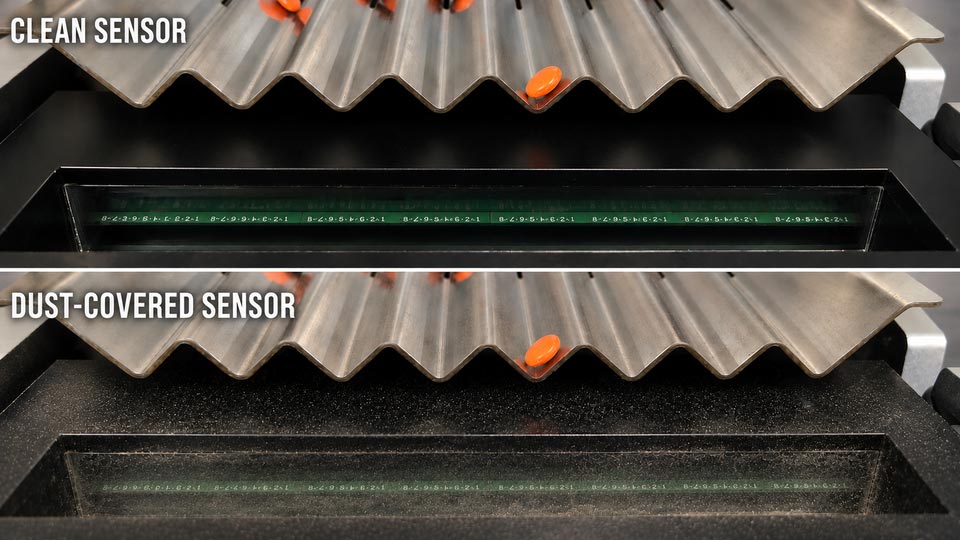
Alt: Schone versus met stof bedekte optische sensor
De verborgen kosten van stof in tabletverpakkingen
Stofgerelateerde telproblemen zijn van veel meer invloed dan alleen de machinereinheid en vervelende operators. Ze hebben invloed op de naleving, productie-efficiëntie, afvalniveaus, en de algehele effectiviteit van de apparatuur, elke dienst kost geld!
Compliancerisico's door onnauwkeurige tellingen
Tijdens GMP-inspecties, onderzoekers concentreren zich op de vraag of de tabletteller gedurende de volledige productierun een stabiele telnauwkeurigheid kan behouden, ook onder stoffige bedrijfsomstandigheden. Farmaceutische fabrikanten moeten ervoor zorgen dat elke fles de exact op het etiket vermelde hoeveelheid bevat. Wanneer stof interfereert met de teleenheid, De telnauwkeurigheid wordt onstabiel.
Een klant opent een fles, vondsten 28 tabletten in plaats van 30, en dient een klacht in. Mogelijk volgt een terugroepactie van de batch.
Tijdens GMP-inspecties, Herhaalde telafwijkingen roepen vragen op over procesbetrouwbaarheid en verpakkingscontrole. Regelgevers verwachten dat farmaceutische verpakkingssystemen consistente prestaties behouden, ongeacht de omgevingsomstandigheden. De FDA heeft herhaaldelijk benadrukt dat gegevensintegriteit en vulnauwkeurigheid essentiële GMP-vereisten zijn.
De onderzoeker herleidt het probleem naar uw telapparatuur. Wat begon als stof op een lens, wordt een conformiteitsbevinding.
In veel faciliteiten, het probleem ligt niet in de prestaties van de operator. Het probleem is simpelweg dat de tablet -teller is nooit ontworpen voor toepassingen met veel stof.
Downtime, Afval, en OEE-verliezen
Regelmatige schoonmaakonderbrekingen verminderen de productie-efficiëntie dramatisch.
Denk eens aan een verpakkingslijn die elke keer stopt 15 minuten voor het reinigen van de sensor. Als elke stop maar drie minuten duurt, de lijn verliest bijna 90 minuten looptijd tijdens één dienst van acht uur. Dat is 20% van de verschuiving verdwenen.
Deze korte onderbrekingen, vaak microstops genoemd, kunnen de algehele effectiviteit van de apparatuur ernstig verminderen (OEE) terwijl het moeilijk blijft om nauwkeurig te volgen.
Stof zorgt ook voor meer afval. Valse afkeuringen kunnen goede tabletten uit de productie halen, terwijl onnauwkeurige tellingen tot extra inspecties en herbewerking leiden.
Het verschil tussen een standaard toonbank en een stofbestendige toonbank telmachine kan substantieel zijn.
| Metrisch | Standaard teller | Stofgeoptimaliseerde telmachine |
| Schoonmaakstops per dienst | 20–30 | 2–4 |
| Verloren productietijd | 60–90 minuten | 10–15 minuten |
| Vals afwijzingspercentage | 2–5% | <0.1% |
| Operatorinterventies per uur | 3–4 | 0.2–0,5 |
Voor bruisende productie in grote hoeveelheden, deze cijfers vertalen zich rechtstreeks in bedrijfskosten en leveringsprestaties.
Casestudy: Hoe een Russische farmaceutische fabriek zijn stofprobleem oploste
Een farmaceutische fabrikant in Rusland werd geconfronteerd met veel van dezelfde uitdagingen die vaak voorkomen bij de productie van bruistabletten.
Hun bestaan tablettelmachine worstelde met zware poederophoping. Sensoren herhaaldelijk verstopt, de productstroom werd instabiel, en operators stopten voortdurend de lijn om schoon te maken.
Het oorspronkelijke probleem
Volgens de productiemanager, de lijn vereiste ongeveer elke sensorreiniging 15 notulen. Stof veroorzaakte herhaalde alarmen, ongelijkmatige voeding, en onjuiste tellingen.
Operators besteedden meer tijd aan het onderhouden van de telapparatuur dan het beheren van de productie.
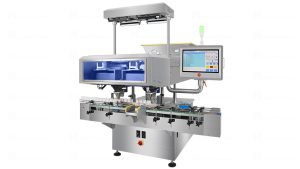
Het bedrijf verving uiteindelijk de originele machine door een Ruida Packing RD-DSL-16Pro-automaat telmachine uitgerust met supersnelle cameradetectietechnologie, ontworpen voor stoffige, bruisende tabletproductieomgevingen.
De stofproef van 15 minuten
De klant vroeg om de telmachine rechtstreeks te laten werken met echte bruistabletten van de productielijn in plaats van standaard monsterproducten te gebruiken.
De testomstandigheden waren eenvoudig:
- Continue werking voor 15 notulen
- Geen handmatige reiniging
- Geen tussenkomst van de operator
- Alleen echte bruistabletten
De nieuwe automatische telmachine voltooide de proef zonder een enkele onderbreking. Sensoren bleven stabiel, de flessenstroom bleef soepel, en telnauwkeurigheid kwamen gedurende de hele run overeen met de productievereisten.
Voor de klant, dit toonde aan dat de apparatuur betrouwbaar kon blijven bruistabletten tellen onder werkelijke fabrieksomstandigheden – niet alleen in een schone demonstratieomgeving.
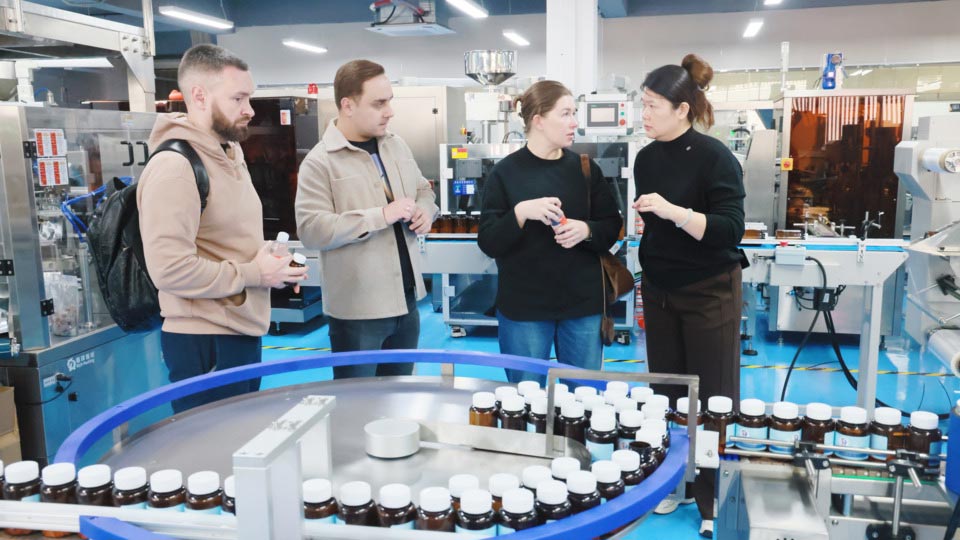
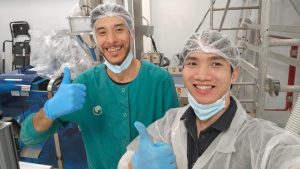
Russische klanten bezoeken Ruida Packing
Waarom het nieuwe telsysteem betrouwbaarder presteerde tijdens blootstelling aan stof
Verschillende technische verbeteringen maakten het nieuwe mogelijk telsysteem succesvol te kunnen opereren in een stoffige omgeving.
Cameragebaseerde detectie
Traditionele infrarood foto-elektrische sensoren zijn zeer gevoelig voor poeder in de lucht in bruisend materiaal tablet tellen apparatuur. De Ruida Packing RD-DSL-16Pro telmachine maakte gebruik van hogesnelheidscameradetectie om de werkelijke vorm te identificeren, maat, en contouren van elke tablet in plaats van alleen te vertrouwen op signalen voor straalonderbreking.
Omdat het camerasysteem daadwerkelijke tabletbeelden analyseerde in plaats van eenvoudige lichtonderbrekingen, drijvend poeder zorgde tijdens de continue productie voor veel minder valse tellingen.
Het camerasysteem kan ook gebroken of afgebroken bruistabletten identificeren voordat ze in de fles terechtkomen, helpt operators bij het verminderen van het aantal defecte producten die in de eindverpakking terechtkomen.
Vergeleken met het vorige telsysteem, de geüpgradede machine behield een stabielere telnauwkeurigheid tijdens langdurig gebruik onder zichtbare poederomstandigheden in de lucht.
Het toevoersysteem verminderde ook de tabletwrijving tijdens het transport, wat hielp om de extra poedergeneratie binnen het telkanaal te verminderen.
Stabiele stofarme invoer
Het toevoersysteem is zo afgesteld dat het kwetsbare bruistabletten kan verwerken zonder overmatige wrijving of extra stof te veroorzaken. Een soepele productbeweging vermindert de wrijving en minimaliseert de stofontwikkeling in de machine.
Consistente voeding verbeterde ook de telstabiliteit en verminderde tabletbreuk.
Geïntegreerde verpakkingslijncontrole
De volledige verpakkingslijn werkte als een gesynchroniseerd systeem in plaats van afzonderlijke, op zichzelf staande machines.
Fles beweging, tabletvoeding, en de transportbandsnelheden bleven tijdens de productie gecoördineerd. Ingebouwde bewakingssensoren detecteerden onmiddellijk flessenstoringen of abnormale stromingsomstandigheden.
Zelfs tijdens langere productieruns, fles beweging, tabletvoeding, en de telprestaties bleven merkbaar stabieler dan op de vorige tellijn.
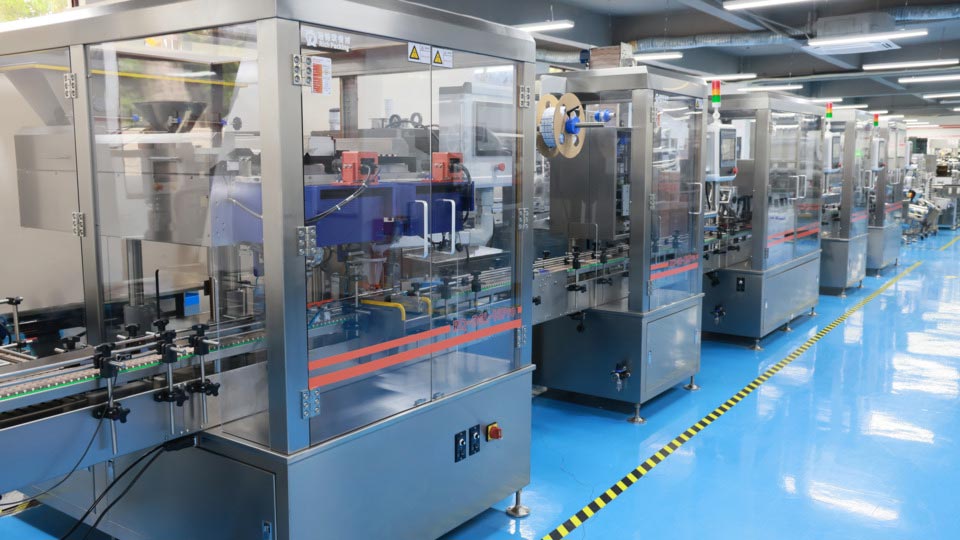
Alt: Ruida Packing tellijn
Snelle reiniging en snelle omschakeling zijn belangrijk
Zelfs de beste tablet -teller vereist nog steeds een regelmatige reiniging tijdens de bruisende productie. In echte productieomgevingen, Het maakt operators minder uit of er moet worden schoongemaakt, maar meer hoe snel ze de lijn weer aan de gang kunnen krijgen.
Het verbeterde systeem maakte gebruik van een modulair systeem, gereedschapsloze structuur waarmee operators snel contactonderdelen konden verwijderen voor reiniging en onderhoud.
In plaats van te besteden 20 naar 30 minuten voor het demonteren van de machine, operators voltooiden de reinigingsprocedures in slechts een paar minuten.
Formaatwijzigingen gingen ook veel sneller. Het schakelen tussen tabletformaten of productformaten vereiste slechts eenvoudige aanpassingen aan het gereedschap in plaats van een langdurige mechanische installatie.
Voor fabrikanten die meerdere SKU's gebruiken, Snellere productwisselingen helpen productieteams de inactieve verpakkingstijd tussen verschillende batches bruistabletten te verminderen.
5 Kenmerken die elke bruistabletteller zou moeten hebben
Productieteams evalueren een nieuwe tabletteller voor bruistabletten tablet tellen besteden gewoonlijk veel aandacht aan verschillende operationele gebieden die rechtstreeks van invloed zijn op de lijnstabiliteit op de lange termijn.
1. Echte stofbestendigheidstests
Test de apparatuur altijd met uw echte tablets. Een betrouwbare tablet -teller zou stabiele prestaties moeten behouden onder echte productiestofomstandigheden.
2. Soepele lijnintegratie
Van telsysteem moet goed synchroniseren met transportbanden, doppen, en apparatuur voor het hanteren van flessen om knelpunten en storingen te voorkomen.
3. Stabiele voeding voor kwetsbare tabletten
Een goed ontworpen voedingssysteem minimaliseert tabletwrijving, vermindert breuk, en vermindert de stofontwikkeling tijdens bedrijf.
4. Toegang tot schoonmaken zonder gereedschap
Dagelijkse schoonmaak moet snel en eenvoudig zijn. Quick-release componenten en modulaire toegang verminderen de downtime en helpen operators bij het handhaven van GMP-naleving.
5. Intelligente monitoringsystemen
Modern automatische tablettellers moet jamdetectie bevatten, fles monitoring, en foutalarmen die problemen identificeren voordat ze de productie onderbreken.
Conclusie
Bij de productie van bruistabletten is stof onvermijdelijk, maar constante downtime en onnauwkeurige tellingen zijn dat niet.
Een standaard tablet -teller kan moeite hebben in omgevingen met veel poeder, wat leidt tot herhaalde schoonmaakstops, onstabiele tellingen, en een lagere productie-efficiëntie. Van stofbestendige telmachines die worden gebruikt op verpakkingslijnen voor bruistabletten wordt doorgaans verwacht dat ze stabiel blijven werken telnauwkeurigheid zelfs na langdurige blootstelling aan poeder in de lucht.
De ervaring van de Russische farmaceutische fabriek laat zien hoe rechts telapparatuur kan de lijnstabiliteit dramatisch verbeteren, verminder de tussenkomst van de operator, en ondersteuning voor het nauwkeurig tellen van tablets tijdens de productie.
Voor fabrikanten die willen verbeteren bruistabletten tellen, het selecteren van apparatuur die speciaal is ontworpen voor stoffige toepassingen is een van de belangrijkste investeringen die ze kunnen doen.
FAQ
1. Waarom veroorzaken bruistabletten zoveel stof??
Bruistabletten zijn van nature bros en poreus, waardoor poeder afbreekt tijdens hantering en transport.
2. Welk type telmachine werkt het beste voor stoffige producten??
Op camera gebaseerd tablets telmachines met stofbestendige ontwerpen en stabiele invoersystemen presteren ze het beste in omgevingen met veel poeder.
3. Hoe kan ik testen of een toonbank tegen bruisstof kan??
Vraag een live productieproef aan met uw eigen tablets onder reële bedrijfsomstandigheden zonder handmatige reiniging tijdens de test.
4. Kan één telmachine verschillende tabletformaten aan??
Ja. Modern automatische telmachines ondersteuning van meerdere productformaten met snelwisseltools en op recepten gebaseerde bedieningselementen.
5. Hoe vaak moet een tabletteller in bruisproductie worden gereinigd??
De reinigingsfrequentie is afhankelijk van de producteigenschappen en het machineontwerp, maar gereedschapsloze systemen verminderen de schoonmaaktijd en onderhoudsinspanningen aanzienlijk.
Referenties
ONS. Food and Drug Administration. Leidraad voor de industrie: Q7A Leidraad voor goede productiepraktijken voor actieve farmaceutische ingrediënten. https://www.fda.gov/regulatory-information/search-fda-guidance-documents/guidance-industry-q7a-good-manufacturing-practice-guidance-active-pharmaceutical-ingredients
“Hoe micro-stops OEE-berekeningen verstoren.” Wereldwijde elektronische diensten, Maart 2026. https://gesrepair.com/how-micro-stoppages-distort-oee-calculations/