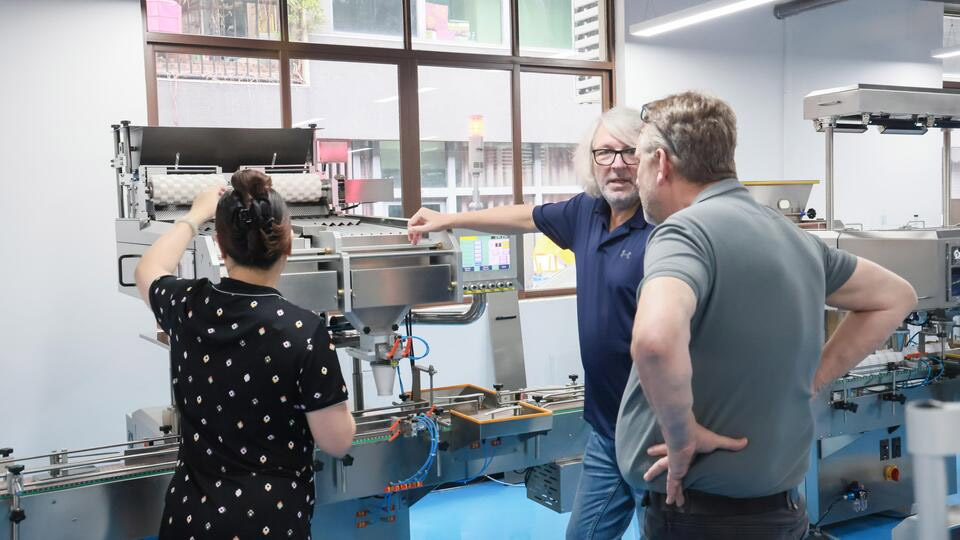
CE marking machinery is about more than a logo. A safe capsule filler takes much more than a sticker to build.
Choosing a capsule filling machine for the European market involves more than comparing production capacity and filling accuracy. Voor farmaceutische en nutraceutische fabrikanten, machine safety, naleving van de regelgeving, and technical documentation are equally important. This guide breaks down CE marking machinery requirements, clarifies how CE differs from GMP, and highlights the essential features buyers should look for in apparatuur voor het vullen van capsules.
Belangrijkste opmerkingen
- What the CE mark means and how CE differs from EU GMP.
- Which EU machinery rules apply and what evidence buyers need.
- The safety, cleaning and monitoring features worth inspecting on a capsule filler.
- How to check compliance documents before ordering equipment.
- What support to request from an overseas machinery supplier.
1. What Is CE Marking and How Does It Differ from EU GMP?
What Does the CE Mark Mean on Machinery?
CE is short for Conformité Européenne, meaning European Conformity. The CE mark serves as a manufacturer’s formal confirmation that a product satisfies the applicable legal requirements for entry into the EU market.
Echter, it does not indicate official government approval, superior product quality, or European manufacturing origin. Rather than being merely a label, CE marking reflects the manufacturer’s responsibility to evaluate product safety and provide evidence of conformity with relevant EU rules. This system helps protect users while allowing compliant products to move more freely across European markets.
Former EU Internal Market Commissioner Elżbieta Bieńkowska captured this balance: “It makes our EU products both safe and competitive”.
CE Marking vs. EU-GMP: Wat is het verschil?
CE marking for machinery focuses on reducing risks related to machine operation, ontwerp, en onderhoud, while Good Manufacturing Practice (GMP) ensures that pharmaceutical products are manufactured under controlled conditions with consistent quality. Bijvoorbeeld, a machine safety interlock prevents operators from accessing hazardous moving parts, whereas hygienic product-contact surfaces and validated cleaning procedures help minimize contamination risks. Although both contribute to safer pharmaceutical manufacturing, they serve different purposes and cannot substitute for one another.
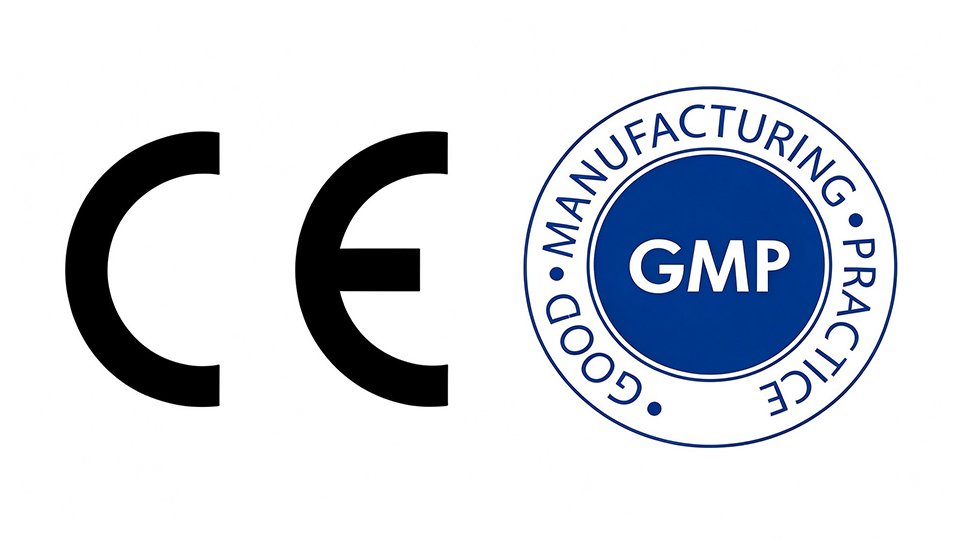
Tafel 1 – CE Marking vs. EU GMP for Capsule Manufacturing
| Focus | CE Marking | EU-GMP |
|---|---|---|
| Hoofddoel | Safety and applicable product conformity | Manufacturing quality and process control |
| Typical evidence | Risk assessment, bewakers, declaration | Schoonmaak, validation and controlled records |
| Practical example | Door interlock and emergency stop | Clean product-contact surfaces |
| Can it replace the other? | Nee | Nee |
2. Meeting Industry Standards With CE-Compliant Packaging Machines
Does CE Marking Is A Must for Pharma and Packaging Machines to Enter the European Market?
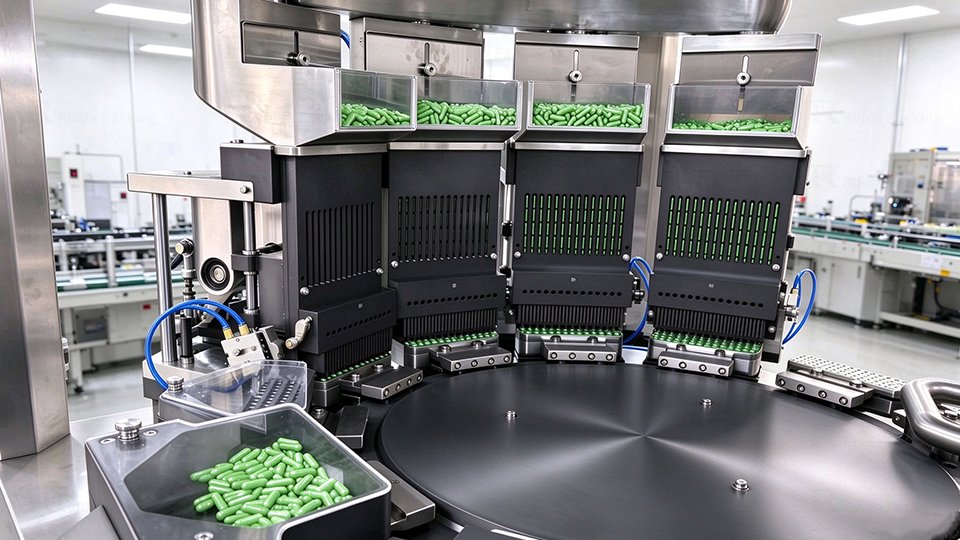
Complete capsule filling machines entering the EU market or being put into service there generally require CE marking. As of November 2026, the Machinery Directive 2006/42/EC remains the primary legal framework, while the Machinery Regulation (EU) 2023/1230 will take effect on 20 Januari 2027. These requirements cover all 27 EU member states, along with Iceland, Liechtenstein, and Norway in the EEA. Machines manufactured in China must also meet the applicable regulations before entering these markets. Daarom, instead of simply asking “is CE marking mandatory for machinery?”, buyers should identify the specific legal requirements that apply to their capsule filling equipment.
Which Other EU Requirements Can Apply?
EU machinery legislation sets out essential health and safety requirements to protect operators and reduce equipment-related risks. Depending on the machine’s intended use, the EMC Directive 2014/30/EU and ATEX requirements may also need consideration. Standards such as EN ISO 12100, EN ISO 14119, EN ISO 13850, and EN 60204-1 provide guidance on risk assessment, veiligheidsvergrendelingen, noodstops, and electrical safety. Beyond machinery compliance, EU GMP Volume 4 applies to relevant pharmaceutical manufacturing activities, while nutraceutical production may also be subject to food hygiene regulations.
How Is Machinery CE Conformity Demonstrated?
Voor fabrikanten, CE marking machinery involves more than attaching a CE label. The process requires several steps to demonstrate compliance with applicable EU regulations:
Identify Applicable Regulations: Determine which EU directives, regelgeving, and relevant technical standards apply to the machine.
Conduct a Risk Assessment: Identify potential mechanical, elektrisch, and operational hazards, then evaluate the associated risks.
Adopt Safety Designs: Add a protective cover, safety door interlocks, and emergency stop systems to the whole machine.
Prepare Technical Documentation: Compile relevant design drawings, elektrische schema's, risk assessment records, testresultaten, and operating instructions.
Complete Conformity Assessment: Follow the applicable assessment procedure and issue an EC/EU Declaration of Conformity before affixing the CE mark.
Not all capsule filling machines require third-party notified body involvement. Meeting CE marking requirements depends on documented safety assessments and compliance evidence, rather than simply purchasing a certificate.
3. What Does CE-Compliant Capsule Filling Equipment Look Like?
When evaluating CE marking machinery, follow the operator from the nameplate through the doors, gereedschap, hoppers and control screen. These steps reveal meaningful capsule filling machine safety features.
CE Marking and Machine Nameplate
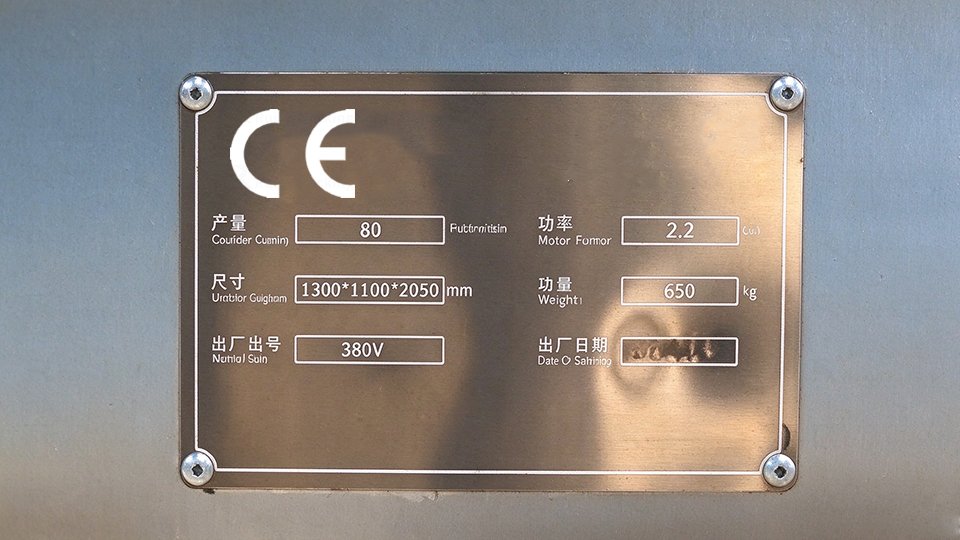
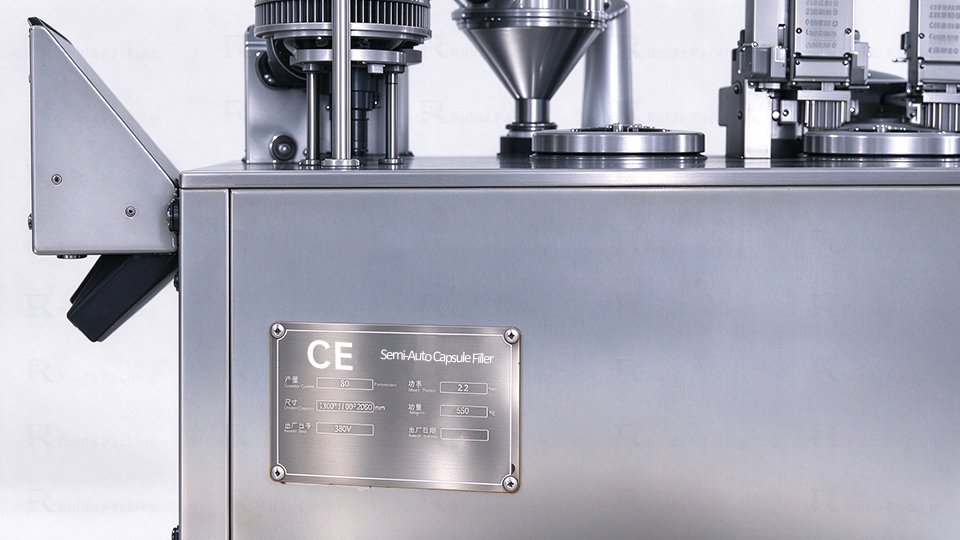
Under Annex I, Sectie 1.7.3 of the Machinery Directive, marking must be visible, legible and indelible. Check the manufacturer’s name and address, machine designation, series or type, serial number if any, construction year and CE marking. One thing for sure is that these details should follow the conformity. A CE compliant capsule filling machine must have evidence behind its label.
Safety Guards, Interlocks and Emergency Protection
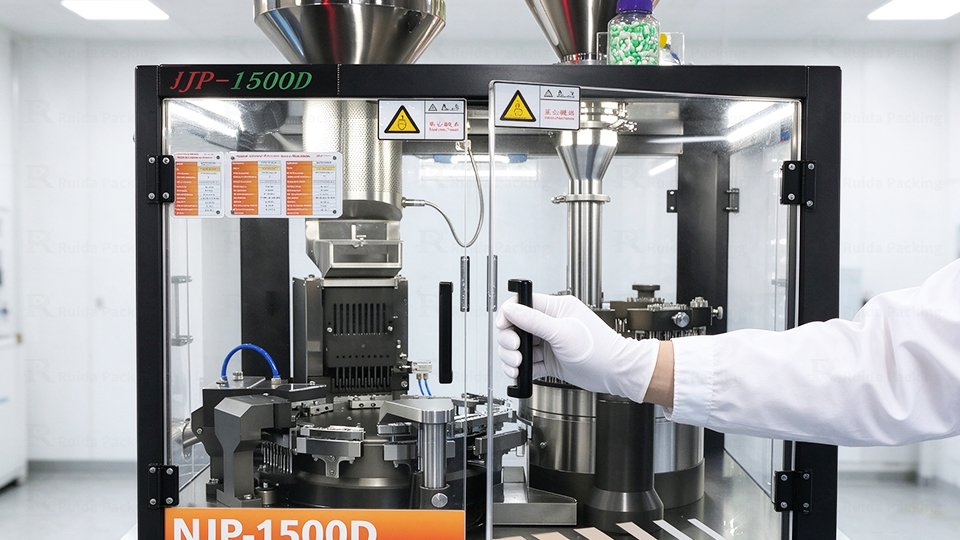
Enclosed machine design keeps hands away from moving stations. On an automatic capsule filling machine, opening safety interlock doors must stop hazardous motion appropriately; an alarm alone is insufficient. Accessible emergency stop buttons provide backup. Material level sensors at capsule orientation, powder loading and capsule feeding stations warn of shortages, but are process controls rather than universal CE mandates.
Safety is a serious production issue, not an abstract checklist. Eurostat recorded 509,851 non-fatal EU manufacturing accidents and 466 fatal accidents in 2024. These are broad manufacturing figures, but show why guarding and a capsule filling machine emergency stop deserve live FAT checks.
Low-Noise Cam Drive and Hygienic Stainless Steel
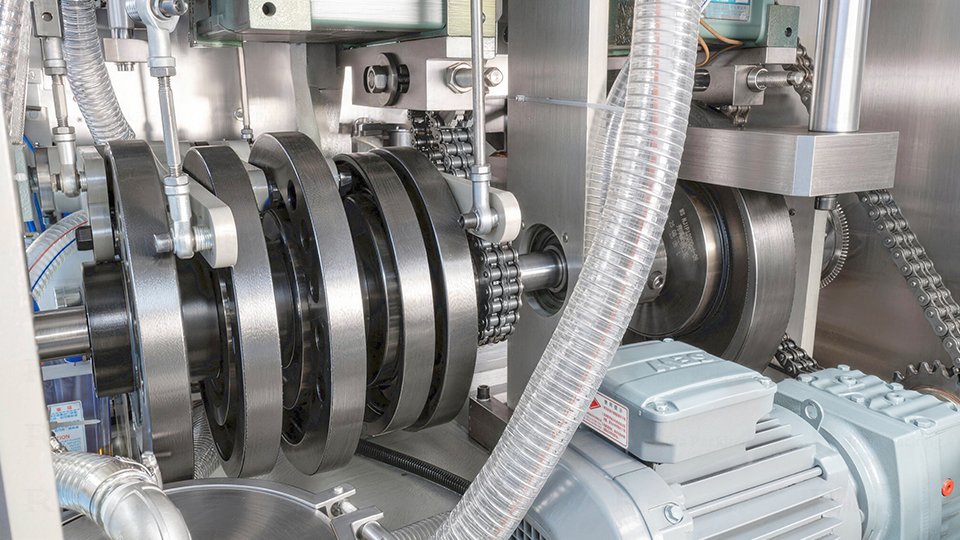
Noise and vibration control are also addressed in Annex I of the Machinery Directive. To improve operating stability, Ruida Packing adopts a one-piece internal cam manufactured through precision CNC machining. Its seamless, non-split structure reduces potential transmission gaps, supporting smoother movement and low-noise transmission during high-speed capsule filling. Echter, CE regulations do not set a fixed noise limit of 80 dB for all capsule filling machines. Actual noise levels should be measured under specified operating conditions and assessed against the applicable regulatory requirements.
Material serves as an essential part in pharmaceutical manufacturing as the pharmaceutical products are subject to strict regulatory requirements. Ruida Packing offers stainless steel 316L for product-contact components and SUS304 stainless steel for the machine’s outer structure. These materials provide corrosion resistance and support pharmaceutical hygiene design, maken routine cleaning and maintenance easier. Hoe dan ook, CE regulations do not specifically require these stainless steel grades. Manufacturers should select suitable materials based on product characteristics, reinigingsprocedures, en productieomstandigheden.
Schoonmaak, Maintenance and Fast Changeover
Safe design also makes routine work easier. An automatic lubrication system supplies measured cam grease at intervals, supporting smooth transmission. Modular tooling and controlled jog mode aid access; on applicable Ruida configurations, a module can be removed or changed in about 15 notulen. Safe maintenance procedures remain essential.
Compressed-air mold cleaning helps clear residue from upper and lower molds when clean air and dust extraction are correctly arranged. A powder recovery system and rejected-capsule collection reduce powder buildup and maintain surface cleaning. For exterior cleaning, a smooth automotive-grade painted frame is easier to wipe than some rough, orange-peel textured finishes that trap powder. Water and cloth may remove routine dust, but GMP cleaning and disinfection procedures still govern the site.
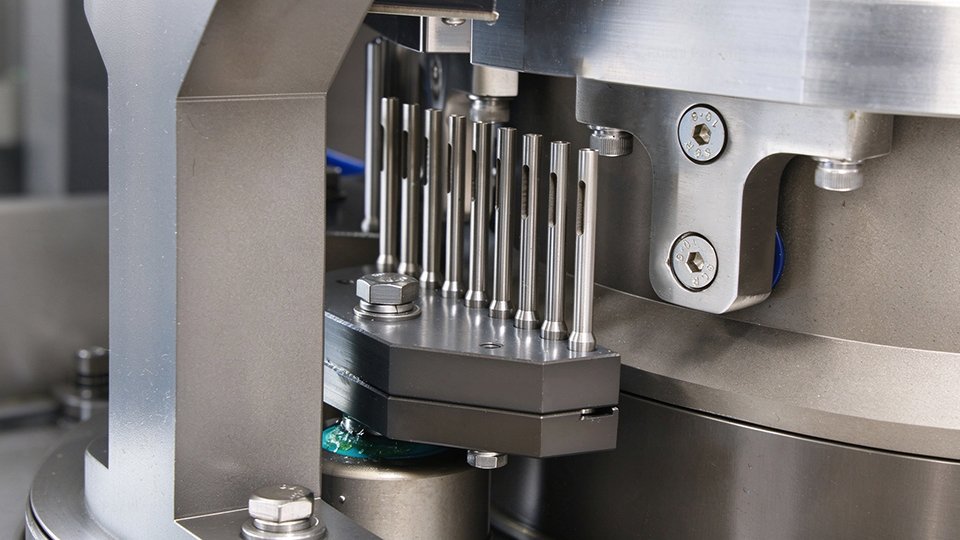
This separation matters. WHO pharmaceutical-quality official Dr Jicui Dong noted that “Compliance with current EU GMP standards needs both theoretical knowledge and practical skills”. Good capsule filling machine cleaning therefore depends on both thoughtful equipment design and trained operators.
Production Monitoring, Audit Trails and Serialization
For large pharmaceutical and nutraceutical manufacturers, production data is essential for quality control and traceability. Depending on manufacturers’ requirements, capsule filling machines can be equipped with three-level user access, electronic audit trails, elektronische handtekeningen, alarmregistraties, and batch production records. Advanced production monitoring and MES integration also allow machine data to be shared with factory quality management systems.
EU GMP-bijlage 11 and US 21 CFR-onderdeel 11 outline the regulatory expectations for managing electronic records and digital signatures in pharmaceutical manufacturing. Echter, these functions are not universally required under CE marking machinery regulations, and having them installed does not automatically guarantee regulatory compliance.
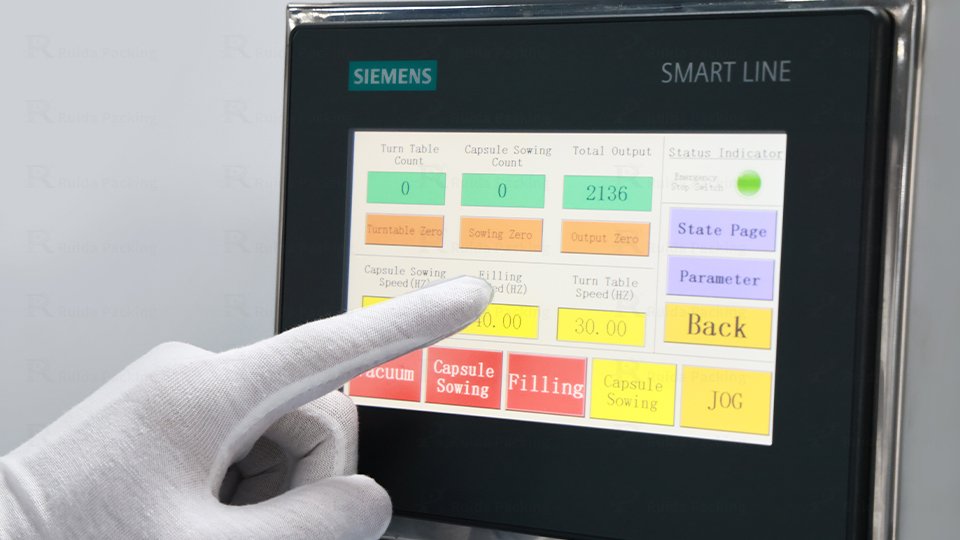
Traceability extends beyond the filling process. Under Delegated Regulation (EU) 2016/161, certain medicines marketed in the EU must carry a unique identifier encoded in a 2D Data Matrix on their packaging. This coding process generally takes place during downstream packaging rather than capsule filling. By connecting the capsule filler with cartoning and coding equipment through suitable data interfaces, manufacturers can associate filling batch information with packaging records, supporting more consistent product traceability throughout the production line.
4. How to Verify CE Compliance Before Buying Capsule Filling Equipment
Before purchasing CE marking machinery, buyers should verify its regulatory compliance through actual machine inspections and supporting documentation. Here is a practical checklist:
CE Marking and Nameplate: Check that the CE mark is properly displayed and the machine details match the signed Declaration of Conformity.
Applicable Regulations and Standards: Confirm which EU directives, regelgeving, and technical standards apply to the equipment.
Safety Designs: Inspect protective covers, safety door interlocks, and emergency stop systems and make sure they work as intended.
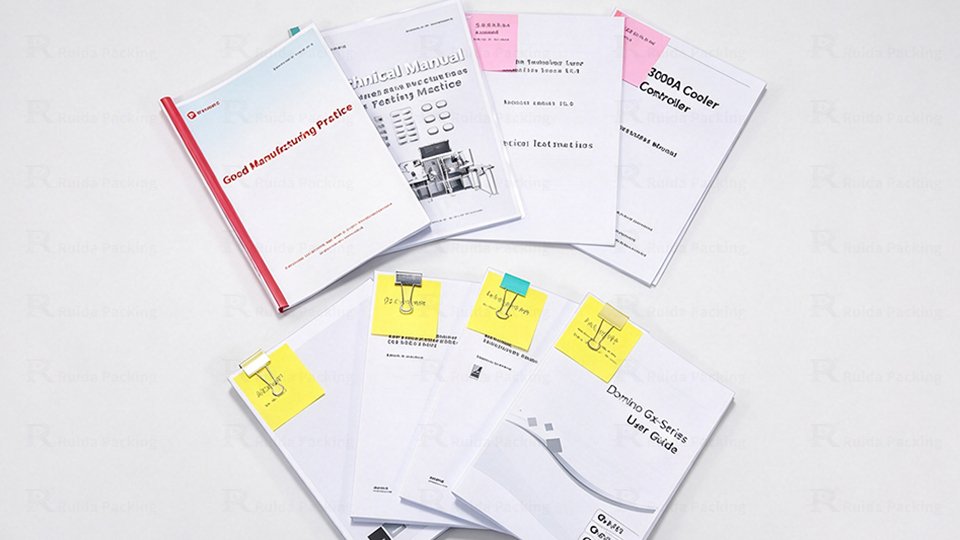
Technical Documentation: Review operating manuals, relevant safety test reports, and available risk assessment evidence.
Material Certificates: Request certificates for product-contact components to verify material specifications.
FAT and Qualification Documents: Review Factory Acceptance Test (VET) records and confirm whether SAT, IQ, and OQ documentation is included in the supplier’s services.
Herinneren, FAT and qualification documents support equipment verification but do not replace the technical documentation required for CE conformity. Whenever possible, inspect and test the actual machine before shipment.
5. Choosing Ruida Packing As Your Capsule Filling Equipment Partner
Founded in China in 2015, Ruida Packing reports five factories, CNC machining centers and lathes, capacity above 3,700 machines annually, and over 2,000 custom solutions each year. Freight-forwarding resources at Hong Kong, Shanghai and Shenzhen ports support customs handling and DDP/DDU delivery. Confirm company figures and terms when ordering.
For pharmaceutical capsule filling equipment, Ruida offers enclosed designs, veiligheidsvergrendelingen, dust-management options and modular maintenance features. Selected configurations support up to 16 production hours daily, subject to verification. Installatie, inbedrijfstelling, opleiding van operators, remote support, FAT/SAT and IQ/OQ assistance are available. Warranty terms specify three years for core components and one year for wearing parts.
Need CE compliant capsule filling equipment for a European project? Share your capsule sizes, formulering, expected output and site safety requirements with Ruida Packing before choosing a model.
6. Conclusie: CE Compliance Starts With Safer Design
For CE marking machinery, the logo only makes a long process of risk reduction visible. Good purchasing decisions consider guards, onderhoud, GMP cleanability and traceable production together. Buyers should verify the precise machine configuration, its legal evidence and its performance during acceptance testing—not rely on a logo alone.
7. Frequently Asked Questions About CE Marking Machinery
Is CE Marking Mandatory for Capsule Filling Machines in Europe?
Generally yes for complete machinery placed on the EU or EEA market. Check the product category, destination and applicable legislation.
What Does the CE Mark Mean on Machinery?
It means the manufacturer declares compliance with applicable EU product rules; it is not a universal third-party quality certificate.
How Do CE Marking and EU GMP Differ in Their Requirements and Purpose?
CE addresses applicable equipment safety and conformity. EU GMP addresses controlled manufacturing, hygiëne, validation and quality assurance.
What Are the CE Marking Requirements for Capsule Filling Equipment?
They include risk assessment, appropriate guarding and controls, technische documentatie, instructies, a conformity declaration and correct marking.
How Can I Verify Whether a Capsule Filling Machine Is CE Compliant?
Compare the nameplate, signed declaration, listed legislation and safety-test evidence, then witness relevant functions at FAT.
Does a Capsule Filling Machine Need Third-Party CE Certification?
Niet noodzakelijkerwijs. The assessment route depends on machine classification and applicable EU law; many ordinary machines use manufacturer assessment.
How Long Is a CE Certificate Valid for Machinery?
CE marking has no universal fixed expiry. The declaration and technical documentation must remain current, especially after relevant changes.
Does CE Marking Require Audit Trails and Electronic Signatures?
Not as a universal machinery requirement. These may be needed for regulated electronic records under relevant EU GMP or FDA rules.
8. Referenties
[1] Europese Unie, Your Europe: CE Marking – EU-vereisten.
[2] Europese Commissie: Evaluation of Machinery Safety and Product Liability Rules (2018).
[3] Europese Commissie: EudraLex-volume 4 – Goede productiepraktijk.