From Initial Inquiry to Factory Visit
In February 2026, a pharmaceutical and health supplement manufacturer from South Africa reached out to Ruida Packing through the company’s English-language website. The client was searching for reliable blister packaging and capsule filling equipment capable of handling both tablets and capsules while meeting strict GMP standards.
Sales Manager Emmy responded within 2 minutes, introducing Ruida Packing’s pharmaceutical packaging solutions and providing more detailed information about the company’s DPP series blister packaging machines and capsule filling equipment, including compatible blister packaging materials such as PVC, aluminum foil, and aluminum-aluminum materials, supported blister sizes, machine output capacity, and applications for tablets and capsules. Emmy also explained that the capsule filling machines can handle different filling materials such as powders and granules, including materials with varying flow characteristics, while maintaining stable filling accuracy and reliable production performance.
Over the following weeks, both sides held several online meetings and exchanged technical documents to discuss the client’s production requirements in depth.
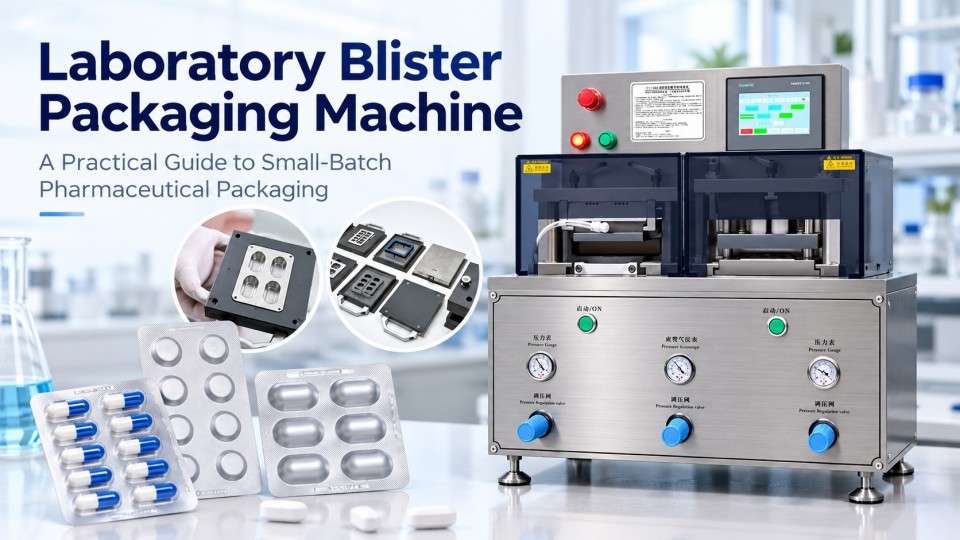
The client’s technical team shared details about their products, including capsule sizes ranging from #00 to #4, tablet specifications, and packaging materials such as PVC/aluminum foil and aluminum-aluminum cold forming materials for moisture-sensitive products. After reviewing the client’s needs, Emmy and Ruida Packing’s engineering team recommended three key machines: the DPP-270 Aluminum-Plastic Blister Packaging Machine, the DPP-180 Aluminum-Plastic Blister Packaging Machine, and the Semi-Automatic Capsule Filling Machine.
The client was particularly interested in finding a long-term equipment partner rather than simply purchasing individual machines. Following several productive technical discussions, the South African delegation decided to visit Ruida Packing’s Guangzhou facility in May for a full on-site evaluation.
Client Concerns Centered Around Flexibility, Capacity, and Compliance
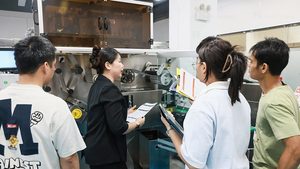
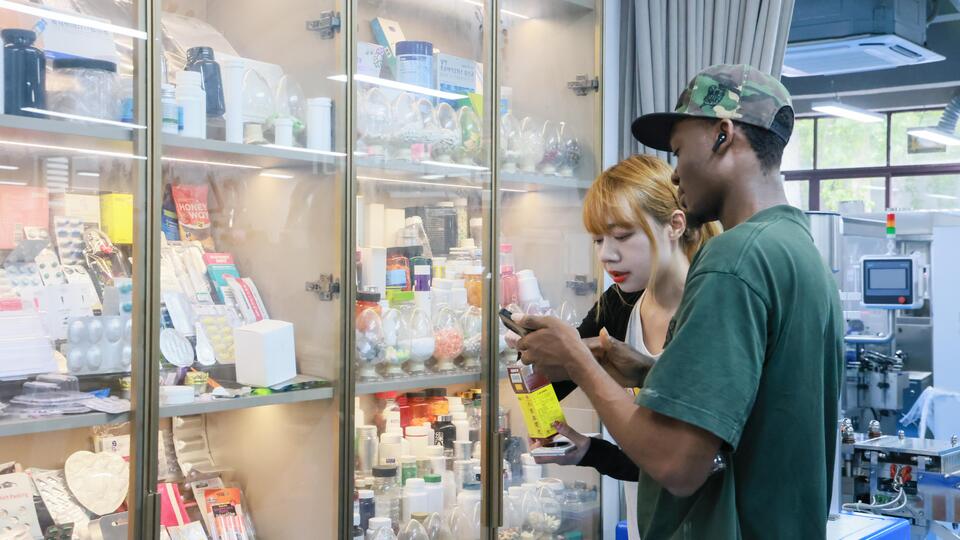
On May 13, the South African delegation arrived at Ruida Packing’s production facility, where they were welcomed by Emmy. Katie assisted throughout the visit as translator, while Engineer Chen led the technical demonstrations and answered operational questions.
The client focused on three key areas: production flexibility, equipment capacity, and GMP compliance.
Fast Product Changeovers for Different Production
The client explained that their production facility handles a wide range of tablet and capsule products, requiring frequent format and mold changes. Minimizing downtime during product changeovers was one of their top priorities.
Emmy explained that the DPP-270 blister packaging machine is equipped with a quick-change mold system that simplifies transitions between products. The forming, sealing, embossing, and punching stations share a unified positioning system, allowing operators to complete mold changes in approximately 15 minutes. Scale indicators and modular adjustment points also make the process more consistent and repeatable.
For the DPP-180 model, Emmy highlighted its compact design and similar quick-change structure, making it especially suitable for medium-scale production and frequent batch switching.
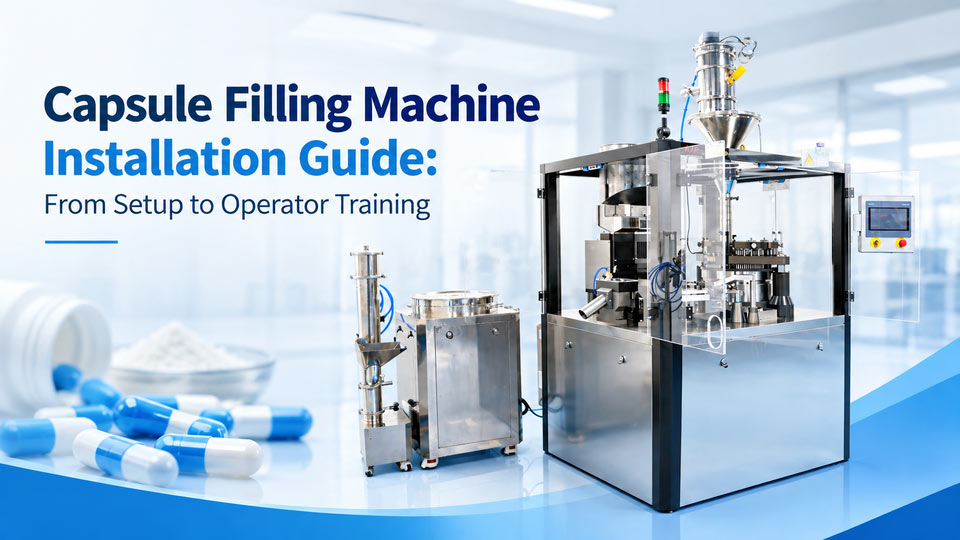
The client also asked about the capsule filling machine’s flexibility. Engineer Chen explained that the semi-automatic capsule filling machine supports capsule sizes from #00 to #5 and allows fast changeovers by replacing the mold plate and adjusting the dosing system.
Production Capacity and Long-Term Scalability
The South African team also wanted to ensure the equipment could support both their current production demands and future expansion plans.
Emmy provided equipment parameters for each model. She explained that the DPP-270 blister packaging machine can achieve outputs of up to 11,200 plates per hour, making it ideal for medium- to large-scale pharmaceutical production. The DPP-180 provides a more compact solution for smaller production runs and pilot projects, with typical outputs ranging from 3,600 to 4,800 plates per hour depending on product specifications and packaging materials.
For capsule production, the semi-automatic capsule filling machine offers output rates between 10,000 and 20,000 capsules per hour, making it a practical option for small- and medium-sized pharmaceutical manufacturers.
GMP Compliance and Pharmaceutical Standards
Regulatory compliance was another major topic during the meeting. Since the client operates in a regulated pharmaceutical environment, they needed assurance that the equipment would meet GMP requirements and South African pharmaceutical standards.
Emmy explained that all Ruida Packing pharmaceutical equipment is designed with GMP compliance in mind. The DPP-270 and DPP-180 blister packaging machines use stainless steel construction, while all product-contact components are made from SUS316 stainless steel to meet pharmaceutical hygiene requirements.
The client was also informed that Ruida Packing has obtained ISO, CE, and SGS certifications and follows strict quality management procedures throughout production, assembly, inspection, and testing.
Live Demonstration of the DPP-270 Blister Packaging Machine
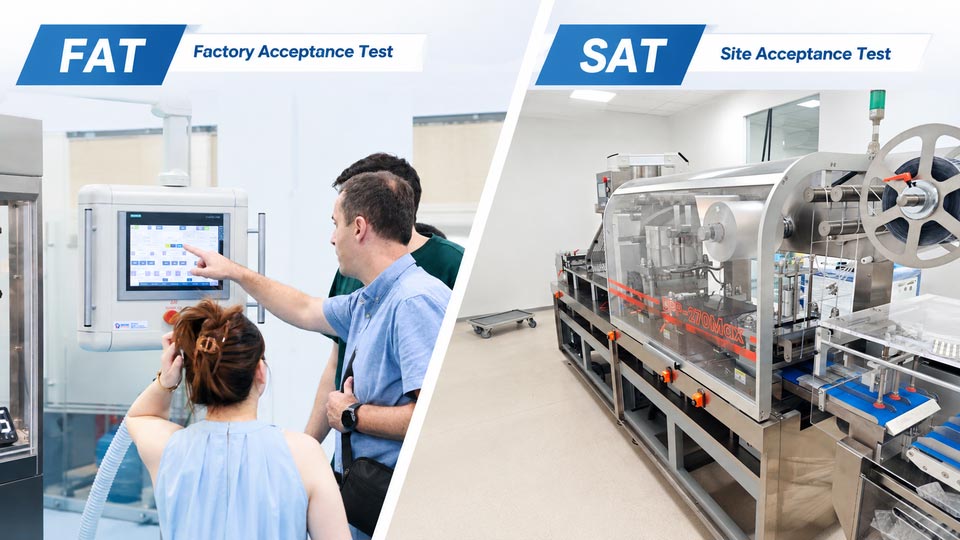
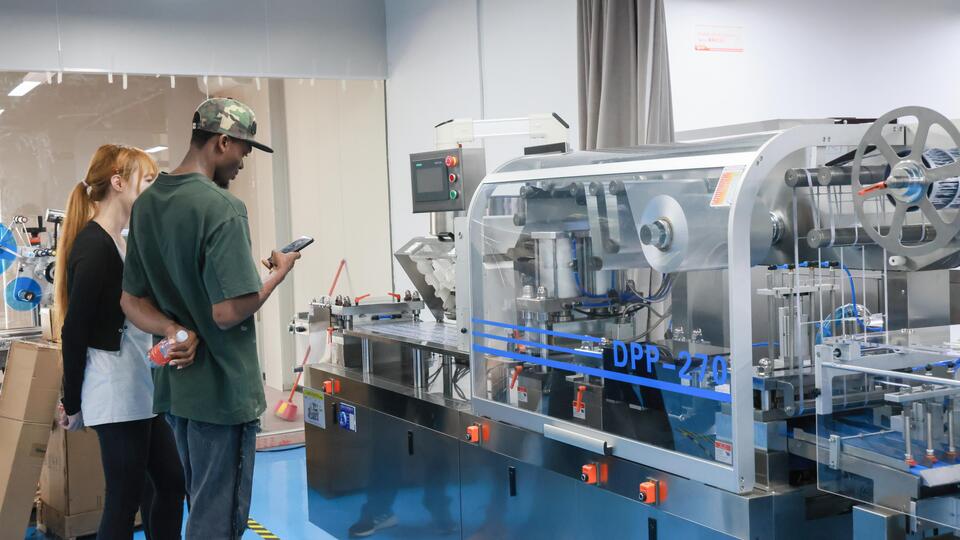
The first demonstration featured the DPP-270 Aluminum-Plastic Blister Packaging Machine. Once the machine started running, the client observed the complete automated process, including PVC film forming, tablet feeding, heat sealing, embossing, and punching.
The client closely watched the machine’s operating stability and overall production flow. During the demonstration, they asked how the machine maintains consistent forming depth across different blister cavities.
Engineer Chen explained that the machine uses independently controlled heating zones and a servo-driven forming system, allowing cavity depth accuracy to remain within ±0.1 mm. He also demonstrated the digital control interface and real-time operating parameters.
The client then asked whether the machine could process aluminum-aluminum cold forming materials for moisture-sensitive pharmaceutical products. Engineer Chen confirmed that both the DPP-270 and DPP-180 support PVC/aluminum and aluminum-aluminum packaging formats, with quick switching between material types.
DPP-180 Blister Packaging Machine Demonstrates Compact Efficiency
The next demonstration focused on the DPP-180 Aluminum-Plastic Blister Packaging Machine.
Although more compact than the DPP-270, the machine demonstrated the same level of precision and operational stability. Engineer Chen explained that the DPP-180 is especially suitable for smaller production spaces, pilot production, and R&D applications.
The client asked how the machine performs during frequent product changes and small-batch production runs. Engineer Chen explained that the quick-change mold system and servo-driven traction system allow operators to maintain stable performance and accurate positioning even during frequent production adjustments.
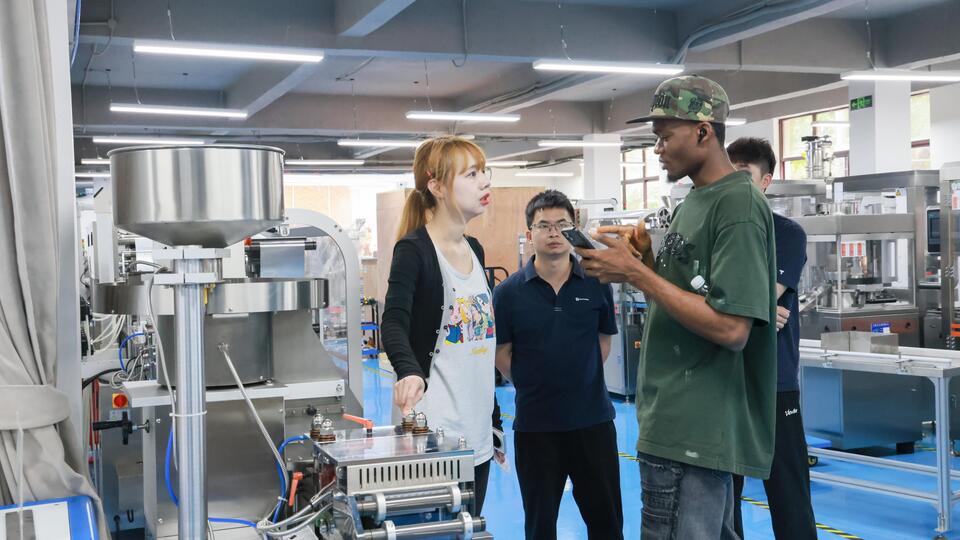
Semi-Automatic Capsule Filling Machine Receives Positive Feedback
The final demonstration featured the Semi-Automatic Capsule Filling Machine.
Engineer Chen demonstrated the complete filling process, including capsule loading, separation, powder filling, capsule closing, and product discharge.
The delegation asked about cleaning procedures between different products. Engineer Chen demonstrated how the machine’s modular structure allows operators to quickly disassemble key components for cleaning and maintenance, helping pharmaceutical manufacturers reduce cross-contamination risks.
Client Expresses Strong Confidence in Ruida Packing Equipment
At the conclusion of the visit, the South African delegation gave highly positive feedback regarding both the equipment and the professionalism of the Ruida Packing team.
The client stated that the DPP-270 blister packaging machine delivered impressive production speed, precision, and automation performance. They also praised the DPP-180 for its flexibility and suitability for smaller production environments.
The semi-automatic capsule filling machine was recognized for its reliability, user-friendly operation, and cost-effective design.
Beyond the equipment itself, the client appreciated the professionalism of the entire Ruida Packing team. Emmy’s clear communication, Katie’s translation support, and Engineer Chen’s detailed technical explanations all contributed to a smooth and productive visit.
Ruida Packing Continues Expanding Its Presence in Global Pharmaceutical Markets
From the initial consultation stage to live factory demonstrations and technical discussions, Ruida Packing demonstrated its client-focused approach, strong engineering capabilities, and commitment to long-term service support.
With more than 10 years of industry experience, a professional engineering and development team, and equipment exported to markets across Asia, Europe, the United States, and Africa, Ruida Packing continues to build its reputation as a trusted supplier of pharmaceutical packaging and capsule filling equipment worldwide.