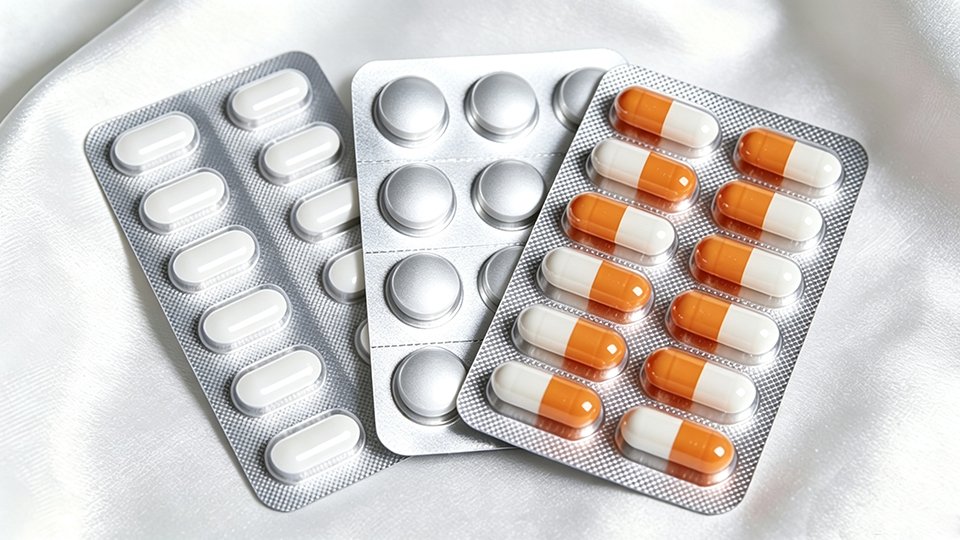
Pytanie „Jak długo wystarczą tabletki po wyjęciu z blistra?" nie ma jednej uniwersalnej odpowiedzi. Tabletka wyjęta do natychmiastowego użycia to nie ta sama sytuacja, co ta przechowywana przez kilka dni w pudełku po tabletkach lub pozostawiona w blistrze z podartą folią. Data ważności podana na etykiecie jest ustalona dla konkretnego preparatu, pakiet, i stan przechowywania. Po zmianie pakietu lub środowiska przechowywania, sama ta data nie może potwierdzić, jak długo pojedynczy tablet zachowa tę samą jakość.
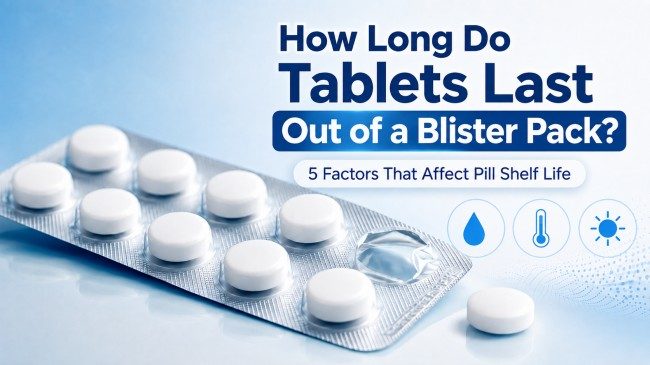
Odpowiedź zależy głównie od pięciu czynników: sformułowanie, czas poza blistrem, warunki przechowywania, pojemnik zastępczy lub stan oryginalnego opakowania, oraz jakość bariery i uszczelnienia blistra. The Wytyczne FDA dotyczące systemów zamykania pojemników farmaceutycznych wyjaśnia, że opakowanie powinno chronić postać leku przed istotnymi przyczynami zepsucia, w tym wilgoć, światło, tlen, zanieczyszczenie, i uszkodzenia fizyczne. Z tego powodu opakowanie stanowi element warunku przydatności do spożycia, a nie zwykły uchwyt.
Jak długo tabletki mogą pozostać poza blistrem?
Tabletka nie traci ważności w momencie przepchnięcia jej przez folię. Bardziej dokładne rozróżnienie dotyczy krótkiej ekspozycji i ciągłego przechowywania poza pierwotną wnęką.
Tabletka przyjęta wkrótce po usunięciu ma tylko krótki okres działania. Tablet pozostawiony luzem na nocnym stoliku, noszony w kieszeni, lub przechowywany przez kilka dni poza blistrem, pozostaje w innych warunkach znacznie dłużej.
Nie ma też niezawodnej całodobowej oferty, 72-godzina, lub zasada jednego tygodnia na każdą tabletkę. Konwencjonalne tabletki powlekane, tabletki musujące, tabletki rozpadające się w jamie ustnej, i preparaty wrażliwe na wilgoć nie reagują na ekspozycję w ten sam sposób. Jedna tabletka może pozostać fizycznie niezmieniona przez okres, który powoduje zmiękczenie drugiej, pękać, wchłaniać wilgoć, lub utracić integralność powłoki.
Na konkretny lek, etykieta opakowania i ulotka dla pacjenta mają pierwszeństwo. Stwierdzenia typu „chronić przed wilgocią,” „chronić przed światłem,” lub „przechowywać w oryginalnym opakowaniu” wskazują, że opakowanie spełnia wymagane warunki przechowywania. Kiedy te instrukcje są obecne, ogólne doświadczenie z innym tabletem nie jest niezawodnym substytutem.
Czynnik 1: Forma tabletki i postać dawkowania
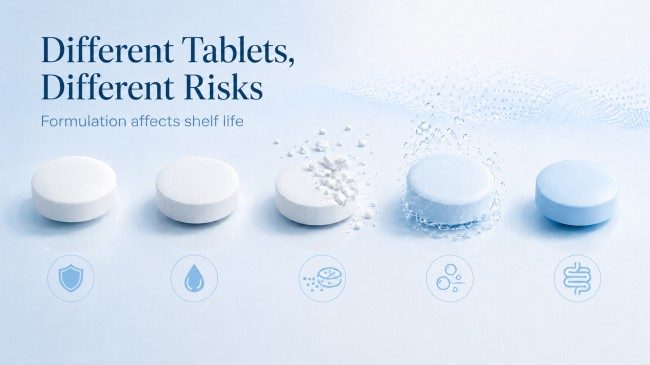
Tabletki o podobnym wyglądzie mogą zawierać różne składniki aktywne, substancje pomocnicze, powłoki, i poziom wilgoci. Różnice te wpływają na to, jak reagują na powietrze, wilgotność, ciepło, i światło.
Powłoka filmowa zapewnia pewną ochronę fizyczną, ale nie zastępuje zapieczętowanego blistra. Wilgoć może nadal przedostawać się przez powłokę i docierać do rdzenia tabletki. W zależności od preparatu, ekspozycja może mieć wpływ na twardość, rozpuszczenie, stabilność chemiczna, lub fizyczną postać składników.
Kilka postaci dawkowania wymaga szczególnej uwagi:
- Tabletki higroskopijne łatwiej absorbują wilgoć z otaczającego powietrza.
- Tabletki musujące są zaprojektowane tak, aby reagować z wodą i dlatego w dużym stopniu zależą od opakowań odpornych na wilgoć.
- Tabletki rozpadające się w jamie ustnej szybko się rozkładają i mogą być bardziej podatne na wilgoć i uszkodzenia podczas manipulacji.
- Tabletki powlekane dojelitowo polegać na nienaruszonej powłoce funkcjonalnej, ale ta powłoka nie jest opakowaniem do długotrwałego przechowywania.
- Tabletki światłoczułe może zależeć od folii, nieprzezroczyste materiały, lub karton zewnętrzny.
A Recenzja Journal of Pharmaceutical Sciences na temat opakowań chroniących przed wilgocią wyjaśnia, że wybór opakowania stałych produktów doustnych powinien uwzględniać stabilność chemiczną i fizyczną, wrażliwość na wilgoć, warunki przechowywania, oraz bariera dla wilgoci dostarczona w opakowaniu. Sposób przechowywania, który sprawdza się w przypadku jednego tabletu, nie powinien stać się ogólną zasadą w przypadku innego.
Czynnik 2: Czas poza pęcherzem
Czas ma znaczenie, bo im dłużej tabletka pozostaje poza swoją wnęką, tym dłużej pozostaje w warunkach, które nie były częścią oferowanego pakietu.
Pierwsze kilka minut po wyjęciu różni się od długotrwałego przechowywania. Tabletka zażyta niezwłocznie ma jedynie krótkotrwały kontakt z powietrzem w pomieszczeniu, światło, i obsługa. Po pozostawieniu tej samej tabletki poza blistrem na kilka godzin lub dni, wpływ środowiska staje się coraz ważniejszy.
Czas sam, Jednakże, nie przesądza o odpowiedzi. Jedna noc w chłodnym miejscu, sucha szafka nie jest równoznaczna z jedną nocą w nagrzanym samochodzie lub wilgotnej łazience. Tabletu wrażliwego na wilgoć i konwencjonalnego tabletu powlekanego również nie można oceniać tym samym zegarem.
Oznacza to, że poziom niepewności generalnie wzrasta wraz z dłuższą ekspozycją, ale zasady tej nie da się przełożyć na jeden uniwersalny termin. Odpowiednie pytanie brzmi nie tylko: „Jak długo tablet stał na zewnątrz?” Jest to również „Jaki to typ tabletu, gdzie był przechowywany, i jaka ochrona wokół niego pozostała?”
To rozróżnienie utrzymuje czynnik czasu w odpowiedniej perspektywie. Krótka ekspozycja nie powoduje natychmiastowego wygaśnięcia, podczas gdy długotrwałe przechowywanie poza blistrem oddala tabletkę od warunków zapewniających okres trwałości podany na etykiecie.
Czynnik 3: Wilgotność, Ciepło, Światło, i obsługa
Gdy tabletka znajdzie się poza zamkniętą wnęką, większy wpływ mają otaczające pomieszczenie i warunki obsługi.
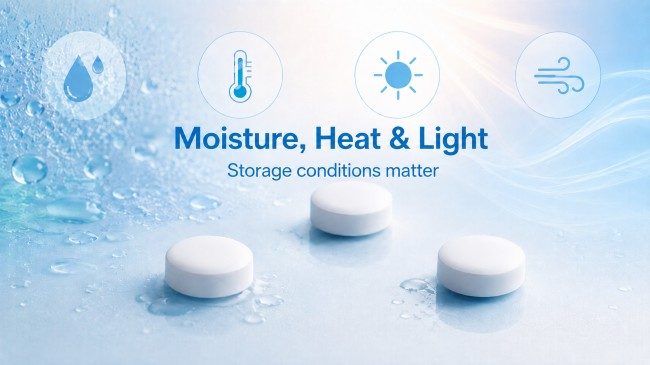
Wilgotność
Para wodna może przedostać się do tabletki lub jej powłoki. W zależności od produktu, narażenie na wilgoć może przyczynić się do zmiękczenia, lepkość, wyśmienity, zmieniona twardość, zmiany w rozpuszczaniu, lub degradację chemiczną. Łazienki, obszary obok zlewów, i półki nad urządzeniami wytwarzającymi ciepło mogą narażać tablety na działanie warunków odbiegających od chłodu, sucha szafka.
Ciepło
Wyższe temperatury mogą przyspieszyć zmiany fizyczne i chemiczne. Samochody, bezpośrednie światło słoneczne, grzejniki, i obszary o dużych wahaniach temperatury różnią się od zwykłych, oznakowanych pomieszczeń do przechowywania.
Światło i Powietrze
Niektóre preparaty wymagają ochrony przed światłem, dostarczane przez folię aluminiową, nieprzezroczyste materiały, lub karton zewnętrzny. Przezroczysty organizer nie zapewnia automatycznie takiej samej ochrony.
Kontakt z powietrzem zmienia także narażenie na tlen i parę wodną, chociaż znaczenie różni się w zależności od sformułowania. Błędem byłoby założenie, że każda tabletka reaguje z taką samą szybkością po wyjęciu z blistra.
Postępowanie i identyfikacja
Luźne tabletki można pocierać o siebie, żeton, zbierać kurz, lub zmieszać się z innymi produktami. Tablet wyjęty z opakowania może również utracić istotne elementy identyfikacyjne. Kolor, kształt, i same oznaczenia nie wystarczą, aby potwierdzić, czym jest sypka tabletka.
Widoczne zmiany w postaci pęknięć, niezwykła miękkość, odbarwienie, lub nietypowy zapach zasługują na uwagę, ale normalny wygląd nie może udowodnić, że każdy atrybut jakości pozostaje niezmieniony. The Wytyczne NHS dotyczące przechowywania leków w domu zaleca przechowywanie leków w oryginalnych opakowaniach, zgodnie z instrukcjami specyficznymi dla produktu, oraz unikanie ciepłych lub wilgotnych miejsc przechowywania.
Czynnik 4: Pojemnik zastępczy i oryginalny stan opakowania
Warunki przechowywania zmieniają się na dwa typowe sposoby: tabletkę przenosi się do innego pojemnika, lub oryginalny blister jest uszkodzony.
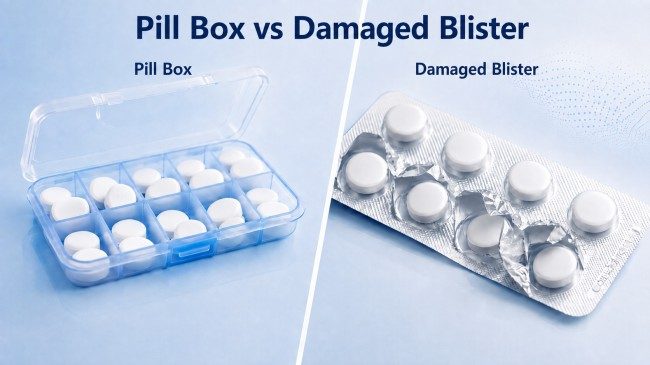
Pudełko na pigułki może ułatwić przestrzeganie harmonogramu dawkowania, ale jego główną funkcją jest raczej organizacja niż ochrona bariery farmaceutycznej. Jego wydajność zależy od materiału pojemnika, dopasowanie pokrywy, częstotliwość otwierania, transmisja światła, i miejsce przechowywania.
Niektóre leki są profesjonalnie przepakowywane w ramach kontrolowanych procedur. Nie oznacza to jednak, że każdy tablet można swobodnie przenieść do dowolnego organizera. Produkty o określonej wilgotności, światło, lub instrukcje w oryginalnym opakowaniu wymagają szczególnej ostrożności.
Druga sytuacja to tabletka, która pozostaje w uformowanej kieszonce, mimo że folia lub plomba uległa uszkodzeniu. Rozdarta folia, dziurka, podniesiona krawędź, miażdżący, lub niepełne wiązanie może połączyć wnękę z otaczającym powietrzem. Kluczowym pytaniem nie jest to, czy tablet wypadł. Chodzi o to, czy pojedyncza wnęka nadal funkcjonuje jako zamknięty pakiet.
Istotne wady obejmują:
- przekłuć lub rozdarć folii przykrywającej;
- zmarszczki przechodzące przez uszczelniony obszar;
- cząsteczki uwięzione w uszczelce;
- niepełne wiązanie wokół ubytku;
- podnoszenie krawędzi, miażdżący, lub zgięcie otwierające uszczelkę.
Niektóre wady są trudne do oceny wizualnej. Małe kanały lub dziurki mogą zmienić środowisko wewnętrzne, nawet jeśli większość blistra wydaje się nienaruszona. W przypadku uszkodzonego opakowania lub tabletki przechowywanej w niepewnych warunkach, porada farmaceuty lub producenta dotycząca konkretnego produktu jest bardziej wiarygodna niż zgadywanie na podstawie upływu czasu lub wyglądu.
Czynnik 5: Materiały na blistry i jakość uszczelnień
Różne receptury wymagają różnych poziomów odporności na wilgoć, tlen, i światło. Struktury pęcherzowe są zatem wybierane na podstawie danych dotyczących stabilności, wymagania dotyczące barier, wydajność formowania, i warunki dystrybucji.
| Struktura blistra | Ogólny profil bariery | Wspólna logika wyboru |
| PCV/Aluminium | Podstawowa ochrona w postaci dawki jednostkowej z widocznością produktu | Tabletki o umiarkowanych potrzebach barierowych |
| PCV/PVDC/Aluminium | Większa odporność na przenikanie pary wodnej | Produkty wymagające silniejszej ochrony przed wilgocią |
| Laminat PCTFE/Aluminium | Wyższa bariera dla wilgoci z przezroczystą wnęką | Bardziej wrażliwe na wilgoć formuły |
| Formowane na zimno Alu-Alu | Silna wilgoć, tlen, i bariera świetlna | Produkty bardzo wrażliwe lub wymagający klimat |
Wybór materiału to tylko część wyniku. A maszyna do pakowania w blistry muszą tworzyć spójne wgłębienia, umieść każdą tabletkę prawidłowo, wyrównać folię przykrywającą, i utrzymywać stabilne warunki uszczelnienia.
Temperatura, ciśnienie, czas przebywania, napięcie sieci, oraz zanieczyszczenia w obszarze zgrzewu mogą mieć wpływ na jakość opakowania. Nawet materiał o wysokiej barierowości nie może zapewnić zamierzonej ochrony, jeśli wgłębienie jest źle uformowane lub folia przykrywająca nie jest odpowiednio uszczelniona.
Kamery mogą identyfikować puste ubytki, zagubione lub uszkodzone tabletki, i widoczne wady folii. Testowanie integralności uszczelnienia jest nadal potrzebne, gdy wycieku nie można potwierdzić samym wyglądem.
Ruida Packing maszyny pakujące w blistry wsparcie zastosowań farmaceutycznych obejmujących formaty Alu-PVC formowane termicznie i Alu-Alu formowane na zimno. W zależności od wybranej konfiguracji, proces może łączyć podawanie materiału, tworzenie się, ładowanie tabletek lub kapsułek, Uszczelnienie ciepła, kodowanie, uderzanie, wypisać, i kontrola wzroku.
Maszyna nie określa terminu ważności leku. Jego rolą jest spójne odtworzenie zatwierdzonego procesu pakowania, tak aby wybrane materiały i konstrukcja uszczelnienia mogły zapewnić zamierzoną ochronę.
Co należy sprawdzić przed przechowywaniem tabletek poza blistrem
Przed wcześniejszym wyjęciem tabletek lub użyciem tabletki z uszkodzonego opakowania, sprawdzać:
- Czy na etykiecie jest napisane, że lek powinien znajdować się w oryginalnym opakowaniu??
- Czy tablet jest wrażliwy na wilgoć?, światłoczułe, musujący, lub szybko się rozpada?
- Jak długo przebywał poza nienaruszoną jamą?
- Czy był wystawiony na działanie ciepła, wilgotność, bezpośrednie światło, lub wielokrotna obsługa?
- Czy został umieszczony w innym pojemniku, i czy ten pojemnik jest bezpiecznie zamknięty?
- Czy oryginalna folia jest rozerwana, przebity, wzniesiony, zgnieciony, lub częściowo otwarte?
- Czy tablet nadal można śmiało dopasować do jego nazwy, wytrzymałość, i instrukcje?
W wyniku tych kontroli nie jest obliczana nowa data ważności. Pokazują, kiedy zmieniły się pierwotne warunki przechowywania i kiedy potrzebne są wskazówki dotyczące konkretnego produktu.
Często zadawane pytania
Czy tabletka traci ważność natychmiast po opuszczeniu opakowania blistrowego??
NIE. Usunięcie nie powoduje natychmiastowego wygaśnięcia. Zmienia to warunki przechowywania. Znaczenie tej zmiany zależy od sformułowania, czas narażenia, środowisko, i pojemnik zastępczy.
Czy mogę wcześniej wyjąć tabletki z blistra??
To zależy od produktu. Pudełko na pigułki może pomóc w zorganizowaniu dawek, ale nie jest to automatycznie odpowiednik oryginalnego blistra. Sprawdź ulotkę dla pacjenta i etykietę apteczną, zwłaszcza gdy produkt wymaga ochrony przed wilgocią i światłem.
Czy tabletki mogą pozostać w pudełku po tabletkach przez tydzień??
Nie ma zasady jednego tygodnia dla wszystkich leków. Przydatność zależy od tabletu, organizator, i środowisko przechowywania. Przeniesienie z góry jest decyzją dotyczącą konkretnego produktu, a nie powszechną praktyką.
Czy tablet jest nadal chroniony, jeśli folia blistra jest rozdarta??
Niezawodnie. Łza, przebicie, lub otwarta krawędź może odsłonić wnękę na działanie otoczenia, nawet jeśli tablet pozostaje w środku. Uszkodzonej jamy nie należy traktować jak nienaruszonego, zamkniętego blistra.
Dlaczego niektóre tabletki są pakowane w blistry Alu-Alu?
Opakowania Alu-Alu wybierane są wtedy, gdy produkt wymaga silnej ochrony przed wilgocią, tlen, lub światło. Usuwa bezpośrednią widoczność produktu i generalnie wykorzystuje więcej materiału opakowaniowego niż przezroczysty blister termoformowany, dlatego wybór powinien opierać się na wymaganiach dotyczących stabilności i produkcji.
Wniosek
To, jak długo tabletki wyjdą z blistra, zależy nie tylko od zegara. Sformułowanie, czas narażenia, wilgotność i ciepło, pojemnik zastępczy, a bariera blistra i integralność uszczelnienia wpływają na poziom ochrony.
Tabletka wyjęta do natychmiastowego użycia różni się od tej przechowywanej luzem przez kilka dni, a rozdarta jama różni się od zamkniętego blistra. Przechowywanie tabletek w oznakowanym opakowaniu do czasu użycia pozwala zachować warunki stosowane w celu zapewnienia ich trwałości. Kiedy te warunki się zmienią, etykietę produktu, farmaceuta, lub producent powinien kierować następną decyzją.
Referencje
2. Światowa Organizacja Zdrowia. Wytyczne dotyczące opakowań produktów farmaceutycznych.
3. Fundusz NHS Szpitali United Lincolnshire. Przechowywanie leków w domu.