السؤال "كم من الوقت تدوم الأقراص خارج علبة البثرة?"ليس لديها إجابة عالمية واحدة. فالجهاز اللوحي الذي تمت إزالته للاستخدام الفوري ليس في نفس الوضع الذي يتم فيه تخزينه لعدة أيام في علبة حبوب منع الحمل أو تركه داخل نفطة مع رقائق ممزقة. يتم تحديد تاريخ انتهاء الصلاحية المسمى لصيغة محددة, طَرد, وحالة التخزين. بمجرد تغيير الحزمة أو بيئة التخزين, لا يمكن لهذا التاريخ وحده تأكيد المدة التي سيحتفظ فيها الجهاز اللوحي الفردي بنفس الجودة.
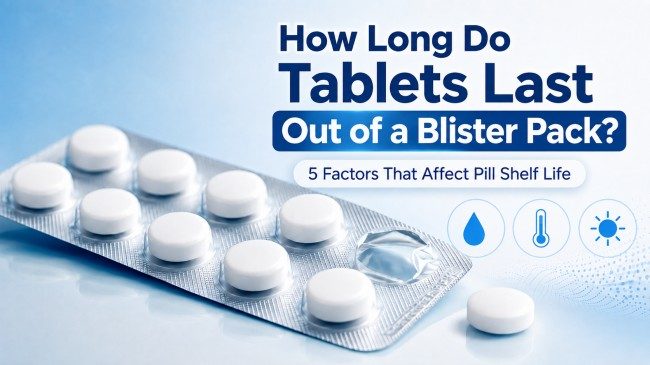
تعتمد الإجابة بشكل أساسي على خمسة عوامل: صياغة, الوقت خارج البثرة, ظروف التخزين, الحاوية البديلة أو حالة العبوة الأصلية, وجودة حاجز البثرة وختمها. ال إرشادات إدارة الغذاء والدواء بشأن أنظمة إغلاق الحاويات الصيدلانية يوضح أن التغليف يجب أن يحمي شكل الجرعة من أسباب التدهور ذات الصلة, بما في ذلك الرطوبة, ضوء, الأكسجين, تلوث, والأضرار الجسدية. هذا هو السبب في أن العبوة جزء من حالة العمر الافتراضي وليست حاملًا بسيطًا.
كم من الوقت يمكن أن تبقى الأقراص خارج العبوة الفقاعية?
لا تنتهي صلاحية الجهاز اللوحي في اللحظة التي يتم فيها دفعه عبر الرقاقة. والتمييز الأكثر دقة هو بين التعرض القصير والتخزين المستمر خارج التجويف الأصلي.
الجهاز اللوحي الذي يتم تناوله بعد وقت قصير من الإزالة له فترة تعرض قصيرة فقط. جهاز لوحي ترك مفككًا على طاولة بجانب السرير, يحمل في الجيب, أو تخزينها لعدة أيام خارج البثرة يبقى تحت مجموعة مختلفة من الظروف لفترة أطول من ذلك بكثير.
لا يوجد أيضًا خدمة موثوقة على مدار 24 ساعة, 72-ساعة, أو قاعدة أسبوع واحد لكل قرص. أقراص تقليدية مغلفة بالفيلم, أقراص فوارة, أقراص متحللة عن طريق الفم, والتركيبات الحساسة للرطوبة لا تستجيب للتعرض بنفس الطريقة. يمكن أن يظل أحد الأقراص دون تغيير فعليًا لفترة تؤدي إلى تليين القرص الآخر, كسر, امتصاص الرطوبة, أو تفقد سلامة الطلاء.
لدواء معين, تأخذ تسمية العبوة ونشرة المريض الأولوية. عبارات مثل "احمي من الرطوبة,""حماية من الضوء," أو "الاحتفاظ بالعبوة الأصلية" تبين أن العبوة جزء من حالة التخزين المطلوبة. عندما تكون تلك التعليمات موجودة, التجربة العامة مع جهاز لوحي آخر ليست بديلاً موثوقًا به.
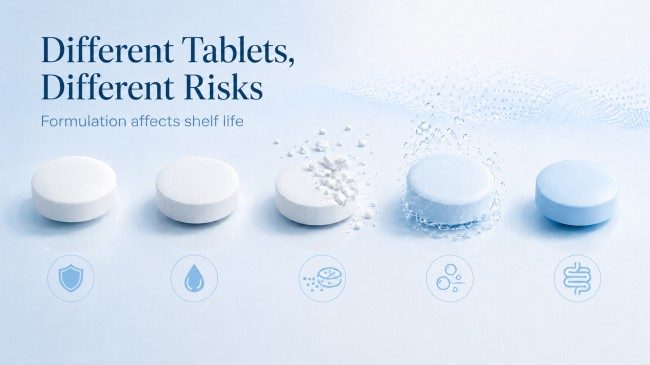
عامل 1: صياغة أقراص وشكل الجرعة
يمكن أن تحتوي الأقراص التي تبدو متشابهة على مكونات نشطة مختلفة, سواغ, الطلاءات, ومستويات الرطوبة. تؤثر هذه الاختلافات على كيفية استجابتها للهواء, رطوبة, حرارة, والضوء.
يوفر طلاء الفيلم بعض الحماية المادية, لكنه لا يحل محل نفطة مختومة. لا يزال بإمكان الرطوبة المرور عبر الطلاء والوصول إلى قلب الجهاز اللوحي. اعتمادا على الصيغة, يمكن أن يؤثر التعرض على الصلابة, الحل, الاستقرار الكيميائي, أو الشكل المادي للمكونات.
تحتاج العديد من أشكال الجرعات إلى اهتمام خاص:
- أقراص استرطابي تمتص الرطوبة من الهواء المحيط بسهولة أكبر.
- أقراص فوارة تم تصميمها لتتفاعل مع الماء وبالتالي تعتمد بشدة على عبوات مقاومة للرطوبة.
- أقراص تفكك عن طريق الفم تتحلل بسرعة ويمكن أن تكون أكثر عرضة للرطوبة والتعامل مع الضرر.
- أقراص مغلفة معوية تعتمد على طلاء وظيفي سليم, ولكن هذا الطلاء ليس حزمة تخزين طويلة الأجل.
- أقراص حساسة للضوء يمكن أن تعتمد على احباط, مواد مبهمة, أو كرتون خارجي.
أ مراجعة مجلة العلوم الصيدلانية حول العبوات الواقية من الرطوبة يوضح أن اختيار العبوة للمنتجات الصلبة عن طريق الفم يجب أن يأخذ في الاعتبار الاستقرار الكيميائي والفيزيائي, حساسية الرطوبة, ظروف التخزين, وحاجز الرطوبة الذي توفره العبوة. لا ينبغي أن يصبح ترتيب التخزين الذي يناسب جهازًا لوحيًا واحدًا قاعدة عامة لجهاز آخر.
عامل 2: الوقت خارج البثرة
الوقت مهم لأنه كلما طالت مدة بقاء القرص خارج تجويفه, كلما طالت فترة بقائها في ظل ظروف لم تكن جزءًا من الحزمة المسوقة لها.
تختلف الدقائق القليلة الأولى بعد الإزالة عن التخزين الممتد. الجهاز اللوحي الذي يتم تناوله على الفور له اتصال قصير فقط بهواء الغرفة, ضوء, والتعامل معها. بمجرد ترك نفس القرص خارج البثرة لساعات أو أيام, يصبح تأثير البيئة أكثر أهمية.
الوقت وحده, لكن, لا يحدد الجواب. ليلة واحدة في مكان بارد, الخزانة الجافة لا تعادل ليلة واحدة في سيارة ساخنة أو حمام رطب. لا يمكن أيضًا الحكم على الجهاز اللوحي الحساس للرطوبة والجهاز اللوحي التقليدي المغطى بالفيلم بنفس الساعة.
وهذا يعني أن مستوى عدم اليقين يزداد عمومًا مع التعرض لفترة أطول, ولكن هذا المبدأ لا يمكن تحويله إلى موعد نهائي عالمي واحد. السؤال ذو الصلة ليس فقط "كم من الوقت ظل الجهاز اللوحي بالخارج؟"?" وهو أيضًا "ما نوع الجهاز اللوحي؟", أين تم تخزينه, وما بقي من حماية حوله?"
هذا التمييز يبقي عامل الوقت في المنظور. التعرض القصير لا يؤدي إلى انتهاء الصلاحية الفوري, بينما يؤدي التخزين المطول خارج البثرة إلى نقل الجهاز اللوحي بعيدًا عن الظروف المستخدمة لدعم مدة صلاحيته الموضحة.
عامل 3: رطوبة, حرارة, ضوء, والتعامل
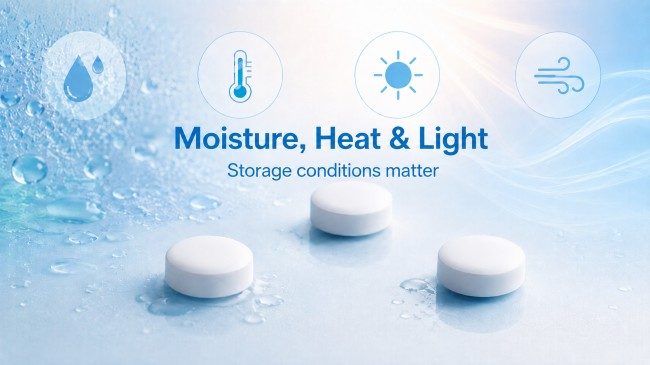
بمجرد أن يكون القرص خارج التجويف المغلق, الغرفة المحيطة وظروف التعامل لها تأثير أكبر.
رطوبة
يمكن أن يدخل بخار الماء إلى القرص أو غلافه. اعتمادا على المنتج, يمكن أن يساهم التعرض للرطوبة في التخفيف, اللزوجة, تكسير, صلابة متغيرة, التغيرات في الذوبان, أو التدهور الكيميائي. الحمامات, المناطق بجانب المصارف, والأرفف الموجودة فوق الأجهزة المنتجة للحرارة يمكن أن تعرض الأجهزة اللوحية لظروف تختلف عن البرودة, خزانة جافة.
حرارة
يمكن لدرجات الحرارة المرتفعة أن تسرع التغيرات الفيزيائية والكيميائية. سيارات, ضوء الشمس المباشر, مشعات, والمناطق ذات التقلبات الكبيرة في درجات الحرارة تختلف عن أماكن تخزين الغرف العادية.
الضوء والهواء
تتطلب بعض التركيبات الحماية من الضوء, المقدمة من رقائق الألومنيوم, مواد مبهمة, أو الكرتون الخارجي. لا يوفر المنظم الشفاف نفس الحماية تلقائيًا.
يؤدي الاتصال بالهواء أيضًا إلى تغيير التعرض للأكسجين وبخار الماء, على الرغم من أن الأهمية تختلف حسب الصياغة. سيكون من غير الدقيق افتراض أن كل قرص يستجيب بنفس المعدل بمجرد إزالته من البثرة.
التعامل وتحديد الهوية
يمكن للأقراص السائبة أن تفرك معًا, رقاقة, جمع الغبار, أو يتم مزجه مع منتجات أخرى. يمكن أيضًا أن يفقد الكمبيوتر اللوحي المنفصل عن عبوته التعريف الأساسي. لون, شكل, والعلامات وحدها لا تكفي لتأكيد ماهية الجهاز اللوحي السائب.
تغييرات مرئية مثل التشقق, نعومة غير عادية, تغير اللون, أو رائحة غير طبيعية تستحق الاهتمام, لكن المظهر الطبيعي لا يمكن أن يثبت أن كل سمة من سمات الجودة تظل دون تغيير. ال إرشادات NHS بشأن تخزين الأدوية في المنزل ينصح بحفظ الأدوية في عبواتها الأصلية, باتباع التعليمات الخاصة بالمنتج, وتجنب مناطق التخزين الدافئة أو الرطبة.
عامل 4: الحاوية البديلة وحالة العبوة الأصلية
تتغير حالة التخزين بطريقتين شائعتين: يتم نقل الجهاز اللوحي إلى حاوية أخرى, أو تلف البثرة الأصلية.
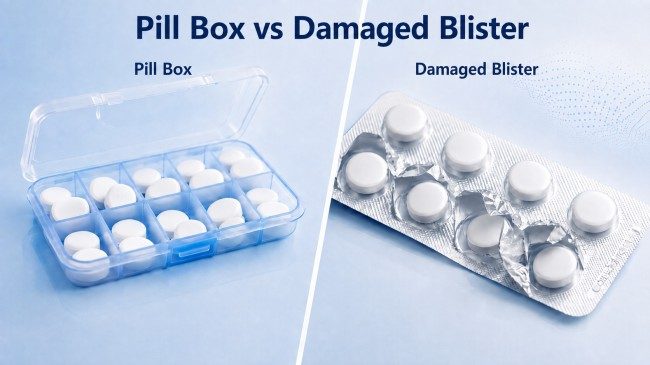
علبة حبوب منع الحمل يمكن أن تجعل جدول الجرعات أسهل في المتابعة, لكن وظيفتها الرئيسية هي التنظيم وليس حماية الحاجز الصيدلاني. يعتمد أدائها على مادة الحاوية, غطاء مناسب, تردد الافتتاح, انتقال الضوء, وموقع التخزين.
تتم إعادة تعبئة بعض الأدوية بطريقة احترافية بموجب إجراءات خاضعة للرقابة. هذا لا يعني أنه يمكن نقل كل جهاز لوحي إلى أي منظم. المنتجات ذات الرطوبة المحددة, ضوء, أو تتطلب تعليمات العبوة الأصلية عناية خاصة.
الحالة الثانية هي بقاء الجهاز اللوحي داخل الجيب المشكل أثناء تلف الرقاقة أو الختم. احباط ممزق, ثقب, حافة مرفوعة, سحق, أو يمكن أن يؤدي الترابط غير الكامل إلى توصيل التجويف بالهواء المحيط. السؤال الرئيسي ليس ما إذا كان الجهاز اللوحي قد سقط. يتعلق الأمر بما إذا كان التجويف الفردي لا يزال يعمل كحزمة مغلقة.
وتشمل العيوب ذات الصلة:
- ثقوب أو تمزقات في رقائق الغطاء;
- التجاعيد التي تعبر المنطقة المغلقة;
- الجسيمات المحاصرة في الختم;
- الترابط غير الكامل حول التجويف;
- رفع الحافة, سحق, أو الانحناء الذي يفتح الختم.
يصعب الحكم على بعض العيوب بصريًا. يمكن للقنوات الصغيرة أو الثقوب الصغيرة أن تغير البيئة الداخلية حتى عندما تبدو معظم البثرة سليمة. للحزمة التالفة أو الجهاز اللوحي المخزن في ظروف غير مؤكدة, تعتبر النصائح الخاصة بالمنتج من الصيدلي أو الشركة المصنعة أكثر موثوقية من التخمين من الوقت المنقضي أو المظهر.
عامل 5: مواد نفطة وجودة الختم
تتطلب التركيبات المختلفة مستويات مختلفة من المقاومة للرطوبة, الأكسجين, والضوء. هياكل نفطة لذلك يتم اختيارها وفقًا لبيانات الاستقرار, متطلبات الحاجز, تشكيل الأداء, وشروط التوزيع.
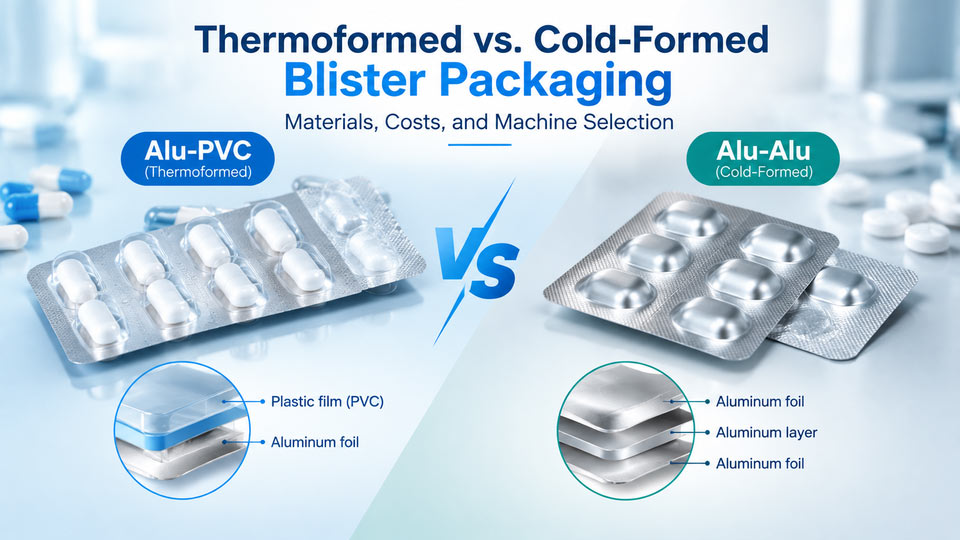
| هيكل نفطة | ملف تعريف الحاجز العام | منطق الاختيار المشترك |
| بولي كلوريد الفينيل/الألومنيوم | حماية أساسية لجرعة الوحدة مع رؤية المنتج | أقراص ذات احتياجات حاجز معتدلة |
| بولي كلوريد الفينيل/PVDC/الألومنيوم | مقاومة أفضل لانتقال بخار الماء | المنتجات التي تحتاج إلى حماية أقوى للرطوبة |
| صفائح PCTFE/ألومنيوم | حاجز رطوبة أعلى مع تجويف شفاف | المزيد من التركيبات الحساسة للرطوبة |
| شكل بارد Alu-Alu | رطوبة قوية, الأكسجين, وحاجز الضوء | منتجات حساسة للغاية أو المناخات الصعبة |
اختيار المواد ليس سوى جزء من النتيجة. أ آلة تغليف نفطة يجب أن تشكل تجاويف متسقة, ضع كل قرص بشكل صحيح, محاذاة احباط الغطاء, والحفاظ على ظروف الختم مستقرة.
درجة حرارة, ضغط, يسكن الوقت, التوتر على شبكة الإنترنت, والتلوث في منطقة الختم يمكن أن يؤثر جميعها على جودة العبوة. حتى المواد ذات الحاجز العالي لا يمكنها توفير الحماية المقصودة إذا كان التجويف سيئ التكوين أو لم يتم إغلاق رقائق الغطاء بشكل متسق.
يمكن للكاميرات تحديد التجاويف الفارغة, أقراص في غير مكانها أو تالفة, وعيوب الرقائق المرئية. لا تزال هناك حاجة لاختبار سلامة الختم عندما لا يمكن تأكيد التسرب من خلال المظهر وحده.
رويدا للتعبئة آلات التعبئة والتغليف بالبثور دعم التطبيقات الصيدلانية التي تتضمن تنسيقات Alu-PVC المُشكلة حراريًا والشكل البارد Alu-Alu. اعتمادا على التكوين المحدد, يمكن أن تجمع العملية بين تغذية المواد, تشكيل, تحميل قرص أو كبسولة, الختم الحراري, الترميز, اللكم, تسريح, وفحص الرؤية.
الآلة لا تحدد مدة صلاحية الدواء. ويتمثل دورها في إعادة إنتاج عملية التغليف المعتمدة باستمرار حتى تتمكن المواد المختارة وتصميم الختم من توفير الحماية المقصودة.
ما يجب التحقق منه قبل تخزين الأجهزة اللوحية خارج عبوة نفطة
قبل إزالة الأجهزة اللوحية مسبقًا أو استخدام الجهاز اللوحي من العبوة التالفة, يفحص:
- هل يتطلب الملصق بقاء الدواء في عبوته الأصلية؟?
- هل الجهاز اللوحي حساس للرطوبة, حساسة للضوء, فوارة, أو تتفكك بسرعة?
- كم من الوقت كان خارج تجويف سليم?
- هل تعرض للحرارة, رطوبة, ضوء مباشر, أو التعامل المتكرر?
- هل تم وضعه في حاوية أخرى, وهل تغلق هذه الحاوية بشكل آمن?
- هل الرقاقة الأصلية ممزقة؟, ثقبت, مرفوع, سحق, أو مفتوحة جزئيا?
- هل لا يزال من الممكن مطابقة الجهاز اللوحي بثقة مع اسمه, قوة, والتعليمات?
لا تحسب هذه الشيكات تاريخ انتهاء الصلاحية الجديد. وهي تظهر متى تغيرت ظروف التخزين الأصلية ومتى تكون هناك حاجة إلى إرشادات خاصة بالمنتج.
الأسئلة الشائعة
هل تنتهي صلاحية الجهاز اللوحي مباشرة بعد ترك علبة نفطة؟?
لا. الإزالة لا تؤدي إلى انتهاء الصلاحية الفوري. يغير حالة التخزين. وتعتمد أهمية هذا التغيير على الصياغة, وقت التعرض, بيئة, وحاوية بديلة.
هل يمكنني أخذ حبوب منع الحمل من علبة نفطة مقدمًا؟?
ذلك يعتمد على المنتج. علبة حبوب منع الحمل يمكن أن تساعد في تنظيم الجرعات, ولكنها لا تعادل تلقائيًا البثرة الأصلية. التحقق من نشرة المريض وملصق الصيدلية, خاصة عندما يتطلب المنتج الحماية من الرطوبة أو الضوء.
هل يمكن أن تبقى الأقراص في علبة حبوب منع الحمل لمدة أسبوع واحد؟?
لا توجد قاعدة لمدة أسبوع واحد لجميع الأدوية. الملاءمة تعتمد على الجهاز اللوحي, المنظم, وبيئة التخزين. يعتبر التحويل المسبق قرارًا خاصًا بالمنتج وليس ممارسة عالمية.
هل لا يزال الجهاز اللوحي محميًا في حالة تمزق ورق الفقاعة؟?
ليس بشكل موثوق. دمعة, ثقب, أو يمكن أن تعرض الحافة المفتوحة التجويف للبيئة المحيطة حتى عندما يظل الجهاز اللوحي بالداخل. لا ينبغي التعامل مع التجويف التالف على أنه نفطة محكمة الغلق.
لماذا تكون بعض الأقراص معبأة في بثور ألو ألو؟?
يتم اختيار تعبئة Alu-Alu عندما يحتاج المنتج إلى حماية قوية من الرطوبة, الأكسجين, أو الضوء. إنه يزيل الرؤية المباشرة للمنتج ويستخدم عمومًا مواد تعبئة أكثر من الفقاعة الشفافة المشكلة بالحرارة, لذلك يجب أن يعتمد الاختيار على متطلبات الاستقرار والإنتاج.
خاتمة
تعتمد مدة بقاء الأقراص خارج العبوة على ما هو أكثر من الساعة. صياغة, وقت التعرض, الرطوبة والحرارة, الحاوية البديلة, ويؤثر حاجز البثرة وسلامة الختم على مستوى الحماية.
يختلف الجهاز اللوحي الذي تمت إزالته للاستخدام الفوري عن الجهاز اللوحي المخزن لعدة أيام, والتجويف الممزق يختلف عن البثرة المغلقة. إن الاحتفاظ بالأقراص في عبواتها المميزة حتى الاستخدام يحافظ على الظروف المستخدمة لدعم مدة صلاحيتها. عندما تتغير تلك الظروف, تسمية المنتج, صيدلي, أو يجب على الشركة المصنعة توجيه القرار التالي.
المراجع
1. نحن. إدارة الغذاء والدواء. أنظمة إغلاق الحاويات لتعبئة الأدوية البشرية والبيولوجية.
2. منظمة الصحة العالمية. المبادئ التوجيهية بشأن التعبئة والتغليف للمنتجات الصيدلانية.
3. مستشفيات لينكولنشاير المتحدة التابعة لهيئة الخدمات الصحية الوطنية. تخزين الأدوية في المنزل.