For premium bottled health supplements, any defect is unacceptable, as it can severely damage the brand’s image. Given these production requirements, how do modern tablet counters achieve precise tablet counting and defect rejection?
The answer lies in vision counting packing machine. Traditional counters rely on photoelectric sensors, making it difficult to accurately reject defective items; this is where AI vision inspection system become essential. By utilizing high-speed cameras
and system recognition, pharmaceutical CCD camera counting machines can automatically identify and reject bottles containing substandard tablets. However, can vision-based counters detect and reject every type of defect? This article outlines the specific scope of defect rejection for these machines and explains the principles behind their operation.
Key Takeaways
- The core operational workflow of a vision counting packing machine.
- Specific physical defects that an AI vision inspection system can accurately detect and reject.
- A step-by-step breakdown of how AI machine vision models for counting capsules are trained using real product images.
- The limitations of automated visual inspection and why lighting and product orientation matter.
- Guide to partner with an experienced vision inspection system manufacturer.
1. What Is a Vision Counting Packing Machine?
At its core, a vision counting packing machine is an advanced piece of equipment that merges high-speed product counting systems with real-time quality control. Instead of just dropping products into a bottle, an AI visual inspection counting machine evaluates every single item.
The core logic flows in coordination:
Feeding → Separation → Image Capturing → Good/Bad Classification → Annotation → Counting → Bottling → Automatic defect rejection
The camera acts as the unblinking eye of the operation, capturing high-resolution product images as they move along the line. The AI defect detection system analyzes the appearance in milliseconds. Qualified products continue down the line, while defective products are instantly rejected via a pneumatic mechanism. Finally, only the good products are counted and transferred to packaging.
Whether you are using a tablet counting machine or a capsule counting machine, this technology adapts perfectly. An AI vision counting machine can effortlessly inspect tablets, capsules, and even sticky gummies, ensuring that your pharmaceutical counting and packing machine delivers flawless results every time.
2. What Defects Can An AI Vision Counting Machine Detect?
An AI visual inspection bottling machine is designed mainly for visible appearance defects. In tablet defect detection, capsule defect detection, and gummy defect detection, the goal is not to replace the whole laboratory quality system, but to catch visible problems before packing.
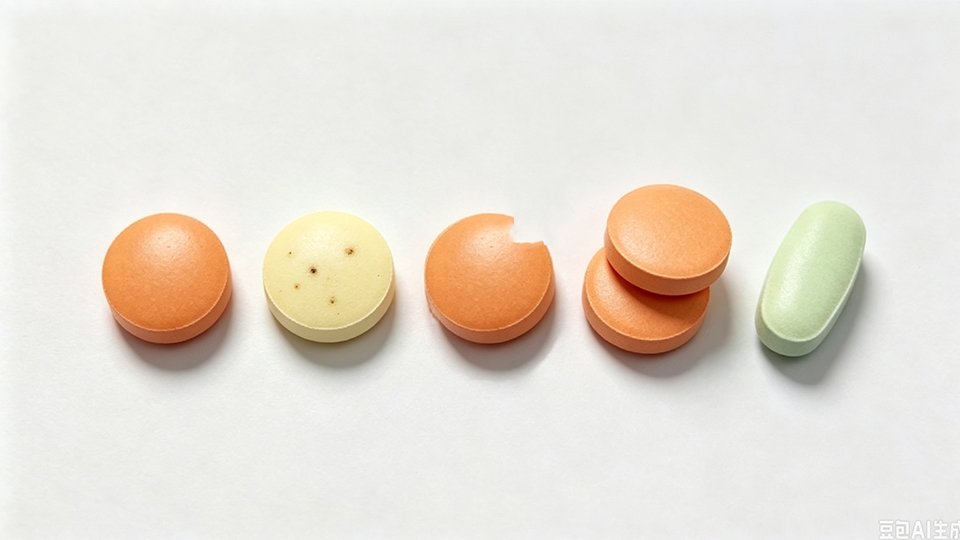
Color Differences
Color is one of the first things customers notice. A white tablet mixed into a batch of blue tablets looks like a tiny lighthouse flashing “something is wrong.”
An AI inspection system can detect:
- Wrong color
- Abnormal color
- Color variation
- Mixed-color products
- Uneven coating appearance
This is especially useful in tablet color inspection, capsule defect inspection, and vitamin tablet counting machine lines where different SKUs may look similar but must not be mixed.
Shape Differences
Shape defects are common in high-speed counting, coating, drying, transportation, or feeding.
A tablet inspection system or capsule inspection system can identify:
- Abnormal shape
- Deformed tablets
- Irregular capsules
- Misshapen gummies
- Visibly deformed capsules
For example, a gummy may stretch or deform during upstream processing. In a normal supplement counting machine, it may still be counted. In an AI defect detection system, it can be classified as Bad and removed after bottle filling.
Size Differences
Size is another important inspection factor. Oversized or undersized products may indicate process instability, breakage, or product mix-up.
An industrial vision system can detect:
- Oversized products
- Undersized products
- Abnormal dimensions
- Incorrect tablet diameter or length
Capsule size irregularity
For pharmaceutical machine vision, size inspection helps strengthen batch consistency. It also supports high speed tablet counting machine operation, because inspection and counting can happen in one continuous process.
Surface Scratches
Surface damage may not always affect dosage, but it can affect customer trust. A scratched coated tablet looks poor, especially in premium supplement and nutraceutical markets.
The system can detect:
- Scratches
- Visible surface damage
- Abnormal marks
- Coating damage
- Surface stains
As one pharmaceutical QA manager notes, “For solid dosage products, visual quality is part of product confidence. A tablet may be chemically correct, but if it looks damaged, customers may still reject it.” In other words, visual quality speaks before the label does.
Broken And Incomplete Products
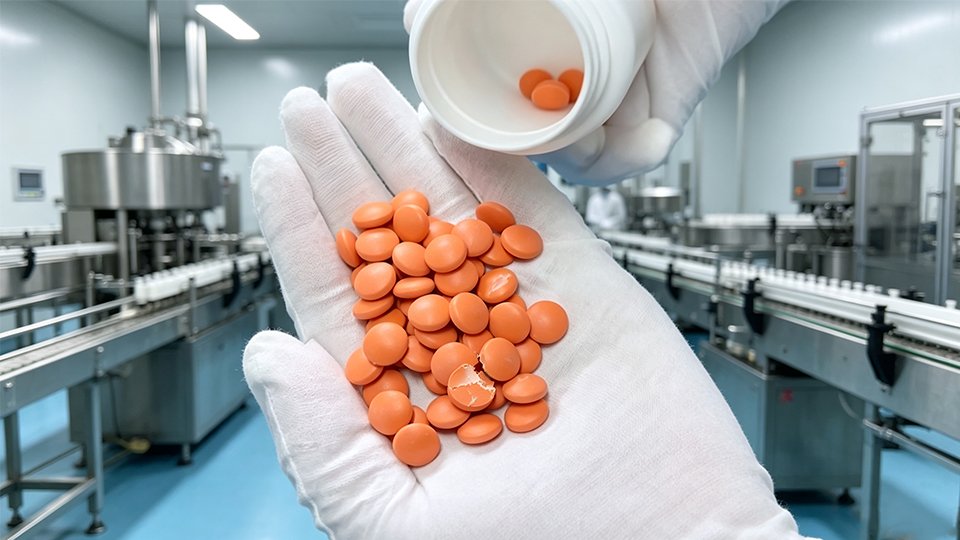
Broken products are among the most important targets for defective tablet detection and automatic defect rejection.
An AI vision counting machine can identify:
- Broken tablets
- Chipped tablets
- Incomplete tablets
- Damaged gummies
- Cracked visible capsules
- Visibly deformed capsules
This is where broken tablet detection, chipped tablet detection, incomplete tablet detection, and damaged tablet detection become highly practical. A traditional tablet counter equipment may count a half tablet as one product if the shape still passes the sensor. But with AI defect inspection, the machine can visually recognize that the product is not complete.
3. How Does AI Learn To Identify Good And Bad Products?
This is the part that makes an AI vision counting packing machine different from a normal tablet counters system or electronic pill counter. The AI model is not magically “born smart.” It learns from real Good and Bad product images, much like a new inspector learning from sample boards—but faster, more repeatable, and without needing coffee breaks.
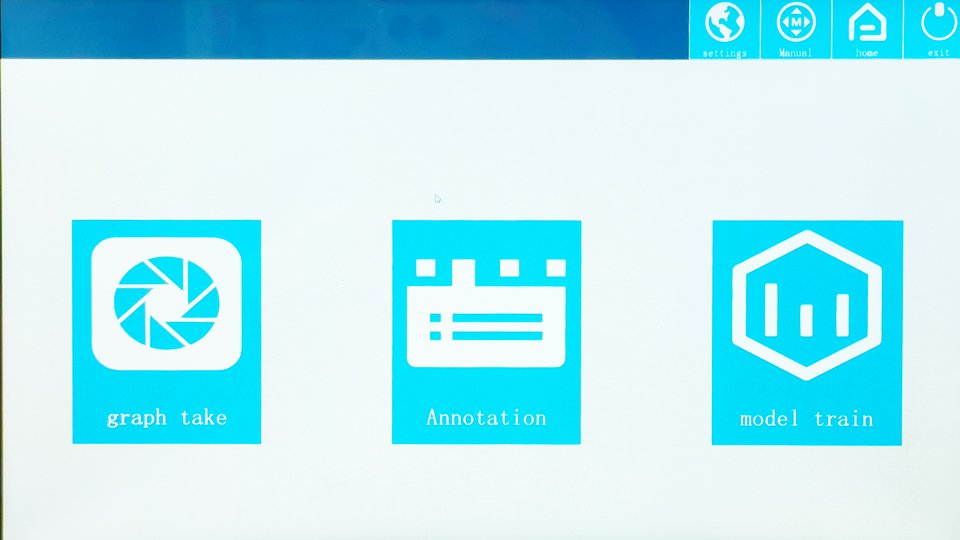
Step 1: Capture Good And Bad Images
The training process starts from the machine interface.
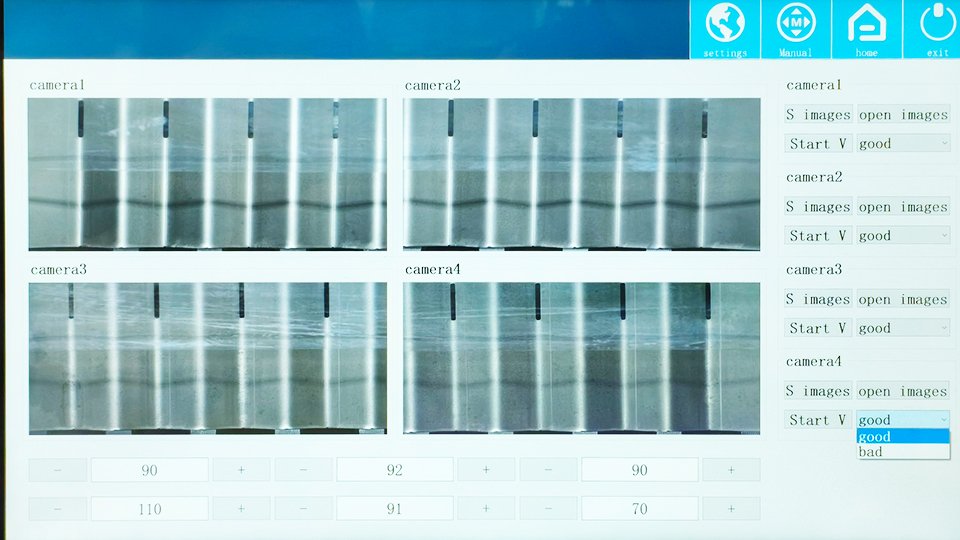
On the HMI, the operator enters:
Graph Take → Start V And S Images
The system captures images of real products. These images are then divided into two labels:
Good= qualified products
Bad= defective products
After image capture, the operator selects Open Images, and the system generates separate folders:
Good Folder
Bad Folder
For tablet visual inspection, capsule visual inspection, or gummy visual inspection, this step is critical because AI training quality depends heavily on the quality and variety of sample images.
A vision expert in our factory, Henry Li, explains, “The model does not learn from slogans. It learns from images. If the training dataset does not represent real production variation, the inspection result will not be stable.” That is why real samples matter more than beautiful brochures.
Step 2: Automatic Annotation
Annotation means labeling images so the visual inspection system knows what it is looking at.
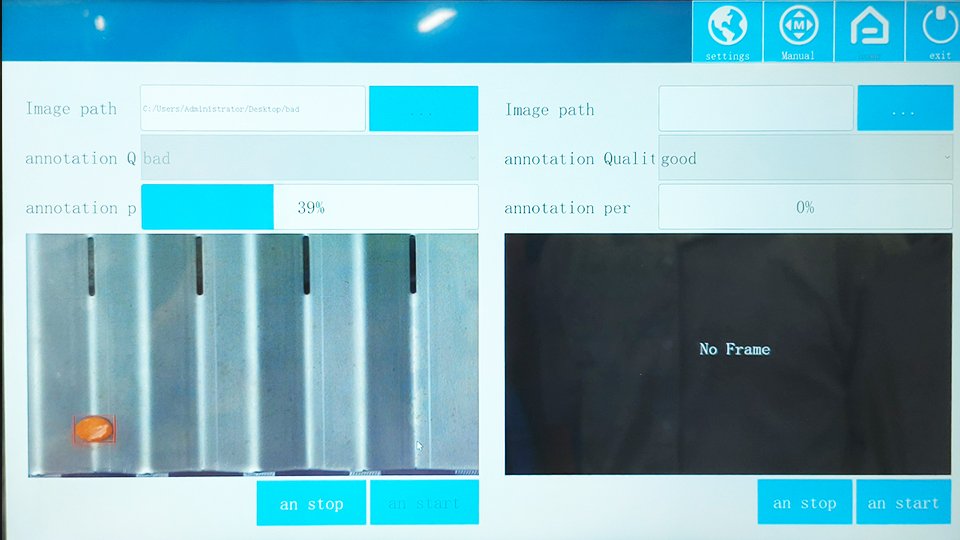
The workflow is:
Open Good/Bad Folder → Select Annotation Q → Automatic Annotation
For example:
- Open Bad Folder
- Select Bad Annotation
- System automatically labels the images as Bad
Automatic annotation is especially useful when preparing a large dataset for tablet defect inspection, capsule shape inspection, tablet scratch detection, or gummy defect detection. Instead of manually labeling every image one by one, the system can process many images quickly.
This improves efficiency when setting up an AI machine vision model for batch counting machine lines, nutraceutical counting machine lines, or dietary supplement packaging machine lines.
Step 3: Manual Annotation
Automatic annotation saves time, but manual correction is still important, for system still doesn’t know “what are bad ones”.
Here is a real production-style example: one captured image contains five tablets. Four tablets are defective, but one tablet is Good. During automatic annotation, the system may label all five tablets in the image as Bad because the image was opened from the Bad folder.
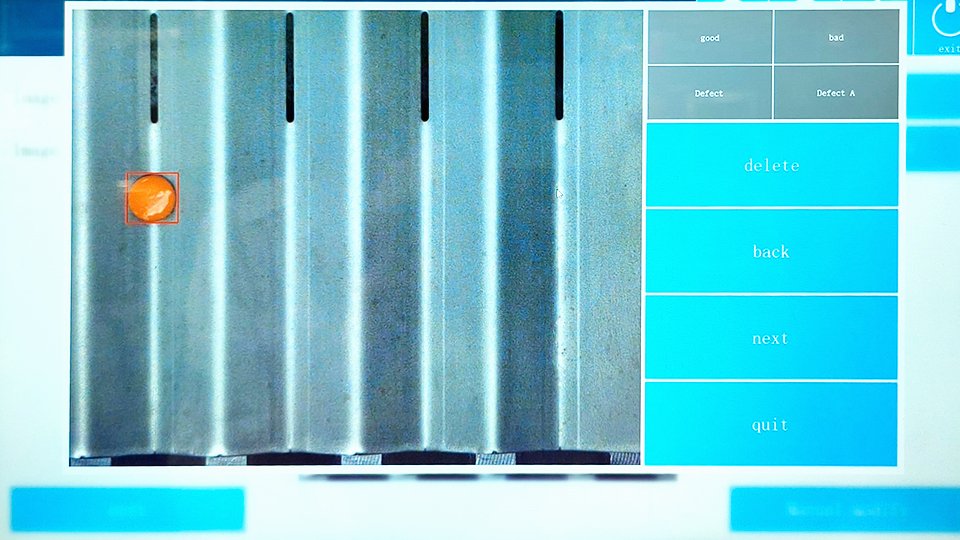
The operator then needs to:
Open Image → Select Incorrectly Labeled Tablet → Manually Mark Good Or Bad
This step corrects the training data. It tells the AI inspection model, “This one is actually qualified. Do not reject products like this.”
Manual annotation improves the accuracy and consistency of the training dataset. For pharmaceutical visual inspection counting machine projects, this matters because small label errors can become repeated rejection errors during high-speed operation.
Step 4: Merge Files
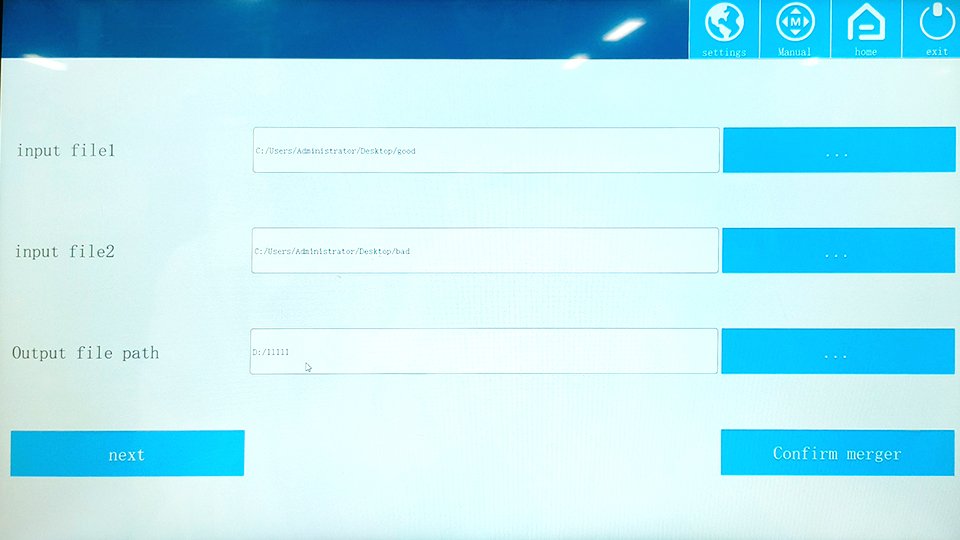
Once Good and Bad images are prepared and corrected, the folders are merged.
The workflow is:
Good Folder + Bad Folder → Merge Files
The system creates one unified training dataset. This dataset becomes the foundation for the final AI model.
In a way, this dataset is like the recipe book for the machine. If the recipe is clear, the AI can cook up better decisions. If the recipe is messy, even the smartest system may serve the wrong dish.
Step 5: Model Train
After dataset preparation, the operator starts model training:
Import Dataset → Select Output Location → Model Train
Because the machine includes a built-in AI learning system, the manufacturer does not need to redevelop a complete AI software platform from scratch. The operator imports the dataset, selects the output location, and starts training.
After training, the system generates an AI inspection model. This model is then used during real production to classify products as Good or Bad.
For pharmaceutical and supplement manufacturer, this is a practical advantage. Whether the line is a pharmaceutical counting machine, supplement tablet counter, gummy counting machine, or nutraceutical batch counting machine, the inspection model can be trained around actual product samples and actual defect standards.
4. How Does the AI Vision System Reject Defective Products?
During live production, the AI vision inspection system operates with lightning speed. The workflow is simple:
- Product feeding
- Camera imaging
- AI defect inspection
- Good/Bad decision
- Reject signal
- Defective product rejection
Let’s look at a example. A scratched tablet enters the inspection area. The camera captures the image, the AI identifies the scratch in milliseconds, the system classifies it as Bad, and the pneumatic rejection mechanism instantly removes it from the line.
The machine does not simply count products. It counts while checking product appearance. This dual-action capability makes the counting and packing machine an invaluable asset for modern production lines.
5. What Can Pharma AI Vision Inspection Counting Machine Not Detect?
While an AI counting and bottling machine is incredibly powerful, it is not omnipotent. A professional vision inspection system manufacturer will always be transparent about machine limitations. Pharma visual inspection primarily focuses on visible defects like tablet size inspection and tablet surface inspection. When it comes to invisible defects, it cannot reliably determine:
- Active ingredient content
- Chemical composition
- Dosage accuracy
- Microbial contamination
- Moisture content
- Internal cracks that cannot be seen
- Internal density
- Hidden defects
Furthermore, environmental and physical factors can challenge the system:
Product Overlap: Multiple tablets overlapping can hide genuine defects. it depends on the degree of overlapping. If two tablets completely overlap, they are difficult to identify.
Poor Product Orientation: If a defect is on the underside, out of the camera’s view, it may be missed.
Insufficient Training Samples: If a specific defect type wasn’t in the training data, the AI might not recognize it.
| Inspection Technology | Best For | Limitations |
| Area Scan Cameras | Tablet shape inspection, gummies, matte tablets | Struggles with highly reflective coatings |
| Line Scan Cameras | High-speed continuous webs, cylindrical capsules | Requires precise product alignment |
AI vision inspection should be designed around the actual product, defect type, lighting conditions, and inspection requirements.
6. Choose an Experienced Vision Inspection System Manufacturer: Why It Matters
Selecting the right pharmaceutical counting and packing machine goes far beyond comparing spec sheets. Partnering with an experienced vision inspection system manufacturer is critical for seamless integration. Here is why their expertise matters:
Product-Specific AI Training: Different tablets, capsules, and gummies require vastly different training data. An expert manufacturer knows how to optimize this.
Camera and Lighting Configuration: The machine vision system must be tailored based on product color, shape, surface, size, and reflectivity.
Rejection System Integration: Identifying a flaw is only half the battle. The AI defect detection system must perfectly synchronize with the reject mechanism, counting system, conveyor, and packing machine.
Real Product Testing: A reputable manufacturer won’t just sell you a brochure. They will take your Good sample and Bad sample, perform AI training, run an inspection test, and provide rejection verification.
Marcus Vance, Director of Packaging Innovations, states, “Integrating AI into the vision based counting process isn’t just an upgrade; it’s a paradigm shift. But it only works if your manufacturer understands the unique optical challenges of your specific formulation.” This reinforces why choosing a specialized vendor is non-negotiable.
Ruida Packing: Chinese Vision Inspection System Pioneer
Ruida Packing focuses on the research and development of pharmaceutical and nutraceutical manufacturing machinery. Having collaborated closely with Fortune 500 pharmaceutical companies like US Pharma, UCB, and Coatian Atlantic Group, their machines strictly comply with CE, cGMP, and ISO international standards.
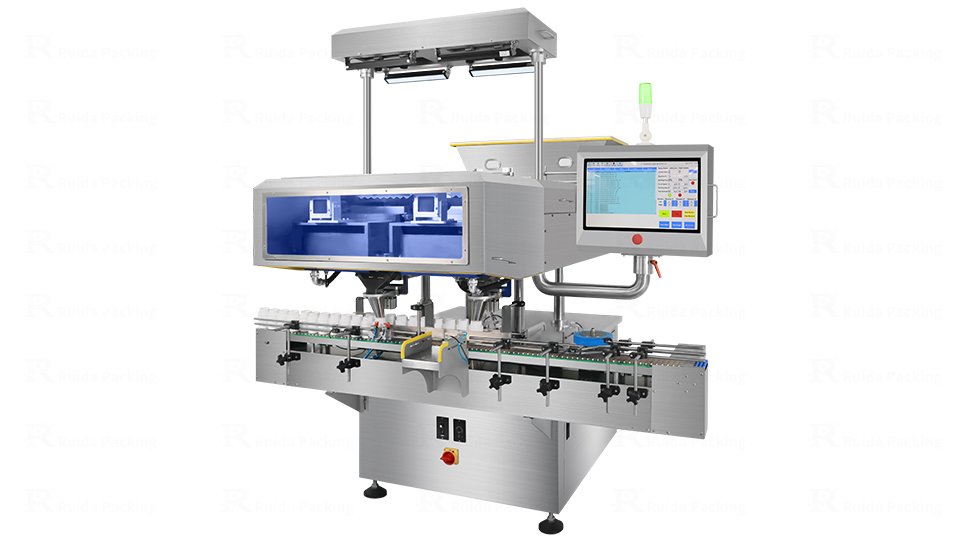
In recent years, we have launched a new series of vision counting packing machines that achieve speeds up to 100 bottles/min, offering precise counting and a wide rejection range. Partnering with Ruida guarantees:
- A 1-year warranty for whole machine with one-year free parts replacement.
- Comprehensive remote and on-site commissioning services.
- The use of internationally renowned brand components, ensuring aftermarket parts can be sourced locally.
7. Conclusion
For modern pharmaceutical and supplement production, the goal is no longer just faster tablet counting. The real value is clearer: Count the right quantity. Inspect every product. Reject predefined defects before packing. An AI vision counting packing machine helps manufacturers combine counting accuracy with visible defect control. And choosing the right Pharma vision inspection system manufacturer makes that system practical, stable, and ready for real production.
8. FAQ
Q1: What is an AI vision counting packing machine?
It is an advanced automatic counting and packing machine that combines high-speed product counting with real-time AI visual inspection. It automatically detects and rejects defective products before they are counted and bottled.
Q2: What defects can an AI vision counting machine detect?
It can identify a wide range of visible flaws, including color variations, abnormal shapes, incorrect sizes, surface scratches, and broken or incomplete products.
Q3: Can the machine inspect tablets, capsules and gummies?
Yes, absolutely! The AI inspection model can be trained to recognize and inspect various product types, making it highly versatile for tablets, capsules, and gummies.
Q4: How does AI learn to identify Good and Bad products?
Operators feed images of both qualified (Good) and defective (Bad) products into the system. Through automatic and manual annotation, the built-in AI learning system trains a custom inspection model.
Q5: Can AI vision inspection detect internal pharmaceutical defects?
No, AI vision systems only detect visible surface defects. They cannot analyze active ingredient content, internal cracks, chemical composition, or moisture levels.
References
- MarketsandMarkets: Industrial Machine Vision Market Size, Share & Trends 3 Grand View Research: Pharmaceutical Packaging Equipment
- Market Size, Share & Trends Analysis Report