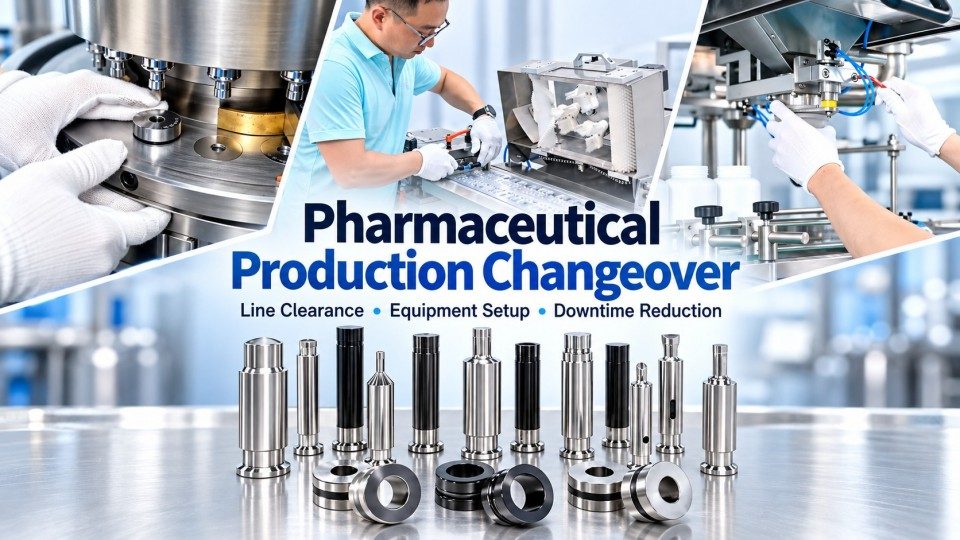

Tablet press stability is one of the most important factors when selecting a tablet press machine.
Introduction
When purchasing a tablet press machine, stability is one of the key factors considered by pharmaceutical manufacturers.
A rotary tablet press is designed for long production cycles. It can operate for many hours per shift and complete hundreds of thousands of compression cycles during continuous pharmaceutical production.
If the machine lacks stability, production risks can increase. Tablet quality variation may lead to batch rejection, customer complaints, and significant financial losses.
The stability of a tablet press machine does not come from one component. It depends on the cooperation of the machine frame, power system, turret and tooling precision, feeding system, and compression force control.
This article explains the five key factors affecting tablet press stability and helps manufacturers make a better decision when selecting a tablet press machine.
Key Takeaways
- Tablet press stability depends on structural rigidity, power consistency, motion accuracy, feeding control, and compression force control.
- Machine vibration, unstable motor output, tooling tolerance, and filling variation can affect tablet weight variation and consistent tablet quality.
- The main motor, relay, and frequency converter work together to maintain stable power performance in a tablet press machine.
- Precision turret and tooling structures help maintain punch alignment and reduce production adjustments during long tablet manufacturing runs.
- Online compression monitoring detects abnormal pressure caused by filling variation, powder clumping, or foreign particles during production.
Tablet Press Stability Overview: Factors and Quality Impact
Tablet press stability includes many aspects, such as mechanical strength, power consistency, movement accuracy, feeding accuracy, and compression control.
For pharmaceutical manufacturers, the most important result is tablet quality stability. This is also the only performance that customers and end users can directly observe.
A stable tablet press requires a complete compression process chain. The machine frame provides structural support. The main motor, relay, and frequency converter maintain stable power output. The turret and tooling control punch movement accuracy. The feeding system controls powder filling consistency. The compression force system monitors and maintains stable tablet formation.
This article analyzes tablet press stability from these five key factors and explains how each system affects consistent tablet quality during pharmaceutical production.
1. Machine Frame Design Creates Structural Stability
The machine frame is the mechanical foundation of tablet press stability. It supports the turret, transmission parts, compression station, and tooling system.
A stable frame keeps all moving parts in a fixed working position. It reduces vibration and maintains accurate compression conditions during continuous tablet production.
Why Frame Rigidity Controls Vibration
During each compression cycle, the upper punch applies force to the powder inside the die. At high production speeds, the same compression actions are repeated continuously for thousands of cycles every hour.
These repeated forces transfer from the tooling system to the turret and machine frame. A rigid frame absorbs these forces and reduces unnecessary movement.
When the frame lacks rigidity, vibration can affect turret rotation and punch alignment. The upper and lower punches may not maintain the same compression position during every cycle.
This directly affects compression force stability. The result can be hardness variation, thickness variation, and unstable tablet weight variation.
Vibration also affects powder filling. During high-speed operation, excessive vibration may shake powder out of the die cavity before compression. This reduces the filling amount and creates tablet weight differences between cycles.
For a tablet press machine, stable frame support is necessary for maintaining tablet quality consistency during long production runs.
Heavy Structure vs Lightweight Machine Design
Machine frame design directly affects the long-term stability of a tablet press machine. Different structural designs create different levels of support for internal components.
Some lightweight machines use simple welded structures or thin casting designs. These structures may have lower manufacturing costs, but they provide less structural strength for continuous pharmaceutical production.
A lightweight frame has limited resistance against repeated mechanical stress. Its connection points may become less stable during long production cycles. This can shorten the period that the machine maintains its original precision.
High-stability tablet presses use integrated machine frames with high-strength materials. A rigid body structure provides better support for the turret, drive system, and compression station.
For example, many high-quality tablet press machines use HT200 cast iron for the main frame. HT200 provides good mechanical strength, vibration absorption, and dimensional stability. These properties help maintain the machine structure during continuous compression processes.
Compared with ordinary welded frames, an integrated cast structure provides a more stable force transmission path. It reduces deformation risks and helps maintain the original machining accuracy of the equipment.
Manufacturers such as Fette, Korsch, IMA, and Ruida Packing use rigid frame designs and suitable materials to support long-term tablet press stability.
A strong machine body creates the foundation for stable operation, accurate compression control, and consistent tablet quality.
2. Power Stability System Ensures Reliable Operation
The power system controls the movement consistency of a tablet press machine. Stable power output helps maintain accurate speed, timing, and compression performance.
How Motor, Relay, and Frequency Converter Maintain Power Stability
The power system provides the driving force for every compression cycle. In a tablet press machine, the main motor, relay, and frequency converter work together to control machine movement and maintain tablet press stability.
The main motor is the core power source of the machine. It converts electrical energy into mechanical rotation and drives the turret, compression rollers, and internal transmission components.
During the main compression stage, the upper and lower punches generate high resistance. The motor needs stable torque output to maintain turret speed and compression timing.
If motor torque cannot follow load changes, the turret speed may fluctuate. A small speed variation can change die filling time and compression duration. This may lead to tablet weight variation, hardness differences, and unstable tablet quality.
The frequency converter controls how the motor operates. It adjusts motor speed, acceleration, and deceleration according to production requirements.
For high-speed rotary tablet press machines, the frequency converter also manages load response. When compression force increases, it helps the motor adjust output and maintain stable movement.
The relay works as an electrical switching and protection component. It controls the connection between electrical circuits and protects key components from abnormal current conditions. A stable relay helps prevent unexpected stops caused by poor electrical contact or switching failures.
These three components form the power foundation of a tablet press machine. Stable motor output, accurate speed control, and reliable electrical switching help maintain compression consistency, reduce tablet weight variation, and support consistent tablet quality.
Why Premium Electrical Components Improve Machine Stability
The difference between standard and premium electrical components appears during long production cycles of a tablet press machine.
The main motor operates continuously during tablet production. Temperature rise, current fluctuation, and changing compression loads can affect motor output. A high-quality motor maintains more stable torque when the machine enters the main compression stage.
Some machines use ordinary motors, relays, and frequency converters. These components may have lower temperature resistance and weaker load stability. Under continuous operation, unstable current control or slower response may affect machine movement and the consistency of the tablet compression process.
High-quality tablet press machines often use internationally recognized components from Siemens and Schneider. These brands are widely used in industrial equipment because of their stable performance, precise control, and long service life.
Premium motors provide more stable torque output during continuous compression cycles. A tablet press machine requires consistent driving force because the turret, compression rollers, and tooling system operate under changing loads.
For example, premium motors maintain stable torque output during continuous tablet production and provide better thermal stability. During long production shifts, temperature increases can affect motor performance. Siemens motors use reliable thermal designs to maintain stable output and reduce speed fluctuation caused by heat accumulation.
High-performance frequency converters provide more accurate speed regulation. They control acceleration, deceleration, and motor response during operation. This helps maintain consistent turret rotation and prevents sudden speed changes during the tablet compression process.
Reliable relays provide stable electrical switching and better protection against current fluctuations. High-quality relays maintain stable contact performance, reducing the risk of power interruption and unexpected downtime.
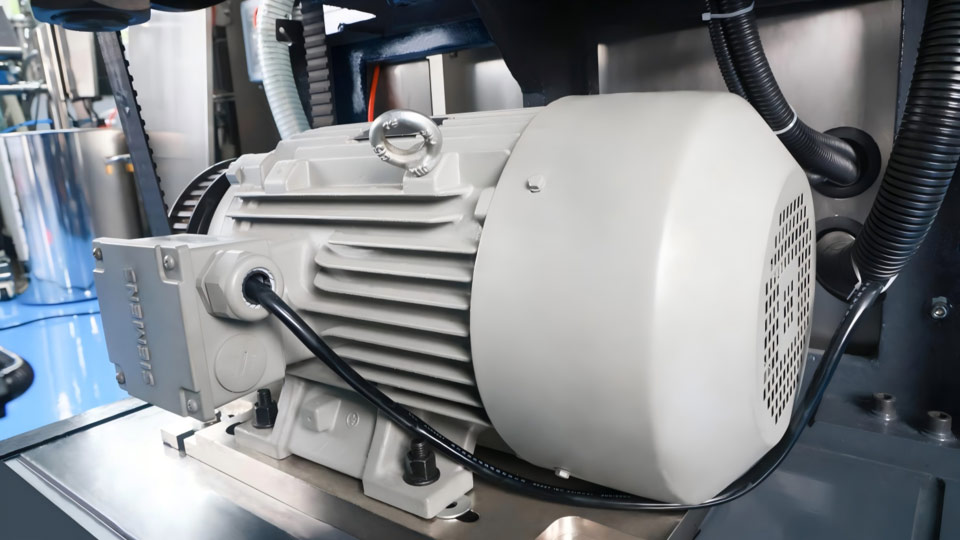
Siemens main motor
3. Turret and Tooling Precision Ensure Compression Accuracy
The turret system is the mechanical reference point of a tablet press machine. It controls the position of dies, punches, and compression stations during continuous tablet production. The main motor provides driving force, but the turret determines how this movement transfers into actual compression actions. The turret system defines the movement accuracy of a tablet press machine.
How Turret Accuracy Affects Compression Stability
The turret is the rotating platform that carries the middle dies and guides punch movement. During each compression cycle, all tooling positions must remain consistent while the turret rotates at high speed.
If the turret has poor flatness or excessive runout, different tooling stations may reach the compression area at different heights. The machine may display the same compression setting, but the actual force applied to the powder can change.
For example, one station may have a slightly deeper compression distance. Another station may have a shorter compression distance. These differences can create variation in tablet hardness and thickness.
This condition directly affects compression force stability and tablet quality consistency. Operators may need to increase parameter adjustments during production to maintain product specifications.
Turret runout is another important factor affecting tablet press stability. During rotation, the turret should maintain a stable vertical position. Excessive runout causes the upper and lower punches to enter the compression zone at different positions.
The result is unstable punch movement and uneven pressure transfer. In high-speed production, even small mechanical deviations can be repeated tens of thousands of times during a production shift.
Turret rigidity also affects long-term performance. During the main compression stage, force transfers from the upper punch through the die and lower punch into the turret.
A turret with insufficient rigidity may deform slightly under repeated compression loads. This can increase alignment errors between the tooling components and accelerate wear.
High-quality rotary tablet press machines use rigid turret structures with precision machining to maintain movement accuracy. For example, pharmaceutical tablet press manufacturers such as Fette, Korsch, IMA, Uhlmann, and Ruida Packing control turret machining accuracy to support stable compression performance.
The turret uses 2Cr13 stainless steel and maintains a runout control of ≤0.04 mm. This design helps keep die positions stable during continuous tablet production.
Why Precision Dies Improve Punch Movement and Maintenance
The turret provides the movement platform, while the punch and die system controls the final compression position. The machining accuracy of the middle die directly affects punch alignment and movement stability.
If the die hole machining accuracy is insufficient, excessive clearance may appear between the punch and middle die. The punch can move slightly from the center line during compression.
This side movement changes the direction of force transmission. It can increase friction between the punch and die and accelerate tooling wear.
The production result may include:
- unstable compression force;
- uneven tablet hardness;
- higher tooling replacement frequency;
- more maintenance adjustments.
High tablet press tooling accuracy depends on precise control of:
- middle die hole diameter;
- punch diameter;
- surface finish;
- fitting clearance.
For pharmaceutical tablet presses, manufacturers including Fette, Korsch, IMA, Uhlmann, and Ruida Packing use precision machining processes to maintain consistent tooling fitting conditions.
For example, Ruida Packing machines control tooling hole dimensions with upper and lower tooling hole diameter tolerance ≤0.013 mm and middle die hole diameter tolerance ≤0.017 mm.
A practical maintenance difference can be seen during middle die replacement. When machining tolerance is accurate, operators can remove and install middle dies manually with controlled force.
However, machines with poor middle die accuracy may create excessive fitting resistance. During maintenance, operators may need to use a hammer to knock the middle die out of the turret.
This operation increases replacement time and may damage the die surface or turret hole if handled incorrectly.
Accurate tooling alignment also supports longer tooling life. When punches move along the correct path, side friction decreases and the compression process becomes more consistent.
For GMP tablet manufacturing, stable tooling movement helps maintain tablet weight consistency, reduce production variation, and support continuous tablet production.
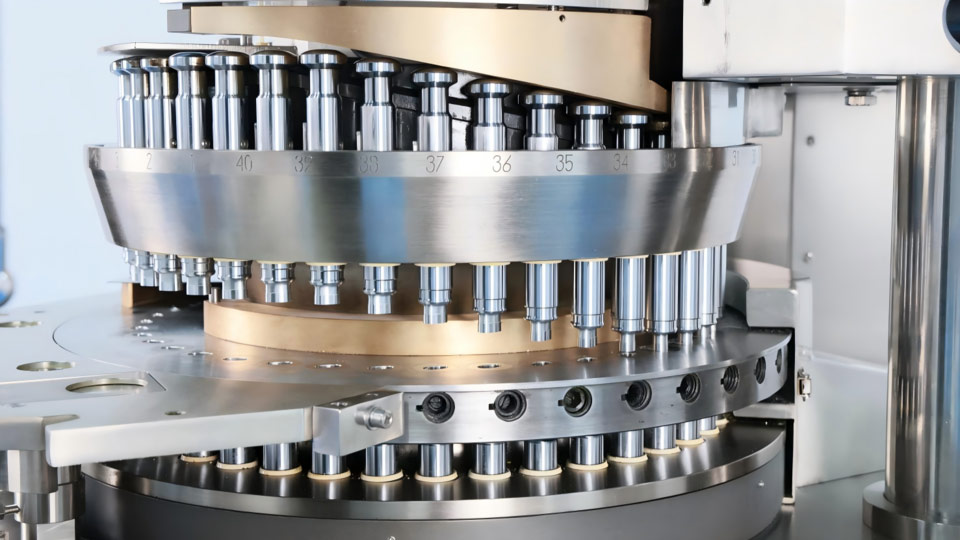
2Cr13 stainless steel turret and tooling
4. Feeding System Controls Powder Filling Consistency
Stable powder filling is essential for consistent tablet weight, hardness, and thickness during high-speed production.
Force Feeder and Servo Feeding System Ensure Consistent Powder Filling Before Compression
Before compression starts, each die cavity must receive a consistent amount of powder. The feeding system controls this first step, because tablet weight stability depends on filling accuracy.
In a rotary tablet press, powder first enters the feeding area, flows into the die cavity, and is evenly distributed before compression. If the powder filling amount varies between different dies, even the same compression force cannot produce tablets with consistent weight and hardness.
Traditional mechanical feeders usually operate with fixed mechanical parameters. However, powder characteristics can change during production, including flowability, particle size, density, and moisture content. These changes may affect powder movement inside the feeder, causing insufficient filling or uneven powder distribution.
A force feeder improves filling stability by actively pushing powder into the die cavities through rotating impellers. Compared with natural gravity feeding, it provides more consistent powder flow and better filling performance during high-speed production.
For applications requiring higher flexibility, servo feeding systems provide more precise control. Instead of relying only on fixed mechanical transmission, the servo motor can adjust feeding speed, feeding timing, and filling compensation according to different powder characteristics.
This allows the tablet press to handle materials with different flow behaviors, including powders with poor flowability, higher viscosity, or a tendency to form bridges. By maintaining stable powder filling before compression, force feeder and servo feeding systems help reduce tablet weight variation and improve production consistency.
Rotary tablet presses from manufacturers such as Ruida Packing, Fette Compacting, and Kilian apply optimized feeding technologies to support stable high-speed tablet production.
5. Compression Force Control Maintains Tablet Quality
Compression Force Control Maintains Tablet Hardness and Thickness Stability
After powder filling, the compression system determines how the powder is formed into a finished tablet. The compression process includes pre-compression and main compression stages.
The pre-compression stage removes air trapped inside the powder bed and improves powder compaction before the final compression force is applied. Without stable pre-compression, trapped air may cause defects such as capping, lamination, and inconsistent tablet hardness.
The main compression stage applies the required force to form the tablet. The stability of compression rollers and pressure adjustment mechanisms directly affects the actual force applied to each tablet.
For example, when the target compression force is 80kN, unstable pressure control may cause some tablets to receive lower force while others receive higher force. This results in variations in hardness, thickness, and tablet strength.
Rotary tablet presses equipped with online compression force monitoring systems can improve compression consistency during production. Pressure sensors detect the actual force generated by each punch during compression and continuously monitor pressure variations throughout the tablet forming process.
When abnormal pressure occurs, the system can identify the cause based on force variation. Common reasons include excessive powder filling, insufficient powder filling, powder agglomeration, or foreign particles entering the compression area. These problems change the resistance during compression and cause sudden pressure fluctuations.
After detecting abnormal compression force, the system can record the affected punch position and remove defective tablets during the tablet discharge process. This helps prevent unstable tablets from entering the final product batch while reducing material waste.
A stable compression system combined with online force monitoring helps manufacturers maintain consistent tablet weight, hardness, and thickness during continuous pharmaceutical production.
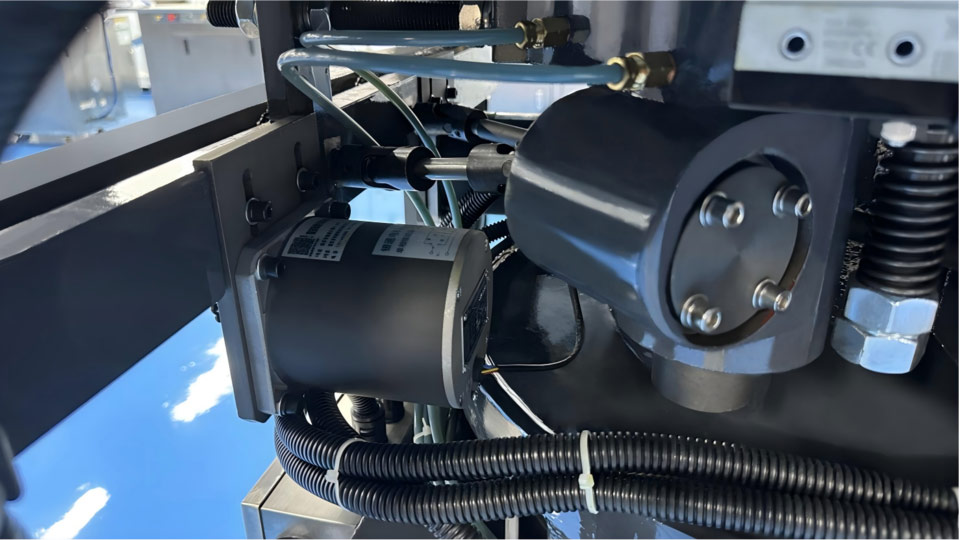
Servo motor control for filling pressure and filling amount.
Conclusion
Tablet press stability is the result of multiple systems working together, from machine structure and power transmission to turret precision, tooling accuracy, feeding consistency, and compression control. Each component affects tablet weight, hardness, thickness, and production efficiency. A well-designed tablet press machine reduces variation, minimizes waste, and supports stable high-speed pharmaceutical manufacturing.
FAQ
1. What factors affect tablet press stability?
Tablet press stability is affected by multiple factors, including machine rigidity, power transmission, turret precision, punch and die accuracy, feeding consistency, and compression force control. Any variation in these systems may influence tablet weight, hardness, thickness, and production efficiency.
2. Why does tablet weight variation happen during production?
Tablet weight variation is usually related to inconsistent powder filling. Changes in powder flowability, particle size, density, or feeder performance can cause different amounts of powder to enter each die cavity, resulting in unstable tablet weight.
3. How does a force feeder improve tablet quality?
A force feeder actively pushes powder into die cavities through rotating impellers. It improves filling consistency, especially during high-speed production, by reducing powder flow variation and helping each die receive a more stable powder volume.
4. Why is online compression force monitoring important for tablet presses?
Online compression force monitoring detects the actual force applied by each punch during compression. It helps identify abnormal conditions caused by overfilling, insufficient filling, powder agglomeration, or foreign particles, allowing defective tablets to be removed during production.
5. How does turret precision affect tablet quality?
The turret provides the movement reference for punches and dies. Poor flatness, excessive runout, or insufficient rigidity can change punch positions during compression, causing pressure fluctuation, inconsistent tablet thickness, and uneven hardness.
References
- U.S. FDA — Current Good Manufacturing Practice (CGMP) Regulations — Minimum requirements for methods, facilities, and controls used in drug manufacturing, processing, and packing.
- European Medicines Agency — Good Manufacturing Practice — EU GMP overview and compliance framework for medicinal-product manufacturing.
- United States Pharmacopeia — <905> Uniformity of Dosage Units — Official USP information on dosage-unit uniformity and acceptance-value testing.