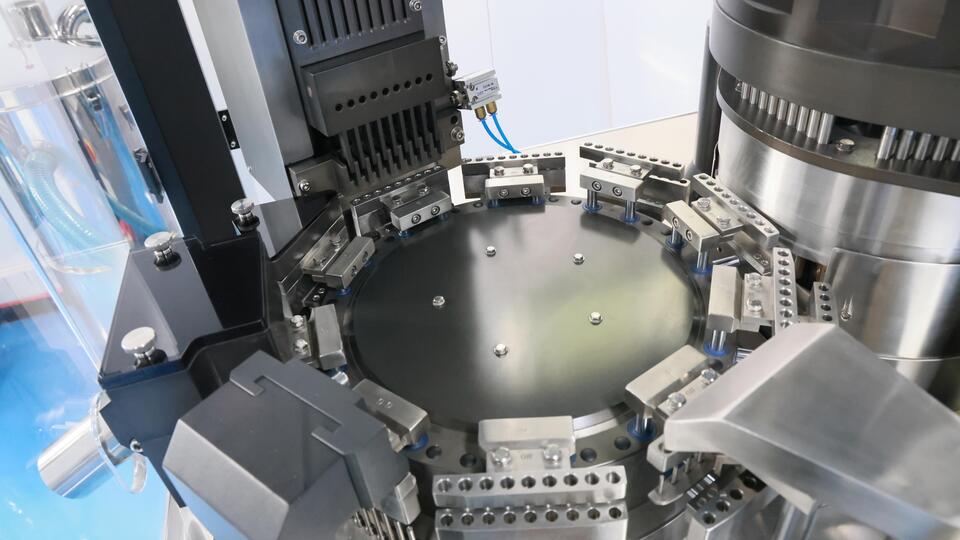
Sticky Powder Creates Major Challenges for Automatic Capsule Filling Machines
Introduction
Sticky powder is one of the biggest challenges for capsule manufacturers. In Capsule Filling Machines, sticky materials can create unstable feeding, powder bridging, and capsule weight variation. These problems come from powder properties, humidity, temperature, and filling system settings.
This article analyzes the causes behind Sticky Powder Problems and explains four practical solutions. The goal is to help manufacturers control production risks and select suitable capsule filling equipment for difficult powder materials.
Key Takeaways
- Sticky Powder Problems often come from material properties, moisture changes, and poor powder flowability, not only machine settings.
- Stable powder feeding systems help prevent bridging, hopper blockage, and filling weight fluctuation during continuous production.
- Surface treatment of filling rods and dosing components reduces powder adhesion and supports consistent capsule filling accuracy.
- Extremely sticky materials may require semi-auto capsule filler with forced screw feeding instead of traditional gravity-based powder filling methods.
- Proper material evaluation, environment control, and equipment selection support GMP production requirements and reduce unexpected downtime.
1. Material Properties and Environment Affect Powder Flowability
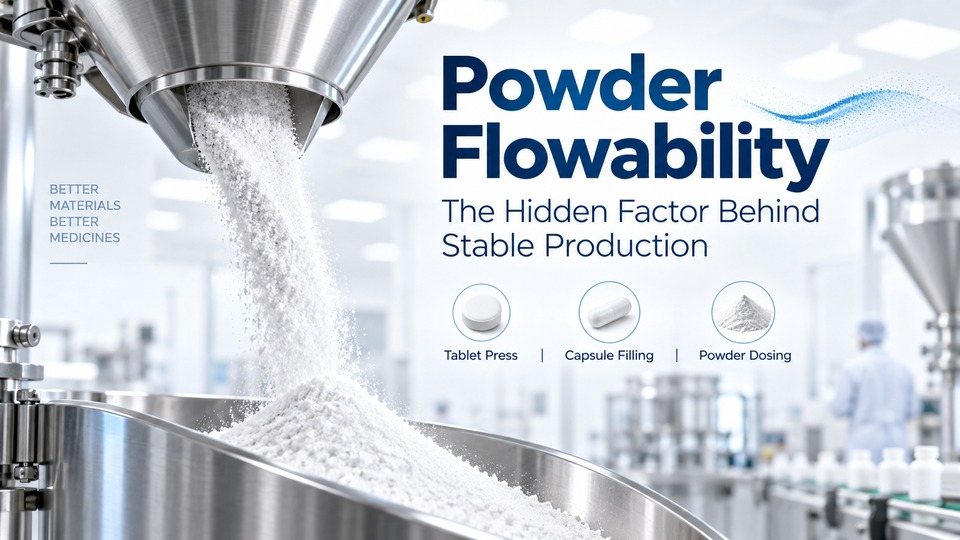
Powder behavior directly affects the performance of Capsule Filling Machines. Before adjusting machine parameters, manufacturers need to check the material characteristics and production environment. Different powders have different flow behavior during feeding and dosing.
Control Powder Properties Before Capsule Filling
The physical properties of powder determine how easily it moves through the filling system. Fine particle size, high moisture content, and natural viscosity can make powders difficult to handle.
Fine powders have a larger surface area. More particles contact each other during movement. This increases friction and adhesion between particles. Materials such as plant extracts, protein powders, and enzyme powders may form powder bridges inside the hopper.
When bridging occurs, powder cannot enter the dosing area continuously.
Moisture content is another key factor affecting powder flowability. When powder absorbs moisture from the air, a thin water layer forms on the particle surface. This increases bonding between particles and can lead to powder caking.
Materials such as herbal extracts, probiotics, and collagen powders are more sensitive to humidity. These materials may feed normally at the beginning of production. After several hours, they may become sticky and start attaching to the hopper or feeding components.
Some pharmaceutical and nutraceutical powders have natural sticky characteristics. Plant extracts may contain polysaccharides and fiber components. Protein powders can absorb water and expand. These materials may show higher adhesion even when moisture levels are controlled.
Maintain Stable Temperature and Humidity Conditions
The production environment directly influences powder behavior. Excess moisture in the production room can make powders absorb water and become more adhesive. Extremely dry environments may create static charges on fine powder particles, affecting material movement.
For GMP pharmaceutical production areas, many facilities maintain temperature around 20–25°C and relative humidity around 45–60%, depending on product requirements and process validation.
High humidity can make hygroscopic powders absorb moisture during operation. The powder may gradually become sticky and reduce feeding stability.
Temperature changes can also affect powder characteristics. Materials containing oils, fats, or wax-like components may soften under higher temperatures. These powders can attach to hopper walls, screws, or other contact surfaces.
When humidity levels drop too low, fine dry powders are more likely to build up static charges. The charged particles may attach to hopper walls or machine surfaces during filling. The powder may stick to plastic components, create airborne dust, and reduce material transfer efficiency.
2. Pneumatic Feeding Helps Handle Sticky Powder Materials
Sticky powders can interrupt the feeding process inside Capsule Filling Machines. When powder has poor flowability, it may attach to the hopper wall or create bridging above the feeding outlet. These conditions reduce the stability of material supply and increase operator adjustment work.
For difficult powder materials, the feeding system design becomes an important factor. A suitable powder feeding system can maintain continuous material transfer and reduce feeding interruptions during production.
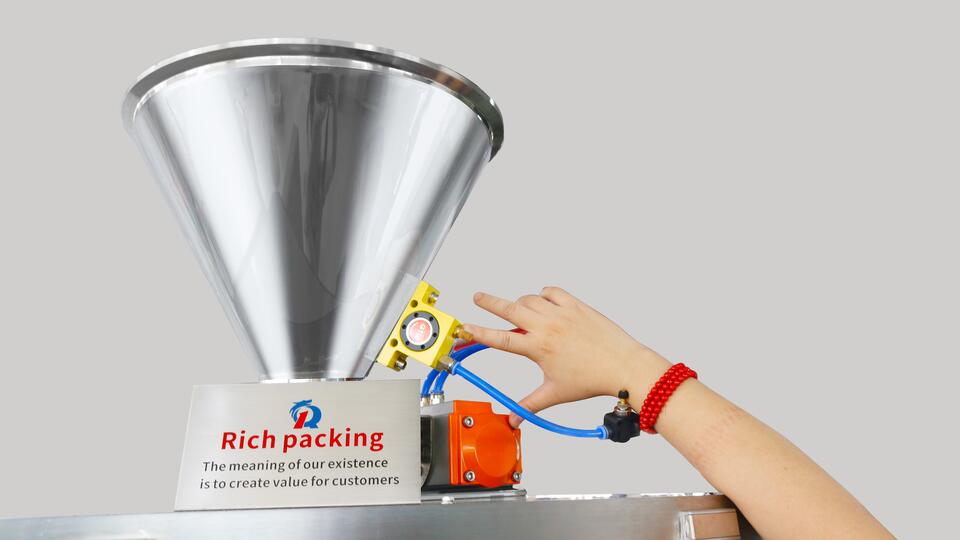
Pneumatic Feeding System
Reduce Powder Bridging with Pneumatic Feeding Systems
The pneumatic feeding system uses controlled air pressure to assist powder discharge. It helps move materials that cannot flow only by gravity. This method is suitable for powders with lower flowability and higher adhesion.
Sticky powders may remain on the inner surface of the hopper during operation. As the material level decreases, the powder can form a bridge above the outlet. The bridge blocks the powder path and stops continuous feeding.
To solve this problem, some Capsule Fillers add a pneumatic vibrator near the hopper outlet. The compressed air drives the vibration mechanism and transfers vibration to the hopper wall.
The vibration breaks the powder bridge and releases material attached to the surface. This keeps the powder moving toward the dosing area and reduces manual knocking during production.
Manufacturers including Ruida Packing, along with companies such as Fette, Bosch, and Syntegon, apply pneumatic feeding solutions on selected capsule filling systems.
The feeding speed must also match the powder characteristics. Excessive feeding pressure can compress sticky powder and increase blockage risk. Insufficient feeding may create empty areas in the dosing system and cause capsule weight variation.
For materials such as herbal extracts, nutritional powders, and sticky pharmaceutical powders, pneumatic feeding provides better control compared with simple gravity discharge.
3. Surface Treatment Improves Filling Component Performance
The filling station directly affects capsule weight consistency during production. When sticky powder contacts metal components, material residue can build up on filling rods, dosing plates, and other contact surfaces.
This residue changes the powder movement inside the dosing system. Operators may need to stop the machine for cleaning or adjust filling parameters during a production shift. For sticky materials, surface treatment becomes an important method to reduce powder attachment and maintain stable filling performance.
Electrochemical Polishing Reduces Powder Adhesion
Electropolishing is an electrochemical surface finishing process used on metal components. The process removes microscopic peaks from the metal surface through controlled electrical and chemical reactions.
During processing, the metal part works as an anode inside an electrolyte solution. The high points on the surface dissolve faster than lower areas. This creates a smoother surface structure with reduced roughness.
For Capsule Filling Machines, components such as filling rods, dosing plates, and powder contact parts can receive this treatment.
Sticky materials often create problems at the filling station. Powders with high viscosity or high moisture content may attach to filling rods and affect dosing accuracy.
A smoother surface reduces the contact force between powder particles and metal components. This helps prevent problems such as powder accumulation, unstable dosing, and increased capsule weight variation.
The treated surface also reduces powder residue during repeated filling cycles. Less material remains on the components after production, which helps reduce cleaning frequency and manual adjustment work.
Ruida Packing applies surface finishing methods on key powder contact components. Similar approaches are also used by international capsule filling machine manufacturers when handling difficult powder materials.
Protective Coatings Prevent Powder Sticking
For materials with stronger adhesion characteristics, additional surface coatings can be applied to filling components. Common options include PTFE coating, chrome plating, and ceramic coating.
PTFE coating, also known as Teflon coating, has a low surface energy. Powder particles have less attraction to the coated surface, which helps reduce sticking during filling cycles.
A chrome-plated surface provides a harder contact layer, helping components resist mechanical wear during repeated filling cycles. It creates a stronger surface layer that supports repeated contact between components and powder materials.
Ceramic coating provides high hardness and chemical resistance. This treatment is commonly selected for filling components that experience frequent powder contact and require better resistance to abrasion and powder sticking.
The selection of surface treatment depends on powder properties and production conditions. For example, sticky pharmaceutical powders may require low-adhesion coatings. Abrasive powders may require harder surface protection.
Some capsule filling equipment suppliers provide customized treatments based on different materials. These solutions help address powder adhesion, filling inconsistency, and cleaning requirements in pharmaceutical production.
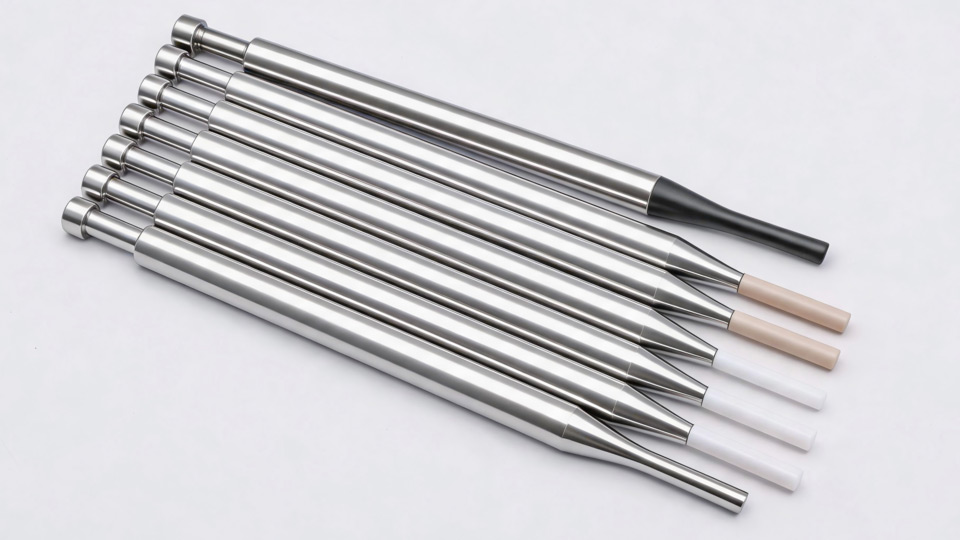
Capsule Filling Machine Filling Rods Made of Multiple Materials
4. Final Solution: Semi-Automatic Capsule Machines with Force Feeder
Some powder materials remain difficult to process after adjusting moisture, temperature, feeding settings, and surface treatment. When powder viscosity becomes too high, the material may block the dosing area and affect capsule filling accuracy.
In these cases, changing the feeding method becomes necessary. A Semi-Automatic Capsule Filling Machine equipped with a force feeder can actively transfer sticky powder into the filling area. This system does not rely only on powder gravity flow.
For extremely sticky materials, a screw force feeder provides stronger material movement. It pushes powder continuously and maintains a stable supply for capsule filling.
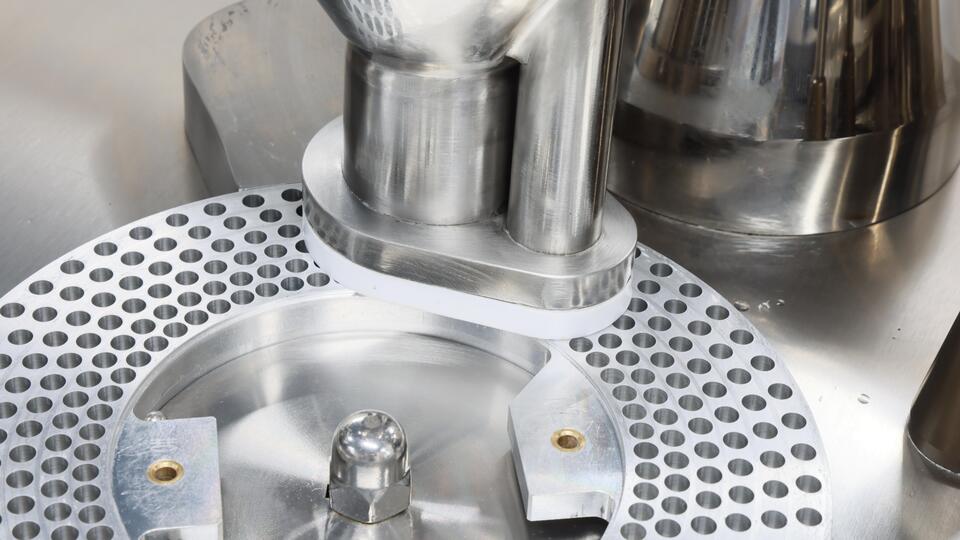
Semi-Automatic Capsule Machine for Sticky Powder
Fully Automatic and Semi-Automatic Filling Methods
A fully automatic Capsule Filling Machine uses a dosing disc and tamping rod system. The powder first moves from the hopper into the dosing disc. Multiple tamping stations compress the powder inside the dosing holes.
The filling rods control powder compression and dose formation. After reaching the required density, the formed powder plug is pushed into the empty capsule body.
This structure works well for pharmaceutical powders with stable flowability. However, sticky materials may create several production problems.
The powder may not enter every dosing hole evenly. Some holes may receive insufficient material, while others may contain excess powder. Operators may observe capsule weight variation during QA inspection.
A Semi-Automatic Capsule Filling Machine with a screw force feeder uses a different feeding method.
Instead of depending only on gravity flow, the screw actively pushes powder toward the capsule filling area. The rotating screw creates continuous material movement and helps transfer difficult powders into the capsule.
This method is suitable for sticky powders, herbal extracts, and low-flowability materials. The forced feeding action reduces powder blockage and improves material transfer stability.
For extremely viscous powders, the screw speed can be adjusted according to material behavior. Operators can control feeding conditions based on powder density, moisture content, and filling requirements.
Choosing the Right Filling Method for Difficult Powders
The choice between automatic and semi-automatic equipment depends on powder characteristics.
| Feature | Automatic Capsule Filling Machine | Semi-Automatic Capsule Machine with Screw Force Feeder |
| Filling principle | Dosing disc with tamping rods | Direct screw forced feeding |
| Material requirement | Stable powder flowability | Sticky and poor-flowability powders |
| Main feeding method | Gravity feeding into dosing disc | Mechanical powder pushing |
| Suitable application | Large-scale standard production | Difficult powder filling |
For standard pharmaceutical powders, a full automatic system provides high production capacity and continuous operation.
For powders with high viscosity, strong adhesion, or unstable flow behavior, a semi-automatic system with a screw force feeder can provide a more suitable filling approach.
Before selecting capsule filling equipment, manufacturers should test powder characteristics under actual production conditions. Powder flowability, moisture content, density, and adhesion behavior determine which filling method matches the material.
Conclusion
Sticky powder problems in Capsule Filling Machines come from multiple factors, including material properties, production environment, feeding methods, and filling structure.
Controlling moisture, temperature, and powder preparation can improve material behavior before filling. Pneumatic feeding systems help reduce powder bridging and support unstable materials during production.
For powder adhesion at the filling station, electropolishing and surface coatings can reduce material buildup on filling rods and dosing components.
When powder flowability becomes too poor for a dosing disc system, a Semi-Automatic Capsule Filling Machine with a screw force feeder provides another filling method. Equipment decisions should be based on actual powder tests, filling performance, and the quality requirements defined for each production process.
FAQ
1. Why does powder become sticky during capsule filling?
Powder becomes sticky because of material properties and production conditions. Fine particle size, high moisture content, and natural adhesive components can reduce powder flowability.
Materials such as herbal extracts, protein powders, and probiotics may absorb moisture from the environment. This increases powder adhesion and creates problems inside the Capsule Filling Machine.
2. How can manufacturers improve sticky powder feeding in capsule filling?
Manufacturers can improve feeding stability by controlling powder moisture, adjusting production humidity, and selecting a suitable feeding system.
For powders with poor flowability, pneumatic feeding systems can help reduce powder bridging. A hopper vibrator can also release powder attached to the hopper wall.
For extremely sticky materials, a force feeder or screw force feeder can actively transfer powder into the filling area.
3. What humidity and temperature should a capsule production room maintain?
Many GMP pharmaceutical production areas control temperature around 20–25°C and relative humidity around 45–60%, depending on product requirements.
Higher humidity can increase powder moisture absorption. Low humidity may increase static electricity, especially with fine powders.
The final environmental range should be confirmed through product validation and manufacturing requirements.
4. Why does sticky powder cause capsule weight variation?
Sticky powder may not enter the dosing holes evenly in a Capsule Filling Machine.
When powder forms bridges, attaches to surfaces, or moves inconsistently, the amount of powder compressed by the filling rods can change.
This creates differences between capsules and increases QA inspection requirements.
5. Can a full automatic capsule filling machine handle sticky powder?
A full automatic Capsule Filling Machine can handle many powders with proper preparation and suitable feeding systems.
However, extremely sticky materials may have difficulty entering the dosing disc because the system depends on stable powder movement.
For these materials, a semi-automatic capsule machine with a screw force feeder may provide a more suitable filling method.
6. What surface treatments can reduce powder sticking?
Common surface treatments include electropolishing, PTFE coating, chrome plating, and ceramic coating.
Electropolishing reduces microscopic surface roughness. Coatings reduce powder adhesion and improve material release from contact components.
The suitable treatment depends on powder characteristics and production conditions.
References
- U.S. Food and Drug Administration (FDA) — Current Good Manufacturing Practice (cGMP) for Finished Pharmaceuticals
https://www.ecfr.gov/current/title-21/chapter-I/subchapter-C/part-211 - European Commission — EudraLex Volume 4: EU Guidelines for Good Manufacturing Practice (GMP)
https://health.ec.europa.eu/medicinal-products/eudralex/eudralex-volume-4_en - United States Pharmacopeia (USP) — General Chapter <1174> Powder Flow
https://www.usp.org/ - U.S. Food and Drug Administration (FDA) — Guidance for Industry: Process Validation: General Principles and Practices
https://www.fda.gov/regulatory-information/search-fda-guidance-documents/process-validation-general-principles-and-practices - European Medicines Agency (EMA) — Pharmaceutical Quality System and Manufacturing Guidelines
https://www.ema.europa.eu/en/human-regulatory-overview/research-development/pharmaceutical-quality-system