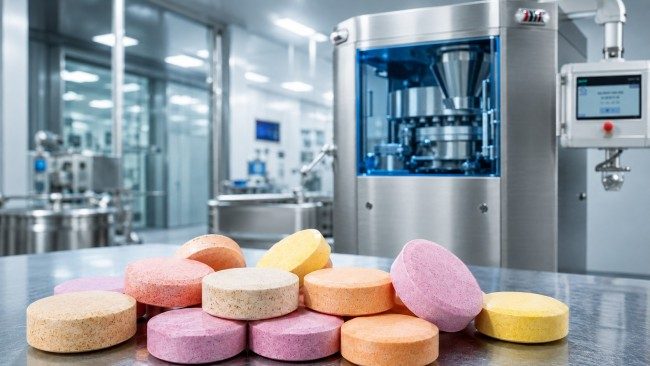
Viên nhai là dạng viên rắn được thiết kế để nhai trước khi nuốt. Chúng thường được sử dụng để cung cấp vitamin, khoáng sản, thuốc kháng axit, thực phẩm bổ sung, và các sản phẩm dược phẩm được lựa chọn. Ví dụ quen thuộc bao gồm viên nhai vitamin C, viên nhai canxi, và vitamin tổng hợp dạng nhai.
Mặc dù máy tính bảng nhai có thể được sản xuất bằng nhiều thiết bị sản xuất máy tính bảng tương tự được sử dụng cho máy tính bảng thông thường., các yêu cầu sản phẩm là khác nhau. Vì viên thuốc được nhai và lưu lại trong miệng lâu hơn, nếm, kết cấu, cảm giác trong miệng, kích thước máy tính bảng, và khả năng nhai trở nên quan trọng hơn nhiều. Đồng thời, máy tính bảng vẫn cần đủ sức mạnh để chịu được lực nén, tẩy bụi, bao bì, vận chuyển, và xử lý.
Những yêu cầu này ảnh hưởng đến toàn bộ quá trình sản xuất. Nhà sản xuất cần xem xét công thức, dù là nén trực tiếp hay tạo hạt phù hợp hơn, cách pha trộn hoạt động trong quá trình nén máy tính bảng, thuộc tính chất lượng nào cần được kiểm soát, và việc đóng vỉ hay đóng chai thì phù hợp hơn.
Hướng dẫn này giải thích công thức dạng viên nhai, chế tạo, thiết bị sản xuất, cân nhắc về chất lượng, và đóng gói trong một quy trình sản xuất hoàn chỉnh.
1. Điều gì làm nên sự khác biệt của viên nhai?
Sự khác biệt chính giữa viên nhai và viên nén thông thường đó là cách chúng dự định được thực hiện.
Một viên thuốc thông thường thường được nuốt cả viên và sau đó tan rã sau khi đến đường tiêu hóa. Một viên thuốc nhai được thiết kế để nhai thành các hạt nhỏ hơn trước khi nuốt. Vì điều này, người dùng trực tiếp trải nghiệm hương vị của máy tính bảng, kết cấu, độ cứng, và dư vị.
That changes what manufacturers need to consider during both formulation and production.
Ví dụ, a conventional tablet can have an unpleasant taste that is barely noticed if it is swallowed quickly. The same taste can become a major problem in a chewable tablet because the material remains in the mouth while it is being chewed. Sweeteners, hương vị, fillers, chất kết dính, and other excipients therefore need to work together to produce acceptable taste and mouthfeel while still supporting reliable tablet compression.
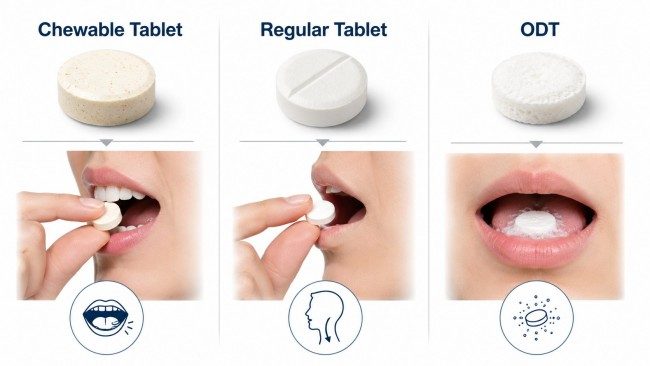
Chewable Tablets vs Regular Tablets vs ODTs
Chewable tablets are also different from orally disintegrating tablets, commonly called ODTs.
An ODT is designed to break apart rapidly in the mouth with little or no chewing. A chewable tablet is intentionally chewed before swallowing. A conventional tablet, bằng cách so sánh, is normally swallowed intact.
| Loại máy tính bảng | Nó thường được thực hiện như thế nào | Trọng tâm sản phẩm chính |
| Viên nhai | Nhai trước khi nuốt | Nếm, cảm giác trong miệng, tính nhai được, sức mạnh |
| Máy tính bảng thông thường | Nuốt toàn bộ | Sức mạnh, sự tan rã, dự định phát hành |
| ODT | Tan nhanh trong miệng | Phân hủy nhanh và quản lý dễ dàng |
Những khác biệt này cũng ảnh hưởng đến kích thước và hình dạng của máy tính bảng. Viên nhai thường được làm đủ lớn để mang vitamin, khoáng sản, thuốc kháng axit, hoặc các thành phần khác, vì vậy thiết kế dụng cụ và kích thước máy tính bảng cần phải vừa thoải mái khi nhai cũng như thiết thực cho sản xuất.
Máy tính bảng cũng phải đạt được sự cân bằng giữa sức mạnh và khả năng nhai. Nó cần phải tồn tại khi phóng điện từ máy ép viên, tẩy bụi, điều tra, bao bì, chuyên chở, và xử lý bình thường mà không bị vỡ quá mức. Đồng thời, làm cho máy tính bảng trở nên cứng một cách không cần thiết có thể làm cho việc nhai trở nên khó chịu hơn.
Đây là lý do tại sao việc phát triển máy tính bảng nhai không thể chỉ tập trung vào hương vị hoặc sức nén. Công thức phải hỗ trợ cả trải nghiệm ăn uống mong muốn và hiệu suất sản xuất ổn định.
2. Các ứng dụng và ví dụ về máy tính bảng nhai phổ biến
Viên nhai được sử dụng phổ biến trong các sản phẩm dễ sử dụng, nếm, hoặc khối lượng máy tính bảng tương đối lớn rất quan trọng.
Các sản phẩm vitamin và khoáng chất là những ví dụ quen thuộc nhất. Chúng bao gồm viên nhai vitamin C, vitamin tổng hợp dạng nhai, viên nhai canxi, kẹo nhai magiê, và các sản phẩm dinh dưỡng khác. Công thức giàu khoáng chất có thể tạo ra phấn trắng, kim loại, hoặc cảm giác cay đắng, vì vậy hương vị và kết cấu thường trở thành mục tiêu quan trọng trong công thức.
Viên nhai kháng axit là một ứng dụng khác đã được thiết lập. Chúng có thể chứa hàm lượng thành phần khoáng chất tương đối cao và được thiết kế để nhai trước khi nuốt..
Một số sản phẩm dược phẩm chọn lọc cũng sử dụng dạng nhai, including products intended for users who have difficulty swallowing conventional tablets. Pediatric products require particular attention to dose, kích thước máy tính bảng, excipient selection, and instructions for use rather than simply scaling down an adult product.
Chewable formats are also used in nutraceutical and veterinary products. Each application has its own palatability, dose, sự ổn định, and manufacturing requirements, which is why there is no single standard chewable tablet formula.
3. How Is a Chewable Tablet Formulated?
A chewable tablet formulation has to work as both a compressed tablet and a product that is deliberately chewed. The active ingredient, tá dược, taste system, particle properties, and manufacturing route all influence the final result.
Active Ingredient and Dose
The required active ingredient and dose come first. High-dose minerals, strongly bitter actives, vật liệu nhạy cảm với độ ẩm, và các thành phần liều lượng thấp có thể tạo ra các vấn đề về công thức rất khác nhau.
Liều lượng cũng ảnh hưởng đến kích thước viên thuốc, và một chiếc máy tính bảng dễ nén sẽ không tự động thoải mái khi nhai.
Tá dược chức năng
Viên nhai có thể chứa chất độn hoặc chất pha loãng, chất kết dính, chất bôi trơn, nhảy lượn, chất phân hủy, chất làm ngọt, hương vị, và các tá dược khác.
Chất độn giúp xây dựng khối lượng viên thuốc và có thể ảnh hưởng đến kết cấu. Chất kết dính hỗ trợ liên kết hạt. Chất bôi trơn làm giảm ma sát trong quá trình nén và đẩy. Chất lượn có thể cải thiện dòng bột, trong khi chất phân hủy được sử dụng khi thiết kế sản phẩm yêu cầu.
Công thức vẫn cần có độ chảy và độ nén phù hợp để hỗn hợp có thể lấp đầy khoang khuôn một cách nhất quán và tạo thành dạng viên mà không có khuyết tật quá mức..
Hương vị và cảm giác trong miệng
Hương vị là một trong những khác biệt lớn nhất giữa dạng viên nhai và dạng viên thông thường.
Chất làm ngọt và hương vị thường được sử dụng vì chất này sẽ đọng lại trong miệng khi nhai. Các polyol như mannitol thường được lựa chọn vì chúng có thể mang lại cảm giác dễ chịu hơn trong miệng..
Khi một thành phần hoạt chất có vị đắng mạnh hoặc gây khó chịu, hương vị thôi có thể không đủ. Phương pháp che giấu vị giác có thể bao gồm lớp phủ, vi bao, hoặc các chiến lược xây dựng khác, miễn là chúng vẫn tương thích với phần còn lại của quá trình sản xuất.
Kích thước hạt cũng quan trọng. Các hạt thô hoặc được kiểm soát kém có thể tạo ra cảm giác khó chịu, trong khi sự khác biệt lớn về kích thước hoặc mật độ hạt có thể làm tăng nguy cơ phân tách trong quá trình trộn và vận chuyển.
4. Các thuộc tính chất lượng quan trọng của viên nhai
Viên nén nhai cần phải có độ tin cậy về mặt cơ học trong quá trình sản xuất và đóng gói đồng thời có thể nhai được. Do đó, đánh giá chất lượng xem xét một số thuộc tính cùng nhau.
| Thuộc tính chất lượng | Tại sao nó quan trọng |
| Trọng lượng máy tính bảng và tính nhất quán của nội dung | Hỗ trợ thành phần và liều lượng phù hợp |
| độ cứng / lực phá vỡ | Cho biết độ bền cơ học và có thể ảnh hưởng đến khả năng nhai |
| Tính dễ vỡ | Cho thấy khả năng chống mài mòn và vỡ |
| Kích thước và độ dày | Xử lý ảnh hưởng, bao bì, và nhai |
| Sự tan rã | Giúp mô tả đặc điểm của dạng bào chế tan vỡ |
| giải thể | Đánh giá sự giải phóng hoạt chất |
| Hương vị và cảm giác trong miệng | Ảnh hưởng trực tiếp đến trải nghiệm người dùng |
| Vẻ bề ngoài | Giúp xác định các khuyết tật về thể chất |
Độ cứng là quan trọng, nhưng một viên thuốc cứng hơn không hẳn là một viên thuốc nhai tốt hơn. Nếu sức mạnh quá thấp, máy tính bảng có thể sứt mẻ hoặc vỡ trong quá trình khử bụi, chuyển tải, bao bì, và vận chuyển. Nếu nó cao một cách không cần thiết, nhai có thể trở nên khó chịu.
Tính dễ vỡ cung cấp cái nhìn thứ hai về độ bền vật lý, trong khi sự tan rã và hòa tan giúp xác nhận rằng dạng bào chế hoạt động như dự kiến. Các mục tiêu thích hợp phụ thuộc vào công thức và đặc tính sản phẩm hơn là vào một giá trị chung.
5. Sản xuất máy tính bảng nhai: Từng bước một
Sau khi thiết lập được công thức và quy trình, Quá trình sản xuất viên nhai tuân theo trình tự tương tự như các loại viên nén khác.
Bước chân 1: Chuẩn bị nguyên liệu thô
Nguyên liệu được cấp phát theo công thức lô. Tùy thuộc vào tình trạng của họ, bột có thể được sàng hoặc nghiền để phá vỡ các chất kết tụ và thu được sự phân bố kích thước hạt phù hợp hơn để trộn và cho ăn.
Bước chân 2: Pha trộn các thành phần
Các hoạt chất và tá dược được trộn lẫn để đạt được sự phân bố cần thiết. Đang tải máy xay, thời gian trộn, kích thước hạt, Tỉ trọng, và thứ tự bổ sung có thể ảnh hưởng đến tính đồng nhất và dòng chảy.
Chất bôi trơn thường được thêm vào trong giai đoạn trộn sau vì bôi trơn quá mức có thể làm giảm liên kết hạt và thay đổi tính chất của viên thuốc.
Bước chân 3: Sử dụng nén trực tiếp hoặc tạo hạt
Hỗn hợp nén trực tiếp có thể chuyển sang giai đoạn bôi trơn cuối cùng và nén viên mà không cần bước tạo hạt riêng biệt.
Khi cần tạo hạt, lộ trình có thể bao gồm tạo hạt ướt hoặc tạo hạt khô, sấy khô nếu có, phay hoặc định cỡ, và pha trộn cuối cùng. Mục đích là tạo ra vật liệu nạp và nén đáng tin cậy hơn.
Bước chân 4: Nén hỗn hợp trên máy ép viên quay
Hỗn hợp cuối cùng được chuyển sang máy ép viên quay. Hệ thống cấp liệu phân phối vật liệu vào các khoang khuôn, trong khi vị trí đục lỗ thấp hơn xác định độ sâu khuôn có sẵn và do đó ảnh hưởng đến trọng lượng máy tính bảng.
Khuôn đầy sau đó đi qua quá trình nén. Nén trước có thể được sử dụng khi cần thiết để loại bỏ một phần không khí bị mắc kẹt và tạo thành khối nén ban đầu trước khi nén chính.. Nén chính tạo thành viên thuốc thành phẩm, và cú đấm phía dưới nâng nó lên để phóng ra.
Các cài đặt cần thiết phụ thuộc vào công thức, kích thước máy tính bảng, dụng cụ, trọng lượng mục tiêu, tốc độ nhấn, điều kiện thức ăn, và hành vi bột. Chỉ riêng lực nén không được coi là yếu tố kiểm soát duy nhất đối với độ cứng hoặc khả năng nhai của viên thuốc.
Bước chân 5: Khử bụi, Thanh tra, và mẫu
Sau khi phóng ra, viên nén thường đi qua máy khử bụi để loại bỏ bột lỏng. Tùy theo dây chuyền và hệ thống chất lượng, Các bước tiếp theo cũng có thể bao gồm phát hiện kim loại và lấy mẫu trong quá trình.
Các sự cố nén phổ biến có thể chỉ ra các nguyên nhân khác nhau:
| Vấn đề | Các yếu tố cần điều tra |
| Dính hoặc nhặt | Độ ẩm công thức, bôi trơn, bề mặt dụng cụ, nhiệt độ |
| Sự biến đổi về trọng lượng | Dòng bột, sự phân chia, điều kiện thức ăn, sự đổ đầy, tốc độ nhấn |
| Sứt mẻ hoặc đóng nắp | Không khí bị cuốn vào, sự gắn kết, hồ sơ nén, dụng cụ |
| Độ cứng quá mức | Khả năng nén, điều kiện nén, kích thước máy tính bảng |
| Khó phóng ra | Bôi trơn, ma sát của tường khuôn, điều kiện dụng cụ |
Đây là những vấn đề đa yếu tố. Cài đặt máy, tính chất công thức, điều kiện vật chất, và dụng cụ nên được kiểm tra cùng nhau.
6. Thiết bị nào được sử dụng trong sản xuất máy tính bảng nhai?
Thiết bị chính xác phụ thuộc vào việc sản phẩm sử dụng phương pháp nén trực tiếp hay tạo hạt, nhưng một dòng điển hình có thể bao gồm:
| Thiết bị | Vai trò chính |
| Máy sàng hoặc máy nghiền | Chuẩn bị bột và khử kết tụ |
| Máy xay bột | Trộn hoạt chất và tá dược |
| Máy tạo hạt | Tạo hạt khi có yêu cầu |
| Máy sấy và máy định cỡ | Xử lý hạt ướt trước khi trộn lần cuối |
| Máy ép viên quay | Nén hỗn hợp cuối cùng thành viên |
| Máy tính bảng | Loại bỏ bột bề mặt lỏng lẻo |
| Máy dò kim loại | Phát hiện ô nhiễm kim loại khi đưa vào dây chuyền |
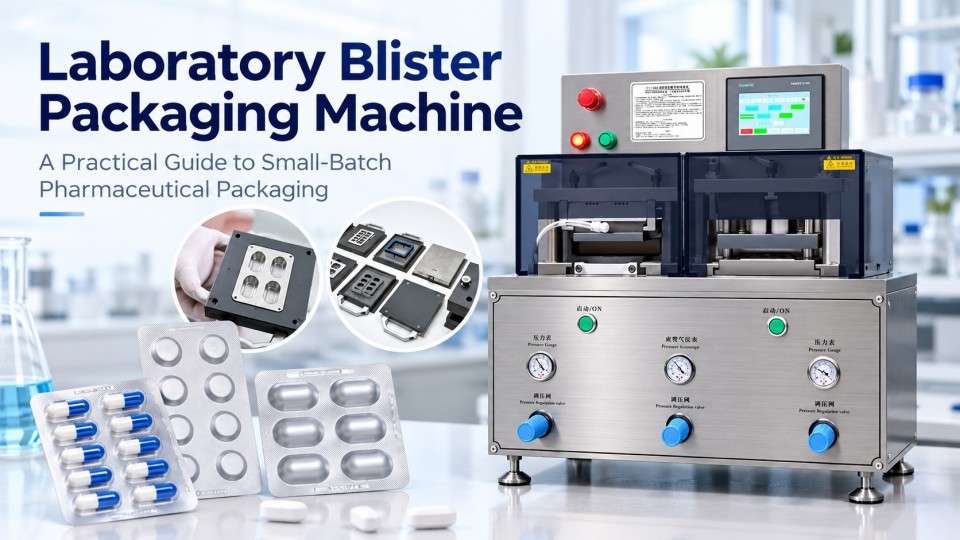
| Máy đóng gói vỉ | Pack tablets into blister cavities |
| Tablet counting line | Count and fill tablets into bottles |
| Máy đóng hộp | Load finished packs into cartons |

The rotary tablet press is the central machine in the tablet compression stage. Machine selection depends on tablet diameter and shape, dụng cụ, powder properties, năng lực sản xuất, and required automation.
Chewable tablets do not need a special category of tablet press simply because they are chewable. What matters is whether the machine, dụng cụ, feed system, and operating range match the formulation and tablet design.
For a complete production line, Ruida Đóng gói can connect tablet compression with downstream blister packaging, tablet counting, bottle handling, and cartoning equipment according to the required packaging format.
7. Chewable Tablet Packaging Solutions
Chewable tablets are commonly packed in blister packs or bottles. The better option depends on moisture and oxygen sensitivity, kích thước máy tính bảng, unit count, định dạng thị trường, and required barrier performance.
Bao bì vỉ
Blister packs separate tablets into individual cavities and are useful when unit-dose presentation or individual tablet separation is important.
Barrier performance depends on the complete packaging structure. PVC-based blisters, higher-barrier plastic structures, Và cold-form Alu-Alu packs do not provide the same level of protection.
The blister packaging machine forms and seals the pack, but the barrier itself comes from the selected materials and seal quality.
When secondary packaging is required, finished blister sheets can continue to a cartoning machine.
Bao bì chai
Bottle packaging is common for chewable vitamins, khoáng sản, and nutritional products sold in larger counts.
A typical automated tablet counting and bottling line can include:
Bottle unscrambling → Tablet counting/filling → Checkweighing → Desiccant insertion → Cotton insertion → Capping → Induction sealing → Labeling → Coding/inspection
Not every product needs every step. Desiccants, Ví dụ, should be selected according to the product’s moisture sensitivity and complete package design.

Blister or Bottle?
| Sự cân nhắc | Mụn nước | Cái chai |
| Trình bày liều lượng | Individual cavities | Multiple tablets per container |
| Large tablet counts | Less convenient in many cases | Often practical |
| Individual tablet separation | Strong advantage | Shared container |
| Barrier performance | Depends on blister structure | Depends on bottle, đóng cửa, and seal |
Packaging should therefore be considered early in line planning. A large chewable tablet sold in a 90-count bottle needs a very different packaging process from a product packed into individual blister cavities.
Phần kết luận
Chewable tablets combine the advantages of compressed solid dosage forms with additional demands for taste, cảm giác trong miệng, kích thước máy tính bảng, and chewability.
The best manufacturing route starts with the formulation. Material properties determine whether direct compression or granulation is more suitable, the tablet press must match the blend and tablet design, quality checks confirm finished-product performance, and the packaging format must provide the required protection and presentation.
A stable chewable tablet production line is therefore built by connecting formulation, nén, kiểm soát chất lượng, and packaging rather than optimizing any one step in isolation.
Frequently Asked Questions About Chewable Tablets
1.What is a chewable tablet?
A chewable tablet is a solid oral tablet designed to be chewed before swallowing. Its formulation needs to consider taste, cảm giác trong miệng, kết cấu, mechanical strength, and chewability in addition to normal tablet manufacturing requirements.
2.How are chewable tablets manufactured?
The typical process includes raw-material preparation, pha trộn, direct compression or granulation when required, sản xuất máy tính bảng, tẩy bụi, điều tra, and final blister or bottle packaging.
3.What ingredients are used in chewable tablet formulation?
Typical formulations can include active ingredients, fillers, chất kết dính, chất bôi trơn, nhảy lượn, chất phân hủy, chất làm ngọt, hương vị, và các tá dược khác. The exact combination depends on dose, nếm, tính chất vật chất, và yêu cầu về sản phẩm.
4.Why do chewable tablets stick to tablet press punches?
Possible causes include formulation moisture, sticky ingredients, inadequate lubrication, điều kiện dụng cụ, nhiệt độ sản phẩm, and compression conditions. The underlying cause should be identified before changing machine settings.
5.What quality attributes are important for chewable tablets?
Common attributes include tablet weight, content consistency, kích thước, hardness or breaking force, tính dễ vỡ, sự tan rã, giải thể, vẻ bề ngoài, nếm, cảm giác trong miệng, and chewability.
6.What equipment is needed for chewable tablet manufacturing?
A line can include powder preparation equipment, a blender, optional granulation and drying equipment, a rotary tablet compression machine, deduster, máy dò kim loại, and downstream tablet blister machine or tablet bottling line.
7.What packaging is suitable for chewable tablets?
Both blister packs and bottles are widely used. Selection depends on tablet size, đếm, yêu cầu rào cản, unit-dose needs, điều kiện bảo quản, và hình thức thị trường.
Tham khảo
1. FDA – Quality Attribute Considerations for Chewable Tablets: Hướng dẫn cho ngành
2. FDA / ICH Q6A Specifications
3. Công nghệ dược phẩm – Viên nhai: A Review of Formulation Considerations
4. PMC Research – Tabletability and Wet Granulation Study