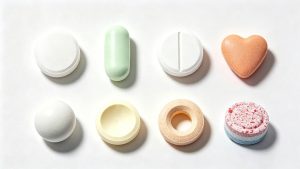
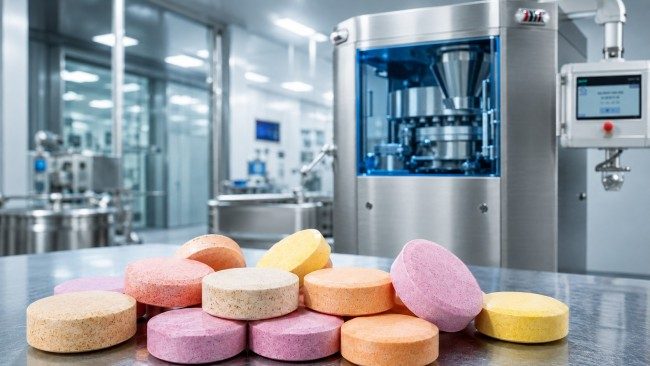
เม็ดเคี้ยวเป็นเม็ดแข็งที่ออกแบบมาเพื่อเคี้ยวก่อนกลืน. มักใช้สำหรับวิตามิน, แร่ธาตุ, ยาลดกรด, ผลิตภัณฑ์เสริมอาหาร, และผลิตภัณฑ์ยาคัดสรร. ตัวอย่างที่คุ้นเคย ได้แก่ เม็ดเคี้ยววิตามินซี, เม็ดเคี้ยวแคลเซียม, และวิตามินรวมแบบเคี้ยวได้.
แม้ว่าแท็บเล็ตแบบเคี้ยวสามารถผลิตได้ด้วยอุปกรณ์การผลิตแท็บเล็ตแบบเดียวกับที่ใช้สำหรับแท็บเล็ตทั่วไป, ความต้องการของผลิตภัณฑ์แตกต่างกัน. เนื่องจากเม็ดยาถูกเคี้ยวและอยู่ในปากได้นานขึ้น, รสชาติ, เนื้อสัมผัส, ความรู้สึกปาก, ขนาดแท็บเล็ต, และความสามารถในการเคี้ยวก็มีความสำคัญมากขึ้น. ในเวลาเดียวกัน, แท็บเล็ตยังต้องการความแข็งแรงเพียงพอที่จะรับแรงอัดได้, การกำจัดฝุ่น, บรรจุภัณฑ์, การส่งสินค้า, และการจัดการ.
ข้อกำหนดเหล่านี้ส่งผลต่อกระบวนการผลิตทั้งหมด. ผู้ผลิตจำเป็นต้องพิจารณาถึงสูตร, ไม่ว่าจะเป็นการบีบอัดโดยตรงหรือ แกรนูล เหมาะสมกว่า, การผสมผสานทำงานอย่างไรระหว่างการบีบอัดแท็บเล็ต, คุณลักษณะด้านคุณภาพใดที่ต้องได้รับการควบคุม, และบรรจุภัณฑ์แบบตุ่มหรือแบบขวดมีความเหมาะสมมากกว่ากัน.
คู่มือนี้จะอธิบายสูตรยาเม็ดเคี้ยว, การผลิต, อุปกรณ์การผลิต, ข้อพิจารณาด้านคุณภาพ, และบรรจุภัณฑ์ในขั้นตอนการผลิตที่สมบูรณ์เพียงขั้นตอนเดียว.
1. อะไรทำให้เม็ดเคี้ยวแตกต่าง?
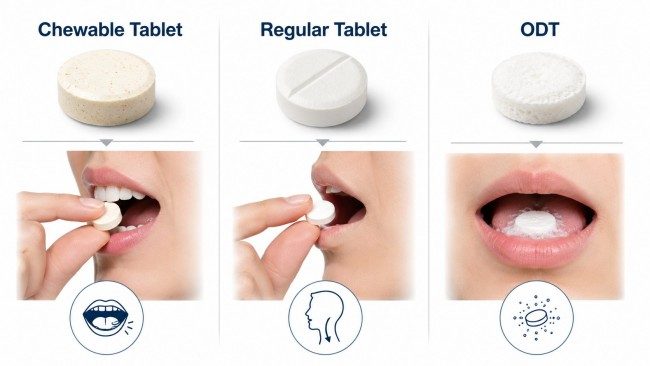
ความแตกต่างที่สำคัญระหว่าง เม็ดเคี้ยวและเม็ดธรรมดา คือวิธีที่พวกเขาตั้งใจจะเอาไป.
โดยปกติแล้วยาเม็ดแบบทั่วไปจะถูกกลืนเข้าไปทั้งเม็ดแล้วจึงสลายตัวหลังจากไปถึงระบบทางเดินอาหาร. แท็บเล็ตแบบเคี้ยวได้รับการออกแบบให้เคี้ยวเป็นอนุภาคขนาดเล็กก่อนกลืน. เพราะเหตุนี้, ผู้ใช้จะได้สัมผัสกับรสชาติของแท็บเล็ตโดยตรง, เนื้อสัมผัส, ความแข็ง, และรสที่ค้างอยู่ในคอ.
ซึ่งจะเปลี่ยนสิ่งที่ผู้ผลิตต้องพิจารณาระหว่างทั้งการกำหนดสูตรและการผลิต.
ตัวอย่างเช่น, แท็บเล็ตทั่วไปอาจมีรสชาติที่ไม่พึงประสงค์ซึ่งแทบจะสังเกตไม่เห็นหากกลืนเข้าไปอย่างรวดเร็ว. รสชาติเดียวกันอาจกลายเป็นปัญหาสำคัญในแท็บเล็ตแบบเคี้ยวได้เนื่องจากวัสดุยังคงอยู่ในปากขณะเคี้ยว. สารให้ความหวาน, รสชาติ, ฟิลเลอร์, สารยึดเกาะ, และสารปรุงแต่งอื่นๆ จึงต้องทำงานร่วมกันเพื่อให้ได้รสชาติและความรู้สึกที่ยอมรับได้ ขณะเดียวกันก็สนับสนุนการบีบอัดยาเม็ดที่เชื่อถือได้.
ยาเม็ดเคี้ยว กับ ยาเม็ดธรรมดา กับ ODT
เม็ดเคี้ยวยังแตกต่างจากเม็ดที่สลายตัวทางปาก, โดยทั่วไปเรียกว่า ODT.
ODT ได้รับการออกแบบมาให้แตกตัวอย่างรวดเร็วในปากโดยเคี้ยวเพียงเล็กน้อยหรือไม่ต้องเคี้ยวเลย. เม็ดเคี้ยวถูกจงใจเคี้ยวก่อนกลืน. แท็บเล็ตธรรมดา, โดยการเปรียบเทียบ, ปกติแล้วจะถูกกลืนลงไปโดยไม่เสียหาย.
| ประเภทแท็บเล็ต | ปกติแล้วจะถ่ายอย่างไร | การมุ่งเน้นผลิตภัณฑ์ที่สำคัญ |
| แท็บเล็ตเคี้ยวได้ | เคี้ยวก่อนกลืน | รสชาติ, ความรู้สึกปาก, ความเคี้ยวได้, ความแข็งแกร่ง |
| แท็บเล็ตปกติ | กลืนไปทั้งตัว | ความแข็งแกร่ง, การสลายตัว, ตั้งใจจะปล่อย |
| โอดีที | สลายตัวอย่างรวดเร็วในปาก | สลายตัวเร็วและบริหารจัดการง่าย |
ความแตกต่างเหล่านี้ยังส่งผลต่อขนาดและรูปร่างของแท็บเล็ตด้วย. เม็ดเคี้ยวมักมีขนาดใหญ่พอที่จะใส่วิตามินได้, แร่ธาตุ, ยาลดกรด, หรือส่วนผสมอื่นๆ, ดังนั้นการออกแบบเครื่องมือและขนาดแท็บเล็ตจึงต้องคงความสบายในการเคี้ยวและการใช้งานจริงสำหรับการผลิต.
แท็บเล็ตจะต้องมีความสมดุลระหว่างความแข็งแรงและความสามารถในการเคี้ยว. มันต้องรอดจากการปล่อยตัว แท่นกดแท็บเล็ต, การกำจัดฝุ่น, การตรวจสอบ, บรรจุภัณฑ์, ขนส่ง, และการจัดการตามปกติโดยไม่มีการแตกหักมากเกินไป. ในเวลาเดียวกัน, การทำให้แท็บเล็ตแข็งโดยไม่จำเป็นอาจทำให้เคี้ยวน้อยลง.
ด้วยเหตุนี้การพัฒนายาเม็ดเคี้ยวจึงไม่สามารถเน้นที่รสชาติหรือการบีบอัดเพียงอย่างเดียวได้. สูตรนี้ต้องสนับสนุนทั้งประสบการณ์การกินที่ต้องการและประสิทธิภาพการผลิตที่มั่นคง.
2. การใช้งานและตัวอย่างแท็บเล็ตเคี้ยวทั่วไป
เม็ดเคี้ยวเป็นเรื่องปกติในผลิตภัณฑ์ที่ง่ายต่อการบริหาร, รสชาติ, หรือมวลเม็ดยาที่ค่อนข้างใหญ่.
ผลิตภัณฑ์วิตามินและแร่ธาตุเป็นตัวอย่างที่คุ้นเคยที่สุด. เหล่านี้ได้แก่ เม็ดเคี้ยววิตามินซี, วิตามินแบบเคี้ยวได้, เม็ดเคี้ยวแคลเซียม, แมกนีเซียมเคี้ยว, และผลิตภัณฑ์โภชนาการอื่นๆ. สูตรที่อุดมด้วยแร่ธาตุสามารถสร้างสีชอล์กได้, โลหะ, หรือความรู้สึกขมขื่น, ดังนั้นรสชาติและเนื้อสัมผัสจึงมักกลายเป็นเป้าหมายในการกำหนดสูตรที่สำคัญ.
ยาเม็ดเคี้ยวยาแก้ท้องเฟ้อเป็นอีกหนึ่งแอปพลิเคชั่นที่เป็นที่ยอมรับ. พวกเขาสามารถมีส่วนผสมของแร่ธาตุในระดับที่ค่อนข้างสูงและได้รับการออกแบบมาให้เคี้ยวก่อนกลืน.
ผลิตภัณฑ์ยาที่เลือกสรรยังใช้รูปแบบที่เคี้ยวได้, รวมถึงผลิตภัณฑ์ที่มีไว้สำหรับผู้ใช้ที่มีปัญหาในการกลืนแท็บเล็ตทั่วไป. ผลิตภัณฑ์สำหรับเด็กจำเป็นต้องให้ความสนใจเป็นพิเศษกับขนาดยา, ขนาดแท็บเล็ต, การเลือกสารปรุงแต่ง, และคำแนะนำในการใช้งานแทนที่จะลดขนาดผลิตภัณฑ์สำหรับผู้ใหญ่.
รูปแบบเคี้ยวยังใช้ในผลิตภัณฑ์โภชนเภสัชและสัตวแพทย์อีกด้วย. แต่ละแอปพลิเคชั่นมีความอร่อยของตัวเอง, ปริมาณ, ความมั่นคง, และข้อกำหนดการผลิต, ด้วยเหตุนี้จึงไม่มีสูตรยาเม็ดเคี้ยวมาตรฐานสูตรเดียว.
3. แท็บเล็ตเคี้ยวมีสูตรอย่างไร?
สูตรแท็บเล็ตแบบเคี้ยวต้องทำงานเป็นทั้งแท็บเล็ตแบบบีบอัดและเป็นผลิตภัณฑ์ที่จงใจเคี้ยว. สารออกฤทธิ์, สารเพิ่มปริมาณ, ระบบรับรส, คุณสมบัติของอนุภาค, และเส้นทางการผลิตล้วนส่งผลต่อผลลัพธ์สุดท้าย.
ส่วนผสมและปริมาณที่ใช้งานอยู่
สารออกฤทธิ์และปริมาณที่ต้องการต้องมาก่อน. แร่ธาตุในปริมาณสูง, มีฤทธิ์ขมมาก, วัสดุที่ไวต่อความชื้น, และส่วนผสมในปริมาณต่ำอาจทำให้เกิดปัญหาในการกำหนดสูตรที่แตกต่างกันมาก.
ปริมาณยังส่งผลต่อขนาดแท็บเล็ตด้วย, และแท็บเล็ตที่บีบอัดง่ายไม่เคี้ยวอัตโนมัติสะดวกสบาย.
สารเพิ่มปริมาณการทำงาน
เม็ดเคี้ยวอาจมีสารตัวเติมหรือสารเจือจาง, สารยึดเกาะ, น้ำมันหล่อลื่น, การเต้นรำร่อน, สารสลายตัว, สารให้ความหวาน, รสชาติ, และสารเพิ่มปริมาณอื่นๆ.
สารตัวเติมช่วยสร้างมวลเม็ดยาและอาจส่งผลต่อเนื้อสัมผัสได้. สารยึดเกาะรองรับการยึดเกาะของอนุภาค. น้ำมันหล่อลื่นช่วยลดแรงเสียดทานระหว่างการบีบอัดและการดีดตัวออก. เครื่องร่อนสามารถปรับปรุงการไหลของผงได้, ในขณะที่สารช่วยแตกตัวถูกใช้เมื่อจำเป็นโดยการออกแบบผลิตภัณฑ์.
สูตรยังคงต้องการการไหลที่เหมาะสมและความสามารถในการอัดแน่นเพื่อให้ส่วนผสมสามารถเติมช่องแม่พิมพ์ได้อย่างสม่ำเสมอและสร้างเม็ดยาโดยไม่มีข้อบกพร่องมากเกินไป.
รสชาติและความรู้สึกปาก
รสชาติเป็นหนึ่งในความแตกต่างที่ใหญ่ที่สุดระหว่างสูตรแท็บเล็ตแบบเคี้ยวและสูตรทั่วไป.
สารให้ความหวานและรสชาติมักใช้เพราะสารยังคงอยู่ในปากขณะเคี้ยว. Polyols such as mannitol are often selected because they can contribute both bulk and a more pleasant mouthfeel.
When an active ingredient is strongly bitter or otherwise unpleasant, flavor alone may not be enough. Taste-masking approaches can include coating, microencapsulation, or other formulation strategies, provided they remain compatible with the rest of the manufacturing process.
Particle size also matters. Coarse or poorly controlled particles can create a gritty sensation, while large differences in particle size or density can increase the risk of segregation during blending and transfer.
4. Important Quality Attributes of Chewable Tablets
Chewable tablets need to remain mechanically reliable during production and packaging while also being acceptable to chew. การประเมินคุณภาพจึงพิจารณาคุณลักษณะหลายประการร่วมกัน.
| คุณลักษณะด้านคุณภาพ | ทำไมมันถึงสำคัญ |
| น้ำหนักแท็บเล็ตและความสอดคล้องของเนื้อหา | รองรับองค์ประกอบและปริมาณที่สม่ำเสมอ |
| ความแข็ง / แรงทำลาย | บ่งบอกถึงความแข็งแรงทางกลและอาจส่งผลต่อความสามารถในการเคี้ยว |
| ความเปราะบาง | แสดงความทนทานต่อการเสียดสีและการแตกหัก |
| ขนาดและความหนา | ส่งผลกระทบต่อการจัดการ, บรรจุภัณฑ์, และเคี้ยว |
| การสลายตัว | ช่วยอธิบายลักษณะของการ แบบฟอร์มการให้ยา พังทลาย |
| การละลาย | ประเมินการปลดปล่อยสารออกฤทธิ์ |
| รสชาติและความรู้สึกปาก | ส่งผลโดยตรงต่อประสบการณ์ผู้ใช้ |
| รูปร่าง | ช่วยระบุข้อบกพร่องทางกายภาพ |
ความแข็งเป็นสิ่งสำคัญ, แต่แท็บเล็ตที่แข็งกว่านั้นไม่ใช่แท็บเล็ตที่เคี้ยวได้ดีกว่าโดยอัตโนมัติ. หากความแข็งแกร่งยังต่ำเกินไป, แท็บเล็ตอาจแตกหรือแตกหักได้ในระหว่างการกำจัดฝุ่น, การลำเลียง, บรรจุภัณฑ์, และการขนส่ง. หากสูงเกินความจำเป็น, การเคี้ยวอาหารอาจไม่เป็นที่พอใจ.
ความเปราะบางให้มุมมองที่สองของความทนทานทางกายภาพ, ในขณะที่การสลายตัวและการละลายช่วยยืนยันว่ารูปแบบของยาทำงานได้ตามที่ตั้งใจไว้. เป้าหมายที่เหมาะสมขึ้นอยู่กับสูตรผสมและข้อมูลจำเพาะของผลิตภัณฑ์ ไม่ใช่ค่าสากลค่าเดียว.
5. การผลิตแท็บเล็ตเคี้ยว: ทีละขั้นตอน
เมื่อกำหนดเส้นทางการกำหนดสูตรและกระบวนการแล้ว, การผลิตยาเม็ดเคี้ยวมีลำดับคล้ายกับยาเม็ดอัดอื่นๆ.
ขั้นตอน 1: เตรียมวัตถุดิบ
วัตถุดิบจะถูกจ่ายตามสูตรแบทช์. ขึ้นอยู่กับสภาพของพวกเขา, ผงสามารถกรองหรือบดเพื่อแยกจับเป็นก้อนและได้รับการกระจายขนาดอนุภาคที่เหมาะสมมากขึ้นสำหรับการผสมและการป้อน.
ขั้นตอน 2: ผสมผสานส่วนผสม
ผสมส่วนผสมออกฤทธิ์และสารเพิ่มปริมาณเพื่อให้ได้การกระจายตามที่ต้องการ. กำลังโหลดเครื่องปั่น, เวลาผสม, ขนาดอนุภาค, ความหนาแน่น, และลำดับการเติมอาจส่งผลต่อความสม่ำเสมอและการไหล.
โดยทั่วไปจะมีการเติมน้ำมันหล่อลื่นในระหว่างขั้นตอนการผสมในภายหลัง เนื่องจากการหล่อลื่นที่มากเกินไปสามารถลดการเกาะตัวของอนุภาคและเปลี่ยนคุณสมบัติของเม็ดยาได้.
ขั้นตอน 3: ใช้การบีบอัดโดยตรงหรือการทำแกรนูล
ส่วนผสมแบบบีบอัดโดยตรงสามารถเคลื่อนไปสู่การหล่อลื่นขั้นสุดท้ายและการบีบอัดแบบเม็ดยาโดยไม่ต้องมีขั้นตอนการทำแกรนูลแยกต่างหาก.
เมื่อจำเป็นต้องทำเป็นเม็ด, เส้นทางอาจรวมถึงแกรนูลเปียกหรือแกรนูลแห้ง, การอบแห้งตามความเหมาะสม, การกัดหรือการปรับขนาด, และการผสมครั้งสุดท้าย. จุดประสงค์คือเพื่อสร้างวัสดุที่ป้อนและบีบอัดได้อย่างน่าเชื่อถือมากขึ้น.
ขั้นตอน 4: บีบอัดส่วนผสมบนเครื่องกดแท็บเล็ตแบบหมุน
ส่วนผสมสุดท้ายจะถูกถ่ายโอนไปยัง a กดแท็บเล็ตแบบหมุน. ระบบป้อนจะกระจายวัสดุเข้าไปในโพรงแม่พิมพ์, ในขณะที่ตำแหน่งการเจาะด้านล่างจะกำหนดความลึกในการเติมแม่พิมพ์ที่มีอยู่ และส่งผลต่อน้ำหนักของเม็ดยา.
แม่พิมพ์ที่เติมแล้วจะผ่านการบีบอัด. การบีบอัดล่วงหน้าสามารถนำมาใช้เมื่อจำเป็นเพื่อเอาส่วนหนึ่งของอากาศที่ติดอยู่ออก และสร้างการบีบอัดเริ่มต้นก่อนการบีบอัดหลัก. การบีบอัดหลักจะสร้างแท็บเล็ตที่เสร็จแล้ว, และหมัดล่างก็ยกขึ้นเพื่อดีดออก.
การตั้งค่าที่จำเป็นขึ้นอยู่กับสูตร, ขนาดแท็บเล็ต, เครื่องมือ, น้ำหนักเป้าหมาย, ความเร็วในการกด, เงื่อนไขการฟีด, และพฤติกรรมของผง. แรงอัดเพียงอย่างเดียวไม่ควรถือเป็นการควบคุมความแข็งหรือความสามารถในการเคี้ยวของเม็ดยาเพียงอย่างเดียว.
ขั้นตอน 5: กำจัดฝุ่น, ตรวจสอบ, และตัวอย่าง
หลังจากดีดออก, แท็บเล็ตมักจะผ่านเครื่องกำจัดฝุ่นเพื่อกำจัดแป้งฝุ่น. ขึ้นอยู่กับสายงานและระบบคุณภาพ, ขั้นตอนปลายน้ำยังอาจรวมถึงการตรวจจับโลหะและการสุ่มตัวอย่างระหว่างกระบวนการด้วย.
ปัญหาการบีบอัดทั่วไปอาจชี้ไปที่สาเหตุที่แตกต่างกัน:
| ปัญหา | ปัจจัยที่ต้องตรวจสอบ |
| ติดหรือหยิบ | สูตรความชื้น, การหล่อลื่น, พื้นผิวเครื่องมือ, อุณหภูมิ |
| การเปลี่ยนแปลงของน้ำหนัก | การไหลของผง, การแบ่งแยก, เงื่อนไขการฟีด, การกรอก, ความเร็วในการกด |
| การบิ่นหรือการปิดฝา | อากาศที่ถูกกักขัง, พันธะ, โปรไฟล์การบีบอัด, เครื่องมือ |
| ความแข็งมากเกินไป | ความกะทัดรัด, เงื่อนไขการบีบอัด, ขนาดแท็บเล็ต |
| การขับออกที่ยากลำบาก | การหล่อลื่น, แรงเสียดทานผนังตาย, สภาพเครื่องมือ |
สิ่งเหล่านี้เป็นปัญหาหลายปัจจัย. การตั้งค่าเครื่อง, คุณสมบัติการกำหนด, สภาพวัสดุ, และควรตรวจสอบเครื่องมือร่วมกัน.
6. อุปกรณ์ใดที่ใช้ในการผลิตแท็บเล็ตแบบเคี้ยว?
อุปกรณ์ที่แน่นอนขึ้นอยู่กับว่าผลิตภัณฑ์ใช้การบีบอัดโดยตรงหรือการทำแกรนูล, แต่บรรทัดทั่วไปอาจรวมถึง:
| อุปกรณ์ | บทบาทหลัก |
| ตะแกรงหรือโรงสี | การเตรียมผงและดีอะโกลเมอเรชัน |
| เครื่องปั่นแป้ง | ผสมส่วนผสมออกฤทธิ์และสารเพิ่มปริมาณ |
| เครื่องบดย่อย | ก่อตัวเป็นเม็ดเมื่อจำเป็น |
| เครื่องอบผ้าและโรงคัดขนาด | ประมวลผลเม็ดเปียกก่อนผสมขั้นสุดท้าย |
| เครื่องกดแท็บเล็ตแบบหมุน | บีบอัดส่วนผสมสุดท้ายลงในแท็บเล็ต |
| เครื่องกำจัดแท็บเล็ต | ลบแป้งพื้นผิวที่หลวม |
| เครื่องตรวจจับโลหะ | ตรวจจับการปนเปื้อนของโลหะเมื่อรวมไว้ในสายการผลิต |
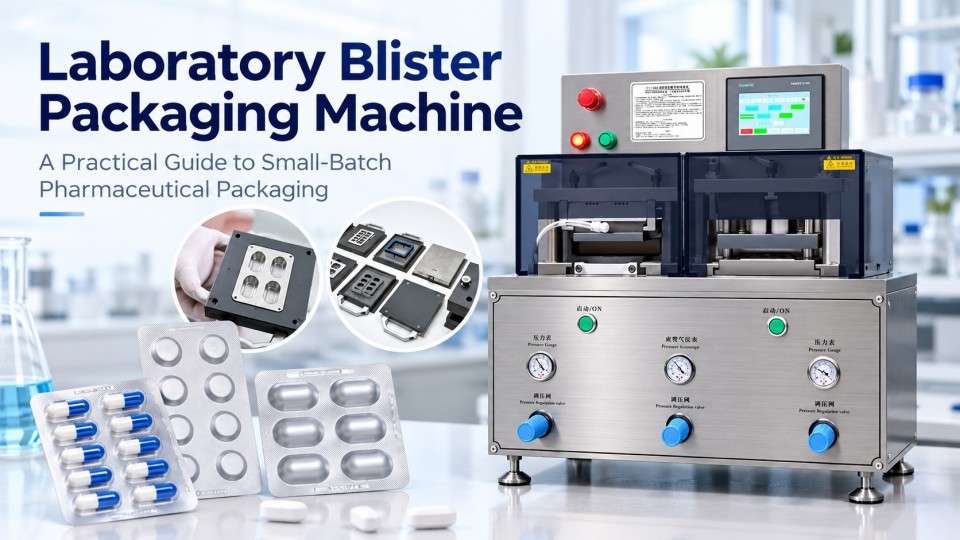
| เครื่องบรรจุแบบพุพอง | บรรจุเม็ดยาลงในช่องตุ่ม |
| เส้นนับแท็บเล็ต | นับและเติมยาเม็ดลงในขวด |
| เครื่องบรรจุกล่อง | โหลดแพ็คสำเร็จรูปลงในกล่อง |

เครื่องอัดยาเม็ดแบบหมุนเป็นเครื่องศูนย์กลางในขั้นตอนการบีบอัดยาเม็ด. การเลือกเครื่องขึ้นอยู่กับเส้นผ่านศูนย์กลางและรูปร่างของเม็ดยา, เครื่องมือ, คุณสมบัติของผง, กำลังการผลิต, และระบบอัตโนมัติที่จำเป็น.
เม็ดเคี้ยวไม่จำเป็นต้องมีการกดแท็บเล็ตประเภทพิเศษเพียงเพราะว่าสามารถเคี้ยวได้. สิ่งสำคัญคือไม่ว่าจะเป็นตัวเครื่อง, เครื่องมือ, ระบบฟีด, และช่วงการทำงานตรงกับสูตรและการออกแบบแท็บเล็ต.
เพื่อสายการผลิตที่สมบูรณ์, รุยด้า แพ็คกิ้ง สามารถเชื่อมต่อการบีบอัดแท็บเล็ตกับบรรจุภัณฑ์พุพองแบบดาวน์สตรีม, การนับแท็บเล็ต, การจัดการขวด, และอุปกรณ์บรรจุกล่องตามรูปแบบบรรจุภัณฑ์ที่ต้องการ.
7. โซลูชั่นบรรจุภัณฑ์แท็บเล็ตเคี้ยวได้
เม็ดเคี้ยวมักบรรจุในแพ็คตุ่มหรือขวด. ตัวเลือกที่ดีกว่านั้นขึ้นอยู่กับความไวของความชื้นและออกซิเจน, ขนาดแท็บเล็ต, จำนวนหน่วย, รูปแบบตลาด, และประสิทธิภาพของสิ่งกีดขวางที่ต้องการ.
บรรจุภัณฑ์แบบพุพอง
แผงตุ่มจะบรรจุเม็ดยาแยกกันในแต่ละช่อง และมีประโยชน์เมื่อการนำเสนอขนาดยาต่อหน่วยหรือการแยกเม็ดยาแต่ละเม็ดเป็นสิ่งสำคัญ.
ประสิทธิภาพของแผงกั้นขึ้นอยู่กับโครงสร้างบรรจุภัณฑ์ที่สมบูรณ์. แผลพุพองที่ทำจากพีวีซี, โครงสร้างพลาสติกที่มีอุปสรรคสูง, และ แพ็ค Alu-Alu แบบเย็น ไม่ได้ให้ความคุ้มครองในระดับเดียวกัน.
เครื่องบรรจุภัณฑ์พุพองจะขึ้นรูปและปิดผนึกบรรจุภัณฑ์, แต่อุปสรรคนั้นมาจากวัสดุที่คัดสรรและคุณภาพการซีล.
เมื่อจำเป็นต้องใช้บรรจุภัณฑ์รอง, แผ่นตุ่มสำเร็จรูปสามารถต่อไปยังเครื่องบรรจุกล่องได้.
บรรจุภัณฑ์ขวด
บรรจุภัณฑ์แบบขวดเป็นเรื่องปกติสำหรับวิตามินแบบเคี้ยว, แร่ธาตุ, และผลิตภัณฑ์โภชนาการที่จำหน่ายในจำนวนที่มากขึ้น.
การนับเม็ดยาอัตโนมัติและสายการบรรจุขวดโดยทั่วไปอาจรวมอยู่ด้วย:
การถอดขวด → การนับ/การบรรจุยาเม็ด → การตรวจสอบน้ำหนัก → การใส่สารดูดความชื้น → การใส่ฝ้าย → การปิดฝา → การปิดผนึกแบบเหนี่ยวนำ → การติดฉลาก → การเข้ารหัส/การตรวจสอบ
ไม่ใช่ทุกผลิตภัณฑ์ที่ต้องการทุกขั้นตอน. สารดูดความชื้น, ตัวอย่างเช่น, ควรเลือกตามความไวต่อความชื้นของผลิตภัณฑ์และการออกแบบบรรจุภัณฑ์ที่สมบูรณ์.

ตุ่มหรือขวด?
| การพิจารณา | ฟองน้ำ | ขวด |
| การนำเสนอขนาดยา | ฟันผุส่วนบุคคล | หลายเม็ดต่อคอนเทนเนอร์ |
| นับแท็บเล็ตขนาดใหญ่ | สะดวกน้อยลงในหลายกรณี | มักจะใช้งานได้จริง |
| การแยกแท็บเล็ตส่วนบุคคล | ข้อได้เปรียบที่แข็งแกร่ง | คอนเทนเนอร์ที่ใช้ร่วมกัน |
| ประสิทธิภาพของสิ่งกีดขวาง | ขึ้นอยู่กับโครงสร้างของตุ่ม | ขึ้นอยู่กับขวด, ปิด, และประทับตรา |
ดังนั้นควรพิจารณาบรรจุภัณฑ์ตั้งแต่เนิ่นๆ ในการวางแผนสายการผลิต. ยาเม็ดเคี้ยวขนาดใหญ่ที่ขายในขวดจำนวน 90 ขวดต้องใช้กระบวนการบรรจุภัณฑ์ที่แตกต่างอย่างมากจากผลิตภัณฑ์ที่บรรจุในโพรงพุพองแต่ละอัน.
บทสรุป
เม็ดเคี้ยวผสมผสานข้อดีของรูปแบบยาที่เป็นของแข็งที่ถูกบีบอัดเข้ากับความต้องการรสชาติเพิ่มเติม, ความรู้สึกปาก, ขนาดแท็บเล็ต, และความสามารถในการเคี้ยวได้.
เส้นทางการผลิตที่ดีที่สุดเริ่มต้นด้วยการกำหนดสูตร. คุณสมบัติของวัสดุเป็นตัวกำหนดว่าการบีบอัดโดยตรงหรือแกรนูลมีความเหมาะสมมากกว่าหรือไม่, การกดแท็บเล็ตจะต้องตรงกับการผสมผสานและการออกแบบแท็บเล็ต, การตรวจสอบคุณภาพยืนยันประสิทธิภาพของผลิตภัณฑ์สำเร็จรูป, และรูปแบบบรรจุภัณฑ์จะต้องมีการป้องกันและการนำเสนอที่จำเป็น.
สายการผลิตยาเม็ดเคี้ยวที่มีความเสถียรจึงถูกสร้างขึ้นโดยการเชื่อมต่อสูตรผสม, การบีบอัด, การควบคุมคุณภาพ, และบรรจุภัณฑ์ แทนที่จะเพิ่มประสิทธิภาพขั้นตอนใดขั้นตอนหนึ่งโดยแยกออกจากกัน.
คำถามที่พบบ่อยเกี่ยวกับแท็บเล็ตเคี้ยว
1.แท็บเล็ตเคี้ยวคืออะไร?
แท็บเล็ตที่เคี้ยวได้คือแท็บเล็ตในช่องปากแข็งที่ออกแบบมาเพื่อเคี้ยวก่อนกลืน. สูตรของมันต้องคำนึงถึงรสชาติด้วย, ความรู้สึกปาก, เนื้อสัมผัส, ความแข็งแรงทางกล, และความสามารถในการเคี้ยว นอกเหนือจากข้อกำหนดในการผลิตแท็บเล็ตตามปกติ.
2.เม็ดเคี้ยวผลิตได้อย่างไร?
กระบวนการทั่วไปประกอบด้วยการเตรียมวัตถุดิบ, การผสม, การบีบอัดหรือแกรนูลโดยตรงเมื่อจำเป็น, การผลิตแท็บเล็ต, การกำจัดฝุ่น, การตรวจสอบ, และบรรจุภัณฑ์พุพองหรือขวดสุดท้าย.
3.ส่วนผสมใดบ้างที่ใช้ในสูตรเม็ดเคี้ยว?
สูตรทั่วไปอาจรวมถึงส่วนผสมออกฤทธิ์ด้วย, ฟิลเลอร์, สารยึดเกาะ, น้ำมันหล่อลื่น, การเต้นรำร่อน, สารสลายตัว, สารให้ความหวาน, รสชาติ, และสารเพิ่มปริมาณอื่นๆ. การรวมกันที่แน่นอนขึ้นอยู่กับปริมาณ, รสชาติ, คุณสมบัติของวัสดุ, และข้อกำหนดของผลิตภัณฑ์.
4.เหตุใดเม็ดเคี้ยวจึงยึดติดกับเครื่องกดแท็บเล็ต?
สาเหตุที่เป็นไปได้ ได้แก่ ความชื้นในสูตร, ส่วนผสมเหนียว, การหล่อลื่นไม่เพียงพอ, สภาพเครื่องมือ, อุณหภูมิผลิตภัณฑ์, และสภาวะการบีบอัด. ควรระบุสาเหตุที่แท้จริงก่อนที่จะเปลี่ยนการตั้งค่าเครื่อง.
5.คุณลักษณะด้านคุณภาพใดที่สำคัญสำหรับแท็บเล็ตแบบเคี้ยว?
คุณลักษณะทั่วไป ได้แก่ น้ำหนักแท็บเล็ต, ความสม่ำเสมอของเนื้อหา, ขนาด, ความแข็งหรือแรงทำลาย, ความกร่อน, การสลายตัว, การละลาย, รูปร่าง, รสชาติ, ความรู้สึกปาก, และความสามารถในการเคี้ยวได้.
6.อุปกรณ์ใดที่จำเป็นสำหรับการผลิตแท็บเล็ตแบบเคี้ยว?
สายการผลิตอาจรวมถึงอุปกรณ์เตรียมผง, เครื่องปั่น, อุปกรณ์เสริมการทำเม็ดและการทำให้แห้ง, เครื่องอัดเม็ดยาแบบหมุน, เครื่องกำจัดฝุ่น, เครื่องตรวจจับโลหะ, และเครื่องพ่นยาเม็ดปลายน้ำหรือสายการบรรจุขวดยาเม็ด.
7.บรรจุภัณฑ์ใดที่เหมาะกับเม็ดเคี้ยว?
มีการใช้ทั้งบรรจุภัณฑ์พลาสติกและขวดกันอย่างแพร่หลาย. การเลือกขึ้นอยู่กับขนาดแท็บเล็ต, นับ, ข้อกำหนดสิ่งกีดขวาง, ความต้องการหน่วยปริมาณ, สภาพการเก็บรักษา, และรูปแบบตลาด.
เอกสารอ้างอิง
1. องค์การอาหารและยา – ข้อควรพิจารณาด้านคุณภาพสำหรับยาเม็ดเคี้ยว: คำแนะนำสำหรับอุตสาหกรรม
2. องค์การอาหารและยา / ข้อมูลจำเพาะของ ICH Q6A
3. เทคโนโลยีเภสัชกรรม – เม็ดเคี้ยว: การทบทวนข้อควรพิจารณาในการกำหนดสูตร
4. วิจัยพีเอ็มซี – การศึกษาความสามารถในการวางเม็ดยาและการเกิดแกรนูลแบบเปียก