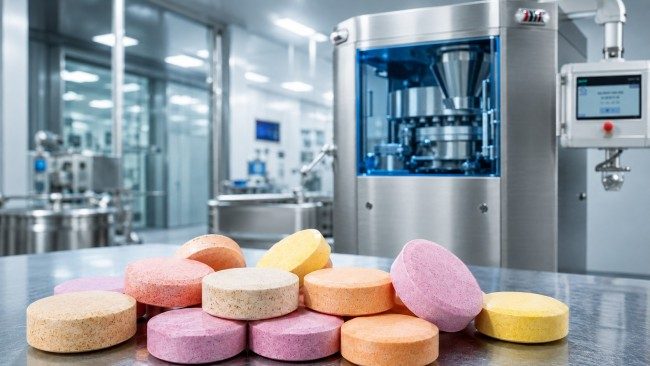
Τα μασώμενα δισκία είναι στερεά δισκία σχεδιασμένα για μάσηση πριν από την κατάποση. Χρησιμοποιούνται συνήθως για βιταμίνες, ορυκτά, αντιόξινα, συμπληρώματα διατροφής, και επιλεγμένα φαρμακευτικά προϊόντα. Γνωστά παραδείγματα περιλαμβάνουν μασώμενα δισκία βιταμίνης C, μασώμενα δισκία ασβεστίου, και μασώμενες πολυβιταμίνες.
Αν και τα μασώμενα δισκία μπορούν να παραχθούν με τον ίδιο εξοπλισμό κατασκευής δισκίων που χρησιμοποιείται για τα συμβατικά δισκία, οι απαιτήσεις του προϊόντος είναι διαφορετικές. Επειδή το δισκίο μασάται και μένει περισσότερο στο στόμα, γεύση, υφή, αίσθηση στο στόμα, μέγεθος tablet, και η μάσηση γίνεται πολύ πιο σημαντική. Συγχρόνως, τα δισκία εξακολουθούν να χρειάζονται αρκετή αντοχή για να αντέξουν τη συμπίεση, ξεσκόνισμα, συσκευασία, αποστολή, και χειρισμός.
Αυτές οι απαιτήσεις επηρεάζουν ολόκληρη τη διαδικασία παραγωγής. Οι κατασκευαστές πρέπει να εξετάσουν τη σύνθεση, είτε άμεση συμπίεση είτε κοκκοποίηση είναι πιο κατάλληλο, πώς συμπεριφέρεται το μείγμα κατά τη συμπίεση του δισκίου, ποια ποιοτικά χαρακτηριστικά πρέπει να ελέγχονται, και εάν η συσκευασία κυψέλης ή φιάλης είναι πιο κατάλληλη.
Αυτός ο οδηγός εξηγεί τη σύνθεση μασώμενων δισκίων, βιομηχανοποίηση, εξοπλισμός παραγωγής, ζητήματα ποιότητας, και συσκευασία σε μια πλήρη ροή παραγωγής.
1. Τι κάνει τα μασώμενα δισκία διαφορετικά?
Η κύρια διαφορά μεταξύ μασώμενα δισκία και κανονικά δισκία είναι ο τρόπος με τον οποίο προορίζονται να ληφθούν.
Ένα συμβατικό δισκίο συνήθως καταπίνεται ολόκληρο και στη συνέχεια αποσυντίθεται αφού φτάσει στο γαστρεντερικό σωλήνα. Ένα μασώμενο δισκίο έχει σχεδιαστεί για να μασηθεί σε μικρότερα σωματίδια πριν από την κατάποση. Εξαιτίας αυτού, ο χρήστης βιώνει άμεσα τη γεύση του tablet, υφή, σκληρότητα, και επίγευση.
That changes what manufacturers need to consider during both formulation and production.
Για παράδειγμα, a conventional tablet can have an unpleasant taste that is barely noticed if it is swallowed quickly. The same taste can become a major problem in a chewable tablet because the material remains in the mouth while it is being chewed. Sweeteners, γεύσεις, fillers, συνδετικά, and other excipients therefore need to work together to produce acceptable taste and mouthfeel while still supporting reliable tablet compression.
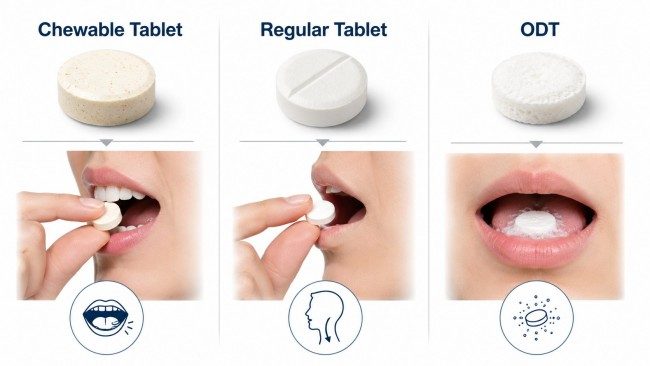
Chewable Tablets vs Regular Tablets vs ODTs
Chewable tablets are also different from orally disintegrating tablets, commonly called ODTs.
An ODT is designed to break apart rapidly in the mouth with little or no chewing. A chewable tablet is intentionally chewed before swallowing. A conventional tablet, συγκριτικά, is normally swallowed intact.
| Τύπος tablet | Πώς λαμβάνεται κανονικά | Βασική εστίαση προϊόντος |
| Μασώμενο δισκίο | Μασημένο πριν την κατάποση | Γεύση, αίσθηση στο στόμα, μασηματικότητα, δύναμη |
| Κανονικό tablet | Κατάπιε ολόκληρο | Δύναμη, αποσύνθεση, προβλεπόμενη απελευθέρωση |
| Ορατό | Αποσυντίθεται γρήγορα στο στόμα | Γρήγορη αποσύνθεση και εύκολη διαχείριση |
Αυτές οι διαφορές επηρεάζουν επίσης το μέγεθος και το σχήμα του tablet. Τα μασώμενα δισκία γίνονται συχνά αρκετά μεγάλα ώστε να μεταφέρουν βιταμίνες, ορυκτά, αντιόξινα, ή άλλα συστατικά, Επομένως, ο σχεδιασμός των εργαλείων και οι διαστάσεις του tablet πρέπει να παραμένουν άνετοι στο μάσημα καθώς και πρακτικοί στην παραγωγή.
Το δισκίο πρέπει επίσης να επιτύχει μια ισορροπία μεταξύ της δύναμης και της δυνατότητας μάσησης. Πρέπει να επιβιώσει από την απόρριψη από το πρέσα δισκίων, ξεσκόνισμα, επιθεώρηση, συσκευασία, μεταφορά, και κανονικό χειρισμό χωρίς υπερβολικό σπάσιμο. Συγχρόνως, κάνοντας το δισκίο άσκοπα σκληρό μπορεί να το κάνει λιγότερο ευχάριστο στη μάσηση.
Αυτός είναι ο λόγος για τον οποίο η ανάπτυξη μασώμενων δισκίων δεν μπορεί να επικεντρωθεί μόνο στη γεύση ή στη συμπίεση. Το σκεύασμα πρέπει να υποστηρίζει τόσο την επιδιωκόμενη διατροφική εμπειρία όσο και τη σταθερή απόδοση κατασκευής.
2. Συνήθεις εφαρμογές και παραδείγματα για μασώμενα δισκία
Τα μασώμενα δισκία είναι κοινά σε προϊόντα με ευκολία χορήγησης, γεύση, ή μια σχετικά μεγάλη μάζα ταμπλέτας έχει σημασία.
Τα προϊόντα βιταμινών και μεταλλικών στοιχείων είναι τα πιο γνωστά παραδείγματα. Αυτά περιλαμβάνουν μασώμενα δισκία βιταμίνης C, μασώμενες πολυβιταμίνες, μασώμενα δισκία ασβεστίου, μασώμενα μαγνησίου, και άλλα διατροφικά προϊόντα. Οι πλούσιες σε μέταλλα φόρμουλες μπορούν να δημιουργήσουν κιμωλία, μεταλλικός, ή πικρές αισθήσεις, Έτσι, η γεύση και η υφή γίνονται συχνά σημαντικοί στόχοι σύνθεσης.
Τα αντιόξινα μασώμενα δισκία είναι μια άλλη καθιερωμένη εφαρμογή. Μπορούν να περιέχουν σχετικά υψηλά επίπεδα μεταλλικών συστατικών και έχουν σχεδιαστεί για μάσημα πριν από την κατάποση.
Επιλεγμένα φαρμακευτικά προϊόντα χρησιμοποιούν επίσης μασώμενες μορφές, συμπεριλαμβανομένων προϊόντων που προορίζονται για χρήστες που δυσκολεύονται να καταπιούν συμβατικά δισκία. Τα παιδιατρικά προϊόντα απαιτούν ιδιαίτερη προσοχή στη δόση, μέγεθος tablet, επιλογή εκδόχου, και οδηγίες χρήσης αντί να μειώνετε απλώς ένα προϊόν για ενήλικες.
Οι μασώμενες μορφές χρησιμοποιούνται επίσης σε διατροφικά και κτηνιατρικά προϊόντα. Κάθε εφαρμογή έχει τη δική της γευστικότητα, δόση, σταθερότητα, και κατασκευαστικές απαιτήσεις, γι' αυτό δεν υπάρχει μια τυπική φόρμουλα για μασώμενα δισκία.
3. Πώς διαμορφώνεται ένα μασώμενο δισκίο?
Ένα σκεύασμα μασώμενο δισκίο πρέπει να λειτουργεί τόσο ως συμπιεσμένο δισκίο όσο και ως προϊόν που μασάται σκόπιμα. Το δραστικό συστατικό, έκδοχα, σύστημα γεύσης, ιδιότητες σωματιδίων, και η οδός παραγωγής επηρεάζουν το τελικό αποτέλεσμα.
Δραστικό συστατικό και δόση
Το απαιτούμενο δραστικό συστατικό και η δόση είναι πρώτα. Υψηλή δόση ορυκτών, έντονα πικρά δραστικά, υλικά ευαίσθητα στην υγρασία, και τα συστατικά χαμηλής δόσης μπορούν να δημιουργήσουν πολύ διαφορετικά προβλήματα σύνθεσης.
Η δόση επηρεάζει επίσης το μέγεθος του δισκίου, και ένα δισκίο που συμπιέζεται εύκολα δεν είναι αυτόματα άνετο στο μάσημα.
Λειτουργικά Έκδοχα
Τα μασώμενα δισκία μπορεί να περιέχουν πληρωτικά ή αραιωτικά, συνδετικά, λιπαντικά, χορός ολίσθησης, αποσυνθετικά, γλυκαντικά, γεύσεις, και άλλα έκδοχα.
Τα πληρωτικά βοηθούν στη δημιουργία μάζας ταμπλέτας και μπορούν να επηρεάσουν την υφή. Τα συνδετικά υποστηρίζουν τη σύνδεση σωματιδίων. Τα λιπαντικά μειώνουν την τριβή κατά τη συμπίεση και την εκτίναξη. Τα ολισθητικά μπορούν να βελτιώσουν τη ροή της σκόνης, ενώ χρησιμοποιούνται αποσαθρωτικά όταν απαιτείται από τον σχεδιασμό του προϊόντος.
Το σκεύασμα εξακολουθεί να χρειάζεται κατάλληλη ροή και συμπαγοποίηση, έτσι ώστε το μείγμα να μπορεί να γεμίζει την κοιλότητα της μήτρας σταθερά και να σχηματίζει ταμπλέτες χωρίς υπερβολικά ελαττώματα.
Γεύση και αίσθηση στο στόμα
Η γεύση είναι μια από τις μεγαλύτερες διαφορές μεταξύ της μασώμενης και της συμβατικής σύνθεσης δισκίων.
Τα γλυκαντικά και τα αρώματα χρησιμοποιούνται συνήθως επειδή το υλικό παραμένει στο στόμα ενώ μασάται. Οι πολυόλες όπως η μαννιτόλη επιλέγονται συχνά επειδή μπορούν να συνεισφέρουν τόσο σε όγκο όσο και σε πιο ευχάριστη αίσθηση στο στόμα.
Όταν ένα δραστικό συστατικό είναι έντονα πικρό ή αλλιώς δυσάρεστο, η γεύση από μόνη της μπορεί να μην είναι αρκετή. Οι προσεγγίσεις κάλυψης της γεύσης μπορεί να περιλαμβάνουν επίστρωση, μικροενθυλάκωση, ή άλλες στρατηγικές τυποποίησης, υπό την προϋπόθεση ότι παραμένουν συμβατά με την υπόλοιπη διαδικασία κατασκευής.
Το μέγεθος των σωματιδίων έχει επίσης σημασία. Τα χοντρά ή ανεπαρκώς ελεγχόμενα σωματίδια μπορούν να δημιουργήσουν μια αίσθηση άμμου, ενώ οι μεγάλες διαφορές στο μέγεθος ή την πυκνότητα των σωματιδίων μπορεί να αυξήσουν τον κίνδυνο διαχωρισμού κατά την ανάμειξη και τη μεταφορά.
4. Σημαντικά ποιοτικά χαρακτηριστικά των μασώμενων δισκίων
Τα μασώμενα δισκία πρέπει να παραμένουν μηχανικά αξιόπιστα κατά την παραγωγή και τη συσκευασία, ενώ είναι επίσης αποδεκτά για μάσημα. Επομένως, η αξιολόγηση ποιότητας εξετάζει πολλά χαρακτηριστικά μαζί.
| Ποιότητα Χαρακτηριστικό | Γιατί έχει σημασία |
| Βάρος δισκίου και συνοχή περιεχομένου | Υποστηρίζει σταθερή σύνθεση και δόση |
| Σκληρότητα / σπαστική δύναμη | Υποδεικνύει μηχανική αντοχή και μπορεί να επηρεάσει τη μάσηση |
| Ευθρυπτότητα | Παρουσιάζει αντοχή σε τριβή και θραύση |
| Μέγεθος και πάχος | Επηρεάζουν τον χειρισμό, συσκευασία, και το μάσημα |
| Αποσύνθεση | Βοηθά στον χαρακτηρισμό του πώς το δοσολογική μορφή χαλάει |
| Διάλυση | Αξιολογεί την απελευθέρωση του δραστικού συστατικού |
| Γεύση και αίσθηση στο στόμα | Επηρεάζουν άμεσα την εμπειρία του χρήστη |
| Εμφάνιση | Βοηθά στον εντοπισμό σωματικών ελαττωμάτων |
Η σκληρότητα είναι σημαντική, αλλά ένα πιο σκληρό δισκίο δεν είναι αυτόματα καλύτερο μασώμενο δισκίο. Εάν η δύναμη είναι πολύ χαμηλή, τα δισκία μπορεί να θρυμματιστούν ή να σπάσουν κατά τη διάρκεια της αποσκόνωσης, μεταφέροντας, συσκευασία, και μεταφοράς. If it is unnecessarily high, chewing can become unpleasant.
Friability provides a second view of physical durability, while disintegration and dissolution help confirm that the dosage form performs as intended. The appropriate targets depend on the formulation and product specification rather than on one universal value.
5. Chewable Tablet Manufacturing: Βήμα βήμα
Once the formulation and process route are established, chewable tablet manufacturing follows a sequence similar to other compressed tablets.
Βήμα 1: Prepare the Raw Materials
Raw materials are dispensed according to the batch formula. Depending on their condition, powders can be sieved or milled to break agglomerates and obtain a more suitable particle-size distribution for blending and feeding.
Βήμα 2: Blend the Ingredients
Τα δραστικά συστατικά και τα έκδοχα αναμειγνύονται για να επιτευχθεί η απαιτούμενη κατανομή. Φόρτωση μπλέντερ, χρόνος ανάμειξης, μέγεθος σωματιδίων, πυκνότητα, και η σειρά προσθήκης μπορεί να επηρεάσει την ομοιομορφία και τη ροή.
Τα λιπαντικά προστίθενται συνήθως σε ένα μεταγενέστερο στάδιο ανάμειξης, επειδή η υπερβολική λίπανση μπορεί να μειώσει τη σύνδεση των σωματιδίων και να αλλάξει τις ιδιότητες του δισκίου.
Βήμα 3: Χρησιμοποιήστε άμεση συμπίεση ή κοκκοποίηση
Ένα μείγμα άμεσης συμπίεσης μπορεί να προχωρήσει στην τελική λίπανση και συμπίεση δισκίου χωρίς ξεχωριστό βήμα κοκκοποίησης.
Όταν απαιτείται κοκκοποίηση, η διαδρομή μπορεί να περιλαμβάνει υγρή κοκκοποίηση ή ξηρή κοκκοποίηση, στέγνωμα όπου υπάρχει, φρεζάρισμα ή διαστασιολόγηση, και τελική ανάμειξη. Ο σκοπός είναι να δημιουργηθεί υλικό που τροφοδοτεί και συμπιέζει πιο αξιόπιστα.
Βήμα 4: Συμπιέστε το μείγμα σε μια περιστροφική πρέσα ταμπλετών
Το τελικό μείγμα μεταφέρεται σε α περιστροφική πρέσα ταμπλετών. Το σύστημα τροφοδοσίας διανέμει υλικό στις κοιλότητες της μήτρας, ενώ η κάτω θέση διάτρησης καθορίζει το διαθέσιμο βάθος πλήρωσης της μήτρας και επομένως επηρεάζει το βάρος του δισκίου.
Η γεμισμένη μήτρα περνά έπειτα από συμπίεση. Η προσυμπίεση μπορεί να χρησιμοποιηθεί όταν χρειάζεται για να αφαιρεθεί μέρος του παγιδευμένου αέρα και να σχηματιστεί μια αρχική συμπίεση πριν από την κύρια συμπίεση. Η κύρια συμπίεση σχηματίζει το τελικό δισκίο, και η κάτω διάτρηση στη συνέχεια την ανυψώνει για εκτίναξη.
Οι απαιτούμενες ρυθμίσεις εξαρτώνται από τη σύνθεση, διαστάσεις tablet, εργαλεία, βάρος στόχου, ταχύτητα πίεσης, συνθήκες τροφοδοσίας, και συμπεριφορά σκόνης. Η δύναμη συμπίεσης από μόνη της δεν πρέπει να αντιμετωπίζεται ως ο μόνος έλεγχος για τη σκληρότητα ή τη μάσηση του δισκίου.
Βήμα 5: Σκόνη, Ελέγχω, και Δείγμα
Μετά την εκτίναξη, Τα δισκία συνήθως περνούν μέσα από ένα ξεσκονιστήριο για να αφαιρέσουν τη χαλαρή σκόνη. Ανάλογα με τη γραμμή και το σύστημα ποιότητας, Τα κατάντη βήματα μπορούν επίσης να περιλαμβάνουν ανίχνευση μετάλλων και δειγματοληψία κατά τη διαδικασία.
Τα συνήθη προβλήματα συμπίεσης μπορεί να οδηγούν σε διαφορετικές αιτίες:
| Πρόβλημα | Παράγοντες προς διερεύνηση |
| Κολλώντας ή μαζεύοντας | Υγρασία σύνθεσης, λάδωμα, επιφάνεια εργαλείων, θερμοκρασία |
| Διακύμανση βάρους | Ροή σκόνης, χωρισμός, συνθήκες τροφοδοσίας, η γέμιση, ταχύτητα πίεσης |
| Τσιπάρισμα ή κάλυμμα | Εγκλωβισμένος αέρας, συγκόλληση, προφίλ συμπίεσης, εργαλεία |
| Υπερβολική σκληρότητα | Συμπυκνότητα, συνθήκες συμπίεσης, διαστάσεις tablet |
| Δύσκολη εκτόξευση | Λάδωμα, τριβή τοιχώματος μήτρας, κατάσταση εργαλείων |
Αυτά είναι προβλήματα πολλαπλών παραγόντων. Ρυθμίσεις μηχανήματος, ιδιότητες σύνθεσης, υλική κατάσταση, και τα εργαλεία πρέπει να ελέγχονται μαζί.
6. Τι εξοπλισμός χρησιμοποιείται στην κατασκευή μασώμενων δισκίων?
Ο ακριβής εξοπλισμός εξαρτάται από το εάν το προϊόν χρησιμοποιεί άμεση συμπίεση ή κοκκοποίηση, αλλά μια τυπική γραμμή μπορεί να περιλαμβάνει:
| Εξοπλισμός | Κύριος Ρόλος |
| Κοσκινάκι ή μύλος | Παρασκευή σκόνης και αποσυσσωμάτωση |
| Μπλέντερ πούδρας | Αναμείξτε δραστικά συστατικά και έκδοχα |
| Κοκκοποιητής | Σχηματίστε κόκκους όταν απαιτείται |
| Στεγνωτήριο και μύλος μεγεθών | Επεξεργαστείτε τους υγρούς κόκκους πριν την τελική ανάμειξη |
| Περιστροφική πρέσα ταμπλετών | Συμπιέστε το τελικό μείγμα σε δισκία |
| Ξεσκονιστήριο tablet | Αφαιρέστε τη σκόνη χαλαρής επιφάνειας |
| Ανιχνευτής μετάλλων | Ανιχνεύστε μεταλλική μόλυνση όταν περιλαμβάνεται στη σειρά |
| Μηχανή συσκευασίας κυψέλης | Συσκευάστε τα δισκία σε κοιλότητες κυψέλης |
| Γραμμή μέτρησης tablet | Μετρήστε και γεμίστε τα δισκία σε φιάλες |
| Μηχανή χαρτοκιβωτίων | Τοποθετήστε τα τελικά πακέτα σε χαρτοκιβώτια |

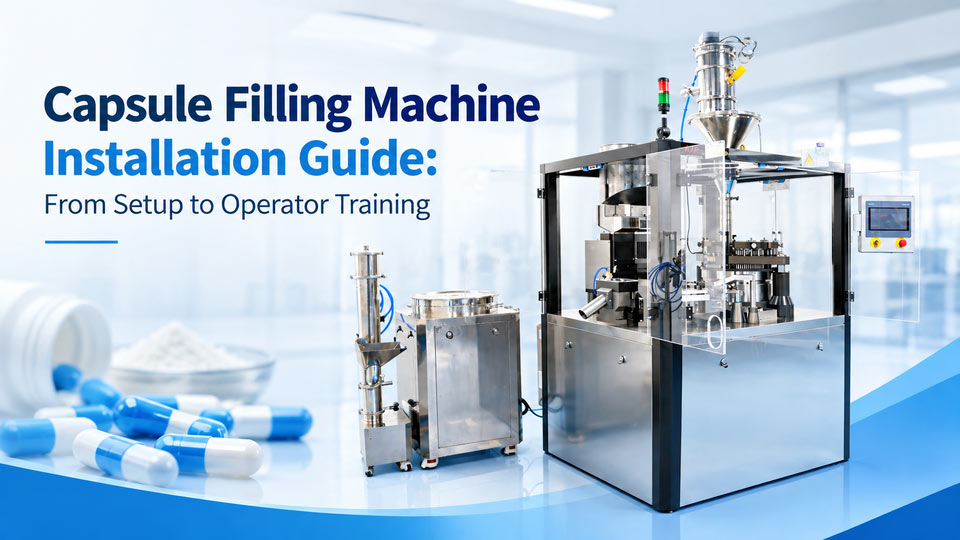
Η περιστροφική πρέσα ταμπλέτας είναι το κεντρικό μηχάνημα στο στάδιο συμπίεσης του tablet. Η επιλογή του μηχανήματος εξαρτάται από τη διάμετρο και το σχήμα του tablet, εργαλεία, ιδιότητες σκόνης, παραγωγική ικανότητα, και απαιτείται αυτοματισμός.
Τα μασώμενα δισκία δεν χρειάζονται ειδική κατηγορία πρέσας ταμπλετών απλώς και μόνο επειδή είναι μασώμενα. Αυτό που έχει σημασία είναι αν η μηχανή, εργαλεία, σύστημα τροφοδοσίας, και το εύρος λειτουργίας ταιριάζει με τη σύνθεση και τη σχεδίαση του tablet.
Για μια ολοκληρωμένη γραμμή παραγωγής, Συσκευασία Ruida μπορεί να συνδέσει τη συμπίεση του tablet με τη συσκευασία blister, μέτρηση δισκίων, χειρισμός μπουκαλιών, και εξοπλισμός χαρτοκιβωτίου σύμφωνα με την απαιτούμενη μορφή συσκευασίας.
7. Διαλύματα συσκευασίας για μασώμενα δισκία
Τα μασώμενα δισκία συσκευάζονται συνήθως σε συσκευασίες κυψέλης ή μπουκάλια. Η καλύτερη επιλογή εξαρτάται από την υγρασία και την ευαισθησία στο οξυγόνο, διαστάσεις tablet, αριθμός μονάδων, μορφή αγοράς, και απαιτείται απόδοση φραγμού.
Συσκευασία Blister
Συσκευασίες blister χωρίζουν τα δισκία σε μεμονωμένες κοιλότητες και είναι χρήσιμες όταν η παρουσίαση της δόσης μονάδας ή ο διαχωρισμός μεμονωμένων δισκίων είναι σημαντική.
Η απόδοση του φραγμού εξαρτάται από την πλήρη δομή συσκευασίας. Κυψέλες με βάση το PVC, πλαστικές κατασκευές υψηλότερου φραγμού, και συσκευασίες Alu-Alu ψυχρής μορφής δεν παρέχουν το ίδιο επίπεδο προστασίας.
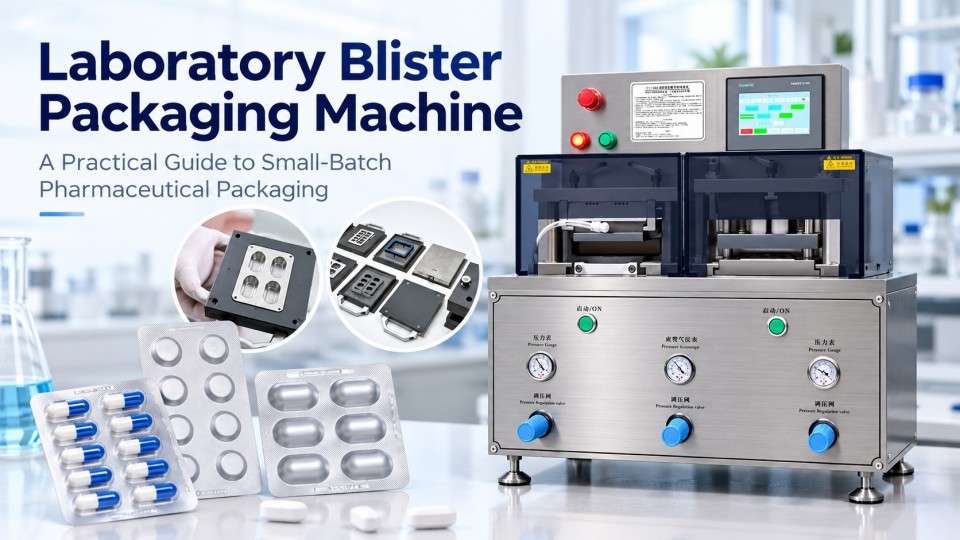
Η μηχανή συσκευασίας blister σχηματίζει και σφραγίζει τη συσκευασία, αλλά το ίδιο το φράγμα προέρχεται από τα επιλεγμένα υλικά και την ποιότητα της σφραγίδας.
Όταν απαιτείται δευτερεύουσα συσκευασία, Τα τελειωμένα φύλλα κυψέλης μπορούν να συνεχίσουν σε μια μηχανή χαρτοκιβωτίου.
Συσκευασία μπουκαλιών
Η συσκευασία του μπουκαλιού είναι κοινή για τις μασώμενες βιταμίνες, ορυκτά, και διατροφικά προϊόντα που πωλούνται σε μεγαλύτερες ποσότητες.
Μια τυπική αυτοματοποιημένη γραμμή μέτρησης και εμφιάλωσης δισκίων μπορεί να περιλαμβάνει:
Αποσύνδεση φιάλης → Μέτρηση/γέμιση δισκίου → Έλεγχος ζύγισης → Εισαγωγή αποξηραντικού → Εισαγωγή βαμβακερού → Πώμα → Επαγωγική σφράγιση → Ετικέτα → Κωδικοποίηση/επιθεώρηση
Δεν χρειάζεται κάθε προϊόν κάθε βήμα. Αφυγραντικά, για παράδειγμα, πρέπει να επιλέγεται σύμφωνα με την ευαισθησία του προϊόντος στην υγρασία και τον πλήρη σχεδιασμό της συσκευασίας.

Κυψέλη ή μπουκάλι?
| Θεώρηση | Φουσκάλα | Μπουκάλι |
| Παρουσίαση δόσης | Μεμονωμένες κοιλότητες | Πολλαπλές ταμπλέτες ανά δοχείο |
| Μεγάλοι αριθμοί tablet | Λιγότερο βολικό σε πολλές περιπτώσεις | Συχνά πρακτικό |
| Μεμονωμένος διαχωρισμός tablet | Ισχυρό πλεονέκτημα | Κοινόχρηστο κοντέινερ |
| Απόδοση φραγμού | Εξαρτάται από τη δομή της κυψέλης | Εξαρτάται από το μπουκάλι, κλείσιμο, και σφραγίδα |
Ως εκ τούτου, η συσκευασία θα πρέπει να λαμβάνεται υπόψη στην αρχή του σχεδιασμού. Ένα μεγάλο μασώμενο δισκίο που πωλείται σε φιάλη 90 μετρητών χρειάζεται μια πολύ διαφορετική διαδικασία συσκευασίας από ένα προϊόν που είναι συσκευασμένο σε μεμονωμένες κοιλότητες κυψέλης.
Σύναψη
Τα μασώμενα δισκία συνδυάζουν τα πλεονεκτήματα των συμπιεσμένων στερεών δοσολογικών μορφών με πρόσθετες απαιτήσεις για γεύση, αίσθηση στο στόμα, μέγεθος tablet, και μασηματικότητα.
Ο καλύτερος τρόπος παραγωγής ξεκινά με τη σύνθεση. Οι ιδιότητες του υλικού καθορίζουν εάν η άμεση συμπίεση ή η κοκκοποίηση είναι καταλληλότερη, η πρέσα tablet πρέπει να ταιριάζει με το σχέδιο του μείγματος και του tablet, οι ποιοτικοί έλεγχοι επιβεβαιώνουν την απόδοση του τελικού προϊόντος, και η μορφή συσκευασίας πρέπει να παρέχει την απαιτούμενη προστασία και παρουσίαση.
Ως εκ τούτου, δημιουργείται μια σταθερή γραμμή παραγωγής μασώμενων δισκίων με σύνθεση σύνδεσης, συμπίεση, ποιοτικός έλεγχος, και τη συσκευασία αντί να βελτιστοποιήσετε οποιοδήποτε βήμα σε απομόνωση.
Συχνές ερωτήσεις σχετικά με τα μασώμενα δισκία
1.Τι είναι ένα μασώμενο δισκίο?
Ένα μασώμενο δισκίο είναι ένα στερεό από του στόματος δισκίο σχεδιασμένο για μάσημα πριν από την κατάποση. Η σύνθεσή του πρέπει να λαμβάνει υπόψη τη γεύση, αίσθηση στο στόμα, υφή, μηχανική αντοχή, και δυνατότητα μάσησης επιπλέον των κανονικών απαιτήσεων κατασκευής δισκίων.
2.Πώς κατασκευάζονται τα μασώμενα δισκία?
Η τυπική διαδικασία περιλαμβάνει την προετοιμασία της πρώτης ύλης, ανάμειξη, άμεση συμπίεση ή κοκκοποίηση όταν απαιτείται, κατασκευή tablet, ξεσκόνισμα, επιθεώρηση, και τελική συσκευασία κυψέλης ή φιάλης.
3.Ποια συστατικά χρησιμοποιούνται στη σύνθεση μασώμενων δισκίων?
Τα τυπικά σκευάσματα μπορεί να περιλαμβάνουν δραστικά συστατικά, fillers, συνδετικά, λιπαντικά, χορός ολίσθησης, αποσυνθετικά, γλυκαντικά, γεύσεις, και άλλα έκδοχα. Ο ακριβής συνδυασμός εξαρτάται από τη δόση, γεύση, ιδιότητες υλικού, και απαιτήσεις προϊόντος.
4.Γιατί οι μασώμενες ταμπλέτες κολλάνε στις γροθιές πρέσας δισκίων?
Πιθανές αιτίες περιλαμβάνουν την υγρασία της σύνθεσης, κολλώδη συστατικά, ανεπαρκής λίπανση, κατάσταση εργαλείων, θερμοκρασία προϊόντος, και συνθήκες συμπίεσης. Η υποκείμενη αιτία θα πρέπει να εντοπιστεί πριν αλλάξετε τις ρυθμίσεις του μηχανήματος.
5.Ποια ποιοτικά χαρακτηριστικά είναι σημαντικά για τα μασώμενα δισκία?
Τα κοινά χαρακτηριστικά περιλαμβάνουν το βάρος του tablet, συνοχή περιεχομένου, διαστάσεις, σκληρότητα ή δύναμη θραύσης, ευθρυπτότητα, αποσύνθεση, διάλυση, εμφάνιση, γεύση, αίσθηση στο στόμα, και μασηματικότητα.
6.Τι εξοπλισμός χρειάζεται για την κατασκευή μασώμενων δισκίων?
Μια σειρά μπορεί να περιλαμβάνει εξοπλισμό προετοιμασίας σκόνης, ένα μπλέντερ, προαιρετικός εξοπλισμός κοκκοποίησης και ξήρανσης, μια περιστροφική μηχανή συμπίεσης δισκίων, ξεσκονιστήρι, ανιχνευτής μετάλλων, και μηχάνημα κυψέλης ή γραμμή εμφιάλωσης δισκίων κατάντη.
7.Ποια συσκευασία είναι κατάλληλη για μασώμενα δισκία?
Τόσο οι συσκευασίες blister όσο και οι φιάλες χρησιμοποιούνται ευρέως. Η επιλογή εξαρτάται από το μέγεθος του tablet, κόμης, απαιτήσεις φραγμού, ανάγκες μονάδας δόσης, συνθήκες αποθήκευσης, και μορφή αγοράς.
Αναφορές
1. FDA – Παρατηρήσεις για τα ποιοτικά χαρακτηριστικά για τα μασώμενα δισκία: Οδηγίες για τη Βιομηχανία
2. FDA / Προδιαγραφές ICH Q6A
3. Φαρμακευτική Τεχνολογία – Μασώμενα δισκία: Μια ανασκόπηση των παρασκευασμάτων
4. Έρευνα PMC – Μελέτη δισκιοποίησης και υγρής κοκκοποίησης