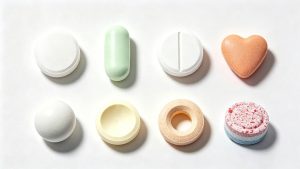
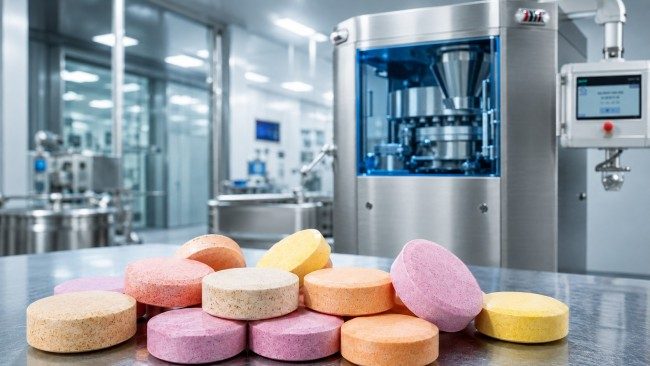
Tablet kunyah adalah tablet padat yang dirancang untuk dikunyah sebelum ditelan. Mereka biasanya digunakan untuk vitamin, mineral, antasida, suplemen makanan, dan produk farmasi terpilih. Contoh yang umum termasuk tablet kunyah vitamin C, tablet kunyah kalsium, dan multivitamin kunyah.
Meskipun tablet kunyah dapat diproduksi dengan peralatan pembuatan tablet yang sama dengan yang digunakan untuk tablet konvensional, persyaratan produk berbeda. Pasalnya, tablet dikunyah dan bertahan lebih lama di mulut, mencicipi, tekstur, rasa di mulut, ukuran tablet, dan daya kunyah menjadi jauh lebih penting. Pada saat yang sama, tablet masih memerlukan kekuatan yang cukup untuk menahan kompresi, menghilangkan debu, kemasan, pengiriman, dan menangani.
Persyaratan ini mempengaruhi keseluruhan proses produksi. Produsen perlu mempertimbangkan formulasinya, apakah kompresi langsung atau granulasi lebih cocok, bagaimana campuran berperilaku selama kompresi tablet, atribut kualitas mana yang perlu dikontrol, dan apakah kemasan melepuh atau botol lebih tepat.
Panduan ini menjelaskan formulasi tablet kunyah, manufaktur, peralatan produksi, pertimbangan kualitas, dan pengemasan dalam satu aliran produksi lengkap.
1. Apa yang Membuat Tablet Kunyah Berbeda?
Perbedaan utama antara tablet kunyah dan tablet biasa adalah bagaimana mereka dimaksudkan untuk diambil.
Tablet konvensional biasanya ditelan utuh dan kemudian hancur setelah mencapai saluran pencernaan. Tablet kunyah dirancang untuk dikunyah menjadi partikel yang lebih kecil sebelum ditelan. Karena ini, pengguna langsung merasakan cita rasa tablet tersebut, tekstur, kekerasan, dan sisa rasa.
Hal ini mengubah apa yang perlu dipertimbangkan oleh produsen selama formulasi dan produksi.
Misalnya, tablet konvensional dapat memiliki rasa tidak enak yang hampir tidak terlihat jika ditelan dengan cepat. Rasa yang sama dapat menjadi masalah besar pada tablet kunyah karena bahan tersebut tetap berada di mulut saat sedang dikunyah. Pemanis, rasa, pengisi, pengikat, Oleh karena itu, dan eksipien lainnya perlu bekerja sama untuk menghasilkan rasa dan rasa yang dapat diterima di mulut sambil tetap mendukung kompresi tablet yang andal.
Tablet Kunyah vs Tablet Reguler vs ODT
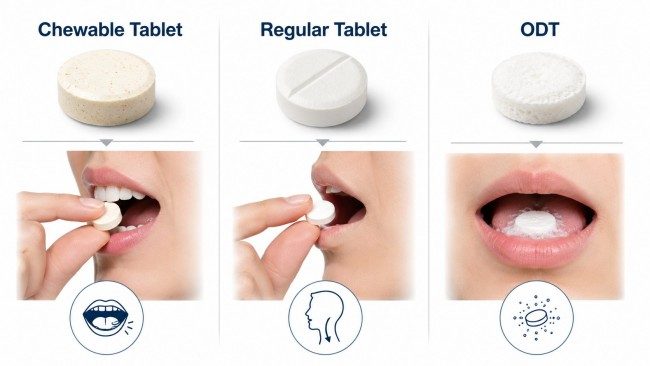
Tablet kunyah juga berbeda dengan tablet yang disintegrasi secara oral, biasa disebut ODT.
ODT dirancang untuk pecah dengan cepat di mulut dengan sedikit atau tanpa mengunyah. Tablet kunyah sengaja dikunyah sebelum ditelan. Tablet konvensional, sebagai perbandingan, biasanya ditelan utuh.
| Tipe Tablet | Bagaimana Biasanya Diambil | Fokus Produk Utama |
| Chewable tablet | Dikunyah sebelum ditelan | Mencicipi, rasa di mulut, chewability, kekuatan |
| Tablet biasa | Swallowed whole | Kekuatan, kehancuran, intended release |
| ODT | Hancur dengan cepat di mulut | Disintegrasi cepat dan administrasi mudah |
Perbedaan ini juga mempengaruhi ukuran dan bentuk tablet. Tablet kunyah seringkali dibuat cukup besar untuk membawa vitamin, mineral, antasida, or other ingredients, jadi desain perkakas dan dimensi tablet harus tetap nyaman untuk dikunyah serta praktis untuk produksi.
The tablet must also strike a balance between strength and chewability. Itu harus bertahan dari pelepasan dari mesin cetak tablet, menghilangkan debu, inspeksi, kemasan, mengangkut, dan penanganan normal tanpa kerusakan berlebihan. Pada saat yang sama, membuat tablet menjadi terlalu keras dapat membuat tablet menjadi kurang enak untuk dikunyah.
This is why chewable tablet development cannot focus on taste or compression alone. Formulasinya harus mendukung pengalaman makan yang diinginkan dan kinerja produksi yang stabil.
2. Aplikasi Tablet Kunyah Umum dan Contohnya
Tablet kunyah umum ditemukan pada produk yang kemudahan pemberiannya, mencicipi, atau massa tablet yang relatif besar itu penting.
Produk vitamin dan mineral adalah contoh yang paling umum. Ini termasuk tablet kunyah vitamin C, multivitamin kunyah, tablet kunyah kalsium, kunyah magnesium, dan produk nutrisi lainnya. Formula kaya mineral bisa menghasilkan kapur, metalik, atau sensasi pahit, jadi rasa dan tekstur seringkali menjadi target formulasi yang penting.
Tablet kunyah antasida adalah aplikasi lain yang sudah dikenal. Mereka mengandung bahan mineral tingkat tinggi dan dirancang untuk dikunyah sebelum ditelan.
Produk farmasi tertentu juga menggunakan format kunyah, including products intended for users who have difficulty swallowing conventional tablets. Pediatric products require particular attention to dose, ukuran tablet, excipient selection, and instructions for use rather than simply scaling down an adult product.
Chewable formats are also used in nutraceutical and veterinary products. Setiap aplikasi memiliki kelezatannya masing-masing, dosis, stabilitas, dan persyaratan manufaktur, which is why there is no single standard chewable tablet formula.
3. Bagaimana Tablet Kunyah Diformulasikan?
A chewable tablet formulation has to work as both a compressed tablet and a product that is deliberately chewed. The active ingredient, eksipien, taste system, particle properties, and manufacturing route all influence the final result.
Bahan Aktif dan Dosis
The required active ingredient and dose come first. High-dose minerals, strongly bitter actives, bahan yang sensitif terhadap kelembaban, dan bahan-bahan berdosis rendah dapat menimbulkan masalah formulasi yang sangat berbeda.
Dosis juga mempengaruhi ukuran tablet, dan tablet yang mudah dikompres belum tentu nyaman untuk dikunyah.
Eksipien Fungsional
Tablet kunyah dapat mengandung bahan pengisi atau pengencer, pengikat, pelumas, tarian meluncur, penghancur, pemanis, rasa, dan eksipien lainnya.
Pengisi membantu membangun massa tablet dan dapat mempengaruhi tekstur. Pengikat mendukung ikatan partikel. Pelumas mengurangi gesekan selama kompresi dan ejeksi. Glidant dapat meningkatkan aliran bubuk, sedangkan penghancur digunakan bila diperlukan oleh desain produk.
Formulasinya masih memerlukan aliran dan kekompakan yang sesuai agar campuran dapat mengisi rongga cetakan secara konsisten dan membentuk tablet tanpa cacat yang berlebihan.
Rasa dan Rasa di Mulut
Rasa adalah salah satu perbedaan terbesar antara formulasi tablet kunyah dan tablet konvensional.
Pemanis dan perasa biasa digunakan karena bahannya tetap berada di mulut saat dikunyah. Poliol seperti manitol sering dipilih karena dapat memberikan kontribusi massal dan rasa yang lebih enak di mulut.
Ketika bahan aktif terasa sangat pahit atau tidak enak, rasa saja mungkin tidak cukup. Pendekatan untuk menutupi rasa dapat mencakup pelapisan, mikroenkapsulasi, atau strategi formulasi lainnya, asalkan tetap kompatibel dengan proses produksi lainnya.
Ukuran partikel juga penting. Partikel yang kasar atau tidak terkontrol dengan baik dapat menimbulkan sensasi berpasir, sedangkan perbedaan besar dalam ukuran atau kepadatan partikel dapat meningkatkan risiko segregasi selama pencampuran dan pemindahan.
4. Atribut Kualitas Penting dari Tablet Kunyah
Tablet kunyah harus tetap dapat diandalkan secara mekanis selama produksi dan pengemasan dan juga dapat dikunyah. Oleh karena itu penilaian kualitas melihat beberapa atribut secara bersamaan.
| Atribut Kualitas | Mengapa Itu Penting |
| Berat tablet dan konsistensi isi | Mendukung komposisi dan dosis yang konsisten |
| Kekerasan / kekuatan putus | Menunjukkan kekuatan mekanik dan dapat mempengaruhi kemampuan kunyah |
| Kerapuhan | Menunjukkan ketahanan terhadap abrasi dan kerusakan |
| Ukuran dan ketebalan | Mempengaruhi penanganan, kemasan, dan mengunyah |
| Kehancuran | Membantu mengkarakterisasi bagaimana bentuk sediaan rusak |
| Pembubaran | Mengevaluasi pelepasan bahan aktif |
| Rasa dan sensasi di mulut | Secara langsung mempengaruhi pengalaman pengguna |
| Penampilan | Membantu mengidentifikasi cacat fisik |
Kekerasan itu penting, namun tablet yang lebih keras belum tentu merupakan tablet kunyah yang lebih baik. Jika kekuatan terlalu rendah, tablet dapat terkelupas atau pecah saat dihilangkan debunya, menyampaikan, kemasan, dan transportasi. Jika terlalu tinggi, mengunyah bisa menjadi tidak menyenangkan.
Kerapuhan memberikan pandangan kedua tentang ketahanan fisik, sementara disintegrasi dan disolusi membantu memastikan bahwa bentuk sediaan berfungsi sebagaimana mestinya. Target yang tepat bergantung pada formulasi dan spesifikasi produk, bukan pada satu nilai universal.
5. Pembuatan Tablet Kunyah: Langkah demi Langkah
Setelah formulasi dan rute proses ditetapkan, Pembuatan tablet kunyah mengikuti urutan yang mirip dengan tablet kompresi lainnya.
Melangkah 1: Siapkan Bahan Bakunya
Bahan baku dibagikan sesuai dengan formula batch. Tergantung pada kondisi mereka, bubuk dapat diayak atau digiling untuk memecah gumpalan dan mendapatkan distribusi ukuran partikel yang lebih sesuai untuk pencampuran dan pengumpanan.
Melangkah 2: Haluskan Bahan-Bahannya
Bahan aktif dan eksipien dicampur untuk mencapai distribusi yang dibutuhkan. Memuat blender, waktu pencampuran, ukuran partikel, kepadatan, dan urutan penambahan dapat mempengaruhi keseragaman dan aliran.
Pelumas biasanya ditambahkan pada tahap pencampuran selanjutnya karena pelumasan yang berlebihan dapat mengurangi ikatan partikel dan mengubah sifat tablet.
Melangkah 3: Gunakan Kompresi Langsung atau Granulasi
Campuran kompresi langsung dapat berpindah ke pelumasan akhir dan kompresi tablet tanpa langkah granulasi terpisah.
Ketika granulasi diperlukan, rutenya dapat mencakup granulasi basah atau granulasi kering, pengeringan jika memungkinkan, penggilingan atau ukuran, dan pencampuran akhir. Tujuannya adalah untuk menciptakan material yang mengumpan dan mengompres dengan lebih andal.
Melangkah 4: Kompres Campuran pada Rotary Tablet Press
Campuran terakhir dipindahkan ke a mesin tablet putar. Sistem umpan mendistribusikan material ke dalam rongga cetakan, while the lower punch position determines the available die fill depth and therefore influences tablet weight.
The filled die then passes through compression. Precompression can be used when needed to remove part of the entrapped air and form an initial compact before main compression. Main compression forms the finished tablet, and the lower punch then raises it for ejection.
The required settings depend on the formulation, dimensi tablet, perkakas, berat sasaran, press speed, feed conditions, and powder behavior. Compression force alone should not be treated as the only control for tablet hardness or chewability.
Melangkah 5: Dedust, Memeriksa, and Sample
After ejection, tablets commonly pass through a deduster to remove loose powder. Depending on the line and quality system, downstream steps can also include metal detection and in-process sampling.
Masalah kompresi yang umum dapat disebabkan oleh berbagai penyebab:
| Masalah | Faktor-Faktor yang Perlu Diselidiki |
| Menempel atau memetik | Kelembapan formulasi, pelumasan, permukaan perkakas, suhu |
| Variasi berat | Aliran bubuk, pemisahan, feed conditions, isiannya, press speed |
| Memotong atau membatasi | Udara yang terperangkap, ikatan, profil kompresi, perkakas |
| Kekerasan yang berlebihan | Kekompakan, kondisi kompresi, dimensi tablet |
| Ejeksi yang sulit | Pelumasan, gesekan dinding mati, kondisi perkakas |
Ini adalah masalah multifaktor. Pengaturan mesin, sifat formulasi, kondisi material, dan perkakas harus diperiksa bersama-sama.
6. Peralatan Apa yang Digunakan dalam Pembuatan Tablet Kunyah?
Peralatan pastinya bergantung pada apakah produk menggunakan kompresi langsung atau granulasi, tapi garis tipikal bisa mencakup:
| Peralatan | Peran Utama |
| Ayak atau gilingan | Persiapan bubuk dan deaglomerasi |
| Blender bubuk | Campur bahan aktif dan eksipien |
| granulator | Bentuk butiran bila diperlukan |
| Pabrik pengering dan ukuran | Proses butiran basah sebelum pencampuran akhir |
| Mesin press tablet putar | Kompres campuran terakhir ke dalam tablet |
| Penghilang tablet | Hapus bedak di permukaan yang lepas |
| Detektor logam | Deteksi kontaminasi logam saat disertakan dalam saluran |
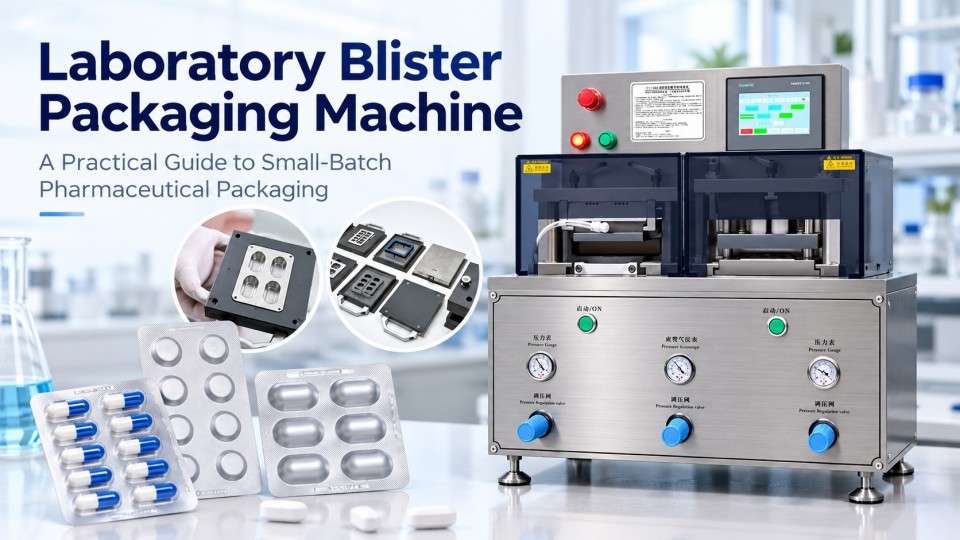
| Mesin pengemas blister | Kemas tablet ke dalam rongga lepuh |
| Garis penghitungan tablet | Hitung dan isi tablet ke dalam botol |
| Mesin karton | Muat paket yang sudah jadi ke dalam karton |

Mesin press tablet putar adalah mesin utama dalam tahap kompresi tablet. Pemilihan mesin tergantung pada diameter dan bentuk tablet, perkakas, sifat bubuk, kapasitas produksi, dan otomatisasi yang diperlukan.
Tablet kunyah tidak memerlukan kategori tablet press khusus hanya karena dapat dikunyah. Yang penting adalah apakah mesinnya, perkakas, sistem pakan, dan jangkauan operasi sesuai dengan formulasi dan desain tablet.
Untuk lini produksi lengkap, Pengepakan Ruida dapat menghubungkan kompresi tablet dengan kemasan blister hilir, penghitungan tablet, penanganan botol, dan peralatan kartoning sesuai dengan format kemasan yang dibutuhkan.
7. Solusi Kemasan Tablet Kunyah
Tablet kunyah biasanya dikemas dalam kemasan blister atau botol. Pilihan yang lebih baik bergantung pada kelembapan dan sensitivitas oksigen, dimensi tablet, jumlah satuan, format pasar, dan kinerja penghalang yang diperlukan.
Kemasan Blister
Blister mengemas tablet terpisah ke dalam rongga tersendiri dan berguna ketika penyajian dosis unit atau pemisahan tablet individual penting.
Kinerja penghalang tergantung pada struktur pengemasan yang lengkap. Lepuh berbahan dasar PVC, struktur plastik dengan penghalang lebih tinggi, Dan kemasan Alu-Alu bentuk dingin tidak memberikan tingkat perlindungan yang sama.
Mesin pengemas melepuh membentuk dan menyegel kemasan, namun pembatasnya sendiri berasal dari bahan pilihan dan kualitas segel.
Ketika pengemasan sekunder diperlukan, lembaran melepuh yang sudah jadi dapat dilanjutkan ke mesin kartoning.
Kemasan Botol
Kemasan botol biasa digunakan untuk vitamin kunyah, mineral, dan produk nutrisi dijual dalam jumlah yang lebih besar.
Jalur penghitungan dan pembotolan tablet otomatis yang khas dapat mencakup:
Penguraian botol → Penghitungan/pengisian tablet → Penimbangan → Penyisipan bahan pengering → Penyisipan kapas → Pembatasan → Penyegelan induksi → Pelabelan → Pengodean/pemeriksaan
Tidak setiap produk membutuhkan setiap langkah. pengering, Misalnya, should be selected according to the product’s moisture sensitivity and complete package design.

Blister or Bottle?
| Pertimbangan | Melepuh | Botol |
| Presentasi dosis | Individual cavities | Beberapa tablet per wadah |
| Large tablet counts | Kurang nyaman dalam banyak kasus | Often practical |
| Pemisahan tablet individual | Strong advantage | Shared container |
| Kinerja penghalang | Tergantung pada struktur lepuh | Tergantung pada botolnya, penutup, dan segel |
Packaging should therefore be considered early in line planning. Tablet kunyah berukuran besar yang dijual dalam botol berisi 90 hitungan memerlukan proses pengemasan yang sangat berbeda dari produk yang dikemas ke dalam rongga lepuh individual..
Kesimpulan
Chewable tablets combine the advantages of compressed solid dosage forms with additional demands for taste, rasa di mulut, ukuran tablet, and chewability.
The best manufacturing route starts with the formulation. Material properties determine whether direct compression or granulation is more suitable, the tablet press must match the blend and tablet design, quality checks confirm finished-product performance, and the packaging format must provide the required protection and presentation.
A stable chewable tablet production line is therefore built by connecting formulation, kompresi, kontrol kualitas, and packaging rather than optimizing any one step in isolation.
Frequently Asked Questions About Chewable Tablets
1.Apa itu tablet kunyah?
A chewable tablet is a solid oral tablet designed to be chewed before swallowing. Formulasinya perlu mempertimbangkan rasa, rasa di mulut, tekstur, mechanical strength, and chewability in addition to normal tablet manufacturing requirements.
2.Bagaimana tablet kunyah diproduksi?
The typical process includes raw-material preparation, pencampuran, kompresi langsung atau granulasi bila diperlukan, pembuatan tablet, menghilangkan debu, inspeksi, dan kemasan lepuh atau botol akhir.
3.What ingredients are used in chewable tablet formulation?
Typical formulations can include active ingredients, pengisi, pengikat, pelumas, tarian meluncur, penghancur, pemanis, rasa, dan eksipien lainnya. Kombinasi yang tepat tergantung pada dosis, mencicipi, sifat material, dan persyaratan produk.
4.Why do chewable tablets stick to tablet press punches?
Kemungkinan penyebabnya termasuk kelembapan formulasi, sticky ingredients, inadequate lubrication, kondisi perkakas, suhu produk, dan kondisi kompresi. The underlying cause should be identified before changing machine settings.
5.What quality attributes are important for chewable tablets?
Atribut umum termasuk berat tablet, content consistency, ukuran, kekerasan atau kekuatan putus, kerapuhan, kehancuran, pembubaran, penampilan, mencicipi, rasa di mulut, and chewability.
6.What equipment is needed for chewable tablet manufacturing?
Sebuah lini dapat mencakup peralatan persiapan bubuk, a blender, peralatan granulasi dan pengeringan opsional, mesin kompresi tablet putar, deduster, detektor logam, and downstream tablet blister machine or tablet bottling line.
7.Kemasan apa yang cocok untuk tablet kunyah?
Baik kemasan blister maupun botol banyak digunakan. Pilihannya tergantung pada ukuran tablet, menghitung, persyaratan penghalang, unit-dose needs, kondisi penyimpanan, dan format pasar.
Referensi
1. FDA – Quality Attribute Considerations for Chewable Tablets: Panduan untuk Industri
2. FDA / ICH Q6A Specifications
3. Teknologi Farmasi – Tablet Kunyah: Tinjauan Pertimbangan Formulasi
4. PMC Research – Studi Tabletabilitas dan Granulasi Basah