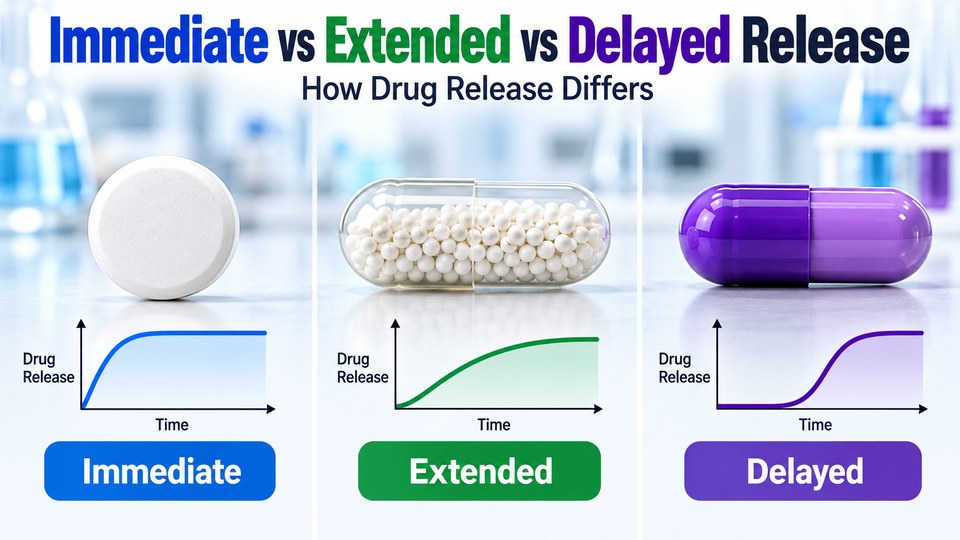
錠剤またはカプセルが次のように説明されている場合 即時解放, 延長リリース, もしくは発売が遅れたり, この用語は、その有効成分がいつ、どのように放出されるかを指します。. アン 即時リリース (そして) 剤形には放出を遅らせたり延長したりする意図的な機構はありません. アン 延長リリース (は) 製剤は放出を長期間にわたって延長します, その間 遅延リリース (DR) 製剤は、後の時間または特定の条件に達するまで放出を延期します。.
徐放性および遅延放出性製品は、より広範な放出調節剤形ファミリーに属します。. リリースプロファイルはマトリックスシステムを通じて作成可能, 機能性コーティング, 多粒子製剤, 浸透圧システム, およびその他の配合技術.
これらの基本的な違いを理解すると、XR などの用語も作成されます。, SR, CR, 氏, 長期放出, 徐放性があり、解釈が容易です。また、放出プロファイルが異なれば、異なる配合および製造アプローチが必要となる理由も説明されています。.
即時リリースとは何ですか, 延長放出と遅延放出の意味?
最も明確な違いは 2 つの質問に基づいています: リリースはいつ始まりますか, リリース開始後に意図的に延長される?
即時リリース (そして)
即時放出とは、剤形が有効成分の放出を遅延または延長するように意図的に設計されていないことを意味します. これは、多くの放出調節製剤と比較される従来の放出パターンです。.
従来の即放性錠剤の多くは、最初に小さな粒子に崩壊します。, その後、有効成分が胃腸液に溶解します。. APIの溶解度, 粒子の特性, 賦形剤, タブレットの構造, 崩壊剤のパフォーマンスはすべてこのプロセスに影響を与える可能性があります. FDA の指導による治療 解散 即時放出固体経口剤形の放出性能を評価する重要な方法としての試験.
しかし, 即時放出は、全用量が即座に放出されることを意味するものではありません. 崩壊と溶解にはまだ時間がかかる. 「即時」とは主に、リリースを延期または延長するための意図的な配合メカニズムが導入されていないことを意味します。.
延長リリース (は)
徐放性剤形は、従来の即時放出製剤よりも長期間にわたって有効成分を利用できるように設計されています。. FDAは、徐放性錠剤を、摂取後長期間にわたって原薬を利用できるようにする製剤であると説明しています.
延長リリースは 1 つの特定のテクノロジーではありません. 商品によっては, 放出プロファイルはポリマーマトリックスによって生成可能, 機能性コーティング, 多粒子システム, 浸透圧機構, または別の設計された配合物.
拡張リリースは意図されたリリース動作を説明するものであるため、この区別は重要です。, 特定の錠剤の構造や製造機械ではありません.
遅延リリース (DR)
遅延リリースは、リリースの開始を意図的に延期します。. 剤形は、規定の時間または環境条件に達するまで、無傷のままであるか、または放出が制限されます。.
DR と ER の最も有用な違いは次のとおりです。:
リリース開始時の遅延リリース制御; 延長リリースは主にリリースの継続時間を制御します.
したがって、遅延放出製剤は、遅延が終了したらゆっくり放出する必要はありません。. 意図したトリガーに達した後、リリースは比較的迅速に進むことができます.
腸溶錠, カプセル, ペレット, 顆粒は一般的な遅延放出設計です. 機能性コーティングは、ある胃腸条件下では放出を阻止し、別の条件下では放出を可能にすることを目的としています。. FDA の剤形用語では、遅延放出錠剤と徐放性錠剤を区別して認識しています, カプセル, ペレット, と顆粒.
即時リリース vs 延長リリース vs 遅延リリース: 重要な違い
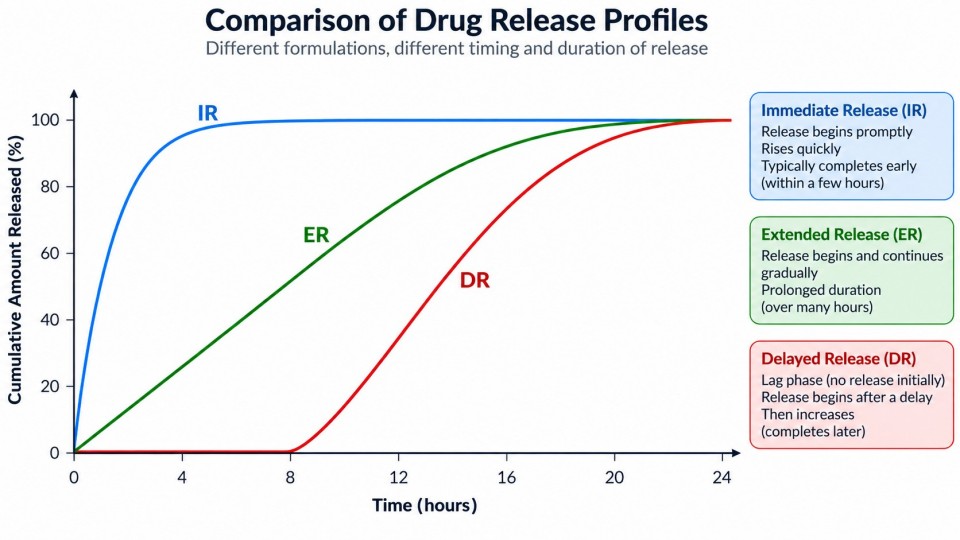
3 つのリリース タイプは、リリースの開始点とリリース期間の両方が異なります。.
| 要素 | 即時リリース | 延長リリース | 遅延リリース |
|---|---|---|---|
| 主な目的 | 意図的な遅延や延長を伴わないリリース | 時間をかけてリリースを延長する | 発売開始を延期します |
| 放出開始 | プログラムされた遅延なしで開始します | 多くの場合、大きな遅延なく開始されます, デザインに応じて | プログラムされたラグまたはトリガーの後に開始します |
| リリース期間 | 一般的に短い | 意図的に延長された | 遅延後は短期間または延長される可能性があります |
| 一般的な配合アプローチ | 従来の錠剤やカプセル | マトリックスシステム, 機能性コーティング, 多粒子, 浸透圧システム | 腸溶性コーティング, 遅延放出性のペレットまたは顆粒 |
| 一般的な剤形 | タブレット, カプセル | タブレット, カプセル, ペレット, 顆粒 | タブレット, カプセル, ペレット, 顆粒 |
| パフォーマンスに関する重要な質問 | 意図的な変更を加えることなく、意図したとおりに製品がリリースされているか? | 意図したリリースプロファイルは長期間にわたって維持されますか? | 製品は、意図したトリガーの前にリリースしたり、その後リリースしたりすることに抵抗しますか?? |
これが、遅延リリースと延長リリースに互換性がない理由です。. 製品はリリースが遅れてすぐにリリースされる場合があります, 一方、延長リリース システムはより早くリリースを開始できますが、長期間継続できます。.
ERって何をするの?, XR, SR, CR, MRとPRの意味?
医薬品では複数の略語や命名規則が使用されるため、発売に関する用語がわかりにくくなる.
MR — 修正リリース 最も広範で有用な概念です. タイミングを考慮した剤形について説明しています。, レート, または有効成分の放出位置が従来の放出位置から意図的に変更されている. 延長放出剤形と遅延放出剤形は両方とも、このより広い概念に含まれます。. FDA と EMA はどちらも修正リリース フレームワークを使用しています, 彼らが好む用語は同じではありませんが、.
ER — 延長リリース 長期間にわたって放出されることを指します.
XR — 延長リリース 徐放性製剤に関連する製品の接尾辞としてよく使用されます。. しかし, FDA は、「XR」などの接尾辞の命名規則は、広く認識されている 1 つの命名標準によって管理されていないことに注意しています。.
SR — 徐放 一般に、従来の即時放出よりも長時間放出を持続することを目的とした製剤を指します。. 拡張リリースと同様の文脈でよく使用されます。, ただし、これらの用語をすべての製品で自動的に同一として扱うべきではありません。.
CR — 制御放出 通常、放出速度またはパターンの意図的な制御を意味します。. 実際に, この用語は広く使われることもあります, しかし、真に制御された放出プロファイルは、単に放出を長く持続させることよりも、より具体的な製剤目標です。.
PR — 長期リリース ヨーロッパの用語で広く使用されています. 経口放出調節製品に関する EMA ガイダンスは、特に徐放性および遅延放出剤形を対象としています。.
徐放性は正確な普遍的な規制カテゴリーではなく、平易な表現です。.
メーカー向け, 重要な点は、ER であると想定しないことです。, XR, SR, CR, と PR は交換可能なラベルです. 実際の配合設計, リリース仕様, 溶解プロファイル, 承認された製品用語, および該当する市場要件により、略語だけよりも正確に製品を定義できます。.
さまざまな製剤が放出をどのように制御するか?
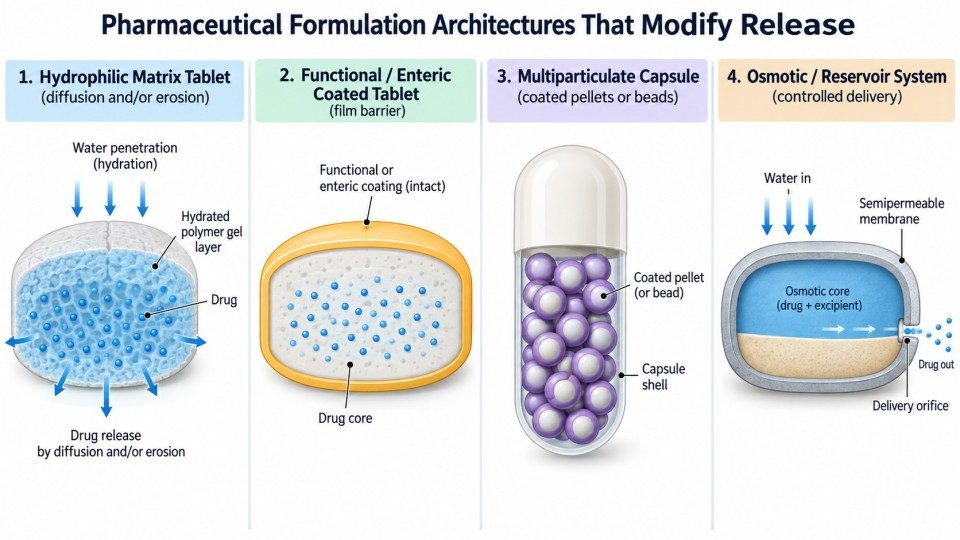
放出挙動は主に製剤と剤形の構造によって作成されます. いくつかの異なる技術で修正リリースを生成できる.
マトリックスシステム
マトリックスタブレットでは, 有効成分は放出制御物質を介して分散されます。, 多くの場合ポリマー.
胃腸液が親水性マトリックスに浸透するとき, ポリマーは水和してゲル層を形成することができます. その後、有効成分は拡散などのプロセスによって水和構造を通って移動します。, 一方、ポリマーの膨張と浸食も放出速度に影響を与える可能性があります.
疎水性または不溶性マトリックスは、細孔形成のさまざまな組み合わせに依存します, 拡散, そしてマトリックス構造.
大切な関係性は、:
ポリマーの特性 + マトリックス構造 + 液体の浸透 + 拡散・侵食 → 放出プロファイル
錠剤に同じ量の有効成分が含まれている場合でも、製剤組成や錠剤の物理的な構造を変更すると、性能が変わる可能性があるのはこのためです。.
機能性コーティング
コーティングは外観やマスクの味を改善するだけではありません. 機能性コーティング リリース制御システムの一部になることができます.
徐放性コーティングは、ポリマーフィルムを介して水と溶解した有効成分の移動を制御できます。. 発売が遅れたり、 腸溶性コーティング 代わりに、後で解放する前に、定義された条件下で無傷のままであることを目的としたバリアを作成します。.
コーティング配合, フィルムの完全性, コーティングの均一性, 乾燥条件, 錠剤コアまたはペレットの特性がすべて重要です. A functional coating therefore cannot be reduced to a simple rule such as “a thicker coating always means slower release.”
ペレット, Beads and Multiparticulate Systems
Modified release can also be built into many small units instead of one tablet matrix.
ペレット, beads, or granules can receive individual functional coatings and then be filled into ハードカプセル or compressed into multiparticulate tablets. Different pellet populations can even carry different coating structures to create more complex release patterns.
This connects release design directly with several pharmaceutical manufacturing operations:
pellet formation → functional coating → blending → カプセル充填 or tablet compression
カプセル製造用, the capsule shell itself may simply contain the multiparticulate system; the release-controlling function can reside mainly in the coated pellets inside it.
Osmotic and Reservoir Systems
More specialized products use reservoir systems or osmotic delivery.
A reservoir dosage form surrounds the active ingredient with a release-controlling membrane. An osmotic system uses water entering through a semipermeable membrane to generate pressure that drives material out through a defined delivery path.
These approaches demonstrate why “extended release” should not be treated as a single type of tablet. Different dosage-form architectures can produce similar overall objectives through very different mechanisms.
How Pharmaceutical Manufacturing Influences Release Performance
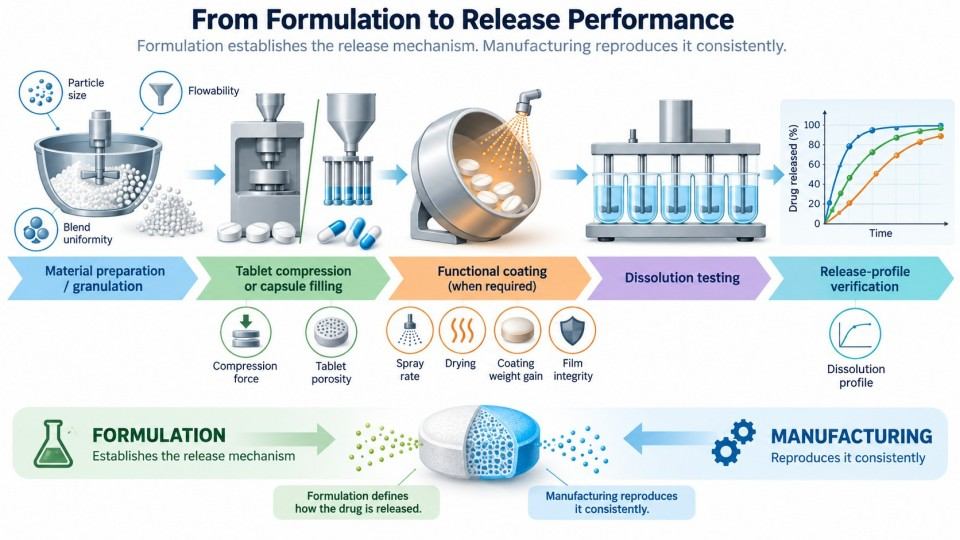
The formulation establishes the intended release mechanism, but manufacturing must reproduce that design consistently from development batches to commercial production.
Material Preparation and Granulation
Before compression or capsule filling, properties such as particle-size distribution, かさ密度, 流動性, 水分, granule strength, and blend uniformity affect how material feeds and distributes during production.
湿式造粒, 乾式造粒, または 直接圧縮 can produce different material structures. Granulation can improve flow and compressibility, but it can also change particle porosity, surface area, disintegration behavior, and subsequent dissolution.
The manufacturing route must therefore match the formulation rather than being selected only around available equipment.
錠剤の圧縮
その間 錠剤圧縮, powder or granules are filled into dies and compacted between punches. タブレットの重量, 圧縮力, 滞在時間, 密度, 硬度, 気孔率, and mechanical integrity are connected process and product attributes.
These properties do not control every release formulation in the same way. In some matrix systems, changes in porosity or compact structure can influence fluid penetration and diffusion. In coated tablets, compression first needs to produce mechanically consistent cores capable of surviving subsequent coating and handling.
予圧縮 can also affect deaeration and powder-bed densification before main compression, particularly for formulations sensitive to trapped air or high-speed compression.
The correct conclusion is therefore not that the tablet press “determines” extended release. Compression is one part of a larger formulation and manufacturing system that must maintain the physical properties required by the validated release design.
Tablet and Pellet Coating
Functional coating adds another group of process variables:
spray rate, 霧化, coating-solution properties, inlet air, product temperature, drying rate, 混合, coating weight gain, and film uniformity.
Poor coating distribution can produce units with different barrier properties. Overwetting, insufficient drying, damaged films, or unstable spray conditions can also affect coating integrity.
For delayed-release systems, manufacturers need both resistance before the intended release condition and reliable release afterward. For extended-release coatings, the coating process has to reproduce the barrier characteristics established during formulation development.
Capsule Filling and Multiparticulate Handling
Hard capsules can contain powder, 顆粒, ペレット, mini-tablets, or combinations of multiparticulates.
When coated pellets provide the release function, filling accuracy matters, but so does gentle material handling. Excessive mechanical damage to functional coatings can change the behavior of the multiparticulate system even if the capsule’s total fill weight remains acceptable.
This is an example of why equipment performance should be evaluated against the dosage-form design rather than considered in isolation.
Dissolution Testing
The finished dosage form ultimately has to demonstrate its intended release behavior.
Dissolution testing measures how the active ingredient is released into defined test media over time and is used in pharmaceutical development, 品質管理, 仕様, and evaluation of manufacturing changes. FDA maintains guidance and dissolution resources for both immediate-release and modified-release solid oral dosage forms.
For an immediate-release product, the test focuses on appropriate release within the specified conditions. A modified-release product usually requires a release profile evaluated at multiple time points or conditions appropriate to its design.
This creates an important manufacturing loop:
formulation → production process → dosage-form structure → dissolution profile → batch verification
No single formulation ingredient or machine replaces this complete control strategy.
Packaging Protects the Finished Release System
一次包装 does not turn an immediate-release tablet into an extended-release product, but it helps preserve the dosage form produced by the manufacturing process.
水分, 酸素, physical abrasion, or storage conditions can affect certain tablet cores, polymers, コーティング, カプセル, and other formulation components. ブリスター包装 or sealed bottle systems therefore form part of the finished product’s protection strategy when their barrier properties match the product’s stability requirements.
製薬メーカー向け, this means release performance, physical stability, and packaging cannot always be evaluated as completely separate subjects.
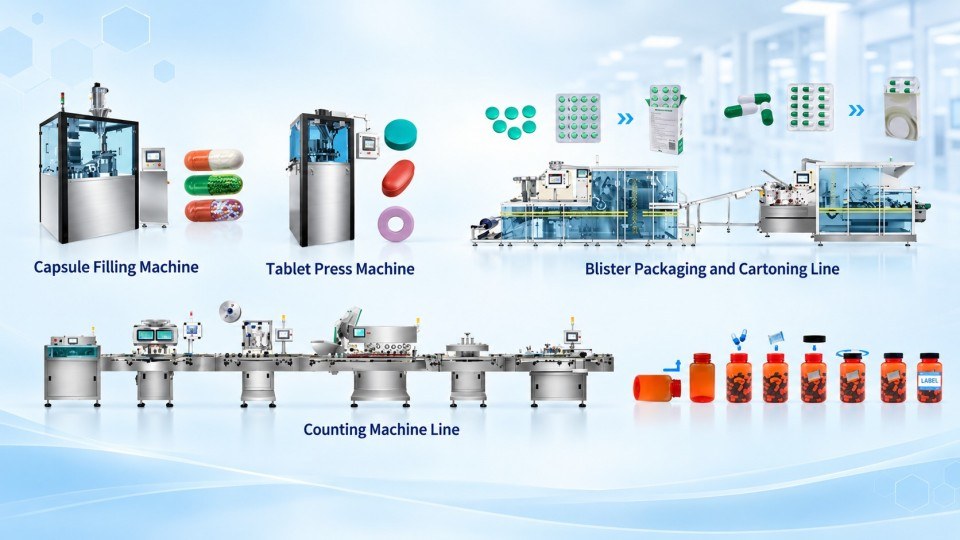
Ruida Packing supplies pharmaceutical equipment for solid-dosage manufacturing and packaging, を含む 錠剤圧縮機, 錠剤コーティング機, カプセル充填機, ブリスター包装機、 そして tablet counting bottling line. These machines support processes such as tablet compression, 機能性コーティング, capsule and pellet filling, 一次包装, and tablet capsule bottling, while the final release profile still depends on the validated formulation, プロセスパラメータ, dosage-form structure, and dissolution testing.
結論は
The difference between immediate release, 延長リリース, and delayed release comes down primarily to the timing and duration of active-ingredient release.
Immediate release introduces no deliberate delay or extension. Extended release prolongs release over time. Delayed release postpones the start of release until a defined point or condition is reached.
Behind these terms is a much larger pharmaceutical system involving modified release, matrix polymers, 機能性コーティング, ペレット, 拡散, erosion, 造粒, タブレットの圧縮, カプセル充填, dissolution testing, and protective packaging.
Understanding those relationships is more useful than treating IR, は, DR, SR, CR, XR, or PR as isolated labels. Each release profile is the result of a specific dosage-form design that manufacturing must reproduce consistently.
よくある質問
1. Is extended release the same as sustained release?
The terms are often used in similar contexts, but they should not automatically be treated as universally interchangeable. Extended release is established terminology for dosage forms designed to prolong release, while sustained release is also widely used to describe longer-duration release. The product’s approved terminology and release specification are more important than assuming every abbreviation has exactly the same meaning.
2. Is delayed release the same as extended release?
いいえ. Delayed release postpones when release begins, while extended release prolongs release over time. A delayed-release product can release relatively quickly after its programmed delay ends.
3. What does XR mean on a tablet or capsule?
XR is commonly used to indicate extended release, although suffix conventions vary by product and manufacturer. The dosage-form description and approved product labeling should be used to identify the actual release design.
4. Are all modified-release tablets extended release?
いいえ. Modified release is a broader category. It can include extended-release products as well as delayed-release products and other designs in which the timing or rate of release has been intentionally altered.
5. What makes a tablet extended release?
An extended-release profile can be created through technologies such as polymer matrices, release-controlling coatings, 多粒子システム, reservoir structures, or osmotic systems. The appropriate approach depends on the active ingredient, 賦形剤, target release profile, manufacturing process, および製品仕様.
6. Can tablet compression affect drug release?
はい, depending on the formulation. Compression changes physical properties such as tablet density, 硬度, 気孔率, and internal structure. These changes can influence fluid penetration, 崩壊, 拡散, or coating performance in some formulations. Compression is therefore one manufacturing factor rather than the sole determinant of the release profile.
参考文献
- 私たち. Food and Drug Administration — Dosage Forms. FDA Structured Product Labeling terminology includes immediate-, extended-, and delayed-release dosage-form classifications.
- 私たち. Food and Drug Administration — Dissolution Testing of Immediate Release Solid Oral Dosage Forms. Guidance covering dissolution testing and specifications for IR solid oral dosage forms.
- 私たち. Food and Drug Administration — Orange Book Preface. Includes FDA discussion of extended-release dosage forms and formulation differences.
- European Medicines Agency — Guideline on Quality of Oral Modified-Release Products. Covers pharmaceutical development and quality considerations for prolonged-release and delayed-release oral dosage forms.
- 私たち. Food and Drug Administration — Dissolution Methods Database and Guidance Resources. Provides dissolution resources for immediate- and modified-release solid oral dosage forms.