錠剤とカプセルの主な包装方法
導入
Many tablet and capsule manufacturers focus on formulation, 圧縮, and filling processes. しかし, after thousands or millions of tablets and capsules are produced, the final packaging decision can determine where tens of thousands of dollars are spent.
The selected tablet packaging method affects material cost, production equipment, 保管条件, and product protection throughout the supply chain. A packaging choice made at the beginning of production may influence long-term operating expenses.
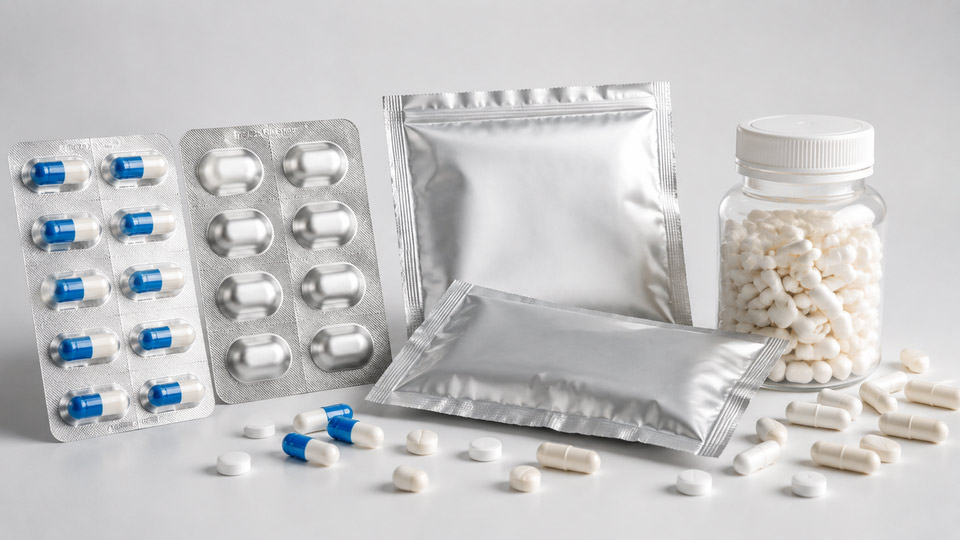
This guide compares four major tablet packaging methods, including bottle packaging, PVC-Alu blister packaging, Alu-Alu ブリスター包装, ソフトデュアルアルミニウムパッケージ. These formats are commonly produced by pharmaceutical packaging equipment such as blister machines and strip packaging machines for tablet and capsule products.
The comparison covers material cost, 湿気防止, 光の保護, transportation safety, and required pharmaceutical packaging equipment.
重要なポイント
- 錠剤の包装 selection directly affects material cost, production investment, and product protection requirements during storage and transportation.
- ボトル包装 supports large-volume tablet packaging and capsule packaging through counting and filling systems, while product movement inside bottles requires attention for fragile tablets.
- PVC-Alu blister packaging provides lower material cost, その間 Alu-Alu ブリスター包装 そして soft dual aluminium packaging provide stronger barrier protection against moisture and light.
- Different tablet packaging solutions require evaluation of product sensitivity, transportation conditions, and manufacturing requirements before equipment selection.
- 適切な pharmaceutical packaging solutions combine correct packaging materials with appropriate equipment, including counting systems, ブリスター包装機, tablet blister packaging machines, capsule blister packaging machines, and aluminium foil sealing systems.
1.Packaging Material Cost Comparison for Tablets and Capsules
The cost of capsule packaging depends on the package structure, material consumption, and production process. ボトル包装, PVC-Alu blister packaging, Alu-Alu ブリスター包装, and soft dual aluminium packaging have different material requirements and require different pharmaceutical packaging equipment, including blister machines and capsule strip packaging systems.
Among these tablet packaging methods, PVC-Alu blister packaging normally has the lowest material cost. Its lower material consumption makes tablet blister packaging suitable for many standard pharmaceutical products.Bottle packaging is positioned in the middle range, while Alu-Alu blister packaging and soft dual aluminium packaging require higher material investment due to their aluminum-based structures.
PVC-Alu Blister Packaging Cost Analysis
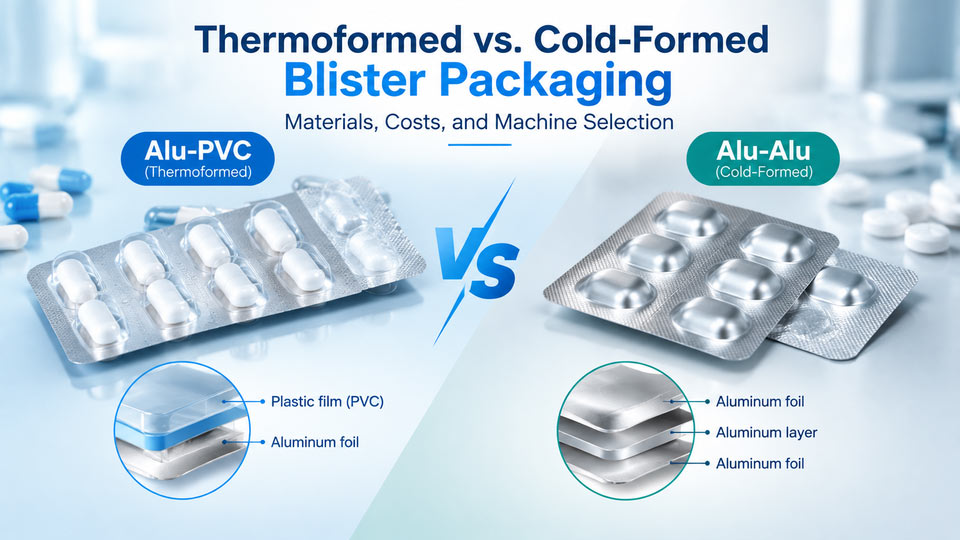
PVC-Alu blister packaging is one of the most common tablet packaging そして capsule packaging methods used for pharmaceutical and healthcare products. This format is widely produced by a ブリスターマシン to create tablet blister packaging そして capsule blister packaging 製品.
This structure combines a PVC forming film with an aluminum foil sealing layer.A pharmaceutical blister packaging machine forms cavities, fills tablets or capsules, and seals each dose.
The material cost of PVC-Alu blister packaging mainly comes from the PVC forming film and aluminum foil. Compared with aluminum-based high-barrier packaging methods, PVC material has a lower cost.
Based on Ruida Packing’s packaging material cost analysis, standard PVC-Alu blister packaging normally costs around $0.005–0.015 per 50 tablets or capsules in packaging materials. The actual cost depends on blister cavity size, aluminum foil thickness, PVC specification, and the number of tablets or capsules packed per sheet.
Compared with ボトル包装, PVC-Alu blister packaging requires more individual package units for the same product quantity.
The main cost advantage of PVC-Alu blister packaging comes from its simple material structure. It does not require a bottle body, キャップ, ラベル, or desiccant in the standard package format.
したがって, PVC-Alu blister packaging normally has the lowest material cost among common tablet packaging methods.
Bottle Packaging Cost Analysis
ボトル包装 is widely used for large-volume tablet packaging そして capsule packaging because one container can hold dozens or hundreds of tablets or capsules.
Compared with individual unit-dose packages, bottle packaging requires fewer containers for the same product quantity, which helps reduce packaging consumption in large-scale production.
A bottle containing around 50 tablets or capsules normally requires approximately $0.015–0.04 in packaging materials. This cost includes the bottle body, キャップ, sealing aluminium foil, ラベル, and desiccant. HDPE and PET are common bottle materials, while different bottle sizes and material thicknesses affect the final cost.
The sealing aluminium foil, 乾燥剤, and label also contribute to the total tablet packaging cost.
Among different tablet packaging methods, bottle packaging has a medium material cost level, with a higher cost than PVC-Alu blister packaging but lower cost than Alu-Alu blister packaging and soft dual aluminium packaging.
Alu-Alu Blister Packaging and Soft Dual Aluminium Packaging Cost Analysis
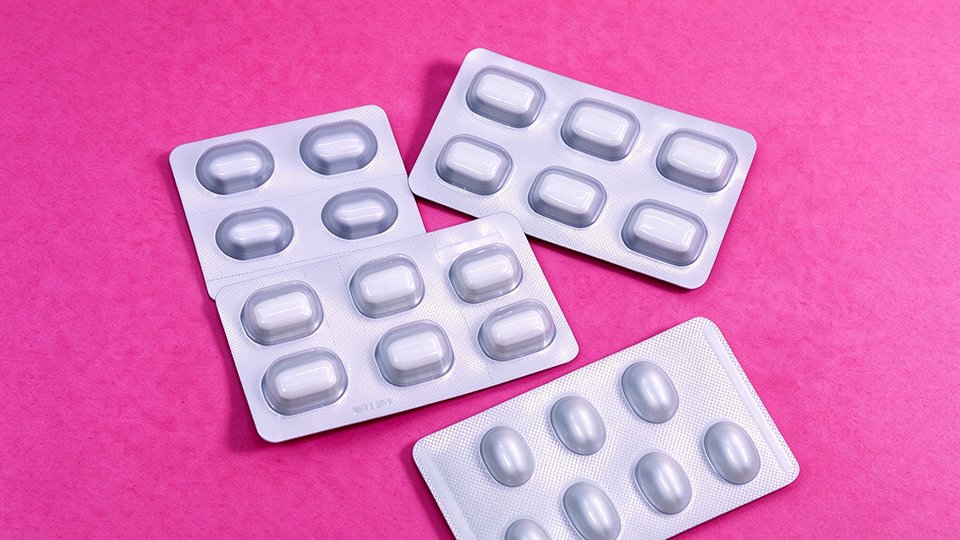
Alu-Alu ブリスター包装 そして soft dual aluminium packaging are aluminum-based tablet packaging methods with higher material costs compared with PVC-Alu blister packaging. These formats are commonly used for high-barrier tablet blister packaging そして capsule blister packaging アプリケーション.
The higher cost mainly comes from the aluminum-based material structure and increased material consumption during production. Compared with PVC-Alu blister packaging, these formats require more aluminum foil materials, which increases the packaging material investment.
Alu-Alu ブリスター包装 そして soft dual aluminium packaging normally cost around $0.02–0.06 per 50 tablets or capsules in packaging materials.
The actual cost depends on aluminum foil thickness, package size, sealing specifications, and the quantity of tablets or capsules packed in each unit, also depend on equipment configuration, including the selected ブリスターマシン または tablet strip packaging machine.
| Packaging Method | Estimated Material Cost (Per 50 Tablets/Capsules) | Cost Level | Main Material Components |
| PVC-Alu Blister Packaging | $0.005–0.015 | Lowest | PVC forming film + アルミホイル |
| ボトル包装 | $0.015–0.04 | 中くらい | Bottle body + キャップ + sealing aluminium foil + ラベル + 乾燥剤 |
| Alu-Alu Blister Packaging | $0.02–0.06 | 高い | Aluminum-based multilayer foil structure |
| Soft Dual Aluminium Packaging | $0.02–0.06 | 高い | Two aluminum foil-based layers + sealing materials |
2.Moisture Protection Comparison of Different Tablet Packaging Methods
Manufacturers often use WVTR (Water Vapor Transmission Rate) as an indicator of moisture barrier performance for different tablet packaging そして capsule packaging methods. A lower WVTR value means stronger resistance against water vapor transmission and better moisture protection performance for pharmaceutical 包装ソリューション.
Based on typical pharmaceutical packaging materials, the moisture protection ranking from low to high among common tablet packaging methods は:
1. ボトル包装: WVTR approximately 0.1–1.0 g/m²/day
2. PVC-Alu Blister Packaging: WVTR approximately 0.05–0.5 g/m²/day
3. Alu-Alu Blister Packaging: WVTR approximately 0–0.01 g/m²/day
4. Soft Dual Aluminium Packaging: WVTR approximately 0–0.01 g/m²/day
Bottle Packaging Moisture Protection Performance
Bottle packaging provides moderate moisture protection for many tablet packaging and capsule packaging applications. Before opening, HDPE bottles commonly used in pharmaceutical packaging may have a WVTR of approximately 0.1–1.0 g/m²/day.
The sealing aluminium foil under the cap provides an additional moisture barrier before first opening. The aluminum foil layer itself has a WVTR value close to 0 g/m²/day. Desiccants inside bottle packaging also help maintain low humidity during storage.
しかし, the moisture protection performance of bottle packaging decreases after opening. Each opening allows external air with moisture to enter the bottle.
As moisture enters, moisture-sensitive APIs may experience stability changes. Increased water content can accelerate hydrolysis reactions, affect dissolution performance, or increase degradation products. For some sensitive products, moisture absorption of only 1–3% by weight may influence tablet hardness, 外観, or API stability.
The desiccant inside the bottle gradually loses absorption capacity during repeated use. Once silica gel or molecular sieve becomes saturated, its moisture control effect decreases.
Compared with individual-unit tablet packaging methods such as ブリスター パッケージ, bottle packaging solutions provide less protection after repeated opening because multiple tablets or capsules share the same internal environment.
PVC-Alu Blister Packaging Moisture Protection Performance
PVC-Alu blister packaging provides better moisture protection than ボトル包装 for many tablet packaging そして capsule packaging アプリケーション. The main advantage of PVC-Alu blister packaging comes from its unit-dose structure. Each tablet or capsule is sealed inside an individual cavity, allowing users to remove one dose at a time without repeatedly opening the entire ブリスター パッケージ.
The aluminum foil layer in PVC-Alu blister packaging provides the main moisture barrier. The aluminum foil itself has a WVTR value close to 0 g/m²/day. しかし, the PVC forming film has higher water vapor transmission, making the typical WVTR of this packaging format approximately 0.05–0.5 g/m²/day depending on material thickness and sealing quality.
Compared with ボトル包装, PVC-Alu blister packaging avoids long-term moisture exposure after opening and is widely used in pharmaceutical ブリスター包装 アプリケーション. Removing one tablet or capsule only breaks one cavity, while the remaining products stay individually sealed. This prevents repeated humidity changes caused by opening and closing a bottle.
しかし, compared with Alu-Alu ブリスター包装, PVC-Alu blister packaging has lower moisture resistance because the PVC forming layer allows more water vapor transmission than an aluminum-based structure. For highly moisture-sensitive products, manufacturers may select Alu-Alu or soft dual aluminium packaging for higher barrier performance.
Alu-Alu Blister Packaging and Soft Dual Aluminium Packaging Moisture Protection Performance
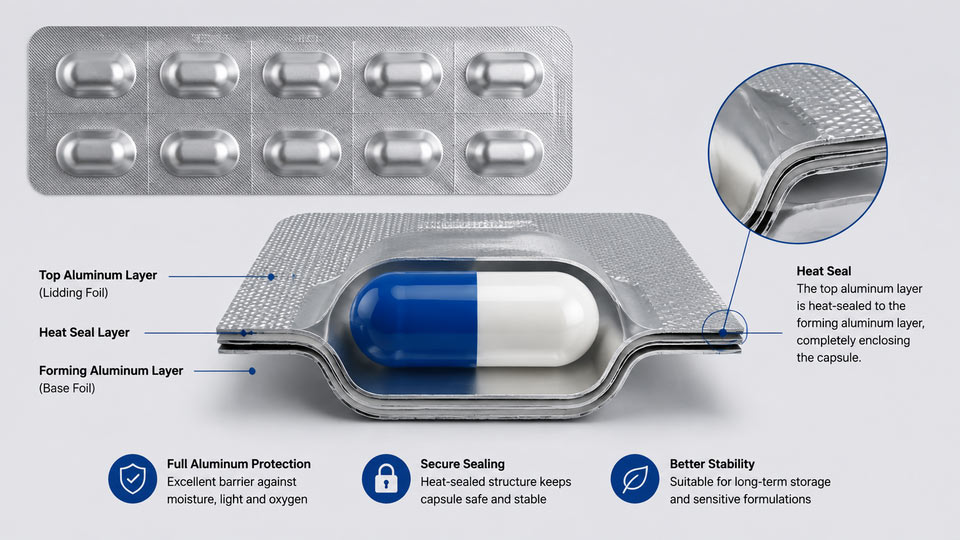
Alu-Alu blister packaging and soft dual aluminium packaging provide the highest moisture protection level among common tablet packaging and capsule packaging methods. Both formats use aluminum-based barrier materials, which create a strong protection layer against water vapor transmission. The aluminum foil itself has a WVTR value close to 0 g/m²/day, providing extremely low moisture permeability for pharmaceutical blister packaging and ストリップ包装.
Compared with PVC-Alu blister packaging, Alu-Alu ブリスター包装 そして soft dual aluminium packaging provide lower WVTR values and stronger moisture resistance. They are commonly selected for moisture-sensitive products where API stability and shelf-life control require higher barrier performance.
3.Light Protection Comparison of Different Tablet Packaging Methods
Manufacturers often refer to USP requirements for light-resistant 医薬品包装. According to USP standards, packaging materials used for light protection should have a spectral transmission of no more than 10% within the 290–450 nm wavelength range.
Based on typical pharmaceutical packaging structures, the light protection ranking from low to high among common tablet packaging methods is:
1. PVC-Alu Blister Packaging: The transparent PVC forming film allows light transmission, while the aluminum foil side provides light blocking.
2. ボトル包装: Light protection depends on bottle material, with transparent PET having lower protection and colored HDPE or amber bottles providing better performance.
3. Alu-Alu Blister Packaging: Aluminum-based structure blocks UV and visible light with very high barrier performance in high-protection ブリスター包装 アプリケーション.
4. Soft Dual Aluminium Packaging: Dual aluminum foil layers provide similar maximum light protection performance fortablet strip packaging そして capsule strip packaging アプリケーション.
PVC-Alu Blister Packaging Light Protection Performance
PVC-Alu blister packaging provides moderate light protection for many tablet packaging そして capsule packaging アプリケーション. The aluminum foil side blocks most UV and visible light, but the PVC forming side is usually transparent, allowing light transmission into the cavity.
Compared with ボトル包装, PVC-Alu blister packaging provides better individual product protection because each tablet or capsule is sealed separately. しかし, it has lower light barrier performance than Alu-Alu ブリスター包装 そして soft dual aluminium packaging, which use aluminum-based structures on both sides.
Bottle Packaging Light Protection Performance
ボトル包装 provides different levels of light protection for tablet packaging そして capsule packaging depending on bottle material, 色, and thickness. Transparent PET bottles have limited light blocking performance, while opaque HDPE and amber bottles provide stronger protection against UV and visible light transmission.
Transparent PET bottles may show light transmission above 50%, while opaque HDPE bottles can reduce spectral transmission to approximately 下に 10% depending on material structure and thickness.
Compared with PVC-Alu blister packaging, ボトル包装 has more variation in light protection because performance depends on bottle selection. Compared with Alu-Alu ブリスター包装 そして soft dual aluminium packaging, ボトル包装 provides lower light barrier performance because aluminum foil structures can block UV and visible light transmission to nearly 0%.
The final tablet packaging choice depends on the required balance between protection performance and production cost.
Alu-Alu Blister Packaging and Soft Dual Aluminium Packaging Light Protection Performance
Alu-Alu ブリスター包装 そして soft dual aluminium packaging provide the highest light protection level among common tablet packaging そして capsule packaging メソッド. Both structures use aluminum foil as the main barrier layer, which blocks UV light and visible light transmission.
The aluminum foil layer used in Alu-Alu ブリスター包装 そして soft dual aluminium packaging can reduce light transmission to nearly 0%, providing stronger protection than PVC-Alu and most bottle packaging solutions.
Compared with PVC-Alu blister packaging そして ボトル包装, these aluminum-based tablet packaging methods provide more stable light protection. They are commonly selected for light-sensitive products where API stability requires strict control of UV and visible light exposure. The higher aluminum material usage also increases packaging cost, so manufacturers select these formats based on product protection requirements.
Aluminum Packaging Material Light Protection Performance
4.Portability Comparison of Different Tablet Packaging Methods
Bottle Packaging Portability Performance
ボトル包装 is commonly used for large-volume tablet packaging そして capsule packaging because one container can hold dozens or hundreds of products. This structure reduces the number of packages required but increases the size of each package.
For daily use, users need to carry the entire bottle even when only a few tablets or capsules are required. A bottle containing 100 or more units may take more space in bags or pockets compared with individual-dose packages.
Bottle packaging also requires opening the container every time a dose is removed. The cap, ボトルのサイズ, and remaining product quantity affect carrying convenience during travel or outdoor use.
したがって, bottle packaging solutions are more suitable for home storage, 薬局, and long-term supply scenarios rather than frequent single-dose carrying.
PVC-Alu Blister Packaging and Alu-Alu Blister Packaging Portability Performance
PVC-Alu blister packaging そして Alu-Alu ブリスター包装 both provide better portability than ボトル包装 because each tablet or capsule is sealed in an individual cavity. Users can carry only the required doses instead of transporting a complete bottle.
PVC-Alu blister packaging offers good daily carrying convenience. The blister card can be divided into smaller sections, allowing users to carry several tablets or capsules for short trips or daily use. The lightweight structure also reduces the space required in bags or storage boxes.
Alu-Alu ブリスター包装 provides similar single-dose convenience but uses a thicker aluminum-based structure. The stronger material increases package rigidity, which provides better protection during transportation but may require slightly more storage space compared with PVC-Alu formats.
しかし, compared with soft dual aluminium packaging, both blister formats have a more rigid structure. Soft dual aluminium packaging can offer greater flexibility when users need to carry small quantities of products in compact spaces.
Soft Dual Aluminium Packaging Portability Performance
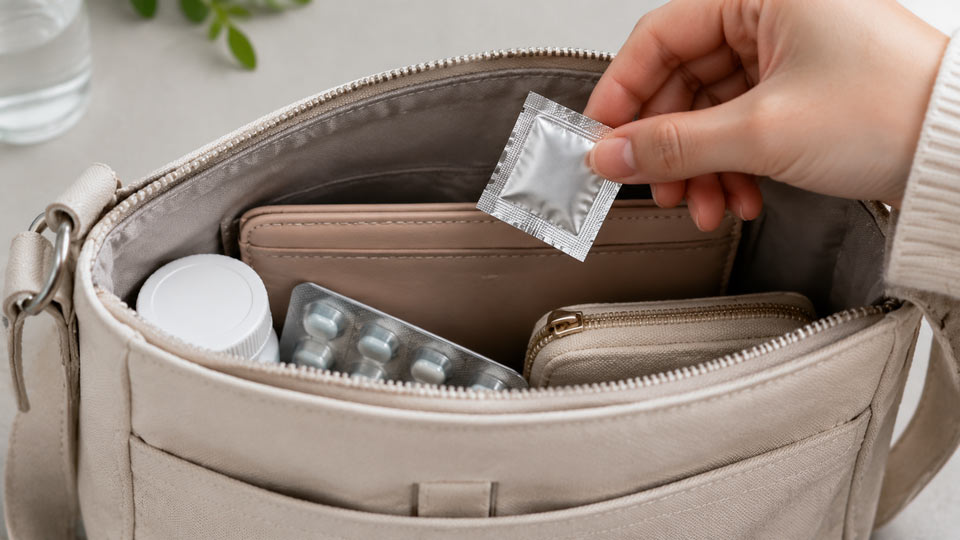
Soft dual aluminium packaging offers excellent portability.
Soft dual aluminium packaging provides high portability for many tablet packaging そして capsule packaging applications because each tablet or capsule is individually sealed in a compact flexible package.
Compared with ボトル包装, soft dual aluminium packaging reduces the carrying space required for daily use. Each package can be separated according to dosage requirements, making it suitable for travel, outdoor activities, and portable medication management.
Compared with PVC-Alu blister packaging そして Alu-Alu ブリスター包装, soft dual aluminium packaging has a more flexible structure. The package can be folded or arranged in smaller spaces, which provides better carrying convenience when users need only a few doses.
The individual sealing structure also prevents unused tablets or capsules from being exposed after other doses are removed. これにより、 soft dual aluminium packaging suitable for products requiring both portability and individual dose protection.
結論は
右を選択する tablet packaging そして capsule packaging method depends on product sensitivity, packaging cost, 湿気防止, 光の保護, 携帯性, および生産要件. Different tablet packaging methods have different advantages in pharmaceutical and healthcare applications.
| Comparison Item | ボトル包装 | PVC-Alu Blister Packaging | Alu-Alu Blister Packaging | Soft Dual Aluminium Packaging |
| Packaging Cost | ⭐⭐⭐ Medium | ⭐⭐⭐⭐⭐ Lowest | ⭐⭐ High | ⭐⭐ High |
| 湿気対策 | ⭐⭐ Low | ⭐⭐⭐ Medium | ⭐⭐⭐⭐⭐ Excellent | ⭐⭐⭐⭐⭐ Excellent |
| 光保護 | ⭐⭐⭐ Medium | ⭐⭐⭐ Medium | ⭐⭐⭐⭐⭐ Excellent | ⭐⭐⭐⭐⭐ Excellent |
| Product Safety | ⭐⭐ Low | ⭐⭐⭐⭐ Good | ⭐⭐⭐⭐⭐ Excellent | ⭐⭐⭐⭐⭐ Excellent |
| 携帯性 | ⭐⭐ Low | ⭐⭐⭐⭐ Good | ⭐⭐⭐ Medium | ⭐⭐⭐⭐⭐ Excellent |
| Large Volume Production | ⭐⭐⭐⭐⭐ Excellent | ⭐⭐⭐⭐ Good | ⭐⭐⭐ Good | ⭐⭐⭐ Medium |
| Individual Dose Protection | ⭐ Low | ⭐⭐⭐⭐⭐ Excellent | ⭐⭐⭐⭐⭐ Excellent | ⭐⭐⭐⭐⭐ Excellent |
| Suitable Product Type | Large-volume tablet packaging そして capsule packaging | Standard pharmaceutical products | Moisture/light-sensitive products | High-protection portable products |
よくある質問: Tablet Packaging and Capsule Packaging Selection
1. What is the difference between bottle packaging and blister packaging?
Bottle packaging stores multiple tablets or capsules in one container, making it suitable for large-volume tablet packaging and capsule packaging applications. Blister packaging seals each tablet or capsule separately, providing better individual protection against moisture, ライト, そして汚染.
2. Which tablet packaging method has the lowest cost?
Among common tablet packaging methods, PVC-Alu blister packaging generally has the lowest material cost. Bottle packaging has a medium cost level because the total package includes the bottle, キャップ, sealing aluminium foil, ラベル, and desiccant. Alu-Alu blister packaging and soft dual aluminium packaging have higher costs due to higher aluminum material usage.
3. Which packaging method provides the best moisture protection?
Alu-Alu blister packaging and soft dual aluminium packaging provide the highest moisture protection. Their aluminum structures have WVTR values close to 0 g/m²/day. PVC-Alu blister packaging provides medium moisture protection, while bottle packaging depends on bottle material, sealing performance, and desiccant capacity.
4. Is bottle packaging suitable for moisture-sensitive tablets and capsules?
Bottle packaging can be used for moisture-sensitive products when combined with sealing aluminium foil and desiccants. しかし, after opening, repeated exposure to external humidity reduces moisture control. For highly moisture-sensitive APIs, manufacturers may choose Alu-Alu blister packaging or soft dual aluminium packaging.
参考文献
- 米国薬局方 (米国薬局) – Packaging and Storage Requirements
- 私たち. 食品医薬品局 (FDA) – Container Closure Systems for Packaging Human Drugs and Biologics
- 欧州医薬品庁 (EMA) – Guideline on Plastic Immediate Packaging Materials
- 適正製造基準 (GMP) Guidelines – Pharmaceutical Packaging Requirements
- ISO 11607 – Packaging for terminally sterilized medical devices