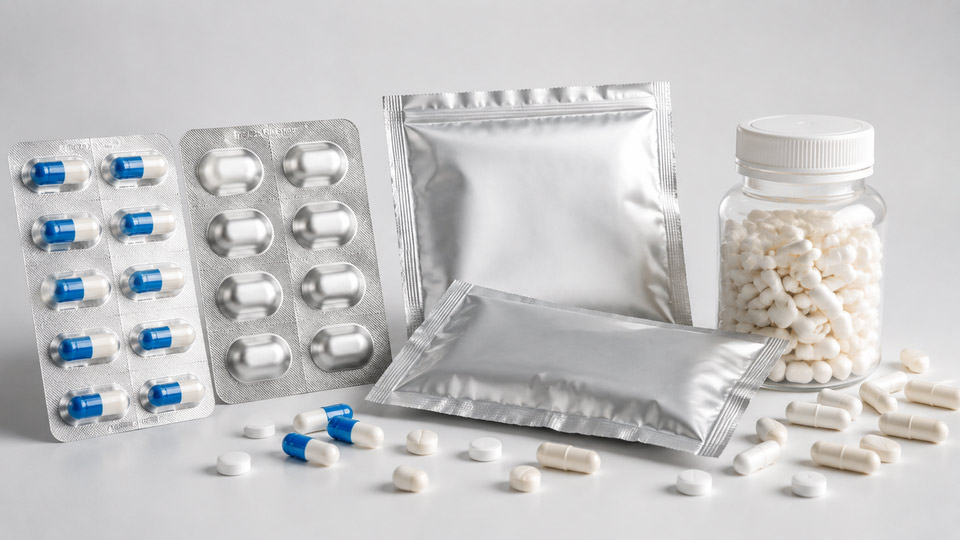
Wichtigste Verpackungsmethoden für Tabletten und Kapseln
Einführung
Viele Tabletten- und Kapselhersteller konzentrieren sich auf die Formulierung, Kompression, und Abfüllprozesse. Jedoch, nachdem Tausende oder Millionen von Tabletten und Kapseln hergestellt wurden, Die endgültige Verpackungsentscheidung kann darüber entscheiden, wo Zehntausende von Dollar ausgegeben werden.
Die gewählte Tablettenverpackungsmethode beeinflusst die Materialkosten, Produktionsausrüstung, Lagerbedingungen, und Produktschutz in der gesamten Lieferkette. Eine zu Beginn der Produktion getroffene Verpackungsauswahl kann die langfristigen Betriebskosten beeinflussen.
In diesem Leitfaden werden vier gängige Verpackungsmethoden für Tabletten verglichen, inklusive Flaschenverpackung, PVC-Alu-Blisterverpackung, Alu-Alu-Blisterverpackung, und weiche Doppelaluminiumverpackung. Diese Formate werden üblicherweise von pharmazeutischen Verpackungsanlagen wie Blistermaschinen und Streifenverpackungsmaschinen für Tabletten- und Kapselprodukte hergestellt.
Der Vergleich bezieht sich auf die Materialkosten, Feuchtigkeitsschutz, Lichtschutz, Transportsicherheit, und erforderliche pharmazeutische Verpackungsausrüstung.
Wichtigste Erkenntnisse
- Verpackung von Tabletten selection directly affects material cost, production investment, and product protection requirements during storage and transportation.
- Flaschenverpackung supports large-volume tablet packaging and capsule packaging through counting and filling systems, while product movement inside bottles requires attention for fragile tablets.
- PVC-Alu-Blisterverpackung provides lower material cost, während Alu-Alu-Blisterverpackung Und soft dual aluminium packaging provide stronger barrier protection against moisture and light.
- Different tablet packaging solutions require evaluation of product sensitivity, transportation conditions, and manufacturing requirements before equipment selection.
- Geeignet pharmaceutical packaging solutions combine correct packaging materials with appropriate equipment, including counting systems, Blasenverpackungsmaschinen, tablet blister packaging machines, capsule blister packaging machines, and aluminium foil sealing systems.
1.Vergleich der Verpackungsmaterialkosten für Tabletten und Kapseln
Die Kosten für die Kapselverpackung hängen von der Packungsstruktur ab, Materialverbrauch, und Produktionsprozess. Flaschenverpackung, PVC-Alu-Blisterverpackung, Alu-Alu-Blisterverpackung, und weiche Doppelaluminiumverpackungen stellen unterschiedliche Materialanforderungen und erfordern unterschiedliche pharmazeutische Verpackungsgeräte, einschließlich Blistermaschinen und Kapselstreifenverpackungssystemen.
Zu diesen Tablettenverpackungsmethoden gehören, PVC-Alu-Blisterverpackungen haben normalerweise die niedrigsten Materialkosten. Aufgrund des geringeren Materialverbrauchs eignen sich Tablettenblister für viele gängige Pharmaprodukte. Flaschenverpackungen sind im Mittelfeld angesiedelt, während Alu-Alu-Blisterverpackungen und Soft-Dual-Aluminiumverpackungen aufgrund ihrer auf Aluminium basierenden Strukturen höhere Materialinvestitionen erfordern.
Kostenanalyse für PVC-Alu-Blisterverpackungen
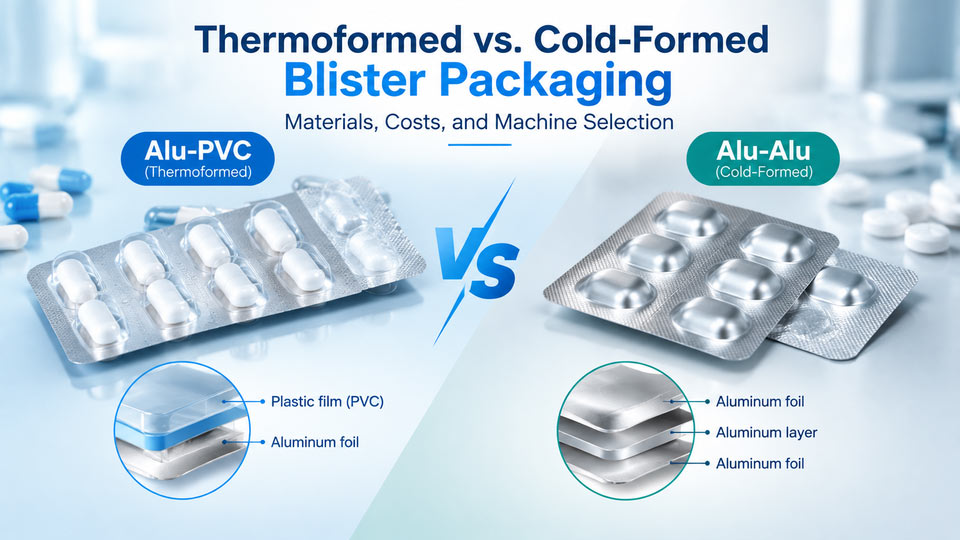
PVC-Alu-Blisterverpackung ist einer der häufigsten Tablettenverpackung Und Kapselverpackung Methoden für Pharma- und Gesundheitsprodukte. Dieses Format wird häufig von a produziert Blistermaschine zu erstellen Blisterverpackung für Tabletten Und Blisterverpackung für Kapseln Produkte.
Diese Struktur kombiniert eine PVC-Formfolie mit einer Siegelschicht aus Aluminiumfolie.A Blisterverpackungsmaschine für Arzneimittel bildet Hohlräume, füllt Tabletten oder Kapseln ab, und versiegelt jede Dosis.
Die Materialkosten von PVC-Alu-Blisterverpackung stammt hauptsächlich aus PVC-Formfolie und Aluminiumfolie. Im Vergleich zu Hochbarriere-Verpackungsmethoden auf Aluminiumbasis, PVC-Material ist kostengünstiger.
Basierend auf der Verpackungsmaterialkostenanalyse von Ruida Packing, Eine Standard-PVC-Alu-Blisterverpackung kostet normalerweise etwa 0,005 bis 0,015 US-Dollar pro Stück 50 Tabletten oder Kapseln in Verpackungsmaterialien. Die tatsächlichen Kosten hängen von der Größe der Blasenhöhle ab, Dicke der Aluminiumfolie, PVC-Spezifikation, und die Anzahl der pro Blatt verpackten Tabletten oder Kapseln.
Gegenüber Flaschenverpackung, PVC-Alu-Blisterverpackungen erfordern bei gleicher Produktmenge mehr einzelne Verpackungseinheiten.
Der Hauptkostenvorteil von PVC-Alu-Blisterverpackung kommt von seiner einfachen Materialstruktur. Es ist kein Flaschenkörper erforderlich, Kappe, Etikett, oder Trockenmittel im Standardverpackungsformat.
daher, PVC-Alu-Blisterverpackung hat normalerweise die niedrigsten Materialkosten unter den gängigen Verpackungsmethoden für Tabletten.
Kostenanalyse für Flaschenverpackungen
Flaschenverpackung wird häufig für großvolumige Anwendungen verwendet Tablettenverpackung Und Kapselverpackung denn ein Behälter kann Dutzende oder Hunderte von Tabletten oder Kapseln aufnehmen.
Im Vergleich zu Einzeldosispackungen, Für die Flaschenverpackung sind bei gleicher Produktmenge weniger Behälter erforderlich, Dies trägt dazu bei, den Verpackungsverbrauch in der Großserienproduktion zu reduzieren.
Eine Flasche mit ca 50 Für Tabletten oder Kapseln sind normalerweise etwa 0,015 bis 0,04 US-Dollar an Verpackungsmaterial erforderlich. In diesen Kosten ist der Flaschenkörper enthalten, Kappe, Aluminiumfolie versiegeln, Etikett, und Trockenmittel. HDPE und PET sind gängige Flaschenmaterialien, während unterschiedliche Flaschengrößen und Materialstärken die Endkosten beeinflussen.
Die versiegelnde Aluminiumfolie, Trockenmittel, und Label tragen ebenfalls zum Gesamtergebnis bei Kosten für die Tablettenverpackung.
Unter verschiedenen Verpackungsmethoden für Tabletten, Flaschenverpackungen weisen ein mittleres Materialkostenniveau auf, mit höheren Kosten als PVC-Alu-Blisterverpackungen, aber niedrigeren Kosten als Alu-Alu-Blisterverpackungen und weiche Doppelaluminiumverpackungen.
Kostenanalyse für Alu-Alu-Blisterverpackungen und weiche Dual-Aluminium-Verpackungen
Alu-Alu-Blisterverpackung Und soft dual aluminium packaging basieren auf Aluminium Tablettenverpackung Methoden mit höheren Materialkosten im Vergleich zur PVC-Alu-Blisterverpackung. Diese Formate werden üblicherweise für Hochbarrieren verwendet Blisterverpackung für Tabletten Und Blisterverpackung für Kapseln Anwendungen.
Die höheren Kosten sind hauptsächlich auf die Materialstruktur auf Aluminiumbasis und den erhöhten Materialverbrauch bei der Produktion zurückzuführen. Im Vergleich zur PVC-Alu-Blisterverpackung, Diese Formate erfordern mehr Aluminiumfolienmaterialien, was die Investition in Verpackungsmaterial erhöht.
Alu-Alu-Blisterverpackung Und soft dual aluminium packaging kostet normalerweise etwa 0,02–0,06 US-Dollar pro Stück 50 Tabletten oder Kapseln in Verpackungsmaterialien.
Die tatsächlichen Kosten hängen von der Dicke der Aluminiumfolie ab, Packungsgröße, Dichtungsspezifikationen, und die Menge der in jeder Einheit verpackten Tabletten oder Kapseln, hängen auch von der Gerätekonfiguration ab, einschließlich der ausgewählten Blistermaschine oder Verpackungsmaschine für Tablettenstreifen.
| Verpackungsmethode | Geschätzte Materialkosten (Pro 50 Tabletten/Kapseln) | Kostenniveau | Hauptmaterialkomponenten |
| PVC-Alu-Blisterverpackung | $0.005–0,015 | Am niedrigsten | PVC-Formfolie + Aluminiumfolie |
| Flaschenverpackung | $0.015–0,04 | Medium | Flaschenkörper + Kappe + Aluminiumfolie versiegeln + Etikett + Trockenmittel |
| Alu-Alu-Blisterverpackung | $0.02–0,06 | Hoch | Mehrschichtige Folienstruktur auf Aluminiumbasis |
| Weiche Dual-Aluminium-Verpackung | $0.02–0,06 | Hoch | Zwei Schichten auf Aluminiumfolienbasis + Dichtungsmaterialien |
2.Feuchtigkeitsschutz-Vergleich verschiedener Tablettenverpackungsmethoden
Hersteller verwenden häufig WVTR (Wasserdampfdurchlässigkeitsrate) als Indikator für die Feuchtigkeitsbarriereleistung für verschiedene Tablettenverpackung Und Kapselverpackung Methoden. Ein niedrigerer WVTR-Wert bedeutet eine stärkere Beständigkeit gegen Wasserdampfdurchlässigkeit und eine bessere Feuchtigkeitsschutzleistung für Arzneimittel Verpackungslösungen.
Basierend auf typischen pharmazeutischen Verpackungsmaterialien, Der Feuchtigkeitsschutz wird allgemein von niedrig bis hoch bewertet Verpackungsmethoden für Tabletten Ist:
1. Flaschenverpackung: WVTR etwa 0,1–1,0 g/m²/Tag
2. PVC-Alu-Blisterverpackung: WVTR etwa 0,05–0,5 g/m²/Tag
3. Alu-Alu-Blisterverpackung: WVTR etwa 0–0,01 g/m²/Tag
4. Weiche Dual-Aluminium-Verpackung: WVTR etwa 0–0,01 g/m²/Tag
Feuchtigkeitsschutz bei Flaschenverpackungen
Flaschenverpackungen bieten für viele Tabletten- und Kapselverpackungsanwendungen einen mäßigen Feuchtigkeitsschutz. Vor dem Öffnen, HDPE-Flaschen, die üblicherweise in pharmazeutischen Verpackungen verwendet werden, können einen WVTR von etwa 0,1–1,0 g/m²/Tag haben.
Die abdichtende Aluminiumfolie unter der Kappe sorgt vor dem ersten Öffnen für eine zusätzliche Feuchtigkeitsbarriere. Die Aluminiumfolienschicht selbst hat einen WVTR-Wert nahe bei 0 g/m²/Tag. Trockenmittel in der Flaschenverpackung tragen auch dazu bei, während der Lagerung eine niedrige Luftfeuchtigkeit aufrechtzuerhalten.
Jedoch, Die Feuchtigkeitsschutzleistung der Flaschenverpackung nimmt nach dem Öffnen ab. Durch jede Öffnung gelangt Außenluft mit Feuchtigkeit in die Flasche.
Wenn Feuchtigkeit eindringt, Bei feuchtigkeitsempfindlichen APIs kann es zu Stabilitätsveränderungen kommen. Ein erhöhter Wassergehalt kann Hydrolysereaktionen beschleunigen, die Auflösungsleistung beeinflussen, oder Abbauprodukte erhöhen. Für einige empfindliche Produkte, Eine Feuchtigkeitsaufnahme von nur 1–3 Gew.-% kann die Tablettenhärte beeinflussen, Aussehen, oder API-Stabilität.
Das Trockenmittel in der Flasche verliert bei wiederholtem Gebrauch allmählich an Aufnahmefähigkeit. Sobald Kieselgel oder Molekularsieb gesättigt sind, seine feuchtigkeitsregulierende Wirkung nimmt ab.
Im Vergleich zur Einzeleinheit Tablettenverpackung Methoden wie z Blasiert Verpackung, Flaschenverpackungslösungen bieten nach mehrmaligem Öffnen weniger Schutz, da sich mehrere Tabletten oder Kapseln die gleiche Innenumgebung teilen.
PVC-Alu-Blisterverpackung mit Feuchtigkeitsschutz
PVC-Alu-Blisterverpackung Bietet einen besseren Feuchtigkeitsschutz als Flaschenverpackung für viele Tablettenverpackung Und Kapselverpackung Anwendungen. Der Hauptvorteil von PVC-Alu-Blisterverpackung kommt von seiner Einheitsdosisstruktur. Jede Tablette oder Kapsel ist in einem individuellen Hohlraum versiegelt, So können Benutzer jeweils eine Dosis entnehmen, ohne die gesamte Dosis wiederholt öffnen zu müssen Blasiert Paket.
Die Aluminiumfolienschicht drin PVC-Alu-Blisterverpackung stellt die wichtigste Feuchtigkeitsbarriere dar. Die Aluminiumfolie selbst hat einen WVTR-Wert nahe bei 0 g/m²/Tag. Jedoch, Der PVC-bildende Film weist eine höhere Wasserdampfdurchlässigkeit auf, Die typische WVTR dieses Verpackungsformats beträgt je nach Materialstärke und Versiegelungsqualität etwa 0,05–0,5 g/m²/Tag.
Gegenüber Flaschenverpackung, PVC-Alu-Blisterverpackungen verhindern eine langfristige Feuchtigkeitseinwirkung nach dem Öffnen und werden häufig in der Pharmaindustrie eingesetzt Blisterverpackung Anwendungen. Durch die Entnahme einer Tablette oder Kapsel wird nur ein Hohlraum zerstört, während die übrigen Produkte einzeln versiegelt bleiben. Dies verhindert wiederholte Feuchtigkeitsänderungen durch das Öffnen und Schließen einer Flasche.
Jedoch, gegenüber Alu-Alu-Blisterverpackung, PVC-Alu-Blisterverpackungen weisen eine geringere Feuchtigkeitsbeständigkeit auf, da die PVC-bildende Schicht eine bessere Wasserdampfdurchlässigkeit ermöglicht als eine Struktur auf Aluminiumbasis. Für stark feuchtigkeitsempfindliche Produkte, Für eine höhere Barriereleistung können Hersteller Alu-Alu- oder weiche Dual-Aluminium-Verpackungen wählen.
Alu-Alu-Blisterverpackung und weiche Doppelaluminiumverpackung mit Feuchtigkeitsschutz
Alu-Alu-Blisterverpackungen und weiche Doppelaluminiumverpackungen bieten den höchsten Feuchtigkeitsschutz unter den gängigen Tabletten- und Kapselverpackungsmethoden. Bei beiden Formaten kommen Barrierematerialien auf Aluminiumbasis zum Einsatz, die eine starke Schutzschicht gegen die Wasserdampfdurchlässigkeit bilden. Die Aluminiumfolie selbst hat einen WVTR-Wert nahe bei 0 g/m²/Tag, Bereitstellung einer extrem geringen Feuchtigkeitsdurchlässigkeit für pharmazeutische Blisterverpackungen und Streifenverpackung.
Im Vergleich zur PVC-Alu-Blisterverpackung, Alu-Alu-Blisterverpackung Und soft dual aluminium packaging sorgen für niedrigere WVTR-Werte und eine stärkere Feuchtigkeitsbeständigkeit. Sie werden üblicherweise für feuchtigkeitsempfindliche Produkte ausgewählt, bei denen API-Stabilität und Haltbarkeitskontrolle eine höhere Barriereleistung erfordern.
3.Lichtschutzvergleich verschiedener Tablettenverpackungsmethoden
Hersteller beziehen sich häufig auf die USP-Anforderungen für Lichtbeständigkeit Pharmaverpackungen. Gemäß USP-Standards, Für den Lichtschutz verwendete Verpackungsmaterialien sollten eine spektrale Transmission von nicht mehr als haben 10% im Wellenlängenbereich von 290–450 nm.
Basierend auf typischen pharmazeutischen Verpackungsstrukturen, Der Lichtschutz wird allgemein von niedrig nach hoch eingestuft Tablettenverpackung Methoden ist:
1. PVC-Alu-Blisterverpackung: Die transparente PVC-Bildfolie ermöglicht Lichtdurchlässigkeit, während die Aluminiumfolienseite für Lichtblockierung sorgt.
2. Flaschenverpackung: Der Lichtschutz hängt vom Flaschenmaterial ab, wobei transparentes PET einen geringeren Schutz bietet und farbige HDPE- oder bernsteinfarbene Flaschen eine bessere Leistung bieten.
3. Alu-Alu-Blisterverpackung: Die Struktur auf Aluminiumbasis blockiert UV- und sichtbares Licht mit sehr hoher Barriereleistung und hohem Schutz Blisterverpackung Anwendungen.
4. Weiche Dual-Aluminium-Verpackung: Doppelte Aluminiumfolienschichten bieten eine ähnliche maximale LichtschutzleistungTablettenstreifenverpackung Und Kapselstreifenverpackung Anwendungen.
PVC-Alu-Blisterverpackung, Lichtschutzleistung
PVC-Alu-Blisterverpackung bietet für viele einen mäßigen Lichtschutz Tablettenverpackung Und Kapselverpackung Anwendungen. Die Seite aus Aluminiumfolie blockiert das meiste UV- und sichtbare Licht, aber die PVC-bildende Seite ist normalerweise transparent, Ermöglicht die Lichtdurchlässigkeit in den Hohlraum.
Gegenüber Flaschenverpackung, PVC-Alu-Blisterverpackung Bietet einen besseren individuellen Produktschutz, da jede Tablette oder Kapsel separat versiegelt ist. Jedoch, es hat eine geringere Lichtschrankenleistung als Alu-Alu-Blisterverpackung Und soft dual aluminium packaging, die auf beiden Seiten Aluminium-basierte Strukturen verwenden.
Lichtschutzleistung bei Flaschenverpackungen
Flaschenverpackung Bietet unterschiedliche Lichtschutzstufen für Tablettenverpackung Und Kapselverpackung abhängig vom Flaschenmaterial, Farbe, und Dicke. Transparente PET-Flaschen haben eine begrenzte Lichtblockierungsleistung, während undurchsichtige HDPE- und bernsteinfarbene Flaschen einen stärkeren Schutz gegen UV- und sichtbare Lichtdurchlässigkeit bieten.
Transparente PET-Flaschen können oben eine Lichtdurchlässigkeit aufweisen 50%, während undurchsichtige HDPE-Flaschen die spektrale Transmission auf ungefähr reduzieren können unten 10% abhängig von Materialstruktur und -stärke.
Gegenüber PVC-Alu-Blisterverpackung, Flaschenverpackung bietet mehr Variationen beim Lichtschutz, da die Leistung von der Flaschenauswahl abhängt. Gegenüber Alu-Alu-Blisterverpackung Und soft dual aluminium packaging, Flaschenverpackung Bietet eine geringere Lichtbarriereleistung, da Aluminiumfolienstrukturen die UV- und sichtbare Lichtdurchlässigkeit bis zu nahezu 0 % blockieren können.
Das Finale Tablettenverpackung Die Wahl hängt von der erforderlichen Balance zwischen Schutzleistung und Produktionskosten ab.
Alu-Alu-Blisterverpackung und weiche Doppelaluminiumverpackung mit Lichtschutzleistung
Alu-Alu-Blisterverpackung Und soft dual aluminium packaging bieten den höchsten Lichtschutzgrad unter den gängigen Tablettenverpackung Und Kapselverpackung Methoden. Beide Strukturen verwenden Aluminiumfolie als Hauptbarriereschicht, das UV-Licht und die Übertragung sichtbaren Lichts blockiert.
Die verwendete Aluminiumfolienschicht Alu-Alu-Blisterverpackung Und soft dual aluminium packaging kann die Lichtdurchlässigkeit auf nahezu reduzieren 0%, bietet einen stärkeren Schutz als PVC-Alu und die meisten Flaschenverpackungslösungen.
Gegenüber PVC-Alu-Blisterverpackung Und Flaschenverpackung, diese auf Aluminiumbasis Verpackungsmethoden für Tabletten sorgen für einen stabileren Lichtschutz. Sie werden üblicherweise für lichtempfindliche Produkte ausgewählt, bei denen die API-Stabilität eine strenge Kontrolle der UV- und sichtbaren Lichtexposition erfordert. Der höhere Materialverbrauch von Aluminium erhöht auch die Verpackungskosten, Daher wählen Hersteller diese Formate basierend auf Produktschutzanforderungen aus.
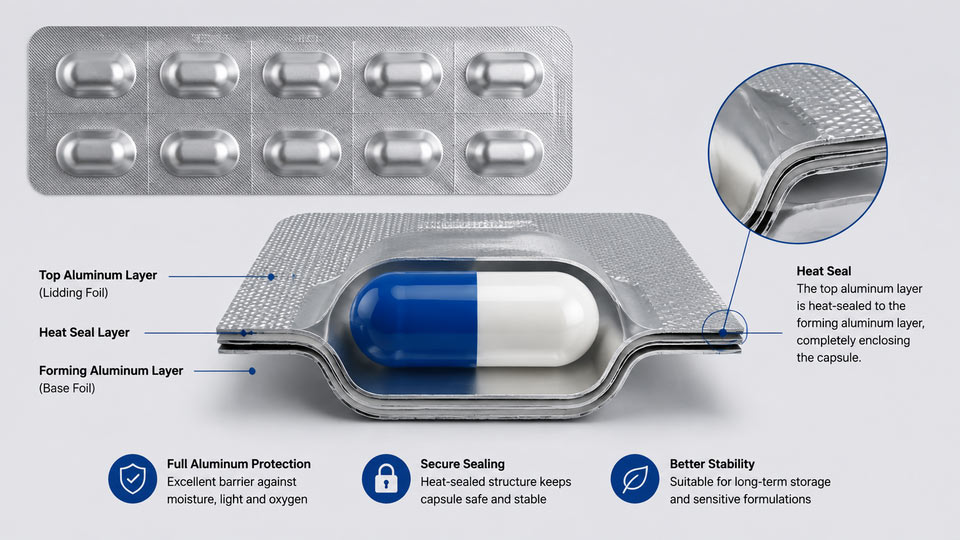
Lichtschutzleistung des Aluminiumverpackungsmaterials
4.Portabilitätsvergleich verschiedener Tablet-Verpackungsmethoden
Tragbarkeit von Flaschenverpackungen
Flaschenverpackung wird üblicherweise für große Volumina verwendet Tablettenverpackung Und Kapselverpackung denn ein Behälter kann Dutzende oder Hunderte von Produkten aufnehmen. Diese Struktur reduziert die Anzahl der erforderlichen Pakete, erhöht jedoch die Größe jedes Pakets.
Für den täglichen Gebrauch, Selbst wenn nur wenige Tabletten oder Kapseln benötigt werden, muss der Benutzer die gesamte Flasche mit sich führen. Eine Flasche mit 100 oder mehr Einheiten können im Vergleich zu Einzeldosispackungen mehr Platz in Beuteln oder Taschen beanspruchen.
Bei Flaschenverpackungen muss der Behälter außerdem jedes Mal geöffnet werden, wenn eine Dosis entnommen wird. Die Kappe, Flaschengröße, und die verbleibende Produktmenge beeinträchtigen den Tragekomfort auf Reisen oder im Freien.
daher, Flaschenverpackungslösungen eignen sich eher für die Aufbewahrung zu Hause, Apotheken, und langfristige Versorgungsszenarien anstelle des häufigen Tragens von Einzeldosen.
Tragbarkeit von PVC-Alu-Blisterverpackungen und Alu-Alu-Blisterverpackungen
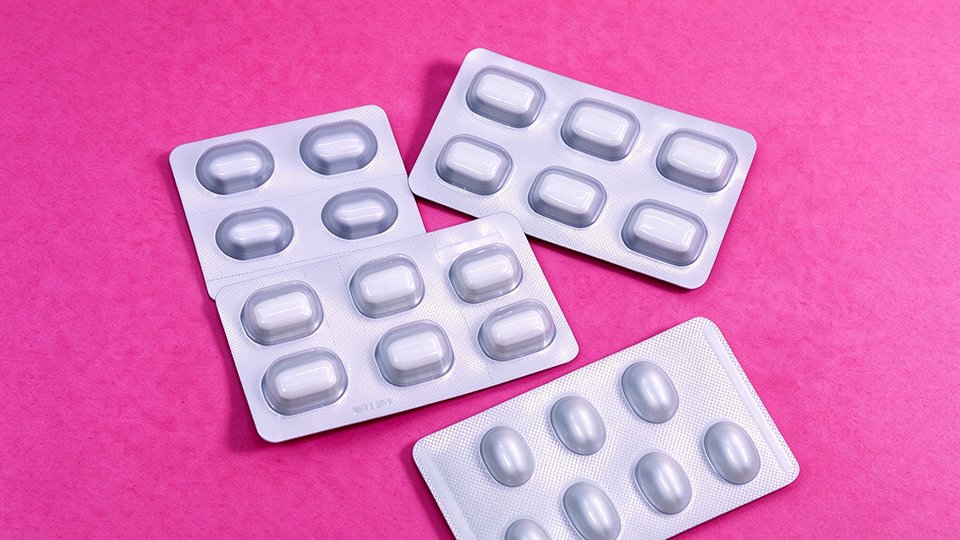
PVC-Alu-Blisterverpackung Und Alu-Alu-Blisterverpackung beide bieten eine bessere Portabilität als Flaschenverpackung denn jede Tablette oder Kapsel ist in einer individuellen Kavität versiegelt. Benutzer können nur die benötigten Dosen transportieren, anstatt eine komplette Flasche zu transportieren.
PVC-Alu-Blisterverpackung bietet guten täglichen Tragekomfort. Die Blisterkarte kann in kleinere Abschnitte unterteilt werden, So können Benutzer mehrere Tabletten oder Kapseln für kurze Reisen oder den täglichen Gebrauch mit sich führen. Die leichte Struktur reduziert zudem den Platzbedarf in Taschen oder Aufbewahrungsboxen.
Alu-Alu-Blisterverpackung Bietet einen ähnlichen Komfort bei der Einzeldosis, verwendet jedoch eine dickere Struktur auf Aluminiumbasis. Das stärkere Material erhöht die Steifigkeit des Pakets, Dies bietet einen besseren Schutz beim Transport, erfordert jedoch im Vergleich zu PVC-Alu-Formaten möglicherweise etwas mehr Lagerraum.
Jedoch, gegenüber soft dual aluminium packaging, Beide Blisterformate haben eine steifere Struktur. Weiche Doppelaluminiumverpackungen bieten mehr Flexibilität, wenn Benutzer kleine Produktmengen auf kompaktem Raum transportieren müssen.
Weiche Dual-Aluminium-Verpackung, tragbare Leistung
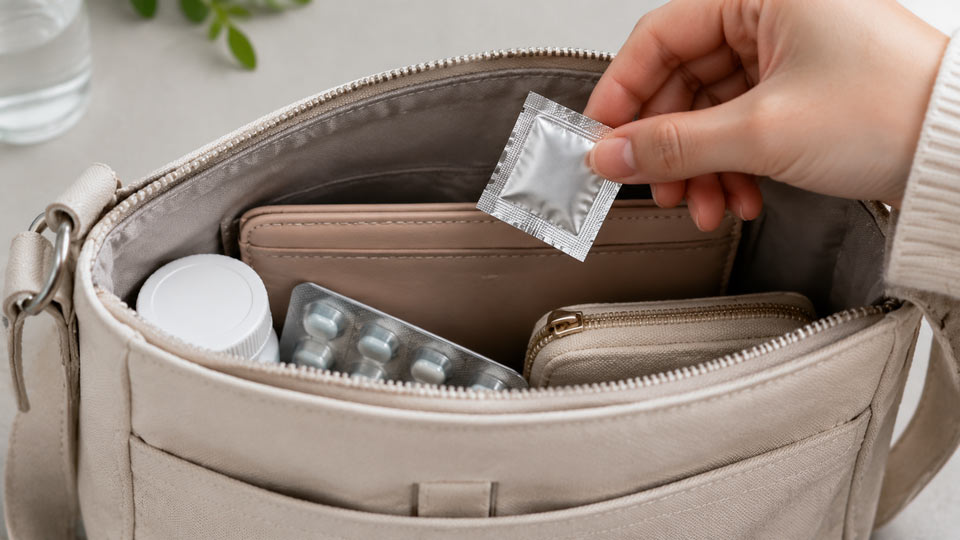
Die weiche Doppelaluminiumverpackung bietet hervorragende Tragbarkeit.
Weiche Doppelaluminiumverpackung bietet für viele eine hohe Portabilität Tablettenverpackung Und Kapselverpackung Anwendungen, da jede Tablette oder Kapsel einzeln in einer kompakten, flexiblen Verpackung versiegelt ist.
Gegenüber Flaschenverpackung, soft dual aluminium packaging reduces the carrying space required for daily use. Each package can be separated according to dosage requirements, making it suitable for travel, outdoor activities, and portable medication management.
Gegenüber PVC-Alu-Blisterverpackung Und Alu-Alu-Blisterverpackung, soft dual aluminium packaging has a more flexible structure. The package can be folded or arranged in smaller spaces, which provides better carrying convenience when users need only a few doses.
The individual sealing structure also prevents unused tablets or capsules from being exposed after other doses are removed. Das macht soft dual aluminium packaging suitable for products requiring both portability and individual dose protection.
Abschluss
Das Richtige auswählen Tablettenverpackung Und Kapselverpackung method depends on product sensitivity, packaging cost, Feuchtigkeitsschutz, Lichtschutz, Portabilität, und Produktionsanforderungen. Different tablet packaging methods have different advantages in pharmaceutical and healthcare applications.
| Comparison Item | Flaschenverpackung | PVC-Alu-Blisterverpackung | Alu-Alu-Blisterverpackung | Weiche Dual-Aluminium-Verpackung |
| Packaging Cost | ⭐⭐⭐ Mittel | ⭐⭐⭐⭐⭐ Am niedrigsten | ⭐⭐ Hoch | ⭐⭐ Hoch |
| Feuchtigkeitsschutz | ⭐⭐ Niedrig | ⭐⭐⭐ Mittel | ⭐⭐⭐⭐⭐ Ausgezeichnet | ⭐⭐⭐⭐⭐ Ausgezeichnet |
| Lichtschutz | ⭐⭐⭐ Mittel | ⭐⭐⭐ Mittel | ⭐⭐⭐⭐⭐ Ausgezeichnet | ⭐⭐⭐⭐⭐ Ausgezeichnet |
| Produktsicherheit | ⭐⭐ Niedrig | ⭐⭐⭐⭐ Gut | ⭐⭐⭐⭐⭐ Ausgezeichnet | ⭐⭐⭐⭐⭐ Ausgezeichnet |
| Portabilität | ⭐⭐ Niedrig | ⭐⭐⭐⭐ Gut | ⭐⭐⭐ Mittel | ⭐⭐⭐⭐⭐ Ausgezeichnet |
| Großserienfertigung | ⭐⭐⭐⭐⭐ Ausgezeichnet | ⭐⭐⭐⭐ Gut | ⭐⭐⭐ Gut | ⭐⭐⭐ Mittel |
| Individueller Dosisschutz | ⭐ Niedrig | ⭐⭐⭐⭐⭐ Ausgezeichnet | ⭐⭐⭐⭐⭐ Ausgezeichnet | ⭐⭐⭐⭐⭐ Ausgezeichnet |
| Geeigneter Produkttyp | Großvolumig Tablettenverpackung Und Kapselverpackung | Standard-Pharmaprodukte | Feuchtigkeits-/lichtempfindliche Produkte | Tragbare Produkte mit hohem Schutz |
FAQ: Auswahl von Tablettenverpackungen und Kapselverpackungen
1. Was ist der Unterschied zwischen Flaschenverpackung und Blisterverpackung??
Flaschenverpackungen lagern mehrere Tabletten oder Kapseln in einem Behälter, Dadurch eignet es sich für großvolumige Tabletten- und Kapselverpackungsanwendungen. Die Blisterverpackung versiegelt jede Tablette oder Kapsel einzeln, Bietet einen besseren individuellen Schutz vor Feuchtigkeit, Licht, und Kontamination.
2. Welche Tablettenverpackungsmethode hat die niedrigsten Kosten??
Zu den gängigen Verpackungsmethoden für Tabletten, PVC-Alu-Blisterverpackungen weisen im Allgemeinen die niedrigsten Materialkosten auf. Flaschenverpackungen haben ein mittleres Kostenniveau, da im Gesamtpaket die Flasche enthalten ist, Kappe, Aluminiumfolie versiegeln, Etikett, und Trockenmittel. Alu-Alu-Blisterverpackungen und Soft-Dual-Aluminiumverpackungen sind aufgrund des höheren Aluminiummaterialverbrauchs teurer.
3. Welche Verpackungsmethode bietet den besten Feuchtigkeitsschutz??
Die Alu-Alu-Blisterverpackung und die weiche Doppelaluminiumverpackung bieten höchsten Feuchtigkeitsschutz. Ihre Aluminiumstrukturen haben WVTR-Werte nahe bei 0 g/m²/Tag. Die PVC-Alu-Blisterverpackung bietet einen mittleren Feuchtigkeitsschutz, während die Flaschenverpackung vom Flaschenmaterial abhängt, Dichtungsleistung, und Trockenmittelkapazität.
4. Ist die Flaschenverpackung für feuchtigkeitsempfindliche Tabletten und Kapseln geeignet??
Flaschenverpackungen können für feuchtigkeitsempfindliche Produkte in Kombination mit versiegelter Aluminiumfolie und Trockenmitteln verwendet werden. Jedoch, nach dem Öffnen, Wiederholte Einwirkung von äußerer Luftfeuchtigkeit verringert die Feuchtigkeitskontrolle. Für stark feuchtigkeitsempfindliche Wirkstoffe, Hersteller können sich für eine Alu-Alu-Blisterverpackung oder eine weiche Dual-Aluminium-Verpackung entscheiden.
Referenzen
- Pharmakopöe der Vereinigten Staaten (USP) – Verpackungs- und Lageranforderungen
- UNS. Lebensmittel- und Arzneimittelbehörde (FDA) – Behälterverschlusssysteme für die Verpackung von Humanarzneimitteln und Biologika
- Europäische Arzneimittel-Agentur (EMA) – Richtlinie für Kunststoff-Sofortverpackungsmaterialien
- Gute Herstellungspraxis (GMP) Richtlinien – Anforderungen an pharmazeutische Verpackungen
- ISO 11607 – Verpackung für endsterilisierte Medizinprodukte