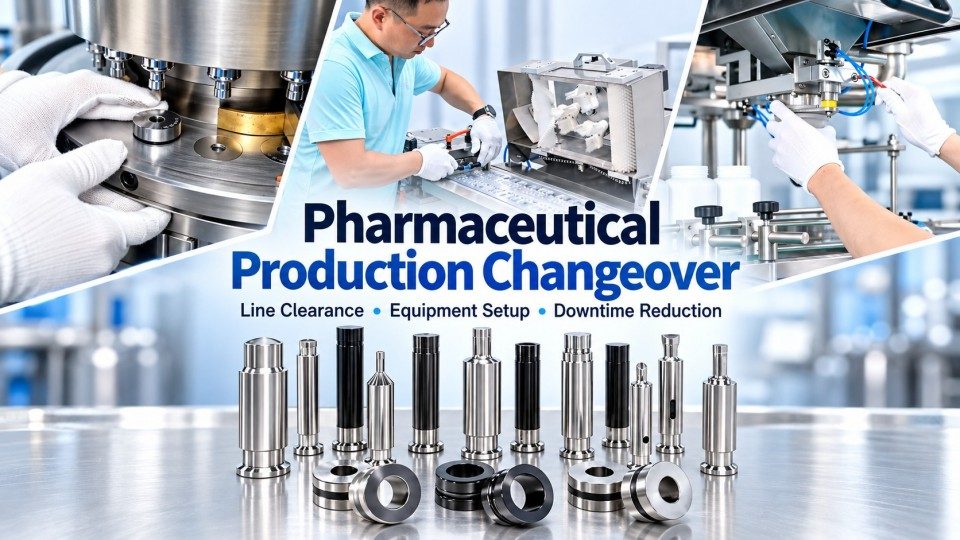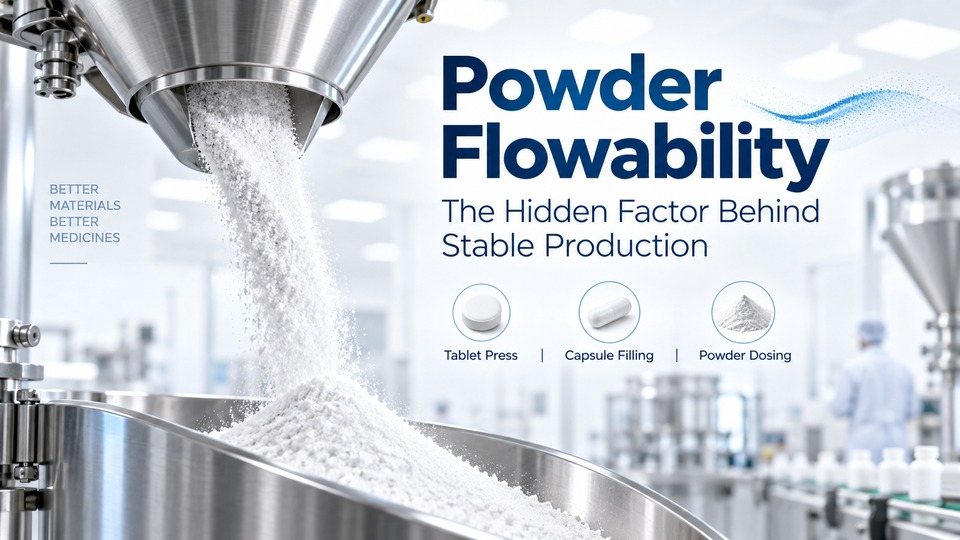
Del polvo en el laboratorio a la tableta en el lineal de una farmacia, el forma de dosificación da forma a casi todas las decisiones de fabricación de medicamentos & drogas.
La respuesta a lo que significa forma farmacéutica., Es simple, ya que está en forma sólida o líquida para contener y administrar el contenido médico o nutracéutico.. Para fabricantes, sin embargo, la elección afecta la formulación, diseño de procesos, máquinas de procesamiento, y embalaje. Esta guía explicará qué significa forma farmacéutica., las principales formas farmacéuticas y ejemplos, y como sólido forma de dosificación orals son desarrollados y fabricados.

Principales conclusiones
- La definición de forma farmacéutica y qué significa forma farmacéutica en farmacia..
- Las principales formas farmacéuticas orales sólidas y líquidas con ejemplos..
- como tabletas, cápsulas duras, y se fabrican gránulos.
- El equipo y los factores de proceso que respaldan la producción constante de cualquier forma farmacéutica de medicamento..
- Cómo combinar la forma de dosificación oral, formulación, y equipo.
1. ¿Qué es una forma de dosificación oral farmacéutica??
En lenguaje sencillo, Para definir la forma de dosificación, es la forma en que se presenta el medicamento o suplemento, como una tableta, cápsula, polvo, o liquido.
La definición de forma farmacéutica va más allá de la forma de las pastillas.. Se conecta formulación de dosificación con tiempo de liberación, estabilidad, y fabricación.
Comúnmente, La forma de dosificación puede ser oral o inhalada., donde la forma de dosificación oral es la preferida. Una forma de dosificación oral está destinada a administrarse por vía oral.. Las formas de dosificación de medicamentos comunes incluyen tabletas., cápsulas, gránulos, y soluciones.
2. Tipos de formas de dosificación oral farmacéutica
Las formas farmacéuticas se pueden clasificar de varias maneras.. Para productos orales, La distinción más útil es entre formas sólidas y líquidas..
Formas de dosificación oral sólidas
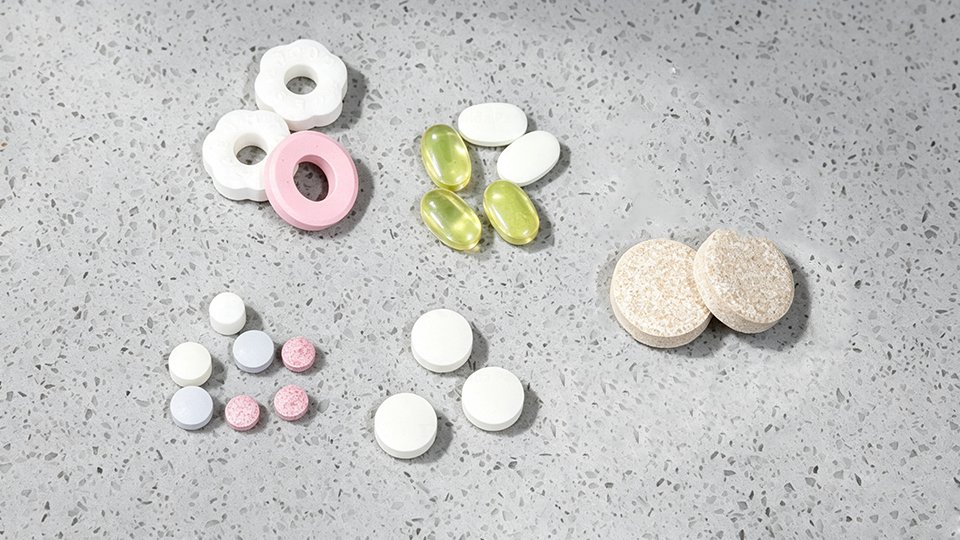
Las formas farmacéuticas orales sólidas prevalecen en muchas fábricas médicas y de suplementos., gracias a su proceso de fabricación más sencillo y menor necesidad de almacenamiento. Indudablemente, Nacen para una línea de producción a gran escala.. Entonces, ¿qué formas pueden tener en la tierra?? La siguiente tabla muestra los tipos comunes de formas de dosificación sólidas..
Tabla 1-Tipos de formas farmacéuticas orales sólidas y ejemplos
| Tipo | Ejemplos | Características básicas |
|---|---|---|
| tabletas | Tabletas de liberación prolongada Tabletas masticables Tabletas efervescentes |
Hecho por compresión Puede recubrirse o formularse para diferentes usos. |
| Cápsulas duras | Cápsulas rellenas de polvo Cápsulas de pastillas Cápsulas llenas de líquido Cápsulas vegetarianas |
Útil para formulaciones que son difíciles de comprimir. |
| Cápsulas blandas | Cápsulas blandas de aceite de pescado | Estructura cerrada Fácil de tragar |
| Polvos | Proteína en polvo Polvo de electrolito |
Adecuado para dosificación directa de polvo |
| Gránulos | Tamaño de partícula controlado y propiedades de flujo. |
Las propiedades de la formulación son importantes al desarrollar formas farmacéuticas orales sólidas.. Como señalan el científico farmacéutico Sayantan Chattoraj y el profesor Changquan Calvin Sun, Las "deficiencias en el flujo y la compresión del polvo" pueden limitar la fabricación de tabletas. La lección es práctica.: El desarrollo de formas farmacéuticas orales sólidas comienza con la comprensión de cómo se comporta la formulación bajo el proceso seleccionado..
Formas de dosificación oral líquida
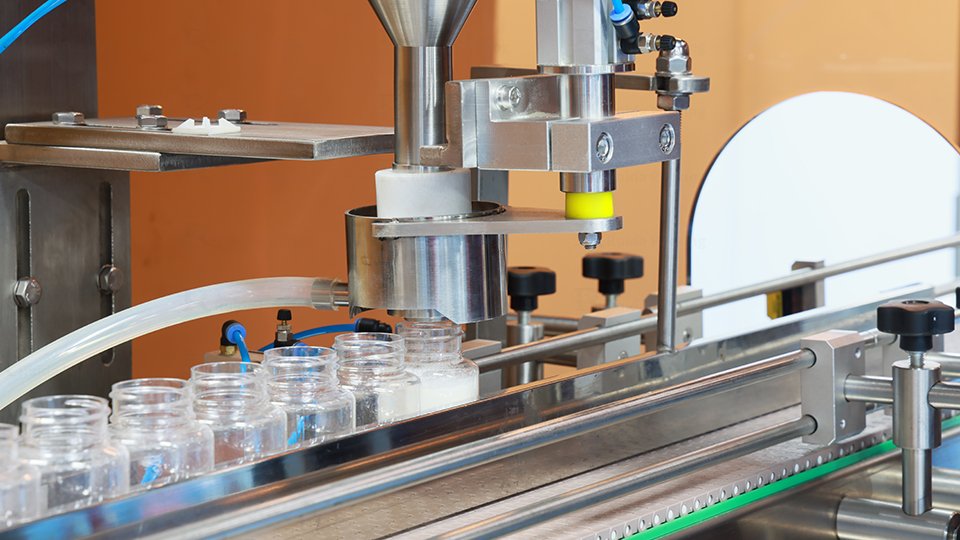
Las formas de dosificación oral líquida incluyen soluciones., suspensiones, jarabes, y emulsiones. Los ejemplos incluyen líquido oral antiviral., y jarabes para la tos, etc..
Comparado con productos sólidos., Los productos líquidos generalmente requieren mayor atención a la solubilidad., viscosidad, control microbiano, y compatibilidad de contenedores. Algunos usuarios pueden preferir una forma de dosificación oral líquida., mientras que una forma sólida a menudo ofrece una dosificación y manipulación unitarias convenientes.
3. ¿Cómo se fabrican las formas farmacéuticas orales sólidas??
Diferentes formas de dosificación oral necesitan diferentes estrategias de fabricación. Una tableta necesita granulación y compresión., mientras que una cápsula dura requiere un llenado preciso. Entonces, echemos un vistazo más de cerca a cómo el proceso de procesamiento difiere entre las diferentes formas de dosificación oral sólida..
¿Cómo se fabrican las tabletas??
En fabricación de tabletas, Las técnicas pueden variar un poco según la propiedad del polvo.. Si el polvo es extremadamente fino , dificultando la alimentación, luego se aplica la granulación para garantizar un peso constante de la tableta.. Por lo tanto, Los pasos de procesamiento se pueden clasificar en dos formas como se muestra a continuación..
Compresión directa: Mezcla → compresión
Esta ruta es adecuada cuando la mezcla tiene una fluidez y compresibilidad adecuadas..
Método granulado:
Hay dos formas de hacer las tabletas cuando la granulación está involucrada en el proceso..
Granulación húmeda: Mezclado → granulación húmeda → secado → molienda → compresión
La granulación húmeda puede mejorar el flujo y la compresibilidad.. Los estudios de la FDA señalan que los cambios en el tamaño de las partículas pueden afectar la estructura y la disolución de las tabletas durante la fabricación de las formas farmacéuticas..
Granulación seca: Mezclado → compactación → fresado → compresión
La granulación húmeda funciona bien la mayor parte del tiempo., sin embargo, cuando el polvo es sensible a la humedad y la propiedad puede cambiar expuesto al agua, este método ya no es la respuesta. Aquí es cuando la granulación seca sube al escenario.. Simplemente a través de la presión, el polvo se forma en gránulos.
A veces es necesario el recubrimiento cuando es imprescindible controlar el tiempo de liberación de las tabletas.. A pesar de recubrimiento de película que se utiliza para mejorar el atractivo visual o el sabor, Los recubrimientos entéricos y otros recubrimientos de liberación sostenida pueden cambiar dónde o qué tan rápido se libera un ingrediente activo..
¿Cómo se fabrican las cápsulas duras??
Las cápsulas se elaboran mediante el siguiente proceso.:
Dispensación de cápsulas vacías → llenado de polvo → rechazo de cápsulas no separadas → bloqueo de cápsulas → salida de cápsulas
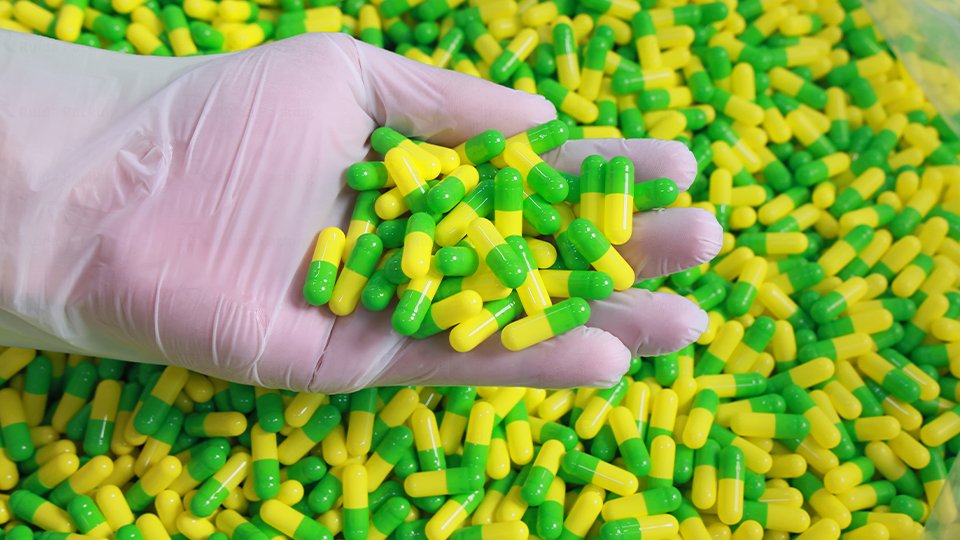
El método de alimentación del polvo puede variar según las diferentes propiedades del polvo.. El polvo fino con excelente fluidez se adapta a la alimentación neumática, mientras que el polvo pegajoso se adapta a la alimentación con barrena. Si planea llenar cápsulas con gránulos, entonces el método de alimentación con taza es perfecto. Cuando el material es líquido, Se utilizan bombas de llenado como la bomba de cerámica para llenarlo..
Para hacer estas cápsulas, básicamente necesitamos un llenador de cápsulas semiautomático o un máquina llenadora de cápsulas completamente automática. No importa cuál elijas, factores que incluyen la precisión del llenado, mantenimiento, El cambio de molde se tiene en cuenta cuando las fábricas obtienen una máquina para fabricar cápsulas..
¿Cómo se fabrican los gránulos orales??
Otras formas de dosificación sólidas orales diferentes, Los gránulos pueden ser un producto terminado o un producto intermedio utilizado para fabricar tabletas y cápsulas..
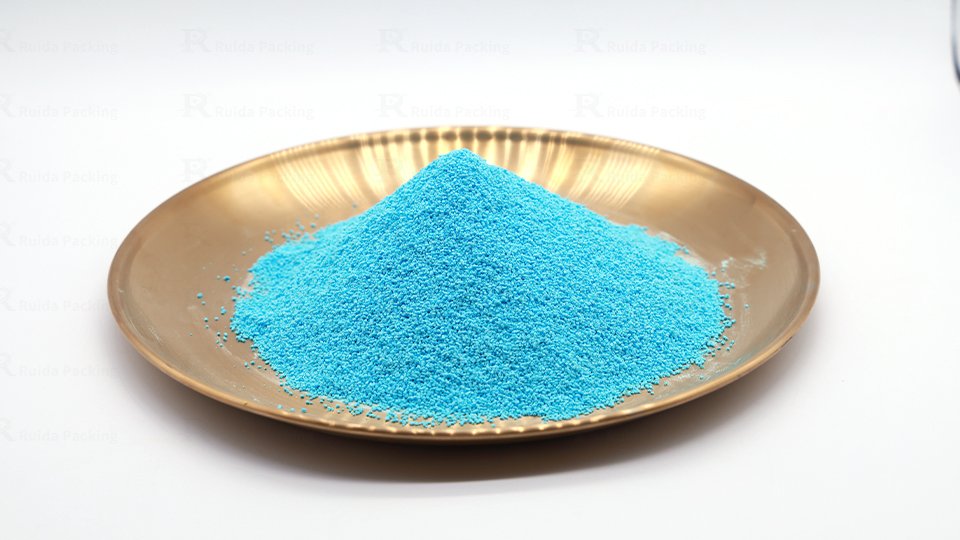
Granulación húmeda: Mezclado → adición de líquido → formación de gránulos → secado → dimensionado
Granulación seca: Mezclado → compactación → fresado → dimensionado
El objetivo no es simplemente crear partículas más grandes. Los fabricantes necesitan un tamaño de partícula controlado, nivel de humedad, densidad, y fluidez.
Estas propiedades son importantes durante el desarrollo de la forma farmacéutica.. La formulación de dosificación determina las propiedades del polvo., y por ejemplo, Los gránulos que fluyen mal pueden desestabilizar el llenado del troquel en un prensa de tabletas, mientras que los cambios de densidad pueden influir en el peso del relleno de la cápsula.
4. ¿Qué equipo se utiliza para fabricar formas farmacéuticas orales sólidas??
Desde polvo y gránulos hasta tabletas y cápsulas, Las diferentes formas de dosificación sólidas deciden las máquinas necesarias para producirlas.. En otras palabras, La forma farmacéutica significa más que la forma final.: la forma seleccionada determina también la máquina necesaria. La siguiente tabla muestra las máquinas de procesamiento involucradas en la producción de diferentes productos..
Mesa 2- Formas de dosificación comunes y las máquinas correspondientes típicas.
| Forma de dosificación oral sólida | Equipo típico |
|---|---|
| tabletas | Licuadora, granulador, prensa de tabletas, máquina de recubrimiento, detector de metales, Desempolvador |
| Cápsulas duras | Licuadora, máquina de llenado de cápsulas, pulidor de cápsulas |
| Polvos | Licuadora, tamiz, máquina de llenado de polvo |
| Gránulos | Granulador, equipo de llenado |
Ya que hemos mencionado la máquina llenadora de cápsulas., granuladores, y máquina de recubrimiento antes, Daré más detalles sobre las licuadoras., prensas para tabletas, detectores de metales, desempolvadores, y pulidores de cápsulas.
Licuadora: Esta máquina se utiliza para mezclar diferentes polvos de manera uniforme. Ayuda a garantizar una mezcla uniforme y una calidad constante del producto antes del siguiente paso de producción.. Basado en diferentes materiales y propósito anticipado., hay dos tipos de licuadoras: Tipo V y tipo tridimensional.. Comparado con la licuadora tipo V, La licuadora tridimensional puede mezclar los polvos de manera más uniforme gracias a su movimiento multidireccional..
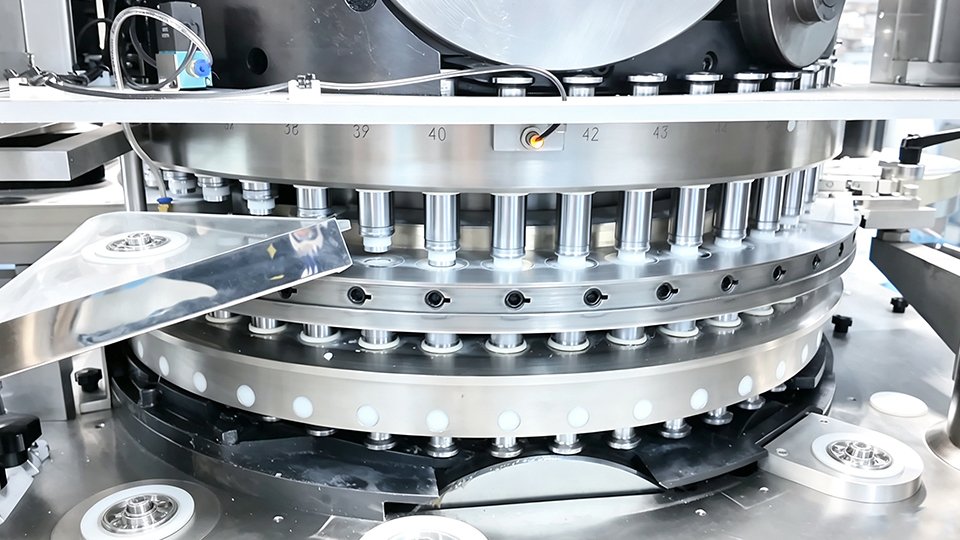
Máquina prensadora de tabletas: Esta es la máquina principal para comprimir el polvo en cápsulas.. Basado en la capacidad de producción y el nivel de automatización., Las prensas para tabletas generalmente se pueden dividir en modelos estándar y de alta velocidad.. Los modelos estándar suelen utilizar un volante para ajustar la presión de compresión., mientras que los modelos de alta velocidad son más convenientes, permitiendo a los operadores ajustar los parámetros directamente a través de la pantalla táctil.
Pulidora de cápsulas: La fuga de polvo es inevitable durante el proceso de llenado de cápsulas, por lo que quedarán residuos de polvo en las cubiertas de las cápsulas.. El máquina pulidora de cápsulas Generalmente se conecta justo después de la máquina llenadora de cápsulas para limpiar los residuos de polvo..
Detector de metales: Un detector de metales comprueba las tabletas o cápsulas en busca de partículas metálicas no deseadas o contaminación.. Ayuda a proteger la calidad del producto y la seguridad del consumidor.. Se utiliza comúnmente como paso de inspección final antes del embalaje..
Desempolvador: Similar al pulidor de cápsulas., un desempolvador elimina el exceso de polvo y polvo de la superficie de las tabletas después de la compresión. Esto mejora la apariencia del producto y la calidad del empaque..
5. Cómo elegir el proceso y el equipo de fabricación adecuados?
La elección del proceso y el equipo de fabricación adecuados depende de algo más que la forma farmacéutica deseada.. Los fabricantes deben considerar las características del producto., capacidad de producción, propiedades de los materiales, requisitos reglamentarios, condiciones de la planta, y requisitos de limpieza antes de seleccionar una máquina.
Tomemos como ejemplo una máquina llenadora de cápsulas.. Antes de elegir un modelo adecuado, Los fabricantes primero deben confirmar la información básica de la cápsula., incluyendo el tamaño de la cápsula, material de cápsula como gelatina dura o cápsulas vegetales, y el número de tamaños de cápsulas necesarios para la producción.. Estos detalles determinan las herramientas y la configuración de la máquina..
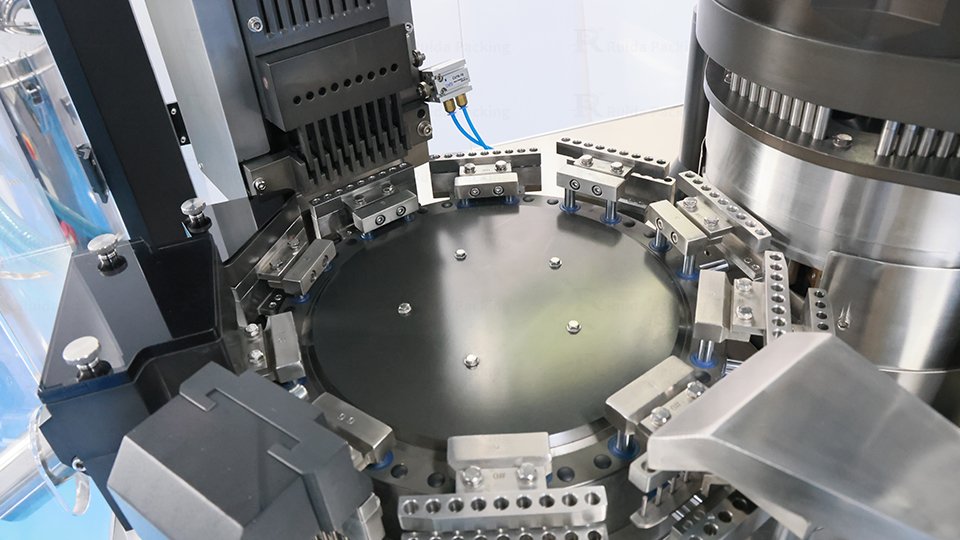
La velocidad de producción y el rendimiento requeridos también son importantes.. Un fabricante de nutracéuticos más pequeño puede priorizar la flexibilidad y el cambio rápido, mientras que un fabricante farmacéutico de gran volumen puede necesitar una máquina de alta velocidad con funcionamiento estable y repetible.
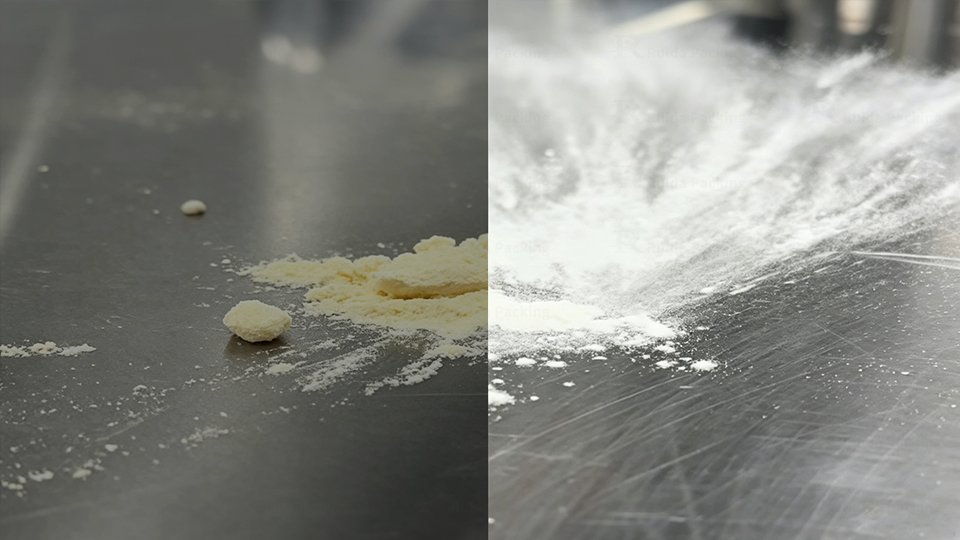
También se deben evaluar cuidadosamente las características del polvo.. Fluidez, viscosidad, y la densidad aparente puede afectar el rendimiento de alimentación y llenado del polvo. En base a estas propiedades, Es posible que los fabricantes deban elegir un método de alimentación adecuado., como alimentación por sinfín o alimentación neumática, para lograr una dosificación estable y precisa.
Las regulaciones locales son otra consideración clave. Diferentes mercados pueden tener diferentes requisitos de cumplimiento. Por ejemplo, El cumplimiento de la CE es importante para muchos proyectos europeos, mientras que los equipos utilizados en los Estados Unidos pueden implicar requisitos como el formulario DEA 452 y regulaciones aplicables de la FDA. Estos requisitos deben confirmarse antes de comprar el equipo..
La fuente de alimentación de la máquina también debe coincidir con las condiciones locales del cliente.. Voltaje, frecuencia, y los tipos de enchufe pueden variar de un país a otro, por lo que estas especificaciones deben verificarse con anticipación para evitar problemas de instalación y operación..
Para la producción farmacéutica y nutracéutica., También vale la pena comprobar el material de las piezas que entran en contacto con el producto.. SUS 316 El acero inoxidable suele preferirse para los componentes que entran en contacto con el producto debido a su resistencia a la corrosión y su idoneidad para entornos de producción higiénicos..
Finalmente, Los fabricantes deben considerar la facilidad de limpieza y el diseño higiénico.. Características como el diseño modular de la máquina., puestos de trabajo bien organizados, descarga de cápsula asistida por aire, y soplar aire para las clavijas dosificadoras puede hacer limpieza y cambio más fácil y al mismo tiempo ayuda a reducir los residuos de polvo.
Este mismo principio se aplica a otros equipos farmacéuticos y nutracéuticos.: Se debe seleccionar la máquina adecuada según el producto., proceso, objetivos de producción, y entorno operativo real en lugar de capacidad únicamente.
6. Embalaje Ruida: Soluciones de equipos para la fabricación de dosis orales sólidas
Ruida Packing proporciona equipos de envasado y fabricación de productos farmacéuticos y nutracéuticos para la fabricación de dosis orales sólidas.. Respaldado por Dun & Certificación Bradstreet, Tableta de suministros de embalaje Ruida, cápsula, y maquinaria de embalaje a clientes de todo el mundo, con equipos diseñados para cumplir con CE, cGMP, y requisitos ISO.
Más allá del propio equipo, Ruida Packing se enfoca en brindar soporte postventa integral. Cada máquina se envía con la información de contacto del representante de ventas correspondiente para una comunicación conveniente.. También proporcionamos instalación y puesta en marcha en el extranjero., entrenamiento del operador, manuales detallados de la máquina, y guías en video de posventa para ayudar a los clientes a operar y mantener sus equipos de manera efectiva. Cuando hace falta, documentación FAT También se puede proporcionar para respaldar las pruebas y la aceptación previas al envío..
7. Conclusión
Detrás de cada forma farmacéutica oral sólida, Existe una conexión mágica entre la formulación y el equipo de procesamiento.. Cada forma como tabletas., cápsulas, polvos, y gránulos, Tienen su propia lógica de fabricación..
Entonces, ¿cómo seleccionar la máquina para su medicamento o suplemento?? La mejor estrategia es no elegir una máquina primero, pero comenzar con el producto y construir el proceso en torno a sus propiedades reales..
8. Preguntas frecuentes
¿Qué significa la forma de dosificación oral farmacéutica??
¿Qué significa la forma farmacéutica en la práctica?? Significa si el producto se presenta como tableta., cápsula, polvo, líquido, u otra forma, y esa elección afecta tanto al uso como a la fabricación..
¿Cuáles son los tipos más comunes de formas farmacéuticas orales sólidas??
Las formas de dosificación oral sólida más comunes son las tabletas., cápsulas duras, polvos, y gránulos. Las tabletas pueden ser de liberación inmediata., liberación prolongada o algo miente esto, mientras que las cápsulas suelen estar llenas de polvos o gránulos.
¿Qué equipo se utiliza para fabricar formas farmacéuticas orales sólidas??
El equipo típico incluye licuadoras., granuladores, secadoras, prensas para tabletas, máquinas de llenado de cápsulas, y máquinas de recubrimiento. Los productos terminados pueden entonces pasar al conteo., llenado de botellas, embalaje blíster, y estuchado. El equipo adecuado depende de la forma farmacéutica., formulación, y objetivo de producción.
¿Qué forma de dosificación oral se produce por compresión??
El forma de dosificación de tableta Es la principal forma oral hecha por compresión.. Por lo general, están hechos de una mezcla de gránulos y polvo que se comprimen juntos..
¿Qué forma de dosificación está destinada a administrarse por vía oral??
Una forma de dosificación oral está destinada a la administración por la boca., incluyendo tabletas, cápsulas, polvos, gránulos, soluciones, jarabes, y suspensiones. Entonces, ¿Cuál es la forma farmacéutica en este caso?? La ruta es oral., mientras que la forma física puede variar.
Referencias
- A NOSOTROS. Alimento & Administración de medicamentos (FDA): Formas de dosificación sólidas orales Problemas previos y posteriores a la aprobación.
- Consejo Internacional de Armonización (I): P8(R2) Desarrollo farmacéutico.
- Farmacopea de los Estados Unidos (USP): Capítulo General <1217> Fuerza de rotura de la tableta.
- Organización Mundial de la Salud (OMS): Información sobre medicamentos de la OMS, volumen. 25, No. 2, 2011, Fabricación de cápsulas.
- Chattoraj, S., & Sol, do. DO.: Estrategias de ingeniería de cristales y partículas para mejorar la compresión del polvo y las propiedades de flujo para permitir la fabricación continua de tabletas mediante compresión directa. Revista de Ciencias Farmacéuticas.