¿Por qué se puede suministrar el mismo ingrediente farmacéutico activo en forma de tableta?, cápsula, líquido, o inyección? La respuesta depende de factores como la estabilidad del producto., control de cantidad, características de liberación, uso previsto, y vía de administración.
Para fabricantes, la forma farmacéutica seleccionada da forma al proceso de producción. Las tabletas requieren una preparación y compresión del polvo adecuadas., Las cápsulas necesitan un llenado y cierre precisos., y los líquidos implican diferentes condiciones de mezclado y llenado. El producto terminado también debe envasarse según su sensibilidad a la humedad., oxígeno, luz, fuga, y daño físico.
Esta guía presenta las principales formas farmacéuticas y explica cómo influyen en los procesos de fabricación., selección de equipos, y requisitos de embalaje.
1. ¿Qué son las formas de dosificación farmacéutica??
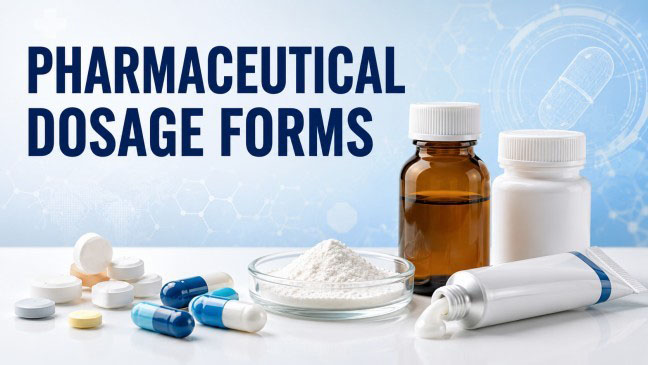
Una forma de dosificación farmacéutica es la forma física en la que se produce y suministra un producto farmacéutico.. Los ejemplos comunes incluyen tabletas, cápsulas, polvos, soluciones, suspensiones, crema, e inyecciones. La forma seleccionada admite la fabricación., almacenamiento, control de cantidad, y el método de uso previsto.
A menudo se confunden varios términos relacionados:
| Término | Significado | Ejemplo |
| Ingrediente farmacéutico activo (API) | El principal componente activo de un producto farmacéutico. | Paracetamol |
| Dosis | La cantidad especificada utilizada en un momento o durante un período definido | 500 mg |
| Formulación | La combinación diseñada del API y otros ingredientes. | API, relleno, aglutinante, y desintegrante |
| Forma de dosificación | La forma física terminada del producto. | Comprimido recubierto con película |
| Vía de administración | El método previsto de uso del producto. | Administración oral |
La mayoría de los productos farmacéuticos terminados contienen uno o más API junto con excipientes.. Dependiendo de la formulación, Los excipientes pueden mejorar el flujo de material., admite compresión de tableta, mantener la estabilidad del producto, ayudar a la desintegración, enmascarar un sabor desagradable, o ajustar las características de liberación de ingredientes.
La forma farmacéutica y la vía de administración están relacionadas pero no son el mismo concepto.. Tanto una tableta como una solución oral pueden estar destinadas al uso oral., sin embargo, requieren diferentes formulaciones, métodos de fabricación, controles de proceso, y sistemas de embalaje. Los productos dentro de la misma categoría también pueden seguir diferentes procesos.. Por ejemplo, la formulación de una tableta puede ser adecuada para la compresión directa, mientras que otro puede requerir granulación o recubrimiento.
Por lo tanto, los fabricantes deben definir la forma farmacéutica., propiedades de los materiales, cantidad objetivo, consideraciones de estabilidad, y paquete previsto antes de seleccionar el equipo de producción. El equipo debe adaptarse a la formulación y al proceso en lugar de esperar que corrija características de material o especificaciones de embalaje inadecuadas..
2. ¿Cuáles son los principales tipos de formas farmacéuticas??
Las formas de dosificación se pueden agrupar por estado físico., características de liberación, o vía de administración. Estos sistemas se superponen, por lo que un producto puede pertenecer a más de un grupo.
| grupo principal | Ejemplos comunes | Enfoque de fabricación típico | Paquete común |
| Sólido | tabletas, cápsulas, polvos, gránulos | Fluir, mezcla, compresión o llenado | Ampollas, botellas, bolsitas |
| Líquido | Soluciones, suspensiones, emulsiones, jarabes | Mezclando, uniformidad, viscosidad y llenado | Botellas o envases unitarios |
| Semisólido | Cremas, ungüentos, geles, pastas | Mezclando, homogeneización y viscosidad | tubos, bombas o frascos |
| Especializado | Inyecciones, productos de inhalación, parches, supositorios | Procesamiento y controles específicos del producto | viales, ampollas, dispositivos o paquetes sellados |
2.1 Formas de dosificación sólidas
tabletas se elaboran comprimiendo una mezcla preparada de polvo o gránulos en una forma definida. Los formatos comunes incluyen tabletas convencionales., tabletas masticables, tabletas efervescentes, tabletas de desintegración oral, y tabletas de liberación modificada. Su comportamiento de fabricación depende del flujo de polvo., tamaño de partícula, nivel de humedad, compresibilidad, lubricación, y diseño de herramientas.
Cápsulas Incluye cápsulas duras de dos piezas., cápsulas blandas, y cápsulas duras llenas de líquido. Las cápsulas duras pueden contener polvos., gránulos, bolitas, o tabletas pequeñas. Las cápsulas duras llenas de líquido requieren un material de relleno compatible y un proceso de cierre o sellado adecuado.. Las cápsulas blandas siguen un método de formación y llenado diferente y normalmente utilizan equipos específicos..
Polvos y gránulos Puede suministrarse en envases de usos múltiples o dividirse en sobres individuales y paquetes tipo barra.. Su producción requiere atención para mezclar la uniformidad., segregación, polvo, comportamiento de medición, y el efecto de la humedad durante el llenado y almacenamiento.
2.2 Formas de dosificación líquidas
Las formas líquidas incluyen soluciones., suspensiones, emulsiones, y jarabes. Las soluciones contienen ingredientes disueltos., las suspensiones contienen partículas sólidas dispersas, y las emulsiones contienen fases líquidas separadas.
Las consideraciones de fabricación incluyen el orden de mezcla., temperatura, filtración cuando corresponda, viscosidad, espuma, y condiciones de llenado. Las suspensiones y emulsiones también requieren controles que aborden la sedimentación o la separación de fases durante el procesamiento..
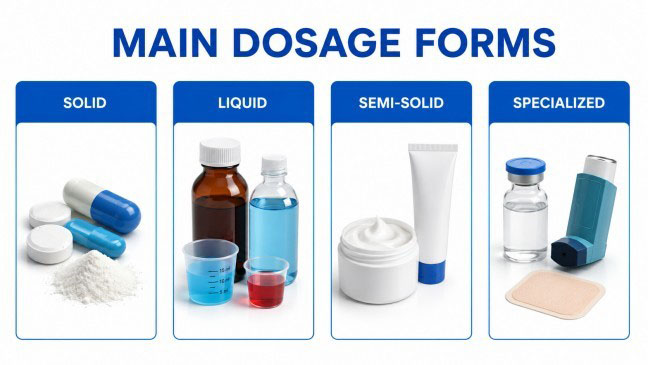
2.3 Formas farmacéuticas semisólidas y especializadas
Cremas, ungüentos, geles, y las pastas son formas semisólidas comúnmente envasadas en tubos, zapatillas, o frascos. Su viscosidad afecta la mezcla., transferir, relleno, y selección de contenedores.
Otras formas de dosificación incluyen inyecciones., productos de inhalación, parches transdérmicos, y supositorios. Sus requisitos difieren sustancialmente de los sólidos orales convencionales y deben evaluarse dentro del marco de desarrollo pertinente..
3. ¿Cómo se fabrican las diferentes formas farmacéuticas??
La mayoría de los procesos de fabricación comienzan con la recepción del material., identificación, dispensando, y preparación controlada. Los pasos posteriores dependen de la forma farmacéutica y las especificaciones del producto..
3.1 Fabricación de tabletas
Un proceso típico de tableta incluye:
Dispensación → Tamizado o Molienda → Mezcla → Granulación si es necesario → Secado → Lubricación → Compresión → Recubrimiento opcional → Inspección → Embalaje
No todas las fórmulas necesitan granulación. La compresión directa utiliza una mezcla que ya tiene un comportamiento de flujo y compresión adecuado.. La granulación húmeda introduce un aglutinante líquido antes del secado y el dimensionamiento., mientras que la granulación seca es un proceso que forma gránulos compactando mecánicamente material en polvo a alta presión sin agregar líquido. La ruta seleccionada debe provenir de estudios de formulación y ensayos de producción..
Durante la compresión, a máquina prensadora de tabletas llena los troqueles, comprime el material, y expulsa las tabletas formadas. La profundidad de llenado y el rendimiento del alimentador afectan principalmente al peso de la tableta, mientras que la fuerza de compresión influye en el espesor y la dureza.. La velocidad de la torreta cambia el tiempo de llenado y el tiempo de permanencia en la compresión., y las herramientas desgastadas o desalineadas pueden causar defectos como pegado, tapando, o daños en los bordes. Luego se puede aplicar un recubrimiento para mejorar la apariencia., enmascaramiento del sabor, protección ambiental, o diseño de versión modificada.
3.2 Fabricación de cápsulas
Para cápsulas duras de dos piezas, la secuencia principal es:
Alimentación de cápsulas vacías → Orientación → Separación de tapa y cuerpo → Llenado → Rechazar → Cierre → Expulsión → Pulido → Inspección
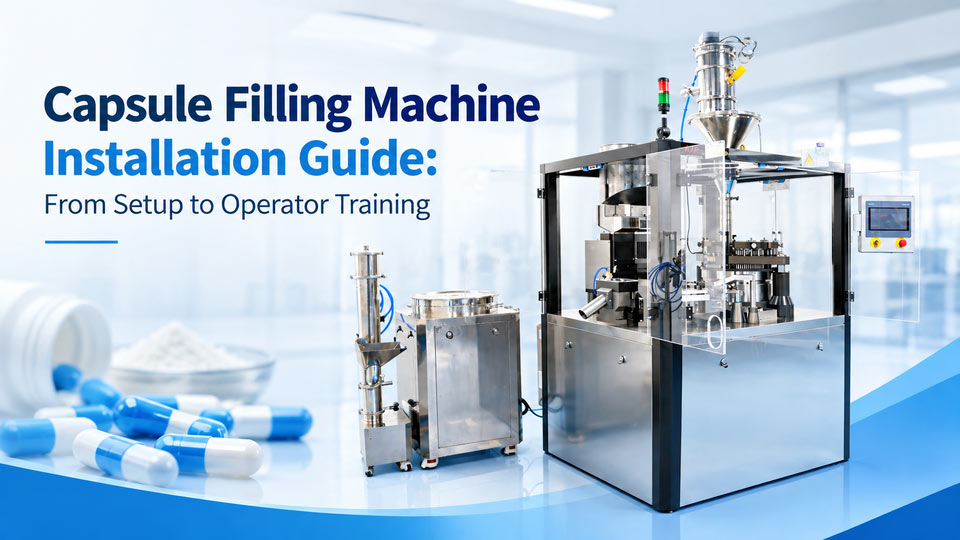
A máquina llenadora de cápsulas debe coincidir con el tamaño de la cápsula y el material de relleno. Polvos, gránulos, bolitas, y los líquidos utilizan diferentes disposiciones de dosificación. Flujo de materiales, densidad aparente, rango de peso de llenado, condición de la cáscara, y la calidad del cierre son importantes a la hora de desarrollar el proceso. El pulido y la inspección de las cápsulas normalmente se realizan antes del envasado en blíster o botella..
3.3 Embalaje de polvo y gránulos
Los productos en polvo y granulados se mezclan y transfieren a un sistema de dosificación adecuado.. Los sinfines se utilizan comúnmente para muchos polvos., mientras que los vasos volumétricos u otros comederos pueden ser adecuados para gránulos que fluyen libremente. A máquina envasadora de bolsitas Puede formar el paquete a partir de rollos de película., medir el producto, sellar el paquete, y cortar o separar las unidades terminadas.
3.4 Procesamiento de líquidos y semisólidos
La producción de líquidos y semisólidos puede incluir la mezcla., calentar o enfriar, homogeneización, filtración, desaireación, tenencia, relleno, y cerrando. La secuencia real depende de la formulación.. Materiales de contacto con equipos, métodos de transferencia, mecanismo de llenado, y el procedimiento de limpieza debe seleccionarse según la viscosidad, tendencia a formar espuma, contenido de partículas, y controles de higiene requeridos.
4. ¿Cómo afectan las formas farmacéuticas a los requisitos de embalaje??
El embalaje es parte del sistema del producto., no es un paso decorativo agregado después de la fabricación. Su diseño debe reflejar la forma farmacéutica., formulación, información de estabilidad, condiciones de transporte, y mercado previsto.
Embalaje primario contiene directamente el producto, como una cavidad de ampolla, botella, bolsita, tubo, o vial. embalaje secundario Incluye artículos como cajas de cartón., etiquetas, y folletos. Embalaje terciario Soporta almacenamiento y transporte a través de estuches., divisores, y palets.
| Forma de dosificación | Paquete primario común | Consideraciones principales | Equipo relacionado |
| tabletas | Ampollas o botellas | Humedad, luz, abrasión y recuento de unidades | Máquina de blister de tabletas o línea de conteo de tabletas |
| Cápsulas duras | Ampollas o botellas | Humedad, condición de la carcasa y recuento de unidades | Máquina de blister de cápsulas o línea de conteo de cápsulas |
| Polvos y gránulos | Sobres, palos, bolsas o botellas | Humedad, condición de medición y sellado | Máquina empacadora de bolsitas o máquina empacadora de bolsas prefabricadas |
| Líquidos | Botellas o envases individuales | Fuga, compatibilidad y volumen de llenado | Máquina de llenado de líquidos |
| Semisólidos | tubos, bombas o frascos | Viscosidad, fugas y contacto con el producto | Tubo, equipo de llenado de bomba o frasco |
| Productos estériles | viales, ampollas o sistemas precargados | Integridad del cierre de contenedores y controles especializados | Línea de llenado y cierre específica para cada producto |
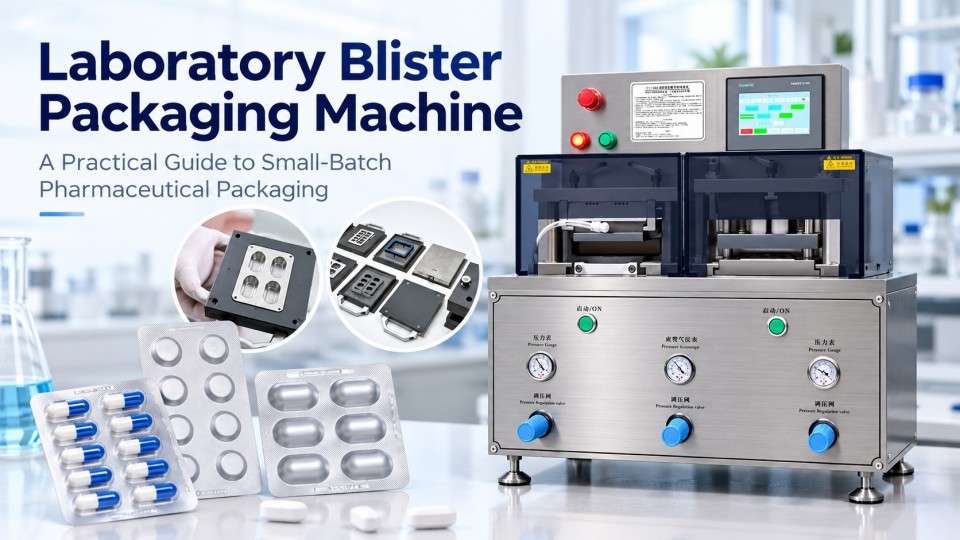
Para tabletas y cápsulas, Los blister separan las unidades en cavidades individuales.. A máquina de embalaje blíster forma o alimenta las cavidades, carga el producto, Sella el material de la tapa., codifica la web, y corta los paquetes finales. La estructura de barrera debe seleccionarse a partir de los datos del producto.; un blister de PVC estándar y un blister de aluminio conformado en frío no proporcionan el mismo perfil de protección.
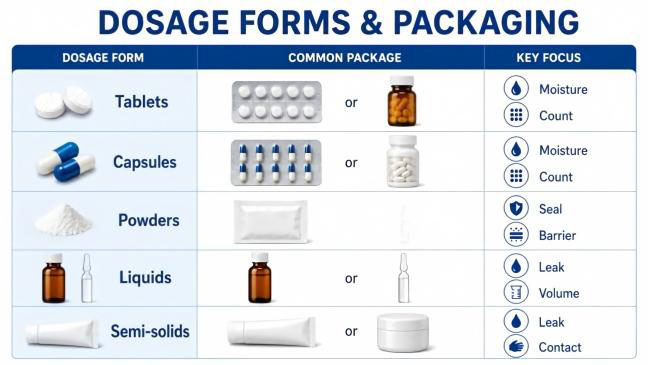
Los frascos a menudo se seleccionan para paquetes de tabletas y cápsulas con mayor cantidad. un tipico Línea automática de recuento de comprimidos y cápsulas. conectar botella descodificando, contando, inserción desecante opcional, tapando, sellado por inducción, etiquetado. El cierre, transatlántico, desecante, y el material de la botella deben considerarse partes de un sistema de embalaje.
Los sobres y los paquetes en barra son comunes para cantidades medidas de polvos y gránulos.. Estructura de la película, temperatura del sello, presión de sellado, polvo del producto, diseño de lágrima, y el aire residual puede afectar el rendimiento del paquete. Los paquetes secundarios pueden entonces trasladarse a un máquina estuchadora para formar cajas de cartón, inserción de producto, manipulación de folletos, codificación, e inspección.
Ningún formato de envase es automáticamente adecuado para todos los productos del mismo grupo de formas farmacéuticas.. La selección de paquetes debe estar respaldada por trabajo de compatibilidad, prueba de paquete, y estudios de estabilidad. Para una comparación de formatos más amplia, vea esta guía para tipos de envases farmacéuticos.
5. Cómo seleccionar equipos de envasado y fabricación farmacéutica
La selección de equipos debe comenzar con información del producto y del proceso en lugar de un modelo de máquina.. Una especificación de equipo útil normalmente cubre:
- Características de los materiales: flujo de polvo, densidad aparente, tamaño de partícula, sensibilidad a la humedad, viscosidad, espuma, o pegajosidad.
- Formato del producto: diámetro y forma de la tableta, tamaño de la cápsula, rango de relleno, recuento de botellas, dimensiones de la bolsita, o diseño en blister.
- Salida requerida: tamaño del lote, objetivo por hora, patrón de cambio, cambios planificados, y expansión esperada.
- Controles de proceso: monitoreo de peso o conteo, lógica de rechazo, detección de metales, codificación, y registro de datos.
- Limpieza y cambio: acceso a la parte de contacto, metodo de limpieza, reemplazo de pieza de formato, y control entre productos.
- Conexión de línea: salida aguas arriba, velocidad aguas abajo, almacenamiento en búfer, disposición del transportador, y comunicación entre máquinas.
Las configuraciones típicas incluyen:
| Producto y paquete | Ejemplo de configuración de línea |
| Blíster de comprimidos | Prensa de tabletas → desempolvador de tabletas → detector de metales → máquina de blister → estuchadora |
| botella de cápsula | Llenadora de cápsulas → pulidora de cápsulas → máquina llenadora y contadora de cápsulas → taponadora → selladora por inducción → etiquetadora |
| Bolsita de polvo | Licuadora → alimentador → empaquetadora de barras(o máquina empacadora de bolsitas) → controladora de peso → estuchadora |
La velocidad nominal de una máquina no define la salida de la línea completa. Alimentación del producto, inspección, se detiene, cambio, y la capacidad downstream también afecta la producción real. Cuando varias etapas están conectadas, un línea farmacéutica integrada debe planificarse en torno a un equilibrio de línea realista y el diseño de fábrica disponible.

Embalaje Ruida proporciona prensas para tabletas, máquinas de llenado de cápsulas, máquinas de ampolla, contando lineas, y equipos de estuchado para proyectos de fabricación y envasado de dosis sólidas. Según el formato del producto., salida objetivo, y diseño de fábrica, El equipo puede ayudar a configurar máquinas individuales o una línea de producción integrada..
6. Control de calidad de formas farmacéuticas y consideraciones de GMP
Los controles de calidad dependen de la forma farmacéutica y de las especificaciones del producto aprobadas.. Los controles de tabletas pueden incluir variaciones de peso., espesor, dureza, friabilidad, desintegración, y disolución cuando corresponda. Los controles de las cápsulas pueden cubrir el peso de llenado, cierre de concha, apariencia, y desintegración. Los controles líquidos y semisólidos pueden incluir la cantidad de llenado., uniformidad, viscosidad, y cierre de contenedores.
Los controles de embalaje pueden cubrir el recuento o la cantidad de llenado., condición del sello, fuga, imprimir información, verificación de etiqueta, y rendimiento de rechazo. Estos controles deben estar respaldados por procedimientos escritos., criterios de aceptación definidos, personal capacitado, mantenimiento, calibración, y revisión documentada.
La planificación GMP va más allá de la máquina. Condiciones de las instalaciones, control de materiales, limpieza, validación de procesos, supervisión de calidad, y los registros de producción contribuyen a un funcionamiento consistente. El equipo puede soportar el proceso requerido., pero el estado regulatorio depende del sistema completo de fabricación y calidad utilizado en la instalación..
7. Formas de dosificación farmacéutica: Preguntas frecuentes
¿Cuáles son las principales formas farmacéuticas??
Los grandes grupos son sólidos, líquido, semisólido, y formas de dosificación especializadas. tabletas, cápsulas, polvos, soluciones, suspensiones, crema, inyecciones, y los productos para inhalación son ejemplos comunes. La clasificación también puede considerar la vía de administración y las características de liberación..
¿Cuál es la diferencia entre una dosis y una forma farmacéutica??
Una dosis es la cantidad especificada utilizada en un momento dado o durante un período definido.. Una forma farmacéutica es el producto físico., como una tableta, cápsula, solución, o crema, que lleva esa cantidad.
¿Las tabletas y cápsulas se fabrican en el mismo equipo??
No. Las tabletas se forman por compresión en una prensa de tabletas.. Se separan las cápsulas duras de dos piezas., completado, y cerrado en una máquina llenadora de cápsulas. Posteriormente podrán utilizar equipos similares de envasado en blister o botella si su tamaño y características de manipulación son compatibles con la línea seleccionada..
¿Qué formatos de envasado se utilizan habitualmente para las formas farmacéuticas sólidas??
Los comprimidos y las cápsulas duras se suelen envasar en blísteres o frascos.. Los polvos y granulados pueden utilizar sobres., paquetes de palos, bolsas, o botellas. La elección final depende de las características del producto., cantidad del paquete, requisitos de barrera, y datos de estabilidad.
¿Qué información se necesita antes de elegir el equipo??
Los fabricantes deben preparar detalles sobre el material., forma de dosificación, dimensiones, cantidad objetivo, producción, formato de embalaje, espacio de fábrica, utilidades, enfoque de limpieza, y documentación requerida. También pueden ser necesarias muestras y ensayos..
Conclusión: Combinación de formas farmacéuticas con la fabricación y el envasado
Las formas farmacéuticas conectan la formulación., fabricación, control de calidad, y embalaje. una tableta, cápsula, polvo, o líquido presenta un comportamiento material diferente y por lo tanto requiere una ruta de producción diferente. Luego, el embalaje debe seleccionarse teniendo en cuenta el perfil de estabilidad del producto., necesidades de manejo, y condiciones de distribución previstas.
Antes de configurar una línea, Los fabricantes deben definir primero el producto y el paquete., luego haga coincidir cada procesamiento, relleno, inspección, y etapa de embalaje según esos requisitos. Este enfoque produce una especificación de equipo más clara y reduce los cambios evitables durante el desarrollo del proyecto..
Referencias
Yo Q8(R2): Desarrollo farmacéutico
Organización Mundial de la Salud: Buenas prácticas de fabricación