Εισαγωγή
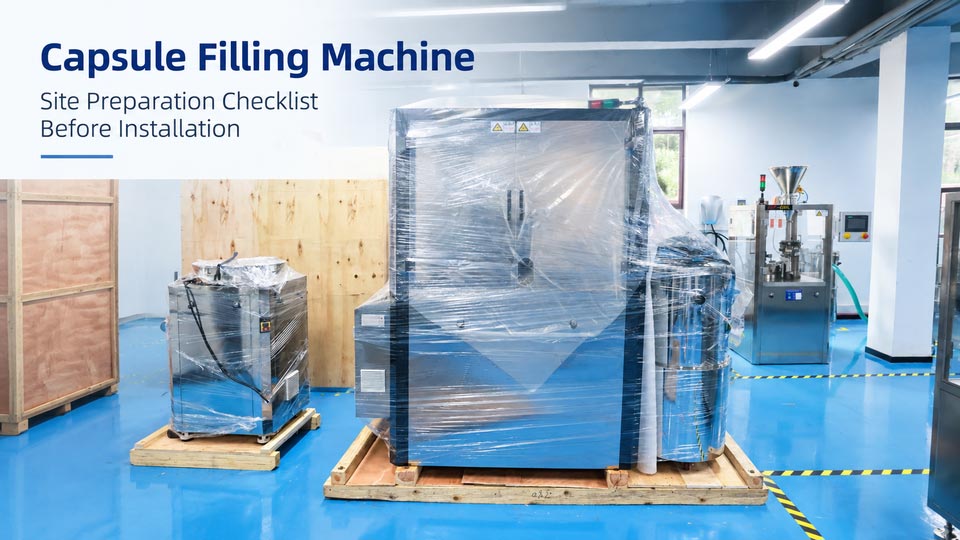
ΕΝΑ Μηχανή πλήρωσης καψουλών plays an important role in pharmaceutical and nutraceutical manufacturing processes. It fills empty capsules with powder, κόκκους, or pellets under controlled conditions. Before equipment delivery, manufacturers need to understand what should be prepared before installing a Capsule Filling Machine to avoid installation delays.
A Capsule Filler depends on the factory environment and supporting systems. Proper Installation Space, cleanroom conditions, HVAC control, πεπιεσμένος αέρας, vacuum supply, and electrical power are required for equipment setup.
During the Capsule Filling Machine Installation, engineers need a complete checklist covering factory layout, υπηρεσίες κοινής ωφέλειας, and environmental requirements. Knowing what utilities are required for a Capsule Filling Machine helps clients prepare the site before the machine arrives.
This guide provides a practical Capsule Filling Machine installation checklist before delivery, including space requirements, cleanroom classification, HVAC conditions, and utility preparation for pharmaceutical production facilities.
ΚΛΕΙΔΙΑ TAKEAWAY
- Insufficient installation space can increase cleaning difficulty and maintenance time for a Capsule Filling Machine.
- Incorrect compressed air, αδειάζω, or electrical preparation can delay equipment commissioning.
- Cleanroom classification and HVAC control affect contamination control and GMP production requirements.
- Proper factory preparation reduces installation changes after equipment delivery.
- Floor conditions and utility stability influence filling accuracy during production.
1. Capsule Filling Machine Installation Space Requirements
Before installing a Capsule Filling Machine, the factory should prepare the correct installation area. The layout should consider equipment operation, καθάρισμα, συντήρηση, and future production adjustments.
A proper Capsule Filling Machine Installation Space plan helps avoid installation delays and provides enough access for operators and engineers.
Required Space Around the Capsule Filler
When preparing a factory for a Capsule Filling Machine Installation, clients should confirm how much clearance is needed around a Capsule Filler before equipment delivery. The installation area should provide enough room for operation, καθάρισμα, και συντήρηση.
The recommended Machine Clearance around the equipment is ≥800 mm. This space allows operators to check the capsule feeding section, powder filling area, and capsule output area during production.
The reserved Installation Space also supports daily cleaning procedures. Operators require sufficient working space to clean remaining powder and complete preparation before starting a new batch. A narrow working area can make cleaning and inspection more difficult.
For a complete Capsule Filling Machine Installation Checklist, clients should confirm the machine layout with the supplier before shipment.
Ceiling Clearance for Loading Equipment
The vertical space above a Capsule Filling Machine should be checked before delivery. What space is required for a Capsule Filling Machine installation depends on both the machine height and connected auxiliary equipment.
Some Capsule Filler systems may connect with a Vacuum Powder Loader for automatic powder transfer. An Empty Capsule Loader can also be installed above the machine to supply empty capsules during production.
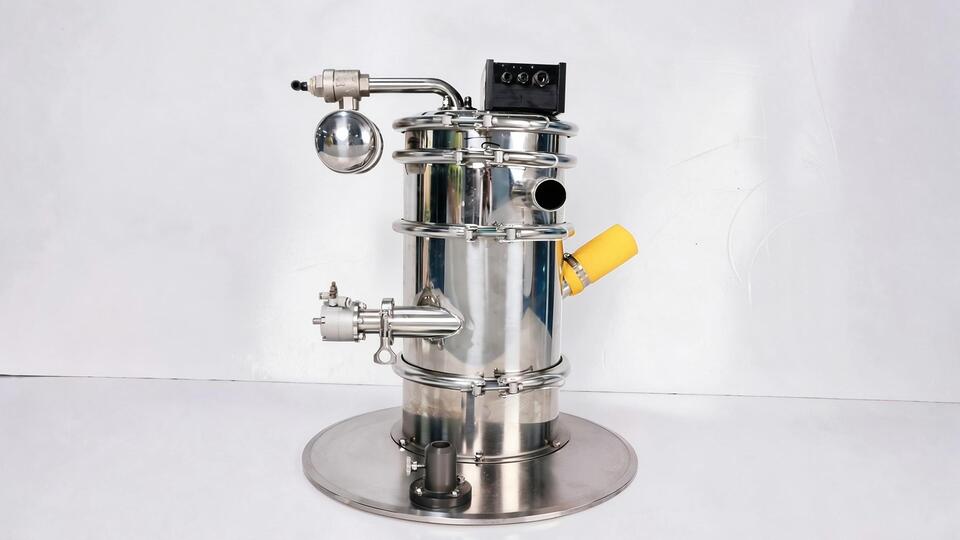
Vacuum Powder Loader
The recommended Ceiling Clearance above the machine is ≥500 mm. This space allows engineers to install, ελέγχω, and maintain equipment connections above the filling area.
2. Floor and Transportation Preparation Before Delivery
Before a Capsule Filling Machine Installation, the factory should confirm the floor condition and equipment access route. Proper preparation helps engineers complete delivery, τοποθέτησης, and installation work without unexpected changes.
The factory layout should support Pharmaceutical Equipment Installation, including machine placement, μεταφορά, and future maintenance activities.
Floor Levelness and Load Requirements
When planning how to prepare a factory for a Capsule Filling Machine installation, the floor condition should be checked before equipment delivery. The installation area needs enough load capacity and suitable flatness for stable equipment placement.
The recommended Floor Levelness requirement is ≤1 mm/m. A flat installation surface helps maintain proper machine alignment and reduces vibration during operation. Stable machine positioning also helps reduce capsule weight variation during filling.
The factory should also confirm the Floor Load Capacity before placing the equipment. The floor must support the weight of the Capsule Filler and related accessories without deformation.
Check the Machine Transportation Route
Before Pharmaceutical Equipment Installation, the factory should confirm the complete Transportation Route for the Capsule Filling Machine. The path from unloading area to the final production room should be checked before shipment.
When preparing for factory preparation before pharmaceutical equipment installation, clients should review the following points:
- Factory entrance: Confirm the door width and height are large enough for equipment transportation.
- Corridors and passages: Check the width, turning radius, and any narrow areas along the route.
- Elevators: Confirm elevator size, weight capacity, and loading conditions if the equipment needs vertical transportation.
- Floor condition: Ensure the transportation path can support the equipment weight and moving tools.
- Corners and turning areas: Reserve enough space for forklifts, pallet trucks, or lifting equipment.
- Temporary obstacles: Remove materials, εξοπλισμός παραγωγής, or structures that block the transportation path.
3. Cleanroom and Environmental Requirements
Before operating a Capsule Filling Machine, the production area should meet the required cleanliness and environmental conditions. The suitable classification is determined by the product characteristics, διαδικασία παραγωγής, and contamination control strategy.
Cleanroom classification should be confirmed before equipment delivery. This preparation helps clients select suitable HVAC systems and production conditions for the Capsule Filler.
ISO Cleanroom Classification Requirements
When preparing Cleanroom requirements for Capsule Filling Machine installation, clients should confirm the required cleanliness level based on product type and production risk.
ISO 14644-1 defines cleanroom grades based on the number of airborne particles measured within a controlled area. The classification is based on the number of particles at different sizes, such as ≥0.1 μm, ≥0.3 μm, ≥0.5 μm, ≥1 μm, and ≥5 μm.
For a Capsule Filling Machine, the production environment should control airborne dust from powder materials and prevent unnecessary contamination during filling operations. The required Cleanroom Classification should be confirmed according to the product category and quality requirements.
The following table shows the ISO Class 5–8 levels commonly referenced in pharmaceutical production:
| Κλάση ISO (ISO 14644-1) | Maximum Particle Concentration (particles/m³, ≥0.5 μm) | Cleanroom Description | Typical Pharmaceutical Applications |
|---|---|---|---|
| Κλάση ISO 5 | ≤3,520 particles/m³ | Very high cleanliness level with strict airborne particle control | Aseptic filling areas, sterile processing zones, critical product exposure areas |
| Κλάση ISO 6 | ≤35,200 particles/m³ | High cleanliness environment with controlled particle levels | Sterile preparation areas and controlled processing zones |
| Κλάση ISO 7 | ≤352,000 particles/m³ | Controlled cleanroom commonly used for pharmaceutical manufacturing | Non-sterile capsule filling, παραγωγή δισκίων, powder handling areas |
| Κλάση ISO 8 | ≤3,520,000 particles/m³ | Basic controlled cleanroom environment | Material preparation areas, δευτερεύουσα συσκευασία, general pharmaceutical production areas |
The required cleanroom grade for a Capsule Filler varies according to the material, μέθοδο παραγωγής, και απαιτήσεις ποιότητας. Για παράδειγμα, non-sterile capsule production may use ISO Class 7 or ISO Class 8 controlled areas, while sterile products require stricter contamination control.
EU GMP Grade Requirements
When preparing GMP cleanroom classification for Capsule Filling Machine installation, clients should confirm the required EU GMP Grade with the quality department. The selected grade affects HVAC design, pressure control, cleaning procedures, and environmental monitoring.
The EU GMP Grade system includes Grade A, σι, ντο, and D areas. These classifications help pharmaceutical facilities manage particle contamination risks during manufacturing activities.
| Production Type | Recommended EU GMP Grade | Τυπική Εφαρμογή |
|---|---|---|
| Sterile pharmaceutical production | Grade A with Grade B background, or Grade C/D for supporting areas | Sterile filling, aseptic processing, sterile product exposure operations |
| Non-sterile pharmaceutical capsule production | Grade D or controlled clean area based on product requirements | Conventional drug capsules, powder capsule filling under controlled conditions |
| Nutraceutical and supplement capsule production | Controlled production area or ISO Class 7–8 environment depending on quality requirements | Vitamins, συμπληρώματα διατροφής, προϊόντα υγείας |
For sterile capsule production, the critical filling area requires strict contamination control. Grade A is used for the highest-risk operation area, while Grade B normally provides the background environment. Supporting preparation and transfer areas may use Grade C or Grade D depending on the process design.
For non-sterile capsule production, a Capsule Filling Machine normally does not operate in Grade A or Grade B environments. The required cleanroom level is selected based on product risk, dust control requirements, and company GMP standards. Many facilities use controlled areas equivalent to ISO Class 7 or ISO Class 8 conditions.
4. Temperature and Humidity Control Requirements
Before equipment delivery, clients should verify the environmental temperature and humidity parameters of the filling room. Stable environmental control helps maintain powder characteristics, capsule shell performance, και γεμιστική συνέπεια.
Temperature Requirements for Capsule Filling
During Capsule Filling Machine Installation, clients should confirm the Temperature Control requirements for the production area. A suitable temperature range helps maintain stable powder flow and capsule shell performance.
For many pharmaceutical and nutraceutical production areas, the recommended temperature is commonly controlled around 20–25°C. Ωστόσο, the actual setting should be confirmed according to the material characteristics and production requirements.
High temperature may affect capsule shell properties and powder behavior. Gelatin capsules may become softer, while some powders may show changes in flowability during filling.
Low temperature may increase the risk of capsule shell brittleness and affect equipment conditions. Temperature changes can also influence powder movement inside the dosing system.
Humidity Control for Powder Filling Stability
Humidity control is an important part of Temperature and humidity requirements for Capsule Filling Machine. The production area should maintain suitable humidity conditions to support stable powder handling and capsule filling performance.
For many pharmaceutical and nutraceutical applications, the recommended relative humidity is commonly controlled around 30–60% RH. The actual humidity range should be confirmed according to powder characteristics, capsule material, και απαιτήσεις προϊόντος.
High humidity can affect Ρευστότητα σκόνης during production. Some powders may absorb moisture, become sticky, or form small lumps. These changes can affect the dosing system and lead to Capsule Weight Variation during filling.
Low humidity can increase static electricity inside the Capsule Filling Machine. Powder may attach to machine surfaces or feeding components, which can affect cleaning work and filling consistency.
5. HVAC System Requirements for Capsule Filling Areas
The HVAC System (Θέρμανση, Ventilation, and Air Conditioning) is the environmental control system used in pharmaceutical production areas. It manages air cleanliness, θερμοκρασία, υγρασία, airflow direction, and room pressure.
For a Capsule Filling Machine, the HVAC system provides a controlled production environment for powder filling operations. It helps maintain cleanroom conditions and supports contamination control requirements.
During Capsule Filling Machine Installation, clients should confirm the HVAC design before equipment delivery. Proper environmental preparation helps ensure that the production area meets the required GMP and cleanroom conditions.
Airflow and Pressure Control Requirements
When checking HVAC requirements for Capsule Filling Machine installation, clients should review airflow direction and pressure control in the filling area. These factors affect powder containment, particle control, and cleanroom performance.
The Airflow Control system should provide suitable air movement around the Capsule Filling Machine. During powder filling, small particles may become airborne. Correct airflow direction helps prevent dust from spreading to other areas.
Room pressure difference is also important in pharmaceutical production. A suitable Pressure Differential between rooms helps control the movement of airborne particles and protects cleaner areas from contamination.
Για παράδειγμα, the capsule filling room may be designed with higher pressure than surrounding areas to control the movement of airborne particles. Clean air flows from the higher-pressure area to the lower-pressure area when doors are opened or closed. This helps prevent dust from nearby rooms from entering the filling area during production.
The exact Pressure Differential setting depends on the cleanroom classification, HVAC design, and GMP requirements. Κατά τη λειτουργία, QA teams may check pressure monitoring records to confirm that the room conditions remain within the required range.
HVAC Filtration and Environmental Monitoring
The HVAC System uses air filtration components to control airborne particles inside the production area. For a Capsule Filling Machine, suitable air filtration helps maintain the required cleanroom conditions during powder filling operations.
A HEPA Filter is commonly used in pharmaceutical HVAC systems where higher air cleanliness is required. The filter removes airborne particles from supply air before it enters the production area. The required filtration level should match the selected cleanroom classification and GMP requirements.
Environmental monitoring is also required for controlled production areas. QA teams may monitor temperature, υγρασία, pressure difference, and airborne particle levels during production.
For a Capsule Filling Machine, powder handling can create airborne particles during material feeding and filling. Stable air filtration and monitoring help detect environmental changes before they affect production conditions.
The facility should maintain environmental monitoring records according to the production requirements. QA personnel can use these monitoring records to evaluate environmental conditions and detect potential deviations during production.
6. Utility Requirements for Capsule Filler Installation
Before installing a Capsule Filler, clients should prepare the required utility connections in advance. The main utility requirements include compressed air, vacuum supply, and electrical power.
Compressed Air Requirements for Capsule Filling
When reviewing Compressed air requirements for Capsule Filling Machine, clients should check air flow rate before air pressure. Insufficient flow is a common cause of unstable pneumatic operation.
The utility specification should provide the required Air Flow Rate for the machine. Clients should also check the air consumption of auxiliary equipment connected to the same system.
A Vacuum Powder Loader or Empty Capsule Loader may require additional compressed air. Για παράδειγμα, if the total equipment consumption is 8 m³/h, the available air supply should be around 12 m³/h. This provides approximately 50% additional capacity above the calculated consumption.
This capacity margin helps cover peak demand and pressure fluctuations during operation. The exact margin should follow the equipment supplier’s utility requirements when they specify a different value.
Air pressure also needs to meet the machine requirements. Πολοί Αυτόματες μηχανές πλήρωσης καψουλών operate around 0.5–0.7 MPa, but the actual range depends on the model and configuration.
The supplied compressed air must maintain suitable cleanliness and moisture control before entering the machine. ISO 8573-1 classifies compressed air according to particles, νερό, and oil content.
The machine’s air treatment unit may include an air-water separator, φίλτρα, regulator, and drain system. These components help remove moisture and contaminants from the incoming compressed air.
Vacuum System Requirements for Capsule Filling
The Vacuum System is an important part of a Capsule Filling Machine. The vacuum pump generates negative pressure for capsule separation, capsule holding, and other vacuum-assisted operations during production.
Κατά το γέμισμα της κάψουλας, stable vacuum helps the machine separate the capsule cap and body correctly. If the vacuum condition is unstable, the machine may experience προβλήματα διαχωρισμού κάψουλας or abnormal operation.
For automatic Capsule Filler, the vacuum pump is often supplied and configured by the equipment manufacturer. The selected vacuum pump depends on the machine design, ταχύτητα παραγωγής, and application requirements.
Different manufacturers may select different vacuum pump brands and configurations. Some basic configurations may use standard industrial vacuum pumps, while pharmaceutical equipment manufacturers with higher requirements may select internationally recognized brands.
Για παράδειγμα, companies such as Ruida Packing and Fette Compacting may use Becker vacuum pumps for selected equipment configurations. Becker vacuum pumps are widely used in industrial and pharmaceutical applications due to their stable performance and service experience.
When the vacuum pump is supplied with the machine, clients do not need to select the pump separately. Ωστόσο, clients should prepare the required installation conditions before equipment delivery.
Ruida Packing provides Becker vacuum pumps for automatic capsule filling machines
| Preparation Item | Client Preparation | Details |
|---|---|---|
| Τροφοδοτικό | Prepare the required electrical connection | Confirm voltage, frequency, and phase requirements for the vacuum pump motor |
| Cable and Wiring Location | Reserve electrical connection space | Engineers need enough space to connect the vacuum pump motor and control system |
| Vacuum Pipe Connection | Prepare vacuum connection points and pipeline space | Confirm the pipe route if the vacuum pump is installed separately from the main machine |
| Exhaust Location | Confirm vacuum pump exhaust direction and position | Arrange the exhaust location to avoid affecting the clean production area |
| Ventilation Conditions | Ensure sufficient airflow around the vacuum pump | The vacuum pump generates heat during operation and requires suitable ventilation |
| Installation Environment | Prepare a suitable installation area | Avoid high temperature, υψηλή υγρασία, and excessive dust around the vacuum pump |
| Έλεγχος θορύβου | Select a suitable installation position | Some factories place vacuum pumps in utility rooms to reduce noise impact |
| Maintenance Space | Reserve service space around the pump | Engineers need access for inspection, καθάρισμα, και συντήρηση |
7. Electrical Power Preparation Before Installation
Before the Capsule Filling Machine arrives at the production site, clients should prepare the required electrical infrastructure. The preparation includes power capacity, cable arrangement, protection devices, grounding, and connections for auxiliary equipment.
Electrical Infrastructure Preparation for Capsule Filling Machine
Clients should prepare the following electrical conditions before Capsule Filling Machine Installation:
| Preparation Item | Client Preparation | Details |
|---|---|---|
| Power Capacity | Prepare sufficient electrical capacity | Calculate the required capacity based on the machine power, motors, and auxiliary equipment to prevent overload or power trips during operation |
| Electrical Cabinet Location | Reserve electrical installation space | Confirm the location of the main power connection and ensure convenient cable connection during installation |
| Cable Preparation | Prepare suitable electrical cables | Cable specifications should match equipment power requirements, current load, and installation distance |
| Circuit Breaker and Protection Devices | Install suitable electrical protection | Include circuit breakers and overload protection devices to protect the machine electrical system |
| Power Connection Point | Reserve the power connection location | The connection point should be close to the machine installation area to avoid additional wiring work |
| Equipment Grounding | Prepare reliable grounding | Proper grounding protects operators and reduces electrical interference affecting PLC systems and sensors |
| Electrical Environment | Confirm suitable installation conditions | Avoid high humidity, υψηλή θερμοκρασία, and excessive dust that may affect electrical components |
| Auxiliary Equipment Power Supply | Prepare power connections for additional equipment | Devices such as vacuum powder loaders, empty capsule loaders, and dust collectors may require additional power supply |
| Power Capacity Margin | Reserve additional capacity | Extra capacity allows future auxiliary equipment expansion without major electrical modification |
Σύναψη
Preparing the production site before equipment delivery is an important step for Capsule Filling Machine Installation. The machine requires suitable space, cleanroom conditions, υπηρεσίες κοινής ωφέλειας, and installation support before startup.
Clients should confirm factory conditions, including floor levelness, operating space, cleanroom classification, θερμοκρασία, υγρασία, and HVAC control. These conditions provide the required environment for capsule filling operations.
Utility preparation is also required before the machine arrives. Πεπιεσμένος αέρας, vacuum supply, and electrical power should be ready according to the equipment requirements. The capacity of auxiliary equipment should also be included during planning.
A complete site preparation checklist helps engineers complete installation and testing more efficiently. Early confirmation with the equipment supplier can reduce unexpected changes during installation and support stable production startup.
Συχνές ερωτήσεις
What utilities are required before installing a Capsule Filling Machine?
A Capsule Filling Machine requires several utilities before installation, including compressed air, vacuum supply, and electrical power.Clients should prepare the correct connection points, pipeline layout, electrical capacity, and installation conditions before equipment delivery. Auxiliary equipment, such as a Vacuum Powder Loader and empty capsule loader, should also be included in utility planning.
What cleanroom class is required for a Capsule Filling Machine?
The required cleanroom class depends on the product type and production process.
For non-sterile capsule production, many facilities use controlled pharmaceutical production areas based on GMP requirements. Sterile production requires stricter environmental control, such as higher cleanroom grades and tighter contamination control.
Clients should confirm the required cleanroom classification with their QA department and follow applicable GMP requirements.
Does a Capsule Filling Machine need compressed air and vacuum supply?
Ναί. Most automatic Capsule Filling Machines require both compressed air and vacuum systems.
Compressed air supports pneumatic actions, while the vacuum system supports capsule separation and other vacuum-assisted operations.
The final specifications vary according to the equipment design and selected machine configuration. Clients should confirm the utility specifications with the equipment supplier before installation.
Who provides the vacuum pump for a Capsule Filling Machine?
The vacuum pump is commonly supplied and configured by the equipment manufacturer.
Different manufacturers may use different vacuum pump brands and configurations. Some pharmaceutical equipment suppliers select internationally recognized vacuum pump brands, such as Becker vacuum pumps, based on equipment requirements.
Clients should confirm whether the vacuum pump is included with the machine and prepare the required installation conditions, including power supply, piping connection, ventilation, and maintenance space.
What installation area does a Capsule Filling Machine require before setup?
The installation area is determined by the equipment size, layout design, and connected production units.
Clients should leave sufficient clearance around the machine for operation, sanitation procedures, maintenance work, and material transfer. If additional equipment is installed, such as a powder loader or capsule loader, extra space should also be considered.
The completed factory layout should follow the installation drawing supplied by the equipment manufacturer.
Αναφορές
- EU GMP Guidelines – Manufacture of Medicinal Products
Ευρωπαϊκή Επιτροπή - ISO 14644-1: Cleanrooms and associated controlled environments — Classification of air cleanliness by particle concentration
International Organization for Standardization - ISO 8573-1: Compressed air — Contaminants and purity classes
International Organization for Standardization - FDA Guidance for Industry – Sterile Drug Products Produced by Aseptic Processing
ΜΑΣ. Υπηρεσία τροφίμων και φαρμάκων - Ορθές πρακτικές παραγωγής του ΠΟΥ για φαρμακευτικά προϊόντα
Παγκόσμιος Οργανισμός Υγείας