>

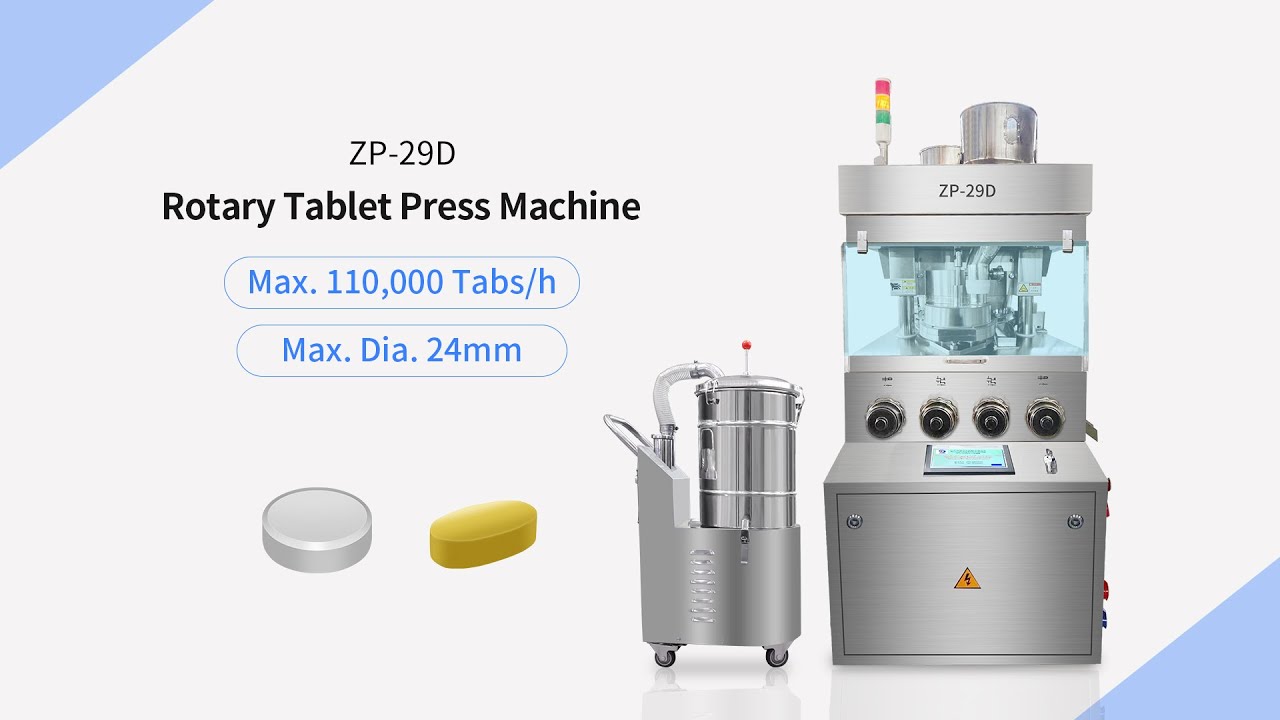
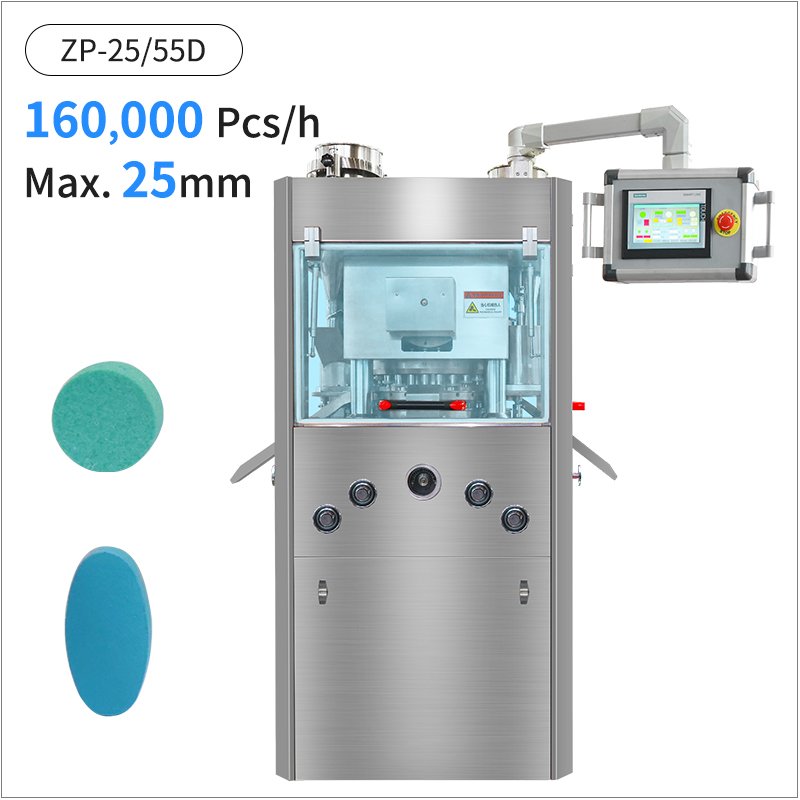
錠剤ロータリー式自動錠剤プレス機

ハーブ丸薬プレス機
錠剤機プレス
錠剤圧搾機製薬
錠剤圧搾機
丸薬圧搾機
ハーブ丸薬プレス機
錠剤機プレス
錠剤圧搾機製薬
錠剤圧搾機
丸薬圧搾機

錠剤ロータリー式自動錠剤プレス機

タブレット回転式自動錠剤プレス機タブレットの使い方?
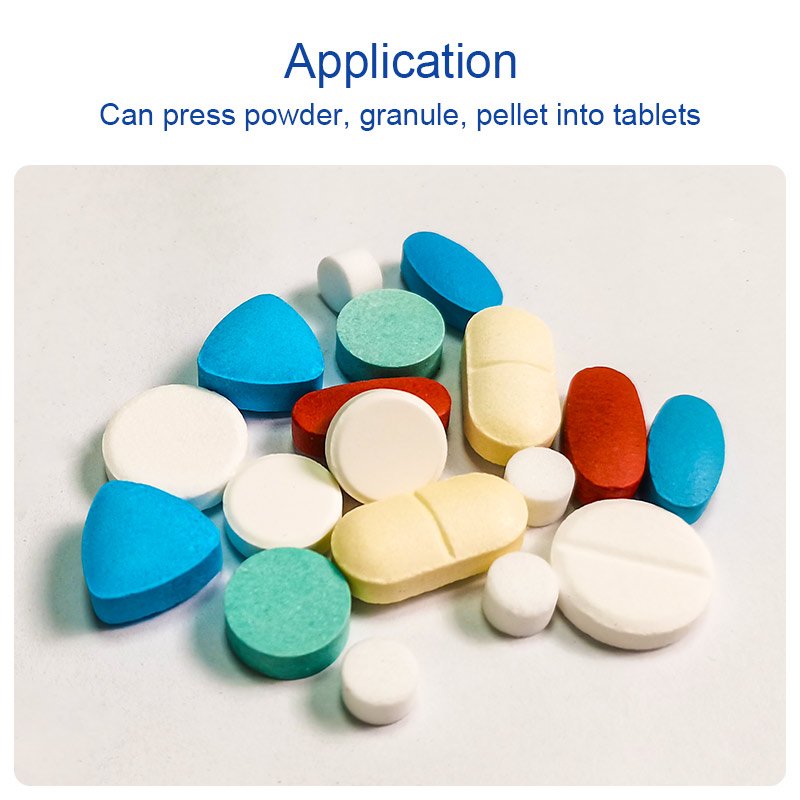
粉末はホッパーからダイに供給されます. このプロセスは通常、重力送りや強制送りなどの送り機構によって管理されます。. 錠剤の重量とサイズが一定になるように、ダイに充填される粉末の量が制御されます。. これは、充填深さを調整することで行われます。. 上下のパンチが一緒になり、ダイ内の粉末を圧縮します。. この圧力により粒子が結合します, 固体の錠剤を形成する. 必要な錠剤の硬度や密度に応じて、圧力をかける量を調整できます。. 圧縮後, 下部パンチが上昇して成形された錠剤をダイから排出します. その後、錠剤は容器に集められ、さらなる加工や包装が行われます。.

仕様:

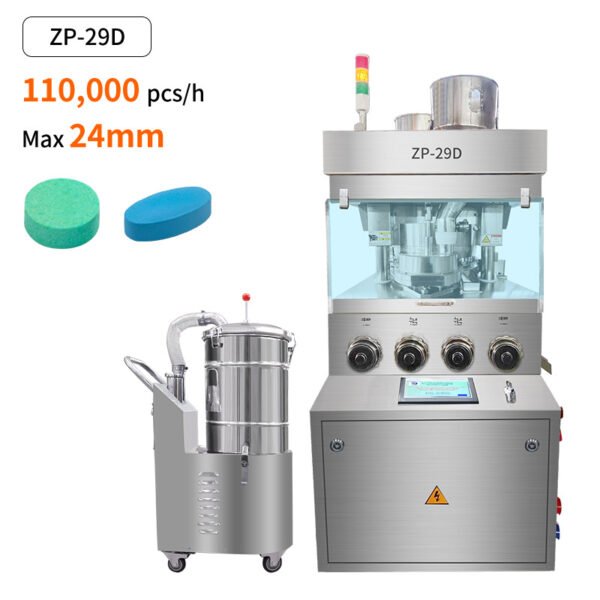
最大110,000タブ/時

錠剤の最大直径24mm

最大圧力100kN

15日間の迅速な配送

錠剤製造機の錠剤プレス機の仕組み?

丸薬マシン打錠機は、複数のパンチとダイを備えた回転タレットを使用して、粉末または顆粒材料を錠剤に圧縮することによって動作します。.

主な特徴

最大生産能力 1110,000個/時間
錠剤の最大直径 24んん
ピンク 5.5くぅ
電圧 220V/380V 50Hz(カスタマイズ)
寸法 1040×910×1690mm

Tablet Press Machine Advantages

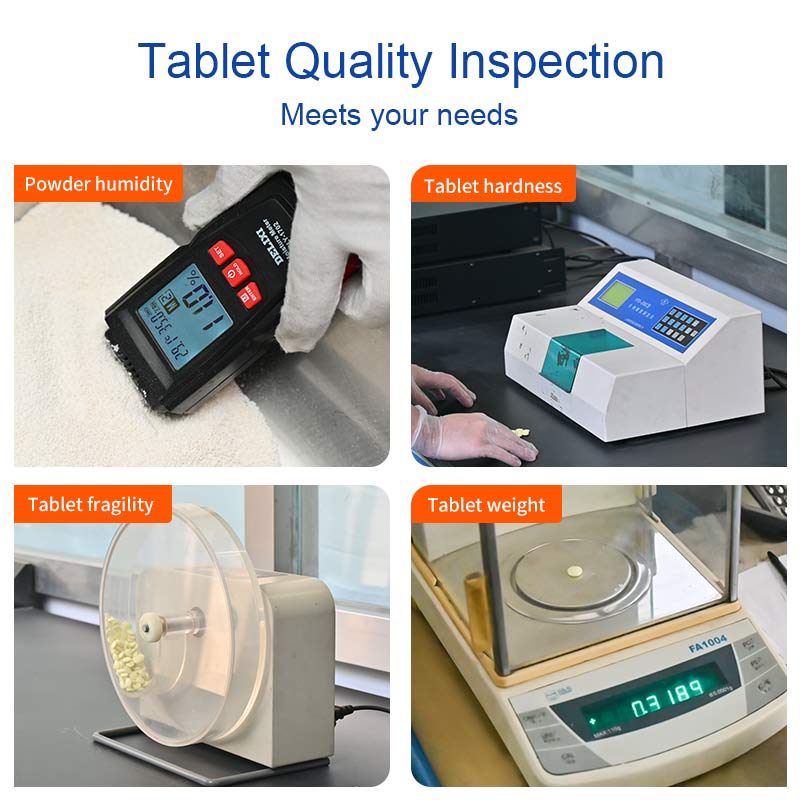
錠剤圧縮機は圧縮力を正確に制御することで錠剤の重量、厚さ、硬度を均一に保ち、信頼性が高く一貫した錠剤品質を実現します。

発泡錠圧縮機は、正確な投与と圧縮により材料の無駄を最小限に抑え、生産のコスト効率に貢献します。

製薬機械の打錠機は、さまざまな錠剤のサイズ、形、処方に対応できるため、メーカーは多種多様な医薬品や栄養補助食品を生産できます。

主要部品

How to Choose Tablet Press Molds (D, DD, B, BB)?

At Ruidapacking, we engineer the ZP-29D Tablet Press to deliver unmatched versatility for pharmaceutical, 栄養補助食品, and industrial applications. A critical factor in achieving perfect tablet consistency is selecting the right die type. Our tooling options—D, DD, B, and BB dies—cater to diverse production requirements, ensuring optimal efficiency, minimal waste, and superior tablet quality. Here’s how each die type benefits your operation:

1. D-Type Dies: Standardization & Cost Efficiency

D-Type dies are the industry standard for high-volume production of common round tablets (typically 5–25mm diameter). Their universal design ensures compatibility with most rotary tablet press and ancillary equipment. Benefits include:

Lower Tooling Costs: Widely available and economical for routine production.

Ease of Maintenance: Simplified cleaning and polishing extend die lifespan.

Rapid Changeovers: Interchangeability reduces downtime between batches.

Ideal for manufacturers producing large batches of vitamins, analgesics, or standard supplements where speed and cost control are priorities.

2. DD-Type Dies: Enhanced Durability for Abrasive Formulations

DD-Type dies feature double-deep (DD) specifications, with extended die lengths and reinforced construction. This design excels when processing abrasive or corrosive powder blends (鉱物, effervescent mixes). Key advantages:

Extended Service Life: Hardened steel resists wear from abrasive compounds, reducing replacement frequency.

Improved Compression Stability: Minimizes capping/laminating in challenging formulations.

Reduced Contamination Risk: Tight tolerances prevent material buildup in die bores.

Essential for producing tablets with high filler content, APIs, or granule blends demanding rigorous compression cycles.

3. B-Type Dies: Versatility for Complex Shapes & Small Batches

B-Type dies support multi-tip punches (caplet, oval, or custom shapes) and smaller tablet sizes. Their European-standard design (ISO 18084) offers flexibility for R&D or niche production:

Complex Geometries: Enables intricate embossing, break lines, and non-round shapes without compromising structural integrity.

R&D Agility: Perfect for prototyping new formulations or small-batch runs.

Reduced Material Waste: Precision alignment ensures uniform weight/ hardness in low-volume production.

Choose B-Type for premium supplements, veterinary tablets, or personalized medicine requiring unique branding or dosing precision.

4. BB-Type Dies: Specialized Performance for Micro-Tablets & High-Potency APIs

BB-Type dies are engineered for ultra-small tablets (<5んん) and high-potency active ingredients. Their smaller punch head diameter and enhanced guidance system deliver:

Unmatched Accuracy: Tight control over fill depth and compression for micro-dosing.

Minimal Cross-Contamination: Ideal for potent compounds requiring strict cleaning protocols.

Optimized Powder Flow: Prevents bridging in low-weight formulations.

Critical for pediatric drugs, hormone therapies, or effervescent micro-tablets where dosage consistency is non-negotiable.

Why Choose Ruidapacking for Your Needs?

cGMP Compliance: All tablet press machine meet USP, EU, and ISO standards for material traceability.

Custom Solutions: Request bespoke machine for sticky formulations.

Global Support: Global on-site debugging and technical guidance.

What Causes the Apparent Surplus of Powder on the Tablet Press Turntable?

Powder accumulation on the turret of tablet presses compromises tablet quality, causes cross-contamination, and increases machine wear. 下に, we dissect the root causes across three critical systems and provide actionable solutions.

1. Force Feeder System

Inconsistent Feed Flow: Gaps between feeder paddles and turntable allow powder leakage.

Hopper Geometry: Steep angles or poor surface polish cause powder bridging/stagnation.

Paddle Speed Mismatch: Too slow → inadequate fill; too fast → centrifugal scattering.

ソリューション:

A double-impeller forced feeder with a material cover prevents material overflow during high-speed operation, which could affect tablet weight. The feeder’s large surface area, approximately one-quarter the arc length of the turntable, improves powder filling capacity while preventing centrifugal force from causing powder stratification at high speeds. A clearance of ≤0.05mm between the feeder base and the turntable prevents powder leakage.

2. Powder Recirculation System

Due to the high-speed rotation of the turntable, the powder is thrown out in the middle mold, and the excess powder on the turntable causes secondary pollution.

ソリューション:

Configure residual powder recycling system. The powder return turntable will recycle the excess powder flowing out of the gap of the feeder to the powder return turntable under the power of the main turntable for secondary utilization. There is basically no powder on the disk surface, which improves the utilization efficiency of raw materials.

3. High-Speed Centrifugal Effects

Turret Surface Roughness: Microscopic pits (Ra>0.8μm) trap powder via adhesion.

Electrostatic Buildup: Friction-generated static attracts particles at >40 RPM speeds.

Coriolis Forces: Powder migrates radially outward at accelerations >2G.

ソリューション:

Apply conductive PTFE coating (surface resistance <10⁶ Ω) to turret.

Install ionizing air knives at 45° angles to turret edge (pressure: 0.5 bar).

Limit turret speed to ≤35 RPM for cohesive powders.

Critical Consequences of Ignoring Residue

Tablet Defects: Weight variation (>5% RSD), capping from contaminated dies.

Regulatory Risks: Cross-contamination breaches EU GMP standards.

Machine Damage: Powder ingress into bearings ↓ lifespan by 40%.

Ruidapacking’s new high-speed tablet press HGZP-40D can achieve zero residual powder on the turntable surface. The following designs have been made for the machine: first, it is equipped with a double-impeller forced feeder; second, a PTFE powder pressing plate is added after the forced feeder. When the powder is in the middle die, it is covered by the powder pressing plate. Even if the tablet press is running fast, the powder will not be thrown onto the turntable, but will stay in the powder pressing plate. The residual powder is then returned to the forced feeder through the powder circulation system. When the punch passes through the powder pressing plate, the upper punch just reaches the turntable surface and enters the middle die; third, the processing precision is high.

見積もり依頼

    *当社はお客様の機密性を尊重し、すべての情報は保護されます。