يسمح تصنيع العقود الصيدلانية لمالك المنتج بالاستعانة بمصادر خارجية للتطوير المختار, إنتاج, أو أنشطة التعبئة والتغليف لشريك تصنيع مؤهل. ويمكن أن يتراوح النطاق من إنتاج صيغة ثابتة إلى دعم نقل التكنولوجيا, توسيع نطاق العملية, دفعات تجارية, والتغليف النهائي.
يظهر نموذجان للخدمة بشكل متكرر في هذه المشاريع: منظمة تصنيع العقد, أو كبير مسؤولي التسويق, وتطوير العقود وتنظيم التصنيع, أو سي دي إم أو. وكثيرا ما تتداخل مسؤولياتهم, لكنهم عادةً ما يدخلون المشروع في مراحل مختلفة ويقدمون مستويات مختلفة من الدعم الفني.
ويعتمد نجاح أي من النموذجين على أكثر من الطاقة الإنتاجية المتاحة. يحتاج شريك التصنيع أيضًا إلى المعدات المناسبة, التحولات التي تسيطر عليها, إعدادات عملية قابلة للتكرار, إجراءات التنظيف الفعالة, أنظمة التفتيش, ومسؤوليات الجودة واضحة.
ما هو تصنيع العقود الصيدلانية?
التصنيع الصيدلاني التعاقدي هو ترتيب يقوم فيه مالك المنتج باستئجار منشأة خارجية لإكمال أنشطة التصنيع أو التعبئة والتغليف المحددة. يوفر مالك المنتج متطلبات المنتج, معايير الجودة, الإخراج المستهدف, ومواصفات السوق, بينما يقوم شريك التصنيع بتوريد المرافق, الموظفين, أنظمة الإنتاج, والإمكانيات الفنية اللازمة لإتمام العمل المتفق عليه.
ويختلف النطاق بين المشاريع. بعض الشركات لديها بالفعل تركيبة مستقرة ومعايير إنتاج ثابتة. إنهم يحتاجون بشكل أساسي إلى قدرة تصنيع إضافية, المعدات المؤهلة, أو الوصول إلى تنسيقات التغليف غير المتوفرة في منشآتهم الخاصة.
وتتطلب المشاريع الأخرى دعماً أوسع قبل أن يبدأ الإنتاج التجاري. يمكن أن يشمل ذلك تعديل الصياغة, تطوير العملية, نقل التكنولوجيا, الإنتاج التجريبي, تحسين المعلمة, دفعات التحقق من الصحة, والارتقاء من عملية أصغر إلى معدات الإنتاج الكاملة.
يمكن أن يشكل التغليف أيضًا جزءًا مهمًا من خدمة التصنيع التعاقدية. اعتمادا على المنتج والمنشأة, يستطيع شريك التصنيع التعامل معها:
- تغليف نفطة للأقراص والكبسولات الصلبة
- عد الأقراص والكبسولات وتعبئتها
- التعبئة والتغليف في أكياس أو عبوات للمساحيق والحبيبات
- تغطية الزجاجة, الختم التعريفي, وضع العلامات, والترميز
- التغليف بالكرتونة, إدراج النشرة, تقتيش, والرفض التلقائي
لا يؤدي الاستعانة بمصادر خارجية للإنتاج إلى إلغاء مسؤوليات الجودة الملقاة على عاتق مالك المنتج. يحتاج كلا الطرفين إلى إجراءات محددة بوضوح للموافقة على المواد, سجلات التصنيع, اختبار, الانحرافات, تغييرات العملية, الافراج عن المنتج, الشكاوى, ويتذكر. يتم عادةً تسجيل هذه المسؤوليات في اتفاقية جودة مكتوبة قبل بدء الإنتاج المنتظم.
لمجموعات العملاء الرئيسية لشركة Ruida Packing, يرتبط تصنيع العقود الصيدلانية بشكل خاص بمنتجات الجرعات الصلبة عن طريق الفم وتغليفها. منشأة تعاقدية تنتج الأقراص, كبسولات صلبة, مساحيق, أو الحبيبات غالبًا ما تحتاج إلى دعم أحجام الدفعات المختلفة, خصائص المنتج, تنسيقات الأدوات, أحجام الحاويات, ومواصفات التعبئة والتغليف عبر مشاريع العملاء المتعددة. وهذا يجعل مرونة الإنتاج وتوافق المعدات جزءًا أساسيًا من نموذج التصنيع.
CMO مقابل CDMO: ما هو الفرق?
يوفر CMO بشكل أساسي القدرة التصنيعية وتنفيذ الإنتاج. يقوم العميل عادةً بنقل صيغة ثابتة, المواصفات المعتمدة, وعملية محددة. يقوم مدير التسويق بعد ذلك بتكييف المشروع مع منشأته, استكمال أنشطة الإنتاج المتفق عليها, يسجل الدفعة, وتسليم المنتج النهائي وفقا للعقد.
يجمع CDMO بين دعم التطوير والتصنيع. ويمكن الانضمام في وقت سابق, عندما الصيغة, طريقة الإنتاج, النهج التحليلي, أو أن خطة التوسع لا تزال بحاجة إلى العمل. يمكن للشريك نفسه بعد ذلك دعم الدُفعات التجريبية, نقل العملية, تصديق, الإنتاج التجاري, والتعبئة والتغليف.
الحدود ليست مطلقة. تقدم بعض منظمات الإدارة الجماعية دعمًا للتطوير أو توسيع النطاق, بينما تتخصص بعض منظمات التنمية النظيفة في نطاق محدود من أشكال الجرعات. إن الاتفاقية الموقعة والإمكانيات الفعلية للمنشأة لها أهمية أكبر من الاسم المستخدم في تسويقها.
| مقارنة | مدير التسويق الرئيسي | CDMO |
| الدور الأساسي | القدرة على التصنيع والتنفيذ | التطوير والتصنيع المتكامل |
| نقطة دخول نموذجية | بعد أن يتم تعريف العملية إلى حد كبير | أثناء الصياغة, تطوير, أو توسيع النطاق |
| دعم الصياغة | يعتمد على المزود | وشملت عادة |
| نقل التكنولوجيا | يتلقى ويطبق عملية ثابتة | يساعد على تحسين ونقل العملية |
| توسيع النطاق | ينقل الإنتاج إلى المعدات المتاحة | ربط التنمية بالإنتاج التجاري |
| الدعم التحليلي | يختلف حسب المنشأة | عادة أوسع |
| أفضل ملاءمة | منتج محدد يحتاج إلى القدرة | منتج يحتاج إلى استمرارية التطوير |
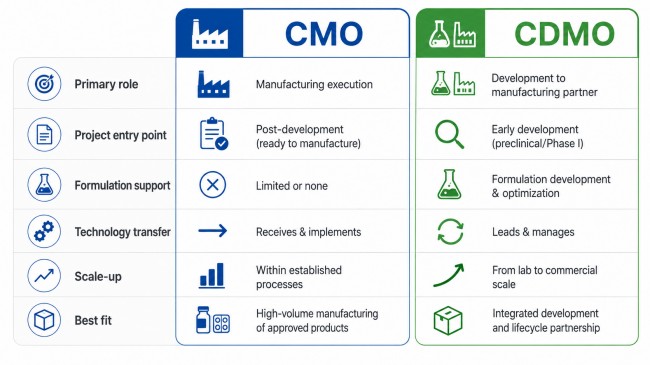
عندما يكون مدير التسويق التنفيذي هو الأفضل
غالبًا ما يكون مدير التسويق (CMO) مناسبًا عندما يكون لدى مالك المنتج بالفعل صيغة مستقرة, المواصفات المقررة, وفريق فني من ذوي الخبرة. الحاجة الرئيسية هي القدرة الموثوقة, التنفيذ المتسق, المعدات المؤهلة, أو الوصول إلى تنسيق التغليف المطلوب.
ويمكنه أيضًا دعم المنتجات الناضجة التي تحتاج إلى مصدر إنتاج ثانٍ أو إنتاج إضافي خلال فترات ارتفاع الطلب.
عندما يكون CDMO هو الأفضل
يعد CDMO أكثر ملاءمة عندما لا يزال المنتج بحاجة إلى أعمال صياغة, تحسين العملية, الدعم التحليلي, الإنتاج التجريبي, أو التوسع التجاري. إن الحفاظ على التطوير والتصنيع داخل مؤسسة واحدة يمكن أن يقلل من عمليات تسليم الموردين والحفاظ على الاستمرارية الفنية.
يجب أن يعكس الاختيار النهائي شكل الجرعة, نطاق الدفعة, السوق المستهدف, متطلبات التعبئة والتغليف, معدات, والجدول الزمني للمشروع.
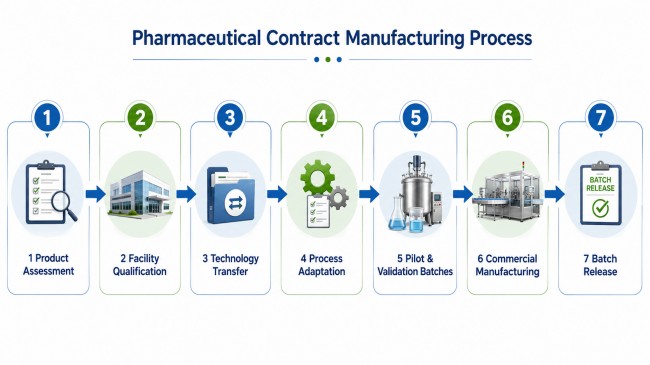
كيف تتم عملية تصنيع العقود الصيدلانية?
تبدأ العملية قبل دخول المواد إلى الإنتاج. كلا الطرفين يؤكد أولا ما إذا كان المشروع, منشأة, معدات, نظام الجودة, والجدول الزمني يتناسبان مع بعضهما البعض.
1. تقييم المنتج والمشروع
يقوم شريك التصنيع بمراجعة شكل الجرعة, حالة الصياغة, خصائص المواد, حجم الدفعة المستهدفة, الطلب السنوي, متطلبات السوق, وشكل التعبئة والتغليف. يحدد هذا التقييم ما إذا كانت المرافق والمعدات المتاحة تتوافق مع المنتج.
2. اتفاقية تأهيل المنشأة والجودة
يقوم مالك المنتج بتقييم نظام الجودة, الموظفين, معدات, ضوابط التنظيف, الوثائق, تاريخ الإنتاج, والقدرات المتاحة. ثم تحدد اتفاقية الجودة مسؤوليات المواد, سجلات الإنتاج, اختبار, الانحرافات, التغييرات, قرارات الافراج, الشكاوى, ويتذكر.
3. نقل التكنولوجيا
يمكن أن تتضمن حزمة النقل الصيغة الرئيسية, تعليمات التصنيع, معلمات العملية الحرجة, الأساليب التحليلية, متطلبات التنظيف, تحديد, وتفاصيل التعبئة والتغليف.
يتطلب النقل الناجح أن يفهم الفريق المتلقي كيف تتصرف المواد وكيف ينبغي إعادة إنتاج العملية على معدات مختلفة. إرسال المستندات وحده لا يكفي.
4. التكيف مع العمليات وتوسيع نطاقها
غالبًا ما تحتاج الإعدادات إلى التعديل عندما ينتقل الإنتاج من معدات التطوير إلى الآلات التجارية. وقت الخلط, سرعة المغذية, قوة الضغط, إعدادات جرعات الكبسولة, ظروف الطلاء, ويمكن أن تتغير معلمات الختم مع حجم المعدات وتصميمها.
الهدف هو حماية خصائص المنتج المهمة أثناء إنشاء عملية تجارية قابلة للتكرار.
5. دفعات تجريبية والتحقق من الصحة
تقوم الدفعات التجريبية أو الهندسية باختبار العملية المنقولة, تأكيد إعدادات المعدات, تقييم العائد, وتحديد حدود التشغيل. يمكن أن يتطلب المشروع أيضًا التعبئة والتغليف, تنظيف, أو معالجة دفعات التحقق من الصحة قبل الإنتاج الروتيني.
6. التصنيع والتعبئة التجارية
للمنتجات الصلبة عن طريق الفم, يمكن أن يشمل الإنتاج التجاري إعداد المواد, مزج أو تحبيب, ضغط القرص أو ملء الكبسولة, طلاء, التعبئة والتغليف الأولية, التغليف الثانوي, تقتيش, واستكمال سجل الدفعة.
تعتمد عملية المصب على الحزمة النهائية. حزم نفطة, زجاجات, أكياس, وتتطلب حزم العصا تغذية مختلفة, ختم, تقتيش, وترتيبات الكرتونة.
7. إصدار الدفعة والتحكم في التغيير
اختبار, مراجعة الوثيقة, يطلق, تخزين, والشحن إكمال الدفعة. تغييرات لاحقة على المواد, معدات, الأدوات, برمجة, التعبئة والتغليف, أو تتطلب إعدادات العملية تقييمًا رسميًا لأنها يمكن أن تؤثر على العملية المعتمدة.
ما هي متطلبات المعدات المهمة لتصنيع العقود الصيدلانية؟?
غالبًا ما يتعامل مصنعو العقود مع العديد من الصيغ, مواصفات العملاء, أحجام الدفعة, تنسيقات الأدوات, وأنواع الحزمة. يجب أن تدعم معداتهم هذا الاختلاف دون إضعاف التحكم في العملية.
أحجام دفعات مرنة ومخرجات مستقرة
السرعة القصوى ليست سوى جزء واحد من تخطيط السعة. وينبغي للمنشأة أيضًا أن تأخذ في الاعتبار أصغر دفعة عملية, خسارة البداية, استقرار منخفض السرعة, جهد التنظيف, ونطاق الإخراج القابل للاستخدام.
يجب أن تعمل مكبس الأقراص الدوارة بشكل متسق عبر نطاق السرعة المطلوب. يجب أن تتوافق آلة تعبئة الكبسولة مع أحجام الكبسولة, خصائص المسحوق, طريقة الجرعات, وحجم الدفعة. المعدات كبيرة الحجم يمكن أن تزيد من فقدان المواد, أعمال التنظيف, وتكلفة التشغيل على الطلبات الصغيرة.
التحولات السريعة والسيطرة عليها
تحل مرافق المنتجات المتعددة محل الأدوات اللوحية, أجزاء الجرعات الكبسولة, قوالب نفطة, أدلة الزجاجة, قنوات العد, وأجزاء تنسيق الكرتون بشكل متكرر.
التغيير الجيد يجمع بين السرعة والتحكم. يحتاج المشغلون إلى تحديد جزء واضح, إعدادات قابلة للتكرار, فحص خلوص الخط, والموافقة الموثقة قبل بدء الدفعة التالية. وقت التحول الأقصر له قيمة قليلة إذا كانت التسميات السابقة, أجزاء, أو تبقى الإعدادات على الخط.
قابلية التنظيف والتحكم في المسحوق
يجب أن توفر المعدات أجزاء يمكن الوصول إليها لتلامس المنتج, الأسطح الملساء, مناطق محدودة للاحتفاظ بالمسحوق, مكونات التغذية القابلة للإزالة, وجمع الغبار الفعال عند الاقتضاء.
هيكل الفولاذ المقاوم للصدأ وحده لا يضمن سهولة التنظيف. الأختام, زوايا, مسامير, أجزاء الجرعات, ونقاط النقل كلها تؤثر على الاحتفاظ بالبقايا. يجب أن تتوافق إجراءات التنظيف أيضًا مع المنتج والمخاطر المرتبطة بالدفعة التالية.
المعلمات المتكررة وسجلات الإنتاج
يحتاج المشغلون إلى التحكم في سرعة الماكينة وتسجيلها, ملء الوزن, قوة الضغط, درجة حرارة الختم, ضغط الختم, حدود الرفض, ووصفات دفعة.
يمكن لأنظمة PLC وHMI دعم إدارة الوصفات, وصول المستخدم, إنذار, وسجلات الإنتاج. يجب أن تتوافق وظائف البيانات مع متطلبات التوثيق الخاصة بالمنشأة والأسواق المستهدفة بدلاً من إضافتها كمطالبات امتثال غير مدعومة.
التفتيش في الخط والرفض التلقائي
اعتمادا على المنتج والحزمة, يمكن أن يشمل الخط مراقبة الوزن, كشف المنتج المفقود, التحقق من عدد الزجاجات, فحص الغطاء أو الرقائق, فحوصات الترميز, فحص التسمية, تدقيق الوزن, والرفض التلقائي.
يجب أن تكون خطة التفتيش مبنية على المخاطر. والغرض من ذلك هو السيطرة على العيوب التي يمكن أن تؤثر على جودة المنتج, إمكانية التتبع, أو اكتمال الحزمة, عدم تثبيت كل وحدة متاحة في كل سطر.
مرونة التغليف
قد يحتاج العملاء المختلفون إلى عبوات نفطة, زجاجات الدواء, أكياس, حزم العصا, التسميات, منشورات, أو كرتون بعدة أحجام. ولذلك ينبغي تقييم خط التعبئة والتغليف لنطاق التنسيق, طريقة التغذية, موقف الترميز, التوافق التفتيش, وقت التحول, وتكامل الخط.
| المنتج أو العملية | المعدات المشتركة | متطلبات تصنيع العقد الرئيسي |
| الأجهزة اللوحية | خلاط, المحبب, الصحافة قرص دوار, آلة طلاء | مرونة الأدوات, إعدادات مستقرة, والتنظيف في متناول الجميع |
| كبسولات صلبة | ماكينة تعبئة الكبسولات, ملمع كبسولة | تغيير حجم الكبسولة, اتساق الجرعات, والتحكم في المسحوق |
| التغليف بالبثور | ماكينة تعبئة البليستر, فحص الرؤية, آلة الكرتون | تغيير التنسيق, التحكم في الختم, والكشف عن المنتج المفقود |
| تغليف الزجاجة | خط عد الأقراص والكبسولات, الواضع المجفف, معدات السد والختم | دقة العد, مرونة الزجاجة, ومزامنة الخط |
| أكياس وحزم العصا | ماكينة تعبئة الأكياس أو ماكينة تعبئة الأكياس | نظام الجرعات المطابق للمادة |
| التغليف الثانوي | معدات وضع العلامات والتعبئة في الكرتون | دقة الترميز, مراقبة النشرة, والتعامل مع التنسيقات المتعددة |
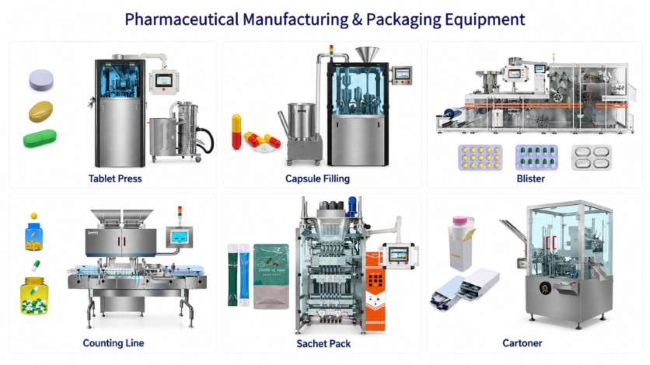
تقوم Ruida Packing بتوريد مكبس الأقراص, آلة تعبئة الكبسولات الصلبة, آلة نفطة, آلة تعبئة الأقراص أو الكبسولات , آلة تعبئة الأكياس, ومعدات التغليف الكرتوني لمشاريع إنتاج وتعبئة الأدوية. لمنشأة CMO أو CDMO, يجب أن يبدأ اختيار المعدات بشكل الجرعة, نطاق الدفعة, متطلبات التنظيف, تردد التحول, ومواصفات الحزمة بدلاً من الحد الأقصى للإنتاج المعلن عنه وحده.
كيف ينبغي للشركات تقييم شريك تصنيع العقود الصيدلانية?
يحتاج الشريك القادر إلى أكثر من مجرد القدرة الإنتاجية الاحتياطية. خبرتها الفنية, معدات, نظام الجودة, الوثائق, والاتصالات كلها تؤثر على أداء المشروع.
يجب أن يغطي التقييم:
- تجربة شكل الجرعة: معرفة نوع المنتج, السلوك المادي, مخاطر العملية, وطريقة التغليف.
- الجودة والتوثيق: عمليات التدقيق, معالجة الانحراف, السيطرة على التغيير, سجلات التحقق من الصحة, إدارة البيانات, وتوثيق الدفعة.
- القدرة وتناسب الدفعة: الحد الأدنى لحجم الدفعة, فتحات الإنتاج المتاحة, القدرة على التوسع, مهلة, ومساحة للنمو.
- المعدات والتعبئة والتغليف مناسبة: الآلات الموجودة, الأدوات, أنظمة التفتيش, نطاق التنسيق, وأي استثمار مطلوب.
- التواصل والمسؤولية: ملكية المشروع, تردد التقارير, سير عمل الموافقة, اتصالات الانحراف, وسلطة القرار.
الشريك الأفضل ليس دائمًا أكبر منشأة. يتمتع CMO أو CDMO المناسب بخبرة المنتج, حجم الإنتاج, مرونة المعدات, ضوابط الجودة, ودعم المشروع المطلوب للمهمة المحددة.
خاتمة
يوفر تصنيع العقود الصيدلانية إمكانية الوصول إلى القدرة الإنتاجية, الدعم الفني, وأنظمة التعبئة والتغليف دون مطالبة كل مالك منتج ببناء منشأة كاملة.
يعتبر مدير التسويق (CMO) مناسبًا بشكل عام للمنتجات القائمة التي تحتاج بشكل أساسي إلى تصنيع موثوق. يدعم نظام إدارة التنمية والتطوير مسارًا أوسع من التطوير ونقل التكنولوجيا إلى الإنتاج التجاري. في كلا النموذجين, النجاح يعتمد على مسؤوليات واضحة, عملية إنتاج خاضعة للرقابة, و المعدات الصيدلانية مختارة للدفعة الحقيقية, تنظيف, التحول, تقتيش, ومتطلبات التعبئة والتغليف.
التعليمات
ما هو تصنيع العقود الصيدلانية?
إنه ترتيب يقوم فيه مالك المنتج بتعيين تصنيع محدد, اختبار, أو أنشطة التعبئة والتغليف إلى منشأة خارجية مؤهلة. تم توثيق المسؤوليات في اتفاقيات الخدمة والجودة.
ما هو الفرق الرئيسي بين CMO و CDMO؟?
يقوم مدير التسويق بشكل رئيسي بتصنيع منتج راسخ. يدعم CDMO أيضًا أعمال الصياغة, تحسين العملية, نقل التكنولوجيا, الأنشطة التحليلية, وتوسيع نطاقها. تختلف نطاقات الخدمة الفعلية بين مقدمي الخدمة.
هل يشمل تصنيع العقود الصيدلانية التعبئة والتغليف؟?
نعم. يمكن أن تشمل الخدمات تغليف الفقاعة, تعبئة الأقراص والكبسولات, آلة تعبئة الأكياس أو آلة تعبئة الأكياس, وضع العلامات, الترميز, تقتيش, والتعبئة في الكرتون عندما يكون لدى المنشأة المعدات المطلوبة والإجراءات المعتمدة.
من المسؤول عن جودة المنتج?
يحتفظ كلا الطرفين بمسؤوليات محددة. يجب أن تنص اتفاقية الجودة على من يتحكم في المواد, إنتاج, اختبار, الانحرافات, التغييرات, يطلق, الشكاوى, ويتذكر.
ما هي المعدات اللازمة لتصنيع عقود الجرعات الصلبة عن طريق الفم?
يمكن أن يتطلب المشروع معدات الخلط أو التحبيب, مكبس الأقراص الدوارة أو آلة تعبئة الكبسولة, معدات الطلاء, أنظمة تعبئة الفقاعات أو الزجاجات, وضع العلامات, تقتيش, وماكينات تصنيع الكرتون. التكوين النهائي يعتمد على شكل الجرعة, حجم الدفعة, خصائص المواد, ونوع الحزمة.
المراجع
المفوضية الأوروبية, حجم يودراليكس 4, الفصل 7: أنشطة الاستعانة بمصادر خارجية.