फार्मास्युटिकल अनुबंध विनिर्माण उत्पाद मालिक को चयनित विकास को आउटसोर्स करने की अनुमति देता है, उत्पादन, या किसी योग्य विनिर्माण भागीदार को पैकेजिंग गतिविधियाँ. इसका दायरा एक स्थापित फॉर्मूला तैयार करने से लेकर प्रौद्योगिकी हस्तांतरण का समर्थन करने तक हो सकता है, प्रक्रिया स्केल-अप, वाणिज्यिक बैच, और अंतिम पैकेजिंग.
इन परियोजनाओं में दो सेवा मॉडल अक्सर दिखाई देते हैं: अनुबंध विनिर्माण संगठन, या सी.एम.ओ, और अनुबंध विकास और विनिर्माण संगठन, या सीडीएमओ. उनकी ज़िम्मेदारियाँ अक्सर ओवरलैप होती हैं, लेकिन वे आम तौर पर विभिन्न चरणों में एक परियोजना में प्रवेश करते हैं और विभिन्न स्तरों पर तकनीकी सहायता प्रदान करते हैं.
किसी भी मॉडल की सफलता उपलब्ध उत्पादन क्षमता से अधिक पर निर्भर करती है. विनिर्माण भागीदार को भी उपयुक्त उपकरण की आवश्यकता होती है, नियंत्रित परिवर्तन, दोहराने योग्य प्रक्रिया सेटिंग्स, प्रभावी सफाई प्रक्रियाएं, निरीक्षण प्रणाली, और स्पष्ट गुणवत्ता जिम्मेदारियाँ.
फार्मास्युटिकल कॉन्ट्रैक्ट मैन्युफैक्चरिंग क्या है??
फार्मास्युटिकल अनुबंध निर्माण एक ऐसी व्यवस्था है जिसमें एक उत्पाद मालिक परिभाषित विनिर्माण या पैकेजिंग गतिविधियों को पूरा करने के लिए एक बाहरी सुविधा को किराए पर लेता है. उत्पाद स्वामी उत्पाद की आवश्यकताएं प्रदान करता है, गुणवत्ता मानक, लक्ष्य आउटपुट, और बाज़ार विशिष्टताएँ, जबकि विनिर्माण भागीदार सुविधाओं की आपूर्ति करता है, कार्मिक, उत्पादन प्रणालियाँ, और सहमत कार्य को पूरा करने के लिए आवश्यक तकनीकी क्षमताएं.
परियोजनाओं के बीच दायरा अलग-अलग होता है. कुछ कंपनियों के पास पहले से ही एक स्थिर फॉर्मूलेशन और स्थापित उत्पादन पैरामीटर हैं. उन्हें मुख्य रूप से अतिरिक्त विनिर्माण क्षमता की आवश्यकता है, योग्य उपकरण, या उन पैकेजिंग प्रारूपों तक पहुंच जो उनकी अपनी सुविधा में उपलब्ध नहीं हैं.
व्यावसायिक उत्पादन शुरू होने से पहले अन्य परियोजनाओं को व्यापक समर्थन की आवश्यकता होती है. इसमें फॉर्मूलेशन समायोजन शामिल हो सकता है, प्रक्रिया विकास, प्रौद्योगिकी हस्तांतरण, पायलट उत्पादन, पैरामीटर अनुकूलन, सत्यापन बैच, और एक छोटी प्रक्रिया से पूर्ण उत्पादन उपकरण तक स्केल-अप.
पैकेजिंग भी अनुबंध निर्माण सेवा का एक महत्वपूर्ण हिस्सा बन सकती है. उत्पाद और सुविधा पर निर्भर करता है, विनिर्माण भागीदार संभाल सकता है:
- गोलियों और हार्ड कैप्सूल के लिए ब्लिस्टर पैकेजिंग
- टेबलेट और कैप्सूल की गिनती और बोतलबंद करना
- पाउडर और कणिकाओं के लिए पाउच या स्टिक पैक पैकेजिंग
- बोतल कैपिंग, प्रेरण सीलिंग, लेबलिंग, और कोडिंग
- कार्टनिंग, पत्रक प्रविष्टि, निरीक्षण, और स्वचालित अस्वीकृति
आउटसोर्सिंग उत्पादन से उत्पाद स्वामी की गुणवत्ता संबंधी जिम्मेदारियाँ समाप्त नहीं होती हैं. सामग्री अनुमोदन के लिए दोनों पक्षों को स्पष्ट रूप से परिभाषित प्रक्रियाओं की आवश्यकता है, विनिर्माण रिकॉर्ड, परीक्षण, विचलन, प्रक्रिया परिवर्तन, उत्पाद विमोचन, शिकायतों, और याद दिलाता है. नियमित उत्पादन शुरू होने से पहले इन जिम्मेदारियों को आम तौर पर एक लिखित गुणवत्ता समझौते में दर्ज किया जाता है.
रुइडा पैकिंग के मुख्य ग्राहक समूहों के लिए, फार्मास्युटिकल अनुबंध विनिर्माण विशेष रूप से मौखिक ठोस खुराक उत्पादों और उनकी पैकेजिंग के लिए प्रासंगिक है. टैबलेट बनाने वाली एक अनुबंध सुविधा, कठोर कैप्सूल, पाउडर, या कणिकाओं को अक्सर विभिन्न बैच आकारों का समर्थन करने की आवश्यकता होती है, उत्पाद विशेषताएँ, टूलींग प्रारूप, कंटेनर आकार, और अनेक ग्राहक परियोजनाओं में पैकेजिंग विशिष्टताएँ. यह उत्पादन लचीलेपन और उपकरण अनुकूलता को विनिर्माण मॉडल का केंद्रीय भाग बनाता है.
सीएमओ बनाम सीडीएमओ: क्या अंतर है?
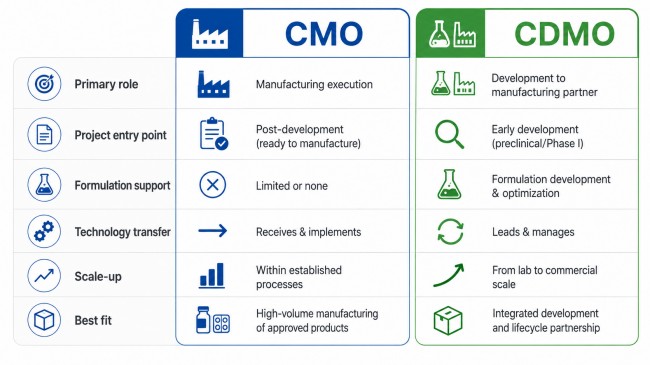
एक सीएमओ मुख्य रूप से विनिर्माण क्षमता और उत्पादन निष्पादन प्रदान करता है. ग्राहक आम तौर पर एक स्थापित फॉर्मूला स्थानांतरित करता है, अनुमोदित विशिष्टताएँ, और एक परिभाषित प्रक्रिया. इसके बाद सीएमओ परियोजना को अपनी सुविधा के अनुसार अनुकूलित करता है, सहमत उत्पादन गतिविधियों को पूरा करता है, बैच रिकॉर्ड करता है, और अनुबंध के अनुसार तैयार उत्पाद वितरित करता है.
एक सीडीएमओ विनिर्माण के साथ विकास सहायता को जोड़ता है. यह पहले भी शामिल हो सकता है, जब सूत्र, उत्पाद विधि, विश्लेषणात्मक दृष्टिकोण, या स्केल-अप योजना पर अभी भी काम करने की आवश्यकता है. फिर वही भागीदार पायलट बैचों का समर्थन कर सकता है, प्रक्रिया स्थानांतरण, मान्यकरण, वाणिज्यिक उत्पादन, और पैकेजिंग.
सीमा निरपेक्ष नहीं है. कुछ सीएमओ विकास या स्केल-अप सहायता प्रदान करते हैं, जबकि कुछ सीडीएमओ खुराक रूपों की एक सीमित श्रृंखला में विशेषज्ञ हैं. हस्ताक्षरित समझौता और सुविधा की वास्तविक क्षमताएं इसके विपणन में उपयोग किए गए नाम से अधिक मायने रखती हैं.
| तुलना | सीएमओ | सीडीएमओ |
| प्राथमिक भूमिका | विनिर्माण क्षमता और निष्पादन | एकीकृत विकास और विनिर्माण |
| विशिष्ट प्रवेश बिंदु | प्रक्रिया काफी हद तक परिभाषित होने के बाद | सूत्रीकरण के दौरान, विकास, या स्केल-अप |
| सूत्रीकरण समर्थन | प्रदाता पर निर्भर करता है | आम तौर पर शामिल है |
| प्रौद्योगिकी हस्तांतरण | एक स्थापित प्रक्रिया प्राप्त करता है और लागू करता है | प्रक्रिया को अनुकूलित और स्थानांतरित करने में मदद करता है |
| स्केल अप | उत्पादन को उपलब्ध उपकरणों पर ले जाता है | विकास को व्यावसायिक उत्पादन से जोड़ता है |
| विश्लेषणात्मक समर्थन | सुविधा के अनुसार भिन्न होता है | आमतौर पर व्यापक |
| सबसे अच्छा फिट | एक परिभाषित उत्पाद जिसके लिए क्षमता की आवश्यकता होती है | एक उत्पाद जिसे विकास की निरंतरता की आवश्यकता है |
जब एक सीएमओ बेहतर फिट होता है
सीएमओ अक्सर तब उपयुक्त होता है जब उत्पाद स्वामी के पास पहले से ही एक स्थिर फॉर्मूला हो, स्थापित विशिष्टताएँ, और एक अनुभवी तकनीकी टीम. मुख्य आवश्यकता विश्वसनीय क्षमता है, लगातार निष्पादन, योग्य उपकरण, या किसी आवश्यक पैकेजिंग प्रारूप तक पहुंच.
यह उन परिपक्व उत्पादों का भी समर्थन कर सकता है जिन्हें उच्च मांग की अवधि के दौरान दूसरे उत्पादन स्रोत या अतिरिक्त आउटपुट की आवश्यकता होती है.
जब एक सीडीएमओ बेहतर फिट हो
सीडीएमओ तब अधिक उपयुक्त होता है जब उत्पाद को अभी भी फॉर्मूलेशन कार्य की आवश्यकता होती है, प्रक्रिया अनुकूलन, विश्लेषणात्मक समर्थन, पायलट उत्पादन, या वाणिज्यिक स्केल-अप. विकास और विनिर्माण को एक ही संगठन के भीतर रखने से आपूर्तिकर्ता हैंडओवर को कम किया जा सकता है और तकनीकी निरंतरता बनाए रखी जा सकती है.
अंतिम विकल्प को खुराक के रूप को प्रतिबिंबित करना चाहिए, बैच रेंज, बाजार लक्ष्य, पैकेजिंग आवश्यकता, उपकरण, और परियोजना अनुसूची.
फार्मास्युटिकल अनुबंध विनिर्माण प्रक्रिया कैसे काम करती है?
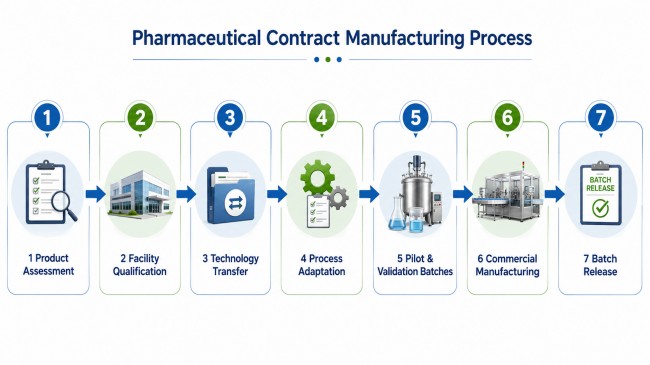
सामग्री के उत्पादन में प्रवेश करने से पहले प्रक्रिया शुरू हो जाती है. दोनों पक्ष पहले पुष्टि करें कि क्या परियोजना, सुविधा, उपकरण, गुणवत्ता प्रणाली, और शेड्यूल एक दूसरे के अनुकूल है.
1. उत्पाद और परियोजना मूल्यांकन
विनिर्माण भागीदार खुराक फॉर्म की समीक्षा करता है, सूत्रीकरण की स्थिति, भौतिक विशेषताएँ, लक्ष्य बैच का आकार, वार्षिक मांग, बाज़ार की आवश्यकताएँ, और पैकेजिंग प्रारूप. यह मूल्यांकन यह पहचानता है कि उपलब्ध सुविधा और उपकरण उत्पाद से मेल खाते हैं या नहीं.
2. सुविधा योग्यता और गुणवत्ता समझौता
उत्पाद स्वामी गुणवत्ता प्रणाली का मूल्यांकन करता है, कार्मिक, उपकरण, सफाई नियंत्रण, प्रलेखन, उत्पादन इतिहास, और उपलब्ध क्षमता. गुणवत्ता समझौता तब सामग्रियों के लिए जिम्मेदारियाँ सौंपता है, उत्पादन रिकॉर्ड, परीक्षण, विचलन, परिवर्तन, निर्णय जारी करें, शिकायतों, और याद दिलाता है.
3. प्रौद्योगिकी हस्तांतरण
स्थानांतरण पैकेज में मास्टर फॉर्मूला शामिल हो सकता है, विनिर्माण निर्देश, महत्वपूर्ण प्रक्रिया पैरामीटर, विश्लेषणात्मक तरीकों, सफाई की आवश्यकताएँ, विशेष विवरण, और पैकेजिंग विवरण.
एक सफल स्थानांतरण के लिए प्राप्तकर्ता टीम को यह समझने की आवश्यकता होती है कि सामग्री कैसे व्यवहार करती है और प्रक्रिया को विभिन्न उपकरणों पर कैसे पुन: प्रस्तुत किया जाना चाहिए. केवल दस्तावेज़ भेजना ही पर्याप्त नहीं है.
4. प्रक्रिया अनुकूलन और स्केल-अप
जब उत्पादन विकास उपकरण से वाणिज्यिक मशीनरी की ओर बढ़ता है तो सेटिंग्स को अक्सर समायोजन की आवश्यकता होती है. मिश्रण का समय, फीडर गति, संपीड़न बल, कैप्सूल खुराक सेटिंग, कोटिंग की स्थिति, और सीलिंग पैरामीटर उपकरण के आकार और डिज़ाइन के साथ बदल सकते हैं.
इसका उद्देश्य दोहराने योग्य व्यावसायिक प्रक्रिया स्थापित करते हुए महत्वपूर्ण उत्पाद विशेषताओं की रक्षा करना है.
5. पायलट और सत्यापन बैच
पायलट या इंजीनियरिंग बैच स्थानांतरित प्रक्रिया का परीक्षण करते हैं, उपकरण सेटिंग्स की पुष्टि करें, उपज का मूल्यांकन करें, और परिचालन सीमाओं की पहचान करें. प्रोजेक्ट को पैकेजिंग की भी आवश्यकता हो सकती है, सफाई, या नियमित उत्पादन से पहले सत्यापन बैचों की प्रक्रिया करें.
6. वाणिज्यिक विनिर्माण और पैकेजिंग
मौखिक ठोस उत्पादों के लिए, व्यावसायिक उत्पादन में सामग्री की तैयारी शामिल हो सकती है, सम्मिश्रण या दानेदार बनाना, टैबलेट संपीड़न या कैप्सूल भरना, कलई करना, प्राथमिक पैकेजिंग, द्वितीयक पैकेजिंग, निरीक्षण, और बैच रिकॉर्ड पूरा होना.
डाउनस्ट्रीम प्रक्रिया अंतिम पैक पर निर्भर करती है. ब्लिस्टर पैक, बोतलों, पाउच, और स्टिक पैक को अलग-अलग फीडिंग की आवश्यकता होती है, मुद्रण, निरीक्षण, और कार्टिंग व्यवस्था.
7. बैच रिलीज़ और परिवर्तन नियंत्रण
परीक्षण, दस्तावेज़ समीक्षा, मुक्त करना, भंडारण, और शिपमेंट बैच को पूरा करता है. बाद में सामग्री में परिवर्तन होता है, उपकरण, टूलींग, सॉफ़्टवेयर, पैकेजिंग, या प्रक्रिया सेटिंग्स के लिए औपचारिक मूल्यांकन की आवश्यकता होती है क्योंकि वे अनुमोदित प्रक्रिया को प्रभावित कर सकते हैं.
फार्मास्युटिकल अनुबंध विनिर्माण के लिए कौन सी उपकरण आवश्यकताएँ मायने रखती हैं?
अनुबंध निर्माता अक्सर कई फ़ॉर्मूले संभालते हैं, ग्राहक विशिष्टताएँ, बैच आकार, टूलींग प्रारूप, और पैकेज प्रकार. उनके उपकरणों को प्रक्रिया नियंत्रण को कमजोर किए बिना इस भिन्नता का समर्थन करना चाहिए.
लचीले बैच आकार और स्थिर आउटपुट
अधिकतम गति क्षमता नियोजन का केवल एक हिस्सा है. सुविधा को सबसे छोटे व्यावहारिक बैच पर भी विचार करना चाहिए, स्टार्ट-अप हानि, कम गति स्थिरता, सफाई का प्रयास, और प्रयोग करने योग्य आउटपुट रेंज.
एक रोटरी टैबलेट प्रेस को आवश्यक गति सीमा में लगातार काम करना चाहिए. कैप्सूल भरने वाली मशीन को कैप्सूल के आकार से मेल खाना चाहिए, पाउडर की विशेषताएं, खुराक देने की विधि, और बैच की मात्रा. बड़े आकार के उपकरण भौतिक हानि को बढ़ा सकते हैं, सफ़ाई का काम, और छोटे ऑर्डर पर परिचालन लागत.
तेज़ और नियंत्रित परिवर्तन
बहु-उत्पाद सुविधाएं टैबलेट टूलींग का स्थान ले लेती हैं, कैप्सूल खुराक भाग, छाले के सांचे, बोतल गाइड, चैनलों की गिनती, और प्रारूप भागों को अधिक बार कार्टन करना.
एक अच्छा बदलाव गति को नियंत्रण के साथ जोड़ता है. ऑपरेटरों को स्पष्ट भाग पहचान की आवश्यकता है, दोहराने योग्य सेटिंग्स, लाइन-क्लीयरेंस जाँच, और अगला बैच शुरू होने से पहले दस्तावेज़ीकृत अनुमोदन. यदि पिछले लेबल हों तो कम परिवर्तन समय का कोई महत्व नहीं है, पार्ट्स, या सेटिंग्स लाइन पर रहती हैं.
सफ़ाई योग्यता और पाउडर नियंत्रण
उपकरण को सुलभ उत्पाद-संपर्क हिस्से उपलब्ध कराने चाहिए, चिकनी सतहें, सीमित पाउडर-प्रतिधारण क्षेत्र, हटाने योग्य फीडिंग घटक, और जहां आवश्यक हो प्रभावी धूल संग्रहण.
अकेले स्टेनलेस स्टील निर्माण आसान सफाई की गारंटी नहीं देता है. मुहरें, कोने, शिकंजा, खुराक देने वाले हिस्से, और स्थानांतरण बिंदु सभी अवशेष अवधारण को प्रभावित करते हैं. सफाई प्रक्रियाओं को उत्पाद और निम्नलिखित बैच से जुड़े जोखिम से भी मेल खाना चाहिए.
दोहराए जाने योग्य पैरामीटर और उत्पादन रिकॉर्ड
ऑपरेटरों को मशीन की गति को नियंत्रित और रिकॉर्ड करने की आवश्यकता है, वजन भरें, संपीड़न बल, सीलिंग तापमान, सीलिंग दबाव, अस्वीकृति सीमा, और बैच रेसिपी.
पीएलसी और एचएमआई सिस्टम रेसिपी प्रबंधन का समर्थन कर सकते हैं, उपयोगकर्ता की पहुंच, एलार्म, और उत्पादन रिकॉर्ड. डेटा फ़ंक्शंस को सुविधा की दस्तावेज़ीकरण आवश्यकताओं और लक्षित बाज़ारों से मेल खाना चाहिए न कि उन्हें असमर्थित अनुपालन दावों के रूप में जोड़ा जाना चाहिए.
इन-लाइन निरीक्षण और स्वचालित अस्वीकृति
उत्पाद और पैकेज पर निर्भर करता है, एक पंक्ति में वजन की निगरानी शामिल हो सकती है, गुम-उत्पाद का पता लगाना, बोतल गिनती सत्यापन, टोपी या पन्नी निरीक्षण, कोडिंग जाँच, लेबल निरीक्षण, जांचना, और स्वचालित अस्वीकृति.
निरीक्षण योजना जोखिम आधारित होनी चाहिए. इसका उद्देश्य उन दोषों को नियंत्रित करना है जो उत्पाद की गुणवत्ता को प्रभावित कर सकते हैं, पता लगाने की क्षमता, या पैकेज पूर्णता, प्रत्येक पंक्ति पर प्रत्येक उपलब्ध मॉड्यूल को स्थापित न करें.
पैकेजिंग लचीलापन
विभिन्न ग्राहकों को ब्लिस्टर पैक की आवश्यकता हो सकती है, दवा की बोतलें, पाउच, छड़ी पैक, लेबल, पत्रक, या कई आकारों में डिब्बों. इसलिए पैकेजिंग लाइन का मूल्यांकन प्रारूप सीमा के लिए किया जाना चाहिए, खिलाने की विधि, कोडिंग स्थिति, निरीक्षण अनुकूलता, बदलाव का समय, और लाइन एकीकरण.
| उत्पाद या प्रक्रिया | सामान्य उपकरण | प्रमुख अनुबंध विनिर्माण आवश्यकताएँ |
| गोलियाँ | मिक्सर, दानेदार, रोटरी टैबलेट प्रेस, लेपन मशीन | टूलींग लचीलापन, स्थिर सेटिंग्स, और सुलभ सफाई |
| कठोर कैप्सूल | कैप्सूल भरने की मशीन, कैप्सूल पॉलिशर | कैप्सूल-आकार परिवर्तन, खुराक की निरंतरता, और पाउडर नियंत्रण |
| ब्लिस्टर पैकेजिंग | ब्लिस्टर पैकेजिंग मशीन, दृष्टि निरीक्षण, कार्टनिंग मशीन | प्रारूप परिवर्तन, सील नियंत्रण, और गुम-उत्पाद का पता लगाना |
| बोतल पैकेजिंग | टेबलेट और कैप्सूल गिनती लाइन, शुष्कक प्रविष्टकर्ता, कैपिंग और सीलिंग उपकरण | सटीकता गिनें, बोतल का लचीलापन, और लाइन तुल्यकालन |
| पाउच और स्टिक पैक | पाउच पैक मशीन या स्टिक पैक मशीन | सामग्री से मेल खाने वाली खुराक प्रणाली |
| द्वितीयक पैकेजिंग | लेबलिंग और कार्टनिंग उपकरण | कोडिंग सटीकता, पत्रक नियंत्रण, और बहु-प्रारूप हैंडलिंग |
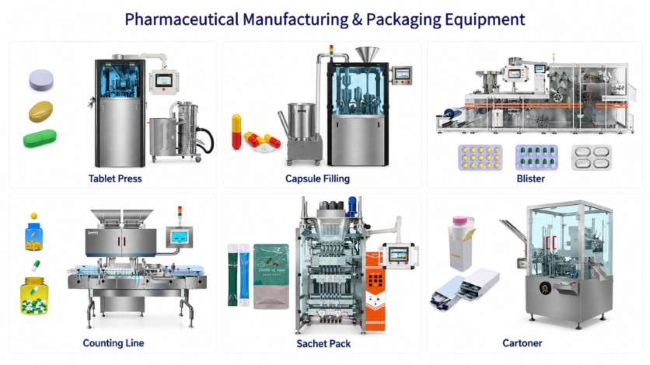
रुइडा पैकिंग टैबलेट प्रेस की आपूर्ति करती है, हार्ड-कैप्सूल भरने की मशीन, ब्लिस्टर मशीन, टैबलेट या कैप्सूल बॉटलिंग मशीन , पाउच पैकेजिंग मशीन, और फार्मास्युटिकल उत्पादन और पैकेजिंग परियोजनाओं के लिए कार्टनिंग उपकरण. सीएमओ या सीडीएमओ सुविधा के लिए, उपकरण का चयन खुराक के रूप से शुरू होना चाहिए, बैच रेंज, सफाई की आवश्यकता, बदलाव की आवृत्ति, और अकेले अधिकतम विज्ञापित आउटपुट के बजाय पैकेज विनिर्देश.
कंपनियों को फार्मास्युटिकल कॉन्ट्रैक्ट मैन्युफैक्चरिंग पार्टनर का मूल्यांकन कैसे करना चाहिए?
एक सक्षम भागीदार को अतिरिक्त उत्पादन क्षमता से अधिक की आवश्यकता होती है. इसका तकनीकी अनुभव, उपकरण, गुणवत्ता प्रणाली, प्रलेखन, और संचार सभी परियोजना प्रदर्शन को प्रभावित करते हैं.
मूल्यांकन को कवर करना चाहिए:
- खुराक-रूप का अनुभव: उत्पाद प्रकार का ज्ञान, भौतिक व्यवहार, प्रक्रिया जोखिम, और पैकेजिंग विधि.
- गुणवत्ता और दस्तावेज़ीकरण: ऑडिट, विचलन प्रबंधन, नियंत्रण बदलें, सत्यापन रिकॉर्ड, डेटा प्रबंधन, और बैच दस्तावेज़ीकरण.
- क्षमता और बैच फिट: न्यूनतम बैच आकार, उपलब्ध उत्पादन स्लॉट, स्केल-अप क्षमता, समय सीमा, और विकास की गुंजाइश.
- उपकरण और पैकेजिंग फिट: मौजूदा मशीनें, टूलींग, निरीक्षण प्रणाली, प्रारूप सीमा, और कोई आवश्यक निवेश.
- संचार और जिम्मेदारी: परियोजना का स्वामित्व, रिपोर्टिंग आवृत्ति, अनुमोदन कार्यप्रवाह, विचलन संचार, और निर्णय प्राधिकारी.
सबसे अच्छा साथी हमेशा सबसे बड़ी सुविधा नहीं होता है. सही सीएमओ या सीडीएमओ के पास उत्पाद का अनुभव है, उत्पादन का पैमाना, उपकरण लचीलापन, गुणवत्ता नियंत्रण, और विशिष्ट असाइनमेंट के लिए आवश्यक प्रोजेक्ट समर्थन.
निष्कर्ष
फार्मास्युटिकल अनुबंध विनिर्माण उत्पादन क्षमता तक पहुंच प्रदान करता है, तकनीकी समर्थन, और प्रत्येक उत्पाद मालिक को एक पूर्ण सुविधा बनाने की आवश्यकता के बिना पैकेजिंग सिस्टम.
एक सीएमओ आम तौर पर स्थापित उत्पादों के लिए उपयुक्त होता है जिन्हें मुख्य रूप से विश्वसनीय विनिर्माण की आवश्यकता होती है. एक सीडीएमओ विकास और प्रौद्योगिकी हस्तांतरण से लेकर व्यावसायिक उत्पादन तक के व्यापक मार्ग का समर्थन करता है. दोनों मॉडलों में, सफलता स्पष्ट जिम्मेदारियों पर निर्भर करती है, एक नियंत्रित उत्पादन प्रक्रिया, और फार्मास्युटिकल उपकरण वास्तविक बैच के लिए चयनित, सफाई, बदलाव, निरीक्षण, और पैकेजिंग आवश्यकताएँ.
अक्सर पूछे जाने वाले प्रश्न
फार्मास्युटिकल कॉन्ट्रैक्ट मैन्युफैक्चरिंग क्या है??
यह एक ऐसी व्यवस्था है जिसमें एक उत्पाद स्वामी परिभाषित विनिर्माण कार्य सौंपता है, परीक्षण, या किसी बाहरी योग्य सुविधा के लिए पैकेजिंग गतिविधियाँ. जिम्मेदारियाँ सेवा और गुणवत्ता समझौतों में दर्ज़ हैं.
सीएमओ और सीडीएमओ के बीच मुख्य अंतर क्या है??
एक सीएमओ मुख्य रूप से एक स्थापित उत्पाद का निर्माण करता है. एक सीडीएमओ फॉर्मूलेशन कार्य का भी समर्थन करता है, प्रक्रिया अनुकूलन, प्रौद्योगिकी हस्तांतरण, विश्लेषणात्मक गतिविधियाँ, और स्केल-अप. वास्तविक सेवा क्षेत्र प्रदाताओं के बीच भिन्न-भिन्न होते हैं.
क्या फार्मास्युटिकल अनुबंध निर्माण में पैकेजिंग शामिल है??
हाँ. सेवाओं में ब्लिस्टर पैकेजिंग शामिल हो सकती है, टैबलेट और कैप्सूल की बोतल, पाउच पैक मशीन या स्टिक पैक मशीन, लेबलिंग, कोडन, निरीक्षण, और जब सुविधा में आवश्यक उपकरण और अनुमोदित प्रक्रियाएं हों तो कार्टिंग करना.
उत्पाद की गुणवत्ता के लिए कौन जिम्मेदार है?
दोनों पक्ष परिभाषित जिम्मेदारियां बरकरार रखते हैं. गुणवत्ता समझौते में यह बताया जाना चाहिए कि सामग्रियों को कौन नियंत्रित करता है, उत्पादन, परीक्षण, विचलन, परिवर्तन, मुक्त करना, शिकायतों, और याद दिलाता है.
मौखिक ठोस खुराक अनुबंध निर्माण के लिए कौन से उपकरण की आवश्यकता है?
किसी परियोजना के लिए मिश्रण या दानेदार बनाने के उपकरण की आवश्यकता हो सकती है, एक रोटरी टैबलेट प्रेस या कैप्सूल भरने की मशीन, कोटिंग उपकरण, ब्लिस्टर या बोतल पैकेजिंग सिस्टम, लेबलिंग, निरीक्षण, और कार्टनिंग मशीनें. अंतिम विन्यास खुराक के रूप पर निर्भर करता है, बैच का आकार, भौतिक विशेषताएँ, और पैकेज प्रकार.
संदर्भ
यूरोपीय आयोग, यूड्रालेक्स वॉल्यूम 4, अध्याय 7: आउटसोर्स गतिविधियाँ.