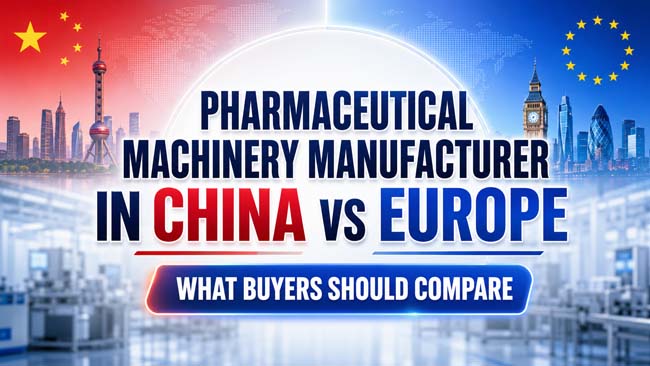
Lựa chọn nhà sản xuất máy móc dược phẩm ở Trung Quốc hay Châu Âu ảnh hưởng đến chi phí mua hàng, thời gian giao hàng, tài liệu GMP sự chuẩn bị, đào tạo điều hành, quy hoạch phụ tùng, và tích hợp dây chuyền sản xuất. Các nhà sản xuất châu Âu thường gắn liền với các thương hiệu lâu đời và hệ thống tự động hóa tiên tiến, trong khi các nhà sản xuất máy móc dược phẩm Trung Quốc đã trở nên mạnh mẽ hơn về thiết bị tùy chỉnh, chu kỳ giao hàng ngắn hơn, và đầu tư có kiểm soát.
Đối với người mua sản xuất máy tính bảng, viên nang cứng, viên nang mềm, thực phẩm bổ sung đóng chai, gói vỉ, hoặc hộp đựng thuốc, sự lựa chọn tốt hơn phụ thuộc vào quy mô dự án, định dạng sản phẩm, ngân sách, kỳ vọng về chất lượng, và hỗ trợ sau bán hàng. Nước xuất xứ không quan trọng bằng việc liệu nhà cung cấp có thể kết hợp thiết bị với thành phẩm và toàn bộ quy trình sản xuất hay không.
Nhà sản xuất máy móc dược phẩm cần chứng minh điều gì?
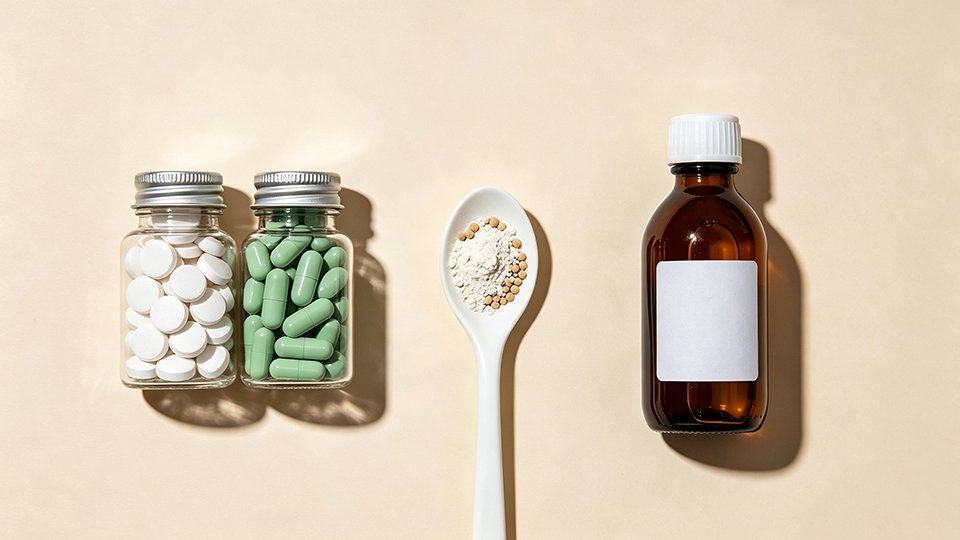
Nhà sản xuất máy móc dược phẩm phải chứng minh rằng thiết bị của mình có thể hỗ trợ sản xuất ổn định, hoạt động sạch sẽ, cài đặt lặp lại, và kiểm tra chất lượng có thể theo dõi. Nhà cung cấp không nên giới thiệu máy chỉ bằng tên model. Điểm khởi đầu phải là thành phẩm: máy tính bảng, viên nang cứng, viên nang mềm, bột, chất lỏng, chai, mụn nước, hoặc thùng carton.
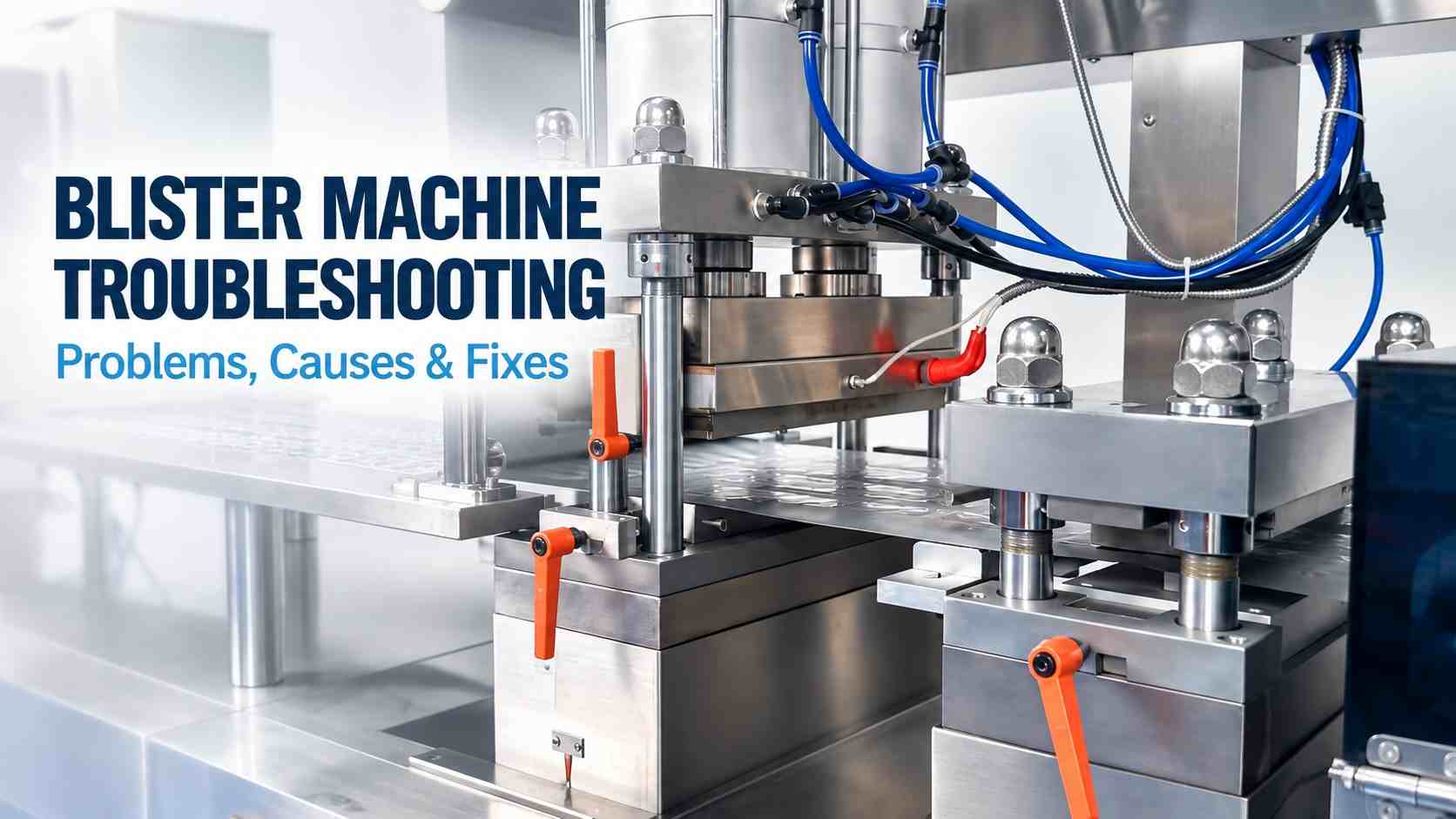
Để sản xuất viên nang cứng, nhà sản xuất có thể đề xuất một máy làm viên nang cứng cho bột, viên, hoặc làm đầy hạt. Để sản xuất máy tính bảng, dự án có thể yêu cầu một máy ép viên quay để nén viên, máy phủ viên để phủ màng, và máy gỡ máy tính bảng trước khi kiểm tra hoặc đóng gói. Đối với gói vỉ máy tính bảng và viên nang, dây chuyền có thể sử dụng máy đóng gói vỉ có hỗ trợ PVC-Alu, Alu-Alu, hoặc các vật liệu tạo hình khác.
Đối với bao bì chai, tuyến đường có thể bao gồm một máy đếm điện tử dạng viên hoặc viên nang, dây chuyền đếm và đóng chai viên nang hoặc viên nang, Chèn hút ẩm, máy đóng nắp chai thuốc, máy niêm phong cảm ứng cho chai dược phẩm, máy dán nhãn chai tròn, và máy đóng thùng dược phẩm. Nhà cung cấp có năng lực nên hiểu cách các máy này kết nối trước khi đưa ra báo giá.
Các nhà sản xuất máy móc dược phẩm Trung Quốc và Châu Âu
Các nhà sản xuất máy móc dược phẩm châu Âu vẫn mạnh về tốc độ cao, tự động hóa cao, và hệ thống sản xuất phức tạp. Họ thường được các tập đoàn dược phẩm lớn có đội ngũ kỹ sư trưởng thành lựa chọn, tiêu chuẩn thiết bị nội bộ nghiêm ngặt, và đủ ngân sách cho chu kỳ mua sắm dài hơn.
Nhà sản xuất máy móc dược phẩm Trung Quốc thường được lựa chọn khi người mua cần cơ cấu chi phí linh hoạt, phản ứng nhanh hơn, và thiết bị tùy chỉnh cho sản xuất quy mô trung bình. Trung Quốc có chuỗi cung ứng máy móc đóng gói và dược phẩm lớn, Vì vậy chế tạo thép không gỉ, gia công các bộ phận, tích hợp điện, dụng cụ, và việc lắp ráp thường có thể được xử lý với thời gian thực hiện ngắn hơn.
Sự so sánh không chỉ đơn giản là “chi phí thấp” và “chất lượng cao”. Một số nhà sản xuất Trung Quốc hiện cung cấp tài liệu CE, Thiết kế máy theo định hướng GMP, Hỗ trợ FAT, hỗ trợ video từ xa, và điều phối dịch vụ ở nước ngoài. Đồng thời, không phải mọi nhà cung cấp Châu Âu đều tự động phù hợp nhất cho mọi sản phẩm, quy mô nhà máy, hoặc ngân sách.
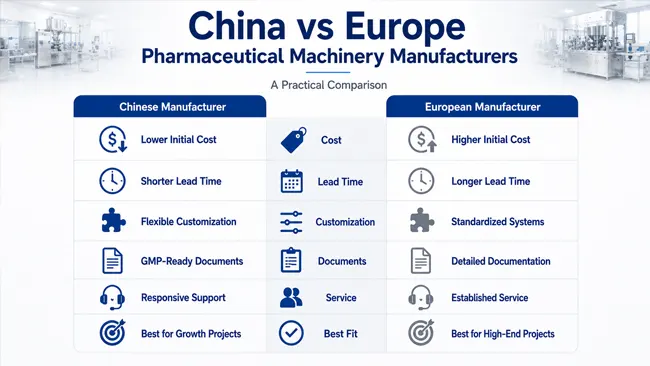
| Điểm so sánh | Nhà sản xuất Trung Quốc | Nhà sản xuất Châu Âu | Kiểm tra người mua |
| Chi phí mua hàng | Thường đầu tư ban đầu thấp hơn | Vốn đầu tư ban đầu thường cao hơn | So sánh cấu hình đầy đủ |
| thời gian dẫn | Thường ngắn hơn đối với máy tiêu chuẩn và bán tùy chỉnh | Thường lâu hơn đối với các dự án phức tạp | Xác nhận FAT và thời gian vận chuyển |
| Tùy chỉnh | Linh hoạt cho kích thước chai, định dạng vỉ, kích thước viên nang, hình dạng máy tính bảng, và bố cục | Mạnh mẽ nhưng có thể đắt hơn | Yêu cầu bản vẽ và chi tiết thay đổi định dạng |
| Tài liệu | Phụ thuộc vào sự trưởng thành của nhà cung cấp | Thông thường các hệ thống tài liệu trưởng thành | Xem lại hướng dẫn sử dụng, Bản ghi FAT, giấy chứng nhận, và sơ đồ |
| Dịch vụ | Các tùy chọn hỗ trợ từ xa và phụ tùng khác nhau tùy theo nhà cung cấp | Mạng lưới địa phương mạnh hơn ở một số thị trường | Kiểm tra thời gian phản hồi và tính sẵn có của các bộ phận |
| Phù hợp nhất | Phát triển nhà máy và mở rộng nhạy cảm với chi phí | Các nhà máy lớn và các dự án tự động hóa cao | Kết hợp mức độ nhà cung cấp với rủi ro dự án |
Chi phí và thời gian thực hiện ảnh hưởng đến quyết định mua hàng như thế nào
Chi phí thường là lý do đầu tiên khiến người mua so sánh Trung Quốc và Châu Âu. Một nhà sản xuất máy móc dược phẩm Trung Quốc thường có thể đưa ra mức đầu tư ban đầu thấp hơn do độ sâu của chuỗi cung ứng địa phương, chi phí sản xuất cạnh tranh, và sự cạnh tranh mạnh mẽ giữa các nhà chế tạo máy. Điều này có thể hữu ích cho các nhà máy mới, nhà sản xuất dinh dưỡng, nhà sản xuất hợp đồng, và các công ty mở rộng từng dây chuyền sản xuất.
Các nhà cung cấp châu Âu có thể có giá cao hơn, nhưng giá cao hơn có thể hợp lý khi người mua cần một dây chuyền tích hợp phức tạp, tự động hóa nâng cao, hoặc nhà cung cấp đã được nhóm kỹ thuật toàn cầu của công ty phê duyệt. Một số công ty dược phẩm đa quốc gia thích nền tảng châu Âu hơn vì xác nhận nội bộ, quy hoạch phụ tùng, và đào tạo người vận hành đã được xây dựng xung quanh những thương hiệu đó.
Thời gian thực hiện cũng quan trọng không kém. Giá máy thấp hơn sẽ không hữu ích nếu thiết bị đến quá muộn so với thời điểm ra mắt sản phẩm. Người mua nên yêu cầu lịch trình sản xuất thực tế, ngày FAT, ngày đóng gói, thời gian vận chuyển, và kế hoạch lắp đặt. Đối với máy làm viên nang cứng, máy vỉ, hoặc dây chuyền đếm và đóng chai viên nang hoặc viên nang, kiểm tra mẫu trước khi giao hàng có thể giảm rủi ro vì người mua có thể thấy cách máy xử lý sản phẩm thực tế.
Sự so sánh thông minh hơn là tổng chi phí dự án. Đã bao gồm giá máy, dụng cụ, bộ phận tiếp xúc với sản phẩm, phụ tùng thay thế, đào tạo, cài đặt, tài liệu kiểm tra, vận chuyển, thuế nhập khẩu, thời gian ngừng sản xuất, và bảo trì trong tương lai.
Cách so sánh chất lượng máy ngoài nước xuất xứ
Nước xuất xứ không đảm bảo chất lượng máy. Người mua nên xem xét các chi tiết thiết kế có ảnh hưởng đến sản xuất hàng ngày.
Đối với một máy ép viên quay, kiểm tra độ ổn định của lực nén máy tính bảng, chất lượng đấm và chết, gia công tháp pháo, thiết kế trung chuyển, bôi trơn, kiểm soát bụi, và truy cập chuyển đổi. Đối với máy làm viên nang cứng, kiểm tra việc tách viên nang, độ chính xác của liều lượng, ổn định chân không, thiết kế trạm nạp bột, từ chối viên nang, và truy cập làm sạch. Đối với máy đóng gói vỉ, kiểm tra độ chính xác tạo hình, áp suất niêm phong, kiểm soát nhiệt độ, ổn định lực kéo servo, cắt chính xác, và thời gian thay khuôn.
Quy tắc tương tự áp dụng cho bao bì chai và thùng carton. Máy đếm điện tử dạng viên hoặc viên nang sẽ xử lý sự thay đổi kích thước sản phẩm mà không thường xuyên xảy ra sai sót. Máy đóng nắp chai thuốc cần kiểm soát lực siết chặt mà không làm hỏng nắp hoặc miệng chai. Máy dán nhãn chai thuốc tròn nên giữ vị trí nhãn ổn định ở tốc độ dây chuyền dự kiến. Máy đóng thùng carton phải phù hợp với kích thước thùng carton, gấp tờ rơi, chèn chai hoặc vỉ, mã hóa hàng loạt, và từ chối yêu cầu.
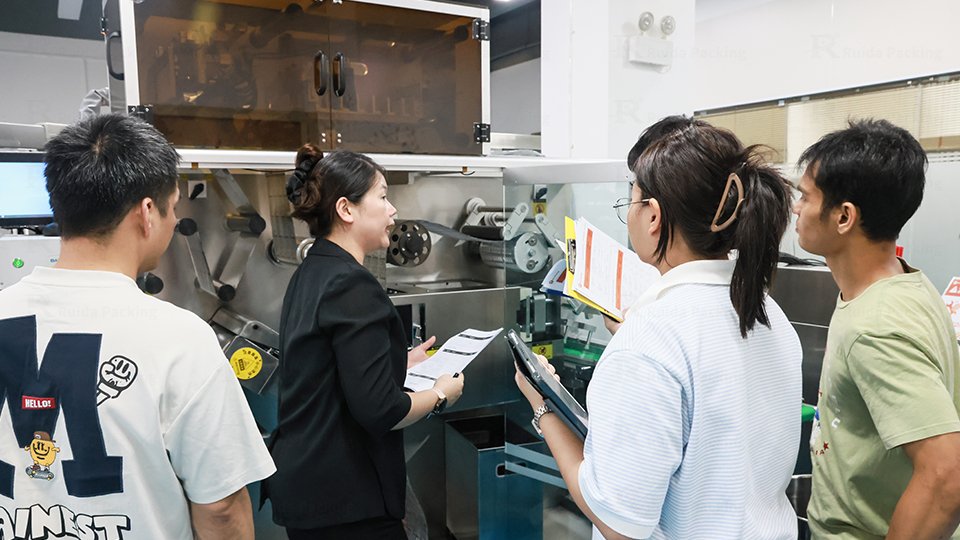
Người mua nên yêu cầu video sử dụng sản phẩm tương tự, không chỉ mẫu nhà máy tiêu chuẩn. Gửi máy tính bảng thực tế, viên nang, chai, mũ lưỡi trai, nhãn, thùng carton, và vật liệu vỉ để thử nghiệm đáng tin cậy hơn. Bản ghi FAT, ảnh mẫu, chạy video, và giải thích về các mẫu bị từ chối mang lại độ tin cậy cao hơn so với các tuyên bố trong tài liệu quảng cáo.
Người mua nên kiểm tra những tài liệu và hỗ trợ xác nhận GMP nào?
Yêu cầu của GMP không có nghĩa là chỉ riêng chiếc máy cũng đủ để nhà máy tuân thủ. Thiết bị phải được thiết kế, đã cài đặt, làm sạch, vận hành, và được duy trì bên trong hệ thống chất lượng của người mua. Vẫn, sự hỗ trợ tài liệu của nhà sản xuất có thể giúp công việc đánh giá chất lượng trở nên dễ dàng hơn nhiều.
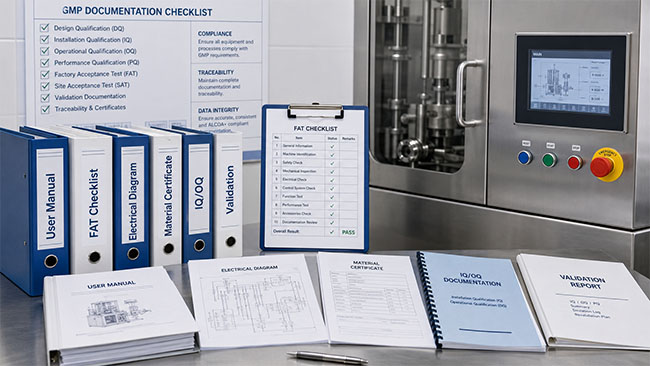
Người mua nên yêu cầu danh sách tài liệu trước khi đặt hàng. Các tài liệu hữu ích thường bao gồm hướng dẫn sử dụng, sơ đồ điện, danh sách phụ tùng, giấy chứng nhận vật liệu cho các bộ phận tiếp xúc với sản phẩm, hướng dẫn bôi trơn, hướng dẫn vệ sinh, Bản ghi FAT, thông tin hiệu chuẩn, và các tài liệu liên quan đến CE hoặc ISO nếu có.
Đối với sản xuất dược phẩm được quản lý, người mua cũng có thể cần hỗ trợ IQ/OQ, đánh giá rủi ro, danh sách báo động, mô tả cấp độ mật khẩu, chức năng ghi hàng loạt, và thay đổi thông tin điều khiển. Một nhà cung cấp Châu Âu có thể đã có gói tài liệu xác nhận hoàn chỉnh. Một nhà sản xuất máy móc dược phẩm Trung Quốc cũng có thể hỗ trợ mạnh mẽ, nhưng người mua nên xem lại độ sâu của tài liệu trước khi trả tiền đặt cọc.
Dịch vụ như thế nào, Phụ tùng thay thế, và đào tạo Thay đổi Tổng chi phí
Chất lượng dịch vụ có thể quyết định liệu một chiếc máy có trở thành tài sản sản xuất ổn định hay một vấn đề lâu dài. Người mua nên hỏi cách lắp đặt, vận hành thử, đào tạo điều hành, khắc phục sự cố, cung cấp phụ tùng, và hỗ trợ từ xa được xử lý.
Đối với dự án ở nước ngoài, hỗ trợ video từ xa rất hữu ích cho các vấn đề nhỏ, nhưng nó không thể thay thế hướng dẫn rõ ràng, hệ thống dây điện có tổ chức, bộ phận được dán nhãn, và người vận hành được đào tạo. Phụ tùng thay thế phải được trích dẫn kèm theo mã số bộ phận, chu kỳ thay thế dự kiến, và hình ảnh nếu có thể. Người mua cũng nên hỏi xem bộ phận nào là hàng hiệu quốc tế tiêu chuẩn và bộ phận nào được nhà sản xuất đặt làm riêng..
Đào tạo nên bao gồm khởi động hàng ngày, tắt máy, dọn dẹp, thay đổi định dạng, bôi trơn, xử lý báo động, và bảo trì cơ bản. Đối với dây chuyền đếm và đóng chai viên nén hoặc viên nang, người vận hành cần hiểu rõ việc bú bình, cho ăn sản phẩm, kênh đếm, cung cấp mũ, niêm phong cảm ứng, định vị nhãn, và từ chối xử lý. Đối với bao bì dạng vỉ và viên nang cộng với bao bì carton dược phẩm, người vận hành cần hiểu phân luồng vật liệu, áp suất niêm phong, cho ăn thùng carton, chèn tờ rơi, mã hóa hàng loạt, và từ chối séc.
Giá máy thấp hơn có thể trở nên đắt đỏ nếu thời gian ngừng hoạt động thường xuyên và phụ tùng thay thế không rõ ràng. Giá máy cao hơn có thể vẫn hợp lý nếu dự án cần dịch vụ tận nơi, tự động hóa nâng cao, và gói hỗ trợ đầy đủ tài liệu.
Nhà sản xuất máy móc dược phẩm có thểS Hỗ trợ dòng thiết bị đầy đủ của bạn?
Một nhà sản xuất máy móc dược phẩm không nên chỉ được đánh giá bởi một mẫu hàng đầu. Người mua nên kiểm tra xem nhà cung cấp có thể hỗ trợ toàn bộ lộ trình thành phẩm mà họ dự định xây dựng hay không.
Đối với sản phẩm viên nang cứng, lộ trình có thể bắt đầu bằng máy làm viên nang cứng, sau đó chuyển sang đánh bóng viên nang, máy dò kim loại hoặc cân kiểm tra, và đóng gói cuối cùng trong chai thuốc, gói vỉ, hoặc thùng carton. Đối với sản phẩm máy tính bảng, lộ trình có thể bao gồm tạo hạt ướt hoặc tạo hạt khô, nén máy tính bảng, lớp phủ máy tính bảng, khử bụi máy tính bảng, bao bì vỉ máy tính bảng và viên nang, đếm chai thuốc viên hoặc viên nang, nắp chai thuốc, niêm phong cảm ứng, ghi nhãn chai, và đóng thùng.
Đối với sản phẩm dược phẩm dạng lỏng, việc so sánh có thể liên quan đến thiết bị làm đầy chất lỏng, nắp chai thuốc, ghi nhãn chai, mã hóa, điều tra, và bao bì carton thứ cấp. Đối với sản phẩm bổ sung, người mua có thể cần một đường dây linh hoạt để xử lý máy tính bảng, viên nang, kẹo dẻo, hoặc bột trong chai, túi, hoặc thùng carton.
Giao diện thiết bị tạo ra nhiều vấn đề thực tế. Chiều cao chai, chiều rộng băng tải, tốc độ đếm, loại mũ, vị trí nhãn, kích thước thùng carton, định dạng tờ rơi, và từ chối bố trí trạm đều ảnh hưởng đến hiệu suất đường dây. Ruida Packing cung cấp dược phẩm và thiết bị đóng gói viên nang cứng, máy tính bảng, gói vỉ, chai, nhãn, và thùng carton, điều này rất hữu ích khi một dự án yêu cầu một số máy được kết nối thay vì một đơn vị riêng biệt.
Trung Quốc hoặc Châu Âu: Nhà sản xuất máy móc dược phẩm nào Phù hợp với dự án của bạn?
Một nhà sản xuất châu Âu có thể là lựa chọn tốt hơn khi dự án lớn, tự động hóa cao, và gắn liền với tiêu chuẩn thiết bị nghiêm ngặt của công ty. Nếu một công ty dược phẩm đa quốc gia đã sử dụng nền tảng châu Âu trên một số nhà máy, hợp tác với cùng một nhà cung cấp có thể đơn giản hóa việc đào tạo, quản lý phụ tùng, và xem xét xác nhận.
Châu Âu cũng có thể mạnh về đường dây tốc độ rất cao, dự án ngăn chặn phức tạp, robot tiên tiến, hoặc các dự án bắt buộc phải có dịch vụ địa phương. Trong những trường hợp này, khoản đầu tư cao hơn có thể được chấp nhận vì người mua đang trả tiền cho một nền tảng quen thuộc, tài liệu được thành lập, và giảm rủi ro phê duyệt nội bộ.
Một nhà sản xuất máy móc dược phẩm Trung Quốc thường thực tế hơn khi người mua cần kiểm soát chi phí, phản ứng nhanh hơn, tùy biến linh hoạt, và thiết bị phù hợp với thành phẩm thực tế. Điều này là phổ biến đối với các nhà sản xuất dược phẩm đang phát triển, nhà sản xuất thuốc khu vực, thương hiệu dinh dưỡng, công ty đóng gói hợp đồng, và các địa điểm sản xuất mới cần từng bước xây dựng năng lực.
Đối với những dự án này, câu hỏi hay hơn không chỉ đơn giản là “Trung Quốc hay Châu Âu?”Người mua nên kiểm tra xem nhà cung cấp có thể kiểm tra mẫu thật hay không, cung cấp video máy, chuẩn bị bản vẽ kỹ thuật, hỗ trợ rà soát tài liệu GMP, sắp xếp FAT, liệt kê các phụ tùng thay thế quan trọng, giải thích các điều khoản bảo hành, và trả lời rõ ràng sau khi giao hàng. Một nhà cung cấp mạnh của Trung Quốc có thể là đối tác lâu dài thực tế khi những điểm này được kiểm chứng trước khi đặt hàng.
Phần kết luận
Một nhà sản xuất máy móc dược phẩm ở Trung Quốc và một nhà cung cấp châu Âu đều có thể là sự lựa chọn đúng đắn, tùy theo dự án. Các nhà sản xuất châu Âu vẫn mạnh mẽ ở quy mô lớn, tự động hóa cao, hệ thống tiêu chuẩn doanh nghiệp. Các nhà sản xuất máy móc dược phẩm Trung Quốc có thể thiết thực hơn cho những người mua cần cấu hình linh hoạt, thời gian thực hiện ngắn hơn, và đầu tư có kiểm soát.
Quyết định tốt nhất không chỉ dựa vào quốc gia. Người mua nên so sánh chất lượng máy, thành phẩm phù hợp, Hỗ trợ tài liệu GMP, quá trình thử nghiệm, mô hình dịch vụ, phụ tùng thay thế, và tổng chi phí dự án. So sánh rõ ràng ngay từ đầu giúp giảm rủi ro sau khi lắp đặt và giúp dây chuyền sản xuất đạt đầu ra ổn định nhanh hơn.
Câu hỏi thường gặp
Là nhà sản xuất máy móc dược phẩm Trung Quốc đáng tin cậy?
Đúng. Một nhà sản xuất máy móc dược phẩm Trung Quốc có thể đáng tin cậy nếu nhà cung cấp đó có thiết kế máy móc đã được chứng minh, thử nghiệm mẫu sản phẩm, tài liệu rõ ràng, Hỗ trợ FAT, và dịch vụ hậu mãi đáp ứng.
Các nhà sản xuất máy móc dược phẩm Châu Âu luôn tốt hơn?
KHÔNG. Các nhà sản xuất châu Âu có thể xuất sắc cho các dự án cao cấp và phức tạp, nhưng chúng không tự động là sự lựa chọn tốt nhất cho mọi nhà máy. Loại sản phẩm, ngân sách, thời gian dẫn, nhu cầu dịch vụ, và kỳ vọng xác nhận sẽ hướng dẫn quyết định.
Người mua nên so sánh gì ngoài giá máy?
Người mua nên so sánh chi phí dụng cụ, phụ tùng thay thế, Kiểm tra chất béo, tài liệu GMP, cài đặt, đào tạo, bảo hành, truy cập làm sạch, thời gian chuyển đổi, và thời gian ngừng hoạt động dự kiến.
Những máy nào phổ biến để sản xuất viên nang cứng và máy tính bảng?
Thiết bị thông thường bao gồm máy làm viên nang cứng, máy ép viên quay, máy phủ viên thuốc, máy tính bảng, máy đóng gói vỉ, máy đếm điện tử dạng viên hoặc viên nang, máy đóng nắp chai, máy dán nhãn chai thuốc tròn, và máy đóng thùng dược phẩm.
Làm cách nào người mua có thể kiểm tra hỗ trợ GMP từ nhà cung cấp?
Người mua có thể yêu cầu hướng dẫn sử dụng, giấy chứng nhận vật chất, sơ đồ điện, hướng dẫn vệ sinh, Bản ghi FAT, thông tin hiệu chuẩn, tài liệu CE, và hỗ trợ IQ/OQ khi cần thiết.
Người mua có nên tham quan xưởng trước khi đặt hàng?
Chuyến tham quan nhà máy rất hữu ích cho các dự án lớn. Nếu chuyến thăm không thể thực hiện được, người mua nên yêu cầu thử nghiệm video trực tiếp, thử nghiệm mẫu sản phẩm, video chạy máy, xem xét tài liệu, và các bản ghi FAT chi tiết.
Tham khảo
[1] FDA / eCFR — 21 CFR § 211.63 Thiết kế thiết bị, kích cỡ, và vị trí
https://www.law.cornell.edu/cfr/text/21/211.63
[2] Ủy ban Châu Âu — Khối lượng EudraLex 4 Hướng dẫn thực hành sản xuất tốt
https://health.ec.europa.eu/medicinal-products/eudralex/eudralex-volume-4_en