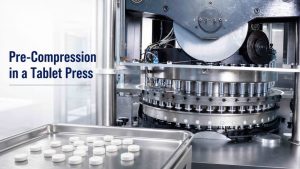

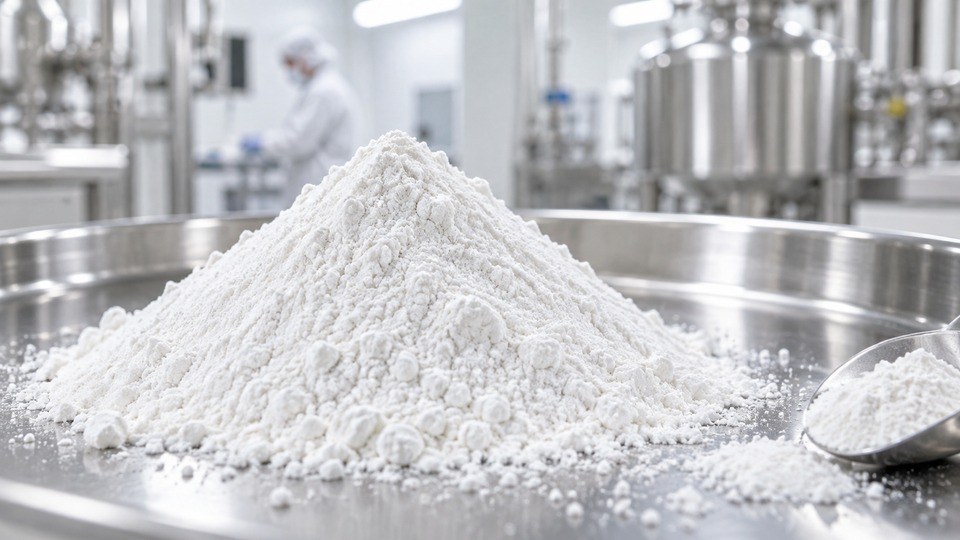
ความสามารถในการไหลของผงคือความสามารถของผงหรือส่วนผสมในการเคลื่อนย้ายและเติมตามที่คาดเดาได้, และในการผลิตยานั้นจะขึ้นอยู่กับขนาดและการกระจายตัวของอนุภาค, รูปร่างของอนุภาค, ความชื้น, ความหนาแน่น, การทำงานร่วมกัน, และเงื่อนไขกระบวนการ. การไหลที่ไม่เสถียรอาจทำให้การเติมแม่พิมพ์แท็บเล็ตไม่สมบูรณ์ได้, การเปลี่ยนแปลงน้ำหนักการเติมแคปซูล, การเชื่อมกระโดด, การให้ยาไม่สม่ำเสมอ, ฝุ่น, และการหยุดการผลิต. อาการเหล่านี้ไม่ได้พิสูจน์ว่าสาเหตุเดียวคือการไหลที่ไม่ดี; การแบ่งแยก, การตั้งค่าตัวป้อน, เครื่องมือ, คุณสมบัติการกำหนด, และสภาพของเครื่องจักรก็สามารถสร้างผลกระทบที่คล้ายกันได้.
การประเมินที่เชื่อถือได้จึงเชื่อมโยงคุณสมบัติของวัสดุกับการทดสอบการไหล, ปฏิสัมพันธ์ของอุปกรณ์, และพฤติกรรมการผลิตจริง. ไม่มีดัชนีคาร์เดียว, อัตราส่วนเฮาส์เนอร์, มุมพักผ่อน, หรือผลเฉือนรับประกันประสิทธิภาพของเครื่องจักร. เป้าหมายเชิงปฏิบัติคือการระบุกลไกการไหลที่เป็นไปได้, ใช้การแก้ไขแบบกำหนดเป้าหมาย, และตรวจสอบสูตรจริงบนอุปกรณ์ที่ต้องการ.
ความสามารถในการไหลของผงในการผลิตยาคืออะไร?
ความสามารถในการไหลของผงอธิบายถึงความสม่ำเสมอของการเคลื่อนที่ของผงภายใต้สภาวะที่กำหนด. ผงที่ตกลงผ่านช่องทางในห้องปฏิบัติการไม่พบการรวมตัวกันแบบเดียวกัน, ความปั่นป่วน, เวลาเติมเงิน, หน้าสัมผัสผนัง, หรือแรงทางกล เช่น ผงที่เคลื่อนที่ผ่าน แท่นกดแท็บเล็ต กรอบฟีด, เครื่องบรรจุแคปซูล, หรือฟิลเลอร์สว่าน.
ดังนั้นความสามารถในการไหลจึงถือเป็นปฏิสัมพันธ์ระหว่างวัสดุและกระบวนการได้ดีกว่าเป็นคุณสมบัติคงที่ซึ่งแสดงด้วยตัวเลขตัวเดียว. แรงเสียดทานระหว่างอนุภาคต่ออนุภาค, การทำงานร่วมกัน, การบรรจุ, แรงเสียดทานแบบผงถึงผนัง, ผลกระทบจากไฟฟ้าสถิต, และการรวมเข้าด้วยกันสามารถเปลี่ยนวิธีการทำงานของสูตรเดียวกันระหว่างการเก็บรักษาได้, โอนย้าย, การให้อาหาร, และการให้ยา.
การไหลที่เสถียรรองรับการป้อนและการเติมที่สม่ำเสมอ. การไหลที่ไม่ดีหรือไม่เสถียรอาจส่งผลให้มีการระบายไม่สม่ำเสมอ, ดริฟท์เติมน้ำหนัก, เติมไม่ครบ, การเชื่อมโยง, รูหนู, การสะสมของฝุ่น, และการหยุดเครื่อง.
การแบ่งแยกมีความเกี่ยวข้องแต่แตกต่างกัน. ส่วนผสมอาจไหลได้ง่ายแต่ยังคงแยกตัวออกเนื่องจากส่วนประกอบมีขนาดอนุภาคต่างกัน, ความหนาแน่น, รูปร่าง, หรือตอบสนองต่อแรงสั่นสะเทือน. การปรับปรุงการไหลจึงไม่ช่วยปรับปรุงความสม่ำเสมอของส่วนผสมโดยอัตโนมัติ.
ปัจจัยใดที่ส่งผลต่อการไหลของผง?
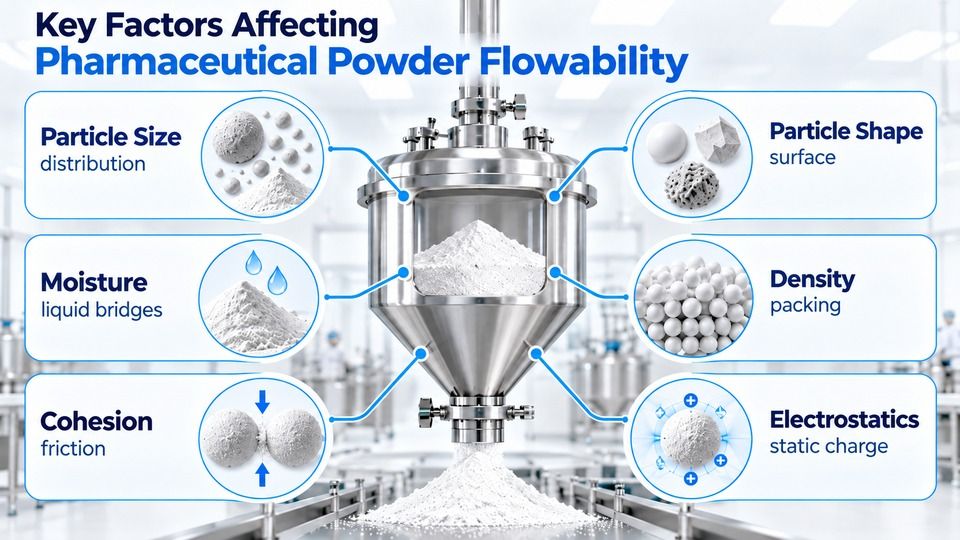
ปัจจัยหลักที่ส่งผลต่อความสามารถในการไหลของผงคือขนาดและการกระจายตัวของอนุภาค, รูปร่างของอนุภาคและสภาพพื้นผิว, ความชื้น, ความหนาแน่นและการบรรจุ, การทำงานร่วมกันและแรงเสียดทาน, ไฟฟ้าสถิต, และคุณสมบัติของสูตรหรือเม็ด. ความสำคัญขึ้นอยู่กับผงและกระบวนการจัดการ.
ขนาดอนุภาคและการกระจายขนาดอนุภาค
เมื่อขนาดอนุภาคลดลง, แรงที่เกี่ยวข้องกับพื้นผิวอาจมีความสำคัญมากขึ้นเมื่อเทียบกับน้ำหนักของอนุภาค. สูตรที่มีสัดส่วนของค่าปรับสูงจึงอาจเหนียวตัวมากขึ้นและยากต่อการระบายหรือเติมอย่างสม่ำเสมอ.
การกระจายขนาดอนุภาคยังส่งผลต่อการบรรจุและการแยกชั้นด้วย. ค่าปรับสามารถใช้ช่องว่างระหว่างอนุภาคขนาดใหญ่ได้, เปลี่ยนความหนาแน่นรวม, และโยกย้ายระหว่างการจัดการ, ในขณะที่ความแตกต่างอย่างมากระหว่างส่วนประกอบของสูตรผสมอาจเพิ่มความเสี่ยงในการคัดแยก.
ไม่มีการตัดขนาดอนุภาคแบบสากลที่ทำให้ผงยาไหลได้ไม่ดี. การเปลี่ยนแปลงใดๆ ในการกระจายขนาดอนุภาคควรได้รับการตรวจสอบเพื่อดูผลกระทบต่อความสม่ำเสมอของส่วนผสม, การบีบอัด, การละลาย, และการประมวลผลขั้นปลาย.
รูปร่างของอนุภาคและลักษณะพื้นผิว
อนุภาคที่โค้งมนโดยทั่วไปจะม้วนและจัดเรียงใหม่แตกต่างจากที่ไม่สม่ำเสมอ, เป็นขุย, เหมือนเข็ม, หรืออนุภาคที่มีมุมสูง. ความหยาบของพื้นผิวและความพรุนสามารถเปลี่ยนแรงเสียดทานได้อีก, การยึดเกาะ, การดูดซึมความชื้น, และประสิทธิภาพของเครื่องร่อน.
ข้อมูลนี้อธิบายว่าทำไมผงสองชนิดที่มีขนาดอนุภาคใกล้เคียงกันจึงสามารถทำงานแตกต่างกันได้ในฮอปเปอร์หรือตัวป้อนเดียวกัน. ดังนั้นสัณฐานวิทยาของอนุภาคจึงควรพิจารณาร่วมกับขนาดมากกว่าที่จะถือเป็นคุณสมบัติรอง.
ความชื้นและสภาวะสิ่งแวดล้อม
ความชื้นสามารถเปลี่ยนการเกาะตัวของของเหลวได้, การยึดเกาะ, การรวมตัวกัน, แรงเสียดทานพื้นผิว, และพฤติกรรมไฟฟ้าสถิต. ผลของมันขึ้นอยู่กับสูตรผสม: การเพิ่มความชื้นไม่ได้ทำให้แป้งทุกตัวไหลแย่ลงโดยอัตโนมัติ.
หากกระแสน้ำเปลี่ยนไปตามฤดูกาล, ความชื้นในห้อง, เวลาจัดเก็บ, หรือการสัมผัสวัตถุ, เปรียบเทียบปริมาณความชื้นและประวัติการจัดการก่อนเปลี่ยนเครื่อง. การอบแห้งมากเกินไปอาจทำให้เกิดปัญหาไฟฟ้าสถิตใหม่ได้ในบางสูตร.
ความหนาแน่น, การบรรจุและการรวมบัญชี
ความหนาแน่นรวมอธิบายมวลของผงที่ยังไม่ได้ใช้ซึ่งมีปริมาตรมากตามที่กำหนด, ในขณะที่ความหนาแน่นของการต๊าปจะอธิบายความหนาแน่นหลังจากขั้นตอนการกรีดที่ระบุ.
ความแตกต่างระหว่างค่าเหล่านี้บ่งชี้ว่าผงจัดเรียงใหม่ภายใต้การกรีดและสร้างพื้นฐานของ Carr Index และ Hausner Ratio. ความหนาแน่นยังมีความสำคัญในการจ่ายปริมาตรตามปริมาตรด้วย:
มวลที่ส่งมอบ µ ปริมาณการจ่าย × ความหนาแน่นรวมที่มีประสิทธิภาพ
ดังนั้นปริมาตรการจ่ายคงที่จึงสามารถให้มวลที่แตกต่างกันได้หากมีการเติมอากาศ, การปักหลัก, การสั่นสะเทือน, เติมถัง, หรือการรวมตัวจะเปลี่ยนความหนาแน่นรวมที่มีประสิทธิผลที่แสดงต่อระบบการจ่ายสาร.
การทำงานร่วมกัน, ผลกระทบจากแรงเสียดทานและไฟฟ้าสถิต
การทำงานร่วมกันต้านทานการแยกระหว่างอนุภาค, ในขณะที่แรงเสียดทานระหว่างอนุภาคต่ออนุภาคและผงต่อผนังจะต้านทานการเคลื่อนไหว. การชาร์จด้วยไฟฟ้าสถิตสามารถเพิ่มการยึดเกาะได้, โดยเฉพาะอย่างยิ่งกับผงละเอียดและภายใต้สภาวะการจัดการที่แห้ง.
ในการผลิต, ผลกระทบเหล่านี้อาจปรากฏเป็นวัสดุที่ยึดติดกับผนังถัง, การเติมตัวป้อนไม่เสถียร, การสะสมในส่วนประกอบของยา, ฝุ่น, หรือมีการหยุดชะงัก. การดำเนินการแก้ไขควรสอดคล้องกับกลไก; การปั่นป่วนที่รุนแรงยิ่งขึ้นอาจทำให้ส่วนโค้งเสียหาย แต่ยังสามารถเพิ่มการเติมอากาศหรือการแยกตัวได้อีกด้วย.
คุณสมบัติของสูตรและเม็ด
ส่วนผสมสุดท้ายจะทำงานเป็นระบบ. สัณฐานวิทยาของ API, คุณสมบัติของสารเพิ่มปริมาณ, ความแข็งแรงของเม็ด, การกระจายสารยึดเกาะ, สภาวะของสารหล่อลื่นและสารร่อน, ลำดับการผสม, และประวัติการประมวลผลสามารถมีอิทธิพลต่อโฟลว์ได้.
การทำแกรนูลสามารถปรับปรุงการจัดการได้เมื่อมีค่าปรับมากเกินไป, โครงสร้างอนุภาคที่ไม่เอื้ออำนวย, หรือความหนาแน่นไม่คงที่ทำให้เกิดปัญหา. มันไม่ใช่วิธีแก้ปัญหาที่เป็นสากล. การบดอัดแบบเปียกหรือการบดอัดแบบลูกกลิ้งสามารถเปลี่ยนความสามารถในการอัดได้, การแบ่งแยก, การละลาย, และประสิทธิภาพของแท็บเล็ตหรือแคปซูลขั้นปลาย.
วัดความสามารถในการไหลของผงได้อย่างไร?
ไม่มีการทดสอบการไหลของผงชนิดใดที่แสดงถึงทุกสภาวะที่พบในการผลิตยา. บททั่วไปของ USP <1174> อธิบายไว้หลายแนวทาง, รวมทั้งมุมพักผ่อนด้วย, ดัชนีความสามารถในการอัด/อัตราส่วน Hausner, ไหลผ่านปาก, และวิธีการเฉือนเซลล์ . วิธีการเหล่านี้จะประเมินลักษณะต่างๆ ของพฤติกรรมของผง, ดังนั้นลักษณะทางห้องปฏิบัติการจึงแข็งแกร่งที่สุดเมื่อมีการตีความการทดสอบเสริมร่วมกัน.
มุมพักผ่อน
มุมพักผ่อนจะวัดความชันที่เกิดจากกองผงภายใต้วิธีการที่กำหนด. โดยทั่วไปแล้วมุมที่ต่ำกว่าจะสัมพันธ์กับการเคลื่อนไหวที่ง่ายขึ้นในการทดสอบนั้น, ในขณะที่ฮีปที่สูงชันสามารถบ่งบอกถึงความต้านทานต่อการไหลที่มากขึ้น.
ผลลัพธ์ที่ได้มีความไวต่อรูปทรงของอุปกรณ์, การเตรียมผง, สภาพแวดล้อม, และกองนั้นเกิดขึ้นได้อย่างไร. มีประโยชน์สำหรับการคัดกรองเชิงเปรียบเทียบ แต่ไม่ควรถือเป็นขีดจำกัดการผ่าน/ไม่ผ่านสากลสำหรับอุปกรณ์การผลิต.
ความหนาแน่นเป็นกลุ่มและแบบเกลียว, ดัชนีคาร์และอัตราส่วนเฮาส์เนอร์
ความหนาแน่นจำนวนมากและความหนาแน่นของการต๊าปจะแสดงลักษณะเฉพาะของการบรรจุแบบผงก่อนและหลังขั้นตอนการรวมพัสดุที่กำหนดไว้. นอกจากนี้ยังใช้ในการคำนวณตัวชี้วัดการไหลทั่วไปสองตัวอีกด้วย:
ดัชนีคาร์ (%) = (ความหนาแน่นของการแตะ - ความหนาแน่นจำนวนมาก) / ความหนาแน่นต๊าป × 100
อัตราส่วน Hausner = ความหนาแน่นของการแตะ / ความหนาแน่นเป็นกลุ่ม
การรวมตัวกันที่สูงขึ้นระหว่างการต๊าปจะสร้างความแตกต่างที่มากขึ้นระหว่างความหนาแน่นของมวลและความหนาแน่นของการต๊าป. Carr Index และ Hausner Ratio มีประโยชน์สำหรับการคัดกรองเปรียบเทียบ, แต่มีความเกี่ยวข้องกันทางคณิตศาสตร์และไม่ควรถือเป็นการยืนยันความเหมาะสมของเครื่องจักรสองครั้งโดยอิสระ.
ไม่จำลองสภาวะไดนามิกภายในตัวป้อนแท็บเล็ต, ระบบการให้ยาแบบแคปซูล, หรือฟิลเลอร์สว่าน.
ไหลผ่านปาก
การทดสอบออริฟิสจะประเมินว่าผงจะไหลผ่านช่องเปิดที่กำหนดอย่างสม่ำเสมอและสม่ำเสมอเพียงใด. ขึ้นอยู่กับขั้นตอน, เอาต์พุตอาจรวมถึงเวลาการไหลด้วย, อัตราการไหลของมวล, หรือช่องเปิดขั้นต่ำที่จำเป็นสำหรับการระบายออกอย่างต่อเนื่อง.
ผลลัพธ์ขึ้นอยู่กับรูปทรงของทางออกและการกำหนดค่าการทดสอบเป็นอย่างยิ่ง. สามารถช่วยเปรียบเทียบพฤติกรรมการปล่อยแรงโน้มถ่วงได้, แต่ไม่ควรแปลงผลออริฟิสของห้องปฏิบัติการเป็นแบบถังบรรจุการผลิตโดยตรง.
การทดสอบเซลล์เฉือน
การทดสอบเซลล์เฉือนจะประเมินพฤติกรรมของผงภายใต้การควบคุมการรวมตัวและแรงเฉือน. สามารถให้ข้อมูลเกี่ยวกับการทำงานร่วมกันได้, พฤติกรรมการให้ผลผลิต, ฟังก์ชั่นการไหล, และปฏิกิริยาระหว่างผงกับผนัง, ทำให้มีประโยชน์อย่างยิ่งสำหรับวัสดุที่เหนียวเหนอะหนะและปัญหาเกี่ยวกับถังหรือการจัดเก็บ.
โดยให้ข้อมูลที่การทดสอบแรงโน้มถ่วงทั่วไปอาจพลาดไป, แต่อุปกรณ์จริงยังคงมีความเครียดที่แตกต่างกัน, รูปทรงเรขาคณิต, เติมครั้ง, และปฏิสัมพันธ์ทางกล.
| ทดสอบ | สิ่งที่บ่งบอกถึง | มีประโยชน์สำหรับ | ข้อจำกัดหลัก | ความเกี่ยวข้องในการผลิต |
|---|---|---|---|---|
| มุมพักผ่อน | พฤติกรรมการก่อตัวเป็นฮีป | การเปรียบเทียบอย่างรวดเร็ว | ขึ้นอยู่กับวิธีการ | การคัดกรองเบื้องต้น |
| ความหนาแน่นเป็นกลุ่ม/ต๊าปเกลียว | การบรรจุและการรวมตัว | ลักษณะเฉพาะของวัสดุ | ไม่ใช่การทดสอบการไหลแบบไดนามิก | สิ่งสำคัญสำหรับการให้อาหารและการให้ยาตามปริมาตร |
| ดัชนีคาร์ | การรวมญาติ | การคัดกรองเปรียบเทียบ | ทางอ้อมและเชิงประจักษ์ | แจ้งวัสดุที่ต้องการการประเมินเพิ่มเติม |
| อัตราส่วนเฮาส์เนอร์ | ความสัมพันธ์ความหนาแน่นแบบแตะต่อจำนวนมาก | การคัดกรองเปรียบเทียบ | ข้อมูลพื้นฐานเดียวกันกับ Carr Index | บทบาทการคัดกรองที่คล้ายกัน |
| ออริฟิสโฟลว์ | พฤติกรรมการปล่อยแรงโน้มถ่วง | การเปรียบเทียบทางออก | ขึ้นอยู่กับเรขาคณิต | เกี่ยวข้องกับกระบวนการที่ป้อนด้วยแรงโน้มถ่วง |
| เซลล์เฉือน | พฤติกรรมการทำงานร่วมกันและผลผลิต | การประเมินผงเหนียวและฮอปเปอร์ | การทดสอบที่ซับซ้อนมากขึ้น | มีประโยชน์ภายใต้เงื่อนไขรวม |
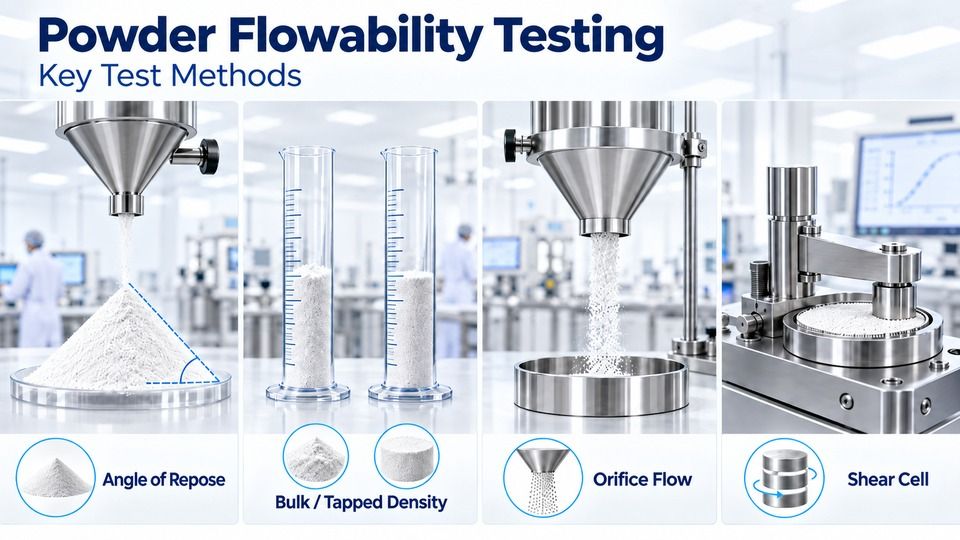
ลำดับการปฏิบัติจึงเป็นลักษณะเฉพาะทางห้องปฏิบัติการ → การทดสอบที่เกี่ยวข้องกับกระบวนการ → การตรวจสอบยืนยันเครื่องจักรจริง.
ความสามารถในการไหลของผงส่งผลต่ออุปกรณ์ทางเภสัชกรรมอย่างไร?
พฤติกรรมของผงเปลี่ยนไปตามอุปกรณ์เนื่องจากการกดแท็บเล็ต, เครื่องเติมแคปซูลอัตโนมัติ, กรวย, เครื่องให้อาหาร, และระบบจ่ายสารชนิดผงจะใช้เวลาในการเติมต่างกัน, ความเครียด, ความปั่นป่วน, และการรวมตัว.
การบีบอัดแท็บเล็ตและการบรรจุแบบตายตัว
บนเครื่องกดแท็บเล็ตแบบหมุน, เส้นทางวิกฤติคือ:
ฮอปเปอร์ → ตัวป้อน / เฟรมฟีด → การบรรจุแบบตายตัว → การบีบอัด
ผงจะต้องเติมโซนป้อนและป้อนแต่ละแม่พิมพ์อย่างสม่ำเสมอก่อนการบีบอัด. เมื่อความเร็วป้อมปืนเพิ่มขึ้น, เวลาที่ใช้ในการเติมแม่พิมพ์ที่มีอยู่จะลดลง. สูตรที่เติมอย่างเพียงพอด้วยความเร็วต่ำอาจไม่เสถียรที่เอาท์พุตที่สูงขึ้น หากผงไม่สามารถเติมแม่พิมพ์ได้เร็วพอ .
การเพิ่มความแปรปรวนของน้ำหนักเม็ดยาที่ความเร็วที่สูงขึ้นสามารถบ่งชี้ถึงกระบวนการเติมที่มีจำกัดการไหล, แต่การเปลี่ยนแปลงของน้ำหนักเพียงอย่างเดียวไม่ได้วินิจฉัยการไหลที่ไม่ดี. การตั้งค่าตัวป้อน, เติมความลึก, เครื่องมือ, ความหนาแน่นของผงแป้ง, การแบ่งแยก, และควรตรวจสอบสภาพเครื่องด้วย.
เครื่องป้อนแบบบังคับสามารถปรับปรุงการจัดส่งได้เมื่อการเติมแรงโน้มถ่วงไม่เพียงพอ, แต่ความเร็วของพายและรูปทรงของตัวป้อนอาจส่งผลต่อการเติมอากาศด้วย, ความหนาแน่น, เวลาที่อยู่อาศัย, การแบ่งแยก, และเติมตาย. การเพิ่มความเร็วตัวป้อนไม่ใช่วิธีแก้ปัญหาโดยอัตโนมัติ.
การบรรจุแคปซูลและการเติมผงเบด
การบรรจุแคปซูล ขึ้นอยู่กับทั้งพฤติกรรมของผงและหลักการจ่าย. ในระบบจานจ่าย/ระบบtamping, เตียงผงต้องเติมช่องจ่ายยาระหว่างรอบ. ในระบบโดซาเตอร์, ผงต้องเข้าและเก็บรักษาไว้ในเครื่องจ่ายก่อนจึงจะถ่ายโอนเข้าสู่ตัวแคปซูล.
การเติมสินค้าที่ช้าหรือไม่สอดคล้องกันอาจทำให้น้ำหนักการเติมเปลี่ยนแปลงได้, โดยเฉพาะความเร็วของเครื่องจักร, ความลึกของผงแป้ง, ความหนาแน่น, หรือเงื่อนไขการบรรจุเปลี่ยนแปลง. การวิจัยเกี่ยวกับการเติมแคปซูลแสดงให้เห็นความสัมพันธ์ระหว่างพารามิเตอร์การไหลของผงและประสิทธิภาพน้ำหนักเติม ขณะเดียวกันก็ระบุถึงความสำคัญของสภาพผงเบดและการบีบอัด .
เมื่อน้ำหนักแคปซูลแตกต่างกัน, ประเมินความสามารถในการไหลร่วมกับระดับเตียง, ความหนาแน่นรวม, การตั้งค่า tamping หรือ dosator, ความเร็วเครื่อง, คุณสมบัติการกำหนด, และแนวโน้มน้ำหนักแบบสถานีถึงสถานี.
การจัดการผง, การเติมสว่านและการจ่ายปริมาตร
ใน เครื่องบรรจุซอง, เครื่องบรรจุผงขวด, และระบบเติมสว่านหรือผงปริมาตรอื่นๆ, การจ่ายสารที่เชื่อถือได้ขึ้นอยู่กับการจ่ายวัสดุที่มั่นคงให้กับกลไกการจ่ายยา.
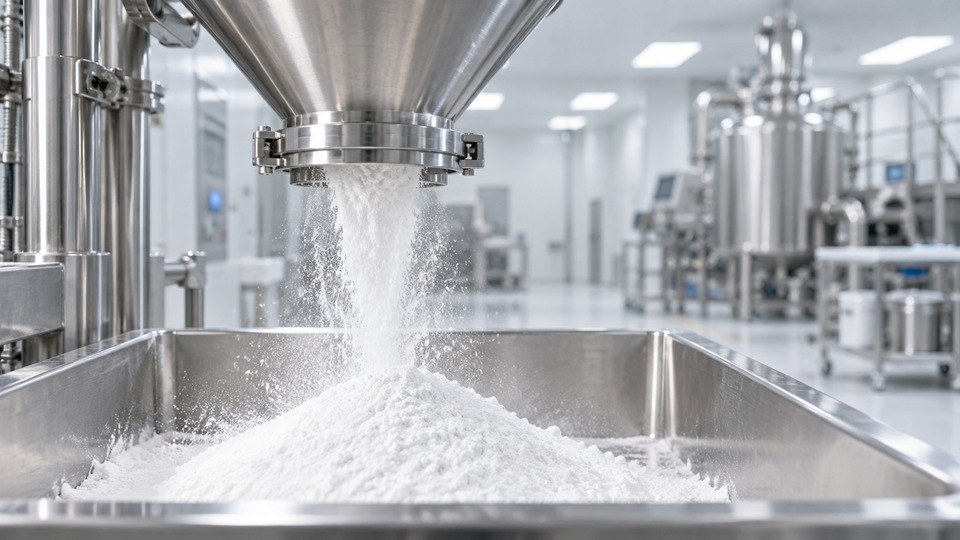
เครื่องเจาะไม่สามารถแก้ปัญหาการไหลต้นน้ำที่ไม่ดีได้โดยอัตโนมัติ. หากสะพานผงหรือรูหนูอยู่เหนือช่องป้อนของสว่าน, สกรูสามารถรับการจ่ายที่ไม่สอดคล้องกันแม้ว่าถังยังคงมีวัสดุอยู่ก็ตาม. การกวนอาจช่วยบางสูตรได้ แต่ก็สามารถเปลี่ยนการเติมอากาศได้เช่นกัน, ความหนาแน่นรวมที่มีประสิทธิภาพ, และการแบ่งแยก.
ระบบปริมาตรมีความไวต่อการเปลี่ยนแปลงความหนาแน่นเป็นพิเศษ. เนื่องจากมวลที่ส่งมอบขึ้นอยู่กับปริมาณการจ่ายและความหนาแน่นรวมที่มีประสิทธิผล, การตกตะกอนหรือการเติมอากาศอาจทำให้น้ำหนักลอยไปโดยไม่เปลี่ยนแปลงปริมาตรการจ่ายที่ระบุ.
ความสามารถในการไหลของผงจะดีขึ้นได้อย่างไร?
การดำเนินการแก้ไขที่ดีที่สุดขึ้นอยู่กับสาเหตุที่น่าจะเป็น. ลำดับที่เป็นประโยชน์คือการระบุกลไก → ทำการเปลี่ยนแปลงตามเป้าหมาย → ตรวจสอบข้อดีข้อเสีย → ตรวจสอบกระบวนการ.
ควบคุมคุณสมบัติของอนุภาคและสูตรผสม
หากค่าปรับที่มากเกินไปหรือการกระจายขนาดอนุภาคที่ไม่เอื้ออำนวยจะเพิ่มการเกาะกัน, การกัดแบบควบคุม, การจำแนกประเภท, แกรนูล, หรือขั้นตอนวิศวกรรมอนุภาคอื่นอาจปรับปรุงการควบคุมได้. วัสดุที่ดัดแปลงจะต้องได้รับการตรวจสอบการแยกส่วน, การบีบอัด, การละลาย, และประสิทธิภาพของผลิตภัณฑ์ขั้นสุดท้าย.
หากการสัมผัสสิ่งแวดล้อมเปลี่ยนแปลงไหล, เปรียบเทียบความชื้น, สภาพการเก็บรักษา, ล็อตวัตถุดิบ, และประวัติการประมวลผล. หลีกเลี่ยงการคิดว่าการทำให้แห้งหรือเพิ่มความชื้นจะช่วยปรับปรุงทุกสูตรได้.
คอลลอยด์ซิลิคอนไดออกไซด์เป็นตัวแทนสารช่วยไหลที่ใช้ในการปรับเปลี่ยนอันตรกิริยาของอนุภาคในสูตรผสมที่เหมาะสม. ผลของมันขึ้นอยู่กับองค์ประกอบของสูตร, ความเข้มข้น, คุณสมบัติของอนุภาค, และเงื่อนไขการผสม. แมกนีเซียมสเตียเรตเป็นสารหล่อลื่นเป็นหลัก และไม่ควรถือเป็นสารช่วยการไหลทั่วไป. การทบทวนวิธีการปรับปรุงการไหลของผงก็เน้นย้ำว่าแนวทางที่เหมาะสมนั้นขึ้นอยู่กับกลไกพื้นฐาน .
ปรับฮอปเปอร์ให้เหมาะสม, เครื่องป้อนและกระบวนการ
หากข้อมูลในห้องปฏิบัติการปรากฏว่ายอมรับได้แต่การผลิตไม่เสถียร, ตรวจสอบเส้นทางผงที่สมบูรณ์. ตรวจสอบการปล่อยถัง, การเติมเต็มตัวป้อน, ระดับผงเตียง, การทำงานของสว่านหรือพาย, การสะสมบนพื้นผิวสัมผัส, การตั้งค่าการจ่ายยา, และปัญหาจะแย่ลงเมื่อความเร็วสูงขึ้นหรือไม่.
อย่าถือว่ามุมถังสากลหรือการตั้งค่าการกวน. เรขาคณิตของฮอปเปอร์, การออกแบบเต้าเสียบ, ปฏิสัมพันธ์ของผนัง, การกำหนดค่าตัวป้อน, และการกวนควรจับคู่กับวัสดุและรูปแบบการไหลที่ต้องการ.
การปรับเครื่องจักรก็มีขีดจำกัดเช่นกัน. หากสูตรผสมที่เหนียวแน่นไม่สามารถเติมโซนจ่ายยาได้ภายในรอบเวลาที่มีอยู่, การเพิ่มความปั่นป่วนหรือการลดความเร็วอย่างต่อเนื่องอาจเป็นเพียงการปกปิดข้อจำกัดด้านวัสดุเท่านั้น.
ควรประเมินความสามารถในการไหลของผงก่อนการผลิตอย่างไร?
ความพร้อมในการผลิตควรขึ้นอยู่กับการกำหนดสูตรจริงและกระบวนการเป้าหมาย มากกว่าการจำแนกประเภทการไหลของห้องปฏิบัติการเดี่ยว.
กำหนดลักษณะของวัสดุขั้นสุดท้าย
ขึ้นอยู่กับความเสี่ยงของกระบวนการ, ข้อมูลที่เป็นประโยชน์อาจรวมถึงการกระจายขนาดอนุภาค, ความชื้น, ความหนาแน่นจำนวนมากและกรีด, ดัชนีคาร์, อัตราส่วนเฮาส์เนอร์, มุมพักผ่อน, พฤติกรรมของช่องปาก, และข้อมูลแรงเฉือน.
จุดประสงค์คือเพื่อระบุพฤติกรรมที่อาจมีความสำคัญในระหว่างการปล่อยฮอปเปอร์, การให้อาหาร, การกรอก, การให้ยาแคปซูล, หรือบรรจุภัณฑ์แบบผง ไม่ใช่แค่เพื่อให้ได้ค่า "ผ่าน".
ทดสอบสูตรจริงหรือสูตรตัวแทน
ผงยาหลอกมีประโยชน์สำหรับการทดสอบการใช้งานเชิงกล แต่ไม่สามารถเป็นตัวแทนสูตรทางการค้าได้ทั้งหมด. สัณฐานวิทยาของ API, น้ำมันหล่อลื่น, เลื่อน, ประวัติเม็ด, ความชื้น, ความหนาแน่น, และส่วนผสมทั้งหมดสามารถเปลี่ยนการป้อนและการให้ยาได้.
สำหรับการทดลองใช้อุปกรณ์, ข้อมูลที่เป็นประโยชน์ได้แก่ ผงหรือเม็ดที่เป็นตัวแทน, ปริมาณเป้าหมายหรือน้ำหนักเติม, รูปแบบการให้ยาหรือรูปแบบบรรจุภัณฑ์, ผลผลิตที่วางแผนไว้, ข้อมูลความหนาแน่นหรือการไหลที่มีอยู่, และข้อจำกัดด้านสิ่งแวดล้อมหรือการจัดการที่ทราบ.
ตรวจสอบเครื่องเป้าหมายและหน้าต่างการทำงาน
การทดลองใช้เครื่องจักรควรประเมินมากกว่าว่าอุปกรณ์ทำงานเป็นเวลาหลายนาทีหรือไม่. สังเกต:
การปล่อยถังและการให้อาหารต่อเนื่อง;
การเชื่อมและการขุดรูหนู;
เครื่องป้อนหรือเติมผงเตียง;
ความเสถียรในการเติมหรือเติมแม่พิมพ์;
แนวโน้มการเติมน้ำหนัก;
การยึดเกาะและฝุ่นละออง;
ปฏิเสธและหยุด;
พฤติกรรมเมื่อความเร็วในการผลิตเปลี่ยนแปลงไป.
วัตถุประสงค์คือหน้าต่างการทำงานที่มั่นคง, ไม่ใช่แค่ความเร็วเครื่องจักรสูงสุดที่กำหนดเท่านั้น.
หากสูตรที่เป็นปัญหาเดียวกันแสดงความล้มเหลวที่คล้ายคลึงกันในเครื่องจักรที่เหมาะสมหลายเครื่องภายใต้สภาวะที่ได้รับการควบคุม, ความสงสัยเปลี่ยนไปที่วัสดุหรือสูตร; นี่คือหลักฐาน, ไม่ใช่ข้อพิสูจน์. หากวัสดุที่ประมวลผลได้ก่อนหน้านี้หลายรายการล้มเหลวซ้ำๆ ในเครื่องเดียวหรือการตั้งค่าเดียว, ความสงสัยเคลื่อนไปทางอุปกรณ์, เครื่องมือ, การกำหนดค่าตัวป้อน, หรือการตั้งค่ากระบวนการ.
เปลี่ยนตัวแปรทีละตัวในเวลาจริงและบันทึกผลลัพธ์.
สำหรับ อุปกรณ์บรรจุภัณฑ์ยา โครงการ, Ruida Packing สามารถประเมินข้อมูลการกำหนดสูตรที่เป็นตัวแทนและวัสดุตัวอย่างพร้อมกับน้ำหนักบรรจุที่ต้องการได้, แบบฟอร์มการให้ยา, เอาท์พุท, และข้อมูลการไหลหรือความหนาแน่นที่มีอยู่. ซึ่งช่วยให้สามารถประเมินพฤติกรรมการป้อนและการจ่ายภายใต้สภาพเครื่องจักรที่เกี่ยวข้อง แทนที่จะเลือกอุปกรณ์จากดัชนีการไหลของห้องปฏิบัติการเพียงอย่างเดียว.
บทสรุป
ความสามารถในการไหลของผงในการผลิตยาจะถูกควบคุมโดยปฏิสัมพันธ์ระหว่างคุณสมบัติของวัสดุและสภาวะของกระบวนการ. ขนาดและรูปร่างของอนุภาค, ความชื้น, ความหนาแน่น, การทำงานร่วมกัน, แรงเสียดทาน, การออกแบบสูตร, และประวัติการประมวลผลมีอิทธิพลต่อพฤติกรรมของผง, ในขณะที่อุปกรณ์กำหนดเส้นทางการไหล, เวลาเติมเงิน, การรวมบัญชี, และความเครียดทางกลที่ต้องทน.
ลำดับการปฏิบัติจริงคือคุณสมบัติของวัสดุ → การทดสอบการไหลเสริม → ปฏิกิริยาระหว่างอุปกรณ์ → ประสิทธิภาพการผลิต → การดำเนินการแก้ไขตามเป้าหมาย → การตรวจสอบเครื่องจักรจริง. ดัชนีคาร์, อัตราส่วนเฮาส์เนอร์, มุมพักผ่อน, การไหลของปาก, และการทดสอบแรงเฉือนช่วยระบุลักษณะความเสี่ยง, แต่ไม่มีใครมาแทนที่การทดสอบภายใต้จุดประสงค์ การบีบอัดแท็บเล็ต, บรรจุแคปซูล, หรือสภาวะการจัดการผง.
ก่อนการเลือกเครื่องจักรยาขั้นสุดท้าย, ประเมินสูตรตัวแทนด้วยน้ำหนักเติมที่ต้องการ, ความเร็วในการผลิต, รูปแบบการให้ยาหรือรูปแบบบรรจุภัณฑ์, และข้อมูลวัสดุที่มีอยู่. Ruida Packing สามารถใช้ข้อมูลนี้ร่วมกับการทดสอบตัวอย่างเพื่อประเมินการให้อาหาร, การให้ยา, เติมความมั่นคง, และหน้าต่างการปฏิบัติงานจริง, ลดความเสี่ยงในการเลือกอุปกรณ์จากข้อมูลการไหลของห้องปฏิบัติการเพียงอย่างเดียว.
คำถามที่พบบ่อยเกี่ยวกับความสามารถในการไหลของผง
-
ความสามารถในการไหลหมายถึงอะไร?
ความสามารถในการไหลของผงอธิบายถึงความรวดเร็วและสม่ำเสมอของผงที่เคลื่อนที่ภายใต้สภาวะที่กำหนด. ในการผลิตยา, ขึ้นอยู่กับคุณสมบัติของวัสดุและอุปกรณ์หรือกระบวนการที่ผงเคลื่อนผ่าน.
-
การทดสอบความสามารถในการไหลของผงใช้วัดค่าอะไร?
การทดสอบแต่ละครั้งจะวัดลักษณะเฉพาะของลักษณะผง. มุมพักผ่อนประเมินการก่อตัวของฮีป, Carr Index และ Hausner Ratio สะท้อนถึงการรวมข้อมูลจากข้อมูลความหนาแน่น, การทดสอบปากจะตรวจสอบการปล่อยแรงโน้มถ่วง, และเซลล์เฉือนประเมินพฤติกรรมภายใต้การควบคุมความเครียด.
-
คุณจะตรวจสอบคุณสมบัติการไหลของผงได้อย่างไร?
ใช้การตรวจวัดในห้องปฏิบัติการเสริมกับผงหรือส่วนผสมขั้นสุดท้าย, แล้วเปรียบเทียบผลลัพธ์เหล่านั้นกับการให้อาหาร, เติมเงิน, การให้ยา, หรือพฤติกรรมการเติมแม่พิมพ์บนอุปกรณ์ที่ต้องการ. ไม่ควรใช้การทดสอบเดี่ยวเป็นเกณฑ์การผลิตเพียงอย่างเดียว.
-
คุณสมบัติการไหลของผงมีอะไรบ้าง?
พฤติกรรมการไหลของผงรวมถึงการทำงานร่วมกัน, แรงเสียดทาน, การบรรจุ, การรวมบัญชี, ปฏิกิริยาระหว่างผงกับผนัง, และการตอบสนองต่อความเครียดที่ใช้. พฤติกรรมเหล่านี้ได้รับอิทธิพลจากขนาดอนุภาค, รูปร่าง, ความชื้น, ความหนาแน่น, ไฟฟ้าสถิต, องค์ประกอบของการกำหนด, และประวัติการประมวลผล.
-
ผงไหลอิสระหมายถึงอะไร?
ผงที่ไหลอย่างอิสระจะเคลื่อนที่ได้อย่างง่ายดายภายใต้สภาวะที่ได้รับการประเมิน. คำนี้ขึ้นอยู่กับกระบวนการ: การไหลอย่างง่ายดายผ่านกรวยในห้องปฏิบัติการไม่ได้รับประกันว่าการบรรจุแม่พิมพ์ความเร็วสูงจะเชื่อถือได้, การให้ยาแคปซูล, หรือการให้อาหารแบบสว่าน.
-
มุมการวางบ่งบอกถึงคุณสมบัติการไหลของผงอย่างไร?
มุมพักผ่อนเป็นข้อบ่งชี้เชิงเปรียบเทียบของพฤติกรรมการขึ้นรูปฮีป. โดยทั่วไปมุมที่ต่ำกว่าจะสัมพันธ์กับการเคลื่อนไหวที่ง่ายขึ้นในการทดสอบนั้น, แต่ผลลัพธ์จะขึ้นอยู่กับวิธีการและไม่ควรคาดการณ์ประสิทธิภาพของเครื่องจักรอย่างอิสระ.
-
จะสามารถปรับปรุงคุณสมบัติการไหลของผงได้อย่างไร?
ระบุสาเหตุที่เป็นไปได้ก่อน. ขึ้นอยู่กับสูตร, การปรับปรุงอาจเกี่ยวข้องกับการควบคุมขนาดอนุภาค, แกรนูล, การควบคุมความชื้น, เครื่องร่อนที่เหมาะสม, การเปลี่ยนแปลงถังหรือตัวป้อน, หรือการปรับการตั้งค่ากระบวนการ. ตรวจสอบทุกการเปลี่ยนแปลงกับประสิทธิภาพของผลิตภัณฑ์ขั้นปลาย.
-
คุณจะประเมินความสามารถในการไหลและความสามารถในการอัดของเม็ดได้อย่างไร?
ใช้ขนาดอนุภาค, ความหนาแน่น, ดัชนีคาร์, อัตราส่วนเฮาส์เนอร์, มุมพักผ่อน, และการวัดการไหลอื่นๆ ที่เกี่ยวข้องพร้อมกับการทดสอบกระบวนการ. ความสามารถในการไหลและความสามารถในการอัดอัดสัมพันธ์กับประสิทธิภาพการผลิต แต่คุณสมบัติไม่สามารถใช้แทนกันได้.
-
ความสามารถในการไหลของผงส่งผลต่อการบรรจุแคปซูลอย่างไร?
ความสามารถในการไหลส่งผลต่อความสม่ำเสมอของผงเบดในการเติมโซนจ่ายแคปซูล. การเติมสินค้าที่ไม่เสถียรอาจส่งผลต่อการเปลี่ยนแปลงของน้ำหนักการเติม, แต่ความลึกของเตียง, ความหนาแน่นรวม, กลไกการให้ยา, ความเร็วเครื่อง, และคุณสมบัติของการกำหนดสูตรก็มีความสำคัญเช่นกัน.
-
ความสามารถในการไหลของผงส่งผลต่อการบีบอัดแท็บเล็ตอย่างไร?
ความสามารถในการไหลส่งผลต่อการส่งผงไปยังเฟรมฟีดและโพรงแม่พิมพ์. เวลาเติมที่ลดลงด้วยความเร็วป้อมปืนที่สูงขึ้นอาจทำให้เกิดข้อจำกัดในการไหล, แต่การตั้งค่าตัวป้อน, เครื่องมือ, เติมความลึก, การแบ่งแยก, ความหนาแน่น, และควรตรวจสอบสภาพเครื่องจักรก่อนวินิจฉัยการไหลไม่ดี.
เอกสารอ้างอิง
- เภสัชตำรับของสหรัฐอเมริกา. บททั่วไป <1174> การไหลของผง . USP–NF. ร็อควิลล์, นพ: เภสัชตำรับของสหรัฐอเมริกา, 2023. ดอย: 10.31003/USPNF_M99885_01_01.
- ธรานนท์ ว, ผู้ชาย, พีรพัฒน์ เจ, ซัน ซีซี. การเปรียบเทียบอย่างเป็นระบบของวิธีการทางเภสัชตำรับสี่วิธีในการวัดความสามารถในการไหลของผง . วารสารเภสัชศาสตร์นานาชาติ. 2024;661:124454. ดอย: 10.1016/เจ.จ.ฟาร์ม.2024.124454.
- ถัง เอ็กซ์, ซาควาตาเยวา เอ, จาง แอล, วู แซฟ, ซัน ป, วู ซี. พฤติกรรมการไหลของผงยาระหว่างการเติมแม่พิมพ์โรตารีด้วยเครื่องป้อนแบบพาย . วารสารเภสัชศาสตร์นานาชาติ. 2020;585:119547. ดอย: 10.1016/j.ijpharm.2020.119547.
- ตัน เอส.บี, นิวตัน เจ.เอ็ม. ความสามารถในการไหลของผงเป็นตัวบ่งชี้ประสิทธิภาพการบรรจุแคปซูล . วารสารเภสัชศาสตร์นานาชาติ. 1990;61(1–2):145–155. ดอย: 10.1016/0378-5173(90)90053-7.
- ชาห์ ดีเอส, โมราฟการ์ เคเค, ใช่แล้ว ดีเค, ลอนการ์ วี, อามิน พีดี, ชลิกวาร์ SS. บทสรุปโดยย่อของวิธีการประมวลผลแบบผงเพื่อเพิ่มประสิทธิภาพการไหล . เฮลีออน. 2023;9(6):e16498. ดอย: 10.1016/j.heliyon.2023.e16498.
- ชาห์ ดีเอส, โมราฟการ์ เคเค, ใช่แล้ว ดีเค, ลอนการ์ วี, อามิน พีดี, ชลิกวาร์ SS. บทสรุปโดยย่อของวิธีการประมวลผลแบบผงเพื่อเพิ่มประสิทธิภาพการไหล. เฮลีออน. 2023;9(6). ดอย: 10.1016/j.heliyon.2023.e16498.