สายการบรรจุยาเป็นระบบบูรณาการของเครื่องจักรที่เชื่อมต่อกันซึ่งบรรจุผลิตภัณฑ์ยาผ่านการป้อน, การนับหรือการให้ยา, บรรจุภัณฑ์หลัก, การตรวจสอบ, การทำให้เป็นอนุกรม, บรรจุภัณฑ์รอง, และการรวบรวมข้อมูล. สำหรับรูปแบบยารับประทานชนิดแข็ง เช่น ยาเม็ดและแคปซูล, การกำหนดค่าสายการผลิตขึ้นอยู่กับรูปแบบบรรจุภัณฑ์เป็นหลัก—ตุ่ม, ขวด, แพ็คติด, หรือแบบซอง—และเกี่ยวกับกำลังการผลิต, ระดับอัตโนมัติ, และข้อกำหนดด้านกฎระเบียบ.
คู่มือนี้จะอธิบายว่าสายการผลิตบรรจุภัณฑ์ยาประกอบด้วยอะไรบ้าง, มันทำงานอย่างไร, มันแตกต่างจากเครื่องบรรจุภัณฑ์แบบสแตนด์อโลนอย่างไร, และวิธีที่ผู้ผลิตสามารถประเมินอุปกรณ์สำหรับการผลิตตามมาตรฐาน GMP.
สายการบรรจุยาคืออะไร?
สายการบรรจุยาผสมผสานการจัดการผลิตภัณฑ์เข้าด้วยกัน, บรรจุภัณฑ์, การตรวจสอบ, และการดำเนินงานขั้นปลายภายในการตั้งค่าการผลิตที่เชื่อมต่อกัน. แทนที่จะใช้งานแต่ละเครื่องแยกกัน, สายการผลิตแบบรวมช่วยจัดการการขนย้ายวัสดุ, การควบคุมเครื่องจักร, การตรวจสอบ, การทำให้เป็นอนุกรม, และข้อมูลการผลิตตลอดขั้นตอนการทำงานด้านบรรจุภัณฑ์.
บรรจุภัณฑ์ยาต้องทำมากกว่าการใส่ผลิตภัณฑ์ลงในภาชนะ. จะต้องปกป้องผลิตภัณฑ์, รักษาข้อมูลการระบุและการติดฉลาก, สนับสนุนการตรวจสอบย้อนกลับ, ลดความเสี่ยงในการปนเปื้อน, และเป็นไปตามข้อกำหนดด้านคุณภาพที่เกี่ยวข้อง. สายการบรรจุยาทั่วไปอาจรวมถึง:
- ระบบการป้อนและการจัดการผลิตภัณฑ์
- การนับ, การให้ยา, หรืออุปกรณ์ขนถ่ายสินค้า
- อุปกรณ์บรรจุภัณฑ์เบื้องต้น
- ระบบตรวจสอบและปฏิเสธ
- การติดฉลาก, การทำให้เป็นอนุกรม, และระบบการรวมกลุ่ม
- อุปกรณ์บรรจุภัณฑ์ทุติยภูมิ
- ฟังก์ชันการจัดการข้อมูลและการตรวจสอบย้อนกลับ
การกำหนดค่าที่แน่นอนขึ้นอยู่กับรูปแบบบรรจุภัณฑ์, ลักษณะผลิตภัณฑ์, ความเร็วในการผลิต, ขนาดชุด, ข้อกำหนดการเปลี่ยนแปลง, และกฎระเบียบของตลาด. แท็บเล็ตและแคปซูล, ตัวอย่างเช่น, สามารถบรรจุในตุ่มหรือขวดได้, แต่อุปกรณ์ที่เลือกแต่ละรูปแบบจะแตกต่างกัน.
เครื่องบรรจุภัณฑ์ยาเทียบกับสายการบรรจุยา
เครื่องบรรจุภัณฑ์และสายการบรรจุยาเป็นตัวแทนของการรวมระบบในระดับต่างๆ. เครื่องบรรจุภัณฑ์ทำหน้าที่บรรจุภัณฑ์เฉพาะฟังก์ชันเดียว. สายการบรรจุรวมเครื่องจักรหลายเครื่องไว้ในระบบการผลิตที่ประสานกันเพียงระบบเดียว.
| แง่มุม | เครื่องบรรจุหีบห่อ | สายการบรรจุยา |
| การทำงาน | ดำเนินการบรรจุภัณฑ์เฉพาะอย่างหนึ่ง | เชื่อมโยงกระบวนการบรรจุภัณฑ์หลายกระบวนการ |
| การดำเนินการ | มักจะทำงานเป็นอุปกรณ์สแตนด์อโลน | เครื่องจักรหลายเครื่องทำงานเป็นระบบประสานงานเดียว |
| การโอนวัสดุ | อาจต้องมีการถ่ายโอนด้วยตนเองหรือกึ่งด้วยตนเอง | ใช้การให้อาหารแบบผสมผสาน, โอนย้าย, และระบบประสาน |
| การควบคุม | มุ่งเน้นไปที่การทำงานของเครื่องจักรแต่ละเครื่อง | ประสานงานข้อมูลการทำงานของเครื่องจักรและข้อมูลการผลิต |
| แอปพลิเคชัน | เหมาะสำหรับงานบรรจุภัณฑ์เฉพาะด้าน | เหมาะสำหรับกระบวนการบรรจุภัณฑ์ที่สมบูรณ์ |
ตัวอย่างเช่น, อัน เครื่องบรรจุภัณฑ์แบบฟอยล์กันชื้น สามารถทำการขึ้นรูปได้, กำลังโหลดผลิตภัณฑ์, การปิดผนึก, การเข้ารหัส, และการตัด. เมื่อรวมเข้ากับอุปกรณ์การให้อาหาร, ระบบตรวจสอบ, อัน เครื่องบรรจุกล่อง, การติดฉลาก, การทำให้เป็นอนุกรม, และการบรรจุหีบห่อ, it becomes part of an integrated pharmaceutical packaging line.
Which Machines Make Up a Pharmaceutical Packaging Line?
A pharmaceutical packaging line usually consists of several equipment categories working together from product loading to final packaged output. The exact configuration varies by product type, รูปแบบบรรจุภัณฑ์, กำลังการผลิต, และข้อกำหนดด้านกฎระเบียบ.
| ขั้นตอนการบรรจุ | อุปกรณ์ทั่วไป | วัตถุประสงค์หลัก |
| Product handling | Feeding system, สายพานลำเลียง, sorter, orientation unit | Transfer products smoothly between processes |
| การนับ, การให้ยา, การเติมเต็ม | เคาน์เตอร์แท็บเล็ต, capsule counter, ระบบจ่ายยา, product loader | Load products accurately into packages |
| บรรจุภัณฑ์เบื้องต้น | เครื่องบรรจุตุ่ม, bottle packaging line, stick/sachet machine | Provide immediate product protection |
| การตรวจสอบ | Vision inspection system, เครื่องตรวจสอบน้ำหนัก, เครื่องตรวจจับโลหะ, reject system | Verify packaging quality and remove defects |
| Serialization | การเข้ารหัส, การติดฉลาก, aggregation, track & ติดตาม | Provide product identification and traceability |
| บรรจุภัณฑ์รอง | Cartoning machine, case packer, shrink wrapper, palletizer | Prepare products for distribution |

Product Feeding and Handling Systems
Product feeding is the first stage of many pharmaceutical packaging lines. Feeding systems ensure that tablets, แคปซูล, or other products enter downstream equipment at a stable and controlled rate. Common components include hoppers, เครื่องป้อนแบบสั่นสะเทือน, ลิฟต์, สายพานลำเลียง, sorters, orientation units, and transfer mechanisms.
Stable product handling is important because irregular feeding can affect counting, การให้ยา, การเติมเต็ม, blister loading, and line efficiency. For solid oral dosage products, feeding systems should be designed according to product size, รูปร่าง, น้ำหนัก, ฝุ่น, ความเปราะบาง, คงที่, and moisture sensitivity.
การนับ, การให้ยา, and Product-Loading Equipment
หลังจากให้อาหารแล้ว, products move to equipment responsible for loading them into the selected package format. The correct term depends on the format:
- บรรจุภัณฑ์ขวด: tablet or capsule counting before bottle filling
- บรรจุภัณฑ์แบบพุพอง: product loading into blister cavities
- Stick or sachet packaging: dosing or filling into flexible packages
This distinction matters because a bottle line, blister line, and stick/sachet line do not use the same loading principle. ก tablet counting machine or capsule counting machine is central to bottle packaging, while blister packaging depends on controlled product loading into formed cavities.
Primary Packaging Equipment
Primary packaging is the stage where pharmaceutical products receive their first protective package. This stage directly affects product protection, สภาพการเก็บรักษา, and user handling. Common primary packaging formats include blister packaging, บรรจุภัณฑ์ขวด, and stick or บรรจุภัณฑ์ซอง.
เครื่องบรรจุภัณฑ์แบบพุพอง
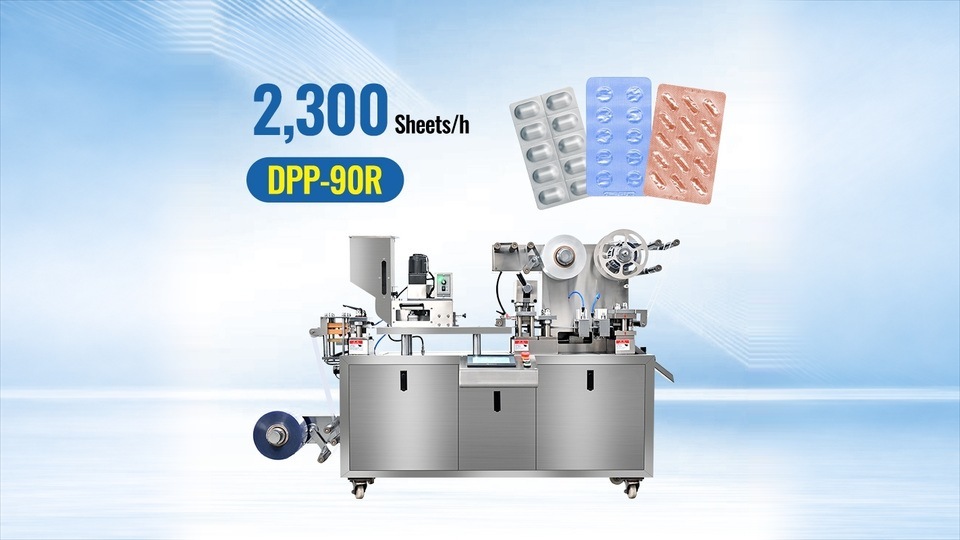
A blister packaging machine forms cavities, loads products, seals packaging materials, codes, perforates, and cuts finished blister packs. Common applications include tablets, แคปซูล, ซอฟเจล, chewables, and other solid oral dosage forms.
Common material combinations include Alu/PVC, Alu/Alu, พีวีซี/พีวีดีซี, and PVC/PE/PVDC. Blister packaging is widely used because it provides individual product protection and supports unit-dose identification.
Bottle Packaging System
A bottle packaging line is commonly used for tablets and capsules that require container-based packaging. A typical bottle packaging process may include tablet or capsule counting, การบรรจุขวด, desiccant or cotton insertion, การจับ, การซีลด้วยระบบเหนี่ยวนำ, การติดฉลาก, การตรวจสอบ, การทำให้เป็นอนุกรม, และการบรรจุกล่อง.
Unlike liquid filling systems, solid oral dosage bottle packaging focuses on accurate counting, controlled filling, and reliable container handling.
Stick and Sachet Packaging Machines
Stick pack packaging machines and sachet packaging machines are used for flexible single-dose packaging formats. They are commonly applied to powders, เม็ด, เม็ด, and products requiring portable individual packages. These systems combine dosing, การเติมเต็ม, การปิดผนึก, การเข้ารหัส, เจาะ, and cutting processes.
Inspection and Quality Control Equipment
Inspection systems help manufacturers monitor packaging conditions and identify products that do not meet predefined requirements. Common inspection equipment includes:
- Vision inspection system for printed information, label placement, package appearance, ส่วนประกอบที่ขาดหายไป, บาร์โค้ด, QR, and DataMatrix verification
- Checkweigher for package weight verification and missing-component detection
- Metal detector or X-ray system where applicable
- Print and label inspection system
- Automatic reject system to remove non-conforming products from the production flow
Inspection can be integrated at multiple stages, such as after primary packaging, after labeling, after cartoning, or before case packing. The correct inspection strategy depends on product risk, package format, ความเร็วของสาย, และข้อกำหนดด้านกฎระเบียบ.
การติดฉลาก, Serialization, and Aggregation
Modern pharmaceutical packaging lines increasingly include labeling, การทำให้เป็นอนุกรม, and aggregation functions. Serialization provides unique identification information for individual packages. Aggregation creates parent-child relationships between blister packs, กล่อง, cases, and pallets to support serialization and track & trace requirements.
Depending on market regulations and line design, serialization and aggregation may be integrated at different stages of the packaging process. These functions support product identification, authentication, recall management, and regulatory reporting.
Secondary Packaging Equipment
After primary packaging and inspection, products move to secondary packaging equipment. This stage may include cartoning, การใส่ใบปลิว, การติดฉลาก, การทำให้เป็นอนุกรม, บรรจุกรณี, shrink wrapping, and palletizing.
A cartoning machine automatically loads primary packages into cartons and may perform carton forming, กำลังโหลดผลิตภัณฑ์, การใส่ใบปลิว, การเข้ารหัส, การทำให้เป็นอนุกรม, การปิดกล่อง, and batch information handling. A case packer then prepares cartons for storage, การขนส่ง, and distribution.
Data Management and Traceability
Data management functions connect machine control, inspection results, serialization records, and production reporting. These functions help manufacturers maintain batch records, support audit trails, and improve visibility across the packaging line.
How Does a Pharmaceutical Packaging Line Work?
A pharmaceutical packaging line works by connecting multiple machines and processes into a coordinated workflow. Each stage performs a specific function, while the complete system manages product transfer, packaging operations, การตรวจสอบ, และการรวบรวมข้อมูล.
A typical workflow may include:
- Product feeding and preparation
- การนับ, การให้ยา, or product loading
- บรรจุภัณฑ์เบื้องต้น
- In-process inspection
- การติดฉลาก, การทำให้เป็นอนุกรม, and aggregation
- Cartoning and leaflet insertion
- Case packing and palletizing
- ผลผลิตผลิตภัณฑ์สำเร็จรูป

Inspection and serialization may be integrated at multiple stages depending on line design and market regulations. The workflow should not be treated as a fixed linear sequence for every product.
Product Feeding and Preparation
The packaging process begins when pharmaceutical products enter the packaging system through feeding equipment. The purpose of this stage is to provide a stable product supply for downstream machines.
การนับ, การให้ยา, or Product Loading
หลังจากให้อาหารแล้ว, products move to equipment responsible for loading them into the selected package format. Examples include tablet and capsule counting before bottle packaging, product loading into blister cavities, and dosing or filling for stick and sachet packaging.
บรรจุภัณฑ์หลัก
Primary packaging provides the first protective layer for pharmaceutical products and directly contacts the product. Common processes include blister packaging, บรรจุภัณฑ์ขวด, and stick or sachet packaging.
การตรวจสอบ, Serialization, and Traceability
Modern pharmaceutical packaging lines increasingly include inspection and traceability functions. Serialization systems provide unique identification information for individual packages and support product tracking requirements. Depending on market regulations and line design, serialization and aggregation functions may be integrated at blister, กล่องกระดาษ, กรณี, or pallet level.
Secondary Packaging and Final Product Handling
After primary packaging and inspection, products move to secondary packaging equipment. This stage may include cartoning, บรรจุกรณี, การติดฉลาก, การใส่ใบปลิว, การทำให้เป็นอนุกรม, and product transfer for storage or distribution.
Types of Pharmaceutical Packaging Lines
Pharmaceutical packaging lines can be classified by product type and by packaging format. These two perspectives should be considered separately because the same product may use different packaging solutions depending on manufacturing requirements.
Pharmaceutical Packaging Lines by Product Type
Solid Oral Dosage Packaging Lines
Solid oral dosage forms, including tablets and capsules, are among the most common applications for pharmaceutical packaging lines. Although tablets and capsules have different physical characteristics, they often share similar packaging workflows. The final equipment configuration depends mainly on packaging format, ความเร็วในการผลิต, product handling requirements, ขนาดชุด, ความถี่ในการเปลี่ยนแปลง, and regulatory expectations.
Typical equipment may include feeding systems, counting or product-loading equipment, เครื่องบรรจุภัณฑ์พุพอง, bottle packaging systems, inspection and reject systems, labeling and serialization systems, เครื่องบรรจุกล่อง, and case packers.
Powder and Granule Packaging Lines
Powder and granule products may require specialized filling and flexible packaging solutions. Common equipment includes powder filling systems, granule dosing systems, stick packaging machines, sachet packaging machines, เครื่องตรวจสอบน้ำหนักบนสายพาน, และเครื่องแพ็คกล่อง.
Pharmaceutical Packaging Lines by Packaging Format
Blister Packaging Line
Blister packaging is a common primary-packaging route for tablets and capsules. Typical processes include forming packaging cavities, การให้อาหารผลิตภัณฑ์, กำลังโหลดผลิตภัณฑ์, การปิดผนึก, การเข้ารหัส, เจาะ, การตัด, การตรวจสอบ, การทำให้เป็นอนุกรม, และการบรรจุกล่อง.
Bottle Packaging Line
Bottle packaging lines are designed for products packed into containers. A typical process includes counting, การบรรจุขวด, desiccant or cotton insertion, การจับ, การปิดผนึกแบบเหนี่ยวนำ, การติดฉลาก, การตรวจสอบ, การทำให้เป็นอนุกรม, และการบรรจุกล่อง.

Stick and Sachet Packaging Line
Stick and sachet packaging lines are used for flexible single-dose packaging formats. They are commonly applied to powders, เม็ด, เม็ด, and products requiring convenient individual packages.
ระบบอัตโนมัติ, การปฏิบัติตาม, and Digital Requirements
Modern pharmaceutical packaging lines combine mechanical equipment with automation, digital monitoring, and regulatory support functions.
Automation in Pharmaceutical Packaging Lines
Important automation technologies include:
- การควบคุม PLC: Programmable Logic Controllers coordinate machine operation, ลูกโซ่, recipes, สัญญาณเตือน, and communication between equipment.
- SCADA monitoring: SCADA systems provide production monitoring, trends, สัญญาณเตือน, and operational information.
- การตรวจสอบการมองเห็น: Machine vision systems support automated packaging quality checks.
- Serialization and track & ติดตาม: Serialization systems provide product identification and support traceability requirements in different markets.
- OEE monitoring: Overall Equipment Effectiveness monitoring helps manufacturers evaluate production performance.
Advanced packaging systems may also exchange information with higher-level manufacturing systems such as MES, ERP, or warehouse management systems.
GMP Compliance and Validation Requirements
Pharmaceutical packaging lines must be designed and operated according to applicable quality requirements. Important considerations include GMP-compliant equipment design, ทำความสะอาดง่าย, appropriate product-contact material selection, controlled product handling, and reduced contamination risks.
Validation activities may include Factory Acceptance Testing (อ้วน), การทดสอบการยอมรับไซต์ (นั่ง), คุณสมบัติการออกแบบ (ดีคิว), คุณสมบัติการติดตั้ง (ไอคิว), คุณสมบัติการปฏิบัติงาน (โอคิว), and Performance Qualification (PQ).
Data Integrity and Documentation
Modern pharmaceutical packaging projects may require controlled user access, เส้นทางการตรวจสอบ, บันทึกการผลิต, เอกสารทางเทคนิค, บันทึกอิเล็กทรอนิกส์, and electronic signatures. Depending on market requirements, systems may need to support principles such as 21 ส่วนซีเอฟอาร์ 11, ภาคผนวก GMP ของสหภาพยุโรป 11, and ALCOA+.
For pharmaceutical packaging line projects, this also means that documentation support should be considered as part of the equipment scope. Ruida Packing can provide FAT/SAT documentation and DQ/IQ/OQ/PQ support to help manufacturers complete equipment qualification and project documentation.
Key Factors When Selecting a Pharmaceutical Packaging Line
Selecting the right pharmaceutical packaging line requires evaluating product requirements, เป้าหมายการผลิต, automation needs, compliance requirements, and long-term operating considerations.
Product Type and Characteristics
Manufacturers should evaluate product form, physical characteristics, handling requirements, แบบฟอร์มการให้ยา, ขนาด, รูปร่าง, น้ำหนัก, ฝุ่น, ความเปราะบาง, คงที่, ความไวต่อความชื้น, and containment needs.
รูปแบบบรรจุภัณฑ์
Common formats include blister packaging, บรรจุภัณฑ์ขวด, ติดบรรจุภัณฑ์, บรรจุภัณฑ์ซอง, แถบบรรจุภัณฑ์, และบรรจุภัณฑ์แบบถุง.
กำลังการผลิต
Important factors include required output, production schedule, ขนาดชุด, ความถี่ในการเปลี่ยนแปลง, OEE target, และแผนการขยายในอนาคต.
ระดับอัตโนมัติ
Automation level should consider machine communication, material transfer, data collection, inspection requirements, serialization integration, and MES/ERP connectivity.
Validation and Documentation Support
Important supplier capabilities include equipment documentation, FAT/SAT support, GMP validation assistance, DQ/IQ/OQ/PQ support, การฝึกอบรม, อะไหล่, และบริการหลังการขาย.
ต้นทุนการเป็นเจ้าของทั้งหมด
A pharmaceutical packaging line investment includes more than equipment purchase. Consider equipment investment, tooling and change parts, การติดตั้งและการว่าจ้าง, การตรวจสอบ, เอกสารประกอบ, การฝึกอบรม, อะไหล่, การซ่อมบำรุง, สาธารณูปโภค, การเปลี่ยนแปลง, การปฏิบัติตาม, และการหยุดทำงาน.
บทสรุป
The value of a pharmaceutical packaging line comes from how its individual machines work together as a system. It is a coordinated system where equipment selection, process flow, ระดับอัตโนมัติ, inspection strategy, การทำให้เป็นอนุกรม, and compliance requirements work together.
For solid oral dosage products, the right line configuration depends on whether the product is packaged in blisters, ขวด, แพ็คติด, หรือแบบซอง. Manufacturers should evaluate product characteristics, รูปแบบบรรจุภัณฑ์, กำลังการผลิต, automation needs, validation requirements, and total cost of ownership before selecting equipment.
For manufacturers planning a solid oral dosage packaging line, Ruida Packing can help evaluate product characteristics, รูปแบบบรรจุภัณฑ์, capacity, ระบบอัตโนมัติ, and compliance requirements.
คำถามที่พบบ่อย
What is a pharmaceutical packaging line?
A pharmaceutical packaging line is an integrated system that connects multiple machines and processes for feeding, การนับ, การให้ยา, or filling, บรรจุภัณฑ์หลัก, การตรวจสอบ, การทำให้เป็นอนุกรม, และบรรจุภัณฑ์รอง.
Which Machines Make Up a Pharmaceutical Packaging Line?
A pharmaceutical packaging line may include feeding systems, อุปกรณ์การนับ, เครื่องบรรจุภัณฑ์พุพอง, bottle packaging systems, stick or sachet packaging machines, ระบบตรวจสอบ, labeling and serialization systems, เครื่องบรรจุกล่อง, and case packers depending on product requirements.
How is a packaging line different from a standalone packaging machine?
A packaging machine performs one specific packaging operation, while a pharmaceutical packaging line integrates multiple machines into a coordinated production system.
How does an automatic pharmaceutical packaging line work?
An automatic pharmaceutical packaging line coordinates product feeding, การนับหรือการให้ยา, บรรจุภัณฑ์หลัก, การตรวจสอบ, การทำให้เป็นอนุกรม, and secondary packaging through integrated control systems such as PLC and SCADA.
What should I evaluate before selecting a pharmaceutical packaging line?
The selection depends on product type, รูปแบบบรรจุภัณฑ์, กำลังการผลิต, ระดับอัตโนมัติ, validation requirements, สนับสนุนเอกสาร, and total cost of ownership.
What is serialization in pharmaceutical packaging?
Serialization assigns unique identification information to individual packages and supports track & ติดตาม, aggregation, authentication, recall management, and regulatory reporting.
What validation is required for a pharmaceutical packaging line?
Validation may include FAT, นั่ง, ดีคิว, ไอคิว, โอคิว, และพีคิวเอ, depending on project scope, เสี่ยง, และข้อกำหนดด้านกฎระเบียบ.
เอกสารอ้างอิง
1. เรา. FDA — Container Closure Systems for Packaging Human Drugs and Biologics
2. เรา. FDA — 21 ส่วนซีเอฟอาร์ 11 บันทึกอิเล็กทรอนิกส์; ลายเซ็นอิเล็กทรอนิกส์
3. คณะกรรมาธิการยุโรป — ภาคผนวก GMP ของสหภาพยุโรป 11: ระบบคอมพิวเตอร์