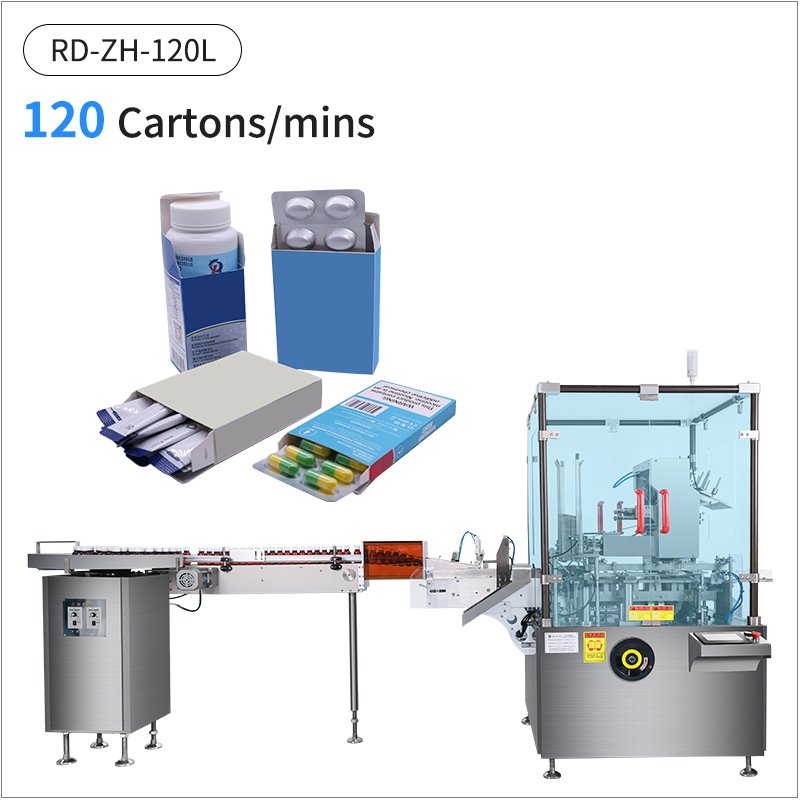
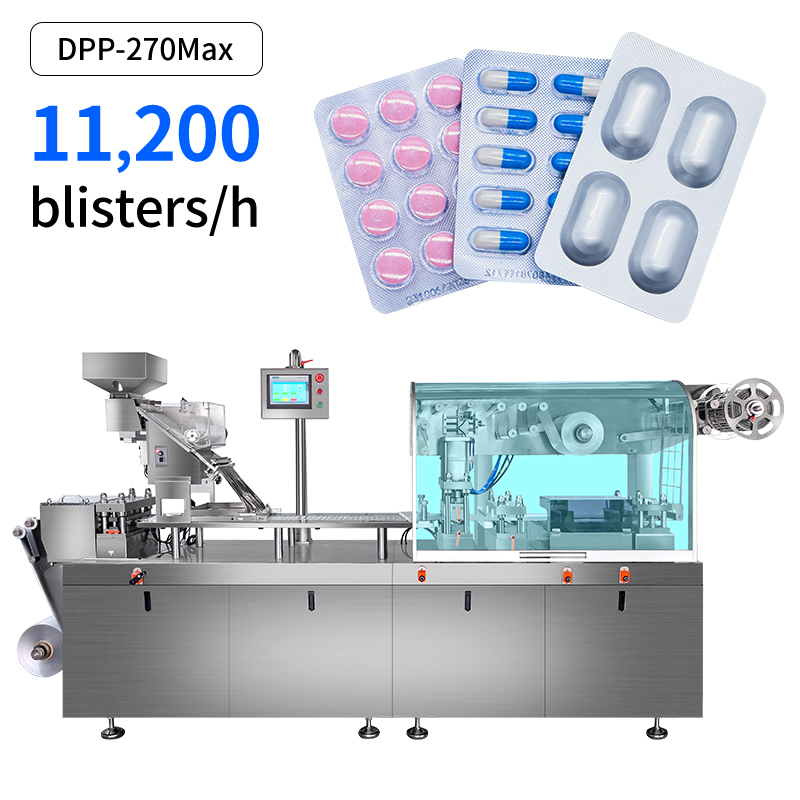
Muitas instalações de fabricação ainda dependem de máquinas semiautomáticas de envase de cápsulas em suas linhas de produção, muitas vezes influenciado pelo menor investimento inicial. No entanto, esta poupança a curto prazo introduz desafios operacionais significativos a longo prazo e custos ocultos que podem afetar negativamente a eficiência, qualidade do produto, e conformidade – especialmente em mercados estritamente regulamentados, como Europa e América do Norte.
Os custos ocultos dos enchimentos semiautomáticos de cápsulas
O principal problema das máquinas semiautomáticas é a sua extensa dependência do trabalho manual.. Uma única unidade semiautomática normalmente requer pelo menos dois operadores para funcionar continuamente. O processo é repetitivo e prático: os trabalhadores devem carregar constantemente cápsulas vazias, adicione pó, mover bandejas de cápsulas da estação de semeadura para a estação de enchimento, depois para a estação de bloqueio, e finalmente descarregar o produto acabado. Este ciclo se repete indefinidamente.
Esta dependência da intervenção humana leva a vários problemas críticos
Altos custos trabalhistas: Vários operadores por máquina aumentam drasticamente as despesas com folha de pagamento.
Baixo rendimento e ineficiência: A transferência manual de bandejas entre estações limita severamente a velocidade de produção, criando um gargalo que limita sua capacidade geral.
Qualidade de produto inconsistente: O envolvimento humano em etapas críticas, como enchimento de pó e manuseio de bandejas, introduz variabilidade. Isso geralmente resulta em imprecisões de dosagem, variação de peso, e integridade da cápsula comprometida.
Risco de não conformidade com cGMP: O manuseio aberto de cápsulas e pós aumenta o risco de contaminação cruzada. Além disso, o processo carece de registro automatizado de dados, tornando a rastreabilidade de lotes extremamente difícil – um grande sinal de alerta para auditorias regulatórias.
Fadiga no local de trabalho: Movimentos monótonos e repetitivos levam à fadiga do operador, o que amplifica ainda mais o risco de erros e acidentes.
A vantagem totalmente automática: Eficiência, Conformidade, e Qualidade
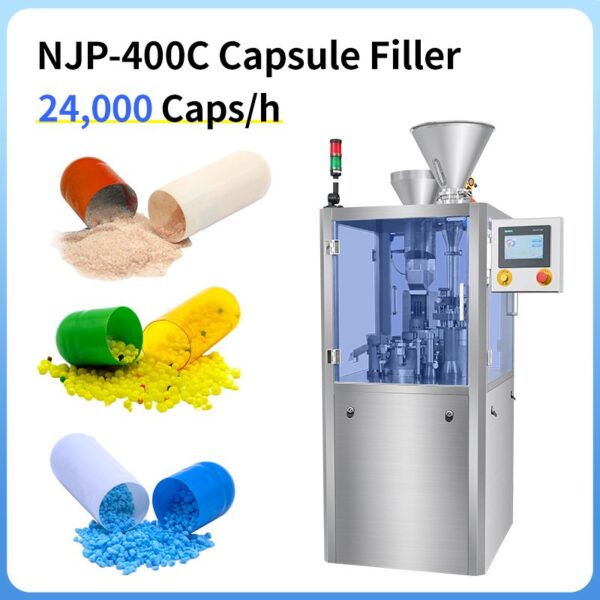
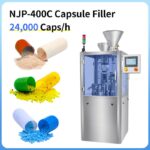
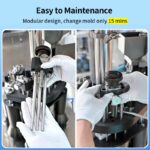
Máquinas de enchimento de cápsulas totalmente automáticas, como o NJP 400, são projetados para eliminar totalmente esses pontos problemáticos. Eles representam uma integração holística de automação que transforma o fluxo de trabalho de produção.
Imagine uma configuração onde você simplesmente conecta um carregador de cápsulas vazias e um sistema de transferência de pó a vácuo à sua máquina. O operador inicia o ciclo através da interface intuitiva da tela sensível ao toque do PLC. A máquina funciona perfeitamente, exigindo atenção apenas quando um alerta sinaliza que a cápsula vazia precisa ser reabastecida ou o suprimento de pó está baixo. É isso.
Veja como essa automação oferece benefícios tangíveis
1. Redução drástica no trabalho: Um operador pode gerenciar sem esforço várias máquinas totalmente automáticas simultaneamente, reduzindo os custos trabalhistas e realocando recursos humanos para tarefas de controle de qualidade mais valiosas.
2. Grande aumento na produção: Com automatizado, operação contínua e sem necessidade de transferências manuais de bandeja, máquinas como o NJP 400 pode alcançar resultados de 24,000 cápsulas por hora ou mais, desbloqueando escalabilidade de produção sem precedentes.
3. Conformidade garantida com cGMP: Um sistema totalmente fechado evita o contato humano com o produto, praticamente eliminando o risco de contaminação cruzada. Além disso, enchimentos automáticos modernos vêm com recursos de gravação de dados, fornecendo registros eletrônicos completos de lote para rastreabilidade total e conformidade regulatória simplificada.
4. Maior precisão e qualidade: Os sistemas servo-acionados garantem que cada cápsula seja preenchida com incrível precisão (>99%), garantindo peso de dosagem consistente e uniformidade superior do produto que os processos manuais nunca podem alcançar de forma confiável.
5. Segurança operacional aprimorada: Intertravamentos e proteções de segurança integrados protegem os operadores de peças móveis, criando um ambiente de trabalho mais seguro em comparação com o manuseio manual repetitivo exigido pelos modelos semiautomáticos.
Conclusão: Um investimento inteligente para o crescimento futuro
Embora o custo inicial de um máquina de enchimento de cápsulas semiautomática pode parecer atraente, as despesas operacionais de longo prazo, ineficiências, e os riscos de conformidade tornam-no uma escolha dispendiosa para qualquer fabricante sério que vise mercados. Atualizar para uma máquina de envase de cápsulas totalmente automática não é apenas uma compra de equipamento – é um investimento estratégico em produtividade, qualidade, e conformidade que proporciona um retorno do investimento mais rápido do que o esperado (ROI) e posiciona suas instalações para um crescimento sustentável.