Maison

>

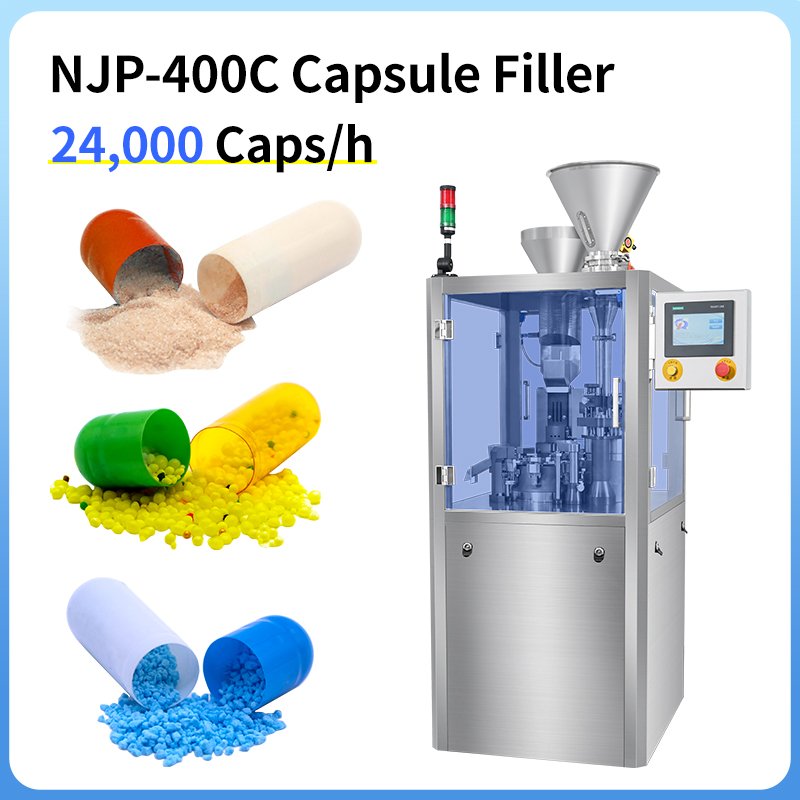
Machine de remplissage de capsules NJP 400

Machine de remplissage de gélules NJP 400
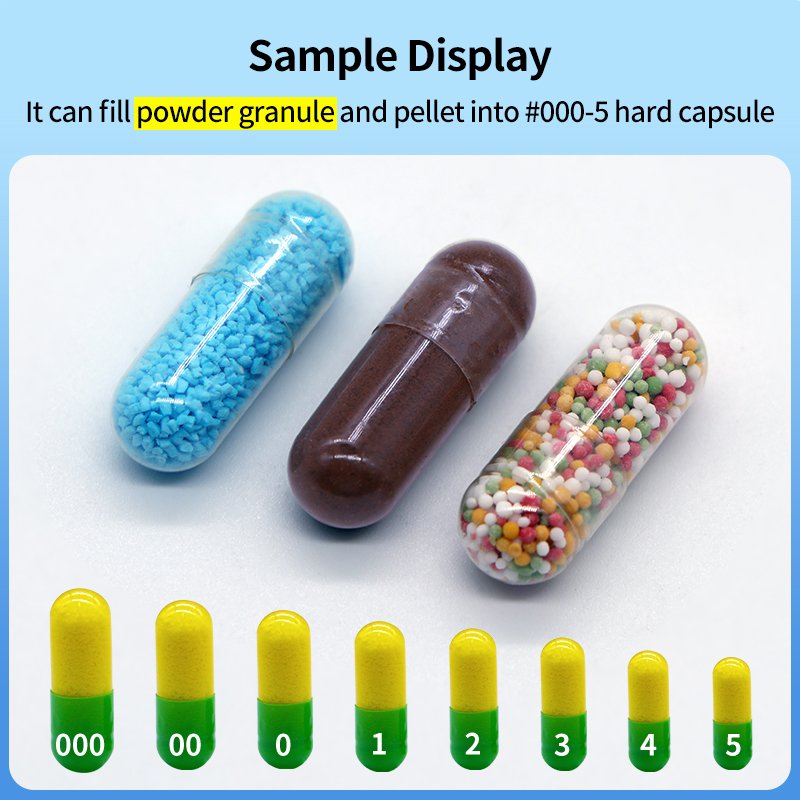
Affichage d'échantillons de capsules
Station service
Méthodes de remplissage facultatives
Les clients disent que nous sommes bons
Machine de remplissage de gélules NJP 400
Affichage d'échantillons de capsules
Station service
Méthodes de remplissage facultatives
Les clients disent que nous sommes bons

Machine de remplissage de capsules NJP 400

Machine de remplissage de gélules NJP 400 peut augmenter votre pharmaceutique, fabrication de nutraceutiques, conçu pour une précision et une efficacité élevées. La machine remplit des gélules avec des poudres, pellets, granulés, ou des comprimés, assurer la sortie de 24,000 capsules/heure avec une précision dépassant 99%. Idéal pour les petites et moyennes usines, hôpitaux, et R&Laboratoires D, il prend en charge les tailles de capsules de #000 à #5, répondant à diverses formulations comme les vitamines, médicaments, et suppléments de santé.


Conçu pour être conforme aux normes cGMP et CE, le NJP 400 dispose d'un écran tactile PLC convivial, minimiser l'erreur, et conception modulaire pour réduire le gaspillage de poussière. Sa conception compacte simplifie le fonctionnement et le nettoyage, tandis que la construction en acier inoxydable 316L garantit la longévité et les normes pharmaceutiques.

Spécification:

Jusqu'à 24 000 pièces/h

Applicable pour #000 ~ 5 gélules

Livraison rapide en 15 jours

Convient pour la poudre, les granulés et les pastilles

Comment fonctionne le remplisseur de gélules NJP-400C?

L'ensemble du processus de production ne nécessite aucune intervention manuelle. Il suffit de l'équiper d'un chargeur de capsules creuses et d'un chargeur de poudre sous vide.. Quand il y a une pénurie de capsules, il chargera automatiquement les capsules. Quand il y a une pénurie de poudre, il ajoutera automatiquement la poudre. Cela permet d'économiser considérablement les coûts de main-d'œuvre et est conforme aux normes cGMP.

Caractéristiques principales

Capacité de production :24 000 pièces/h
Produit applicable :Puissance, granulés, pellets
Pouvoir :380/220V 50 Hz (personnalisable)
Poids net de la machine :600 kg
Taille globale de la machine1000 × 710 × 1900 (mm)

Avantage du NJP-400C

Offre un rendement de production nettement plus élevé et une efficacité supérieure en automatisant l'ensemble du processus d'encapsulation sans intervention manuelle.

Dispose d'une conception en système fermé qui minimise les risques de contamination croisée et garantit un respect plus facile des protocoles d'hygiène stricts.

Provides exceptional product uniformity and batch-to-batch consistency by eliminating human error from critical production stages.

Enables complete data traceability and recording for quality assurance, supporting integration with modern facility monitoring systems.

Principaux partis

Fully Automatic vs. Machines de remplissage de capsule semi-automatiques

Many manufacturing facilities still rely on semi-automatic capsule filling machines for their production lines, often influenced by the lower initial investment. Cependant, this short-term saving introduces significant long-term operational challenges and hidden costs that can adversely affect efficiency, product quality, and compliance—especially in strictly regulated markets like Europe and North America.

The Hidden Costs of Semi-Automatic Capsule Fillers

The core issue with semi-automatic machines is their extensive dependence on manual labor. A single semi-automatic unit typically requires at least two operators to function continuously. The process is repetitive and hands-on: workers must constantly load empty capsules, add powder, move capsule trays from the seeding station to the filling station, then to the locking station, and finally discharge the finished product. This cycle repeats endlessly.

This reliance on human intervention leads to several critical problems

High Labor Costs: Multiple operators per machine dramatically increase payroll expenses.

Low Output and Inefficiency: The manual transfer of trays between stations severely limits production speed, creating a bottleneck that caps your overall capacity.

Inconsistent Product Quality: Human involvement in critical steps like powder filling and tray handling introduces variability. This often results in dosage inaccuracies, weight variation, and compromised capsule integrity.

cGMP Non-Compliance Risk: Open handling of capsules and powders increases the risk of cross-contamination. En outre, the process lacks automated data recording, making batch traceability extremely difficult—a major red flag for regulatory audits.

Workplace Fatigue: Monotonous and repetitive motions lead to operator fatigue, which further amplifies the risk of errors and accidents.

The Fully Automatic Advantage: Efficacité, Conformité, and Quality

Fully automatic capsule filling machines, like the NJP 400, are engineered to eliminate these pain points entirely. They represent a holistic integration of automation that transforms the production workflow.

Imagine a setup where you simply connect an empty capsule loader and a vacuum powder transfer system to your machine. The operator starts the cycle via the intuitive PLC touchscreen interface. The machine runs seamlessly, only requiring attention when an alert signals that the empty capsule needs refilling or the powder supply is low. That’s it.

Here’s how this automation delivers tangible benefits

1. Drastic Reduction in Labor: One operator can effortlessly manage multiple fully automatic machines simultaneously, slashing labor costs and reallocating human resources to more valuable quality control tasks.

2. Massive Boost in Output: With automated, continuous operation and no need for manual tray transfers, machines like the NJP 400 can achieve outputs of 24,000 capsules per hour or more, unlocking unprecedented production scalability.

3. Guaranteed cGMP Compliance: A fully enclosed system prevents human contact with the product, virtually eliminating the risk of cross-contamination. En outre, modern automatic fillers come with data recording capabilities, providing complete electronic batch records for full traceability and simplified regulatory compliance.

4. Higher Precision and Quality: Servo-driven systems ensure each capsule is filled with incredible accuracy (>99%), ensuring consistent dosage weight and superior product uniformity that manual processes can never reliably achieve.

5. Enhanced Operational Safety: Built-in safety interlocks and guards protect operators from moving parts, creating a safer working environment compared to the repetitive manual handling required by semi-automatic models.

Conclusion: A Smart Investment for Future Growth

While the upfront cost of a semi-automatic capsule filling machine may seem appealing, the long-term operational expenses, inefficiencies, and compliance risks make it a costly choice for any serious manufacturer targeting markets. Upgrading to a fully automatic capsule filling machine is not just an equipment purchase—it’s a strategic investment in productivity, qualité, and compliance that delivers a faster than expected Return on Investment (Retour sur investissement) and positions your facility for sustainable growth.

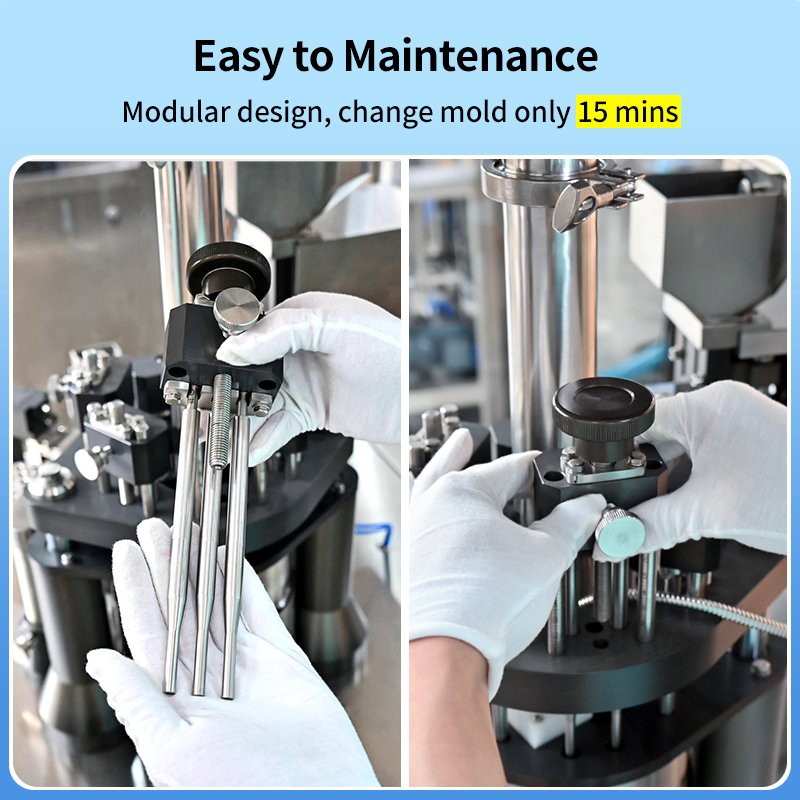
How to Disassemble Molds on a Fully Automatic Capsule Filling Machine: A Step-by-Step Guide

For new investors or engineers entering the pharmaceutical industry, the cleaning and maintenance of a fully automatic capsule filling machine can seem daunting. Adhering to strict cGMP standards requires thorough cleaning after every shift to prevent contamination. If you are new to this process and want to learn how to properly disassemble the molds for cleaning, this step-by-step guide is for you.

Why Proper Disassembly Matters

Regular disassembly and cleaning are critical to maintain dosing accuracy, prevent cross-contamination, and ensure compliance with international quality standards. Proper cleaning also extends the lifespan of your machine and reduces downtime.

Step-by-Step Disassembly Process

1. Start with the Filling Station

After shutdown, begin with the filling unit where residual powder tends to accumulate. Carefully remove the six filling rods one by one.

2. Secure the Filling Assembly

Retrieve the acrylic block (often stored in the machine’s accessory kit) and place it beneath the filling shaft. Jog the machine to its lowest point to safely release and remove the filling assembly.

3. Remove Critical Powder Handling Parts

Suivant, extract the dosing disc and copper plate, which are essential for measuring powder accurately. Alors, detach the scraper blade responsible for powder recovery.

4. Disassemble Capsule Handling Components

Move to the capsule seeding and transfer sections. Gently remove the upper and lower molds from each station. Proceed to detach the capsule feeding tube, inverter (which flips the capsule bodies), and the capsule comb.

5. Initial Cleaning & Sanitization

Once all parts are disassembled, rinse them with clean water to remove powder residue. Wipe each component thoroughly with a dry, lint-free cloth. Apply a suitable disinfectant, tel que 75% medical alcohol, for sanitization, et terminez en les essuyant à nouveau avant stockage ou remontage.

Un démontage correct est la base d’un entretien efficace. Dans notre prochain guide, nous expliquerons la procédure correcte de réassemblage de tous les moules afin de garantir que votre machine fonctionne parfaitement et sans défaut..

Ce guide a-t-il été utile? Si vous avez des questions précises sur le démontage de votre modèle de remplisseuse de capsules, n'hésitez pas à laisser un commentaire ci-dessous!

Demander un devis

    *Nous respectons votre confidentialité et toutes les informations sont protégées.