
Viên muối được làm bằng cách chuẩn bị hạt muối, nén chúng bằng máy ép viên, kiểm tra chất lượng máy tính bảng, loại bỏ bụi bẩn, và lựa chọn hình thức đóng gói phù hợp cho thị trường cuối cùng. Mỗi bước ảnh hưởng đến sức mạnh của máy tính bảng, hành vi giải thể, xử lý ổn định, và hiệu suất lưu trữ.
Viên muối được ứng dụng trong xử lý nước, định lượng công nghiệp, chế biến thực phẩm, sản phẩm làm sạch, và các ứng dụng điện giải hoặc bổ sung. Những sản phẩm này có chung chất liệu cơ bản, nhưng không phải lúc nào họ cũng cần cùng kích thước máy tính bảng, độ cứng, tốc độ sản xuất, hoặc phương pháp đóng gói.
Đối với sản xuất thương mại, nhà sản xuất cần kiểm soát nhiều hơn việc nén. Các viên thuốc thành phẩm cũng phải tồn tại khi chuyển, đếm, đóng gói, vận chuyển, và lưu trữ mà không bị phá vỡ, vón cục, hoặc hấp thụ quá nhiều độ ẩm.
1. Viên muối là gì?
Viên muối là viên nén được làm chủ yếu từ natri clorua hoặc hạt muối. Chúng được tạo thành các hình dạng và trọng lượng cố định để có thể xử lý được., đóng gói, vận chuyển, và hòa tan dễ dự đoán hơn muối lỏng.
Viên muối lớn dùng để xử lý nước hoặc định lượng công nghiệp. Một viên muối nhỏ hơn được sử dụng trong chất điện phân, bổ sung, đồ ăn, hoặc các ứng dụng natri clorua được kiểm soát. Thiết kế sản phẩm phụ thuộc vào cách sử dụng máy tính bảng sau khi sản xuất.
Giá trị chính của viên muối là tính nhất quán. Kích thước máy tính bảng được kiểm soát, cân nặng, độ cứng, và tốc độ hòa tan giúp quản lý việc sản xuất và sử dụng cuối cùng dễ dàng hơn.
2. Những loại viên muối nào được sản xuất?
Viên muối bao gồm một số loại sản phẩm. Mỗi chủng loại có yêu cầu sản xuất và đóng gói khác nhau.
Các loại phổ biến bao gồm:
- Viên muối xử lý nước dùng cho hệ thống làm mềm và chuẩn bị nước muối
- Viên muối công nghiệp dùng để định lượng hóa chất hoặc bổ sung muối có kiểm soát
- Viên muối điện giải dành cho thể thao, hydrat hóa, hoặc sản phẩm bổ sung
- Viên natri clorua dành cho các ứng dụng được kiểm soát trong đó liều lượng và độ tinh khiết là vấn đề quan trọng
- Thực phẩm hoặc viên muối dùng làm sạch để chế biến, hộ gia đình , hoặc sử dụng thương mại
Đây là lý do tại sao dây chuyền sản xuất viên muối nên được quy hoạch từ sản phẩm cuối cùng trở đi. Kích thước máy tính bảng, độ cứng, bảo vệ độ ẩm, định dạng bao bì, và năng lực đầu ra đều phụ thuộc vào thị trường mục tiêu.
3. Nguyên liệu thô nào được sử dụng cho viên muối?
Viên muối thường bắt đầu bằng muối tinh luyện hoặc hạt natri clorua. Nguyên liệu thô phải có độ tinh khiết phù hợp, độ ẩm, kích thước hạt, và khả năng chảy.
Muối rất nhạy cảm với điều kiện sản xuất. Nó có thể hấp thụ độ ẩm từ không khí, gây ra sự vón cục, dính vào, và ăn uống kém. Tinh thể muối cũng có thể bị mài mòn, đấm thật mạnh, chết, người cho ăn, và các bộ phận tiếp xúc khác mòn nhanh hơn so với vật liệu mềm hơn.
Trước khi nhấn máy tính bảng, nhà sản xuất thường kiểm tra:
- Độ tinh khiết của muối
- Độ ẩm
- Phân bố kích thước hạt
- Khả năng chảy
- Mật độ lớn
- Yêu cầu về chất phụ gia hoặc chất kết dính
- Tiêu chuẩn sản phẩm thực phẩm, bổ sung, công nghiệp, hoặc thị trường sử dụng có kiểm soát
Nếu vật liệu quá ướt, quá ổn, hoặc quá thất thường, máy ép viên tạo ra sự thay đổi trọng lượng, dính vào, giới hạn, hoặc những viên thuốc dễ vỡ.

4. Quy trình sản xuất viên muối: Từ chuẩn bị hạt đến ép viên
Bước chân 1: Chuẩn bị hạt muối để nén
Hạt muối cần được chuẩn bị trước khi đưa vào máy ép viên. Bước này bao gồm sấy khô, sàng lọc, pha trộn, và đôi khi tạo hạt.
Sấy khô làm giảm độ ẩm và giúp chống dính trong quá trình nén. Điều này rất quan trọng vì ngay cả việc tăng độ ẩm nhỏ cũng có thể ảnh hưởng đến dòng muối và độ sạch của bề mặt đục lỗ.
Sàng lọc loại bỏ các hạt quá khổ và tiền phạt dư thừa. Kích thước hạt đồng đều hơn giúp vật liệu lấp đầy khoang khuôn một cách đồng đều, hỗ trợ trọng lượng máy tính bảng ổn định.
Một số công thức muối cần tạo hạt trước khi ép. Tạo hạt có thể cải thiện khả năng chảy và khả năng nén, đặc biệt là khi các tinh thể muối thô không nạp vào máy ép viên một cách trơn tru.
Bước chuẩn bị ổn định giúp giảm áp lực lên máy ép viên. Nếu nguyên liệu vào máy thay đổi theo từng đợt, trọng lượng máy tính bảng, độ cứng, và ngoại hình cũng sẽ trở nên khó kiểm soát hơn.
Bước chân 2: Nén muối bằng máy ép viên
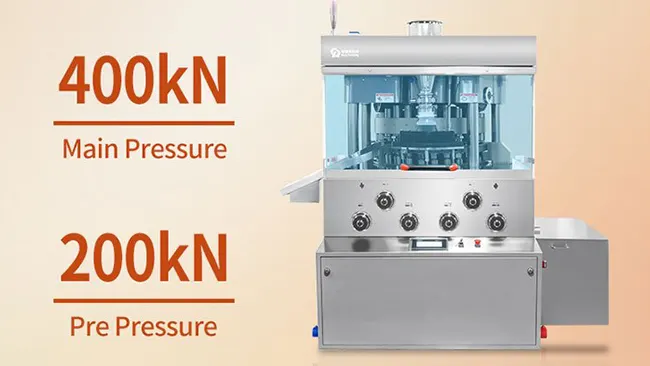
Máy ép viên tạo thành viên muối bằng cách lấp đầy khoang khuôn và nén vật liệu giữa chày trên và chày dưới. Đối với sản phẩm muối, máy thường cần áp suất cao hơn, dụng cụ mạnh hơn, cho ăn ổn định, và chống bụi tốt hơn.
Quá trình nén cơ bản bao gồm:
- cho ăn: Các hạt muối di chuyển từ phễu vào hệ thống cấp liệu.
- Làm đầy: Các hạt lấp đầy khoang khuôn đến độ sâu được kiểm soát.
- Nén trước: Áp suất nhẹ sẽ loại bỏ không khí bị mắc kẹt và bắt đầu hình thành viên thuốc.
- nén chính: Áp suất cao hơn tạo ra hình dạng và độ cứng cuối cùng của viên thuốc.
- Phóng ra: Viên thuốc thành phẩm được đẩy ra khỏi khuôn và chuyển về phía trước.
Việc ép viên muối đòi hỏi khắt khe vì muối có thể cứng, mài mòn, và nhạy cảm với độ ẩm. Viên muối lớn hơn cần lực nén mạnh. Bụi muối mịn cũng xâm nhập vào vùng tiếp xúc nếu thiết kế máy không quản lý bụi đúng cách.
MỘT Máy ép viên muối do đó cần được đánh giá về khả năng chịu áp lực, vật liệu dụng cụ, chống ăn mòn, thiết kế trung chuyển, chống bụi, và truy cập làm sạch.
Bước chân 3: Kiểm tra chất lượng máy tính bảng sau khi nhấn
Chất lượng máy tính bảng cần được kiểm tra sau khi nén. Viên muối phải đủ bền để xử lý và đóng gói, nhưng độ cứng của nó vẫn phải phù hợp với đặc tính hòa tan cần thiết.
Kiểm tra chất lượng phổ biến bao gồm:
- Trọng lượng máy tính bảng
- Độ dày của máy tính bảng
- Độ cứng của viên nén
- Rủi ro dễ vỡ hoặc vỡ
- Bề mặt xuất hiện
- Đóng nắp hoặc cán màng
- Dính hoặc nhặt
- Độ nhạy ẩm
Đối với viên muối công nghiệp, sức mạnh và sự giải thể có kiểm soát là mối quan tâm chính. Đối với viên muối điện giải hoặc bổ sung, tính nhất quán của liều lượng, vẻ bề ngoài, và bảo vệ bao bì quan trọng hơn.
Một dây chuyền sản xuất tốt sẽ giám sát cả hiệu suất của máy và hoạt động của máy tính bảng thành phẩm. Cài đặt báo chí ổn định rất hữu ích, nhưng việc kiểm tra thành phẩm vẫn cần thiết.
5. Quy trình đóng gói viên muối: Loại bỏ bụi và Tùy chọn đóng gói
Bước chân 4: Loại bỏ bụi và bảo vệ dây chuyền đóng gói
Viên muối mang bụi rời hoặc các hạt nhỏ sau khi nén. Bụi có thể đến từ muối mịn, cạnh máy tính bảng, ma sát trong quá trình phóng điện, hoặc bị vỡ trong quá trình chuyển giao.
Kiểm soát bụi giúp bảo vệ thiết bị đóng gói hạ nguồn. Bụi muối lỏng có thể tích tụ xung quanh băng tải, kênh đếm, khu vực niêm phong, cảm biến, và trạm đóng gói. Nó cũng có thể làm cho gói thành phẩm trông kém sạch sẽ hơn.
Tùy thuộc vào sản phẩm và thiết kế dòng, nhà sản xuất sử dụng:
- Khử bụi máy tính bảng
- Hút bụi
- Phát hiện kim loại
- Kiểm tra trực quan
- Chuyển máy tính bảng nhẹ nhàng
- Chiều cao xả được kiểm soát
Bước này quan trọng khi viên muối được chuyển vào bao bì chai, bao bì vỉ, bao bì túi, hoặc đóng gói túi số lượng lớn. Viên nén sạch hơn hỗ trợ đóng gói ổn định hơn và giảm bớt công việc vệ sinh xung quanh dây chuyền.

Bước chân 5: Lựa chọn các phương án đóng gói cho viên muối
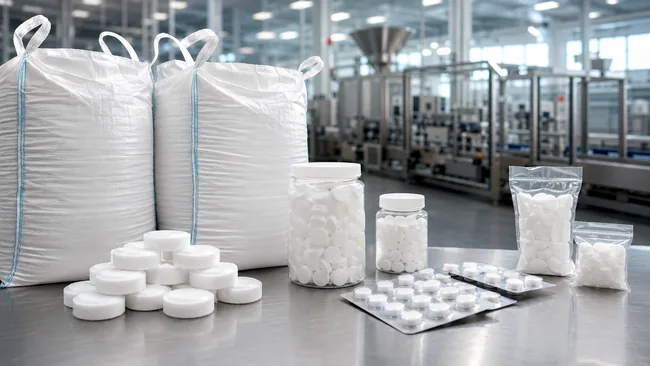
Bao bì viên muối phụ thuộc vào kích thước viên, ứng dụng, độ nhạy ẩm, phương pháp xử lý, và hình thức bán hàng. Bao bì phải bảo vệ máy tính bảng khỏi độ ẩm, sự vỡ vụn, sự ô nhiễm, và xử lý thiệt hại.
Viên muối số lượng lớn thường cần túi hoặc thùng carton chắc chắn vì sản phẩm nặng. Viên muối bán lẻ thường cần chai, mụn nước, hoặc túi nhỏ hơn vì người dùng quan tâm đến sự tiện lợi, liều lượng, và trình bày kệ.
Bao bì cần được xem xét trước khi dây chuyền sản xuất được hoàn thiện. Độ cứng của máy tính bảng, mức độ bụi, kích thước máy tính bảng, và loại máy đóng gói đều ảnh hưởng lẫn nhau.
6. Thiết bị nào được sử dụng trong dây chuyền sản xuất viên muối?
Dây chuyền sản xuất viên muối gồm nhiều máy trước và sau máy ép viên. Việc thiết lập chính xác phụ thuộc vào công thức, kích thước máy tính bảng, mục tiêu đầu ra, và hình thức đóng gói.
Các thiết bị thông thường bao gồm:
- Máy trộn hoặc máy xay sinh tố
- Máy tạo hạt
- Máy sấy hoặc thiết bị sàng lọc
- Máy ép viên muối
- Bộ phận khử bụi hoặc máy tính bảng
- Máy dò kim loại
- Máy đếm viên
- Dây chuyền đếm và điền máy tính bảng
- Máy đóng gói vỉ
- Máy đóng gói túi
- Máy đóng hộp
Đối với viên muối công nghiệp lớn, dây chuyền tập trung vào cường độ nén và đóng gói số lượng lớn. Đối với viên muối điện giải hoặc bổ sung, dòng cần chú ý nhiều hơn đến độ chính xác đếm, bao bì chai, bao bì vỉ, ghi nhãn, và đóng thùng.
Sự lựa chọn thiết bị tốt nhất phụ thuộc vào định dạng sản phẩm cuối cùng, không chỉ bản thân muối.
7. Các vấn đề thường gặp trong sản xuất viên muối
Sản xuất viên muối có thể gặp một số vấn đề nếu nguyên liệu thô, lực nén, dụng cụ, hoặc môi trường không được kiểm soát.
Các vấn đề thường gặp bao gồm:
- Dính: Muối dính vào mặt vì ẩm, bột mịn, hoặc dụng cụ không phù hợp.
- giới hạn: Mặt trên của máy tính bảng tách ra do không khí bị giữ lại trong quá trình nén.
- Sự biến đổi về trọng lượng: Khoang khuôn không được lấp đầy một cách nhất quán.
- Máy tính bảng bị vỡ: Máy tính bảng quá yếu hoặc bị cầm quá mạnh sau khi nhấn.
- Hòa tan chậm: Lực nén quá cao hoặc viên thuốc quá dày đặc.
- Độ hòa tan không đều: Kích thước hạt, độ cứng, hoặc công thức không nhất quán.
- Hấp thụ độ ẩm: Cụm viên nén, làm mềm, hoặc xuống cấp trong quá trình bảo quản.
- Hư hỏng bao bì: Hệ thống đóng gói hoặc vận chuyển số lượng lớn làm vỡ viên thuốc trước khi giao hàng.
Nhiều vấn đề trong số này có liên quan. Độ ẩm có thể gây ra dòng chảy kém, dính vào, sự thay đổi trọng lượng, và vấn đề lưu trữ. Một quy trình ổn định kiểm soát vật liệu, máy móc, tình trạng phòng, và đóng gói cùng nhau.
8. Cách chọn thiết bị sản xuất viên muối
Thiết bị phù hợp phải phù hợp với kích thước viên muối, độ cứng, khối lượng sản xuất, và hình thức đóng gói. Máy hoạt động tốt với viên muối bổ sung nhỏ không phù hợp với viên muối công nghiệp lớn.
Khi lựa chọn máy ép viên muối hay dây chuyền sản xuất trọn gói, người mua nên kiểm tra:
- Đường kính và độ dày tối đa của máy tính bảng
- Lực nén
- Vật liệu dụng cụ và khả năng chống mài mòn
- Chống ăn mòn
- Thiết kế hệ thống cho ăn
- Công suất đầu ra
- Kiểm soát bụi
- Truy cập dọn dẹp
- Yêu cầu chuyển đổi
- Khả năng tương thích với thiết bị đóng gói hạ nguồn
Thiết bị đóng gói nên được lựa chọn sau khi định dạng đóng gói cuối cùng rõ ràng. Một dòng bao 25kg, dây chuyền đếm chai, và dây chuyền đóng gói vỉ là những hệ thống rất khác nhau.
Dành cho nhà sản xuất cần cả thiết bị ép viên và đóng gói xuôi dòng, lập kế hoạch dây chuyền nên xem xét cách mỗi máy kết nối với máy tiếp theo. Ruida Packing cung cấp các giải pháp máy móc đóng gói và dược phẩm tùy chỉnh cho các ngành công nghiệp như dược phẩm dinh dưỡng, chất bổ sung, đồ ăn, sản phẩm chăm sóc sức khỏe, và sản xuất liên quan.
Phần kết luận
Viên muối được sản xuất thông qua một quy trình được kiểm soát, bắt đầu bằng các hạt muối thích hợp và tiếp tục qua quá trình ép viên, kiểm tra chất lượng, kiểm soát bụi, và đóng gói. Mỗi bước đều ảnh hưởng đến bước tiếp theo.
Đối với sản xuất thương mại, quyết định quan trọng nhất là kích thước máy tính bảng, lực nén, hành vi vật chất, kiểm soát bụi, và hình thức đóng gói. Viên muối công nghiệp cỡ lớn, một viên thuốc xử lý nước, và một viên điện giải nhỏ đều được gọi là viên muối, nhưng họ thường cần các giải pháp đóng gói và cài đặt máy khác nhau. Dây chuyền sản xuất viên muối được quy hoạch tốt sẽ kết nối máy ép viên với thiết bị xuôi dòng phù hợp, nên những viên thuốc thành phẩm đều nhất quán, lau dọn, được bảo vệ, và sẵn sàng cho thị trường dự định của họ.
Câu hỏi thường gặp
Viên muối được làm như thế nào?
Viên muối được làm bằng cách chuẩn bị hạt muối, cho chúng vào máy ép viên, nén chúng thành máy tính bảng, kiểm tra chất lượng máy tính bảng, loại bỏ bụi bẩn, và đóng gói các viên thuốc theo mục đích sử dụng cuối cùng của chúng.
Máy nào được sử dụng để làm viên muối?
Máy ép viên được sử dụng để làm viên muối. Đối với sản xuất thương mại, Máy ép viên muối phải có đủ lực nén, dụng cụ phù hợp, cho ăn ổn định, và bảo vệ khỏi bụi muối, mài mòn, và ăn mòn.
Viên muối có giống như viên natri clorua không?
Nhiều viên muối được làm chủ yếu từ natri clorua, nhưng không phải viên muối nào cũng có cùng mục đích và tiêu chuẩn chất lượng. Viên muối công nghiệp, viên xử lý nước, viên muối điện giải, và viên natri clorua sử dụng có kiểm soát có độ tinh khiết khác nhau, kích cỡ, độ cứng, và yêu cầu đóng gói.
Tại sao viên muối cần nén mạnh?
Viên muối cần nén mạnh vì hạt muối phải liên kết thành dạng rắn ổn định. Viên thuốc phải đủ bền để xử lý và đóng gói mà vẫn hòa tan ở tốc độ yêu cầu trong quá trình sử dụng.
Bao bì nào được sử dụng cho viên muối?
Viên muối được đóng trong bao 10kg hoặc 25kg, chai, gói vỉ, túi, thùng carton, hoặc trống. Bao bì phù hợp phụ thuộc vào kích thước máy tính bảng, ứng dụng, độ nhạy ẩm, và liệu sản phẩm được bán với số lượng lớn hay bán lẻ.
Một máy ép viên có thể tạo ra các kích cỡ viên muối khác nhau không?
Một máy ép viên tạo ra các kích cỡ viên muối khác nhau nếu nó hỗ trợ dụng cụ cần thiết, phạm vi áp suất, và điều kiện cho ăn. Người mua nên xác nhận đường kính máy tính bảng tối đa, độ dày, công suất áp suất, và phương pháp chuyển đổi trước khi chọn máy.
Có phải viên muối chỉ dùng để làm mềm nước?
KHÔNG. Viên muối còn được dùng trong định lượng công nghiệp, chế biến thực phẩm, sản phẩm làm sạch, sản phẩm điện giải hoặc bổ sung, và các ứng dụng natri clorua được kiểm soát. Làm mềm nước chỉ là một công dụng phổ biến.
Nguyên nhân khiến viên muối bị vỡ hoặc vỡ vụn?
Viên muối bị vỡ hoặc vỡ vụn do lực nén thấp, chuẩn bị hạt kém, độ ẩm dư thừa, công thức yếu, chuyển thô, hoặc bao bì không phù hợp. Nguyên nhân cần được kiểm tra từ khâu chuẩn bị nguyên liệu đến khâu ép viên và xử lý cuối cùng..
Tham khảo
EMA – ICH Q7 Thực hành sản xuất tốt đối với hoạt chất dược phẩm