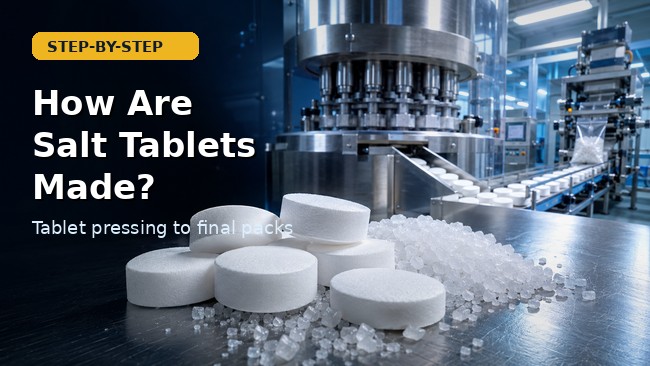
قرص نمک با تهیه گرانول نمک ساخته می شود, فشرده سازی آنها با دستگاه پرس تبلت, بررسی کیفیت تبلت, از بین بردن گرد و غبار سست, و انتخاب قالب بسته بندی مناسب برای بازار نهایی. هر مرحله بر قدرت تبلت تأثیر می گذارد, رفتار انحلال, ثبات حمل و نقل, و عملکرد ذخیره سازی.
از قرص های نمک در تصفیه آب استفاده می شود, دوز صنعتی, فرآوری مواد غذایی, محصولات تمیز کننده, و کاربردهای الکترولیت یا مکمل. این محصولات مواد اولیه مشابهی دارند, اما آنها همیشه به همان اندازه تبلت نیاز ندارند, سختی, سرعت تولید, یا روش بسته بندی.
برای تولید تجاری, تولیدکنندگان باید بیش از فشرده سازی را کنترل کنند. قرص های تمام شده نیز باید از انتقال جان سالم به در ببرند, شمارش, بسته بندی, حمل و نقل, و ذخیره سازی بدون شکستن, کلوخه شدن, یا جذب رطوبت بیش از حد.
1. قرص نمک چیست؟?
قرص های نمک قرص های فشرده ای هستند که عمدتاً از کلرید سدیم یا گرانول های مبتنی بر نمک ساخته می شوند.. آنها به شکل ها و وزن های ثابتی در می آیند تا بتوان با آنها کار کرد, بسته بندی شده, حمل می شود, و قابل پیش بینی تر از نمک شل حل می شود.
یک قرص نمک بزرگ برای تصفیه آب یا دوز صنعتی استفاده می شود. یک قرص نمک کوچکتر در الکترولیت استفاده شود, مکمل, غذا, یا کاربردهای کنترل شده کلرید سدیم. طراحی محصول بستگی به نحوه استفاده از تبلت پس از تولید دارد.
ارزش اصلی یک قرص نمک قوام است. اندازه تبلت کنترل شده, وزن, سختی, و نرخ انحلال مدیریت تولید و استفاده نهایی را آسان تر می کند.
2. چه انواع قرص های نمک تولید می شود?
قرص های نمک چندین دسته محصول را پوشش می دهند. هر دسته دارای الزامات تولید و بسته بندی متفاوتی است.
انواع متداول شامل:
- قرص نمک تصفیه آب برای سیستم های نرم کننده و آماده سازی آب نمک
- قرص نمک صنعتی برای دوز شیمیایی یا افزودن نمک کنترل شده
- قرص نمک الکترولیت برای ورزش, هیدراتاسیون, یا محصولات مکمل
- قرص کلرید سدیم برای کاربردهای کنترل شده که در آن دوز و خلوص مهم است
- برای فرآوری از قرص های نمک برای غذا یا تمیز کردن استفاده کنید, خانوار, یا استفاده تجاری
به همین دلیل خط تولید قرص نمک باید از محصول نهایی به عقب برنامه ریزی شود. اندازه تبلت, سختی, محافظت در برابر رطوبت, فرمت بسته بندی, و ظرفیت تولید همگی به بازار هدف بستگی دارد.
3. چه مواد اولیه ای برای قرص های نمک استفاده می شود?
قرص های نمک معمولاً با نمک تصفیه شده یا گرانول های کلرید سدیم شروع می شوند. ماده اولیه باید دارای خلوص مناسب باشد, سطح رطوبت, اندازه ذرات, و جریان پذیری.
نمک به شرایط تولید حساس است. می تواند رطوبت هوا را جذب کند, که باعث ایجاد کلوخه می شوند, چسبیدن, و تغذیه ضعیف. کریستال های نمک نیز می توانند ساینده باشند, بنابراین مشت, می میرد, فیدرها, و سایر قطعات تماس سریعتر از مواد نرم تر سایش می شوند.
قبل از فشار دادن تبلت, تولید کنندگان معمولا بررسی می کنند:
- خلوص نمک
- میزان رطوبت
- توزیع اندازه ذرات
- جریان پذیری
- چگالی ظاهری
- الزامات افزودنی یا چسب
- استاندارد محصول برای مواد غذایی, مکمل, صنعتی, یا بازارهای با استفاده کنترل شده
اگر مواد خیلی مرطوب باشد, خیلی خوب, یا خیلی نامنظم, پرس تبلت تغییرات وزنی را ایجاد می کند, چسبیدن, دربندی, یا قرص های شکننده.
4. فرآیند تولید قرص نمک: از تهیه گرانول تا پرس قرص
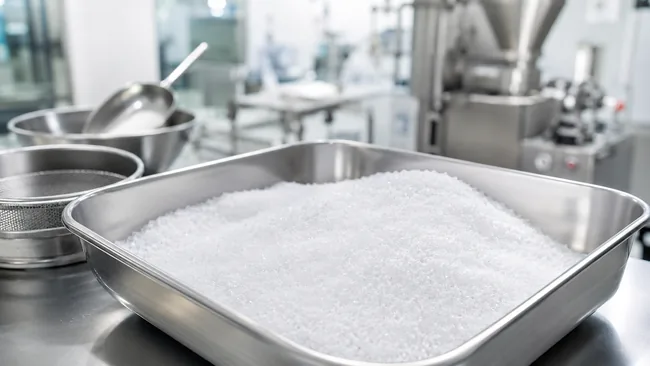
مرحله 1: آماده سازی گرانول نمک برای فشرده سازی
گرانول های نمک باید قبل از ورود به پرس قرص آماده شوند. این مرحله شامل خشک کردن است, غربالگری, مخلوط کردن, و گاهی دانه بندی.
خشک کردن رطوبت را کاهش می دهد و به جلوگیری از چسبندگی در هنگام فشرده سازی کمک می کند. این مهم است زیرا حتی افزایش کمی رطوبت می تواند بر جریان نمک و تمیزی سطح تأثیر بگذارد.
غربالگری ذرات بزرگ و ریزهای اضافی را حذف می کند. اندازه ذرات یکنواخت تر به مواد کمک می کند تا حفره قالب را به طور یکنواخت پر کند, که از وزن ثابت تبلت پشتیبانی می کند.
برخی از فرمول های نمک قبل از فشار دادن نیاز به دانه بندی دارند. دانه بندی می تواند جریان پذیری و تراکم پذیری را بهبود بخشد, به خصوص زمانی که کریستال های نمک خام به راحتی وارد دستگاه پرس قرص نمی شوند.
یک مرحله آماده سازی پایدار فشار روی پرس قرص را کاهش می دهد. اگر مواد وارد شده به دستگاه از دسته ای به دسته دیگر تغییر کند, وزن قرص, سختی, و کنترل ظاهر نیز سخت تر خواهد شد.
مرحله 2: فشرده سازی نمک با دستگاه پرس قرص
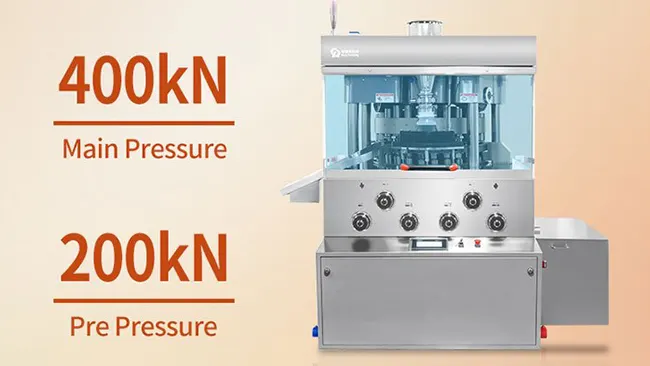
دستگاه پرس قرص با پر کردن یک حفره قالب و فشرده کردن مواد بین پانچ های بالا و پایین، قرص های نمک را تشکیل می دهد.. برای محصولات نمکی, دستگاه اغلب به فشار بالاتری نیاز دارد, ابزار قوی تر, تغذیه پایدار, و محافظت بهتر در برابر گرد و غبار.
فرآیند فشرده سازی اولیه شامل:
- تغذیه: دانه های نمک از قیف به داخل سیستم تغذیه حرکت می کنند.
- پر کردن: گرانول ها حفره قالب را تا یک عمق کنترل شده پر می کنند.
- پیش فشرده سازی: فشار سبک هوای محبوس شده را از بین می برد و شروع به تشکیل قرص می کند.
- فشرده سازی اصلی: فشار بیشتر باعث ایجاد شکل و سختی نهایی قرص می شود.
- تخلیه: قرص تمام شده از قالب بیرون زده و به جلو منتقل می شود.
فشار دادن قرص نمک سخت است زیرا نمک می تواند سخت باشد, ساینده, و حساس به رطوبت. قرص های نمک بزرگتر به نیروی فشرده سازی قوی نیاز دارند. اگر طراحی دستگاه به درستی گرد و غبار را مدیریت نکند، گرد و غبار ریز نمک نیز وارد مناطق تماس می شود.
بوها دستگاه پرس قرص نمک بنابراین باید از نظر ظرفیت فشار ارزیابی شود, مواد ابزار, مقاومت در برابر خوردگی, طراحی فیدر, حفاظت از گرد و غبار, و دسترسی به نظافت.
مرحله 3: بررسی کیفیت تبلت پس از فشار دادن
کیفیت قرص باید پس از فشرده سازی بررسی شود. یک قرص نمک باید برای جابجایی و بسته بندی به اندازه کافی قوی باشد, اما سختی آن همچنان باید با رفتار انحلال مورد نیاز مطابقت داشته باشد.
بررسی های رایج کیفیت شامل:
- وزن تبلت
- ضخامت تبلت
- سختی قرص
- خطر شکنندگی یا شکستگی
- ظاهر سطح
- درپوش یا لمینیت
- چسبیدن یا چیدن
- حساسیت به رطوبت
برای قرص نمک صنعتی, قدرت و انحلال کنترل شده نگرانی اصلی است. برای الکترولیت یا قرص نمک مکمل, قوام دوز, ظاهر, و حفاظت از بسته بندی مهم تر است.
یک خط تولید خوب هم عملکرد دستگاه و هم رفتار تبلت نهایی را کنترل می کند. تنظیمات فشار پایدار مفید هستند, اما تست محصول نهایی هنوز ضروری است.
5. فرآیند بسته بندی قرص نمک: حذف گرد و غبار و گزینه های بسته بندی
مرحله 4: حذف گرد و غبار و محافظت از خط بسته بندی
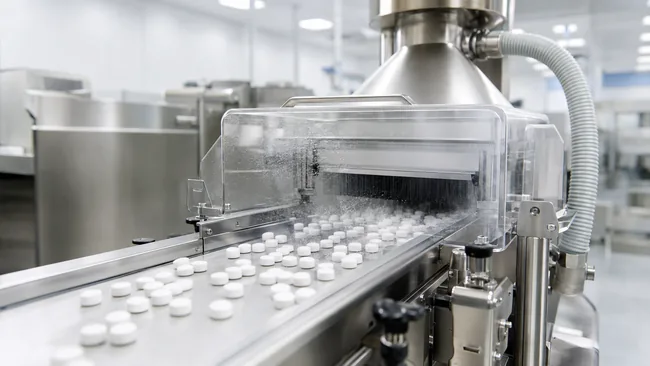
قرص های نمک پس از فشرده سازی، گرد و غبار شل یا ذرات ریز را حمل می کنند. گرد و غبار می تواند از نمک ریز به وجود بیاید, لبه های تبلت, اصطکاک در هنگام تخلیه, یا شکستگی در حین انتقال.
کنترل گرد و غبار به محافظت از تجهیزات بسته بندی پایین دست کمک می کند. گرد و غبار نمک سست می تواند در اطراف نوار نقاله جمع شود, شمارش کانال ها, مناطق آب بندی, حسگرها, و ایستگاه های بسته بندی. همچنین می تواند بسته تمام شده را تمیزتر نشان دهد.
بسته به محصول و طراحی خط, تولید کنندگان استفاده می کنند:
- گردگیری تبلت
- استخراج گرد و غبار
- تشخیص فلز
- بازرسی بصری
- انتقال ملایم تبلت
- ارتفاع تخلیه کنترل شده
این مرحله زمانی اهمیت دارد که قرص های نمک وارد بسته بندی بطری شوند, بسته بندی تاول, بسته بندی کیسه ای, یا بسته بندی کیسه فله. قرص های تمیزتر از بسته بندی پایدارتر پشتیبانی می کنند و کار تمیز کردن را در اطراف خط کاهش می دهند.
مرحله 5: انتخاب گزینه های بسته بندی برای قرص های نمک
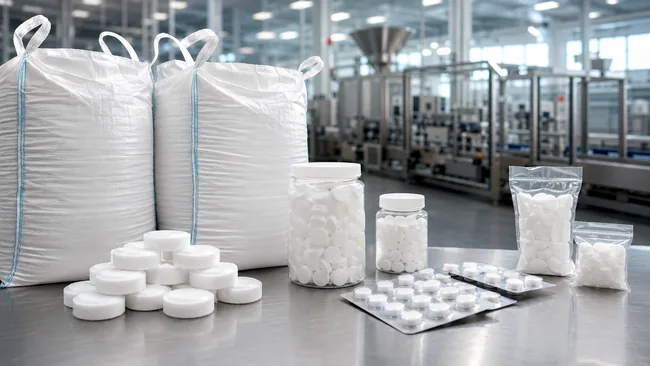
بسته بندی قرص نمک به اندازه قرص بستگی دارد, کاربرد, حساسیت به رطوبت, روش جابجایی, و فرمت فروش. بسته بندی باید از قرص ها در برابر رطوبت محافظت کند, شکستگی, آلودگی, و رسیدگی به آسیب.
قرص های نمک فله معمولاً به کیسه ها یا کارتن های محکم نیاز دارند زیرا محصول سنگین است. قرص های نمک خرده فروشی اغلب به بطری نیاز دارند, تاول ها, یا کیسه های کوچکتر زیرا کاربران به راحتی اهمیت می دهند, دوز, و ارائه قفسه.
بسته بندی باید قبل از نهایی شدن خط تولید در نظر گرفته شود. سختی تبلت, سطح گرد و غبار, اندازه تبلت, و نوع دستگاه بسته بندی همگی بر یکدیگر تأثیر می گذارند.
6. کدام تجهیزات در خط تولید قرص نمک استفاده می شود?
خط تولید قرص نمک شامل چندین دستگاه قبل و بعد از پرس قرص می باشد. تنظیم دقیق به فرمول بستگی دارد, اندازه تبلت, هدف خروجی, و فرمت بسته بندی.
تجهیزات رایج شامل:
- میکسر یا مخلوط کن
- گرانولاتور
- خشک کن یا تجهیزات غربالگری
- دستگاه پرس قرص نمک
- دستگاه گردگیر تبلت یا گرد و غبار
- فلزیاب
- دستگاه شمارش تبلت
- خط شمارش و پر کردن تبلت
- دستگاه بسته بندی تاول
- دستگاه بسته بندی کیسه
- دستگاه کارتن سازی
برای قرص های نمک صنعتی بزرگ, تمرکز خط بر مقاومت فشاری و بسته بندی حجیم است. برای الکترولیت یا قرص نمک مکمل, خط نیاز به توجه بیشتری به دقت شمارش دارد, بسته بندی بطری, بسته بندی تاول, برچسب زدن, و کارتن سازی.
انتخاب بهترین تجهیزات به فرمت محصول نهایی بستگی دارد, نه تنها خود مواد نمکی.
7. مشکلات رایج در تولید قرص نمک
تولید قرص نمک می تواند با مشکلات متعددی در صورت مواد اولیه مواجه شود, نیروی فشرده سازی, ابزار سازی, یا محیط کنترل نمی شود.
مشکلات رایج عبارتند از:
- چسبیدن: نمک به دلیل رطوبت به صورت ها می چسبد, پودر ریز, یا ابزار نامناسب.
- دربندی: صفحه تبلت جدا می شود زیرا هوا در حین فشرده سازی به دام می افتد.
- تنوع وزن: حفره قالب به طور مداوم پر نمی شود.
- شکستگی تبلت: قرص ها خیلی ضعیف هستند یا پس از فشار دادن آنها خیلی بد برخورد می شود.
- انحلال آهسته: نیروی فشرده سازی خیلی زیاد است یا تبلت خیلی متراکم است.
- انحلال ناهموار: اندازه ذرات, سختی, یا فرمولاسیون ناسازگار است.
- جذب رطوبت: تبلت ها جمع می شوند, نرم کردن, یا در طول ذخیره سازی تخریب می شود.
- آسیب بسته بندی: بسته بندی یا سیستم های انتقال فله قرص ها را قبل از تحویل می شکند.
بسیاری از این مشکلات به هم مرتبط هستند. رطوبت می تواند باعث جریان ضعیف شود, چسبیدن, تنوع وزن, و مشکلات ذخیره سازی. یک فرآیند پایدار مواد را کنترل می کند, دستگاه, وضعیت اتاق, و بسته بندی با هم.
8. نحوه انتخاب تجهیزات برای تولید قرص نمک
تجهیزات مناسب باید با اندازه قرص نمک مطابقت داشته باشد, سختی, حجم تولید, و فرمت بسته بندی. دستگاهی که برای قرص های مکمل کوچک خوب کار می کند برای قرص های نمک صنعتی بزرگ مناسب نیست.
هنگام انتخاب دستگاه پرس قرص نمک یا خط تولید کامل, خریداران باید بررسی کنند:
- حداکثر قطر و ضخامت قرص
- نیروی فشار
- مواد ابزار و مقاومت در برابر سایش
- مقاومت در برابر خوردگی
- طراحی سیستم تغذیه
- ظرفیت خروجی
- کنترل گرد و غبار
- دسترسی تمیز کردن
- الزامات تغییر
- سازگاری با تجهیزات بسته بندی پایین دستی
تجهیزات بسته بندی باید پس از مشخص شدن فرمت بسته بندی نهایی انتخاب شوند. یک کیسه 25 کیلوگرمی, خط شمارش بطری, و خط بسته بندی تاول ها سیستم های بسیار متفاوتی هستند.
برای تولیدکنندگانی که هم به تجهیزات پرس تبلت و هم تجهیزات بسته بندی پایین دستی نیاز دارند, برنامه ریزی خط باید نحوه اتصال هر ماشین به ماشین بعدی را در نظر بگیرد. Ruida Packing راه حل های سفارشی دارویی و ماشین آلات بسته بندی را برای صنایعی مانند مواد غذایی ارائه می دهد., مکمل, غذا, محصولات مراقبت های بهداشتی, و تولید مرتبط.
نتیجهگیری
قرص های نمک از طریق یک فرآیند کنترل شده ساخته می شوند که با دانه های نمک مناسب شروع می شود و تا پرس قرص ادامه می یابد., بررسی کیفیت, کنترل گرد و غبار, و بسته بندی. هر مرحله بر مرحله بعدی تأثیر می گذارد.
برای تولید تجاری, مهم ترین تصمیم ها اندازه تبلت است, نیروی فشرده سازی, رفتار مادی, کنترل گرد و غبار, و فرمت بسته بندی. قرص نمک صنعتی بزرگ, یک قرص تصفیه آب, و یک قرص الکترولیت کوچک همه را قرص نمک می نامند, اما آنها اغلب به تنظیمات دستگاه و راه حل های بسته بندی مختلف نیاز دارند. یک خط تولید قرص نمک با برنامه ریزی خوب، دستگاه پرس تبلت را با تجهیزات پایین دستی مناسب متصل می کند., بنابراین قرص های تمام شده سازگار هستند, تمیز کردن, محافظت شده است, و برای بازار مورد نظر خود آماده هستند.
سوالات متداول
قرص نمک چگونه ساخته می شود?
قرص نمک با تهیه گرانول نمک ساخته می شود, تغذیه آنها به دستگاه پرس تبلت, فشرده سازی آنها به تبلت, بررسی کیفیت تبلت, از بین بردن گرد و غبار سست, و بسته بندی قرص ها با توجه به استفاده نهایی آنها.
از چه دستگاهی برای تهیه قرص نمک استفاده می شود?
برای ساخت قرص نمک از دستگاه پرس قرص استفاده می شود. برای تولید تجاری, دستگاه پرس قرص نمک باید نیروی فشرده سازی کافی داشته باشد, ابزار مناسب, تغذیه پایدار, و محافظت در برابر گرد و غبار نمک, سایش, و خوردگی.
آیا قرص نمک همان قرص کلرید سدیم است؟?
بسیاری از قرص های نمک عمدتاً از کلرید سدیم ساخته می شوند, اما همه قرص های نمک دارای هدف یا استاندارد کیفیت یکسانی نیستند. قرص نمک صنعتی, قرص های تصفیه آب, قرص نمک الکترولیت, و قرص های کلرید سدیم با مصرف کنترل شده خلوص متفاوتی دارند, اندازه, سختی, و الزامات بسته بندی.
چرا قرص های نمک نیاز به فشرده سازی قوی دارند?
قرص های نمک نیاز به فشرده سازی قوی دارند زیرا گرانول های نمک باید به شکل جامد پایدار بپیوندند. قرص باید برای جابجایی و بسته بندی به اندازه کافی قوی باشد و در حین استفاده با سرعت مورد نیاز حل شود.
چه بسته بندی برای قرص نمک استفاده می شود?
قرص های نمک در کیسه های 10 یا 25 کیلوگرمی بسته بندی می شوند, بطری ها, بسته های تاول, کیسه ها, کارتن ها, یا طبل. بسته بندی مناسب به اندازه تبلت بستگی دارد, کاربرد, حساسیت به رطوبت, و اینکه آیا محصول به صورت عمده یا خرده فروشی فروخته می شود.
آیا یک پرس قرص می تواند اندازه های مختلف قرص نمک را بسازد?
یک پرس قرص در صورت پشتیبانی از ابزار مورد نیاز، اندازه های مختلف قرص نمک را تولید می کند, محدوده فشار, و شرایط تغذیه. خریداران باید حداکثر قطر تبلت را تأیید کنند, ضخامت, ظرفیت فشار, و روش تغییر قبل از انتخاب ماشین.
آیا قرص های نمک فقط برای نرم کننده های آب استفاده می شود؟?
خیر. از قرص نمک در دوزهای صنعتی نیز استفاده می شود, فرآوری مواد غذایی, محصولات تمیز کننده, محصولات الکترولیت یا مکمل, و کاربردهای کلرید سدیم کنترل شده. نرم کردن آب تنها یکی از کاربردهای رایج است.
چه چیزی باعث شکستن یا خرد شدن قرص های نمک می شود?
قرص های نمک به دلیل نیروی کم فشار می شکنند یا خرد می شوند, آماده سازی گرانول ضعیف, رطوبت بیش از حد, فرمولاسیون ضعیف, انتقال خشن, یا بسته بندی نامناسب. علت را باید از طریق آماده سازی مواد خام از طریق پرس قرص و جابجایی نهایی بررسی کرد.
مرجع
EMA – ICH Q7 عملکرد خوب تولید برای مواد فعال دارویی