
Le compresse di sale si ottengono preparando granuli di sale, comprimendoli con una macchina comprimitrice, controllare la qualità della tavoletta, rimuovendo la polvere sciolta, e selezionando il formato di imballaggio giusto per il mercato finale. Ogni passaggio influisce sulla forza della compressa, comportamento di dissoluzione, stabilità della manovrabilità, e prestazioni di archiviazione.
Le compresse di sale vengono utilizzate nel trattamento dell'acqua, dosaggio industriale, lavorazione degli alimenti, prodotti per la pulizia, e applicazioni di elettroliti o integratori. Questi prodotti condividono lo stesso materiale di base, ma non sempre necessitano della stessa dimensione della tavoletta, durezza, velocità di produzione, o metodo di confezionamento.
Per la produzione commerciale, i produttori devono controllare qualcosa di più della semplice compressione. Anche le compresse finite devono sopravvivere al trasferimento, conteggio, imballaggio, spedizione, e stoccaggio senza rompersi, agglomerazione, o assorbendo troppa umidità.
1. Cosa sono le compresse di sale?
Le compresse di sale sono compresse compresse costituite principalmente da cloruro di sodio o granuli a base di sale. Sono formati in forme e pesi fissi in modo che possano essere maneggiati, imballato, trasportato, e sciolto in modo più prevedibile rispetto al sale sfuso.
Una grande compressa di sale può essere utilizzata per il trattamento dell'acqua o il dosaggio industriale. Una pastiglia di sale più piccola può essere utilizzata nell'elettrolito, supplemento, cibo, o applicazioni controllate di cloruro di sodio. Il design del prodotto dipende da come verrà utilizzato il tablet dopo la produzione.
Il valore principale di una tavoletta di sale è la consistenza. Una dimensione della compressa controllata, peso, durezza, e il tasso di dissoluzione rendono la produzione e l’uso finale più facili da gestire.
2. Quali tipi di compresse di sale vengono prodotte?
Le compresse di sale coprono diverse categorie di prodotti. Ogni categoria ha requisiti di produzione e confezionamento diversi.
I tipi comuni includono:
- Pastiglie di sale per il trattamento dell'acqua per impianti di addolcimento e preparazione della salamoia
- Compresse di sale industriale per dosaggio chimico o aggiunta controllata di sale
- Compresse di sali elettrolitici per lo sport, idratazione, o integratori di prodotti
- Compresse di cloruro di sodio per applicazioni controllate dove dosaggio e purezza contano
- Pastiglie di sale per uso alimentare o detergente per la lavorazione, domestico, o uso commerciale
Questo è il motivo per cui una linea di produzione di compresse di sale dovrebbe essere pianificata a ritroso dal prodotto finale. Dimensioni della tavoletta, durezza, protezione dall'umidità, formato di imballaggio, e la capacità di produzione dipendono tutti dal mercato di riferimento.
3. Quale materia prima viene utilizzata per le compresse di sale?
Le compresse di sale di solito iniziano con sale raffinato o granuli di cloruro di sodio. La materia prima dovrebbe avere una purezza adeguata, livello di umidità, dimensione delle particelle, e fluidità.
Il sale è sensibile alle condizioni di produzione. Può assorbire l'umidità dall'aria, che causano aggregazioni, attaccarsi, e scarsa alimentazione. I cristalli di sale possono anche essere abrasivi, quindi pugni, muore, alimentatori, e le altre parti di contatto si usurano più velocemente rispetto ai materiali più morbidi.
Prima della pressatura della compressa, i produttori di solito controllano:
- Purezza del sale
- Contenuto di umidità
- Distribuzione granulometrica
- Fluidità
- Densità apparente
- Requisiti di additivi o leganti
- Norma di prodotto per alimenti, supplemento, industriale, o mercati ad uso controllato
Se il materiale è troppo bagnato, troppo bello, o troppo irregolare, la comprimitrice produce variazioni di peso, attaccarsi, tappatura, o compresse fragili.
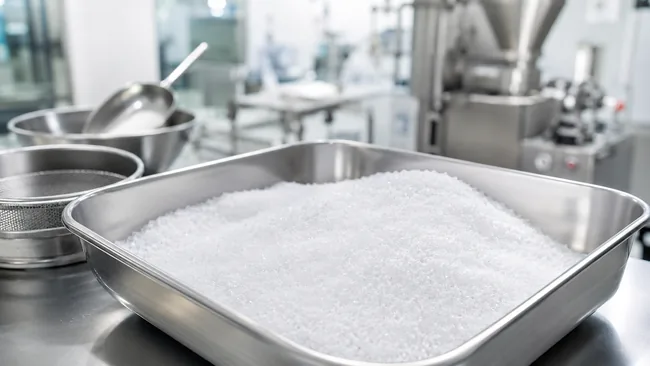
4. Processo di produzione delle compresse di sale: Dalla preparazione dei granuli alla pressatura delle compresse
Fare un passo 1: Preparazione dei granuli di sale per la compressione
I granuli di sale devono essere preparati prima che entrino nella comprimitrice. Questo passaggio include l'asciugatura, screening, miscelazione, e talvolta granulazione.
L'asciugatura riduce l'umidità e aiuta a prevenire l'adesione durante la compressione. Questo è importante perché anche un piccolo aumento di umidità può influenzare il flusso del sale e la pulizia della superficie del punzone.
La vagliatura rimuove le particelle sovradimensionate e le parti fini in eccesso. Una dimensione delle particelle più uniforme aiuta il materiale a riempire uniformemente la cavità dello stampo, che supporta il peso stabile della compressa.
Alcune formule di sale necessitano di granulazione prima della pressatura. La granulazione può migliorare la fluidità e la comprimibilità, soprattutto quando i cristalli di sale grezzo non entrano agevolmente nella comprimitrice.
Una fase di preparazione stabile riduce la pressione sulla comprimitrice. Se il materiale in ingresso nella macchina cambia da lotto a lotto, peso della compressa, durezza, e anche l'aspetto diventerà più difficile da controllare.
Fare un passo 2: Compressione del sale con una macchina comprimitrice
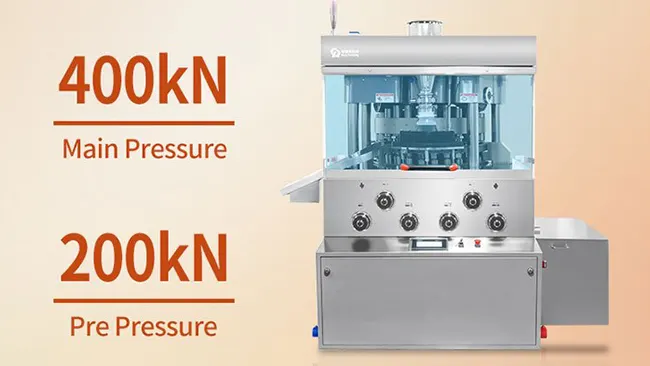
Una macchina comprimitrice forma compresse di sale riempiendo la cavità dello stampo e comprimendo il materiale tra i punzoni superiore e inferiore. Per prodotti salini, la macchina spesso necessita di una pressione maggiore, utensileria più forte, alimentazione stabile, e una migliore protezione dalla polvere.
Il processo di compressione di base include:
- Alimentazione: I granuli di sale si spostano dalla tramoggia al sistema di alimentazione.
- Riempimento: I granuli riempiono la cavità dello stampo ad una profondità controllata.
- Precompressione: Una leggera pressione rimuove l'aria intrappolata e inizia a formare la compressa.
- Compressione principale: Una pressione più elevata crea la forma e la durezza della compressa finale.
- Espulsione: La compressa finita viene espulsa dallo stampo e trasferita in avanti.
La pressatura delle compresse di sale è impegnativa perché il sale può essere duro, abrasivo, e sensibile all'umidità. Le compresse di sale più grandi necessitano di una forte forza di compressione. Anche la polvere fine di sale entra nelle aree di contatto se il design della macchina non gestisce adeguatamente la polvere.
UN macchina per la pressatura delle compresse di sale dovrebbe quindi essere valutata la capacità di pressione, materiale per utensili, resistenza alla corrosione, progettazione dell'alimentatore, protezione dalla polvere, e accesso per la pulizia.
Fare un passo 3: Controllo della qualità della compressa dopo la pressione
La qualità della compressa deve essere controllata dopo la compressione. Una pastiglia di sale deve essere sufficientemente resistente per essere maneggiata e confezionata, ma la sua durezza dovrebbe comunque corrispondere al comportamento di dissoluzione richiesto.
I controlli di qualità comuni includono:
- Peso della compressa
- Spessore della compressa
- Durezza della compressa
- Rischio di friabilità o rottura
- Aspetto superficiale
- Capping o laminazione
- Attaccare o raccogliere
- Sensibilità all'umidità
Per compresse di sale industriale, la forza e la dissoluzione controllata sono le preoccupazioni principali. Per pastiglie di elettroliti o integratori di sale, consistenza del dosaggio, aspetto, e la protezione dell'imballaggio sono più importanti.
Una buona linea di produzione monitora sia le prestazioni della macchina che il comportamento delle compresse finite. Sono utili impostazioni di stampa stabili, ma i test sul prodotto finito sono ancora necessari.
5. Processo di confezionamento delle compresse di sale: Rimozione della polvere e Opzioni di imballaggio
Fare un passo 4: Rimozione della polvere e protezione della linea di confezionamento
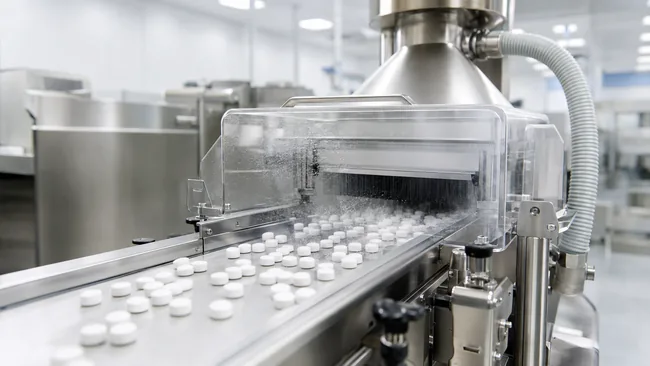
Le compresse di sale trasportano polvere sciolta o piccole particelle dopo la compressione. La polvere può provenire dal sale fino, bordi della compressa, attrito durante lo scarico, o rottura durante il trasferimento.
Il controllo delle polveri aiuta a proteggere le apparecchiature di imballaggio a valle. La polvere di sale sciolta può accumularsi attorno ai trasportatori, conteggio dei canali, aree di sigillatura, sensori, e stazioni di confezionamento. Può anche rendere la confezione finita meno pulita.
A seconda del prodotto e del design della linea, utilizzano i produttori:
- Depolverazione delle compresse
- Aspirazione della polvere
- Rilevamento dei metalli
- Ispezione visiva
- Trasferimento delicato della compressa
- Altezza di scarico controllata
Questo passaggio è importante quando le compresse di sale vengono spostate nella confezione delle bottiglie, imballaggio blister, confezione in busta, o imballaggio in sacco sfuso. Le pastiglie detergenti supportano un imballaggio più stabile e riducono i lavori di pulizia lungo la linea.
Fare un passo 5: Scelta delle opzioni di imballaggio per le compresse di sale
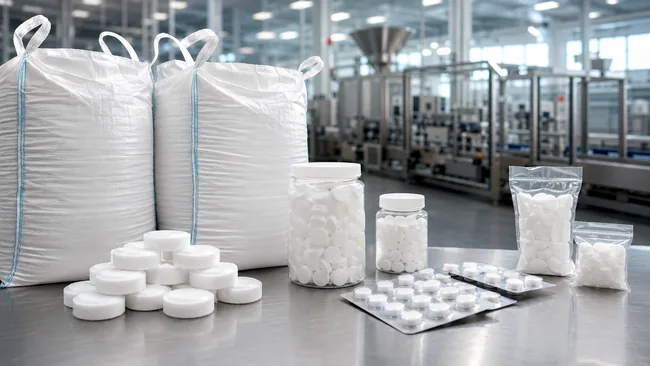
La confezione delle compresse di sale dipende dalle dimensioni della compressa, applicazione, sensibilità all'umidità, metodo di gestione, e formato di vendita. L'imballaggio deve proteggere le compresse dall'umidità, rottura, contaminazione, e gestire i danni.
Le compresse di sale sfuso di solito necessitano di sacchetti o cartoni robusti perché il prodotto è pesante. Le compresse di sale al dettaglio spesso necessitano di bottiglie, vesciche, o buste più piccole perché gli utenti tengono alla comodità, dosaggio, e presentazione sugli scaffali.
L'imballaggio dovrebbe essere preso in considerazione prima che la linea di produzione venga finalizzata. Durezza della compressa, livello di polvere, dimensione della tavoletta, e il tipo di macchina confezionatrice si influenzano a vicenda.
6. Quale attrezzatura viene utilizzata in una linea di produzione di compresse di sale?
Una linea di produzione di compresse di sale comprende diverse macchine prima e dopo la comprimitrice. L'impostazione esatta dipende dalla formula, dimensione della tavoletta, obiettivo di uscita, e il formato della confezione.
L'attrezzatura comune include:
- Mixer o frullatore
- Granulatore
- Essiccatore o attrezzatura per la vagliatura
- Macchina comprimitrice per sale
- Depolveratore per compresse o unità per la rimozione della polvere
- Rilevatore di metalli
- Macchina per il conteggio delle compresse
- Linea di conteggio e riempimento compresse
- Confezionatrice blisteratrice
- Macchina confezionatrice per sacchetti
- Macchina astucciatrice
Per pastiglie di sale industriale di grandi dimensioni, la linea si concentra sulla resistenza alla compressione e sull'imballaggio sfuso. Per pastiglie di elettroliti o integratori di sale, la linea richiede maggiore attenzione alla precisione del conteggio, confezione di bottiglie, imballaggio blister, etichettatura, e astucciamento.
La scelta dell'attrezzatura migliore dipende dal formato del prodotto finale, non solo il materiale salino stesso.
7. Problemi comuni nella produzione di compresse di sale
La produzione di compresse di sale può affrontare diversi problemi se si utilizza la materia prima, forza di compressione, utensileria, o l'ambiente non è controllato.
I problemi comuni includono:
- Attaccando: Il sale si attacca alle facce a causa dell'umidità, polvere fine, o attrezzatura non idonea.
- Arazzo: La parte superiore del tablet si separa perché l'aria rimane intrappolata durante la compressione.
- Variazione di peso: La cavità dello stampo non è riempita in modo uniforme.
- Rottura della compressa: Le compresse sono troppo deboli o maneggiate in modo troppo brusco dopo la pressatura.
- Lenta dissoluzione: La forza di compressione è troppo elevata o la compressa è troppo densa.
- Dissoluzione irregolare: Dimensione delle particelle, durezza, o la formulazione è incoerente.
- Assorbimento dell'umidità: Le compresse si aggregano, ammorbidire, o degradarsi durante lo stoccaggio.
- Danni all'imballaggio: L'imballaggio sfuso o i sistemi di trasferimento rompono le compresse prima della consegna.
Molti di questi problemi sono collegati. L'umidità può causare uno scarso flusso, attaccarsi, variazione di peso, e problemi di archiviazione. Un processo stabile controlla il materiale, macchina, condizione della stanza, e confezionare insieme.
8. Come scegliere l'attrezzatura per la produzione di compresse di sale
L’attrezzatura giusta dovrebbe corrispondere alle dimensioni della tavoletta di sale, durezza, volume di produzione, e il formato della confezione. Una macchina che funziona bene per piccole compresse di integratori non è adatta per grandi compresse di sale industriale.
Quando si sceglie una macchina comprimitrice per sale o una linea di produzione completa, gli acquirenti dovrebbero controllare:
- Diametro e spessore massimi della compressa
- Forza di compressione
- Materiale degli utensili e resistenza all'usura
- Resistenza alla corrosione
- Progettazione del sistema di alimentazione
- Capacità di uscita
- Controllo della polvere
- Accesso per la pulizia
- Requisiti per il passaggio all'euro
- Compatibilità con le apparecchiature di confezionamento a valle
L'attrezzatura per l'imballaggio deve essere selezionata dopo che il formato di imballaggio finale è chiaro. Una linea di bagagli da 25 kg, linea di conteggio bottiglie, e la linea di confezionamento in blister sono sistemi molto diversi.
Per i produttori che necessitano sia di attrezzature per la pressatura delle compresse che di confezionamento a valle, la pianificazione della linea dovrebbe considerare il modo in cui ciascuna macchina si collega a quella successiva. Ruida Packing fornisce soluzioni personalizzate di macchinari farmaceutici e di confezionamento per settori come quello dei nutraceutici, integratori, cibo, prodotti sanitari, e relativa produzione.
Conclusione
La produzione delle compresse di sale avviene attraverso un processo controllato che inizia con idonei granuli di sale e prosegue con la pressatura delle compresse, controllo di qualità, controllo delle polveri, e imballaggio. Ogni passaggio influisce su quello successivo.
Per la produzione commerciale, le decisioni più importanti riguardano le dimensioni del tablet, forza di compressione, comportamento materiale, controllo delle polveri, e il formato della confezione. Una grande tavoletta di sale industriale, una compressa per il trattamento dell'acqua, e una piccola compressa di elettroliti sono tutte chiamate compresse di sale, ma spesso necessitano di impostazioni della macchina e soluzioni di confezionamento diverse. Una linea di produzione di compresse di sale ben pianificata collega la macchina comprimitrice con la giusta attrezzatura a valle, quindi le compresse finite sono coerenti, pulito, protetto, e pronti per il mercato previsto.
Domande frequenti
Come sono fatte le pastiglie di sale?
Le compresse di sale si ottengono preparando granuli di sale, inserendoli in una macchina comprimitrice, comprimendoli in compresse, controllare la qualità della tavoletta, rimuovendo la polvere sciolta, e confezionare le compresse in base al loro utilizzo finale.
Quale macchina viene utilizzata per produrre le compresse di sale?
Per produrre compresse di sale viene utilizzata una macchina comprimitrice. Per la produzione commerciale, una macchina per compresse di sale dovrebbe avere una forza di compressione sufficiente, attrezzatura adeguata, alimentazione stabile, e protezione contro la polvere di sale, abrasione, e corrosione.
Le compresse di sale sono uguali alle compresse di cloruro di sodio?
Molte compresse di sale sono costituite principalmente da cloruro di sodio, ma non tutte le compresse di sale hanno lo stesso scopo o lo stesso standard di qualità. Pastiglie di sale industriale, compresse per il trattamento dell'acqua, compresse di sali elettrolitici, e le compresse di cloruro di sodio per uso controllato hanno una purezza diversa, misurare, durezza, e requisiti di imballaggio.
Perché le compresse di sale necessitano di una forte compressione?
Le compresse di sale necessitano di una forte compressione perché i granuli di sale devono legarsi in una forma solida stabile. La compressa deve essere sufficientemente resistente per essere maneggiata e confezionata pur continuando a dissolversi alla velocità richiesta durante l'uso.
Quale confezione viene utilizzata per le compresse di sale?
Le compresse di sale possono essere confezionate in sacchi da 10 kg o 25 kg, bottiglie, confezioni blister, buste, cartoni, o tamburi. La confezione giusta dipende dalle dimensioni del tablet, applicazione, sensibilità all'umidità, e se il prodotto è venduto sfuso o al dettaglio.
Una pressa per compresse può produrre compresse di sale di dimensioni diverse??
Una pressa per compresse produce compresse di sale di diverse dimensioni se supporta gli strumenti richiesti, intervallo di pressione, e le condizioni di alimentazione. Gli acquirenti devono confermare il diametro massimo della compressa, spessore, capacità di pressione, e il metodo di cambio prima di scegliere una macchina.
Le pastiglie di sale vengono utilizzate solo per gli addolcitori d'acqua?
NO. Le compresse di sale vengono utilizzate anche nel dosaggio industriale, lavorazione degli alimenti, prodotti per la pulizia, prodotti elettrolitici o integratori, e applicazioni controllate di cloruro di sodio. L'addolcimento dell'acqua è solo un uso comune.
Cosa causa la rottura o lo sgretolamento delle compresse di sale?
Le compresse di sale si rompono o si sbriciolano a causa della bassa forza di compressione, scarsa preparazione dei granuli, umidità in eccesso, formulazione debole, trasferimento approssimativo, o imballaggio inadeguato. La causa dovrebbe essere verificata dalla preparazione della materia prima alla pressatura delle compresse e alla manipolazione finale.
Riferimento
EMA – ICH Q7 Buone pratiche di produzione per ingredienti farmaceutici attivi