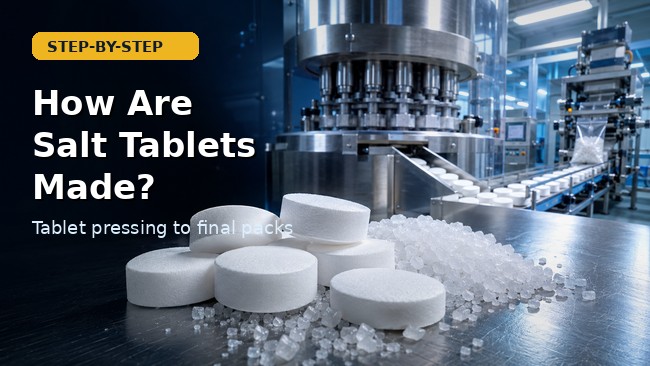
Τα δισκία αλατιού παρασκευάζονται με την παρασκευή κόκκων αλατιού, συμπιέζοντάς τα με πιεστήριο tablet, έλεγχος ποιότητας tablet, αφαιρώντας τη χαλαρή σκόνη, και επιλέγοντας τη σωστή μορφή συσκευασίας για την τελική αγορά. Κάθε βήμα επηρεάζει την ισχύ του tablet, συμπεριφορά διάλυσης, σταθερότητα χειρισμού, και απόδοση αποθήκευσης.
Τα δισκία αλατιού χρησιμοποιούνται στην επεξεργασία νερού, βιομηχανική δοσολογία, επεξεργασία τροφίμων, προϊόντα καθαρισμού, και εφαρμογές ηλεκτρολυτών ή συμπληρωμάτων. Αυτά τα προϊόντα μοιράζονται το ίδιο βασικό υλικό, αλλά δεν χρειάζονται πάντα το ίδιο μέγεθος tablet, σκληρότητα, ταχύτητα παραγωγής, ή μέθοδος συσκευασίας.
Για εμπορική παραγωγή, Οι κατασκευαστές πρέπει να ελέγχουν περισσότερα από τη συμπίεση. Τα τελικά δισκία πρέπει επίσης να επιβιώσουν από τη μεταφορά, αρίθμηση, συσκευασία, αποστολή, και αποθήκευση χωρίς σπάσιμο, συσσωμάτωση, ή απορροφώντας υπερβολική υγρασία.
1. Τι είναι τα δισκία αλατιού?
Τα δισκία αλατιού είναι συμπιεσμένα δισκία κατασκευασμένα κυρίως από χλωριούχο νάτριο ή κόκκους με βάση το αλάτι. Διαμορφώνονται σε σταθερά σχήματα και βάρη, ώστε να μπορούν να χειριστούν, συσκευασμένα, μεταφέρονται, και διαλύθηκε πιο προβλέψιμα από το χαλαρό αλάτι.
Ένα μεγάλο δισκίο αλατιού χρησιμοποιείται για επεξεργασία νερού ή βιομηχανική δοσολογία. Ένα μικρότερο δισκίο αλατιού χρησιμοποιείται στον ηλεκτρολύτη, συμπλήρωμα, τροφή, ή ελεγχόμενες εφαρμογές χλωριούχου νατρίου. Ο σχεδιασμός του προϊόντος εξαρτάται από τον τρόπο χρήσης του tablet μετά την παραγωγή.
Η κύρια αξία ενός δισκίου αλατιού είναι η συνοχή. Ελεγχόμενο μέγεθος tablet, βάρος, σκληρότητα, και ο ρυθμός διάλυσης διευκολύνουν τη διαχείριση της παραγωγής και της τελικής χρήσης.
2. Ποιοι τύποι δισκίων αλατιού παράγονται?
Τα δισκία αλατιού καλύπτουν διάφορες κατηγορίες προϊόντων. Κάθε κατηγορία έχει διαφορετικές απαιτήσεις παραγωγής και συσκευασίας.
Οι κοινοί τύποι περιλαμβάνουν:
- Ταμπλέτες άλατος επεξεργασίας νερού για συστήματα αποσκλήρυνσης και παρασκευή άλμης
- Βιομηχανικά δισκία αλατιού για χημική δοσολογία ή ελεγχόμενη προσθήκη αλατιού
- Ταμπλέτες αλατιού ηλεκτρολυτών για αθλήματα, ενυδάτωση, ή συμπληρωματικά προϊόντα
- Δισκία χλωριούχου νατρίου για ελεγχόμενες εφαρμογές όπου η δοσολογία και η καθαρότητα έχουν σημασία
- Ταμπλέτες αλατιού για τρόφιμα ή καθαρισμό-χρήση για επεξεργασία, νοικοκυριό, ή εμπορική χρήση
Αυτός είναι ο λόγος για τον οποίο μια γραμμή παραγωγής δισκίων αλατιού θα πρέπει να προγραμματιστεί από το τελικό προϊόν προς τα πίσω. Μέγεθος tablet, σκληρότητα, προστασία από την υγρασία, μορφή συσκευασίας, και η παραγωγική ικανότητα εξαρτώνται από την αγορά-στόχο.
3. Ποια πρώτη ύλη χρησιμοποιείται για ταμπλέτες αλατιού?
Τα δισκία αλατιού συνήθως ξεκινούν με εξευγενισμένο αλάτι ή κόκκους χλωριούχου νατρίου. Η πρώτη ύλη πρέπει να έχει την κατάλληλη καθαρότητα, επίπεδο υγρασίας, μέγεθος σωματιδίων, και ρευστότητα.
Το αλάτι είναι ευαίσθητο στις συνθήκες παραγωγής. Μπορεί να απορροφήσει την υγρασία από τον αέρα, που προκαλούν συσσώρευση, κόλλημα, και κακή σίτιση. Οι κρύσταλλοι αλατιού μπορούν επίσης να είναι λειαντικοί, έτσι μπουνιές, πεθαίνει, τροφοδότες, και άλλα μέρη επαφής φθείρονται γρηγορότερα από ό,τι με μαλακότερα υλικά.
Πριν πιέσετε το tablet, οι κατασκευαστές συνήθως ελέγχουν:
- Καθαρότητα αλατιού
- Περιεκτικότητα σε υγρασία
- Κατανομή μεγέθους σωματιδίων
- Ρευστότητα
- Χύδην πυκνότητα
- Απαιτήσεις πρόσθετων ή συνδετικών
- Πρότυπο προϊόντος για τρόφιμα, συμπλήρωμα, βιομηχανικός, ή αγορές ελεγχόμενης χρήσης
Εάν το υλικό είναι πολύ υγρό, πολύ ωραία, ή πολύ ακανόνιστο, η πρέσα ταμπλέτας παράγει διακύμανση βάρους, κόλλημα, κάλυψη, ή εύθραυστα δισκία.
4. Διαδικασία παραγωγής ταμπλέτας αλατιού: Από την προετοιμασία των κόκκων έως το πάτημα δισκίου
Βήμα 1: Προετοιμασία κόκκων αλατιού για συμπίεση
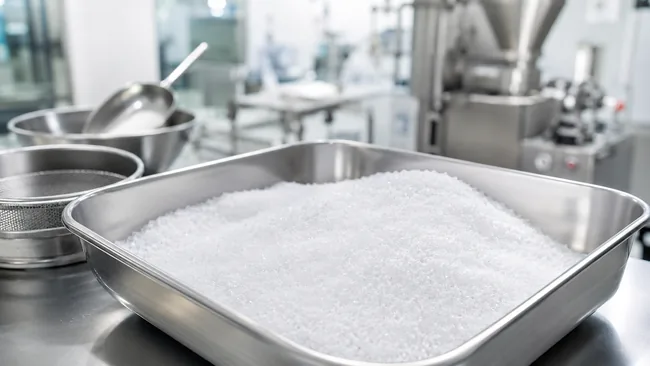
Οι κόκκοι αλατιού πρέπει να προετοιμάζονται πριν εισέλθουν στην πρέσα δισκίων. Αυτό το βήμα περιλαμβάνει το στέγνωμα, διαλογής, ανάμειξη, και μερικές φορές κοκκοποίηση.
Το στέγνωμα μειώνει την υγρασία και βοηθά στην αποφυγή κολλήματος κατά τη συμπίεση. Αυτό είναι σημαντικό γιατί ακόμη και μια μικρή αύξηση της υγρασίας μπορεί να επηρεάσει τη ροή του αλατιού και να διατρυπήσει την καθαριότητα της επιφάνειας.
Η διαλογή αφαιρεί τα υπερμεγέθη σωματίδια και τα υπερβολικά λεπτά. Ένα πιο ομοιόμορφο μέγεθος σωματιδίων βοηθά το υλικό να γεμίσει ομοιόμορφα την κοιλότητα της μήτρας, που υποστηρίζει σταθερό βάρος tablet.
Ορισμένες φόρμουλες αλατιού χρειάζονται κοκκοποίηση πριν πιέσουν. Η κοκκοποίηση μπορεί να βελτιώσει τη ρευστότητα και τη συμπιεστότητα, ειδικά όταν οι κρύσταλλοι ακατέργαστου αλατιού δεν τροφοδοτούνται ομαλά στη μηχανή πρέσας ταμπλετών.
Ένα σταθερό βήμα προετοιμασίας μειώνει την πίεση στην πρέσα ταμπλετών. Εάν το υλικό που εισέρχεται στο μηχάνημα αλλάζει από παρτίδα σε παρτίδα, βάρος δισκίου, σκληρότητα, και η εμφάνιση θα γίνει επίσης πιο δύσκολο να ελεγχθεί.
Βήμα 2: Συμπίεση αλατιού με μηχανή πρέσας ταμπλετών
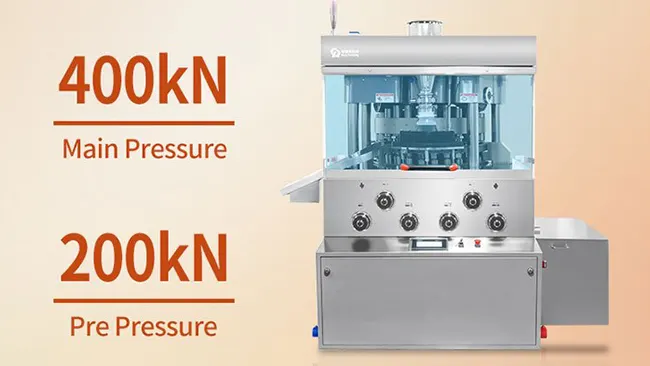
Μια μηχανή πρέσας ταμπλετών σχηματίζει ταμπλέτες αλατιού γεμίζοντας μια κοιλότητα μήτρας και συμπιέζοντας το υλικό μεταξύ των άνω και κάτω διατρήσεων. Για προϊόντα αλατιού, το μηχάνημα χρειάζεται συχνά υψηλότερη πίεση, ισχυρότερο εργαλείο, σταθερή σίτιση, και καλύτερη προστασία από τη σκόνη.
Η βασική διαδικασία συμπίεσης περιλαμβάνει:
- Σίτιση: Οι κόκκοι αλατιού μετακινούνται από τη χοάνη στο σύστημα τροφοδοσίας.
- Πλήρωση: Οι κόκκοι γεμίζουν την κοιλότητα της μήτρας σε ελεγχόμενο βάθος.
- Προσυμπίεση: Η ελαφριά πίεση απομακρύνει τον παγιδευμένο αέρα και αρχίζει να σχηματίζει το δισκίο.
- Κύρια συμπίεση: Η υψηλότερη πίεση δημιουργεί το τελικό σχήμα και σκληρότητα του δισκίου.
- Εκτίναξη: Το έτοιμο δισκίο ωθείται έξω από τη μήτρα και μεταφέρεται προς τα εμπρός.
Η πίεση σε ταμπλέτες αλατιού είναι απαιτητική επειδή το αλάτι μπορεί να είναι σκληρό, αποξεστικό, και ευαίσθητο στην υγρασία. Τα μεγαλύτερα δισκία αλατιού χρειάζονται ισχυρή δύναμη συμπίεσης. Η λεπτή σκόνη αλατιού εισέρχεται επίσης στις περιοχές επαφής εάν ο σχεδιασμός του μηχανήματος δεν διαχειρίζεται σωστά τη σκόνη.
ΕΝΑ μηχανή πρέσας δισκίων αλατιού θα πρέπει επομένως να αξιολογηθεί ως προς την ικανότητα πίεσης, υλικό εργαλείων, αντοχή στη διάβρωση, σχέδιο τροφοδότη, προστασία από τη σκόνη, και πρόσβαση καθαρισμού.
Βήμα 3: Έλεγχος ποιότητας tablet μετά το πάτημα
Η ποιότητα του δισκίου θα πρέπει να ελέγχεται μετά τη συμπίεση. Ένα δισκίο αλατιού πρέπει να είναι αρκετά ισχυρό για χειρισμό και συσκευασία, αλλά η σκληρότητά του θα πρέπει να ταιριάζει με την απαιτούμενη συμπεριφορά διάλυσης.
Οι κοινοί έλεγχοι ποιότητας περιλαμβάνουν:
- Βάρος ταμπλέτας
- Πάχος ταμπλέτας
- Σκληρότητα δισκίου
- Κίνδυνος ευθραυστότητας ή θραύσης
- Εμφάνιση επιφάνειας
- Πώμα ή πλαστικοποίηση
- Κολλώντας ή μαζεύοντας
- Ευαισθησία στην υγρασία
Για βιομηχανικές ταμπλέτες αλατιού, η δύναμη και η ελεγχόμενη διάλυση είναι οι κύριες ανησυχίες. Για ηλεκτρολύτες ή δισκία αλατιού συμπληρώματος, δοσολογική συνοχή, εμφάνιση, και η προστασία της συσκευασίας είναι πιο σημαντική.
Μια καλή γραμμή παραγωγής παρακολουθεί τόσο την απόδοση του μηχανήματος όσο και τη συμπεριφορά του τελικού tablet. Οι ρυθμίσεις σταθερού τύπου είναι χρήσιμες, αλλά η δοκιμή τελικού προϊόντος εξακολουθεί να είναι απαραίτητη.
5. Διαδικασία συσκευασίας ταμπλέτας αλατιού: Αφαίρεση σκόνης και Επιλογές συσκευασίας
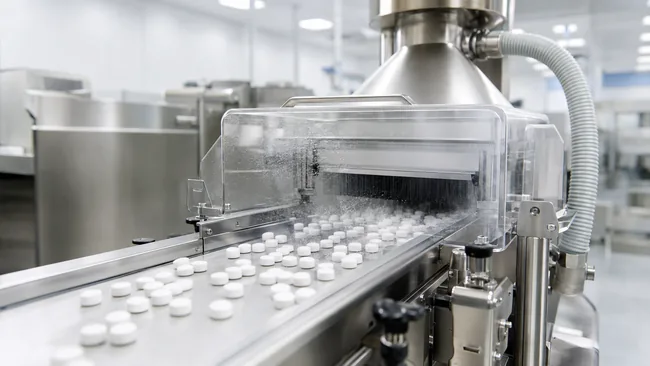
Βήμα 4: Αφαίρεση σκόνης και προστασία της γραμμής συσκευασίας
Τα δισκία αλατιού μεταφέρουν χαλαρή σκόνη ή μικρά σωματίδια μετά τη συμπίεση. Η σκόνη μπορεί να προέλθει από λεπτό αλάτι, άκρες του tablet, τριβή κατά την εκφόρτιση, ή θραύση κατά τη μεταφορά.
Ο έλεγχος σκόνης βοηθά στην προστασία του εξοπλισμού συσκευασίας κατάντη. Χαλαρή σκόνη αλατιού μπορεί να συσσωρευτεί γύρω από τους μεταφορείς, καταμέτρηση καναλιών, περιοχές στεγανοποίησης, αισθητήρες, και σταθμούς συσκευασίας. Μπορεί επίσης να κάνει το έτοιμο πακέτο να φαίνεται λιγότερο καθαρό.
Ανάλογα με το σχεδιασμό του προϊόντος και της γραμμής, χρησιμοποιούν κατασκευαστές:
- Ξεσκόνισμα tablet
- Εξαγωγή σκόνης
- Ανίχνευση μετάλλων
- Οπτική επιθεώρηση
- Απαλή μεταφορά tablet
- Ελεγχόμενο ύψος εκκένωσης
Αυτό το βήμα έχει σημασία όταν τα δισκία αλατιού μεταφέρονται στη συσκευασία του μπουκαλιού, συσκευασία blister, συσκευασία θήκης, ή συσκευασία χύδην σακούλας. Τα καθαρότερα tablet υποστηρίζουν πιο σταθερή συσκευασία και μειώνουν τις εργασίες καθαρισμού γύρω από τη γραμμή.
Βήμα 5: Επιλογή επιλογών συσκευασίας για ταμπλέτες αλατιού
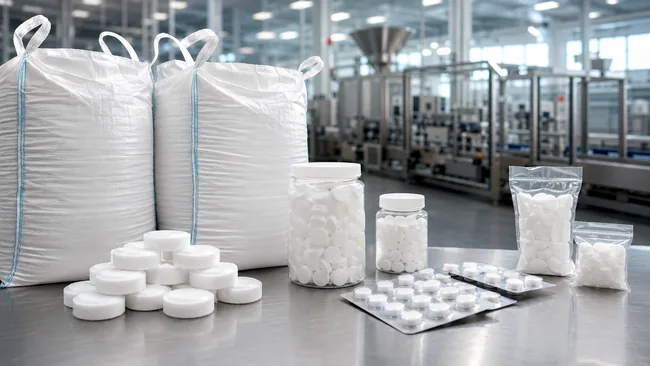
Η συσκευασία του δισκίου αλατιού εξαρτάται από το μέγεθος του δισκίου, εφαρμογή, ευαισθησία στην υγρασία, μέθοδος χειρισμού, και μορφή πωλήσεων. Η συσκευασία πρέπει να προστατεύει τα δισκία από την υγρασία, θραύση, μόλυνση, και χειρισμός ζημιών.
Τα δισκία χύμα αλατιού συνήθως χρειάζονται γερές σακούλες ή χαρτοκιβώτια επειδή το προϊόν είναι βαρύ. Τα δισκία αλατιού λιανικής χρειάζονται συχνά μπουκάλια, φουσκάλες, ή μικρότερες θήκες επειδή οι χρήστες ενδιαφέρονται για την ευκολία, δοσολογία, και παρουσίαση ραφιού.
Η συσκευασία θα πρέπει να ληφθεί υπόψη πριν ολοκληρωθεί η γραμμή παραγωγής. Σκληρότητα ταμπλέτας, επίπεδο σκόνης, μέγεθος tablet, και ο τύπος της μηχανής συσκευασίας επηρεάζουν ο ένας τον άλλον.
6. Ποιος εξοπλισμός χρησιμοποιείται σε γραμμή παραγωγής ταμπλετών αλατιού?
Μια γραμμή παραγωγής δισκίων αλατιού περιλαμβάνει πολλά μηχανήματα πριν και μετά την πρέσα ταμπλετών. Η ακριβής ρύθμιση εξαρτάται από τον τύπο, μέγεθος tablet, στόχος παραγωγής, και μορφή συσκευασίας.
Ο κοινός εξοπλισμός περιλαμβάνει:
- Μίξερ ή μπλέντερ
- Κοκκοποιητής
- Στεγνωτήριο ή εξοπλισμός διαλογής
- Μηχανή πρέσας ταμπλέτας αλατιού
- Μονάδα αφαίρεσης σκόνης ή αφαίρεσης σκόνης tablet
- Ανιχνευτής μετάλλων
- Μηχανή μέτρησης tablet
- Γραμμή μέτρησης και πλήρωσης tablet
- Μηχανή συσκευασίας φουσκαλών
- Μηχανή συσκευασίας τσαντών
- Μηχανή χαρτοκιβωτίων
Για μεγάλα βιομηχανικά δισκία αλατιού, η γραμμή επικεντρώνεται στην αντοχή σε συμπίεση και στη συσκευασία χύδην. Για ηλεκτρολύτες ή δισκία αλατιού συμπληρώματος, η γραμμή χρειάζεται περισσότερη προσοχή στην ακρίβεια μέτρησης, συσκευασία μπουκαλιών, συσκευασία blister, τιτλοφόρηση, και χαρτοκιβώτιο.
Η καλύτερη επιλογή εξοπλισμού εξαρτάται από τη μορφή του τελικού προϊόντος, όχι μόνο το ίδιο το υλικό αλατιού.
7. Συνήθη προβλήματα στην παραγωγή δισκίων αλατιού
Η παραγωγή δισκίων αλατιού μπορεί να αντιμετωπίσει πολλά προβλήματα εάν η πρώτη ύλη, δύναμη συμπίεσης, εργαλεία, ή το περιβάλλον δεν ελέγχεται.
Τα κοινά προβλήματα περιλαμβάνουν:
- Κολλώντας: Το αλάτι κολλάει στα πρόσωπα λόγω της υγρασίας, λεπτή σκόνη, ή ακατάλληλα εργαλεία.
- Σφραγίζοντας: Η επιφάνεια του tablet διαχωρίζεται επειδή παγιδεύεται αέρας κατά τη συμπίεση.
- Διακύμανση βάρους: Η κοιλότητα της μήτρας δεν γεμίζει σταθερά.
- Σπάσιμο tablet: Τα δισκία είναι πολύ αδύναμα ή ο χειρισμός τους είναι πολύ σκληρός μετά το πάτημα.
- Αργή διάλυση: Η δύναμη συμπίεσης είναι πολύ υψηλή ή το tablet είναι πολύ πυκνό.
- Ανώμαλη διάλυση: Μέγεθος σωματιδίων, σκληρότητα, ή το σκεύασμα είναι ασυνεπές.
- Απορρόφηση υγρασίας: Ταμπλέτες συσσωρεύονται, μαλακώνω, ή υποβαθμίζονται κατά την αποθήκευση.
- Ζημιά στη συσκευασία: Τα συστήματα μαζικής συσκευασίας ή μεταφοράς σπάζουν τα δισκία πριν από την παράδοση.
Πολλά από αυτά τα προβλήματα συνδέονται. Η υγρασία μπορεί να προκαλέσει κακή ροή, κόλλημα, διακύμανση βάρους, και θέματα αποθήκευσης. Μια σταθερή διαδικασία ελέγχει το υλικό, μηχανή, κατάσταση δωματίου, και συσκευασία μαζί.
8. Πώς να επιλέξετε εξοπλισμό για την παραγωγή δισκίων αλατιού
Ο σωστός εξοπλισμός πρέπει να ταιριάζει με το μέγεθος του δισκίου αλατιού, σκληρότητα, όγκος παραγωγής, και μορφή συσκευασίας. Ένα μηχάνημα που λειτουργεί καλά για μικρά δισκία συμπληρωμάτων δεν είναι κατάλληλο για μεγάλα βιομηχανικά δισκία αλατιού.
Όταν επιλέγετε μηχανή πρέσας ταμπλέτας αλατιού ή πλήρη γραμμή παραγωγής, οι αγοραστές πρέπει να ελέγξουν:
- Μέγιστη διάμετρος και πάχος ταμπλέτας
- Δύναμη συμπίεσης
- Υλικό εργαλείων και αντοχή στη φθορά
- Αντοχή στη διάβρωση
- Σχεδιασμός συστήματος τροφοδοσίας
- Χωρητικότητα εξόδου
- Έλεγχος σκόνης
- Πρόσβαση καθαρισμού
- Απαιτήσεις αλλαγής
- Συμβατότητα με εξοπλισμό συσκευασίας κατάντη
Ο εξοπλισμός συσκευασίας θα πρέπει να επιλέγεται αφού η τελική μορφή συσκευασίας είναι σαφής. Σειρά σακουλών 25 κιλών, γραμμή μέτρησης μπουκαλιών, και η γραμμή συσκευασίας blister είναι πολύ διαφορετικά συστήματα.
Για κατασκευαστές που χρειάζονται εξοπλισμό συμπίεσης και κατάντη συσκευασίας tablet, Ο σχεδιασμός γραμμής θα πρέπει να εξετάζει πώς συνδέεται κάθε μηχανή με την επόμενη. Η Ruida Packing παρέχει εξατομικευμένες λύσεις φαρμακευτικών και μηχανημάτων συσκευασίας για βιομηχανίες όπως τα διατροφικά προϊόντα, συμπληρώματα, τροφή, προϊόντα υγειονομικής περίθαλψης, και σχετική κατασκευή.
Σύναψη
Τα δισκία αλατιού παρασκευάζονται μέσω μιας ελεγχόμενης διαδικασίας που ξεκινά με κατάλληλους κόκκους αλατιού και συνεχίζει με συμπίεση δισκίων, έλεγχος ποιότητας, έλεγχος σκόνης, και συσκευασία. Κάθε βήμα επηρεάζει το επόμενο.
Για εμπορική παραγωγή, Οι πιο σημαντικές αποφάσεις είναι το μέγεθος του tablet, δύναμη συμπίεσης, υλική συμπεριφορά, έλεγχος σκόνης, και μορφή συσκευασίας. Ένα μεγάλο βιομηχανικό δισκίο αλατιού, ένα δισκίο επεξεργασίας νερού, και ένα μικρό δισκίο ηλεκτρολυτών ονομάζονται όλα ταμπλέτες αλατιού, αλλά συχνά χρειάζονται διαφορετικές ρυθμίσεις μηχανών και λύσεις συσκευασίας. Μια καλά σχεδιασμένη γραμμή παραγωγής ταμπλετών αλατιού συνδέει τη μηχανή πρέσας ταμπλετών με τον κατάλληλο εξοπλισμό κατάντη, έτσι τα τελικά δισκία είναι συνεπή, καθαρός, προστατεύονται, και έτοιμοι για την αγορά που προορίζονται.
Συχνές ερωτήσεις
Πώς παρασκευάζονται τα δισκία αλατιού?
Τα δισκία αλατιού παρασκευάζονται με την παρασκευή κόκκων αλατιού, τροφοδοτώντας τα σε μια μηχανή πρέσας tablet, συμπιέζοντάς τα σε ταμπλέτες, έλεγχος ποιότητας tablet, αφαιρώντας τη χαλαρή σκόνη, και συσκευασία των δισκίων ανάλογα με την τελική τους χρήση.
Ποιο μηχάνημα χρησιμοποιείται για την παρασκευή δισκίων αλατιού?
Για την παρασκευή ταμπλετών αλατιού χρησιμοποιείται μηχανή πρέσας ταμπλετών. Για εμπορική παραγωγή, μια μηχανή πρέσας δισκίων αλατιού πρέπει να έχει αρκετή δύναμη συμπίεσης, κατάλληλο εργαλείο, σταθερή σίτιση, και προστασία από τη σκόνη αλατιού, τριβή, και διάβρωση.
Τα δισκία αλατιού είναι ίδια με τα δισκία χλωριούχου νατρίου?
Πολλά δισκία αλατιού παρασκευάζονται κυρίως από χλωριούχο νάτριο, αλλά δεν έχουν όλα τα δισκία αλατιού τον ίδιο σκοπό ή το ίδιο ποιοτικό πρότυπο. Βιομηχανικά δισκία αλατιού, δισκία επεξεργασίας νερού, δισκία άλατος ηλεκτρολυτών, και τα δισκία ελεγχόμενης χρήσης χλωριούχου νατρίου έχουν διαφορετική καθαρότητα, μέγεθος, σκληρότητα, και απαιτήσεις συσκευασίας.
Γιατί τα δισκία αλατιού χρειάζονται ισχυρή συμπίεση?
Τα δισκία αλατιού χρειάζονται ισχυρή συμπίεση επειδή οι κόκκοι αλατιού πρέπει να δεσμεύονται σε μια σταθερή στερεή μορφή. Το δισκίο πρέπει να είναι αρκετά ανθεκτικό για χειρισμό και συσκευασία, ενώ εξακολουθεί να διαλύεται με τον απαιτούμενο ρυθμό κατά τη χρήση.
Ποια συσκευασία χρησιμοποιείται για τα δισκία αλατιού?
Τα δισκία αλατιού συσκευάζονται σε σάκους των 10 κιλών ή των 25 κιλών, φιάλες, συσκευασίες blister, σακουλάκια, χαρτοκιβώτια, ή ντραμς. Η σωστή συσκευασία εξαρτάται από το μέγεθος του tablet, εφαρμογή, ευαισθησία στην υγρασία, και εάν το προϊόν πωλείται σε μορφή χύμα ή λιανικής.
Μπορεί μια πρέσα ταμπλετών να κάνει διαφορετικά μεγέθη ταμπλέτας αλατιού?
Μια πρέσα ταμπλετών παράγει διαφορετικά μεγέθη ταμπλέτας αλατιού, εάν υποστηρίζει τα απαιτούμενα εργαλεία, εύρος πίεσης, και τις συνθήκες σίτισης. Οι αγοραστές θα πρέπει να επιβεβαιώσουν τη μέγιστη διάμετρο του tablet, πάχος, χωρητικότητα πίεσης, και τη μέθοδο αλλαγής πριν από την επιλογή μηχανής.
Τα δισκία αλατιού χρησιμοποιούνται μόνο για αποσκληρυντικά νερού?
Οχι. Τα δισκία αλατιού χρησιμοποιούνται επίσης στη βιομηχανική δοσολογία, επεξεργασία τροφίμων, προϊόντα καθαρισμού, ηλεκτρολυτών ή συμπληρωμάτων, και ελεγχόμενες εφαρμογές χλωριούχου νατρίου. Η αποσκλήρυνση του νερού είναι μόνο μία κοινή χρήση.
Τι κάνει τα δισκία αλατιού να σπάσουν ή να θρυμματιστούν?
Τα δισκία αλατιού σπάνε ή θρυμματίζονται λόγω χαμηλής δύναμης συμπίεσης, κακή προετοιμασία κόκκων, υπερβολική υγρασία, αδύναμη σύνθεση, πρόχειρη μεταφορά, ή ακατάλληλη συσκευασία. Η αιτία πρέπει να ελέγχεται από την προετοιμασία της πρώτης ύλης μέσω της συμπίεσης του δισκίου και του τελικού χειρισμού.
Αναφορά
EMA – ICH Q7 Καλή Παρασκευαστική Πρακτική για Ενεργά Φαρμακευτικά Συστατικά