
Sıvı dolum makinesi, ölçülen hacimdeki sıvıyı bir kap - şişeye dağıtır, şişe, kese, veya poşet - bir üretim süreci boyunca sürekli ve tekrar tekrar. İlaç ve takviye üretiminde, bu tutarlılık isteğe bağlı değildir. Kısa bir doldurma uyumluluk sorunu yaratır. Aşırı doldurma ürünü israf eder. Dengesiz bir dolum döngüsü, akış yönündeki her şeyi yavaşlatır, kapatmadan denetime kadar.
Makine tipi, doldurma mekanizması, ve konfigürasyonun tamamı ne doldurduğunuza bağlıdır, ne kadar kalın, hangi kapsayıcıyı kullanıyorsunuz, ve hattınızın ne kadar hızlı hareket etmesi gerektiği. İnce bir oral çözelti için iyi çalışan bir yer çekimi dolgusu, viskoz bir süspansiyonla başa çıkamaz. Ürününüzün metal yüzeylerle minimum düzeyde temas etmesi gerekiyorsa, şuruplar için çalışan bir piston dolgusu yanlış seçim olabilir..
Bu kılavuz ana sıvı dolum makinesi türlerini kapsar, her biri nasıl çalışıyor, ve bir farmasötik veya besin takviyesi şişeleme hattı için ekipman seçerken en önemli olan şey.
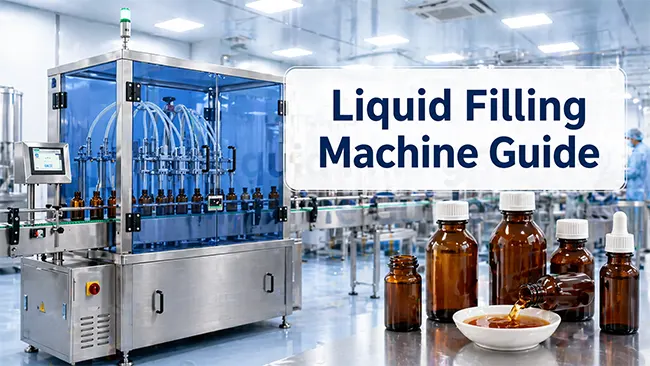
Sıvı Dolum Makinesi Nedir??
Sıvı dolum makinesi, sıvıyı döngü başına belirli bir hacimde ölçen ve kaplara dağıtan paketleme ekipmanıdır.. Sıvı ürün üretildikten sonra kullanılır - karıştırılarak, harmanlanmış, veya bileşik - ve kap kapatma işlemine geçmeden önce, sızlanma, etiketleme, veya kartonlama.
İlaç ve takviye hatlarında, Taşınan sıvıların aralığı geniştir. Oral çözümler, şuruplar, tentürler, sıvı vitaminler, bitkisel özler, süspansiyon, ve emülsiyonların tümü yaygın uygulamalardır. Bu ürünler viskozite açısından önemli ölçüde farklılık gösterir, kimyasal bileşim, ısıya veya kaymaya karşı hassasiyet, ve temas malzemelerine ilişkin düzenleyici gereklilikler.
Sıvı dolum makinesinin temel işi hacim doğruluğudur. Bir partideki her kap aynı miktarda sıvı almalıdır, tanımlanmış bir tolerans dahilinde. Düzenlemeye tabi ürünler için, bu tolerans ürün spesifikasyonunun ve parti dokümantasyonunun bir parçasıdır. Ticari ürünler için, etiket taleplerini doğrudan etkiler, tüketici deneyimi, ve birim başına maliyet.
Farmasötik veya takviye hattındaki çoğu sıvı dolum makinesi şişeleri tutar. Şişeler, damlalıklı şişeler, ve ağızlı torbalar da ürün formatına bağlı olarak görünür. Doldurma bölümü genellikle karıştırma veya bekletme tankı ile kapatma istasyonu arasında bulunur. Tipik bir hat düzeni bu sırayı takip eder:
Sıvı hazırlama → sıvı doldurma → kapaklama → indüksiyonla kapatma → etiketleme → kartonlama
Dolum kalitesini etkileyen tek istasyon sıvı dolum istasyonu değildir. Eğik veya hasarlı olarak gelen bir şişe, makinenin ne kadar iyi kalibre edildiğine bakılmaksızın kötü bir doluma neden olacaktır.. Doldurduktan sonra şişeyi tutamayan bir kapak kapatma makinesi, sıvı dolum cihazı temiz çalışsa bile hattı yavaşlatacaktır.. Bu nedenle sıvı dolum ekipmanı seçimi her zaman hat düzeyinde bir karardır, yalnızca makine düzeyinde bir şey değil.
İlaç ve besin takviyesi uygulamalarını farklı kılan nedir?, söylemek, su şişeleme tesisi veya çeşni hattı, üç şeye iniyor. Birinci, Dozaj doğruluğu mevzuatın ağırlığını taşır — oral sıvı ilaçlar ve takviyeler, gıda ve endüstriyel ürünlerde olmayan dolum hacmi gerekliliklerine tabidir. Saniye, sıvıların kendisi genellikle daha hassastır: bazı formülasyonlar ısıya tepki verir, kesme kuvveti, veya ürün stabilitesini etkileyecek şekilde metal teması. Üçüncü, temizlenebilirlik ve kirlenme kontrolü bunun bir parçasıdır GMP uyumluluğu, bu da dolum sisteminin doğrulanmış temizlik ve belgelenmiş değişime göre tasarlanması gerektiği anlamına gelir, sadece üretim hacmi değil.
Bu bağlam hangi makine tipinin uygun olduğunu şekillendirir, Temas parçaları hangi malzemelerden yapılmalıdır?, ve ekipmanın daha geniş sıvı şişeleme hattına nasıl entegre edildiği.
Sıvı Dolum Makinesi Nasıl Çalışır??
Doldurma döngüsünün dört temel aşaması vardır: kap doldurma ağzının altındaki konuma hareket eder, meme açılır ve sıvı dağıtılır, ayarlanan hacme ulaşıldığında püskürtme ucu kapanır, ve konteyner çıkıyor. Bu dizi partideki her birim için tekrarlanır.
Makine türleri arasında farklılık gösteren şey, hacmin nasıl ölçüleceği ve sıvının nasıl taşınacağıdır.. Bazı makineler zamana göre ölçüm yapar; valf belirli bir süre boyunca açık kalır ve akış hızı hacmi belirler. Diğerleri yer değiştirmeyle ölçer; bir piston her vuruşta sabit bir hacmi hareket ettirir. Diğerleri bir pompa kullanır ve bir akış ölçer veya sensör aracılığıyla elektronik olarak ölçüm yapar..
Her yaklaşım viskoziteyi farklı şekilde ele alır. Bu nedenle doldurulan sıvının türü herhangi bir makine seçim sürecinde ilk sorudur, çıkış hızı veya konteyner boyutu değil.
Sıvı Dolum Makinası Çeşitleri
Aşağıdaki tablo, farmasötik ve takviye uygulamalarında en yaygın olarak kullanılan türleri kapsamaktadır..
| Uç | Nasıl çalışır? | Şunun için en iyisi: | Anahtar kontrolü |
| Piston dolgusu | Bir piston her döngüde sabit bir hacmi memeden çeker ve iter | Şuruplar, süspansiyon, orta ila yüksek viskozite | Mühür kalitesi, temizlenebilirlik, ses ayar aralığı |
| Peristaltik pompa dolgusu | Silindirler sıvıyı hareket ettirmek için esnek boruları sıkıştırır; ürünle yalnızca tüp temas eder | Hassas, steril, veya reaktif formülasyonlar | Boru malzemesi, değiştirme sıklığı |
| Yerçekimi dolgusu | Zaman ayarlı bir valf, sıvıyı yükseltilmiş bir tanktan yerçekimi ile serbest bırakır | İnce, serbest akışlı sıvılar – oral çözeltiler, tentürler | Zamanlama doğruluğu, damlama önleyici nozul tasarımı |
| Taşma dolgusu | Sıvı belirli bir seviyeye kadar doldurulur; fazlalık tanka geri döner | Tutarlı dolum seviyesi görünümü gerektiren köpüklü sıvılar veya ürünler | Konteyner boyutsal tutarlılığı |
| Dişli pompa doldurucusu | Dişli pompa hassas hacimlerde viskoz sıvı sağlar | Yüksek viskoziteli ürünler, sıkı doğruluk gerektiren küçük dolum hacimleri | Pompa malzemesinin formülasyonla uyumluluğu |
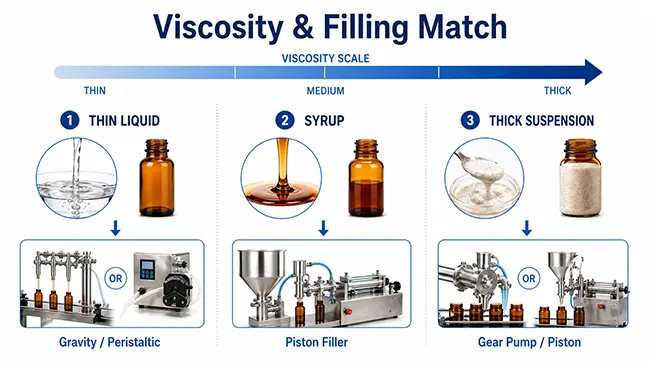
Oral sıvılar için, şuruplar, ve süspansiyon tipi takviyeler, piston ve peristaltik dolgular çoğu uygulamayı kapsar. Yerçekimi dolgu maddeleri ince oral solüsyonlar ve tentürler için yaygındır.. Dişli pompalar viskozite yüksek ve dolum hacmi küçük olduğunda ortaya çıkar.
Viskozite Vermeniz Gereken İlk Karardır
Konteyner boyutundan önce, çıkış hızından önce, viskozite, hangi sıvı dolum mekanizmasının tüm üretim süreci boyunca tutarlı sonuçlar sunabileceğini belirler.
Viskozite centipoise cinsinden ölçülür (cP). Su etrafta duruyor 1 cP. Etanol bazlı tentürler benzerdir. Şuruplar kabaca değişir 100 ile 10,000 cP şeker konsantrasyonuna ve formülasyona bağlı olarak. Kalın süspansiyonlar bu aralığı önemli ölçüde aşabilir.
Pratik sonuç doğrudandır. Yerçekimi dolgusu, zaman ayarlı bir valftan serbestçe akan sıvıya dayanır. Viskozite eklenince akış öngörülemez hale gelir; dolum hacimleri şişeden şişeye değişir. Bir piston dolgusu mekanik yer değiştirmeyi kullanır, dolayısıyla viskozitenin doğruluk üzerinde daha az etkisi vardır, ancak piston contaları ve nozul tasarımının yine de ürünle eşleşmesi gerekiyor. Dişli pompa yüksek viskoziteli malzemeleri iyi bir şekilde işler, ancak pompa malzemesinin formülasyonla uyumlu olması gerekir.
İlaç ve takviye hatları için, ilgili viskozite aralıkları kabaca aşağıdaki gibi dağılır:
- Altında 100 cP — su incesinden hafife: yerçekimi dolgusu veya peristaltik pompa
- 100–5.000 cP — şuruplar, hafif emülsiyonlar: piston dolgusu en yaygın seçimdir
- Üstünde 5,000 cP - kalın süspansiyonlar, yoğun jeller: ısıtmalı nozul seçenekli piston, veya dişli pompa
Pratik bir komplikasyon: bazı sıvı takviyeler ve bitkisel formülasyonlar sıcaklıkla birlikte viskoziteyi değiştirir. 30°C'de iyi akan bir ürün, oda sıcaklığında gözle görülür şekilde kalınlaşabilir. Formül bu şekilde davranırsa, makinenin nozul veya tank seviyesinde ısıtma kapasitesine ihtiyacı var, ve bu satın almadan önce belirtilmelidir - kurulumdan sonra sonradan donatılmaz.
Pistonlu Doldurucu ve Peristaltik Pompa: İlaç Hatlarında Hangi Değişiklikler
Hem pistonlu doldurucular hem de peristaltik pompalar ilaç ve besin takviyesi üretiminde düzenli olarak karşımıza çıkıyor. Aralarındaki karar ürüne bağlıdır, temizlik gereksinimleri, ve hattın kaç SKU çalıştırdığı.
| Piston dolgusu | Peristaltik pompa dolgusu | |
| Doldurma doğruluğu | Yüksek, viskozite aralığında tutarlı | Düşük ila orta viskozite için yüksek |
| Ürün iletişim | Piston, silindir, ve tüm temas sıvısını püskürtün | Yalnızca borular sıvıyla temas eder |
| Şunun için en iyisi: | Şuruplar, süspansiyon, orta viskoziteli formülasyonlar | Hassas, steril, veya reaktif formülasyonlar |
| Temizlik | CIP veya tam sökme gerektirir | Ürünler arasında tüp değişimi; temizlenecek metalle ıslanan parça yok |
| Değişim | Mekanik ses ayarı | Çoklu ürün hatları için hızlı |
| Sarf malzemesi maliyeti | Hiçbiri | Borular yinelenen bir değiştirme maliyetidir |
Formülasyonun metalle temas etmemesi gerektiğinde peristaltik dolgular sıklıkla tercih edilir; bu, bazı bitkisel özler için önemlidir., alkol bazlı ürünler, veya oksidasyon veya metal reaktivitesinin endişe verici olduğu herhangi bir şey. Yalnızca tüp temas prensibi aynı zamanda temizlik doğrulamasını da kolaylaştırır, tüp temizlenip belgelenmek yerine değiştirildiği için.
Pistonlu doldurucular, iş hacminin ve uzun vadeli tutarlılığın birincil gereklilikler olduğu orta ila yüksek viskoziteli farmasötik sıvılar için daha yaygın tercih olmaya devam ediyor.
Sıvı Dolum Makinesinin Şişeleme Hattına Sığdığı Yer
Bir farmasötik veya ek operasyonda, sıvı doldurucu, ürün tutma tankı ile kapatma istasyonu arasında bulunur. Konteyner boş geliyor, dolguyu alır, ve kapanışa doğru ilerliyor.
Oral sıvılar veya sıvı takviyeler için standart bir çizgi bu sırayı takip eder:
Şişeyi çözme → doldurma → kapatma → indüksiyonla kapatma → etiketleme → kartonlama
Bu istasyondaki dolum kalitesi akış yönündeki her şeyi etkiler. Boynunda veya ipliklerinde sıvı bulunan bir şişe, kapatma makinesi — kapaklar düzgün oturmayabilir, tork okumaları tutarsız hale geliyor, ve reddedilme oranları artıyor. Hat bir indüksiyonlu kapatma makinesi içeriyorsa, Şişe ağzı yakınındaki ürün kalıntısı folyo astarın yapışmasını engelleyebilir.
Bu, sıvı dolgu maddesinin yalnızca dolum doğruluğu için belirtilmemesi gerektiği anlamına gelir, ancak her döngüden sonra nozulun temiz bir şekilde kesilmesi için. Damlama önleyici ağızlık tasarımı, onaylanması gereken standart bir özelliktir, özellikle kolayca akan ince sıvılar için.
Sıvı Dolum Makinesi Satın Almadan Önce Nelere Dikkat Edilmeli?
Hacim aralığını ve doğruluk spesifikasyonunu doldurun Makinenin, aralığınızdaki en küçük ve en büyük dolum hacimlerini aynı doğruluk seviyesinde kapsadığını doğrulayın. Birçok sıvı dolgu maddesinin optimum çalışma aralığı vardır ve doğruluk, spesifikasyonun kenarlarına doğru azalır..
Ürün viskozitesi Ürününüzün dolum sıcaklığındaki cP aralığını öğrenin. Başka bir şeyi değerlendirmeden önce bunu makine tipiyle eşleştirin.
Konteyner formatı ve boyun boyutları Şişe boynu çapı, SKU'lar arasında yükseklik değişimi, ve dolumda yukarıdan aşağıya veya aşağıdan yukarıya nozül kullanılmasının tamamı dolum kafası konfigürasyonunu etkiler.
Gerekli çıktı Bunu dakika başına şişe olarak belirtin, sadece ses seviyesini değiştirmekle kalmıyor. Makinenin yalnızca günlük üretim hedefine değil, hattın hızına da uyması gerekiyor.
SKU sayısı ve geçiş sıklığı Birden fazla şişe boyutuna sahip bir hattın hızlı olması gerekir, aletsiz geçiş. Tek ürüne ayrılmış bir hat, daha yavaş bir kurulum sürecini kabul edebilir.
Temizleme yöntemi CIP özelliğinin gerekli olup olmadığına veya manuel sökme ve temizlemenin kabul edilebilir olup olmadığına karar verin. Bu karar hem ekipman maliyetini hem de temizlik doğrulama kapsamını etkiler.
İletişim malzemesi standartları Farmasötik ve tamamlayıcı uygulamalar için, sıvıyla temas eden parçalar minimum 316L paslanmaz çelik olmalıdır. Peristaltik sistemlerdeki borular farmasötik kalitede silikon veya eşdeğeri olmalıdır. Sipariş vermeden önce malzeme sertifikaları isteyin.
Farmasötik veya tamamlayıcı ürünler için sıvı dolum hattı planlıyorsanız, Ruidapacking ürününüzün viskozitesini inceleyebilir, konteyner formatı, hacim aralığını doldur, ve çıktı gereksinimleri, o zaman bir eşleşme önerin sıvı dolum makinası veya şişeleme hattı konfigürasyonunu tamamlayın. 6S yönetim sistemimiz ve tam süreç kontrolümüzle, Sevkiyattan önce tüm ürünlerin tam denetimini sağlıyoruz. Belirli bir ekipman önerisi almak için ürün ve konteyner ayrıntılarınızı gönderin.
SSS
-
Sıvı dolum makinesi ne için kullanılır??
Belirli bir hacimdeki sıvıyı ölçer ve kaplara - şişelere dağıtır, flakon, Torbalar, veya poşetler — bir üretim partisinde tutarlı bir şekilde. İlaç ve takviye hatlarında, yaygın uygulamalar arasında oral çözümler bulunur, şuruplar, tentürler, süspansiyon, ve sıvı vitaminler.
-
Pistonlu doldurucu ile peristaltik pompalı doldurucu arasındaki fark nedir??
Bir piston dolgusu, mekanik yer değiştirmeyi kullanır; bir piston, her döngüde sabit bir hacmi nozül boyunca hareket ettirir. Peristaltik pompa, silindirler tarafından sıkıştırılan esnek boruları kullanır, yani sıvıyla yalnızca boru temas eder. Metal temasından kaçınılması gereken durumlarda peristaltik dolgular tercih edilir. Pistonlu doldurucular, verim ve uzun vadeli doğruluğun öncelikli olduğu orta ve yüksek viskoziteli ürünlerde daha yaygındır..
-
Bir sıvı dolum makinesi farklı viskoziteleri kaldırabilir mi??
Tanımlanmış bir aralıkta, Evet. Çoğu piston dolgusu, dolum hızını ve meme boyutunu ayarlayarak çeşitli viskozitelere uyum sağlayabilir. İnce oral solüsyonlar için tasarlanmış bir makine, kalın süspansiyonlarda güvenilir performans göstermez.. Satın almadan önce viskozite aralığını makine spesifikasyonuna göre doğrulayın.
-
Hacimsel dolum ne anlama gelir??
Bu, makinenin döngü başına tanımlanmış bir hacmi ölçtüğü ve dağıttığı anlamına gelir, yalnızca ağırlık veya zamana göre ölçmek yerine. Piston doldurucuları ve dişli pompa doldurucuları hacimseldir. Yerçekimi dolgu maddeleri genellikle zamana dayalıdır, tutarlı ince sıvılar için doğru şekilde çalışır ancak viskozite değiştiğinde daha az güvenilirdir.
-
Yarı otomatik ve otomatik sıvı dolum makinesi arasında nasıl seçim yaparım?
Yarı otomatik küçük partilere uygundur, yüksek SKU çeşitliliği, veya erken aşamadaki üretim. Bir ürünün taahhüt ettiği hacim olduğunda otomatik uygundur, parti boyutları sabittir, ve birim başına emek maliyeti sermaye yatırımını haklı çıkarır.
-
Farmasötik uygulamalar için sıvıyla temas eden parçalar hangi malzemelerden yapılmalıdır??
316L paslanmaz çelik, metal temas yüzeyleri için standarttır. Peristaltik sistemlerdeki borular farmasötik kalitede silikon veya eşdeğeri olmalıdır. Contalar ve keçeler FDA uyumlu elastomerler olmalıdır. Her zaman malzeme sertifikaları talep edin ve özel formülasyonunuzla uyumluluğu onaylayın.
-
Sıvı dolum, takviye şişeleme hattında nereye sığar??
Sıvı dolgu maddesi, ürün tutma tankı ile kapatma istasyonu arasında bulunur. Tipik bir dizi: şişe çözme → doldurma → kapak kapatma → indüksiyonla kapatma → etiketleme → kartonlama. Bu istasyondaki dolum kalitesi, akış yönündeki her adımda performansı doğrudan etkiler.
-
Hangi doldurma doğruluğunu beklemeliyim??
İyi korunan hacimsel dolguların çoğu, stabil koşullar altında ±%0,5 ila ±%1'e ulaşır. İnce, Tutarlı sıcaklıktaki serbest akışlı sıvılar daha sıkı sonuçlar elde etme eğilimindedir. Yüksek viskoziteli veya sıcaklığa duyarlı ürünler, üretim sırasında daha dikkatli kalibrasyon ve düzenli doğrulama kontrolleri gerektirir.
Referanslar
ISPE — İyi Uygulama Kılavuzu: Oral Katı Dozaj Formları (hat entegrasyonu referansı)