...

>

医薬品の剤形: 型に関する基本ガイド, 製造業, および梱包要件

医薬品の剤形: 型に関する基本ガイド, 製造業, および梱包要件

目次

医薬品の剤形を調べる, 彼らのタイプ, 製造工程, 梱包要件, 固体および液体製品の機器の選択.

Why can the same active pharmaceutical ingredient be supplied as a tablet, カプセル, 液体, or injection? The answer depends on factors such as product stability, quantity control, release characteristics, 使用目的, and route of administration.

メーカー向け, the selected dosage form shapes the production process. Tablets require suitable powder preparation and compression, capsules need accurate filling and closing, and liquids involve different mixing and filling conditions. The finished product must also be packaged according to its sensitivity to moisture, 酸素, ライト, 漏れ, そして物理的なダメージ.

This guide introduces the main pharmaceutical dosage forms and explains how they influence manufacturing processes, equipment selection, および梱包要件.

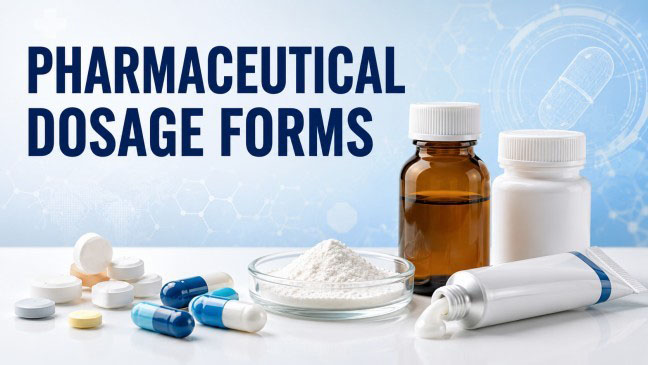
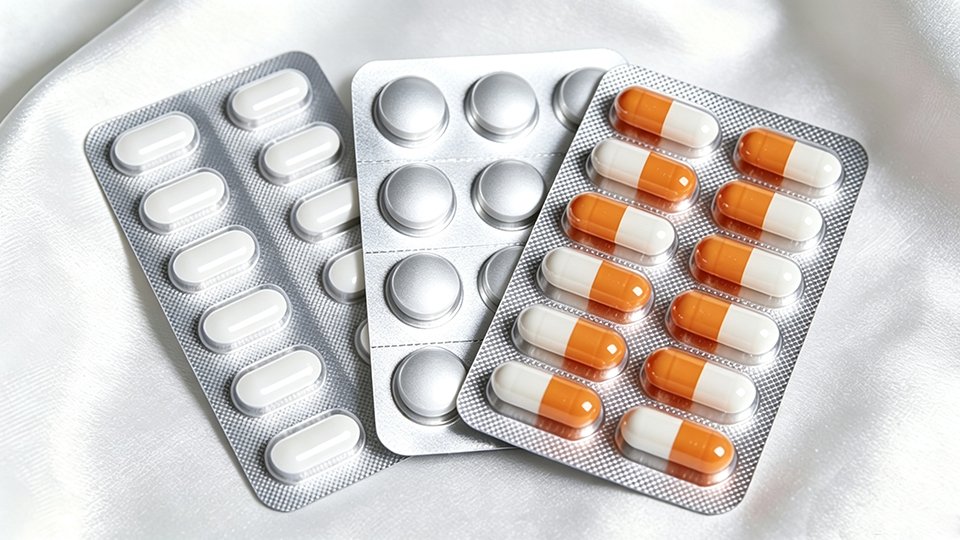
Pharmaceutical dosage forms including tablets, カプセル, パウダー, 液体, and packaging formats

1. What Are Pharmaceutical Dosage Forms?

A pharmaceutical dosage form is the physical form in which a pharmaceutical product is produced and supplied. Common examples include tablets, カプセル, パウダー, ソリューション, サスペンション, クリーム, and injections. The selected form supports manufacturing, ストレージ, quantity control, and the intended method of use.

Several related terms are often confused:

学期Meaning
Active pharmaceutical ingredient (API)The primary active component in a pharmaceutical productAcetaminophen
DoseThe specified amount used at one time or during a defined period500 mg
FormulationThe designed combination of the API and other ingredientsAPI, filler, バインダー, and disintegrant
剤形The finished physical form of the productFilm-coated tablet
Route of administrationThe intended method of using the productOral administration

Most finished pharmaceutical products contain one or more APIs together with excipients. 配合にもよりますが, excipients may improve material flow, support tablet compression, maintain product stability, assist disintegration, mask an unpleasant taste, or adjust ingredient-release characteristics.

Dosage form and route of administration are related but are not the same concept. A tablet and an oral solution may both be intended for oral use, yet they require different formulations, manufacturing methods, process controls, and packaging systems. Products within the same category may also follow different processes. 例えば, one tablet formulation may be suitable for direct compression, while another may require granulation or coating.

Manufacturers should therefore define the dosage form, 材料特性, target quantity, stability considerations, and intended package before selecting production equipment. Equipment should be matched to the formulation and process instead of being expected to correct unsuitable material characteristics or packaging specifications.

2. What Are the Main Types of Pharmaceutical Dosage Forms?

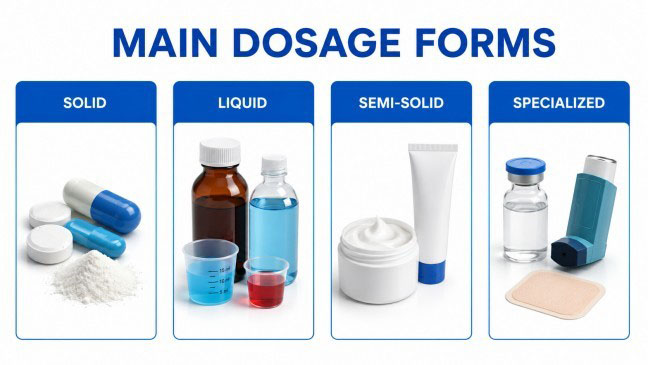
Dosage forms can be grouped by physical state, release characteristics, or route of administration. These systems overlap, so a product may belong to more than one group.

Main groupCommon examplesTypical manufacturing focusCommon package
Solidタブレット, カプセル, パウダー, 顆粒Flow, ブレンドする, compression or filling水疱, ボトル, 小袋
液体ソリューション, サスペンション, エマルジョン, シロップMixing, 均一, viscosity and fillingBottles or unit containers
Semi-solidCreams, 軟膏, ゲル, ペーストMixing, homogenization and viscosityチューブ, pumps or jars
SpecializedInjections, inhalation products, patches, suppositoriesProduct-specific processing and controlsバイアル, ampoules, devices or sealed packs

2.1 Solid Dosage Forms

タブレット are made by compressing a prepared powder or granule blend into a defined shape. Common formats include conventional tablets, チュアブル錠, 発泡錠剤, orally disintegrating tablets, and modified-release tablets. Their manufacturing behavior depends on powder flow, 粒径, 水分レベル, 圧縮率, 潤滑, and tooling design.

カプセル include two-piece hard capsules, ソフトカプセル, and liquid-filled hard capsules. Hard capsules may contain powders, 顆粒, ペレット, or small tablets. Liquid-filled hard capsules require a compatible fill material and an appropriate shell-closing or sealing process. Soft capsules follow a different forming and filling method and normally use dedicated equipment.

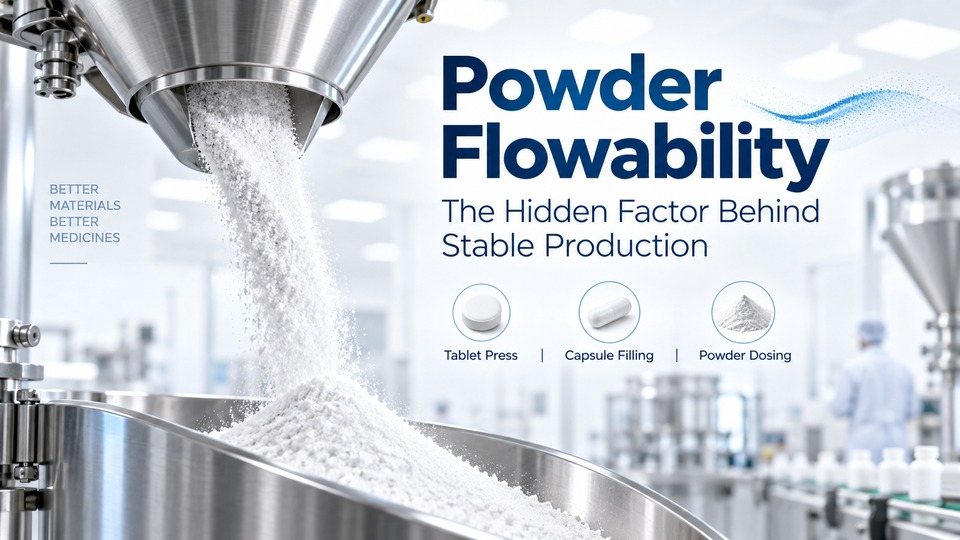
粉末および顆粒 may be supplied in multi-use containers or divided into individual sachets and stick packs. Their production requires attention to blend uniformity, 分離, ほこり, metering behavior, and the effect of humidity during filling and storage.

2.2 Liquid Dosage Forms

Liquid forms include solutions, サスペンション, エマルジョン, and syrups. Solutions contain dissolved ingredients, suspensions contain dispersed solid particles, and emulsions contain separate liquid phases.

Manufacturing considerations include mixing order, 温度, filtration where applicable, 粘度, foam, and filling conditions. Suspensions and emulsions also require controls that address settling or phase separation during processing.

Main types of pharmaceutical dosage forms classified as solid, 液体, 半固体, and specialized forms

2.3 Semi-Solid and Specialized Dosage Forms

Creams, 軟膏, ゲル, and pastes are semi-solid forms commonly packed in tubes, パンプス, or jars. Their viscosity affects mixing, 移行, 充填, and container selection.

Other dosage forms include injections, inhalation products, transdermal patches, and suppositories. Their requirements differ substantially from conventional oral solids and should be evaluated within the relevant development framework.

3. How Are Different Pharmaceutical Dosage Forms Manufactured?

Most manufacturing processes begin with material receipt, 識別, dispensing, and controlled preparation. Later steps depend on the dosage form and product specification.

3.1 錠剤の製造

A typical tablet process includes:

Dispensing → Sieving or Milling → Blending → Granulation if Required → Drying → Lubrication → Compression → Optional Coating → Inspection → Packaging

Not every formula needs granulation. Direct compression uses a blend that already has suitable flow and compression behavior. Wet granulation introduces a liquid binder before drying and sizing, while dry granulation is a process that forms granules by mechanically compacting powdered material under high pressure without adding liquid. The selected route should come from formulation studies and production trials.

圧縮中, ある 錠剤圧縮機 fills the dies, compresses the material, and ejects the formed tablets. Fill depth and feeder performance mainly affect tablet weight, while compression force influences thickness and hardness. Turret speed changes filling time and compression dwell time, and worn or misaligned tooling may cause defects such as sticking, キャッピング, or edge damage. Coating may then be applied for appearance, 味のマスキング, environmental protection, or modified-release design.

3.2 Capsule Manufacturing

For two-piece hard capsules, the main sequence is:

Empty Capsule Feeding → Orientation → Cap-and-Body Separation → Filling → Reject → Closing → Ejection → Polishing → Inspection

カプセル充填機 must match the capsule size and filling material. 粉末, 顆粒, ペレット, and liquids use different dosing arrangements. Material flow, かさ密度, fill-weight range, shell condition, and closing quality are important when developing the process. Capsule polishing and inspection are normally positioned before blister or bottle packaging.

3.3 Powder and Granule Packing

Powder and granule products are blended and transferred to a suitable dosing system. Augers are commonly used for many powders, while volumetric cups or other feeders may suit free-flowing granules. あ サシェ包装機 can form the package from roll film, meter the product, seal the pack, and cut or separate the finished units.

3.4 Liquid and Semi-Solid Processing

Liquid and semi-solid production may include mixing, heating or cooling, homogenization, filtration, deaeration, holding, 充填, and closing. The actual sequence depends on the formulation. Equipment contact materials, transfer methods, filling mechanism, and cleaning procedure should be selected around viscosity, foaming tendency, particle content, and required hygiene controls.

4. How Do Pharmaceutical Dosage Forms Affect Packaging Requirements?

Packaging is part of the product system, not a decorative step added after manufacturing. Its design should reflect the dosage form, 定式化, stability information, 輸送条件, and intended market.

Primary packaging directly contains the product, such as a blister cavity, ボトル, 小袋, tube, or vial. 二次包装 includes items such as cartons, ラベル, リーフレットと. Tertiary packaging supports storage and transportation through cases, dividers, and pallets.

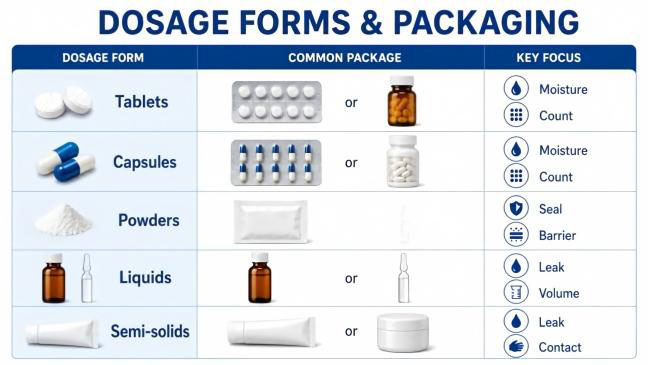
剤形Common primary packageMain considerationsRelated equipment
タブレットBlisters or bottles水分, ライト, abrasion and unit countTablet blister machine or tablet counting line
ハードカプセルBlisters or bottles湿度, shell condition and unit countCapsule blister machine or capsule counting line
粉末および顆粒サシェ, スティック, pouches or bottles水分, metering and seal conditionSachet packaging machine or premade pouch packing machine
液体Bottles or individual containers漏れ, compatibility and fill volumeLiquid filling machine
Semi-solidsチューブ, pumps or jars粘度, leakage and product contactTube, pump or jar filling equipment
Sterile productsバイアル, ampoules or prefilled systemsContainer-closure integrity and specialized controlsProduct-specific filling and closing line

錠剤とカプセルの場合, blister packs separate units into individual cavities. あ ブリスター包装機 forms or feeds the cavities, 製品をロードします, seals the lidding material, codes the web, and cuts the final packs. The barrier structure should be selected from product data; a standard PVC blister and a cold-form aluminum blister do not provide the same protection profile.

Comparison of dosage forms with blister, ボトル, 小袋, tube, and vial packaging

Bottles are often selected for higher-count tablet and capsule packs. A typical automatic tablet and capsule counting line connect bottle unscrambling, 数える, オプションの乾燥剤挿入, キャッピング, 誘導シール, ラベリング. The closure, ライナー, 乾燥剤, and bottle material must be considered as parts of one packaging system.

Sachets and stick packs are common for measured quantities of powders and granules. Film structure, seal temperature, シール圧力, product dust, tear design, and residual air can affect pack performance. Secondary packs may then move to a カートン機 for carton forming, product insertion, チラシの取り扱い, コーディング, そして検査.

No packaging format is automatically suitable for every product in the same dosage-form group. Package selection should be supported by compatibility work, パッケージのテスト, and stability studies. For a wider format comparison, see this guide to pharmaceutical packaging types.

5. How to Select Pharmaceutical Manufacturing and Packaging Equipment

Equipment selection should start with product and process information rather than a machine model. A useful equipment specification normally covers:

  1. Material characteristics: 粉体の流れ, かさ密度, 粒径, 湿気への敏感性, 粘度, foam, or stickiness.
  2. 製品形式: tablet diameter and shape, カプセルサイズ, fill range, bottle count, sachet dimensions, or blister layout.
  3. 必要な出力: バッチサイズ, hourly target, shift pattern, planned changeovers, and expected expansion.
  4. Process controls: weight or count monitoring, rejection logic, 金属探知, コーディング, and data recording.
  5. 掃除と模様替え: contact-part access, cleaning method, format-part replacement, and cross-product control.
  6. Line connection: upstream output, downstream speed, バッファリング, conveyor layout, and communication between machines.

一般的な構成には次のものがあります。:

Product and packageExample line configuration
Tablet blister packTablet press → tablet deduster → metal detector → blister machine → cartoner
カプセルボトルCapsule filler → capsule polisher → capsule counting and filling machine→ capper → induction sealer → labeler
Powder sachetBlender → feeder → stick packing machine(or sachet packing machine→ checkweigher → cartoner

The rated speed of one machine does not define the output of the complete line. Product feeding, 検査, stops, 切り替え, and downstream capacity also affect actual production. When several stages are connected, an integrated pharmaceutical line should be planned around a realistic line balance and the available factory layout.

pharmaceutical dosage forms

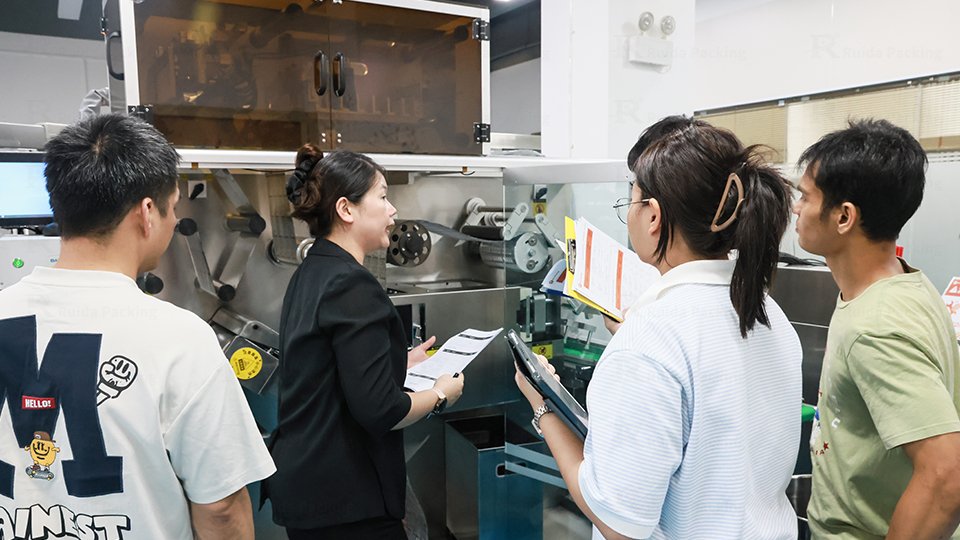
ルイダパッキング provides tablet presses, カプセル充填機, blister machines, counting lines, and cartoning equipment for solid dosage manufacturing and packaging projects. Based on the product format, 目標出力, and factory layout, the team can help configure individual machines or an integrated production line.

6. Pharmaceutical Dosage Form Quality Control and GMP Considerations

Quality controls depend on the dosage form and approved product specification. Tablet checks may include weight variation, 厚さ, 硬度, もろさ, 崩壊, and dissolution where applicable. Capsule controls may cover fill weight, shell closure, 外観, and disintegration. Liquid and semi-solid controls can include fill quantity, 均一, 粘度, and container closure.

Packaging checks may cover count or fill quantity, seal condition, 漏れ, print information, label verification, and rejection performance. These checks should be supported by written procedures, defined acceptance criteria, trained personnel, メンテナンス, 較正, and documented review.

GMP planning extends beyond the machine. Facility conditions, material control, クリーニング, process validation, quality oversight, and production records all contribute to consistent operation. Equipment can support the required process, but regulatory status depends on the complete manufacturing and quality system used at the facility.

7. 医薬品の剤形: よくある質問

What are the main pharmaceutical dosage forms?

The broad groups are solid, 液体, 半固体, and specialized dosage forms. タブレット, カプセル, パウダー, ソリューション, サスペンション, クリーム, injections, and inhalation products are common examples. Classification may also consider route of administration and release characteristics.

What is the difference between a dose and a dosage form?

A dose is the specified quantity used at one time or during a defined period. A dosage form is the physical product, such as a tablet, カプセル, 解決, or cream, that carries that quantity.

Are tablets and capsules manufactured on the same equipment?

いいえ. Tablets are formed by compression on a tablet press. Two-piece hard capsules are separated, 満たされた, and closed on a capsule filling machine. They may later use similar blister or bottle packaging equipment if their size and handling characteristics are compatible with the selected line.

Which packaging formats are commonly used for solid dosage forms?

Tablets and hard capsules are commonly packed in blisters or bottles. Powders and granules may use sachets, スティックパック, ポーチ, またはボトル. The final choice depends on product characteristics, pack quantity, バリア要件, と安定性データ.

What information is needed before choosing equipment?

Manufacturers should prepare details about the material, 剤形, 寸法, target quantity, 出力, 包装形態, factory space, 公共事業, 掃除のアプローチ, and required documentation. Samples and trials may also be needed.

結論: Matching Pharmaceutical Dosage Forms with Manufacturing and Packaging

Pharmaceutical dosage forms connect formulation, 製造業, 品質管理, と包装. A tablet, カプセル, 粉, or liquid presents different material behavior and therefore requires a different production route. Packaging must then be selected around the product’s stability profile, ニーズに対応する, and intended distribution conditions.

Before configuring a line, manufacturers should define the product and package first, then match each processing, 充填, 検査, and packaging stage to those requirements. This approach produces a clearer equipment specification and reduces avoidable changes during project development.

参考文献

I Q8(R2): Pharmaceutical Development

世界保健機関: Good Manufacturing Practices

共有:

メッセージを送信

関連記事

ご要望をお聞かせください

    見積もり依頼

      *当社はお客様の機密性を尊重し、すべての情報は保護されます。

      /*wpsi_fa907744*/