Ο ανοξείδωτος χάλυβας δεν είναι ένα ενιαίο υλικό. Είναι μια οικογένεια κραμάτων με διαφορετικές χημικές συνθέσεις, αντοχή στη διάβρωση, συμπεριφορά συγκόλλησης, και κόστος. Αυτές οι διαφορές έχουν σημασία στη φαρμακευτική παραγωγή, επειδή ο εξοπλισμός μπορεί να εκτεθεί σε σκόνες, υγρά, καθαριστικά, υγρασία, θερμότητα, και επαναλαμβανόμενους κύκλους παραγωγής.
Μια ποιότητα που αποδίδει καλά σε στεγνή διαδικασία μπορεί να συμπεριφέρεται διαφορετικά σε υγρό σύστημα ή σε συνθήκες καθαρισμού που περιέχουν χλώριο. Φινίρισμα επιφάνειας, ποιότητα συγκόλλησης, γεωμετρία εξοπλισμού, και η πρόσβαση για καθαρισμό επηρεάζουν επίσης τη μακροπρόθεσμη απόδοση.
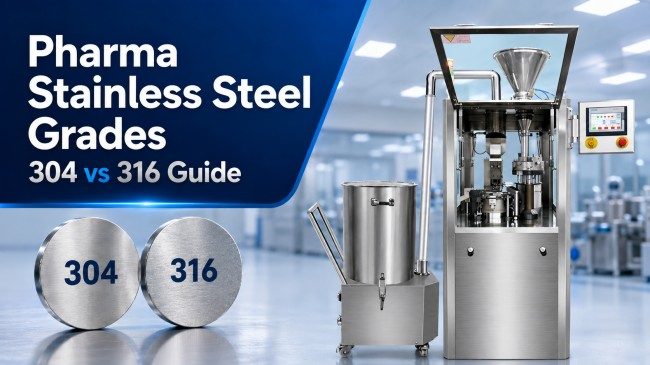
Οι ποιότητες ανοξείδωτου χάλυβα που χρησιμοποιούνται στη φαρμακοβιομηχανία ανήκουν συχνότερα στους 304 και 316 οικογένειες, συμπεριλαμβανομένων των 304L και 316L. Αυτός ο οδηγός εξηγεί γιατί ο ανοξείδωτος χάλυβας χρησιμοποιείται ευρέως, πώς διαφέρουν αυτοί οι βαθμοί, όπου εμφανίζονται φαρμακευτικός εξοπλισμός, και πώς να επιλέξετε μεταξύ 304 και 316 για μια συγκεκριμένη διαδικασία.
Γιατί ο ανοξείδωτος χάλυβας χρησιμοποιείται στη φαρμακευτική βιομηχανία
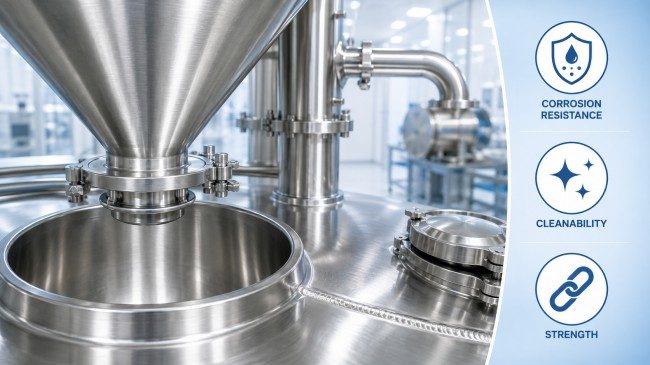
Ο φαρμακευτικός εξοπλισμός πρέπει να παραμένει σταθερός κατά την παραγωγή, καθάρισμα, επιθεώρηση, και συντήρηση. Τα υλικά του πρέπει να αντέχουν στη διάβρωση, αποφύγετε την επιβλαβή αλληλεπίδραση με το προϊόν, υποστήριξη αποτελεσματικού καθαρισμού, και διατηρούν τη μηχανική αντοχή.
Αντοχή στη διάβρωση
Ο ανοξείδωτος χάλυβας περιέχει χρώμιο, που σχηματίζει ένα λεπτό παθητικό στρώμα στην επιφάνεια. Αυτό το στρώμα βοηθά στην προστασία του υποκείμενου μετάλλου από την υγρασία και τη χημική επίθεση.
Η αποτελεσματικότητά του εξαρτάται από το κράμα και το περιβάλλον λειτουργίας. Άλατα, οξέα, χημικά καθαρισμού, θερμοκρασία, υγρασία, και ο χρόνος επαφής μπορεί όλα να επηρεάσουν την αντοχή στη διάβρωση. Για το λόγο αυτό, Οι λέξεις «ανοξείδωτο χάλυβα» από μόνες τους δεν παρέχουν πλήρη προδιαγραφή εξοπλισμού.
Καθαριότητα
Το σωστά φινιρισμένο ανοξείδωτο χάλυβα παρέχει ένα σκληρό, μη απορροφητική επιφάνεια που υποστηρίζει τον καθαρισμό και την επιθεώρηση. Οι λείες επιφάνειες δίνουν στις σκόνες και τα υπολείμματα λιγότερες ανωμαλίες στις οποίες παραμένουν.
Η καθαριότητα εξαρτάται επίσης από το σχεδιασμό και την κατασκευή. Ακατέργαστες συγκολλήσεις, στενά κενά, εκτεθειμένα νήματα, αιχμηρές εσωτερικές γωνίες, και οι απρόσιτοι χώροι μπορούν να συγκρατήσουν υλικό ακόμα και όταν το περιβάλλον εξάρτημα χρησιμοποιεί ένα ανθεκτικό στη διάβρωση κράμα.
Δύναμη και Κατασκευή
Ο ανοξείδωτος χάλυβας μπορεί να αντέξει το επαναλαμβανόμενο γέμισμα, πιεστικός, μεταφέροντας, σφράγιση, και κύκλοι συσκευασίας που βρίσκονται στη φαρμακευτική παραγωγή. Μπορεί επίσης να κοπεί, σχηματίστηκε, κατεργασμένα, συγκολλημένος, και γυαλισμένο σε κορνίζες, χοάνες, σκάφη, σωλήνες, φύλακες, και εξαρτήματα χειρισμού προϊόντων.
ΜΑΣ 21 CFR 211.63 απαιτεί τον κατάλληλο σχεδιασμό φαρμακευτικού εξοπλισμού, έχων μέγεθος, και βρίσκεται για την προβλεπόμενη χρήση του, καθάρισμα, και συντήρηση. Τμήμα 211.65 απαιτεί να μην αντιδρούν οι επιφάνειες που έρχονται σε επαφή με το προϊόν, πρόσθετος, ή απορροφητικό με τρόπο που αλλοιώνει την ποιότητα του προϊόντος. Κεφάλαιο EU GMP 3 Ομοίως απαιτεί εξοπλισμό που να ταιριάζει στον προορισμό του και να επιτρέπει τον ενδελεχή καθαρισμό.
Αυτές οι απαιτήσεις επικεντρώνονται στην απόδοση του εξοπλισμού και στην προστασία του προϊόντος αντί να ονομάζουν μια γενική κατηγορία ανοξείδωτου χάλυβα.
Κοινές ποιότητες ανοξείδωτου χάλυβα που χρησιμοποιούνται στη φαρμακευτική βιομηχανία
Οι ωστενιτικές ποιότητες της σειράς 300 χρησιμοποιούνται ευρέως επειδή συνδυάζουν αντοχή στη διάβρωση, μορφοποιησιμότητα, και συγκολλησιμότητα.
304 Ανοξείδωτο ατσάλι
Βαθμός 304 είναι ένας ανοξείδωτος χάλυβας χρωμίου-νικελίου που χρησιμοποιείται σε στεγνό, εσωτερικός, και ήπια διαβρωτικά περιβάλλοντα. Σε φαρμακευτικό εξοπλισμό, εμφανίζεται συνήθως σε:
- Κουφώματα μηχανών
- Εξωτερικά καλύμματα και πάνελ
- Προφυλακτήρες ασφαλείας
- Στηρίγματα και στηρίγματα
- Ηλεκτρικά ντουλάπια
- Μεταφορικές κατασκευές χωρίς επαφή
304 μπορεί επίσης να ταιριάζει σε επιλεγμένες εφαρμογές επαφής υλικού όταν είναι συμβατό, συνθήκες καθαρισμού, φινίρισμα επιφάνειας, και ο σχεδιασμός του εξοπλισμού έχουν αξιολογηθεί.
304L από ανοξείδωτο χάλυβα
304Το L είναι η έκδοση χαμηλών εκπομπών άνθρακα 304. Η χαμηλότερη περιεκτικότητά του σε άνθρακα μειώνει τον κίνδυνο καθίζησης καρβιδίου του χρωμίου κατά τη διάρκεια ορισμένων κύκλων θερμότητας συγκόλλησης, συμβάλλοντας στη διατήρηση της αντοχής στη διακοκκώδη διάβρωση γύρω από τις σωστά κατασκευασμένες συγκολλήσεις.
Είναι χρήσιμο για συγκολλημένες χοάνες, δεξαμενές, σωλήνες, και κατασκευάζονται συγκροτήματα όπου η αντοχή στη διάβρωση του 304 η οικογένεια είναι επαρκής.
316 Ανοξείδωτο ατσάλι
Βαθμός 316 περιέχει χρώμιο και νικέλιο 304, αλλά περιέχει και μολυβδαίνιο. Αυτή η προσθήκη βελτιώνει την αντίσταση στη διάβρωση με τρύπες και ρωγμές, ειδικά σε συνθήκες που περιέχουν χλώριο ή πιο απαιτητικές χημικά.
316 θεωρείται συνήθως όταν τα συστατικά αντιμετωπίζουν αλατούχα υγρά, συχνός υγρός καθαρισμός, συγκρατημένη υγρασία, ή ισχυρότερα καθαριστικά.
316L από ανοξείδωτο χάλυβα
316Το L είναι η έκδοση χαμηλών εκπομπών άνθρακα 316. Συνδυάζει την ενισχυμένη με μολυβδαίνιο αντοχή στη διάβρωση του 316 με μικρότερη ευαισθησία στη διακοκκώδη διάβρωση μετά τη συγκόλληση.
Αυτό καθιστά το 316L μια κοινή επιλογή για συγκολλημένα δοχεία, σωλήνες υγιεινής, βαλβίδες, πολλαπλές, ακροφύσια πλήρωσης, και άλλα συγκροτήματα επαφής υλικού εκτεθειμένα σε υγρές ή απαιτητικές συνθήκες καθαρισμού.
Ειδικοί βαθμοί όπως 316Ti, 904μεγάλο, και 2205 Το duplex ανοξείδωτο χάλυβα εξυπηρετεί συγκεκριμένες υψηλές θερμοκρασίες, εξαιρετικά διαβρωτικό, υψηλής πίεσης, ή εφαρμογές υψηλής αντοχής. Δεν είναι αυτόματες αναβαθμίσεις για τυπικά φαρμακευτικά μηχανήματα.
| Βαθμός | Κύριο χαρακτηριστικό | Γενική κατεύθυνση εφαρμογής |
| 304 | Γενική ποιότητα χρωμίου-νικελίου | Κορνίζες, εξώφυλλα, φύλακες, και ήπια περιβάλλοντα |
| 304μεγάλο | Χαμηλού άνθρακα 304 | Συγκολλημένα μέρη όπου η αντίσταση 304 επιπέδων είναι επαρκής |
| 316 | Ποιότητα κράματος μολυβδαινίου | Υγρός, εκτεθειμένα σε χλώριο, ή πιο διαβρωτικές περιοχές |
| 316μεγάλο | Χαμηλού άνθρακα 316 | Συγκολλημένα συστήματα που απαιτούν αντίσταση 316 οικογένειας |
| Ειδικοί βαθμοί | Υψηλότερη χημική αντοχή ή αντοχή | Εξειδικευμένος εξοπλισμός διεργασιών |
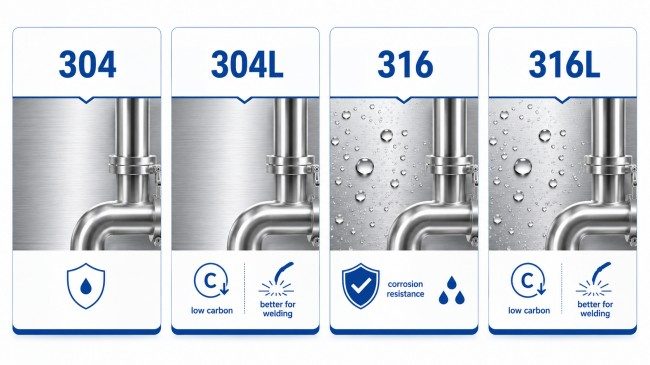
304 εναντίον 316 Ανοξείδωτο ατσάλι: Βασικές Διαφορές
Η κύρια διαφορά μεταξύ 304 και 316 ο ανοξείδωτος χάλυβας είναι το μολυβδαίνιο 316. Αυτό βελτιώνει την αντοχή στην τοπική διάβρωση σε περιβάλλοντα που περιέχουν χλώριο και απαιτούν χημικά περιβάλλοντα.
Αντοχή στη διάβρωση
304 αποδίδει καλά σε πολλές ξηρές και ήπια διαβρωτικές συνθήκες. Συχνά είναι κατάλληλο για κατασκευές μηχανών και περιοχές που εκτίθενται κυρίως σε τακτικό καθαρισμό δωματίων.
316 παρέχει πρόσθετη προστασία όταν τα συστατικά αντιμετωπίζουν αλατούχα διαλύματα, επαναλαμβανόμενο πλύσιμο, ισχυρότερα απορρυπαντικά, ή παρατεταμένη υγρασία. Η διαδικασία καθαρισμού πρέπει να αξιολογηθεί μαζί με το προϊόν, επειδή μια ήπια ξηρή σύνθεση μπορεί να ακολουθηθεί από έναν πιο απαιτητικό κύκλο καθαρισμού.
Κόστος και Κίνδυνος Κύκλου Ζωής
Ο 316 οικογένεια γενικά κοστίζει περισσότερο από το 304 οικογένεια λόγω της πρόσθετης περιεκτικότητάς του σε κράμα. Ωστόσο, Η επιλογή μόνο από την τιμή αγοράς μπορεί να αυξήσει τη συντήρηση, δυσκολία καθαρισμού, αντικατάσταση εξαρτήματος, εργασίες επιθεώρησης, και χρόνο διακοπής λειτουργίας εάν ο βαθμός δεν ταιριάζει με το λειτουργικό περιβάλλον.
Χρησιμοποιώντας 316 ή 316L σε κάθε πλαίσιο, πίνακας, και το προστατευτικό μπορεί επίσης να προσθέσει κόστος χωρίς να βελτιώσει την προστασία του προϊόντος. Ο σχεδιασμός μικτών υλικών είναι επομένως κοινός: χρησιμοποιήστε τον πιο ανθεκτικό βαθμό όπου το απαιτεί η έκθεση και 304 όπου οι συνθήκες είναι λιγότερο απαιτητικές.
Τι σημαίνει το «L».
Το "L" σημαίνει χαμηλό άνθρακα. Κάτω από ορισμένους κύκλους θερμότητας συγκόλλησης, Η καθίζηση καρβιδίου του χρωμίου μπορεί να συμβεί κοντά στα όρια των κόκκων και να μειώσει την αντίσταση στη διάβρωση στην περιοχή που επηρεάζεται από τη θερμότητα.
304Τα L και 316L μειώνουν αυτόν τον κίνδυνο, αλλά δεν διορθώνουν την κακή συγκόλληση. Μέθοδος συγκόλλησης, θωράκιση, εισροή θερμότητας, γεωμετρία συγκόλλησης, άλεσμα, καθάρισμα, και η επεξεργασία μετά τη συγκόλληση εξακολουθούν να επηρεάζουν το τελικό εξάρτημα.
| Σύγκριση | 304/304μεγάλο | 316/316μεγάλο |
| Μολυβδαίνιο | Δεν προστίθεται συνήθως | Προστέθηκε |
| Αντοχή σε χλωριούχα | Χαμηλότερος | Καλύτερα |
| Τυπικό κόστος | Χαμηλότερος | Υψηλότερο |
| Κοινός ρόλος | Δομικοί και ήπιοι χώροι εξυπηρέτησης | Υγρές και περιοχές με υψηλότερη διάβρωση |
| Βάση επιλογής | Χαμηλότερη έκθεση | Πιο απαιτητική χημεία ή υγρασία |
Η σωστή επιλογή εξαρτάται από το προϊόν, μέσα καθαρισμού, υγρασία, κατασκεύασμα, και τη λειτουργία κάθε περιοχής εξοπλισμού.
Όπου χρησιμοποιούνται ποιότητες ανοξείδωτου χάλυβα σε φαρμακευτικό εξοπλισμό
Ένα φαρμακευτικό μηχάνημα δεν χρειάζεται συνήθως ένα βαθμό σε κάθε εξάρτημα. Μια σαφής προδιαγραφή διαχωρίζει τα μέρη που έρχονται σε επαφή με το υλικό, εξαρτήματα της κοντινής ζώνης παραγωγής, δομικά μέρη, και εξαρτήματα που επιλέγονται κυρίως για αντοχή στη φθορά ή μηχανικό φορτίο.
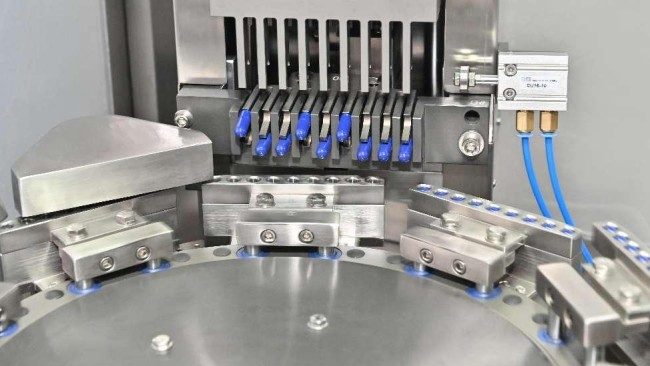
Υλικά-Επαφή και Δομικά Μέρη
Χόπερς, κανάλια τροφοδοσίας, δοσομετρικά μέρη, σωλήνες μεταφοράς, ακροφύσια πλήρωσης, και οι αγωγοί εκκένωσης χρειάζονται ιδιαίτερη προσοχή επειδή έρχονται σε επαφή με εκτεθειμένο υλικό. Κορνίζες, εξώφυλλα, φύλακες, αγκύλες, και τα ηλεκτρικά ντουλάπια συνήθως αντιμετωπίζουν μικρότερη έκθεση σε χημικά.
Στο Ruida Packing, ανοξείδωτα μέρη που έρχονται σε επαφή με τη χρήση του υλικού 316L από ανοξείδωτο χάλυβα, ενώ άλλα εξαρτήματα από ανοξείδωτο χάλυβα χρησιμοποιούν 304 ανοξείδωτο χάλυβα. Αυτή η διαμόρφωση διαχωρίζει τις απαιτήσεις επαφής υλικού από τις δομικές λειτουργίες αντί να εφαρμόζει έναν βαθμό σε ολόκληρο το μηχάνημα.
Παραδείγματα Εξοπλισμού
Σε ένα μηχανή πλήρωσης καψουλών, η χοάνη, τμήμα δοσολογίας, και μεταφοράς σκόνης ή κόκκων επαφής διαδρομής, ενώ το πλαίσιο, υπουργικό συμβούλιο, και οι προφυλακτήρες εκτελούν δομικές ή προστατευτικές λειτουργίες.
ΕΝΑ μηχανή συμπίεσης tablet περιέχει εξαρτήματα που έρχονται σε επαφή με το υλικό καθώς και εργαλεία και εξαρτήματα υψηλού φορτίου. Μπουνιές, πεθαίνει, πυργίσκους, ρουλεμάν, και άλλα μέρη φθοράς επιλέγονται για σκληρότητα, αντοχή στην κόπωση, και λειτουργία λειτουργίας, έτσι η επιλογή υλικού τους εκτείνεται πέρα από ένα απλό 304 εναντίον 316 σύγκριση.
Σε ένα ηλεκτρονικό μηχάνημα μέτρησης κάψουλα tablet, η χοάνη, δονητικά κανάλια, διαδρομή μέτρησης, και έξοδος απόρριψης επικοινωνήστε με τη δοσολογική φόρμα. Μια μηχανή συσκευασίας blister περιλαμβάνει επίσης τροφοδότες και οδηγούς που αγγίζουν μη συσκευασμένα δισκία ή κάψουλες.
Ένα μηχάνημα χαρτοκιβωτίου χειρίζεται συνήθως προϊόντα που βρίσκονται ήδη στην αρχική συσκευασία. Οι κατασκευές του από ανοξείδωτο χάλυβα χρησιμοποιούνται συνήθως 304, εκτός εάν το περιβάλλον παραγωγής ή η τεχνική συμφωνία απαιτεί άλλο υλικό.
Φινίρισμα Επιφανειών και Υγιεινή Σχεδιασμός
Η επιλογή υλικού πρέπει να υποστηρίζεται από κατάλληλο σχεδιασμό φινιρίσματος και εξοπλισμού. Όπου η τραχύτητα της επιφάνειας επηρεάζει τον καθαρισμό, η απαίτηση θα πρέπει να ισχύει για τη σχετική ζώνη επαφής και να επαληθεύεται με μέτρηση και όχι με γενική περιγραφή, όπως "φινίρισμα καθρέφτη".
Οι συγκολλήσεις επαφής υλικού θα πρέπει να είναι προσβάσιμες και να έχουν τελειώσει σύμφωνα με τις συμφωνηθείσες απαιτήσεις. Αιχμηρές γωνίες, στενά κενά, εκτεθειμένα νήματα, επικαλυπτόμενες πλάκες, και τα απρόσιτα κανάλια μπορεί να κάνουν τον καθαρισμό πιο δύσκολο.
Η παθητικοποίηση αφαιρεί την ελεύθερη μόλυνση από σίδηρο και υποστηρίζει την παθητική επιφάνεια μετά την κατασκευή. Η ηλεκτροστίλβωση μπορεί να βελτιώσει την ομαλότητα σε επιλεγμένα συστήματα υψηλής καθαρότητας, αλλά καμία θεραπεία δεν είναι καθολική απαίτηση για κάθε φαρμακευτικό μηχάνημα.
Πώς να επιλέξετε τη σωστή ποιότητα ανοξείδωτου χάλυβα
Η επιλογή υλικού θα πρέπει να ακολουθεί τις πραγματικές συνθήκες διεργασίας και τη λειτουργία κάθε περιοχής εξοπλισμού.
1. Προσδιορίστε προϊόντα και μέσα καθαρισμού
Καταγράψτε κάθε ουσία που έρχεται σε επαφή με τον εξοπλισμό, συμπεριλαμβανομένων των σκονών, υγρά, άλατα, οξέα, απορρυπαντικά, απολυμαντικά, και ξεπλύνετε νερό. Τα χημικά καθαρισμού μπορούν να δημιουργήσουν μεγαλύτερο κίνδυνο διάβρωσης από το ίδιο το προϊόν.
2. Ξεχωριστές Ζώνες Εξοπλισμού
Ζητήστε από τον προμηθευτή να εντοπίσει εξαρτήματα που έρχονται σε άμεση επαφή με το υλικό, εξαρτήματα της κοντινής ζώνης παραγωγής, δομικά μέρη, φθορά εξαρτημάτων, και μη μεταλλικά υλικά επαφής. Αποφύγετε να αποδεχτείτε μια γενική δήλωση ότι το μηχάνημα είναι απλώς "ανοξείδωτο ατσάλι".
3. Ελέγξτε τις συνθήκες έκθεσης
Σκεφτείτε εάν η επαφή είναι στεγνή ή υγρή, διακοπτόμενη ή συνεχής, και αν η θερμότητα, χλωρίδια, συγκρατημένη υγρασία, ή η κακή αποστράγγιση αυξάνει τον κίνδυνο διάβρωσης.
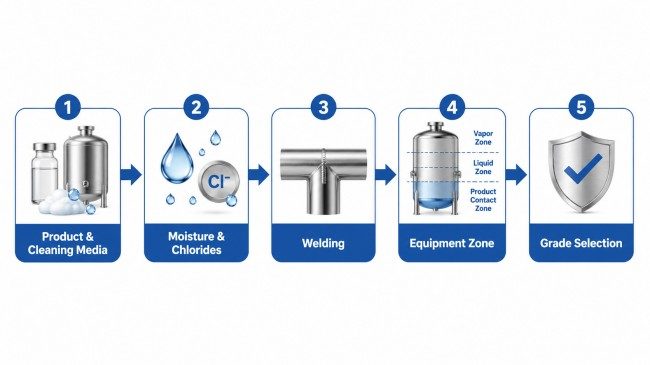
4. Αξιολογήστε την πρόσβαση στην κατασκευή και τον καθαρισμό
Ελέγξτε την κατάσταση συγκόλλησης, εσωτερικές γωνίες, φινίρισμα επιφάνειας, αποχέτευση, αφαιρούμενα εξαρτήματα, και πρόσβαση για καθαρισμό και επιθεώρηση. Ορίστε την παθητικοποίηση, ηλεκτρογυάλισμα, ή απαιτήσεις τραχύτητας μόνο όπου η διαδικασία τις δικαιολογεί.
5. Επιβεβαιώστε τα πρότυπα και τα έγγραφα
Η ονομασία του βαθμού πρέπει να συνδέεται με ένα ισχύον πρότυπο υλικού, όπως το ASTM, ΣΕ, ή JIS, και υποστηρίζεται από το συμφωνημένο πιστοποιητικό υλικού ή το αρχείο ιχνηλασιμότητας.
Ανάλογα με το έργο, μπορεί να περιλαμβάνει τεκμηρίωση:
- Λίστες ανταλλακτικών υλικού-επαφών
- Πιστοποιητικά υλικού
- Απαιτήσεις φινιρίσματος επιφανειών
- Αρχεία επεξεργασίας συγκόλλησης
- Εγγραφές παθητικοποίησης
- Κριτήρια επιθεώρησης FAT
| Κατάσταση λειτουργίας | Πρακτική κατεύθυνση επιλογής |
| Ξηρός, ήπιος, υπηρεσία χωρίς επαφή | 304 συχνά παρέχει μια κατάλληλη ισορροπία |
| Συγκολλημένα μέρη σε ήπιες συνθήκες | Θεωρήστε 304L |
| Υγρή έκθεση ή έκθεση που περιέχει χλώριο | Αξιολογώ 316 ή 316L |
| Συγκολλημένο σύστημα που απαιτεί αντίσταση 316 οικογένειας | Θεωρήστε 316L |
| Εξαιρετικά διαβρωτική ή ασυνήθιστη διαδικασία | Ολοκληρώστε μια ειδική ανασκόπηση μηχανικής |
Οι απαιτήσεις FDA και EU GMP δεν αναφέρουν ότι κάθε εξάρτημα επαφής υλικού πρέπει να χρησιμοποιεί 316L. Απαιτούν υλικά και επιφάνειες εξοπλισμού που ταιριάζουν στη χρήση για την οποία προορίζονται, υποστήριξη καθαρισμού, και αποφύγετε την επιβλαβή αλληλεπίδραση με το προϊόν.
Ο κατασκευαστής και ο χρήστης θα πρέπει να καθορίσουν την απαιτούμενη διαμόρφωση υλικού στις προδιαγραφές του εξοπλισμού και στην τεχνική συμφωνία.
Σύναψη
Οι κύριες ποιότητες ανοξείδωτου χάλυβα που χρησιμοποιούνται στη φαρμακευτική βιομηχανία είναι 304, 304μεγάλο, 316, και 316L. Βαθμός 304 ταιριάζει σε πολλές δομικές και ήπιες εφαρμογές υπηρεσιών, ενώ 316 προσφέρει ισχυρότερη αντοχή σε χλωριούχα, υγρός, ή πιο απαιτητικά χημικά περιβάλλοντα. Οι εκδόσεις χαμηλών εκπομπών άνθρακα μειώνουν τον κίνδυνο διακοκκώδους διάβρωσης που σχετίζεται με ορισμένες συνθήκες συγκόλλησης.
Ο 304 εναντίον 316 Η απόφαση για ανοξείδωτο χάλυβα θα πρέπει να βασίζεται στην πραγματική έκθεση, κατασκεύασμα, και απαιτήσεις κύκλου ζωής. Μια χρήσιμη προδιαγραφή προσδιορίζει την ποιότητα που χρησιμοποιείται σε κάθε σημαντική περιοχή και επίσης ορίζει το φινίρισμα της επιφάνειας, επεξεργασία συγκόλλησης, πρόσβαση καθαρισμού, και δικαιολογητικά.
Συχνές ερωτήσεις
Ποιες ποιότητες ανοξείδωτου χάλυβα χρησιμοποιούνται συνήθως στη φαρμακοβιομηχανία?
304, 304μεγάλο, 316, και 316L είναι οι πιο κοινές ποιότητες γενικής χρήσης. Οι εξειδικευμένες διεργασίες μπορεί να απαιτούν υλικά υψηλότερου κράματος ή διπλής όψης.
Ποια είναι η κύρια διαφορά μεταξύ 304 και 316 ανοξείδωτο χάλυβα?
316 περιέχει μολυβδαίνιο, που βελτιώνει την αντίσταση στη διάβρωση που σχετίζεται με το χλώριο και τη διάβρωση.
Γιατί χρησιμοποιούνται 304L και 316L για συγκολλημένο εξοπλισμό?
Η χαμηλότερη περιεκτικότητά τους σε άνθρακα μειώνει τον κίνδυνο καθίζησης καρβιδίου του χρωμίου κατά τη διάρκεια ορισμένων κύκλων θερμότητας συγκόλλησης και συμβάλλει στη διατήρηση της αντίστασης στη διάβρωση γύρω από σωστά κατασκευασμένες συγκολλήσεις.
Είναι αρκετά ποιοτικός από ανοξείδωτο χάλυβα για να καθορίσει την υγιεινή απόδοση?
Οχι. Φινίρισμα επιφάνειας, ποιότητα συγκόλλησης, γεωμετρία, πρόσβαση καθαρισμού, αποχέτευση, σφραγίδες, και οι τεκμηριωμένες απαιτήσεις κατασκευής επηρεάζουν επίσης τις επιδόσεις υγιεινής.
Η GMP απαιτεί όλα τα εξαρτήματα που έρχονται σε επαφή με το υλικό να χρησιμοποιούν 316L?
Κανένας γενικός κανόνας FDA ή GMP της ΕΕ δεν απαιτεί από κάθε στοιχείο επαφής υλικού να χρησιμοποιεί 316L. Το υλικό πρέπει να ταιριάζει στο προϊόν, διαδικασία καθαρισμού, και την προβλεπόμενη χρήση εξοπλισμού.
Αναφορές
- Ηλεκτρονικός Κώδικας Ομοσπονδιακών Κανονισμών, 21 Μέρος CFR 211, Τμήμα Δ—Εξοπλισμός, ιδίως §§211.63, 211.65, και 211.67.
- Ευρωπαϊκή Επιτροπή, Κατευθυντήριες γραμμές της ΕΕ για την ορθή παρασκευαστική πρακτική, Τόμος 4, Κεφάλαιο 3: Εγκαταστάσεις και Εξοπλισμός, ειδικά οι ενότητες 3.34–3.39.
- ASME, BPE—Εξοπλισμός βιοεπεξεργασίας.