Introduzione
L'imballaggio per dose unitaria colloca ciascuna dose preparata nella propria presentazione sigillata. Nel confezionamento di prodotti farmaceutici e medicinali, questo di solito significa una compressa, una capsula, una bustina di polvere, oppure un contenitore per liquidi monouso disposto in modo da poter essere identificato, protetto, e utilizzato come un'unica unità amministrativa. La FDA tratta i farmaci confezionati in contenitori monodose come un caso di etichettatura distinto per le forme di dosaggio solide e liquide per via orale, il che dimostra che si tratta di qualcosa di più di un semplice formato di confezione piccola.
Questo approccio al packaging è importante perché il suo ruolo va oltre il semplice contenimento del prodotto. Può supportare l'identificazione del livello di dose, ridurre la manipolazione ripetuta, e contribuire a mantenere un controllo più chiaro su ogni singola dose, dal confezionamento fino all'erogazione e all'uso. Questo è il motivo per cui l'imballaggio in dose unitaria appare spesso nelle discussioni sui blister, confezioni a strisce, bustine, e contenitori per liquidi monouso, soprattutto nella produzione farmaceutica, farmacia ospedaliera, e impostazioni sull’uso dei farmaci.

Che cos'è il confezionamento in dose unitaria nei prodotti farmaceutici?
Il confezionamento in dose unitaria significa che un prodotto farmaceutico è confezionato in modo che una dose discreta venga presentata nella propria confezione e gestita come una singola unità di somministrazione.
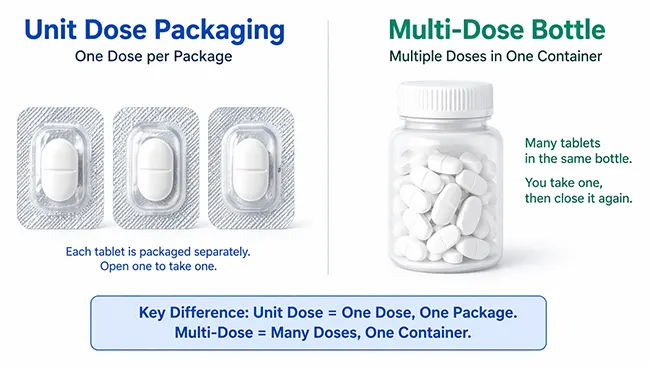
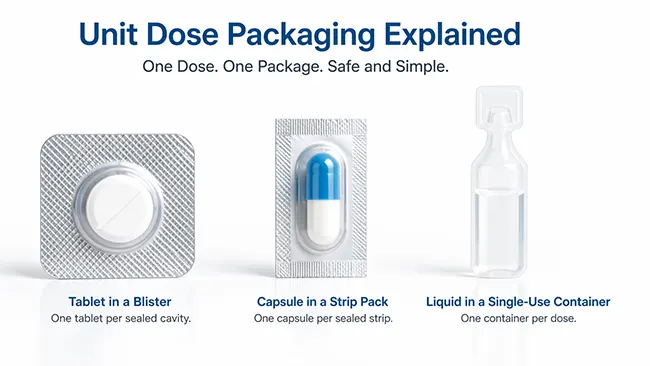
Un modo semplice per capirlo è questo: il confine della confezione segue la dose. Una bottiglia con 30 le compresse possono essere compatte, ma è pur sempre un contenitore multidose perché l'utente apre una confezione ed estrae le dosi una per una. Un blister con una compressa in ciascuna cavità, una confezione strip con una dose sigillata tra nastri flessibili, oppure un contenitore liquido monouso separa già ciascuna dose prima dell'erogazione o della somministrazione.
Questa differenza influisce sulla protezione, identificazione, e flusso di lavoro. Quando ciascuna dose è separata individualmente, la confezione può rendere più chiare le informazioni sul livello di dose, limitare l'esposizione ripetuta del prodotto rimanente dopo l'apertura, e supportare una gestione a valle più controllata. Questo è uno dei motivi per cui l'imballaggio monodose è ampiamente utilizzato per la protezione del prodotto, organizzazione, e la tracciabilità sono importanti insieme alla comodità.
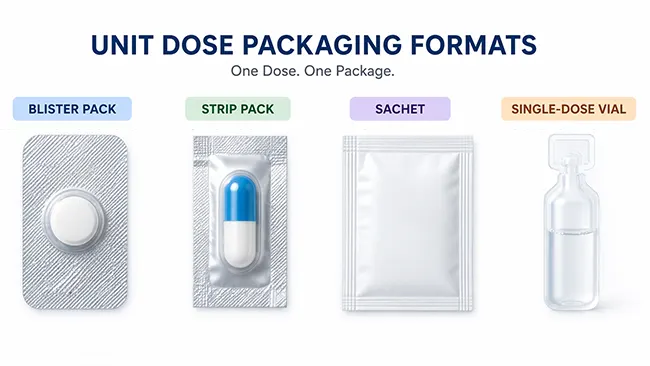
In pratica, l'imballaggio per dose unitaria può apparire in diverse forme. I prodotti solidi orali sono spesso presentati in formato blister o strip. Le polveri possono utilizzare piccoli pacchetti o bustine. Alcuni prodotti liquidi utilizzano contenitori monodose. Il formato può cambiare, ma l’idea centrale rimane la stessa: una dose preparata, un pacchetto definito, un punto di utilizzo più chiaro.
Confezione a dose unitaria rispetto a confezione multidose
Il modo più diretto per comprendere la differenza è esaminare il livello al quale la confezione separa e presenta la dose. In formato monodose, ciascuna dose viene separata fisicamente prima dell'erogazione o della somministrazione. In formato multidose, diverse dosi rimangono all'interno di un contenitore e vengono rimosse nel tempo. Questa differenza modella l’etichettatura, esposizione del prodotto dopo l'apertura, e la gestione quotidiana.
I formati a dose unitaria di solito forniscono una più forte separazione dei livelli di dose. Ogni cavità, sacchetto, o il contenitore rimane sigillato fino all'uso. I formati multidose sostituiscono tale separazione con uno stoccaggio sfuso più semplice e una minore intensità di imballaggio. Nessuno dei due percorsi è automaticamente migliore. Risolvono diversi problemi.
Per molti solidi orali, la decisione è pratica. Se il prodotto beneficia di una presentazione della dose più chiara, manovrabilità più controllata, o un'identificazione a livello di unità più visibile, ha senso un percorso a dose unitaria. Se il prodotto viene regolarmente erogato da un contenitore e la separazione dose per dose aggiunge poco valore, un formato multidose potrebbe comunque essere la soluzione migliore.
| Aspetto | Confezione monodose | Confezione multidose |
| Presentazione della dose | Una dose preparata per confezione | Dosi multiple in un unico contenitore |
| Manipolazione dopo l'apertura | Le dosi non utilizzate rimangono sigillate | Le dosi rimanenti vengono esposte dopo ogni apertura |
| Etichettatura a livello di dose | Più forte | Di solito si affida maggiormente all'etichetta esterna |
| Tracciabilità | Più facile a livello di dose individuale | Solitamente gestito a livello di contenitore |
| Utilizzo del materiale di imballaggio | Più alto | Inferiore |
| La migliore vestibilità | Alto controllo, uso dose-specifico | Erogazione ripetuta da un contenitore |
Tipi comuni di confezioni per dose unitaria
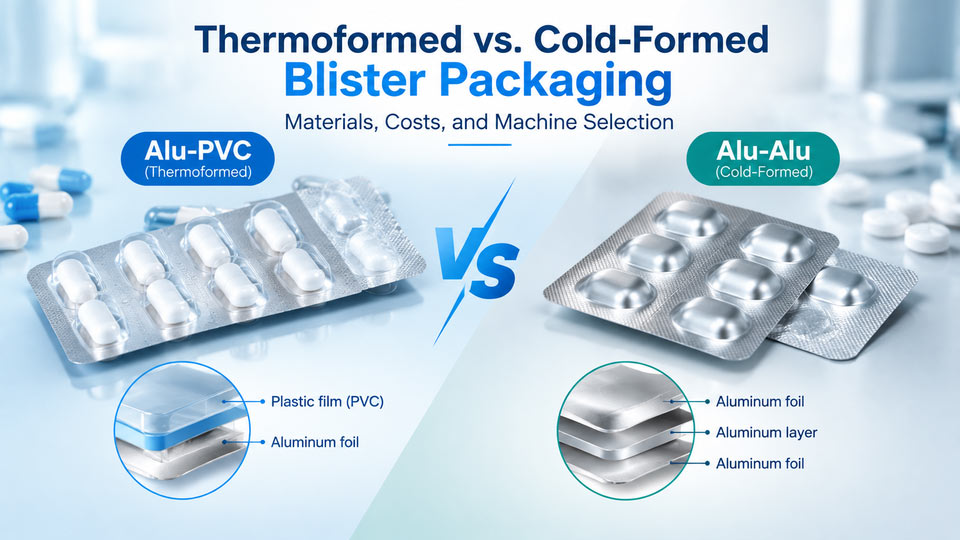
Per compresse e capsule, confezioni in blister sono solitamente il primo formato a cui la gente pensa. Ciascuna cavità contiene un'unità di dosaggio, quindi il prodotto rimane separato fino al momento dell'utilizzo. Questo formato supporta l'organizzazione visiva e aiuta a proteggere le dosi non aperte dall'esposizione ripetuta che avviene una volta aperta la bottiglia.
Strip pacchi seguire la stessa logica di base. Invece di una cavità sagomata con pellicola di copertura, la dose è sigillata tra nastri flessibili. Strutturalmente, la confezione ha un aspetto diverso da un blister, ma dal punto di vista funzionale funziona ancora come presentazione a dose unitaria perché ciascuna dose è già separata prima della dispensazione o della somministrazione.
Polveri e granuli possono essere di piccole dimensioni pacchetti o bustine quando il prodotto è destinato ad un utilizzo singolo. Alcuni medicinali liquidi utilizzano tazze monodose, fiale, o fiale. La forma del prodotto cambia, ma il principio del confezionamento no: una dose preparata è già predisposta all'interno della propria confezione.
Il modo più utile di pensare alla scelta del formato è non chiedersi quale pacchetto sembra più familiare. Si tratta di chiedere quale confezione corrisponde meglio alla forma farmaceutica, esigenze di barriera, requisiti di etichettatura, e il modello di utilizzo a valle.
Perché il confezionamento in dose unitaria viene utilizzato nel settore farmaceutico e sanitario
Vantaggio 1: identificazione più chiara del livello di dose
Quando ogni dose ha la sua confezione, l'identificazione diventa più semplice nel punto di utilizzo. Il pacchetto può essere associato più direttamente al nome del prodotto, forza, e altre informazioni sulla gestione. Ciò è importante quando l’obiettivo non è solo conservare il medicinale, ma anche per rendere ogni singola dose più facile da riconoscere e gestire.
Vantaggio 2: manipolazione meno ripetuta del prodotto rimanente
Un flacone multidose viene aperto più volte nel corso della sua vita utile. Una vescica, striscia, o il pacchetto mantiene le dosi non aperte separate fino al momento del bisogno. Ciò può aiutare a ridurre l’esposizione ripetuta del prodotto rimanente e supportare una gestione a valle più controllata.
Vantaggio 3: sostegno più forte alla tracciabilità
Perché la dose è già separata, l'etichettatura e la scansione possono funzionare in un punto di controllo più piccolo. Ciò può consentire il monitoraggio a livello di pacchetto, controllo dell'erogazione, e la tenuta dei registri è più semplice, soprattutto quando il flusso di lavoro dell'imballaggio dipende da un'identificazione più chiara di ciascuna unità.
Vantaggio 4: una soluzione migliore per il dosaggio organizzato e i prodotti sensibili
Non tutti i prodotti necessitano di confezioni monodose, ma è utile quando si protegge il prodotto, sequenziamento della dose, o materia di presentazione controllata. Questo è uno dei motivi per cui rimane comune nelle discussioni sugli imballaggi solidi orali, soprattutto dove imballaggio farmaceutico deve bilanciare la protezione, usabilità, e chiarezza del flusso di lavoro.
Quali sono i limiti del confezionamento in dose unitaria?
Il più grande compromesso è l’intensità del packaging. Separare ogni dose di solito significa più materiale, ulteriori passaggi di sigillatura, più area stampata, e più attività di ispezione o codifica a livello di unità. Rispetto ad una bottiglia o altro formato sfuso, ciò può aumentare la complessità del packaging anche quando i vantaggi a livello di prodotto sono chiari.
Il costo è il secondo grande problema. Un percorso a dose unitaria può richiedere più materiale di imballaggio, controllo della linea più stretto, e maggiore attenzione ai cambiamenti o alle informazioni stampate. Ciò non significa che sia antieconomico. Ciò significa che il formato deve essere giustificato dalle esigenze del prodotto e dalle priorità operative.
C'è anche una questione di idoneità del prodotto. Alcuni medicinali funzionano bene in flaconi o in altri formati multidose a causa del modello di dispensazione, profilo di durata di conservazione, o la via commerciale non richiede la separazione dose per dose. L’esistenza nella pratica attuale sia di sistemi a dose unitaria che a dose multipla è il segno più chiaro che nessuno dei due formati è universalmente corretto.
Etichettatura, Codici a barre, e tracciabilità nei formati di dose unitaria
Le linee guida della FDA trattano il contenitore monodose come una superficie di etichettatura significativa per le forme di dosaggio solide e liquide orali, mentre la guida ASHP enfatizza una chiara identificazione, dichiarazione di forza, data di scadenza, informazioni di controllo, e facilità di utilizzo sicuro. Questa combinazione rende chiaro che il confezionamento in dose unitaria non consiste solo nel dividere il prodotto in confezioni più piccole. Riguarda anche ciò che ogni confezione deve comunicare e supportare nel punto di utilizzo.
In termini pratici, maggiore è il valore che attribuisci alla visibilità del livello di dose, identificazione pronta per la scansione, e movimentazione controllata a valle, tanto più attraente diventa questo formato. Ecco perché l’imballaggio monodose si trova all’intersezione del design dell’imballaggio, conformità, e flusso di lavoro operativo anziché appartenere a un solo dipartimento.
Quali attrezzature di confezionamento vengono utilizzate per i formati a dose unitaria?
Dal lato dell'attrezzatura, i solidi orali raggiungono molto spesso questo formato macchine confezionatrici blister O macchine confezionatrici a strip. In un percorso vescicale, una macchina forma o indicizza il pacchetto, posiziona la dose, sigilla lo strato di copertura, e crea una presentazione monodose definita in ciascuna cavità. In un percorso a strisce, la macchina sigilla ogni dose tra materiali flessibili mantenendo la stessa logica di confezionamento di una unità.
Potrebbero passare polveri e granuli macchine confezionatrici di bustine quando il prodotto è destinato ad un uso singolo. Alcuni prodotti liquidi utilizzano bicchierini monodose, fiale, o relativi percorsi di riempimento a seconda della forma del prodotto e della logica di somministrazione.
Il punto importante è che la decisione sull’attrezzatura viene dopo la decisione sull’imballaggio. Primo, il produttore decide se il prodotto necessita di separazione dose per dose. Quindi viene scelta la linea per fornire quel formato con la giusta barriera, foca, codifica, e stabilità dell'uscita.
Conclusione
Il confezionamento in dose unitaria è definito più accuratamente come un formato centrato su una dose preparata all'interno di una confezione distinta. Il suo valore diventa più chiaro quando si identifica il livello di dose, movimentazione controllata, tracciabilità, e la protezione del prodotto sono più importanti della semplicità di un contenitore multidose.
Non è automaticamente la risposta giusta per ogni medicinale. Ma rimane una delle scelte di formato più importanti nel confezionamento di prodotti farmaceutici e medicinali perché cambia il modo in cui il prodotto viene etichettato, protetto, gestito, e usato. In pratica, raramente la decisione migliore riguarda la scelta dell’opzione “moderna” o di quella “tradizionale”.. Si tratta di abbinare il formato della confezione al prodotto, il flusso di lavoro, e il livello di controllo di cui l'applicazione ha realmente bisogno.
Domande frequenti
La confezione monodose è uguale alla confezione monodose?
Non sempre, ma i due spesso si sovrappongono. Nell'uso pratico, entrambe le idee puntano a una confezione che presenti una dose pronta alla volta. La formulazione esatta può variare in base al contesto, ma la logica di base del packaging è solitamente simile.
L'imballaggio in blister è sempre un imballaggio a dose unitaria?
L'imballaggio in blister è comunemente usato per la presentazione in dose unitaria, soprattutto per compresse e capsule, perché ogni cavità può contenere una unità di dosaggio. Ma la domanda chiave non è solo il nome del pacchetto. Dipende se il prodotto è effettivamente organizzato in dosi preparate separate.
La confezione monodose è migliore della confezione multidose??
Non in tutti i casi. Il confezionamento in dose unitaria è più efficace quando si effettua il controllo del livello di dose, identificazione, e la gestione è la cosa più importante. Il confezionamento multidose può ancora rappresentare la scelta commerciale o operativa migliore quando la dispensazione ripetuta da un contenitore è pratica e la separazione dose per dose aggiunge poco valore.
Quali prodotti utilizzano comunemente formati a dose unitaria?
Esempi comuni includono compresse e capsule in blister o strip, polveri in piccole confezioni o bustine, e alcuni liquidi in tazze monodose, fiale, o fiale.
Perché l'etichettatura è particolarmente importante nelle confezioni monodose?
Perché la confezione trasporta le informazioni a livello di dose anziché fare affidamento solo su un contenitore esterno più grande. Ciò rende la chiarezza dell’etichetta più centrale per la manipolazione sicura e l’uso a valle.
L'imballaggio in dose unitaria può aiutare con la tracciabilità??
SÌ. Le dosi separate singolarmente facilitano l'associazione della confezione all'etichettatura specifica, scansione, e le fasi di tenuta dei registri.
L'imballaggio in dose unitaria di solito costa di più?
Spesso può, perché di solito richiede più materiali, maggiore gestione a livello di unità, e un maggiore controllo del confezionamento rispetto a un percorso multidose. La giustificazione di tale costo aggiuntivo dipende dalle esigenze del prodotto e dalle priorità del flusso di lavoro.
Riferimenti
·ASHP: confezioni di farmaci a dose singola e a dose unitaria
https://www.ashp.org/-/media/assets/policy-guidelines/docs/technical-assistance-bulletins/technical-assistance-bulletins-single-unit-and-unit-dose-packages-drugs.pdf
·Manrex: multidose o dose unitaria: Come vengono utilizzati entrambi nelle cure a lungo termine
https://manrex.com/blog-post/multi-dose-or-unit-dose-how-they-are-both-being-used-in-long-term-care/