Einführung
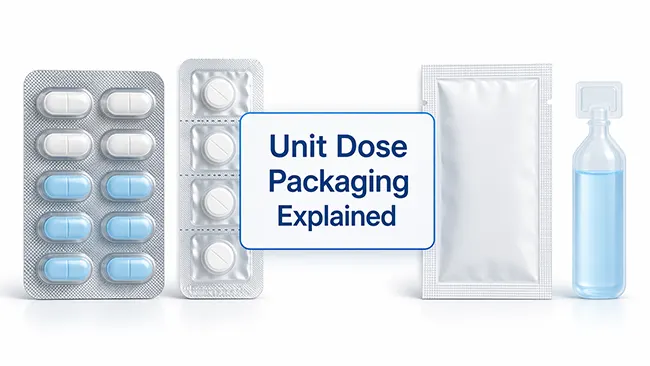
Bei der Einzeldosisverpackung wird jede zubereitete Dosis in einer eigenen versiegelten Verpackung untergebracht. In Pharma- und Medikamentenverpackungen, das bedeutet normalerweise eine Tablette, eine Kapsel, eine Pulverpackung, oder ein Einweg-Flüssigkeitsbehälter, der so angeordnet ist, dass er identifiziert werden kann, geschützt, und als eine Verwaltungseinheit genutzt. Die FDA behandelt in Einzeldosisbehältern verpackte Arzneimittel als eindeutigen Kennzeichnungsfall für orale feste und flüssige Darreichungsformen, was zeigt, dass es sich hierbei um mehr als nur ein kleines Packungsformat handelt.
Dieser Verpackungsansatz ist wichtig, weil seine Rolle über die einfache Produktverpackung hinausgeht. Es kann die Identifizierung der Dosisstufe unterstützen, reduzieren wiederholte Handhabung, und tragen dazu bei, jede einzelne Dosis von der Verpackung bis zur Abgabe und Verwendung klarer zu kontrollieren. Aus diesem Grund tauchen in Diskussionen über Blisterverpackungen häufig Einzeldosisverpackungen auf, Streifenpackungen, Beutel, und Einweg-Flüssigkeitsbehälter, insbesondere in der pharmazeutischen Herstellung, Krankenhausapotheke, und Einstellungen zur Medikamenteneinnahme.
Was ist eine Einzeldosisverpackung in Arzneimitteln??
Unter Einzeldosisverpackung versteht man die Verpackung eines Arzneimittels, sodass eine einzelne Dosis in einer eigenen Verpackung präsentiert und wie eine einzelne Verabreichungseinheit behandelt wird.
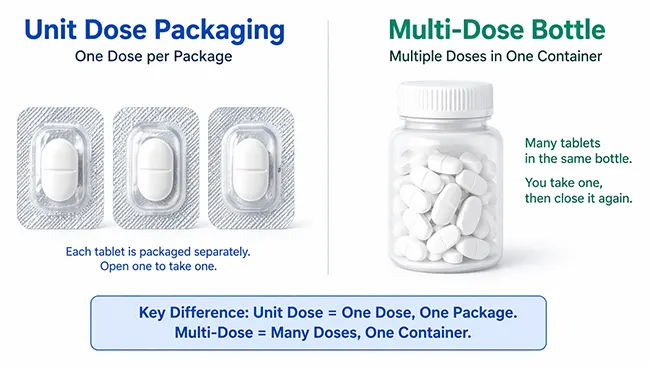
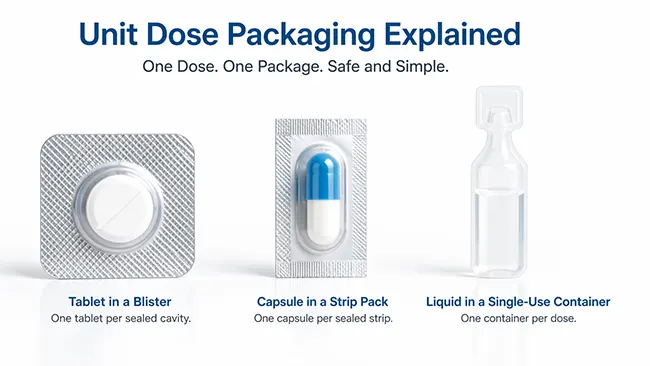
Ein einfacher Weg, es zu verstehen, ist dieser: Die Packungsgrenze folgt der Dosis. Eine Flasche mit 30 Tabletten können kompakt sein, Es handelt sich jedoch immer noch um einen Mehrdosenbehälter, da der Benutzer eine Packung öffnet und die Dosen eine nach der anderen entnimmt. Eine Blisterpackung mit einer Tablette in jeder Vertiefung, eine Streifenpackung mit einer Dosis, versiegelt zwischen flexiblen Bahnen, oder ein Einweg-Flüssigkeitsbehälter trennt jede Dosis bereits vor der Abgabe oder Verabreichung.
Dieser Unterschied wirkt sich auf den Schutz aus, Identifikation, und Arbeitsablauf. Wenn jede Dosis einzeln getrennt ist, Die Packung kann Informationen zur Dosishöhe klarer machen, Begrenzen Sie die wiederholte Exposition des verbleibenden Produkts nach dem Öffnen, und unterstützen eine kontrolliertere nachgelagerte Handhabung. Dies ist einer der Gründe, warum Einheitsdosisverpackungen häufig zum Schutz des Produkts verwendet werden, Organisation, und Rückverfolgbarkeit sind neben der Bequemlichkeit wichtig.
In der Praxis, Einzeldosisverpackungen können in verschiedenen Formen auftreten. Orale feste Produkte werden häufig in Blister- oder Streifenformaten angeboten. Für Pulver können kleine Päckchen oder Beutel verwendet werden. Für bestimmte flüssige Produkte werden Einzeldosisbehälter verwendet. Das Format kann sich ändern, aber der Kerngedanke bleibt derselbe: eine vorbereitete Dosis, ein definiertes Paket, ein klarerer Verwendungszweck.
Einzeldosisverpackung vs. Mehrfachdosisverpackung
Der direkteste Weg, den Unterschied zu verstehen, besteht darin, die Ebene zu untersuchen, auf der die Verpackung getrennt ist und die Dosis darstellt. Im Einheitsdosisformat, Jede Dosis wird vor der Abgabe oder Verabreichung physisch getrennt. Im Multidosis-Format, Mehrere Dosen verbleiben in einem Behälter und werden im Laufe der Zeit entnommen. Dieser Unterschied prägt die Kennzeichnung, Produktexposition nach dem Öffnen, und die tägliche Handhabung.
Einheitsdosisformate bieten normalerweise eine stärkere Trennung der Dosisstufen. Jeder Hohlraum, Beutel, oder Behälter bleibt bis zur Verwendung verschlossen. Bei Mehrfachdosisformaten wird diese Trennung zugunsten einer einfacheren Massenlagerung und einer geringeren Verpackungsintensität eingetauscht. Keine der Routen ist automatisch besser. Sie lösen unterschiedliche Probleme.
Für viele orale Feststoffe, Die Entscheidung ist praktisch. Wenn das Produkt von einer klareren Dosisdarstellung profitiert, kontrollierteres Handling, oder eine besser sichtbare Identifizierung auf Einheitenebene, Eine Einheitsdosis-Route ist sinnvoll. Wenn das Produkt routinemäßig aus einem Behälter abgegeben wird und die Trennung von Dosis zu Dosis nur einen geringen Mehrwert bringt, Ein Mehrfachdosisformat ist möglicherweise immer noch die bessere Lösung.
| Aspekt | Einzeldosisverpackung | Mehrdosenverpackung |
| Dosispräsentation | Eine vorbereitete Dosis pro Packung | Mehrere Dosen in einem Behälter |
| Handhabung nach dem Öffnen | Nicht verwendete Dosen bleiben versiegelt | Die restlichen Dosen werden nach jedem Öffnen freigelegt |
| Kennzeichnung der Dosisstufe | Stärker | Verlässt sich normalerweise mehr auf das äußere Etikett |
| Rückverfolgbarkeit | Einfacher auf der Ebene der Einzeldosis | Wird normalerweise auf Containerebene verwaltet |
| Verwendung von Verpackungsmaterial | Höher | Untere |
| Beste Passform | Hohe Kontrolle, dosisspezifische Anwendung | Wiederholte Abgabe aus einem Behälter |
Gängige Arten von Einzeldosisverpackungen
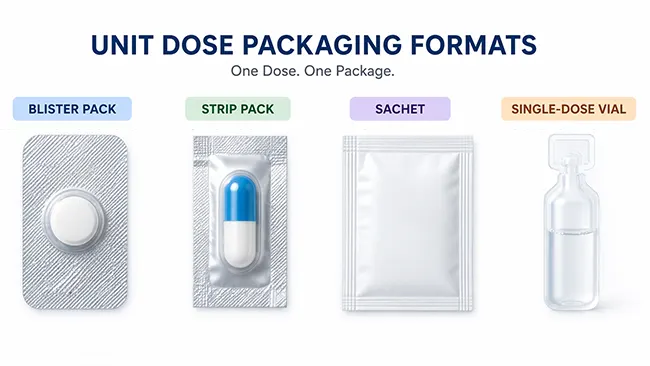
Für Tabletten und Kapseln, Blisterpackungen sind normalerweise das erste Format, an das die Leute denken. Jede Kavität fasst eine Dosiereinheit, so bleibt das Produkt bis zur Verwendung getrennt. Dieses Format unterstützt die visuelle Organisation und hilft, ungeöffnete Dosen vor der wiederholten Exposition zu schützen, die nach dem Öffnen einer Flasche auftritt.
Streifenpackungen folgen der gleichen Grundlogik. Anstelle einer geformten Mulde mit Abdeckfolie, Die Dosis ist zwischen flexiblen Bahnen versiegelt. Strukturell, Die Verpackung sieht anders aus als ein Blister, aber funktionell funktioniert es immer noch wie eine Einheitsdosis-Darstellung, da jede Dosis bereits vor der Abgabe oder Verabreichung getrennt ist.
Pulver und Granulat können in kleinen Mengen verwendet werden Päckchen oder Beutel wenn das Produkt für den einmaligen Gebrauch bestimmt ist. Bestimmte flüssige Medikamente verwenden Einzeldosisbecher, Fläschchen, oder Ampullen. Die Produktform ändert sich, das Verpackungsprinzip jedoch nicht: Eine vorbereitete Dosis ist bereits in einer eigenen Packung enthalten.
Der nützlichste Weg, über die Wahl des Formats nachzudenken, besteht darin, nicht zu fragen, welches Paket Ihnen am vertrautesten vorkommt. Es stellt sich die Frage, welche Packung am besten zur Darreichungsform passt, Barrierebedürfnisse, Kennzeichnungspflichten, und nachgelagertes Nutzungsmuster.
Warum Einzeldosisverpackungen in der Pharma- und Gesundheitsbranche eingesetzt werden
Vorteil 1: klarere Dosis-Level-Identifizierung
Wenn jede Dosis eine eigene Packung hat, Die Identifizierung wird am Ort der Verwendung einfacher. Das Paket kann direkter mit dem Produktnamen verknüpft werden, Stärke, und andere Handhabungsinformationen. Das ist wichtig, wenn das Ziel nicht nur darin besteht, das Arzneimittel aufzubewahren, sondern auch, um jede einzelne Dosis leichter zu erkennen und zu verwalten.
Vorteil 2: weniger wiederholte Handhabung des restlichen Produkts
Eine Mehrdosenflasche wird im Laufe ihrer Lebensdauer immer wieder geöffnet. Eine Blase, Streifen, oder Packung hält ungeöffnete Dosen getrennt, bis sie benötigt werden. Dies kann dazu beitragen, die wiederholte Exposition des verbleibenden Produkts zu reduzieren und eine kontrolliertere Weiterverarbeitung zu unterstützen.
Vorteil 3: stärkere Unterstützung der Rückverfolgbarkeit
Weil die Dosis bereits getrennt ist, Das Beschriften und Scannen kann an einem kleineren Kontrollpunkt erfolgen. Dadurch kann eine Nachverfolgung auf Paketebene erfolgen, Abgabekontrolle, und die Protokollierung einfacher, insbesondere wenn der Verpackungsablauf auf eine klarere Identifizierung jeder Einheit angewiesen ist.
Vorteil 4: besser geeignet für organisierte Dosierung und empfindliche Produkte
Nicht jedes Produkt benötigt eine Einzeldosisverpackung, aber es ist nützlich, wenn Produktschutz, Dosierungssequenzierung, oder kontrollierte Präsentationsmaterie. Dies ist einer der Gründe, warum es in Diskussionen über orale feste Verpackungen nach wie vor üblich ist, vor allem wo Pharmaverpackungen muss den Schutz ausgleichen, Benutzerfreundlichkeit, und Klarheit der Arbeitsabläufe.
Wo liegen die Grenzen der Einheitsdosisverpackung??
Der größte Kompromiss ist die Verpackungsintensität. Die Trennung jeder Dosis bedeutet normalerweise mehr Material, weitere Versiegelungsschritte, mehr bedruckte Fläche, und mehr Inspektions- oder Codierungsarbeiten auf Einheitenebene. Im Vergleich zu einer Flasche oder einem anderen Großformat, Dies kann die Verpackungskomplexität erhöhen, selbst wenn die Vorteile auf Produktebene klar sind.
Die Kosten sind das zweite große Thema. Bei einer Einheitsdosis-Route ist möglicherweise mehr Verpackungsmaterial erforderlich, strengere Linienkontrolle, und mehr Aufmerksamkeit für Umstellungen oder gedruckte Informationen. Das bedeutet nicht, dass es unwirtschaftlich ist. Das bedeutet, dass das Format durch Produktanforderungen und betriebliche Prioritäten gerechtfertigt sein muss.
Es gibt auch eine Frage zur Produktanpassung. Einige Medikamente funktionieren aufgrund des Abgabemusters gut in Flaschen oder anderen Mehrfachdosisformaten, Haltbarkeitsprofil, oder kommerzieller Weg erfordert keine Dosis-für-Dosis-Trennung. Dass es in der gegenwärtigen Praxis sowohl Einheitsdosis- als auch Mehrfachdosissysteme gibt, ist das deutlichste Zeichen dafür, dass keines der beiden Formate allgemein gültig ist.
Beschriftung, Barcodes, und Rückverfolgbarkeit in Einheitsdosisformaten
Die FDA-Richtlinien behandeln den Einheitsdosisbehälter als aussagekräftige Etikettieroberfläche für orale feste und flüssige Darreichungsformen, während die ASHP-Leitlinien den Schwerpunkt auf eine klare Identifizierung legen, Festigkeitserklärung, Ablaufdatierung, Kontrollinformationen, und einfache, sichere Anwendung. Diese Kombination macht deutlich, dass es bei der Verpackung von Einheitsdosen nicht nur darum geht, das Produkt in kleinere Packungen aufzuteilen. Es geht auch darum, was jede Packung am Einsatzort kommunizieren und unterstützen muss.
In praktischer Hinsicht, desto mehr Wert legen Sie auf die Sichtbarkeit der Dosisebene, scanfähige Identifikation, und kontrolliertes Downstream-Handling, desto attraktiver wird dieses Format. Aus diesem Grund steht die Verpackung von Einzeldosen an der Schnittstelle des Verpackungsdesigns, Einhaltung, und betrieblichen Arbeitsablauf, anstatt nur einer Abteilung anzugehören.
Welche Verpackungsausrüstung wird für Einheitsdosisformate verwendet??
Auf der Ausrüstungsseite, Orale Feststoffe gelangen am häufigsten über dieses Format Blisterverpackungsmaschinen oder Streifenverpackungsmaschinen. Auf einer Blasenroute, Eine Maschine formt oder indexiert das Paket, legt die Dosis fest, versiegelt die Deckschicht, und erzeugt in jeder Kavität eine definierte Einzeldosis-Präsentation. In einer Streifenroute, Die Maschine versiegelt jede Dosis zwischen flexiblen Materialien und behält dabei die gleiche Verpackungslogik für eine Einheit bei.
Pulver und Granulat können durchdringen Beutelverpackungsmaschinen wenn das Produkt für den einmaligen Gebrauch bestimmt ist. Für bestimmte flüssige Produkte werden Einzeldosisbecher verwendet, Fläschchen, oder zugehörigen Abfüllwegen je nach Produktform und Verwaltungslogik.
Der wichtige Punkt ist, dass die Entscheidung über die Ausrüstung nach der Entscheidung über die Verpackung fällt. Erste, Der Hersteller entscheidet, ob für das Produkt eine Dosis-für-Dosis-Trennung erforderlich ist. Dann wird die Linie ausgewählt, um dieses Format mit der richtigen Barriere zu liefern, Siegel, Codierung, und Ausgangsstabilität.
Abschluss
Die Verpackung von Einzeldosen wird am genauesten als ein Format definiert, bei dem eine vorbereitete Dosis in einer einzelnen Packung im Mittelpunkt steht. Sein Wert wird deutlicher, wenn die Dosisstufe identifiziert wird, kontrollierte Handhabung, Rückverfolgbarkeit, und Produktschutz sind wichtiger als die Einfachheit eines Mehrdosenbehälters.
Es ist nicht automatisch für jedes Medikament die richtige Antwort. Dennoch bleibt es eines der wichtigsten Formate bei Pharma- und Medikamentenverpackungen, da es die Art und Weise verändert, wie das Produkt gekennzeichnet wird, geschützt, gehandhabt, und verwendet. In der Praxis, Die beste Entscheidung besteht selten darin, sich für die „moderne“ oder die „traditionelle“ Option zu entscheiden. Es geht darum, das Verpackungsformat an das Produkt anzupassen, den Arbeitsablauf, und das Maß an Kontrolle, das die Anwendung wirklich benötigt.
Häufig gestellte Fragen
Ist die Einzeldosisverpackung dasselbe wie die Einzeldosisverpackung??
Nicht immer, aber die beiden überschneiden sich oft. Im praktischen Einsatz, Beide Ideen deuten auf eine Packung hin, die jeweils eine zubereitete Dosis enthält. Der genaue Wortlaut kann je nach Kontext unterschiedlich sein, aber die Kernlogik der Verpackung ist normalerweise ähnlich.
Bei Blisterverpackungen handelt es sich immer um Einzeldosisverpackungen?
Blisterverpackungen werden üblicherweise für die Präsentation von Einzeldosen verwendet, speziell für Tabletten und Kapseln, denn jede Kavität kann eine Dosiereinheit aufnehmen. Aber die entscheidende Frage ist nicht nur der Paketname. Es geht darum, ob das Produkt tatsächlich in Form separater Fertigdosen organisiert ist.
Ist eine Einzeldosisverpackung besser als eine Mehrfachdosisverpackung??
Nicht in jedem Fall. Die Einheitsdosisverpackung ist bei der Kontrolle der Dosisstärke stärker, Identifikation, und Handhabung sind am wichtigsten. Eine Mehrfachdosisverpackung ist möglicherweise immer noch die bessere kommerzielle oder betriebliche Wahl, wenn die wiederholte Abgabe aus einem Behälter praktisch ist und die Trennung von Dosis zu Dosis nur einen geringen Mehrwert bietet.
Welche Produkte verwenden üblicherweise Einheitsdosisformate??
Gängige Beispiele sind Tabletten und Kapseln in Blister- oder Streifenpackungen, Pulver in kleinen Päckchen oder Beuteln, und bestimmte Flüssigkeiten in Einzeldosisbechern, Fläschchen, oder Ampullen.
Warum ist die Kennzeichnung bei Einzeldosisverpackungen besonders wichtig??
Weil die Verpackung Informationen auf Dosisebene enthält und nicht nur auf einen größeren Außenbehälter angewiesen ist. Dadurch wird die Klarheit des Etiketts wichtiger für die sichere Handhabung und die nachgelagerte Verwendung.
Kann die Verpackung von Einzeldosen bei der Rückverfolgbarkeit helfen??
Ja. Einzeln getrennte Dosen erleichtern die Zuordnung der Packung zu einer bestimmten Etikettierung, Scannen, und Aufzeichnungsschritte.
Kostet eine Einzeldosisverpackung normalerweise mehr??
Das ist oft möglich, weil es in der Regel mehr Material erfordert, mehr Handhabung auf Einheitenebene, und mehr Verpackungskontrolle als bei einer Mehrfachdosis-Route. Ob diese zusätzlichen Kosten gerechtfertigt sind, hängt von den Produktanforderungen und den Workflow-Prioritäten ab.
Referenzen
·ASHP – Einzel- und Einzeldosispackungen von Arzneimitteln
https://www.ashp.org/-/media/assets/policy-guidelines/docs/technical-assistance-bulletins/technical-assistance-bulletins-single-unit-and-unit-dose-packages-drugs.pdf
·Manrex – Mehrfachdosis oder Einheitsdosis: Wie sie beide in der Langzeitpflege eingesetzt werden
https://manrex.com/blog-post/multi-dose-or-unit-dose-how-they-are-both-being-used-in-long-term-care/