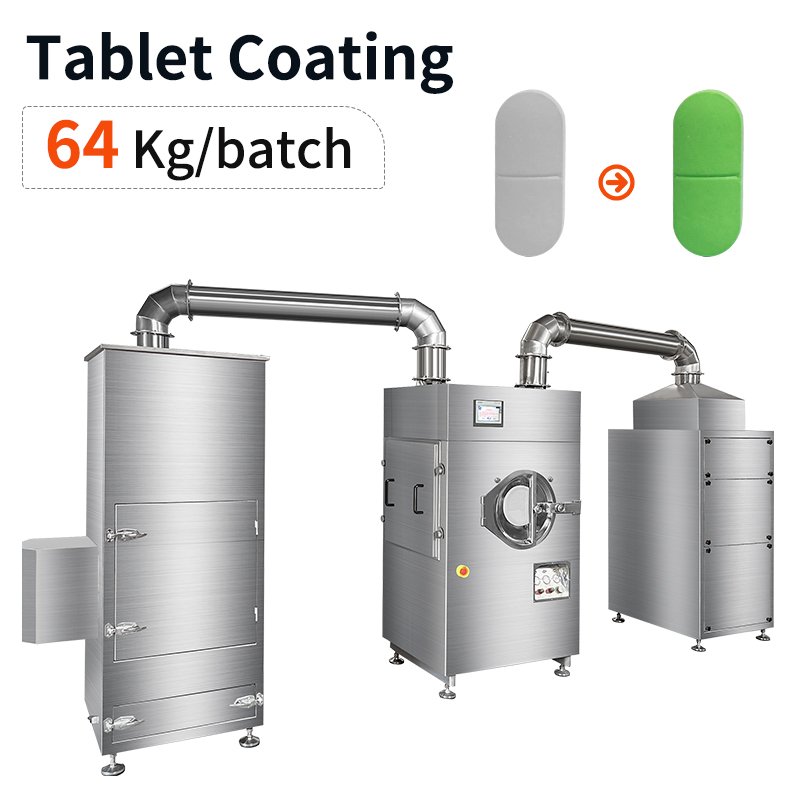
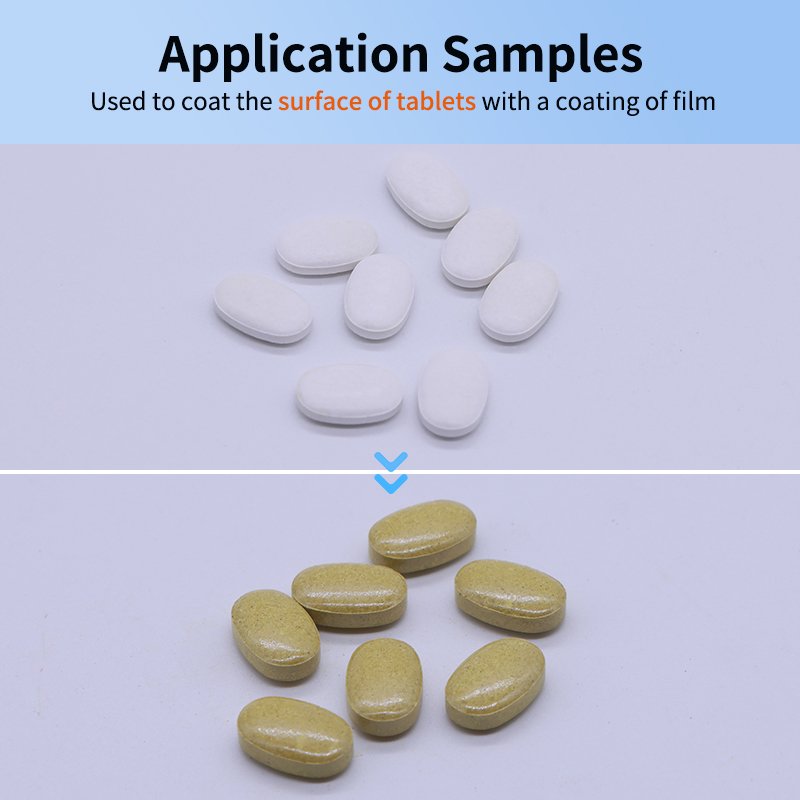
Dans l'industrie pharmaceutique moderne, l’enrobage des comprimés est bien plus qu’une simple amélioration cosmétique : c’est une science qui protège, parfait, et transforme. Machines de revêtement à haut rendement (également connu sous le nom d'enrobeuses de comprimés) jouent un rôle essentiel pour garantir une qualité de revêtement constante, performances améliorées du produit, et une production évolutive.
Parmi toutes les techniques de revêtement, Le pelliculage et le dragéification restent les deux procédés les plus utilisés. Bien que les deux techniques aient le même objectif : appliquer une couche protectrice sur les comprimés, ils varient considérablement en termes de façon de fonctionner, où ils sont utilisés, et comment le marché les adopte. La reconnaissance de ces distinctions permet aux fabricants de choisir l'approche de revêtement optimale et d'améliorer les performances globales de production..
1. Principe de fonctionnement
1.1. Revêtement de film
Le pelliculage est un procédé de revêtement mince à base de polymère dans lequel une solution ou une suspension contenant des polymères filmogènes, plastifiants, et les pigments sont pulvérisés sur des comprimés rotatifs à l'intérieur d'un tambour d'enrobage perforé.
Lorsque l'air chaud traverse le lit de la tablette, le solvant s'évapore, laisser derrière lui un uniforme, mince, et une couche de film lisse sur chaque comprimé. Le processus est contrôlé par des paramètres précis tels que le débit de pulvérisation, température de l'air d'entrée, pression d'atomisation, et la vitesse du tambour.
Machines de pelliculage modernes à haut rendement, intégrer des systèmes avancés pour le contrôle automatique de la température, pistolets pulvérisateurs réglables, et une circulation d'air optimisée, garantissant une qualité de revêtement constante, même à grande échelle.
Principales caractéristiques du pelliculage
Mince, couche de revêtement lisse (généralement 20 à 100 microns)
Temps de revêtement court
Contrôle précis du processus
Déchets de matériaux minimes
Compatible avec les comprimés sensibles à l'humidité ou à la chaleur
1.2. Enrobage de sucre
Enrobage de sucre, d'autre part, est la technique classique utilisée depuis des décennies dans les industries pharmaceutique et de la confiserie. Dans ce processus, les comprimés sont enrobés de plusieurs couches de sirop (solution de sucre) et d'autres excipients tels que des colorants, opacifiants, et agents de polissage.
Le processus comporte plusieurs étapes : scellement, sous-couche, lissage, coloration, et polissage – chacun nécessitant du temps et des compétences. Les comprimés prennent progressivement du poids et du volume à mesure que les couches de sucre s'accumulent..
Alors que les équipements modernes automatisent une grande partie du processus, L'enrobage au sucre nécessite toujours des temps de traitement plus longs et une consommation de matière plus élevée que l'enrobage par film.. Cependant, il produit des comprimés avec un aspect brillant attrayant et un goût agréable, qui sont souhaitables dans certaines catégories de produits.
Principales caractéristiques de l'enrobage de sucre:
Épais, brillant, et revêtement coloré
Cycle de production plus long
Excellent masquage du goût
Finition traditionnelle et visuellement attrayante
2. Scénarios d'application
2.1. Revêtement de film
Le pelliculage est devenu la méthode de revêtement standard pour la plupart des produits pharmaceutiques et nutraceutiques modernes.. Il offre une protection solide et une fonctionnalité précise tout en maintenant l'efficacité de la production.
Les applications typiques incluent:
Revêtement fonctionnel (à libération contrôlée, enrobage entérique, barrière contre l'humidité)
Suppléments à base de plantes et nutraceutiques
Comprimés nécessitant un enrobage rapide et un débit élevé
Le pelliculage est idéal pour les fabricants qui visent une productivité élevée, des coûts inférieurs, et conformité aux normes cGMP. Le processus de revêtement peut être étendu en douceur depuis des essais à petite échelle jusqu'à une fabrication à grande échelle., maintenir une qualité uniforme d’un lot à l’autre.
2.2. Enrobage de sucre
Bien que le pelliculage domine aujourd’hui le marché, l'enrobage de sucre tient toujours sa place dans certaines niches. Son attrait esthétique et ses propriétés masquant le goût le rendent populaire dans le secteur nutraceutique., à base de plantes, et formulations pédiatriques, ainsi que sur les marchés où la préférence des consommateurs privilégie les tablettes traditionnelles ou brillantes.
Les applications typiques incluent:
Comprimés à croquer ou aromatisés
Médecine à base de plantes et traditionnelle
Compléments alimentaires
Produits décoratifs ou différenciés par marque
En outre, certaines entreprises utilisent l'enrobage de sucre pour préserver l'identité de la marque, associant l'aspect brillant au patrimoine, qualité, et la confiance des consommateurs.
3. Comparaison des performances: Efficacité, Coût, et qualité
| Aspect |
Revêtement pelliculaire |
Enrobage de sucre |
| Épaisseur du revêtement |
20–100 µm |
0.5–1 mm |
| Temps de traitement |
1–2 heures |
8–24 heures |
| Gain de poids |
2–3% |
30–50% |
| Coût des matériaux |
Inférieur |
Plus haut |
| Efficacité de la production |
Haut |
Faible |
| Apparence |
Lisse, mat ou brillant |
Brillant, brillant |
| Masquage du goût |
Modéré |
Excellent |
| Revêtement fonctionnel |
Possible (entérique, à libération prolongée) |
Limité |
| Tendance du marché |
Croissance rapide |
Créneau en déclin mais stable |
4. Tendances du marché
Au cours des dernières années, le pelliculage est devenu la norme mondiale, motivé par son efficacité, évolutivité, et avantages environnementaux. Les sociétés pharmaceutiques abandonnent l'enrobage de sucre en raison de la longueur du processus., coût du travail plus élevé, et manque de performances fonctionnelles.
Les principales tendances du marché comprennent:
Automatisation et numérisation: Les machines de revêtement modernes à haut rendement sont dotées de systèmes de contrôle intelligents, surveillance en temps réel, et gestion des recettes pour l'écurie, résultats reproductibles.
Durabilité: Le pelliculage consomme moins d’eau et d’énergie, s’aligner sur les initiatives de fabrication verte.
Innovation fonctionnelle: L’essor des enrobages entériques, systèmes à libération contrôlée, et les revêtements multicouches étendent le rôle du pelliculage au-delà de l'esthétique.
Conformité mondiale: La technologie de pelliculage rencontre les BPF, FDA, et les normes réglementaires de l'UE, soutenir l’accès aux marchés internationaux.
Entre-temps, l'enrobage de sucre reste précieux dans des secteurs de niche, en particulier là où l'expérience du consommateur, richesse des couleurs, ou la saveur sont des priorités marketing – par exemple, sur les marchés de phytothérapie traditionnelle en Asie ou dans les suppléments pour enfants.
5. Choisir la bonne machine d'enrobage de comprimés
Le choix de la bonne technologie de revêtement dépend de la formulation du produit, marché cible, et les objectifs de production.
Les machines d'enrobage modernes à haut rendement comme celles produites par Ruidapacking offrent une flexibilité pour les applications d'enrobage de film et de sucre.. Equipé de:
Systèmes de pulvérisation avancés assurant un revêtement uniforme
Circulation d'air optimisée pour un séchage rapide
Contrôle intelligent de la température et de l'humidité
CIP (Nettoyage sur place) systèmes pour une maintenance facile
Ces fonctionnalités aident les fabricants à obtenir une qualité de revêtement supérieure tout en minimisant les temps d'arrêt et les déchets de production..
La coucheuse haute efficacité RD-HGBY-80 est conçue pour le secteur pharmaceutique, nutraceutique, et applications alimentaires, fournir des solutions de revêtement qui équilibrent la vitesse élevée, précision, et flexibilité. Que votre objectif soit d'améliorer l'apparence des comprimés ou de développer des revêtements fonctionnels, nous vous proposons une technologie fiable adaptée à vos besoins.
6. Conclusion
L'enrobage sous film et l'enrobage au sucre représentent deux époques de la technologie d'enrobage des comprimés, l'une définie par l'efficacité et la fonctionnalité., l'autre par l'art et la tradition.
Alors que le pelliculage domine le marché moderne par sa rapidité, précision, et durabilité, l'enrobage de sucre continue de briller dans des applications de niche qui valorisent l'esthétique et le goût.
Pour les fabricants, le bon choix dépend de l’équilibre entre l’efficacité de la production et la préférence du marché. Et avec l'évolution des machines de revêtement à haut rendement, il est désormais possible de maîtriser les deux : préserver la beauté du passé tout en adoptant l’innovation du futur.