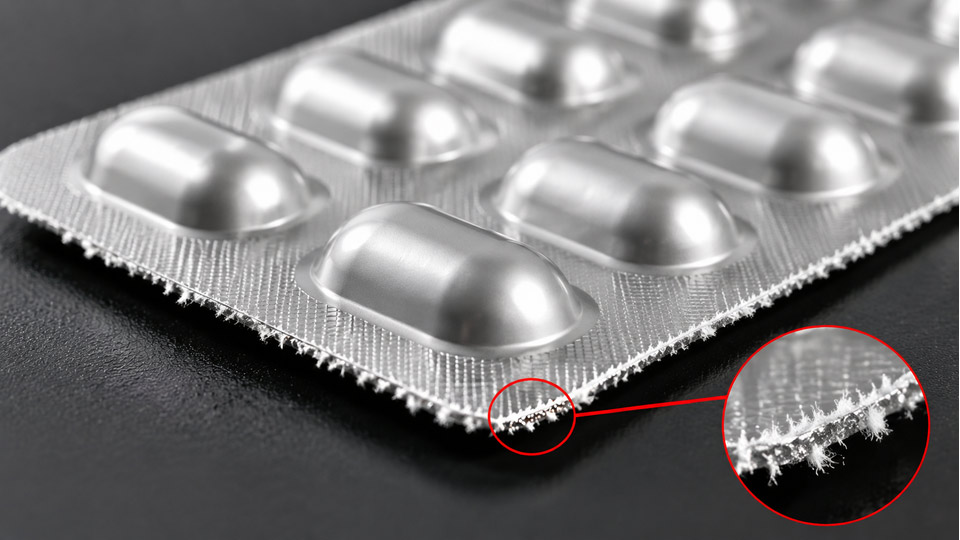
Grate auf Blisterverpackungen sind ein häufiges Problem beim Stanzen von Blisterverpackungen
Einführung
Haben Sie diese Situation in der Produktion gesehen? Am Anfang, Die Blisterverpackungsmaschine schneidet Blisterverpackungskanten sauber, und die Kanten sehen glatt und gratfrei aus.
Nach mehreren Monaten Dauerbetrieb, der Zustand ändert sich. Die Kantenqualität der Blisterverpackung lässt nach, und entlang der Schnittlinie erscheinen kleine raue Spuren.
Dieses Muster ist in der Werkstatt keine Seltenheit. Maschinenparameter bleiben unverändert, Auch die Produktionsgeschwindigkeit bleibt gleich. Die Kantenqualität schwankt jedoch in den täglichen Ausgabeaufzeichnungen ständig.
Wartungsprotokolle weisen oft in eine Richtung. Fortschreitender Verschleiß des Stanzwerkzeugs in der Schneidstation. Werkzeugkanten verlieren nach wiederholten Prägezyklen an Schärfe. Mikrokantenschäden bauen sich Schritt für Schritt auf, und das Schneidverhalten verschiebt sich von sauberem Bruch zu teilweisem Abreißen.
Dieser Artikel erklärt den Mechanismus in drei Teilen. Wie beim Schneiden Blasengrate entstehen. Wie Werkzeugmaterial das Verschleißverhalten beeinflusst. Wie die Ausrichtung der Matrize die Kantenstabilität verändert. Schritte zur Feldkorrektur sind ebenfalls enthalten.
WICHTIGE ERKENNTNISSE
- Nach mehrmaligem Prägen beginnt an der Stempelkante ein Mikroabplatzer.
- Die Maschinenausrichtung beeinflusst auch die Gratverteilung.
- Die Materialauswahl der Schneidwerkzeuge steuert die Verschleißgeschwindigkeit und Kantenstabilität.
- So lösen Sie das Problem der Blasengrate?
1. Wie Blistergrate beim Schneiden von Blisterverpackungsmaschinen entstehen
Beim Schneiden kommt es an der Kontaktlinie zwischen Stanze und Blisterverpackungsmaterial zu Spannungen. Die Kraft wird nicht gleichmäßig über die Kante verteilt. Die höchste Belastung verbleibt im Bereich der Stanzspitze innerhalb der Schneidstation der Blisterverpackungsmaschine.
Wenn die Schlagkante scharf ist, Die Spannung lässt schnell nach und der Bruch beginnt in einem sauberen Verlauf. Sobald der Verschleiß beginnt, Die Spannung konzentriert sich in kleinen Zonen entlang der Kante. Diese Zonen werden zu Schwachstellen für eine frühe Rissbildung und ein instabiles Bruchverhalten.
In der Praxis der Produktionskontrolle, Der Zustand der Stempelkante wird häufig anhand der Verschleißtiefe verfolgt. Wenn der örtliche Verschleiß größer ist 0.2 mm, Die Schneide wird im Grenzzustand betrachtet. An dieser Stelle, Die Bruchstabilität nimmt stark ab, und das Schneidverhalten wird entlang der Kante der Blisterpackung inkonsistent.
Mit fortschreitendem Verschleiß des Stanzwerkzeugs nehmen lokale Spannungsspitzen zu. Dadurch wird das Schneiden vom sofortigen Scheren zum verzögerten Reißen. Das Ergebnis ist eine instabile Kantentrennung, die später als Blistergrate auf der fertigen Blisterverpackung sichtbar werden.
2. Wie sich die Materialpaarung auf den Verschleiß von Schneidwerkzeugen auswirkt
Die Materialpaarung zwischen Schneidwerkzeug und Blisterverpackungssubstrat steuert, wie schnell sich der Verschleiß des Schneidwerkzeugs innerhalb der Blisterverpackungsmaschine entwickelt. Wenn Materialhärte und Zähigkeit nicht im Gleichgewicht sind, Die Kante beginnt sich schneller zu verschlechtern als erwartet.
2.1 Vergleich der Schneidwerkzeugstahltypen
Die Industrie verwendet üblicherweise mehrere Schneidwerkzeugstähle in Stanzsystemen für Blisterverpackungsmaschinen. Zu den Hauptstählen, die in pharmazeutischen Blisterlinien verwendet werden, gehört Cr12MoV, SKD11, und DC53. Jedes Material weist nach der Wärmebehandlung eine unterschiedliche innere Struktur auf, Dies wirkt sich direkt auf die Schneidleistung bei Blisterverpackungsmaterialien aus.
Cr12MoV ist ein herkömmlicher Werkzeugstahl mit hohem Kohlenstoffgehalt und hohem Chromgehalt, der durch standardmäßiges Abschrecken und Anlassen hergestellt wird. Die Karbidverteilung ist innerhalb der Matrix relativ grob und nicht völlig gleichmäßig. Diese Struktur erzeugt beim wiederholten Schneiden in einer Blisterverpackungsmaschine lokale Spannungskonzentrationspunkte, was zu einer früheren Kantenermüdung führt. Es wird hauptsächlich in Verarbeitungsstandards für langsame Linien verwendet PVC-Blisterpackungen.
SKD11 ist ein raffinierter Kaltarbeitsstahl mit verbesserter Härtestabilität und besserer Hartmetallgleichmäßigkeit. Im Vergleich zu Cr12MoV, seine Mikrostruktur ist bei wiederholten Prägezyklen stabiler. Im mittelschnellen Betrieb einer Blisterverpackungsmaschine, SKD11 funktioniert gut mit PVC- und Alu-PVC-Blisterverpackungsmaterialien. Jedoch, wenn Lastschwankungen oder geringfügige Fehlausrichtungen auftreten, An der Schnittkante können dennoch Mikrorisse entstehen, allmählich zunehmender Verschleiß des Schneidwerkzeugs.
DC53 ist ein verbesserter Kaltarbeitsstahl, der für höhere Zähigkeit und verbesserte Verschleißfestigkeit ausgelegt ist. Es kommt eine sekundäre Härtungsbehandlung zum Einsatz, was die Matrix stärkt und gleichzeitig die Schlagfestigkeit beibehält. Die Hartmetallstruktur ist fein und gleichmäßig verteilt, Reduzierung der lokalen Spannungskonzentration beim Schneiden in einer Blisterverpackungsmaschine. Dies macht DC53 unter kontinuierlichen Hochgeschwindigkeitsproduktionsbedingungen stabiler.
In der praktischen Herstellung von Pharmablistern, DC53 wird häufig in Langzeit- und Hochlastumgebungen eingesetzt. Es weist im Vergleich zu SKD11 eine bessere Beständigkeit gegen Mikroabsplitterungen auf und verzögert das Fortschreiten des Schneidwerkzeugverschleißes erheblich. Die Kantenstabilität bleibt über längere Zyklen höher, und Blasengrate treten später im Produktionslebenszyklus auf, insbesondere in Linien mit 24-Stunden-Dauerbetrieb.
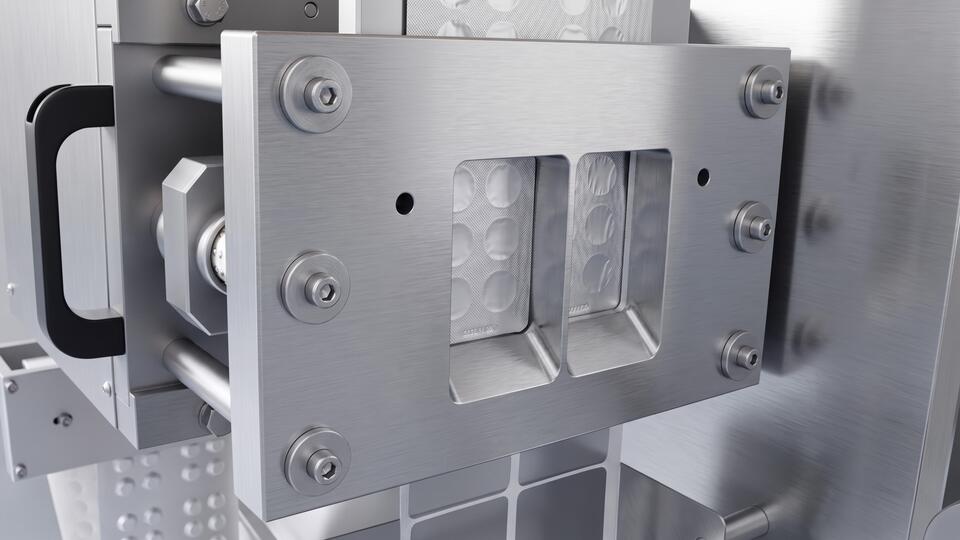
Ruida Packing verwendet DC53 als Werkzeugstahl für Blisterstanzanwendungen
| Material | Wärmebehandlung | Mikrostruktur | Verschleißfestigkeit | Zähigkeit | Kompatibilität mit Blisterpackungen | Anwendungsszenario |
| Cr12MoV | Löschen + Temperament | Grobe Karbidverteilung | Medium | Mittel–Niedrig | PVC-Blisterpackung | Produktionslinien mit niedriger Geschwindigkeit |
| SKD11 | Veredelter Kaltarbeitsstahl | Einheitlichere Karbide | Hoch | Medium | PVC, Alu-PVC-Blisterpackung | Stabile Strecken mit mittlerer Geschwindigkeit |
| DC53 | Sekundärhärtender Stahl | Feine, gleichmäßige Karbide | Sehr hoch | Hoch | PVC, Alu-PVC, gemischte Laminate | Hochgeschwindigkeits-Langstreckenstrecken |
2.2 Materialtypen und Schneidverhalten von Blisterverpackungen
Blisterverpackungsmaterialien wirken sich direkt auf die Schneidlast in der Blisterverpackungsmaschine aus. Dicke, Härte, und die mehrschichtige Struktur steuern, wie schnell sich der Verschleiß des Schneidwerkzeugs entwickelt. Bei der Herstellung von Blisterverpackungen verhalten sich unterschiedliche Materialien beim Stempelkontakt und bei der Bruchtrennung unterschiedlich, insbesondere im langfristigen Pharmabetrieb.
PVC-Blisterpackungen sind am häufigsten Pharmaverpackungen Material. Es weist eine geringe Härte und eine stabile Verformung beim Schneiden auf, wodurch der Schnittwiderstand relativ gering bleibt. In den meisten Blisterverpackungsmaschinenlinien, PVC erzeugt glatte Kanten mit langsamem Verschleiß des Schneidwerkzeugs und geringer Gratneigung.
Alu-PVC-Blister kombiniert Aluminiumfolie mit PVC-Folie, und die Aluminiumschicht wird beim Schneiden zum Hauptwiderstandspunkt. Dies erhöht die Reibung an der Stempelkante und erhöht die mechanische Belastung im Vergleich zu PVC. Infolge, Der Verschleiß des Schneidwerkzeugs schreitet schneller voran, und Blasengrate treten bei langen Produktionsläufen häufiger auf.
PET-Blistermaterial weist im Vergleich zu PVC-basierten Strukturen eine höhere Steifigkeit und eine stärkere elastische Erholung auf. Für eine vollständige Trennung ist eine höhere Schneidkraft erforderlich, Dadurch erhöht sich die Dauerbelastung des Stanzsystems. In Produktionsprotokollen, Blisterverpackungslinien auf PET-Basis weisen im Vergleich zu Standard-PVC-Linien häufig eine höhere Schnittfestigkeit und einen schnelleren Verschleiß der Schneidwerkzeuge auf.
Alu-Alu-Blister weisen die höchste Steifigkeit unter den üblichen pharmazeutischen Blisterstrukturen auf. Beide Schichten basieren auf Aluminium, Dadurch entsteht beim Schneiden eine sehr hohe Härte und eine geringe Duktilität. Im Inneren der Blisterverpackungsmaschine, Dies führt zu einem maximalen Stanzkraftbedarf und einer schnellen Kantenermüdung an der Werkzeugoberfläche.
Mit Flüssigkeit gefüllte Blisterpackungen, wie Soße, Honig, und Parfümpakete, sind strukturell dicker aufgrund verstärkter Hohlräume, die für halbflüssige oder gelförmige Produkte ausgelegt sind. Die erhöhte Dicke erhöht direkt den Schnittwiderstand und verlangsamt die Bruchtrennung beim Stanzen. Dadurch wird das Schneidsystem stark belastet, Dies beschleunigt den Verschleiß des Schneidwerkzeugs und erhöht das Risiko von Blasengraten bei der Hochgeschwindigkeitsproduktion.
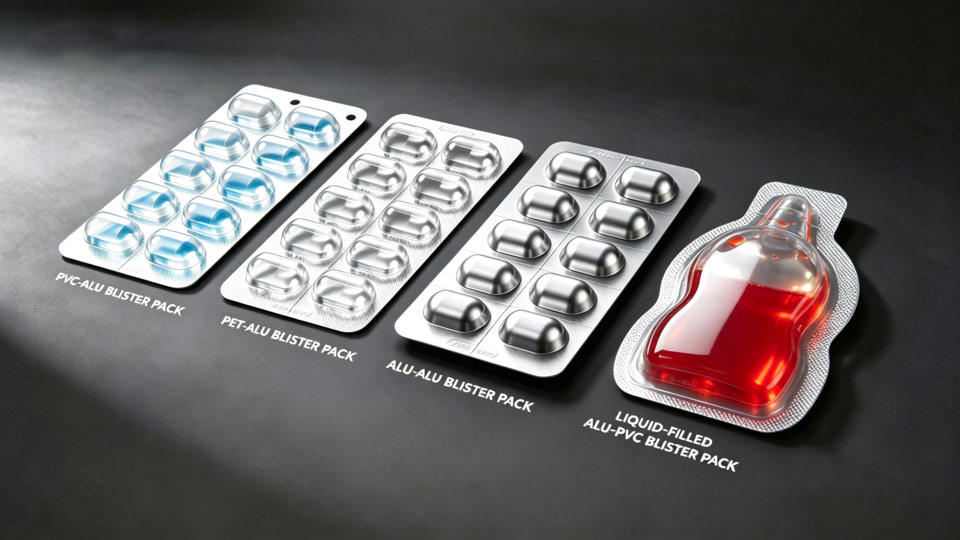
Blisterverpackungsmaterialien weisen unterschiedliche Schwierigkeitsgrade beim Stanzen auf
| Materialtyp | Struktur | Dickenstufe | Härte | Schnittfestigkeit | Werkzeugverschleißgeschwindigkeit | Risiko von Blasengraten | Typische Anwendung |
| PVC-Blister | Einschichtiges PVC | Niedrig | Niedrig | Niedrig | Langsam | Niedrig | Standardtabletten und Kapseln |
| Alu-PVC-Blister | Aluminium + PVC-Laminat | Medium | Medium | Mittel–Hoch | Medium | Medium | Feuchtigkeitsempfindliche Medikamente |
| PET-Blister | Starrer PET-Kunststoff | Mittel–Hoch | Mittel–Hoch | Hoch | Mittel–Hoch | Medium | Hochtransparente Verpackung |
| Alu-Alu-Blister | Aluminium + Aluminium | Hoch | Sehr hoch | Sehr hoch | Schnell | Hoch | Arzneimittel mit hoher Barriere |
| Soßenblister | Verstärkte Hohlraumstruktur | Sehr hoch | Hoch | Sehr hoch | Sehr schnell | Sehr hoch | Halbflüssige und gelförmige Darreichungsformen |
3. Matrizenausrichtung und ihre Auswirkung auf die Werkzeugverschleißbeschleunigung
Die Ausrichtung der Matrize in der Schneidstation einer Blisterverpackungsmaschine hängt von der Positionsbeziehung zwischen Oberstempel und Untermatrize ab. Wenn die Ausrichtung korrekt ist, Der Stempel berührt die Matrizenoberfläche gleichmäßig, und der Verschleiß des Schneidwerkzeugs entwickelt sich in einem ausgewogenen Muster entlang der Schneidkante. In realen Produktionsumgebungen, Dieser Zustand wird häufig durch mechanische Strukturbeschränkungen gestört, Langzeitvibration, und wiederholte Formatwechsel von Blisterpackungen.
Ein häufiges Problem entsteht durch eine vertikale Fehlausrichtung des Stanzsystems. Der Oberstempel und die Untermatrize weisen während der Montage oder im Betrieb möglicherweise nicht die gleiche Mittellinie auf. Schon ein kleiner Versatz verändert die Kraftverteilung beim Schneiden, und eine Seite des Hubs der Blisterverpackungsmaschine trägt eine höhere Last als die andere Seite.
Eine horizontale oder ebene Unwucht ist ein weiterer häufiger Zustand in Produktionshallen. Aufgrund der Rahmenverformung kann eine Seite des Matrizensatzes etwas höher oder tiefer sitzen, Schienenverschleiß, oder langfristige Installationsdrift. Wenn das passiert, Der Stempel gelangt nicht parallel in den Matrizenhohlraum, und beim Schneiden von Blisterpackungen entsteht ein asymmetrischer Druck, was den Schneidwerkzeugverschleiß auf der überlasteten Seite direkt erhöht.
Einige Strukturen von Blisterverpackungsmaschinen machen die Ausrichtungskorrektur komplexer als erwartet. Bediener müssen die Komponenten der Schneidstation teilweise oder vollständig demontieren, bevor sie die Ausrichtungsschnittstelle erreichen, insbesondere bei Präzisionseinstellungen für die Produktion von Blisterverpackungen in pharmazeutischer Qualität.
Dieser wiederholte Einstellvorgang beschleunigt direkt den Verschleiß des Schneidwerkzeugs, da der Stempel nicht mehr unter einer stabilen Kontaktgeometrie arbeitet. Im Laufe der Zeit, Kantenverschlechterung wird deutlicher, und ein instabiles Schnittverhalten führt zu einer früheren Bildung von Blistergraten an der fertigen Blisterverpackung.
4. Technische Lösungen zur Reduzierung von Blasengraten
Die Reduzierung von Blistergraten in einer Blisterverpackungsmaschine erfordert eine kombinierte Kontrolle des Werkzeugzustands, Materialauswahl, und Stabilität der Matrizenausrichtung.
4.1 Strategie zur Abstimmung von Schneidwerkzeug und Blisterverpackungsmaterial
Die Werkzeugauswahl in einer Blisterverpackungsmaschine muss der tatsächlichen mechanischen Belastung durch das Blisterverpackungsmaterial entsprechen. PVC, Alu-PVC, HAUSTIER, und Honigblasenstrukturen erzeugen alle unterschiedliche Schnittwiderstände. Wenn die Materialbelastung nicht mit Werkzeugstahl übereinstimmt, Bei langen Produktionszyklen beschleunigt sich der Verschleiß des Schneidwerkzeugs und die Kantenstabilität nimmt ab.
PVC-Blisterverpackungen weisen eine relativ geringe Schnittfestigkeit auf. Standard-Werkzeugstähle können unter kontrollierten Produktionseinstellungen immer noch einen stabilen Kantenzustand aufrechterhalten. Jedoch, beim Umstieg auf Alu-PVC- oder PET-Blisterstrukturen, Durch den Widerstand der Aluminiumschicht oder eine höhere Materialsteifigkeit erhöht sich die Schnittbelastung, Dies erhöht das Risiko von Blasengraten, wenn die Werkzeugleistung nicht verbessert wird.
Honig-Blisterpackungen stellen aufgrund der größeren Dicke und des verstärkten Hohlraumdesigns eine weitere Schwierigkeit dar. Dieser Zustand beschleunigt den Verschleiß des Schneidwerkzeugs, insbesondere bei lang laufenden pharmazeutischen Chargen, bei denen die Maschinenstopps begrenzt sind und eine Ausgabestabilität erforderlich ist.
Für Produktionsumgebungen mit hoher Auslastung, DC53 wird in der gesamten Branche weithin empfohlen. Es eignet sich nicht nur für Parfüm-Blisterverpackungen, sondern auch für Alu-PVC- und PET-Strukturen, bei denen die Schnittfestigkeit hoch ist. In der pharmazeutischen Großproduktion, DC53 wird üblicherweise bei Hochgeschwindigkeits- und Großserienvorgängen eingesetzt, um den Verschleiß von Schneidwerkzeugen zu kontrollieren und eine stabile Kantenqualität in Blisterverpackungsmaschinensystemen aufrechtzuerhalten.
Im praktischen industriellen Einsatz, große globale Gerätehersteller wie Syntegon, Uhlmann, ES GIBT, Marchesini, Ruida Packing und andere etablierte Anbieter von Blisterverpackungssystemen verwenden alle DC53 oder gleichwertige Hochleistungswerkzeugstrategien in Produktionslinien mit hoher Nachfrage.
4.2 Strategie zur Werkzeugausrichtung und modularen Anpassung
Viele traditionelle Strukturen von Blisterverpackungsmaschinen basieren auf festen Montagesystemen. Die Ausrichtungsanpassung erfordert mehrere manuelle Schritte, einschließlich Neupositionierung von Formkomponenten und wiederholtem Probeschneiden. Diese Vorgänge erhöhen die Ausfallzeit und können bei wiederholten Einstellungen zu Positionierungsschwankungen führen.
In High-End-Blisterverpackungsmaschinensystemen, Hersteller wie Syntegon, Uhlmann, ES GIBT, und Ruida Packing verwenden eine modulare Formarchitektur, um eine wiederholbare Stempel- und Matrizenausrichtung zu unterstützen. Die Oberform und die Unterform sind mit festen Positionierungsreferenzen konstruiert, Daher wird die Ausrichtung durch die Maschinenstruktur gesteuert, anstatt sich auf wiederholte manuelle Korrekturen zu verlassen.
Während der Einstellung der Matrizenausrichtung, Die Form bleibt durch integrierte Führungsstrukturen unterstützt. Bediener können kontrollierte Positionskorrekturen vornehmen, ohne die Stanzstation komplett umbauen zu müssen.
Pharmazeutische Verpackungssysteme verwenden modulare Formenkonstruktionen mit herausziehbaren Schlitzstrukturen. Diese Strukturen vereinfachen die Ausrichtungseinstellung innerhalb der Blisterverpackungsmaschine. Das Formmodul kann direkt in den vordefinierten Führungsschlitz eingesetzt werden, während das integrierte Positionierungssystem die Ausrichtungsgenauigkeit der Stanzstation steuert.
Eine genaue Matrizenausrichtung reduziert eine ungleichmäßige Kraftverteilung zwischen Stempel und Matrize. Wenn die Schnittkraft ausgeglichen bleibt, Die Stempelkante wird gleichmäßiger belastet, Dies trägt dazu bei, den Verschleiß des Schneidwerkzeugs zu verlangsamen.
In der tatsächlichen Produktionspraxis, Diese modulare Struktur ermöglicht die vollständige Installation und Ausrichtungsanpassung der Form in etwa 10 Minuten 10 Protokoll. Der vereinfachte Einstellprozess reduziert Ausfallzeiten und trägt dazu bei, eine stabile Schneidleistung in der Blisterverpackungsmaschine aufrechtzuerhalten.
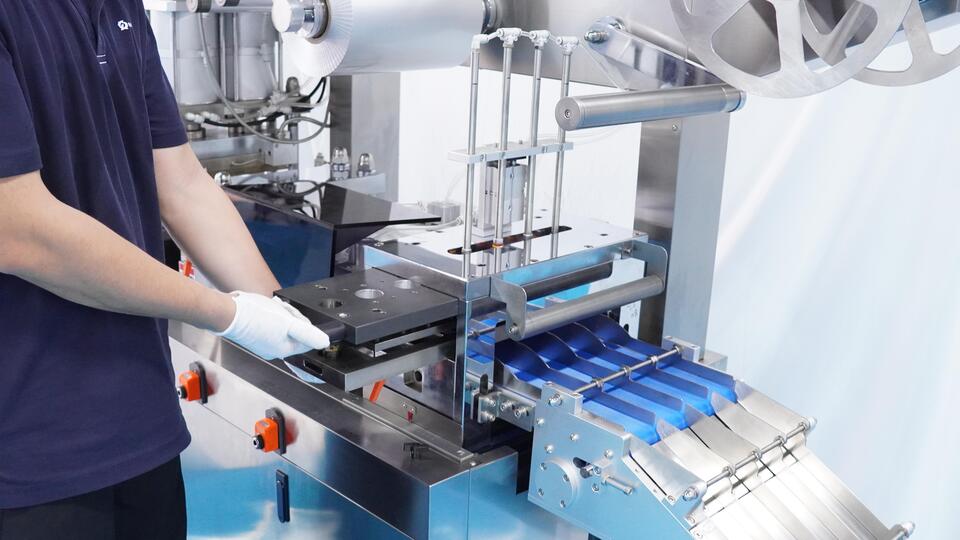
Das ausziehbare Schlitzdesign erleichtert den Austausch
Abschluss
Blistergrate in einer Blisterverpackungsmaschine hängen mit dem Stempelverschleiß zusammen, Materialbelastung, und Werkzeugpositionsverschiebung. In Produktionsunterlagen, Diese drei Faktoren treten bei langen Herstellungsläufen von Blisterverpackungen oft gemeinsam auf. Sobald der Stempelverschleiß übersteigt 0.2 mm, Das Schneidverhalten ändert sich von sauberer Scherung zu teilweisem Abreißen, und Kantenfehler treten bei der Inline-Inspektion häufiger auf.
Unterschiedliche Materialien verändern die Verschleißgeschwindigkeit. PVC ist stabil, während Alu-PVC, HAUSTIER, und Parfümbläschenstrukturen erhöhen die Widerstandsfähigkeit und beschleunigen den Verschleiß des Schneidwerkzeugs. Bei der Hochlastproduktion sind in der Regel DC53-Werkzeuge erforderlich, um die Kantenstabilität aufrechtzuerhalten.
Auch Ausrichtungsdrift trägt dazu bei. Eine ungleichmäßige Kraftverteilung führt zu lokalen Spannungsspitzen und einer frühen Gratbildung. In der Praxis, Systeme mit modularem Ausrichtungsdesign und DC53-Werkzeugen, wie von Syntegon angewendet, Uhlmann, ES GIBT, Marchesini, und Ruida Packing, zeigen eine stabilere Schnittleistung.
Häufig gestellte Fragen
Warum entwickeln Blisterverpackungen mit der Zeit Gratkanten??
Gratkanten entstehen, wenn der Verschleiß des Schneidwerkzeugs in der Blisterverpackungsmaschine fortschreitet. Die Stanzkante verliert ihre scharfe Geometrie, und das Schneiden geht vom sauberen Bruch zum Reißen über. Dadurch entstehen instabile Blisterverpackungskanten.
Was verursacht Blistergrate in Blisterverpackungsmaschinen??
Zu den Hauptursachen gehört Stempelverschleiß, Materialbeständigkeit, und Matrizenfehlausrichtung. Wenn die Spannung an der Schnittschnittstelle ungleichmäßig ist, Am Rand der Blisterpackung bilden sich Blistergrate.
Wie wirkt sich der Verschleiß des Schneidwerkzeugs auf die Qualität der Blisterverpackung aus??
Mit zunehmendem Verschleiß, Kantenschärfe nimmt ab. Sobald der Verschleiß überschritten wird 0.2 mm, Der Schnitt wird instabil. Dies erhöht direkt die Blasengratbildung und verringert die Konstanz der Kantenqualität.
Kann die Maschinenausrichtung die Gratbildung reduzieren??
Ja. Die richtige Ausrichtung in der Blisterverpackungsmaschine sorgt für eine gleichmäßige Kraftverteilung. Dies verlangsamt den Verschleiß des Schneidwerkzeugs und reduziert die lokale Gratbildung.
Was ist der beste Weg, um Blasengrate zu verhindern??
Verwenden Sie die richtige Materialabstimmung, Ausrichtung beibehalten, und wählen Sie einen geeigneten Werkzeugstahl wie DC53 für die Blisterverpackungsproduktion mit hoher Belastung.
REFERENZEN
- UNS. FDA – Aktuelle gute Herstellungspraxis (CGMP) für Fertigarzneimittel
https://www.fda.gov/drugs/pharmaceutical-quality-resources/current-good-manufacturing-practice-cgmp-regulations - EU-GMP-Leitfaden – Anhang 1: Herstellung steriler Arzneimittel
https://health.ec.europa.eu/medicinal-products/eudralex/eudralex-volume-4_en - ISO 15378: Primärverpackungsmaterialien für Arzneimittel (GMP-Anforderungen)
https://www.iso.org/standard/72850.html - ASM International – Verschleiß- und Ausfallmechanismen von Werkzeugstahl
https://www.asminternational.org/ - Pharmaherstellung – Effizienz der Verpackungslinie und Artikel zur Fehlerkontrolle
https://www.pharmamanufacturing.com/