لماذا يمكن توفير نفس العنصر الصيدلاني الفعال على شكل أقراص, كبسولة, سائل, أو الحقن? تعتمد الإجابة على عوامل مثل استقرار المنتج, مراقبة الكمية, خصائص الافراج, الاستخدام المقصود, وطريق الإدارة.
للمصنعين, شكل الجرعة المحدد يشكل عملية الإنتاج. تتطلب الأقراص إعداد مسحوق وضغط مناسبين, تحتاج الكبسولات إلى تعبئة وإغلاق دقيق, والسوائل تنطوي على ظروف خلط وملء مختلفة. يجب أيضًا تعبئة المنتج النهائي وفقًا لحساسيته للرطوبة, الأكسجين, ضوء, تسرب, والأضرار الجسدية.
يقدم هذا الدليل أشكال الجرعات الصيدلانية الرئيسية ويشرح كيفية تأثيرها على عمليات التصنيع, اختيار المعدات, ومتطلبات التعبئة والتغليف.
1. ما هي أشكال الجرعات الصيدلانية؟?
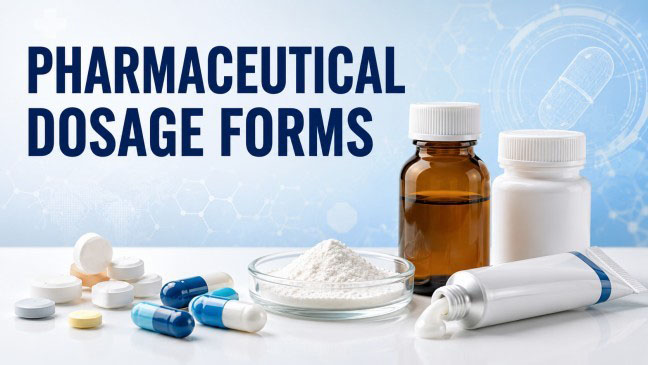
الشكل الجرعة الصيدلانية هو الشكل المادي الذي يتم فيه إنتاج المنتج الصيدلاني وتوريده. تشمل الأمثلة الشائعة الأجهزة اللوحية, كبسولات, مساحيق, الحلول, تعليق, الكريمات, والحقن. النموذج المحدد يدعم التصنيع, تخزين, مراقبة الكمية, وطريقة الاستخدام المقصودة.
غالبًا ما يتم الخلط بين العديد من المصطلحات ذات الصلة:
| شرط | معنى | مثال |
| العنصر الصيدلاني الفعال (API) | العنصر النشط الأساسي في المنتج الصيدلاني | أسِيتامينُوفين |
| جرعة | المبلغ المحدد يستخدم في وقت واحد أو خلال فترة محددة | 500 ملغ |
| صياغة | المزيج المصمم من API والمكونات الأخرى | API, حشو, الموثق, والتفكك |
| شكل الجرعة | الشكل المادي النهائي للمنتج | قرص مغلف بالفيلم |
| طريق الإدارة | الطريقة المقصودة لاستخدام المنتج | الإدارة عن طريق الفم |
تحتوي معظم المنتجات الصيدلانية النهائية على واحد أو أكثر من APIs مع السواغات. اعتمادا على الصيغة, قد تعمل السواغات على تحسين تدفق المواد, دعم ضغط الجهاز اللوحي, الحفاظ على استقرار المنتج, مساعدة التفكك, إخفاء طعم غير سارة, أو ضبط خصائص إطلاق المكونات.
يرتبط شكل الجرعة وطريقة الإعطاء ولكنهما ليسا نفس المفهوم. قد يكون كل من الجهاز اللوحي والمحلول الفموي مخصصين للاستخدام عن طريق الفم, ومع ذلك فهي تتطلب صيغًا مختلفة, طرق التصنيع, ضوابط العملية, وأنظمة التعبئة والتغليف. قد تتبع المنتجات الموجودة ضمن نفس الفئة أيضًا عمليات مختلفة. على سبيل المثال, قد تكون تركيبة قرص واحد مناسبة للضغط المباشر, بينما قد يتطلب الآخر التحبيب أو الطلاء.
ولذلك يجب على الشركات المصنعة تحديد شكل الجرعة, خصائص المواد, الكمية المستهدفة, اعتبارات الاستقرار, والحزمة المقصودة قبل اختيار معدات الإنتاج. يجب أن تكون المعدات مطابقة للتركيبة والعملية بدلاً من أن يُتوقع منها تصحيح خصائص المواد غير المناسبة أو مواصفات التغليف.
2. ما هي الأنواع الرئيسية لأشكال الجرعات الصيدلانية؟?
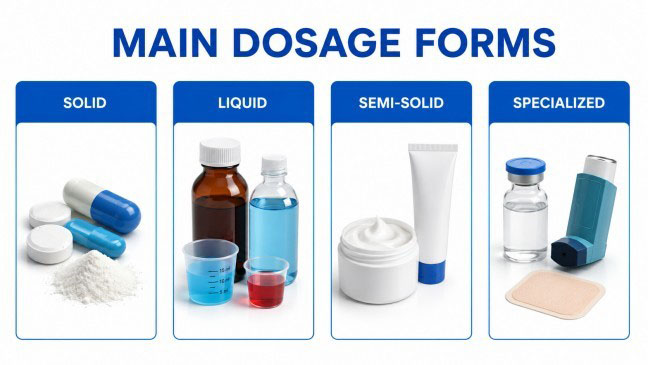
يمكن تجميع أشكال الجرعة حسب الحالة المادية, خصائص الافراج, أو طريق الإدارة. تتداخل هذه الأنظمة, لذلك قد ينتمي المنتج إلى أكثر من مجموعة.
| المجموعة الرئيسية | أمثلة شائعة | التركيز على التصنيع النموذجي | الحزمة المشتركة |
| صلب | أقراص, كبسولات, مساحيق, حبيبات | تدفق, مزج, ضغط أو ملء | بثور, زجاجات, أكياس |
| سائل | حلول, تعليق, المستحلبات, شراب | خلط, التوحيد, اللزوجة والملء | زجاجات أو حاويات وحدة |
| شبه صلبة | الكريمات, المراهم, المواد الهلامية, المعاجين | خلط, التجانس واللزوجة | أنابيب, مضخات أو الجرار |
| المتخصصة | الحقن, منتجات الاستنشاق, بقع, التحاميل | المعالجة والضوابط الخاصة بالمنتج | قوارير, أمبولات, الأجهزة أو العبوات المختومة |
2.1 أشكال الجرعات الصلبة
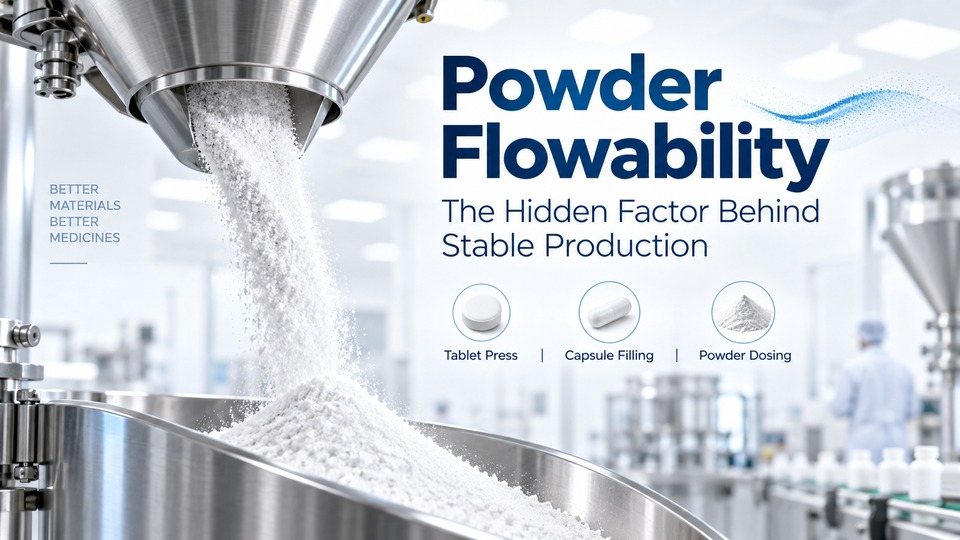
الأجهزة اللوحية يتم تصنيعها عن طريق ضغط مسحوق محضر أو مزيج حبيبي في شكل محدد. تتضمن التنسيقات الشائعة الأجهزة اللوحية التقليدية, أقراص قابلة للمضغ, أقراص فوارة, أقراص متحللة عن طريق الفم, وأقراص الإصدار المعدل. يعتمد سلوكهم التصنيعي على تدفق المسحوق, حجم الجسيمات, مستوى الرطوبة, الانضغاطية, تشحيم, وتصميم الأدوات.
كبسولات تشمل كبسولات صلبة من قطعتين, كبسولات ناعمة, وكبسولات صلبة مملوءة بالسائل. قد تحتوي الكبسولات الصلبة على مساحيق, حبيبات, الكريات, أو أقراص صغيرة. تتطلب الكبسولات الصلبة المملوءة بالسائل مادة تعبئة متوافقة وعملية إغلاق أو إغلاق مناسبة للقشرة. تتبع الكبسولات الناعمة طريقة مختلفة للتشكيل والتعبئة وتستخدم عادةً معدات مخصصة.
المساحيق والحبيبات يمكن توفيرها في حاويات متعددة الاستخدام أو تقسيمها إلى أكياس فردية وعبوات لاصقة. يتطلب إنتاجها الاهتمام بمزج التوحيد, الفصل, تراب, سلوك القياس, وتأثير الرطوبة أثناء التعبئة والتخزين.
2.2 أشكال الجرعات السائلة
تشمل الأشكال السائلة المحاليل, تعليق, المستحلبات, والعصائر. تحتوي المحاليل على مكونات مذابة, تحتوي المعلقات على جزيئات صلبة متفرقة, والمستحلبات تحتوي على مراحل سائلة منفصلة.
تشمل اعتبارات التصنيع ترتيب الخلط, درجة حرارة, الترشيح حيثما ينطبق ذلك, اللزوجة, رغوة, وشروط الملء. تتطلب المعلقات والمستحلبات أيضًا ضوابط تتناول الترسيب أو فصل الطور أثناء المعالجة.
2.3 أشكال الجرعات شبه الصلبة والمتخصصة
الكريمات, المراهم, المواد الهلامية, والمعاجين هي أشكال شبه صلبة ومعبأة عادة في الأنابيب, مضخات, أو الجرار. لزوجتها تؤثر على الخلط, تحويل, تعبئة, واختيار الحاوية.
وتشمل أشكال الجرعات الأخرى الحقن, منتجات الاستنشاق, بقع عبر الجلد, والتحاميل. تختلف متطلباتها بشكل كبير عن المواد الصلبة الفموية التقليدية ويجب تقييمها ضمن إطار التطوير ذي الصلة.
3. كيف يتم تصنيع أشكال الجرعات الصيدلانية المختلفة?
تبدأ معظم عمليات التصنيع باستلام المواد, تعريف, الاستغناء, والتحضير الخاضع للرقابة. تعتمد الخطوات اللاحقة على شكل الجرعة ومواصفات المنتج.
3.1 تصنيع التابلت
تتضمن عملية الكمبيوتر اللوحي النموذجية:
التوزيع ← الغربلة أو الطحن ← المزج ← التحبيب إذا لزم الأمر ← التجفيف ← التشحيم ← الضغط ← الطلاء الاختياري ← الفحص ← التغليف
ليست كل صيغة تحتاج إلى التحبيب. يستخدم الضغط المباشر مزيجًا يتمتع بالفعل بسلوك تدفق وضغط مناسب. يقدم التحبيب الرطب مادة رابطة سائلة قبل التجفيف والتحجيم, في حين أن التحبيب الجاف عبارة عن عملية تشكل حبيبات عن طريق ضغط المواد المسحوقة ميكانيكيًا تحت ضغط عالٍ دون إضافة سائل. وينبغي أن يأتي المسار المختار من دراسات الصياغة وتجارب الإنتاج.
أثناء الضغط, أ آلة ضغط الأقراص يملأ يموت, يضغط المادة, ويخرج الأقراص المشكلة. يؤثر عمق التعبئة وأداء وحدة التغذية بشكل أساسي على وزن الجهاز اللوحي, بينما تؤثر قوة الضغط على السُمك والصلابة. تغير سرعة البرج وقت التعبئة ووقت سكون الضغط, وقد تتسبب الأدوات البالية أو غير المحاذاة في حدوث عيوب مثل الالتصاق, السد, أو تلف الحافة. ويمكن بعد ذلك تطبيق الطلاء للمظهر, اخفاء الذوق, حماية البيئة, أو تصميم الإصدار المعدل.
3.2 تصنيع الكبسولة
للكبسولات الصلبة المكونة من قطعتين, التسلسل الرئيسي هو:
تغذية الكبسولة الفارغة ← التوجيه ← فصل الغطاء والجسم ← التعبئة ← يرفض → إغلاق → طرد → تلميع → التفتيش
أ آلة تعبئة الكبسولات يجب أن يتطابق مع حجم الكبسولة ومواد التعبئة. مساحيق, حبيبات, الكريات, وتستخدم السوائل ترتيبات جرعات مختلفة. تدفق المواد, الكثافة الظاهرية, نطاق ملء الوزن, حالة القشرة, وجودة الإغلاق مهمة عند تطوير العملية. عادةً ما يتم وضع تلميع الكبسولة وفحصها قبل تعبئة الفقاعة أو الزجاجة.
3.3 تعبئة المسحوق والحبيبات
يتم مزج منتجات المسحوق والحبيبات ونقلها إلى نظام الجرعات المناسب. تستخدم المثاقب بشكل شائع للعديد من المساحيق, في حين أن الأكواب الحجمية أو المغذيات الأخرى قد تناسب الحبيبات ذات التدفق الحر. أ آلة تعبئة الأكياس يمكن تشكيل الحزمة من فيلم لفة, قياس المنتج, ختم الحزمة, وقطع أو فصل الوحدات النهائية.
3.4 معالجة السائلة وشبه الصلبة
قد يشمل الإنتاج السائل وشبه الصلب الخلط, التدفئة أو التبريد, التجانس, الترشيح, نزع الهواء, عقد, تعبئة, والإغلاق. التسلسل الفعلي يعتمد على الصياغة. مواد الاتصال بالمعدات, طرق النقل, آلية التعبئة, وينبغي اختيار إجراء التنظيف حول اللزوجة, ميل الرغوة, محتوى الجسيمات, وضوابط النظافة المطلوبة.
4. كيف تؤثر أشكال الجرعات الصيدلانية على متطلبات التعبئة والتغليف?
التعبئة والتغليف جزء من نظام المنتج, ليست خطوة زخرفية تضاف بعد التصنيع. يجب أن يعكس تصميمه شكل الجرعة, صياغة, معلومات الاستقرار, ظروف النقل, والسوق المقصودة.
التعبئة الأولية يحتوي مباشرة على المنتج, مثل تجويف نفطة, زجاجة, الكيس, أنبوب, أو قارورة. التغليف الثانوي يتضمن عناصر مثل الكرتون, التسميات, والمنشورات. التعبئة والتغليف الثلاثي يدعم التخزين والنقل من خلال الحالات, فواصل, والمنصات.
| شكل الجرعة | الحزمة الأساسية المشتركة | الاعتبارات الرئيسية | المعدات ذات الصلة |
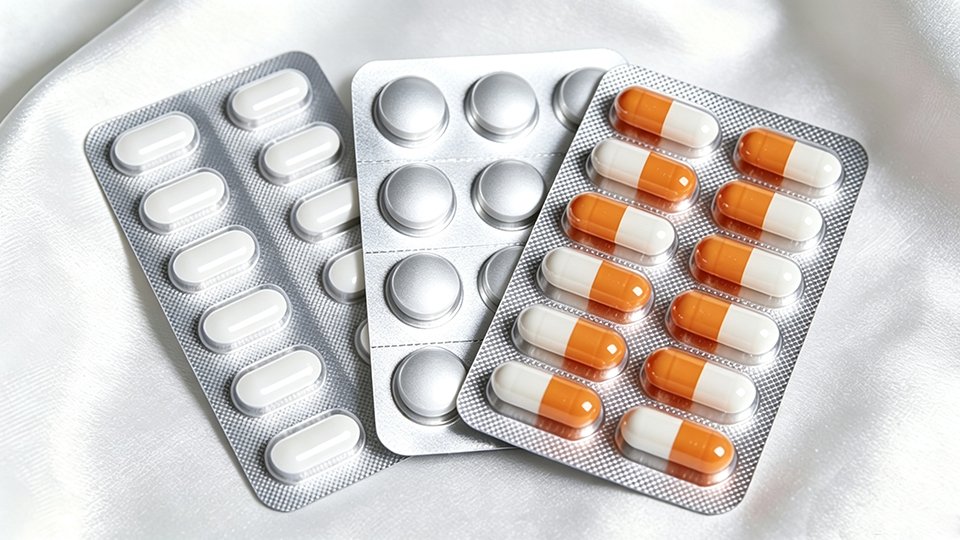
| الأجهزة اللوحية | بثور أو زجاجات | رُطُوبَة, ضوء, التآكل وعدد الوحدات | آلة نفطة الكمبيوتر اللوحي أو خط عد الأقراص |
| كبسولات صلبة | بثور أو زجاجات | رطوبة, حالة القشرة وعدد الوحدات | آلة نفطة الكبسولة أو خط عد الكبسولة |
| المساحيق والحبيبات | أكياس, العصي, الحقائب أو الزجاجات | رُطُوبَة, حالة القياس والختم | آلة تعبئة الأكياس أو آلة تعبئة الأكياس الجاهزة |
| السوائل | زجاجات أو حاويات فردية | تسرب, التوافق وحجم التعبئة | ماكينة تعبئة سوائل |
| شبه صلبة | أنابيب, مضخات أو الجرار | اللزوجة, التسرب والاتصال بالمنتج | أنبوب, معدات تعبئة المضخة أو الجرة |
| منتجات معقمة | قوارير, أمبولات أو أنظمة مملوءة مسبقًا | سلامة إغلاق الحاويات والضوابط المتخصصة | خط تعبئة وإغلاق خاص بالمنتج |
للأقراص والكبسولات, تقوم البثرة بتعبئة وحدات منفصلة في تجاويف فردية. أ آلة تعبئة الفقاعات تشكل التجاويف أو تغذيها, يقوم بتحميل المنتج, يختم مادة الغطاء, رموز الويب, ويقطع العبوات النهائية. ينبغي اختيار هيكل الحاجز من بيانات المنتج; لا توفر نفطة PVC القياسية ونفطة الألومنيوم الباردة نفس ملف تعريف الحماية.
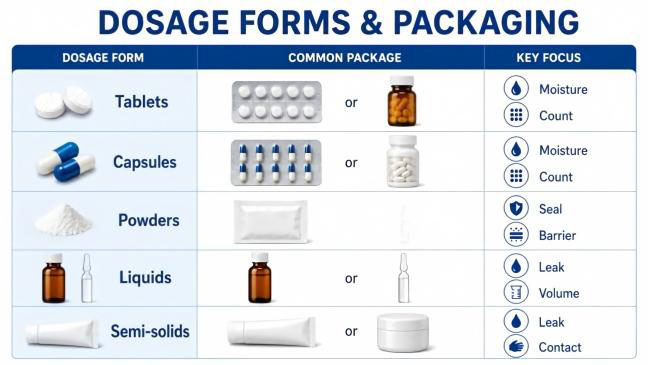
غالبًا ما يتم اختيار الزجاجات لحزم الأقراص والكبسولات ذات العدد الأعلى. نموذجي خط عد الأقراص والكبسولات الأوتوماتيكي ربط زجاجة تفكيك, عد, إدراج المجففة اختياري, السد, الختم التعريفي, وضع العلامات. الإغلاق, بطانة, المجففة, ويجب اعتبار مادة الزجاجة بمثابة أجزاء من نظام تعبئة واحد.
تعتبر الأكياس والعبوات شائعة بالنسبة للكميات المقاسة من المساحيق والحبيبات. هيكل الفيلم, درجة حرارة الختم, ضغط الختم, غبار المنتج, تصميم المسيل للدموع, ويمكن أن يؤثر الهواء المتبقي على أداء العبوة. قد تنتقل الحزم الثانوية بعد ذلك إلى ملف آلة التعبئة في الكرتون لتشكيل الكرتون, إدخال المنتج, التعامل مع النشرة, الترميز, والتفتيش.
لا يوجد تنسيق تعبئة مناسب تلقائيًا لكل منتج في نفس مجموعة أشكال الجرعات. يجب أن يكون اختيار الحزمة مدعومًا بأعمال التوافق, اختبار الحزمة, ودراسات الاستقرار. لمقارنة تنسيق أوسع, انظر هذا الدليل ل أنواع التعبئة والتغليف الصيدلانية.
5. كيفية اختيار معدات تصنيع وتعبئة الأدوية
يجب أن يبدأ اختيار المعدات بمعلومات المنتج والعملية بدلاً من نموذج الآلة. عادة ما تغطي مواصفات المعدات المفيدة:
- خصائص المواد: تدفق المسحوق, الكثافة الظاهرية, حجم الجسيمات, حساسية الرطوبة, اللزوجة, رغوة, أو اللزوجة.
- شكل المنتج: قطر الجهاز اللوحي وشكله, حجم الكبسولة, نطاق التعبئة, عدد الزجاجة, أبعاد الكيس, أو تخطيط نفطة.
- الإخراج المطلوب: حجم الدفعة, هدف كل ساعة, نمط التحول, التحولات المخطط لها, والتوسع المتوقع.
- ضوابط العملية: مراقبة الوزن أو العد, منطق الرفض, كشف المعادن, الترميز, وتسجيل البيانات.
- التنظيف والتغيير: الوصول إلى جزء الاتصال, طريقة التنظيف, استبدال جزء التنسيق, والتحكم عبر المنتجات.
- اتصال الخط: الإخراج المنبع, سرعة المصب, التخزين المؤقت, تخطيط الناقل, والتواصل بين الآلات.
تشمل التكوينات النموذجية:
| المنتج والحزمة | تكوين خط المثال |
| حزمة نفطة الكمبيوتر اللوحي | ضغط الأقراص ← مزيل الغبار اللوحي ← كاشف المعادن ← آلة البثرة ← علبة الكرتون |
| زجاجة كبسولة | حشو الكبسولة ← ملمع الكبسولة ← آلة عد وملء الكبسولة ← كابر ← مانع التسرب التعريفي ← الملصق |
| كيس مسحوق | الخلاط ← المغذية ← آلة تعبئة العصا(أو ماكينة تعبئة الأكياس) → جهاز تدقيق الوزن → ماكينة الكرتون |
لا تحدد السرعة المقدرة لجهاز واحد مخرجات الخط الكامل. تغذية المنتج, تقتيش, توقف, التحول, وتؤثر القدرة النهائية أيضًا على الإنتاج الفعلي. عندما تكون عدة مراحل متصلة, ان خط دوائي متكامل ينبغي التخطيط حول توازن خط واقعي وتخطيط المصنع المتاح.
رويدا للتعبئة والتغليف يوفر مكابس الكمبيوتر اللوحي, آلات تعبئة الكبسولة, آلات نفطة, خطوط العد, ومعدات التغليف الكرتوني لمشاريع تصنيع وتعبئة الجرعات الصلبة. بناء على شكل المنتج, الإخراج المستهدف, وتخطيط المصنع, يمكن للفريق المساعدة في تكوين الآلات الفردية أو خط الإنتاج المتكامل.
6. مراقبة جودة نموذج الجرعات الصيدلانية واعتبارات ممارسات التصنيع الجيدة
تعتمد ضوابط الجودة على شكل الجرعة ومواصفات المنتج المعتمدة. قد تتضمن عمليات فحص الأجهزة اللوحية اختلافًا في الوزن, سماكة, صلابة, القابلية للتفتيت, التفكك, والحل حيثما ينطبق ذلك. قد تغطي عناصر التحكم في الكبسولة وزن التعبئة, إغلاق القشرة, مظهر, والتفكك. يمكن أن تتضمن عناصر التحكم السائلة وشبه الصلبة كمية التعبئة, التوحيد, اللزوجة, وإغلاق الحاوية.
قد تغطي فحوصات التغليف العدد أو كمية التعبئة, حالة الختم, تسرب, طباعة المعلومات, التحقق من التسمية, وأداء الرفض. وينبغي أن تكون هذه الشيكات مدعومة بإجراءات مكتوبة, معايير القبول المحددة, الموظفين المدربين, صيانة, معايرة, ومراجعة موثقة.
يمتد تخطيط GMP إلى ما هو أبعد من الآلة. شروط المنشأة, مراقبة المواد, تنظيف, التحقق من صحة العملية, مراقبة الجودة, وسجلات الإنتاج كلها تساهم في التشغيل المتسق. يمكن للمعدات دعم العملية المطلوبة, لكن الوضع التنظيمي يعتمد على نظام التصنيع والجودة الكامل المستخدم في المنشأة.
7. أشكال الجرعات الصيدلانية: أسئلة مكررة
ما هي الأشكال الصيدلانية الرئيسية؟?
المجموعات العريضة صلبة, سائل, شبه صلبة, وأشكال الجرعات المتخصصة. أقراص, كبسولات, مساحيق, الحلول, تعليق, الكريمات, الحقن, ومنتجات الاستنشاق هي أمثلة شائعة. قد يأخذ التصنيف أيضًا في الاعتبار مسار الإدارة وخصائص الإطلاق.
ما هو الفرق بين الجرعة وشكل الجرعة?
الجرعة هي الكمية المحددة المستخدمة في وقت واحد أو خلال فترة محددة. شكل الجرعة هو المنتج المادي, مثل الكمبيوتر اللوحي, كبسولة, حل, أو كريم, الذي يحمل تلك الكمية.
هل يتم تصنيع الأقراص والكبسولات على نفس الجهاز?
لا. يتم تشكيل الأقراص عن طريق الضغط على مكبس الأقراص. يتم فصل الكبسولات الصلبة المكونة من قطعتين, مملوء, وتغلق على آلة تعبئة الكبسولة. ويمكنهم لاحقًا استخدام معدات تعبئة الفقاعات أو الزجاجات المماثلة إذا كان حجمها وخصائص التعامل معها متوافقة مع الخط المحدد.
ما هي تنسيقات التعبئة والتغليف المستخدمة بشكل شائع لأشكال الجرعات الصلبة?
عادة ما يتم تعبئة الأقراص والكبسولات الصلبة في بثور أو زجاجات. يمكن للمساحيق والحبيبات استخدام الأكياس, حزم العصا, الحقائب, أو الزجاجات. يعتمد الاختيار النهائي على خصائص المنتج, كمية العبوة, متطلبات الحاجز, وبيانات الاستقرار.
ما هي المعلومات المطلوبة قبل اختيار المعدات?
يجب على الشركات المصنعة إعداد تفاصيل حول المادة, شكل جرعة, أبعاد, الكمية المستهدفة, الإخراج, تنسيق التعبئة والتغليف, مساحة المصنع, المرافق, نهج التنظيف, والوثائق المطلوبة. وقد تكون هناك حاجة أيضًا إلى عينات وتجارب.
خاتمة: مطابقة أشكال الجرعات الصيدلانية مع التصنيع والتعبئة
أشكال الجرعات الصيدلانية تربط الصياغة, تصنيع, ضبط الجودة, والتعبئة والتغليف. جهاز لوحي, كبسولة, مسحوق, أو السائل يقدم سلوكًا ماديًا مختلفًا وبالتالي يتطلب طريق إنتاج مختلفًا. يجب بعد ذلك تحديد التغليف حول ملف تعريف استقرار المنتج, احتياجات التعامل, وشروط التوزيع المقصودة.
قبل تكوين الخط, يجب على الشركات المصنعة تحديد المنتج والحزمة أولاً, ثم قم بمطابقة كل معالجة, تعبئة, تقتيش, ومرحلة التعبئة والتغليف لتلك المتطلبات. ينتج عن هذا النهج مواصفات أكثر وضوحًا للمعدات ويقلل من التغييرات التي يمكن تجنبها أثناء تطوير المشروع.
المراجع