Fish oil capsules can go bad, even though each softgel is sealed. เมื่อเวลาผ่านไป, the oil inside can oxidize, and factors such as heat, แสงสว่าง, and oxygen may affect its quality. The printed date and storage instructions are useful starting points, but an unusual smell, leaking capsules, or a damaged seal can raise questions before that date arrives.
So how long do fish oil capsules last, how can you tell when something may be wrong, and what can manufacturers do to help protect the product? ในคู่มือนี้, we’ll explain shelf life, signs to look for, and storage considerations, then take a closer look at how softgel manufacturing and packaging fit into the picture.
How Long Do Fish Oil Capsules Last?
Fish oil capsules do not all have the same shelf life. The date on the bottle is the starting point for your particular product, while the storage instructions tell you the conditions under which that date should be understood. A bottle kept in a hot car for days is not in the same position as one stored as directed—even if both show the same date.
The difference is that the date describes a manufacturer’s expected shelf life; it does not measure the oil in your bottle today. Oxidation can develop over time, and a product’s condition depends on its formulation, บรรจุภัณฑ์, and storage history.
ในการศึกษาครั้งหนึ่ง, researchers examined 171 omega-3 supplements sold in Canada. Some products were approaching the study’s voluntary oxidation limits with one to three years remaining before expiration. That result is a reason to consider storage and product quality alongside the date—not proof that every capsule close to its date is oxidized or unsafe. [1]
What Should You Check on the Bottle?
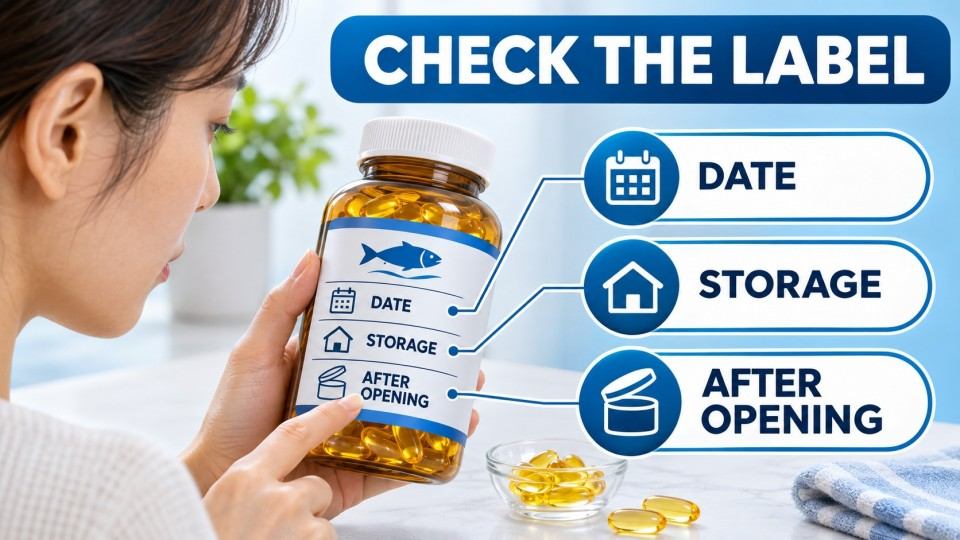
Look for the printed date, the storage instructions, and any directions for use after opening. If the bottle has no clear date or storage instructions, contact the manufacturer with the product name and batch number and ask how long the product is intended to last and how it should be kept.
Storage directions can be specific. ตัวอย่างเช่น, one fish oil softgel label in the U.S. National Institutes of Health’s Dietary Supplement Label Database says to store that product at 59–86°F (15–30°ซ). That is an example from one label, not a temperature range for every fish oil capsule. Your product’s own instructions take priority. [2]
| Situation | What it tells you | What to do |
|---|---|---|
| Within date and stored as directed | The product has been kept under the conditions stated on its label. | Continue to follow the label; a date alone cannot establish the condition of an individual capsule. |
| Within date but left in a hot car | The storage conditions may have fallen outside the manufacturer’s instructions. | Note how long it was exposed and contact the manufacturer with the batch information. |
| Past the printed date | The date on the package has passed; it does not show exactly when oxidation began. | Ask the manufacturer or a pharmacist about the specific product rather than relying on appearance alone. |
| Opened bottle with no after-opening guidance | The label does not tell you a separate period after opening. | Ask the manufacturer whether it has product-specific guidance; do not apply a universal number of months. |
In the United States, the FDA does not require an expiration date on dietary supplements. If a company chooses to include one, it should have valid data to support it. [3] Prescription omega-3 medicines follow drug requirements, so use the pharmacy label and consult a pharmacist about those products. [4]
Why Do Fish Oil Capsules Go Bad?
Fish oil contains omega-3 fatty acids, including EPA and DHA. These unsaturated fats react with oxygen through a process called ออกซิเดชัน. As oxidation progresses, different compounds form; some are associated with stale or rancid odors. Heat, แสงสว่าง, การได้รับออกซิเจน, and time can influence the process. [5]
เอ ซอฟเจล encloses the oil, but the product’s history starts before the capsule reaches the bottle. The oil’s initial condition, the capsule seal, the finished packaging, and storage can all matter. A study of selected omega-3 supplements found differences in oxidative stability among product forms and packaging during storage. Its results describe the products and conditions tested; they do not establish a shelf life for every softgel. [6]
It helps to separate changes in the oil จาก changes in the shell. Capsules that stick together or look misshapen raise questions about the shell and its handling. Those changes do not tell you how much the oil has oxidized. A leak raises a different concern: the capsule’s physical integrity may have been compromised.
How Can You Tell If Fish Oil Capsules Have Gone Bad?
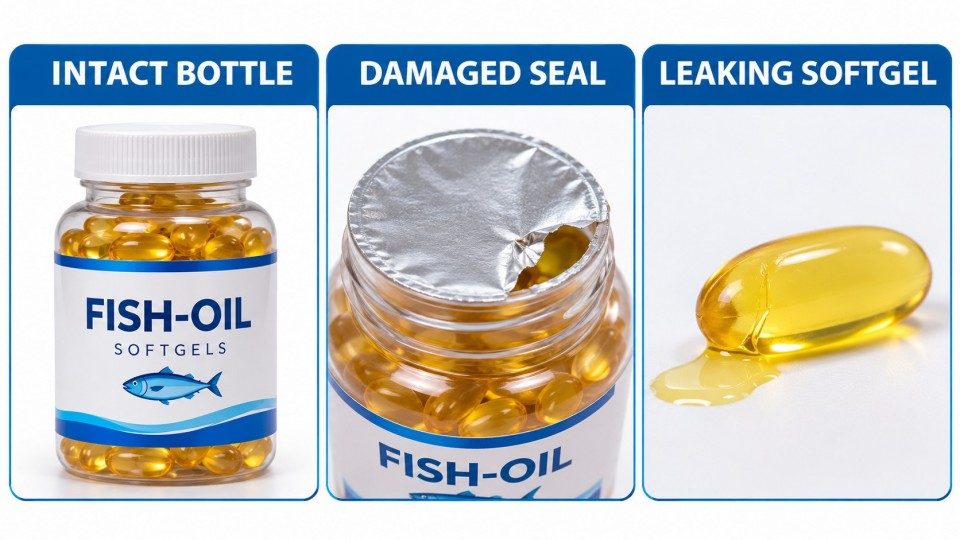
Start with the package, then look at the capsules and consider how the bottle was stored. You do not need to diagnose the chemistry at home; you need to recognize when the product deserves a closer check.
| What you notice | What it can tell you | Next step |
|---|---|---|
| An unusual odor | Fish oil can have a characteristic smell. A strong or unexpected change is a quality concern, but smell alone does not measure oxidation. | Stop using the questionable product and contact the manufacturer. |
| Sticky or misshapen softgels | The shell or storage conditions may be involved; sticking alone does not establish the condition of the oil. | Keep the bottle and describe the change to the manufacturer. |
| Leaking capsules or an oily bottle | One or more capsules may be damaged. | Retain the package and batch number for the manufacturer’s investigation. |
| A damaged seal | The container may not be in its intended condition. | Ask the manufacturer about replacement or return. |
A normal appearance is not proof that the oil meets its specifications. Manufacturers use laboratory methods to examine oxidation
Can You Take Fish Oil Capsules After the Expiration Date?
Do not decide that an expired bottle is still suitable simply because it is unopened or the capsules look normal. The date has passed, but it cannot tell you exactly when oxidation began or establish the condition of a particular capsule.
For a dietary supplement, check the product’s instructions and ask the manufacturer or a pharmacist about that bottle. If you have already taken a questionable product and feel unwell or are concerned, contact a healthcare professional.
How Should You Store Fish Oil Capsules?
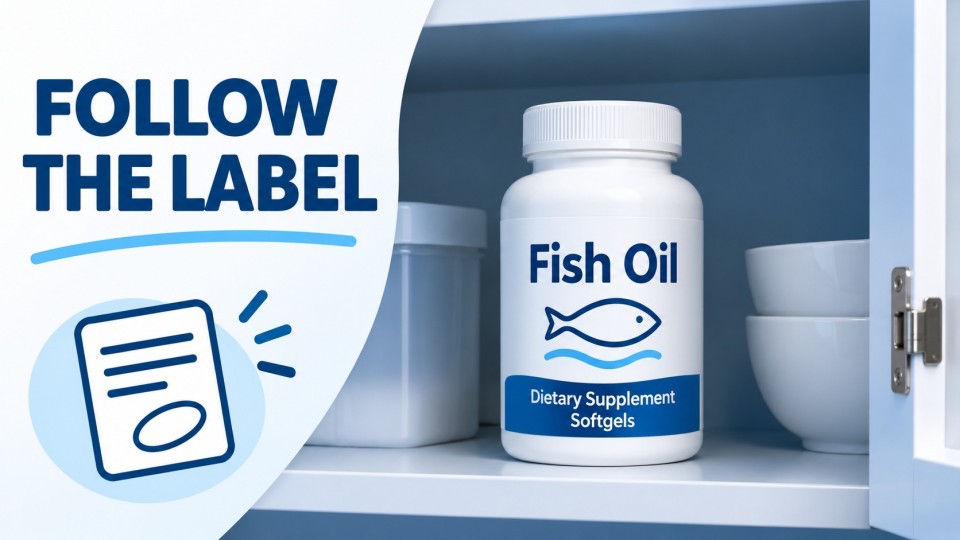
Use the conditions printed on your product. The bottle may specify a temperature range, a place away from light, or instructions after opening. Keep the container closed and retain the label so the date and batch number remain available.
Do Fish Oil Capsules Need to Be Refrigerated?
Check the label before putting your bottle in the refrigerator. Products do not all have the same directions, and a storage instruction for liquid fish oil should not automatically be applied to softgels. If the label is unclear, ask the manufacturer about that product. The same applies before freezing capsules.
What If the Bottle Has Been Exposed to Heat?
A bottle left in a hot car can spend hours outside its recommended conditions. Record how long it was there, the approximate conditions if known, and whether the container or capsules changed. The manufacturer can use those details together with the batch number to advise you about the product. A capsule’s appearance alone does not reveal its full storage history.
How Do Manufacturing and Packaging Affect Fish Oil Capsule Shelf Life?
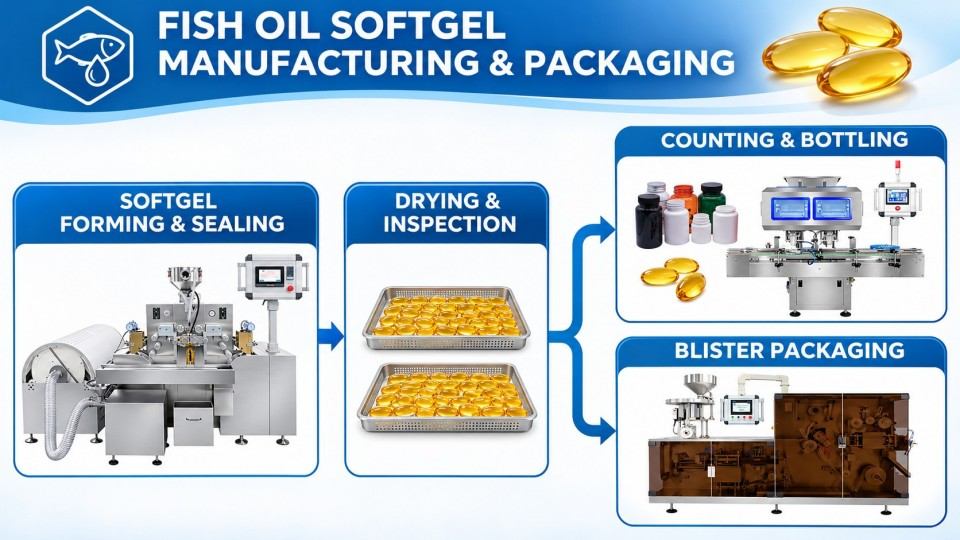
By the time a bottle reaches a shelf, the fish oil has already passed through several stages. Each stage answers a different quality question: Was the oil suitable when it arrived? Were the softgels formed and sealed correctly? Does the finished package meet the product’s storage requirements?
1. Check the Oil Before and During Production
Manufacturers can use peroxide value (PV) และ anisidine value (ของ) to assess different oxidation products. Results need to be interpreted alongside the testing method, oil and specification. [5]
These measurements help describe oil quality; they do not replace finished-product stability testing. ตัวอย่างเช่น, EFSA’s scientific opinion discusses oxidation measurements in fish oil, including oil stored in bulk. That scope should not be treated as a direct test of every finished softgel package. [7]
2. รูปร่าง, Fill and Inspect the Softgel
เอ เครื่องห่อหุ้มซอฟเจล forms the shell around the oil fill and seals it. The capsules then go through drying and inspection before packaging. The manufacturer checks whether the finished capsules meet the product’s specifications, including physical condition and seal integrity. [8]
For a fish oil producer, a visible leaking seam is a clear reason to investigate the capsule and the encapsulation process.
3. Choose a Packaging Route for the Finished Capsules
Dried, inspected softgels can be counted into bottles or placed in blister cavities. To set up the packaging equipment correctly, manufacturers must test the actual finished capsules, not just rely on their stated dimensions.
- บรรจุภัณฑ์ขวด: เอ softgel counting machine separates and counts the capsules before filling them into bottles. Depending on the line configuration, capping and sealing can follow. To keep the process running smoothly, manufacturers need to check how the softgels move through the feeder and whether their size and shape allow them to pass through the bottle opening.
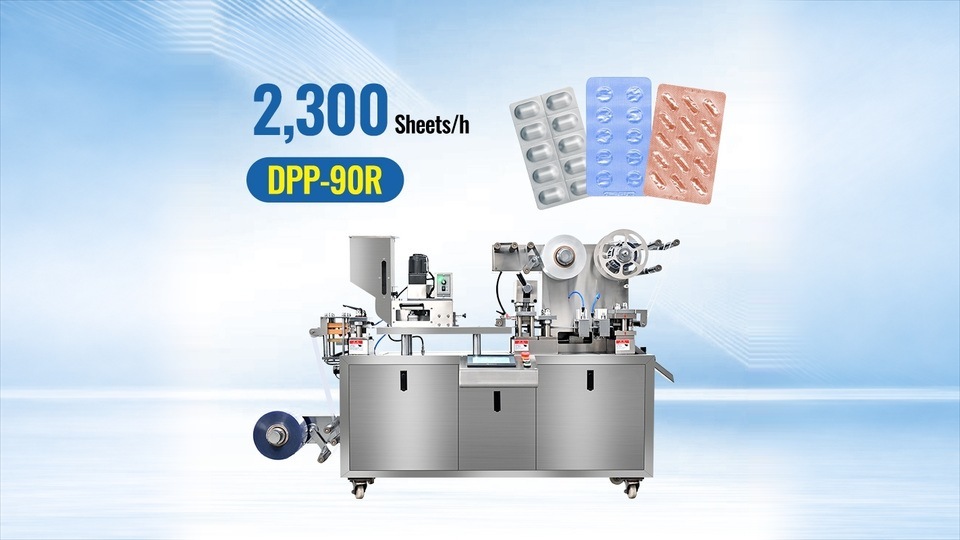
- บรรจุภัณฑ์พุพอง: เอ softgel blister packing machine feeds the capsules into formed cavities before the blister is sealed. The cavity must fit the capsule without putting unnecessary pressure on the shell. Manufacturers also need to consider capsule orientation and select forming and lidding materials that meet the product’s packaging requirements.
Two fish oil softgels can contain similar oil but behave differently on a packaging line because of their shape, firmness, or surface condition. Testing representative samples helps the supplier and manufacturer discuss a suitable setup. [8]
The selected packaging materials and seals are part of the product’s protection. The actual shelf life still needs to be supported by evaluation of the complete product and package under appropriate conditions; a machine alone cannot establish it. [6]
For a fish oil softgel project, Ruida Packing can discuss softgel encapsulation machine, counting and bottling lines, and blister packaging equipment based on your capsule samples, intended package, และเอาท์พุตเป้าหมาย.
คำถามที่พบบ่อย
Can fish oil capsules go bad before the expiration date?
The date is meaningful under the product’s stated conditions. If a bottle has been exposed to conditions outside the label or arrives with a damaged seal, contact the manufacturer with its batch details rather than relying on the date alone.
What if my fish oil has no expiration date?
Check the bottle for a best-by date or other date information. If none is clear, ask the manufacturer how it establishes the product’s shelf life and how the bottle should be stored. In the United States, dietary supplements are not required to carry an expiration date; voluntary dates should be supported by valid data. [3]
What if the label does not say whether to refrigerate fish oil capsules?
Do not assume that directions for another brand or for liquid fish oil apply. Ask the manufacturer about the specific softgels and whether it has different instructions after opening.
How long do fish oil capsules last after opening?
Some labels provide an after-opening period; others do not. Where it is absent, ask the manufacturer rather than applying a fixed number of months to every formulation.
Are sticky fish oil capsules always rancid?
เลขที่. Stickiness concerns the shell’s surface and may be associated with handling or storage. It does not, on its own, measure whether the oil inside has oxidized.
Does a fishy smell always mean the oil has gone bad?
ไม่จำเป็น. Fish oil can have a characteristic odor. A strong or unusual change deserves attention, but smell alone cannot determine the oil’s oxidation level or establish that the product is safe.
Is a blister pack always better than a bottle for fish oil softgels?
ไม่โดยอัตโนมัติ. Protection depends on the complete package, including its materials and seals, as well as the product and storage conditions. Manufacturers should assess the format for the specific formulation rather than select it by appearance alone.
What should I do with expired fish oil capsules?
Check any product-specific disposal instructions and ask a pharmacist about local options. Prescription medicines and dietary supplements may have different instructions.
บทสรุป
Fish oil capsules can go bad, and a printed date is only one part of assessing a bottle. Start with the date and storage instructions, check the container and softgels for unexpected changes, and keep the batch information if you need to contact the manufacturer.
สำหรับผู้ผลิต, the quality discussion begins with the oil and continues through encapsulation and the finished package. If you are planning a fish oil softgel line, Ruida Packing can discuss equipment around your capsule samples, รูปแบบบรรจุภัณฑ์, และข้อกำหนดการผลิต.
Medical Disclaimer
This article provides general information and does not replace advice from a healthcare professional. Follow the instructions for your specific product and consult a pharmacist or doctor when appropriate.
เอกสารอ้างอิง
- Oxidation levels of North American over-the-counter omega-3 supplements. Study of 171 products sold in Canada, 2015.
- NIH Dietary Supplement Label Database. น้ำมันปลา 1,000 mg label. One product’s storage instructions.
- เรา. องค์การอาหารและยา. Dietary Supplement Labeling Guide: General Dietary Supplement Labeling. คำถาม 14.
- เรา. องค์การอาหารและยา. Expiration Dates: คำถามและคำตอบ. Drug products.
- Oxidation of Marine Omega-3 Supplements and Human Health. ทบทวน, 2013.
- Effect of packaging and encapsulation on the oxidative and sensory stability of omega-3 supplements. Study of selected products and storage conditions, 2023.
- European Food Safety Authority. Scientific Opinion on Fish Oil for Human Consumption: Food Hygiene, Including Rancidity. Opinion on fish oil, including bulk oil, 2010.
- Ruida Packing. แคปซูลซอฟเจลคืออะไร? น้ำมันปลา, วิตามินดี, และวิธีการผลิต.