Itu harga dari tag dari mesin yang melepuh dapat diperbaiki, belum pembunuh keuntungan diam-diam di bidang manufaktur farmasi sering kali bersembunyi di dalam limbah tempat sampah.
Saat memilih antara mesin pengemas roller blister dan sistem pelat datar, banyak pembeli yang salah mengira hanya berfokus pada harga awal mesin pengemas blister. Namun, dampak finansial sebenarnya terletak pada biaya bahan kemasan melepuh dalam jangka panjang. Perbedaan kecil dalam jumlah sampah per siklus perlahan-lahan berubah menjadi pengeluaran tahunan yang sangat besar. Dalam gangguan ini, kami akan mengeksplorasi dengan tepat berapa banyak Anda membayar untuk bahan film melepuh yang tidak terpakai dan mengapa meningkatkan teknologi Anda mungkin merupakan keputusan yang paling menguntungkan untuk lini produksi Anda.
Poin Penting
- Pengurasan keuangan tersembunyi yang disebabkan oleh limbah bahan kemasan melepuh.
- Perbedaan mekanis antara mesin roller blister vs pengaturan pelat datar.
- Perhitungan langkah demi langkah penghematan bahan kemasan pada volume produksi tinggi.
- Wawasan tentang cara memilih antara mesin roller blister vs peralatan pelat datar untuk meminimalkan biaya bahan kemasan blister.
1. Pelat Datar vs Mesin Blister Rol: Untuk Apa Anda Sebenarnya Membayar?
Membandingkan mesin roller melepuh vs peralatan pelat datar memerlukan pengamatan lebih jauh dari permukaan lembaran logam. Mengevaluasi biaya mesin pengemas blister seperti membeli printer, karena bahan kemasan melepuh Anda bertindak sebagai pajak harian atas margin keuntungan Anda.
Mesin pelat datar membuat lembaran dalam tata letak kotak, sedangkan mesin pengemas roller blister menggunakan gerakan memutar terus menerus. Sementara pelat datar sangat serbaguna untuk benda yang ditarik dalam, format kisi-kisinya secara alami meninggalkan anyaman yang lebih lebar di antara rongga-rongga. Hal ini meningkatkan keseluruhan biaya kemasan lepuh karena Anda akhirnya membayar bahan kemasan lepuh yang langsung dibuang. Apakah Anda menggunakan bahan kemasan blister plastik atau bahan penutup kemasan blister, setiap milimeter potongan meningkatkan biaya bahan dasar lepuh Anda.
2. Mengapa Kemasan Blister Menghasilkan Limbah Bahan?
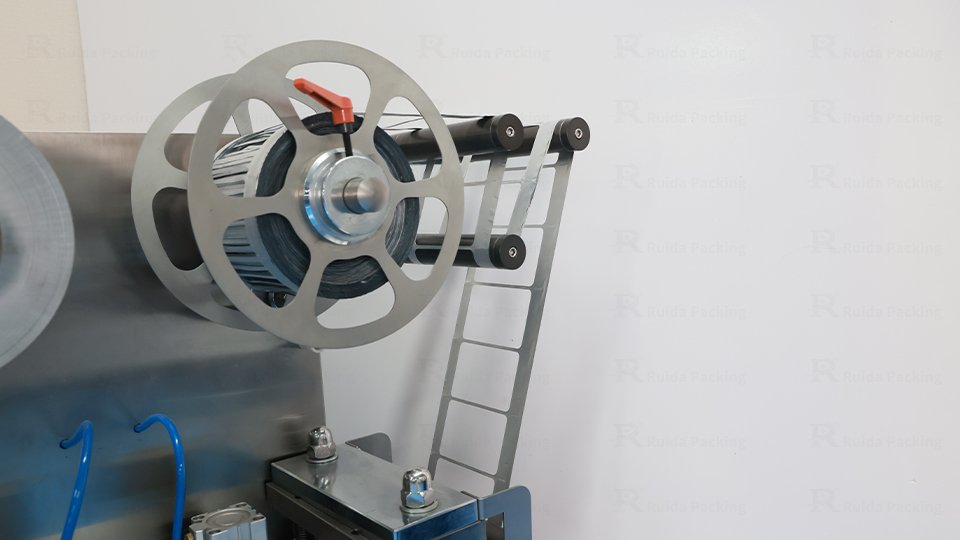
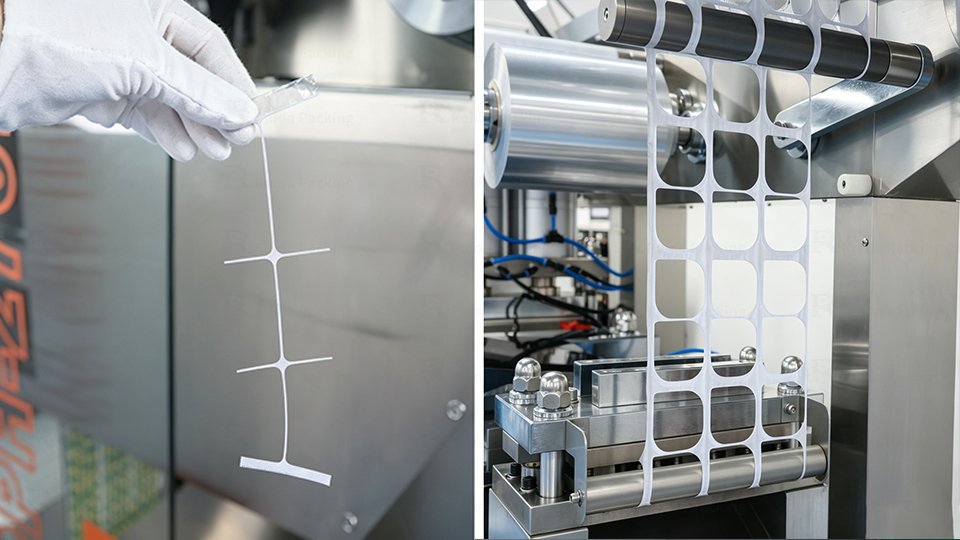
Sebelum membahas solusi, kita harus bertanya: bahan apa yang digunakan dalam kemasan blister, dan mengapa mereka menghasilkan limbah? Apakah pemasok bahan kemasan melepuh menyediakan bahan baki melepuh, bahan dasar melepuh, atau bahan foil penutup lepuh, mesin harus memegang tepi jaring untuk menariknya melalui stasiun pemanas dan pembentukan.
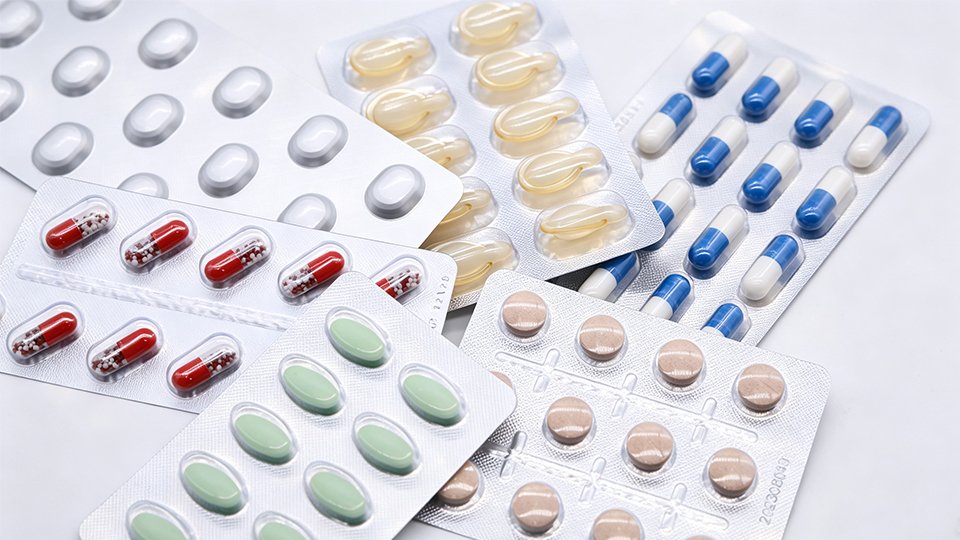
Limbah terutama terjadi di antara rongga yang terbentuk dan tepinya. Saat membeli bahan kemasan lepuh farmasi atau bahan kemasan lepuh farmasi, Anda membeli berdasarkan meter persegi atau kilogram. Setiap celah antara pukulan bahan kemasan pil Anda adalah uang yang dibuang. Menurut a 2023 laporan oleh Fortune Business Insights, pasar kemasan farmasi global sangat didorong oleh efisiensi bahan, dengan bahan baku terhitung hingga 60% biaya pengemasan variabel. Biaya sebenarnya dari kemasan melepuh bukanlah mesin itu sendiri, itu adalah anyaman yang tertinggal.
3. Bagaimana a Mesin Blister Rol Mengurangi Limbah Bahan?
Mesin pengemas rol melepuh menangani limbah ini melalui desain pelubangan yang terhuyung-huyung. Anggap saja seperti menggulung adonan dan memotong kue: jika Anda menggunakan kotak persegi, kamu pergi lebar-lebar, sisa adonan yang tidak terpakai. Sistem rol, Namun, membuat sarang potongan-potongan tersebut berdekatan seperti sel sarang lebah.
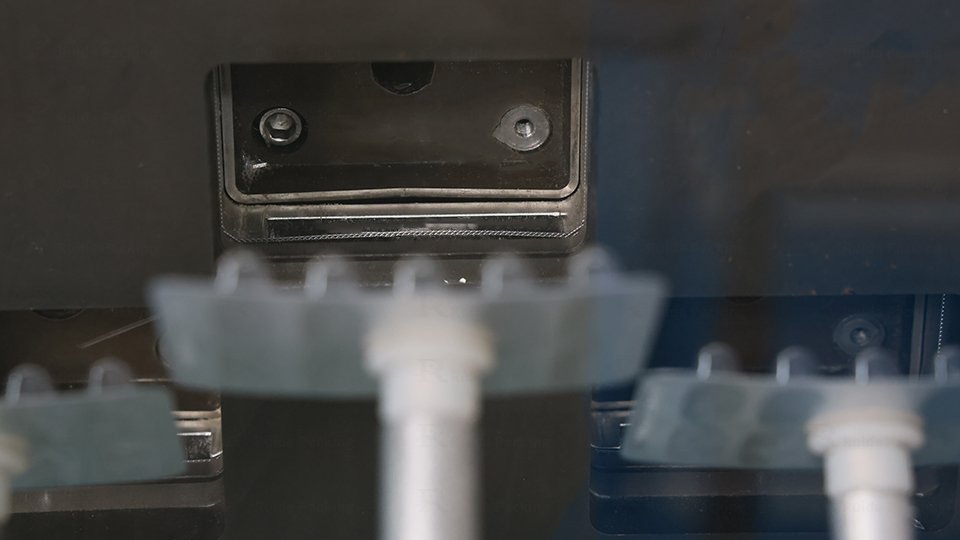
Dengan meminimalkan kesenjangan antara setiap pemotongan, mesin roller melepuh secara dramatis mengurangi konsumsi bahan kemasan melepuh, bahan penutup lepuh, dan bahan kemasan alu alu melepuh. Efisiensi ini berlaku untuk semua bahan kemasan melepuh farmasi. Penelitian dari Packaging Gateway menunjukkan bahwa mengoptimalkan tata letak pelubangan dapat mengurangi limbah polimer 12-15% setiap tahun. Jika bahan foil penutup lepuh dan bahan dasar lepuh Anda bersarang dengan sempurna, biaya kemasan blister Anda secara keseluruhan anjlok.
4. Berapa Banyak yang Bisa a Mesin Blister Rol Menghemat Bahan Kemasan?
Untuk produsen farmasi dan nutraceutical bervolume tinggi, biaya bahan kemasan melepuh bisa menjadi biaya berulang yang signifikan. Perbedaan kecil dalam konsumsi bahan per kemasan blister mungkin tampak tidak berarti, tapi kalau dikalikan puluhan juta lembar, penghematan tahunan bisa menjadi besar.
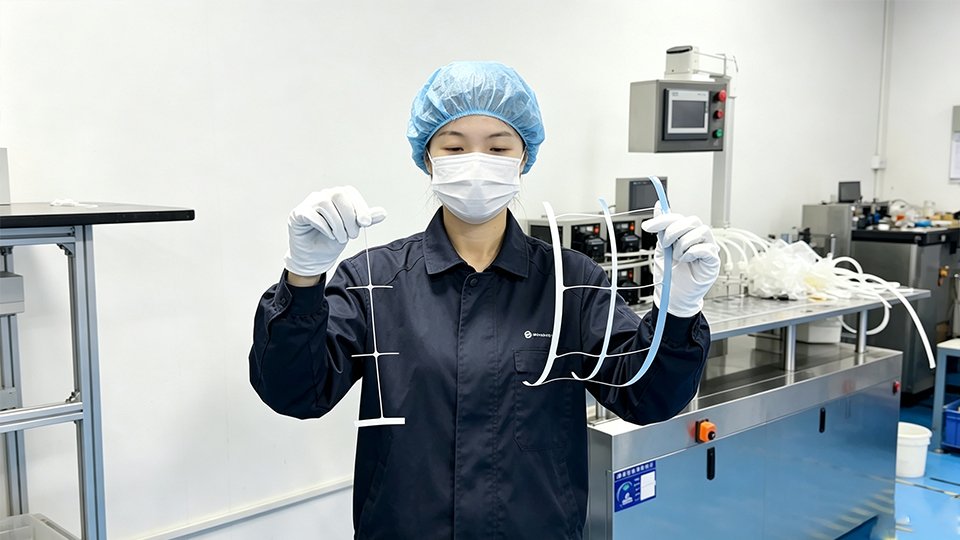
Untuk membuat perbandingan lebih praktis, mari kita gunakan a 250 μm bahan film melepuh PVC farmasi sebagai contoh. A publicly listed pharmaceutical blister PVC film has a density of 1.37 g/cm³ and a bulk price of around USD 1.80/kg for large orders.
A simple way to estimate blister packaging material cost is to calculate the amount of blister packing material used for each blister pack.
The basic formula is:
Material Cost per Lembar= Length (dm) × Width (dm) × Thickness (dm) × Material Price ÷ Number of Sheets
Pertama, convert the material price from USD/kg into USD/dm³:
1.37 g/cm³ = 1.37 kg/dm³
Karena itu:
1.37 kg/dm³ × USD 1.80/kg = USD 2.466/dm³
Now we can calculate the blister pack material cost per blister sheet.
Melangkah 1. Calculate the Material Cost per Lembar
Assume the effective PVC blister tray material used for one blister pack is 100 mm × 80 mm, atau:
| Parameter | Value |
| Panjang | 1.00 dm |
| Lebar | 0.80 dm |
| Ketebalan | 250 μm = 0.0025 dm |
| Material Price | USD 2.466/dm³ |
Then using the formula:
Material Cost per Sheet= Length × Width × Thickness × Material Price
Jadi, the roller machine’s material cost is:
1.00 × 0.80 × 0.0025 × 2.466 = USD 0.00493/pack
Under this example, the material cost is approximately:
Rp 0.00493 per blister sheet. This is very close to the USD 0.00493/sheet figure used in our internal comparison.
Melangkah 2. What Happens on a Flat Plate Machine?
The key difference is material utilization. Because the flat plate punching layout leaves more space between blister packs, the effective material consumption per pack is higher.
To compare a roller blister machine vs flat plate under the same material price and thickness, we can use the flat plate cost of USD 0.00528/sheet from our comparison.
Using the same PVC material price:
Rp 0.00528 − 2.466 − 0.0025 = 0.856 dm²
Artinya proses pelat datar memerlukan waktu kurang lebih 0.856 dm² luas bahan efektif per lembar, dibandingkan dengan 0.800 dm² untuk contoh roller.
Setara dengan panjang material efektif kira-kira:
0.856 − 0.80 = 1.07 dm (atau tentang 107 mm × 80 mm per lembar).
Perbedaan ini menunjukkan tambahan bahan kemasan melepuh yang dikonsumsi karena tata letak pelubangan yang kurang efisien.
Melangkah 3. Hitung Penghematan per Blister Paket Obat
Sekarang perbandingannya menjadi mudah:
| Barang | Mesin Pelat Datar | Mesin Blister Rol |
| Area/lembar material yang efektif | ~0,856 dm² | 0.800 dm² |
| ketebalan PVC | 0.0025 dm | 0.0025 dm |
| Harga bahan PVC | USD 2.466/dm³ | USD 2.466/dm³ |
| Biaya bahan/lembar | Rp 0.00528 | Rp 0.00493 |
Karena itu:
Rp 0.00528 − Rp 0.00493 = Rp 0,00035/lembar
Mesin roller blister menghemat sekitar:
Rp 0.00035 per pengobatan lecet mengemas.
Mungkin terdengar seperti angka yang sangat kecil. Namun perhitungannya berubah drastis ketika produksi tahunan mencapai puluhan juta obat dalam kemasan blister.
Melangkah 4. Hitung Penghematan Bahan Tahunan
Untuk produsen farmasi yang memproduksi 70 juta kemasan blister untuk obat-obatan per tahun:
70,000,000 × Rp 0.00035 = Rp 24,500
Jadi perkiraan penghematan bahan kemasan tahunan adalah:
Sekitar Rp 24,500 per tahun. Semakin tinggi volume produksinya, semakin besar dampaknya:
10 juta: Rp 3,500
30 juta: Rp 10,500
50 juta: Rp 17,500
70 juta: Rp 24,500
100 juta: Rp 35,000
Untuk produsen yang memproduksi 70 juta lembar setiap tahunnya, selisihnya hanya USD 0.00035 per lembar karenanya dapat mewakili hampir USD 25,000 dalam penghematan bahan kemasan blister tahunan. Yang penting penghematan ini berasal dari pemanfaatan material yang lebih baik, bukan hanya dari kecepatan alat berat yang lebih tinggi.
Apa Artinya bagi Produsen Farmasi dan Nutraceutical
Untuk volume produksi kecil, perbedaan bahan baku kemasan blister mungkin memiliki dampak finansial yang terbatas. Namun, untuk produsen farmasi dan nutraceutical yang memproduksi jutaan lembar obat melepuh setiap tahunnya, efisiensi bahan kemasan menjadi jauh lebih penting. Oleh karena itu, produsen harus membandingkan tidak hanya harga pembelian mesin tetapi juga biaya bahan per kemasan blister× volume produksi tahunan.
5. Melampaui Materi: Pergantian, Penghematan Tenaga Kerja dan Energi
Penghematan material hanyalah sebagian dari total keuntungan biaya. Mesin roller blister juga dapat mengurangi biaya pengoperasian melalui pergantian yang lebih cepat dan efisiensi produksi yang lebih tinggi.
Pergantian Film dan Perkakas yang Lebih Cepat
Mesin roller menggunakan platform penggabungan material untuk menyederhanakan penggantian film, sementara desain perkakas bergaya lacinya memungkinkan penggantian perkakas lebih cepat.
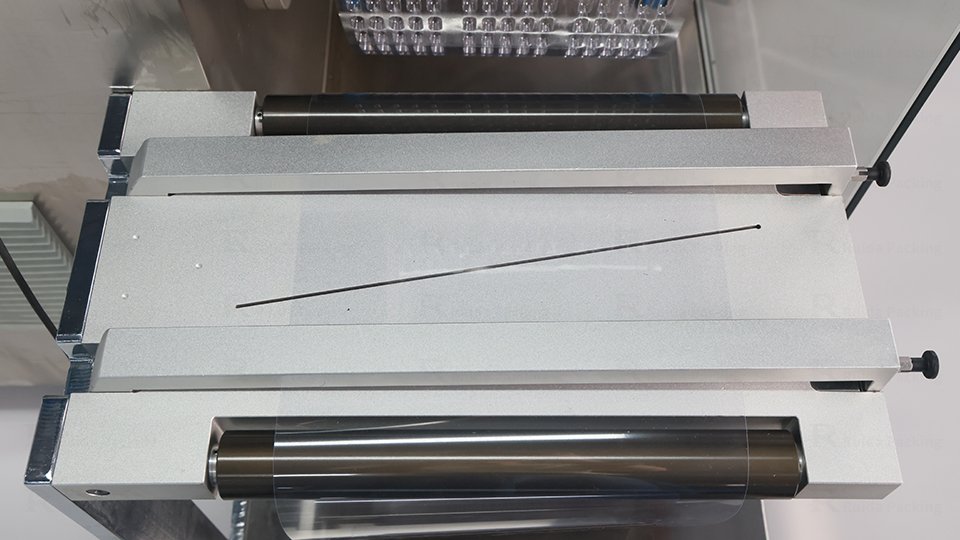
Proses perkakas lengkap, mulai dari pelepasan dan pembersihan hingga pemasangan, dapat diselesaikan dalam waktu kurang dari satu jam, dibandingkan dengan lebih dari dua jam untuk mesin konvensional. Hal ini dapat menghemat lebih dari satu jam waktu henti per pergantian.
Untuk pabrikan Eropa, menggunakan perkiraan biaya tenaga kerja sekitar USD 40/jam, satu jam yang dihemat mewakili kira-kira:
1 jam × USD 40/jam = USD 40 penghematan tenaga kerja per pergantian
Dengan beberapa pergantian setiap tahun, penghematan ini dapat bertambah dengan cepat.
Output Lebih Tinggi dengan Kekuatan Serupa
Efisiensi energi adalah keuntungan utama lainnya.
Menurut data kapasitas maksimum mesin blister kami, mesin pelat datar menghasilkan sekitar 11,200 pelat/jam pada 7 kW, sementara mesin roller mencapai 27,000 pelat/jam pada 24 kW.
Untuk persyaratan produksi di atas 10,000 piring/jam, mesin pelat datar tunggal sudah dapat memenuhi output yang dibutuhkan pada 11,200 piring/jam, sedangkan mesin roller menyediakan kapasitas yang jauh lebih tinggi 27,000 piring/jam. Namun, mesin roller membutuhkan tenaga yang jauh lebih besar, pada 24 kW dibandingkan dengan 7 kW untuk mesin pelat datar.
Dengan harga listrik USD 0,086/kWh dan 2,300 jam operasional per tahun, itu 17 perbedaan kW akan menghasilkan sekitar USD 3,366 lebih banyak biaya listrik tahunan untuk mesin roller.
Untuk produsen volume tinggi, Oleh karena itu, mesin roller blister dapat mengurangi total biaya pengoperasian melalui tiga keuntungan: lebih sedikit limbah bahan kemasan melepuh, pergantian yang lebih cepat, dan output yang lebih tinggi dengan konsumsi daya yang lebih rendah per unit kapasitas.
6. Kapan sebuah Mesin Blister Rol Layak untuk Investasi?
Jika fasilitas Anda menanganinya lama, berjalan terus menerus dengan menggunakan bahan plastik blister atau bahan penutup kemasan blister, investasi terbayar dengan sendirinya dengan cepat. Fasilitas apa pun yang sangat bergantung pada produsen bahan kemasan melepuh untuk volume tinggi akan segera merasakan dampaknya.
Bagaimana Ruida Packing Mendukung Produsen
Ruida Packing mengkhususkan diri dalam penelitian dan pembuatan mesin manufaktur farmasi dan nutraceutical premium, dengan bangga didukung oleh Dun & Jalan Brad (D&B). Semua peralatan kami secara ketat mematuhi CE, cGMP, ISO, dan standar internasional SA. Kami menawarkan sangat disesuaikan, solusi pengemasan menyeluruh yang disesuaikan secara sempurna dengan kebutuhan fasilitas unik Anda.
Fitur mesin pengemas rol melepuh kami:
mekanisme pukulan terhuyung-huyung yang dirancang khusus untuk secara drastis mengurangi pemasok bahan kemasan melepuh’ biaya. Ia juga menawarkan desain jalur cetakan geser untuk pergantian yang cepat, traksi servo penuh untuk penarikan presisi milimeter, dan sistem kontrol suhu PID untuk seragam, pemanasan yang akurat. Untuk memastikan kesuksesan jangka panjang Anda, Ruida Packing menyediakan:
- Penggantian suku cadang inti gratis selama tiga tahun;
- Instalasi di tempat yang komprehensif, debugging, dan pelatihan karyawan;
- Dokumen validasi 4Q lengkap disediakan sesuai permintaan.
7. Kesimpulan
Berdasarkan asumsi ini, satu mesin pengemas rol melepuh dapat menghemat sekitar Rp 29,500 per tahun dibandingkan dengan pengaturan pelat datar.
Akhirnya, menurunkan biaya bahan kemasan inti melepuh memerlukan pertimbangan lebih dari sekadar label harga awal. Dengan beralih ke mesin roller blister, produsen secara drastis mengurangi limbah, meningkatkan efisiensi operasional, dan mendapatkan kembali keuntungan yang hilang. Berhentilah membayar barang bekas dan mulailah memaksimalkan nilai jangka panjang bahan kemasan blister Anda sekarang juga.
8. Pertanyaan Umum
Q1: Berapa penghematan yang bisa dihemat oleh mesin roller blister dibandingkan dengan mesin pelat datar?
Dalam contoh kita, mesin roller mengurangi biaya material sekitar USD 0.00035 per bungkus lepuh. Jika Anda sedang melakukan churn 70 juta lembar per tahun, yang dengan mudah setara dengan sekitar USD 24,500 dalam penghematan bahan tahunan. Ini adalah cara cerdas untuk menyimpan uang Anda di jalur produksi, tidak di tempat sampah.
Q2: Mengapa mesin pengemas blister menghasilkan limbah material??
Penyebab utamanya adalah ruang yang tidak terpakai—atau anyaman—yang tertinggal di antara kemasan lepuh setelah dilubangi. Pemanfaatan bahan yang lebih baik berarti lebih sedikit bahan kemasan melepuh yang dikonsumsi untuk jumlah kemasan jadi yang sama.
Q3: Apakah penghematan bahan signifikan untuk produksi farmasi bervolume tinggi??
Sangat! Sepersekian sen per kemasan lepuh mungkin terlihat seperti uang receh, namun perkembangannya menjadi sangat cepat ketika produksinya mencapai puluhan juta bungkus. Semakin tinggi hasil tahunan Anda, semakin penting biaya bahan kemasan blister Anda.
Q4: Apakah mesin roller blister harganya lebih mahal dibandingkan mesin flat plate?
Harga pembelian di muka bisa lebih tinggi tergantung pada konfigurasi dan tingkat otomatisasi yang Anda pilih. Namun, produsen yang cerdas selalu mempertimbangkan harga awal tersebut dibandingkan dengan penghematan besar-besaran dalam jangka panjang pada bahan kemasan, waktu pergantian, dan tenaga kerja.
Q5: Apa yang harus saya bandingkan ketika memilih antara mesin roller dan mesin melepuh pelat datar?
Jangan pernah membandingkan label harga mesin sendirian. Anda perlu mencermati konsumsi bahan per lembar, biaya bahan tahunan, waktu pergantian, dan dukungan purna jual untuk menentukan total biaya kepemilikan Anda yang sebenarnya.
9. Referensi
[1] Wawasan Bisnis Keberuntungan: Ukuran Pasar Kemasan Farmasi, Membagikan & Analisis Industri
https://www.fortunebusinessinsights.com/industry-reports/pharmaceutical-packaging-market-101828
[2] Gerbang Pengemasan: Bahan Berkelanjutan dan Pengurangan Limbah dalam Kemasan Farmasi
https://www.packaging-gateway.com/analysis/sustainable-materials-pharma-packaging
[3] Pasar dan Pasar: Pasar Kemasan Blister Farmasi – Prakiraan Global ke 2028