Perkenalan: Evolusi Kemasan Dosis Tunggal untuk Cairan, Bubuk, and Granules
The adoption of single-dose packaging is expanding across multiple sectors, termasuk obat-obatan, nutraceutical, food products, and personal care. Products that were once sold in bottles or bulk containers are now frequently delivered in individual portions—from tablet dan kapsul to collagen powders, instant beverages, perfume samples, and even mouthwash.
This shift is driven by changing consumer anticipations. Modern users value packaging that is portable, hygienic, and easy to use, especially for travel, on-the-go consumption, or trial-sized products.
Two packaging formats play a central role in this transformation: aluminum-plastic blister packaging and stick pack packaging.
In the pharmaceutical industry, blister packs remain the dominant solution thanks to their excellent barrier protection, precise unit-dose structure, and long-standing regulatory acceptance. Mesin pengemas blister have therefore been a standard piece of equipment in pharmaceutical manufacturing for decades.
Meanwhile, the rapid growth of nutraceuticals, functional foods, and personal care products is driving the rise of stick pack packaging. Compared with traditional bottles or blister cards, stick packs offer greater flexibility for powders, butiran, and liquid products—while also reducing packaging material costs and enabling high-speed automated production.
Dalam panduan ini, we compare blister packaging and stick pack packaging from multiple perspectives—including history, advantages, equipment costs, application scenarios, and emerging industry trends—to help manufacturers choose the most suitable packaging solution.
Why Blister Packaging Dominated the Market for Decades

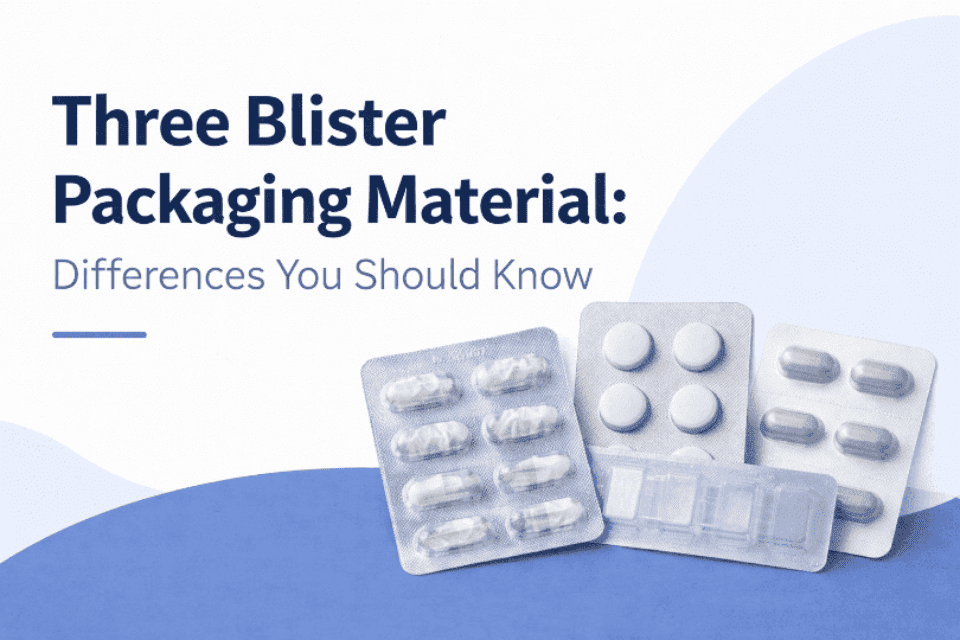
For more than half a century, blister packaging has been the dominant format for solid-dose pharmaceutical products. Tablets and capsules across Europe, Asia, and many other markets are most commonly distributed in aluminum-plastic blister packs, and this format continues to play a central role in pharmaceutical packaging today.
The long-standing dominance of blister packaging is not simply a matter of tradition. It is the result of several structural advantages that align closely with the needs of the pharmaceutical industry.
Strong Protection for Drug Stability
One of the primary reasons blister packaging became widely adopted is its excellent barrier protection.
By sealing each tablet or capsule inside an individual cavity, blister packs protect medicines from: kelembaban, oksigen, lampu, external contamination.
For many pharmaceutical products—especially moisture-sensitive active pharmaceutical ingredients (Lebah)—maintaining stability throughout the product’s shelf life is critical. Advanced materials such as PVDC-coated films or Alu-Alu cold-forming blister structures can provide extremely high barrier performance, helping manufacturers meet strict stability requirements.
Unit-Dose Packaging That Improves Patient Compliance
Another key advantage is the unit-dose structure of blister packaging.
Each cavity contains exactly one tablet or capsule, allowing patients to easily follow prescribed dosing schedules. Calendar-style blister packs can even help patients track daily medication.
This format reduces the risk of: incorrect dosing, contamination after opening, medication errors.
These advantages have made blister packaging a standard solution for pharmaceutical products.
Alignment With Pharmaceutical Regulations
Over the decades, blister packaging has also become deeply integrated into global pharmaceutical regulatory systems.
Regulators and healthcare systems often favor packaging formats that support: tamper evidence, traceability, controlled dosage distribution. Blister packs naturally meet many of these requirements, which has reinforced their widespread adoption in regulated pharmaceutical markets.
A Highly Mature Manufacturing Ecosystem
Akhirnya, Blister packaging also benefits from a highly mature manufacturing ecosystem.
Modern blister packing machines are capable of highly stable, automated production with features such as: automatic tablet or capsule feeding systems, servo-driven indexing, precision sealing control, integrated visual inspection
These technologies enable pharmaceutical manufacturers to maintain strict quality standards while achieving high production efficiency.
Because blister packaging provides the right balance of product protection, regulatory compliance, and manufacturing reliability, it has remained the preferred packaging format for pharmaceutical tablets and capsules for decades.
Mature Manufacturing Technology
Blister packaging equipment has been continuously optimized for decades. Modern blister packing machines now offer: Servo-driven forming and sealing; High-speed indexing systems; Automatic feeding systems for tablets and capsules; Vision inspection systems for quality control
These technologies enable stable high-volume production, which explains why blister packaging has dominated the pharmaceutical industry for so long.
The Rise of Stick Pack Packaging: Key Drivers and Market Trends
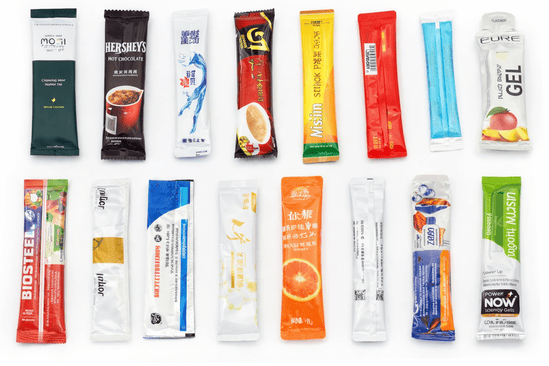
Although blister packaging remains essential for solid tablets and capsules, stick pack packaging has experienced rapid growth in recent years. This shift is mainly driven by evolving consumer habits and new product formats.
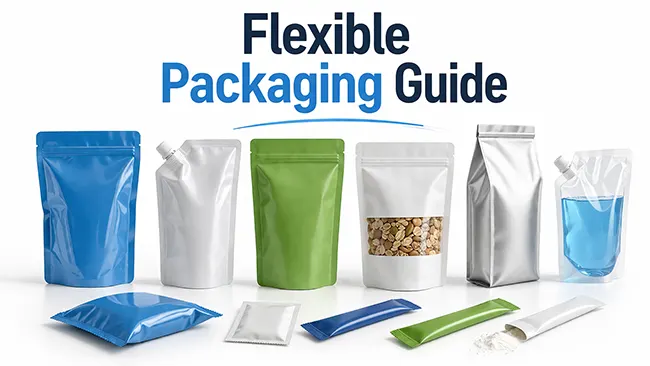
A stick pack is a narrow, tubular sachet format commonly used for powders, butiran, and liquid products. They are produced by vertical form-fill-seal (VFFS) stick pack machines.
Several factors explain the increasing popularity of stick pack packaging.
Convenience and Portability
Modern consumers prefer products that are easy to carry and use on the go. Stick packs are perfect for: nutritional supplements, energy drinks, electrolyte powders, coffee or beverage mixes.
A single stick can be easily torn open and consumed without measuring.
Flexible Product Applications
Unlike blister packaging, stick packs are suitable for a wider range of materials, termasuk: powder products, butiran, cairan, gels and pastes.
This versatility makes stick packs particularly attractive for nutraceutical and functional food products.
Lower Packaging Material Cost
Stick packs typically use laminated film materials, which are lighter and more cost-efficient than rigid blister materials. For large-volume products, this can significantly reduce packaging costs.
High-Speed Multi-Lane Production
Modern stick pack machines often feature multi-lane filling systems, allowing multiple sachets to be produced simultaneously. This greatly increases production efficiency and makes stick packs ideal for high-volume consumer products.
Cost Comparison: Blister Packer vs. VFFS Stick Pack Machines
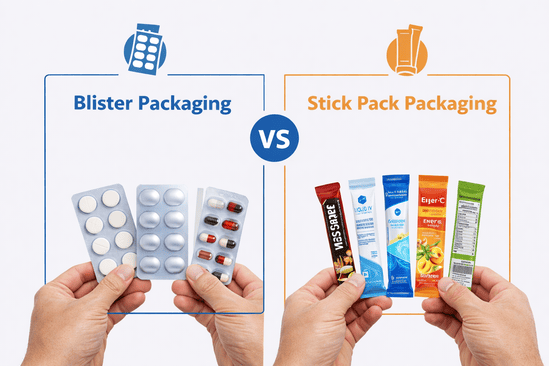
When manufacturers evaluate blister packaging and stick pack packaging, the first question is often: Which machine is cheaper?
Namun, the real comparison should focus on cost per packaged unit, not just the purchase price of the equipment. Dalam praktiknya, the total cost of a packaging system is mainly influenced by three factors: 1) equipment investment; 2)packaging material cost; 3) production efficiency.
Understanding these three elements helps manufacturers decide whether a blister packing machine or a VFFS stick pack machine makes more economic sense.
Equipment Cost
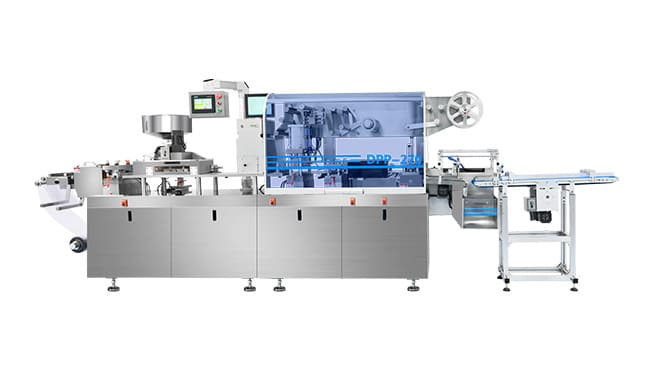
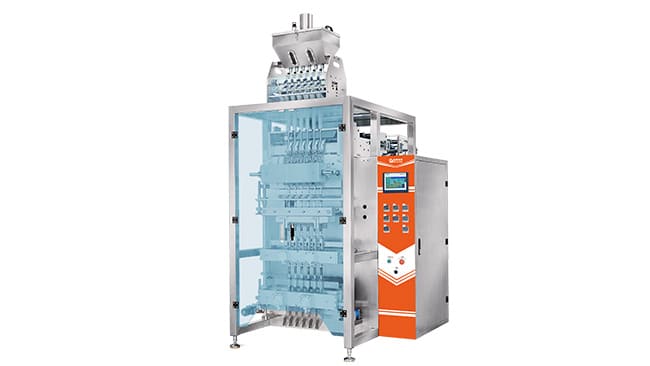
In many cases, a standard blister packing machine costs less than a multi-lane stick pack machine.
Blister machines typically follow a relatively straightforward production process:
forming → feeding → sealing → cutting
By contrast, stick pack machines—especially multi-lane models—require more complex control systems to synchronize film feeding, isian, penyegelan, and cutting across several lanes simultaneously.
Because of this, high-speed stick pack filling machines often have a higher initial investment than blister machines of similar automation levels.
Packaging Material Cost
While blister machines may be less expensive upfront, stick pack packaging often has an advantage when it comes to material cost.
Blister packaging usually requires two materials:
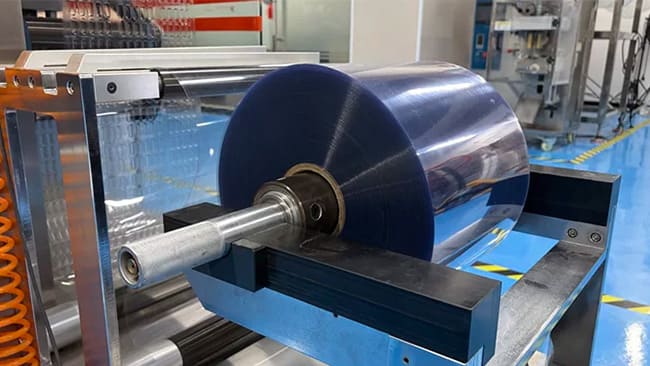
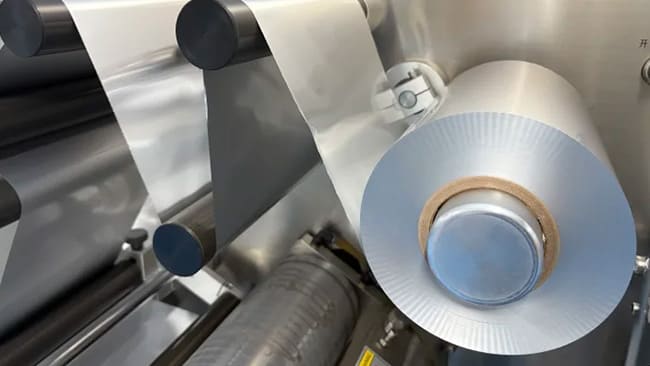
rigid forming film (PVC, PELIHARAAN, or similar)
aluminum lidding foil
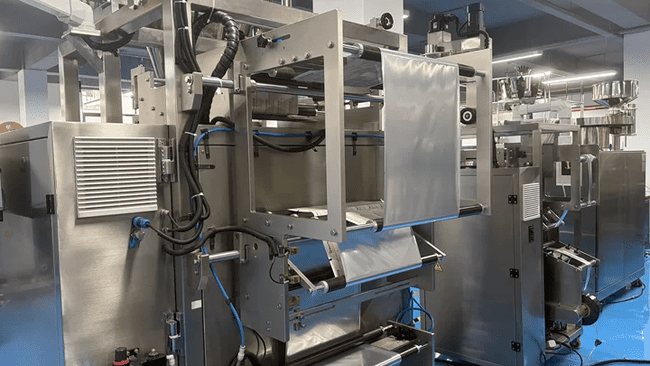
Stick pack packaging, on the other hand, uses flexible laminated film, which is generally lighter and requires less material per package.
Misalnya, if:
blister packaging material costs $0.012 per pack
stick pack film costs $0.007 per pack
then the difference is $0.005 per unit.
For a production volume of 10 million units per year, that difference becomes:
10,000,000 × $0.005 = $50,000 per year
This is why packaging material often plays a bigger role in long-term cost than the machine price itself.
Efisiensi Produksi
Another important factor is throughput.
A typical blister packing machine may produce hundreds of blisters per minute, which is highly efficient for tablets and capsules.
Namun, VFFS stick pack machines can run across multiple lanes simultaneously. Misalnya:
a 6-lane machine running at 40 cycles per minute produces 240 stick packs per minute
This multi-lane design makes stick pack machines particularly suitable for high-volume products such as: drink powders, nutritional supplements, liquid sachets, personal care samples.
The Real Cost Decision
Dalam praktiknya, the most economical packaging system depends largely on the type of product being packaged.
Tablets and capsules are naturally suited to blister packaging, which offers excellent protection and compliance.
Bubuk, butiran, cairan, and sample-size products are often more cost-effective in stick pack packaging due to lower material consumption and high-speed multi-lane production.
For this reason, many manufacturers today use both blister packing machines and stick pack machines, depending on the specific product and target market.
Kemasan Blister vs. Kemasan Paket Tongkat: Application Scenarios
Although blister packaging and stick pack packaging are both widely used for single-dose products, their applications are largely determined by the physical form of the product. Tablet, bubuk, butiran, and liquids each have packaging formats that work best in terms of protection, kenyamanan, and production efficiency.
Tablets and Capsules: Blister Packaging Dominates
For solid oral dosage forms, blister packaging remains the industry standard.
Typical products include: tablet farmasi, capsule medications, and vitamin supplements.
Many well-known pharmaceutical products are distributed in blister packs, and this format is widely adopted across the global pharmaceutical industry. Blister packs provide strong barrier protection, precise unit-dose control, and good patient compliance, which is why blister packing machines remain essential in pharmaceutical manufacturing.
Portion-Control Foods: Blister Packaging Beyond Pharma
Blister packaging is also common in the food service industry for portion-controlled products. Restaurants and catering suppliers frequently use foil-sealed blister cups for items such as: ketchup, mayonnaise, Butter, and salad dressing
Large chains like McDonald’s and KFC often use this type of packaging for sauce portions because it offers hygienic single servings and consistent portion control.
Powders and Granules: A Strong Market for Stick Packs
For powdered and granular products, stick pack packaging is widely accepted due to its portability and efficient material usage.
Typical applications include: collagen powder, protein supplements, electrolyte drink mixes, and instant coffee.
Brands such as Nescafé, Starbucks VIA, and Liquid I.V. use stick packs for convenient single servings. These products are typically produced using multi-lane stick pack machines, which enable high-speed production.
Liquids and Gels: Both Packaging Formats Are Used
For liquid and gel products, both blister packaging and stick pack packaging can be used depending on the application.
Stick packs are common for: drink concentrates, liquid supplements, and cosmetic samples
Namun, liquid blister packaging is also used for products that require rigid cavities and accurate portion control, such as honey portions, oral liquids, or specialty condiments.
Choosing the Right Packaging Technology
From these examples, a clear pattern emerges.
Blister packaging is best suited for: tablet, kapsul, solid pharmaceutical and dosage forms.
Stick pack packaging is ideal for: bubuk, butiran, cairan, gels, sample-size consumer products
For manufacturers selecting new equipment, the choice between a blister packing machine and a stick pack machine should therefore begin with the physical characteristics of the product being packaged.
Our Packaging Equipment Solutions: Backed by Over 10 Years of Export Experience
With more than a decade of experience in exporting pharmaceutical and packaging machinery, we provide flexible equipment solutions for manufacturers producing single-dose products such as tablets, bubuk, butiran, dan cairan.
Our product range includes both blister packaging machines and stick pack machines, allowing manufacturers to choose the most suitable packaging format based on their product type and production scale.
Blister Packing Machines for Solid and Liquid Products
Our blister packing machines are widely used for packaging: tablet, kapsul, softgels, honey portions, liquid nutritional products
Multiple machine models are available to meet different capacity requirements. Selain itu, the feeding system can be customized according to the product characteristics, whether for tablets, kapsul, or special-shaped products.
For liquid products, we also offer liquid blister packing machines, which allow precise filling of liquids into thermoformed cavities before sealing with aluminum foil. This solution is suitable for products such as liquid supplements, honey portions, saus, and oral liquid products.
Stick Pack Machines From Single-Lane to Multi-Lane
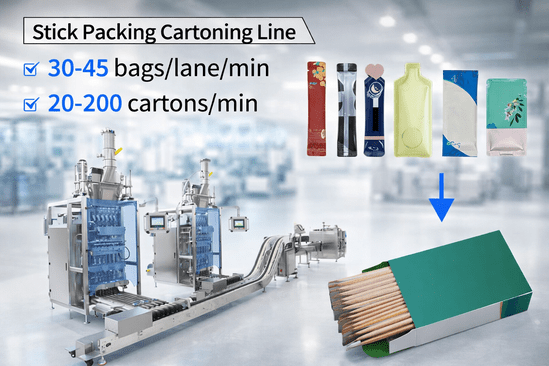
For powders, butiran, and liquid sachets, we provide a wide range of stick pack machines, termasuk: single-lane stick pack machines, double-lane stick pack machines, and multi-lane high-speed stick pack machines.
These machines are suitable for packaging products such as drink powders, Suplemen Kolagen, instant coffee, oral liquids, and cosmetic samples.
The multi-lane design allows manufacturers to significantly increase production capacity while maintaining high filling accuracy.
Beyond individual machines, we also provide complete packaging lines for higher levels of automation.
By combining primary packaging equipment and secondary packaging machines, manufacturers can build a fully automated production line from filling and sealing to final cartoning.
With experience serving customers across different international markets, we focus on providing reliable machines, flexible customization, and stable long-term operation for pharmaceutical, nutraceutical, makanan, and personal care packaging applications.
Kesimpulan: The Future of Single-Dose Packaging Equipment
As demand for single-dose packaging continues to grow across pharmaceuticals, nutraceutical, makanan, and personal care products, both blister packaging and stick pack packaging will remain essential solutions.
Blister packaging continues to dominate applications such as tablets, kapsul, and portion-controlled foods, where strong barrier protection and precise unit-dose control are critical. Pada saat yang sama, stick pack packaging has expanded rapidly for powders, butiran, and liquid consumer products, thanks to its flexibility, lightweight materials, and high-speed production capabilities.
Rather than replacing each other, these two formats often serve different product forms and market needs.
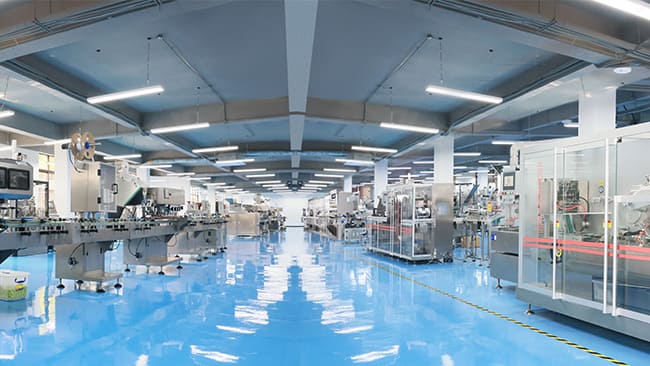
For manufacturers, the key is selecting the right packaging technology based on product characteristics, production scale, and target market requirements. In many cases, companies even operate both blister packing machines and stick pack machines within the same production facility.
As consumer demand for convenient, portabel, and hygienic packaging continues to increase, single-dose packaging equipment will play an increasingly important role in modern production lines.