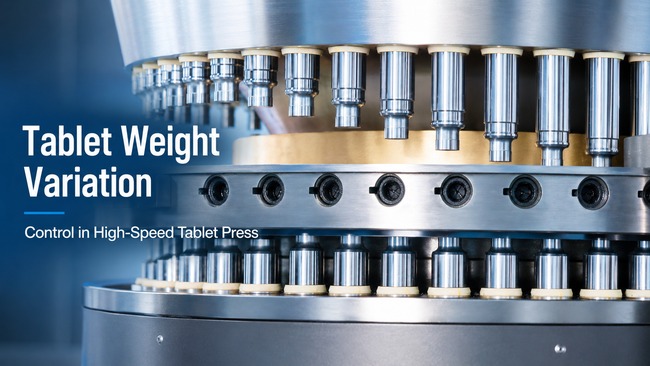
Variasi berat tablet adalah salah satu masalah kualitas paling umum dalam kompresi tablet. Tampaknya tablet dari batch yang sama tidak cukup mendekati berat target. Dalam produksi, ini biasanya menunjukkan aliran bubuk yang tidak stabil, pengisian cetakan yang tidak konsisten, mengubah kepadatan bubuk, keausan perkakas, atau koordinasi yang buruk antara kecepatan pengumpan dan kecepatan pengepres.
Mesin press tablet tidak menimbang setiap tablet sebelum dikompresi. Ini mengisi setiap rongga cetakan dengan volume bubuk atau butiran yang terkontrol, lalu kompres bahan itu menjadi tablet. Ini berarti berat tablet sangat bergantung pada seberapa konsisten setiap cetakan terisi selama setiap siklus pengepresan.
Untuk produsen farmasi dan nutraceutical, Variasi berat tablet dapat mempengaruhi konsistensi dosis, kekerasan tablet, kerapuhan, perilaku pembubaran, penampilan, dan stabilitas pengemasan hilir. Uji variasi berat tablet dapat mendeteksi masalah tersebut, tetapi kendali sebenarnya dimulai lebih awal: persiapan bahan, makanan, isian, pemantauan kompresi, dan pengendalian penolakan.
1. Apa Arti Variasi Berat Tablet dalam Produksi Tablet
Variasi berat tablet berarti setiap tablet dalam batch yang sama berbeda dari berat target atau satu sama lain di luar kisaran kendali yang dapat diterima. Biasanya ditemukan melalui pengambilan sampel, pemeriksaan dalam proses, atau uji variasi berat tablet.
Hal yang penting adalah bahwa variasi bobot adalah sinyal proses, bukan hanya hasil pemeriksaan akhir. Setiap tablet dibentuk dari bahan yang diisi ke dalam satu rongga cetakan. Jika dadu menerima lebih banyak bubuk, tablet menjadi lebih berat. Jika dadu tidak terisi penuh, tablet menjadi lebih ringan.
Variasi berat tablet juga harus dipisahkan dari keseragaman isi. Tablet yang lebih berat mungkin mengandung lebih banyak bahan aktif jika campurannya seragam, namun berat tablet saja tidak sepenuhnya membuktikan distribusi bahan aktif. Dari sisi peralatan, berat tablet yang stabil masih menunjukkan bahwa pemberian makan dan pengisian lebih terkendali.
Saat berat tablet mulai melayang, tim produksi harus terlebih dahulu memeriksa aliran bubuk, isiannya, kondisi pengumpan, penyesuaian kedalaman pengisian, keausan perkakas, dan tekan kecepatan sebelum menganggapnya hanya sebagai masalah pengujian tablet yang sudah selesai.
2. Mengapa Variasi Berat Tablet Terjadi Selama Kompresi
Variasi berat tablet terjadi selama kompresi ketika jumlah bahan yang memasuki rongga cetakan berubah dari satu tablet ke tablet berikutnya. Penyebabnya bisa berasal dari formulasinya, pengumpan, perkakas, kecepatan pers, atau cara mesin disetel.
Penyebab umum meliputi:
- Aliran bubuk yang buruk: material tidak bergerak ke dalam rongga cetakan secara merata.
- Pengisian cetakan tidak konsisten: setiap cetakan menerima volume bubuk atau butiran yang berbeda.
- Pemisahan materi: partikel dipisahkan berdasarkan ukuran atau kepadatan di hopper atau feeder.
- Kedalaman pengisian tidak stabil: pengaturan pengisian berubah atau tidak disesuaikan secara akurat.
- Kelaparan pengumpan: pengumpan tidak dapat memasok material yang cukup pada kecepatan yang dibutuhkan.
- Keausan perkakas: pukulan, meninggal, atau kamera tidak lagi mengulangi gerakan yang sama secara akurat.
- Menempel atau memetik: bahan tetap berada pada permukaan pelubang dan mengubah permukaan isian atau tablet yang efektif.
- Kecepatan pers yang berlebihan: cetakan melewati area pengisian terlalu cepat untuk material saat ini.
Kecepatan saja bukanlah musuh. Mesin press tablet berkecepatan tinggi dapat menghasilkan tablet yang stabil saat disusui, isian, kompresi, dan sistem pemantauan dicocokkan dengan benar. Masalah muncul ketika kecepatan produksi lebih tinggi daripada yang dapat didukung oleh material dan sistem pemberian pakan.
3. Bagaimana Aliran Serbuk dan Pengisian Die Mempengaruhi Berat Tablet
Aliran bubuk dan pengisian cetakan merupakan inti dari pengendalian berat tablet. A mesin kompresi tablet biasanya mengontrol volume yang diisi ke dalam cetakan. Hasil berkualitas yang dibutuhkan, Namun, diukur dengan berat dan kinerja. Inilah sebabnya mengapa kepadatan bubuk, distribusi ukuran partikel, kelembaban, dan kemampuan mengalir sangat penting.
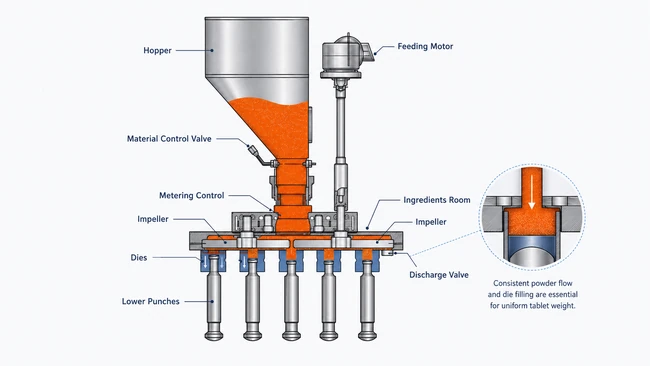
Jika butirannya terlalu halus, terlalu basah, terlalu kering, atau terlalu tidak teratur, mereka mungkin tidak mengalir secara merata ke dalam cetakan. Beberapa cetakan terisi penuh, sementara yang lain menerima lebih sedikit materi. Jika campuran terpisah di hopper atau feeder, kepadatan massal dapat berubah selama batch, meskipun pengaturan kedalaman pengisian tidak berubah.
Tempat tidur bubuk yang stabil membantu pengumpan mengirimkan material secara konsisten. Butiran seragam, kelembaban terkontrol, pelumas yang sesuai, dan sifat aliran yang baik mengurangi kemungkinan variasi berat tablet secara tiba-tiba selama kompresi.
Ukuran partikel maksimum juga harus sesuai dengan ukuran tablet dan cetakan. Partikel yang besar atau tidak rata dapat mengganggu kelancaran pengisian cetakan, terutama ketika tablet kecil diproduksi dengan kecepatan tinggi. Untuk materi yang sulit, tim produksi harus meninjau granulasi, penyaringan, pengeringan, pencampuran, dan kondisi penyimpanan sebelum menyetel mesin press tablet berulang kali.
4. Bagaimana Sistem Pengumpanan Mengontrol Stabilitas Berat pada Mesin Press Tablet Berkecepatan Tinggi
Sistem pengumpanan mengontrol seberapa andal bubuk mencapai rongga cetakan. Dalam produksi yang lebih lambat, pemberian gravitasi mungkin cukup untuk beberapa material. Dalam produksi berkecepatan tinggi, pengumpanan gravitasi sering kali menjadi kurang stabil karena setiap cetakan menghabiskan lebih sedikit waktu di bawah area pengisian.
Pengumpan paksa meningkatkan stabilitas berat tablet dengan secara aktif memindahkan bubuk ke dalam cetakan. Dayung atau impeler pengumpan membantu menjaga pasokan bubuk lebih konsisten, mengurangi pengisian yang kurang dan meningkatkan pengisian cetakan pada kecepatan menara yang lebih tinggi.
Untuk mesin press tablet putar, kecepatan pengumpan dan kecepatan menara harus bekerja sama. Jika pengumpan berjalan terlalu lambat, dadu mungkin tidak terisi seluruhnya. Jika berjalan terlalu agresif, itu dapat menyebabkan geseran material, pemanasan bubuk, atau segregasi. Tujuannya bukan sekadar untuk mendorong lebih banyak bedak, tetapi untuk memberi makan setiap cetakan dengan tempat tidur bubuk yang stabil dan dapat diulang.
Pengumpan paksa impeller dua lapis dapat berguna untuk kompresi output tinggi karena mendukung kapasitas pengisian sekaligus mengurangi risiko pemisahan material. Jarak bebas pengumpan yang tepat juga penting. Kesenjangan yang terlalu besar dapat menyebabkan kebocoran dan hilangnya bubuk; pengaturan yang terlalu ketat dapat meningkatkan gesekan atau keausan.
5. Bagaimana Isi Kedalaman, Penyesuaian Servo, dan Kekuatan Kompresi Bekerja Sama
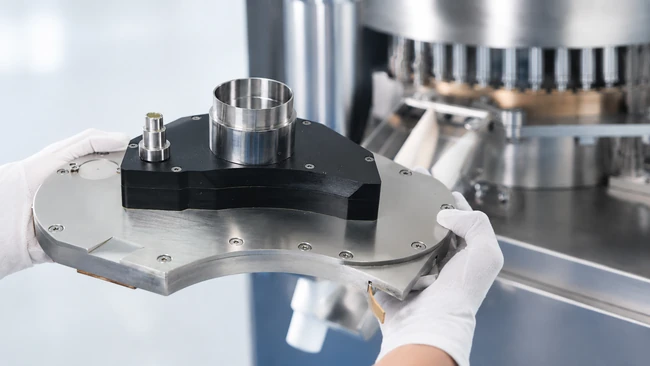
Kedalaman pengisian secara langsung mempengaruhi berat tablet karena mengontrol berapa banyak bahan yang masuk ke rongga cetakan sebelum kompresi. Di banyak mesin press tablet, penyesuaian berat pada dasarnya adalah penyesuaian kedalaman pengisian.
Penyesuaian manual dapat dilakukan untuk produksi yang lebih lambat atau tidak terlalu menuntut, tapi itu sangat bergantung pada pengalaman operator. Dalam kecepatan tinggi produksi tablet, perubahan kecil dapat membuat banyak tablet tidak normal dengan cepat. Penyesuaian pengisian yang dikontrol servo memberi mesin cara yang lebih berulang untuk menambah atau mengurangi jumlah pengisian sesuai dengan pengaturan target.
Kekuatan kompresi harus dipahami dengan benar. Gaya kompresi yang lebih tinggi tidak secara otomatis memperbaiki variasi berat tablet. Kekuatan kompresi terutama mempengaruhi kekerasan tablet, pemadatan tablet, kepadatan tablet, risiko pembatasan tablet, dan pembentukan tablet. Hal ini juga dapat mengungkapkan masalah pengisian atau perkakas yang tidak normal melalui sinyal tekanan.
Pra-kompresi membantu menghilangkan udara yang terperangkap dan menyiapkan alas bedak untuk kompresi utama. Kompresi utama membentuk tablet akhir. Ketika pra-kompresi dan kompresi utama stabil, tablet lebih cenderung memiliki kekerasan dan bentuk yang konsisten. Namun jika dadu tidak terisi dengan benar sebelum kompresi, tekanan saja tidak dapat menghasilkan berat tablet yang benar.
Inilah sebabnya mengapa mengisi kedalaman, makanan, dan pemantauan kompresi harus bekerja sebagai satu sistem kontrol.
6. Bagaimana Sistem Pemantauan dan Penolakan Online Mengurangi Risiko Batch
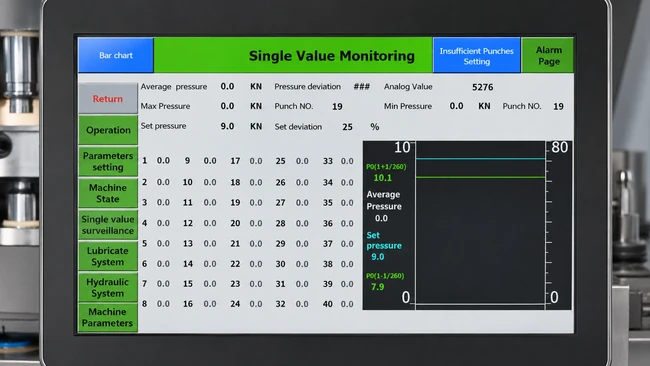
Pemantauan online membantu tim produksi mendeteksi kompresi abnormal sebelum terlalu banyak tablet yang rusak dipindahkan ke hilir. Di mesin press tablet berkecepatan tinggi, pemantauan tekanan pukulan dapat melacak perbedaan tekanan antar stasiun dan mengidentifikasi tren abnormal.
Pemantauan tekanan tidak secara langsung menimbang setiap tablet. Ia menggunakan sinyal kompresi untuk mendeteksi masalah seperti pengisian yang kurang, pengisian berlebihan, pelekatan, keausan perkakas, atau perilaku material yang tidak biasa. Ketika tekanan bergerak di luar kisaran yang ditetapkan, mesin dapat berbunyi alarm, berhenti, atau memicu sistem penolakan online.
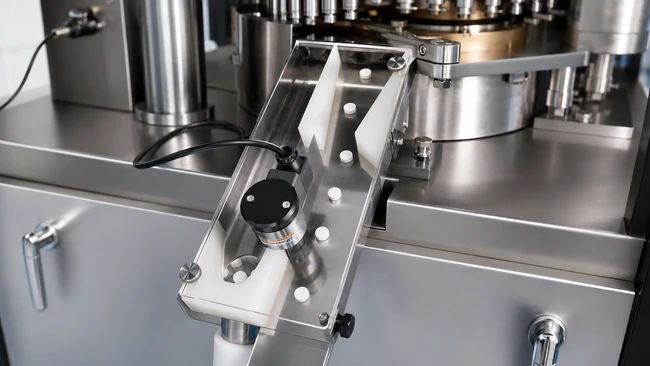
Sistem penolakan online yang baik mengurangi risiko batch dengan membuang tablet yang tidak normal sebelum dicampur dengan tablet yang dapat diterima. Beberapa sistem mendukung penolakan satu tablet, sementara yang lain mendukung penolakan terus-menerus ketika tren abnormal yang berulang terdeteksi.
Hal ini mengubah pengendalian berat tablet dari koreksi tertunda menjadi pengendalian proses. Pengambilan sampel tradisional dapat menemukan masalah setelah banyak tablet diproduksi. Pemantauan dan penolakan online membantu mengidentifikasi tablet abnormal selama produksi dan mengurangi kemungkinan tablet tersebut masuk dalam penghitungan, kemasan blister, pengisian botol, atau karton.
7. Poin Kontrol Utama untuk Mengurangi Variasi Berat Tablet
Pengendalian variasi berat tablet bergantung pada beberapa titik yang terhubung. Tabel di bawah menunjukkan bagaimana faktor proses dan fitur mesin bekerja sama.
| Titik Kontrol | Mengapa Ini Mempengaruhi Berat Tablet | Kontrol Mesin atau Proses |
| Aliran bubuk | Aliran yang buruk menyebabkan pengisian cetakan tidak stabil | Granulasi, penyaringan, kontrol kelembaban |
| Isinya | Secara langsung menentukan berat tablet | Kedalaman pengisian dan pengaturan pengumpan yang stabil |
| Kinerja pengumpan | Mencegah pengisian yang kurang pada kecepatan tinggi | Pengumpan paksa dan kecepatan pengumpan yang sesuai |
| Penyesuaian kedalaman pengisian | Mengontrol volume material di setiap cetakan | Penyesuaian pengisian yang dikontrol servo |
| Kondisi perkakas | Perkakas yang aus mempengaruhi kemampuan pengulangan | Inspeksi pukulan dan mati |
| Sinyal kompresi | Mengungkapkan pengisian atau pembentukan yang tidak normal | Pemantauan tekanan pukulan waktu nyata |
| Penanganan tablet yang rusak | Menghentikan tablet buruk memasuki batch | Sistem penolakan online |
| Stabilitas jangka panjang | Debu, memakai, dan pelumasan mempengaruhi konsistensi | Penyegelan, pengendalian debu, sistem pelumasan |
Misalnya, Mesin press tablet berkecepatan tinggi RD-HGZP-26D/40D Ruida Packing dirancang dengan penyesuaian pengisian servo, pemberian makan secara paksa, pemantauan tekanan pukulan waktu nyata, dan penolakan online berfungsi untuk mendukung stabilitas berat selama produksi tablet output tinggi.
8. Daftar Periksa Pemecahan Masalah Praktis untuk Variasi Berat Tablet
Urutan pemecahan masalah yang terstruktur membantu menghindari penyesuaian mesin secara acak. Saat variasi berat tablet muncul, mulai dari material dan bergerak selangkah demi selangkah menuju pengaturan mesin.
Pertama, periksa materinya. Tinjau distribusi ukuran butiran, kelembaban, kemampuan mengalir, konten denda, kepadatan massal, dan apakah segregasi terjadi setelah pencampuran. Mesin press tablet tidak dapat sepenuhnya mengoreksi material yang tidak dapat mengalir atau terisi secara konsisten.
Kedua, periksa pengumpan. Carilah kelaparan pengumpan, dayung usang, kecepatan pengumpan salah, kebocoran bubuk, atau penumpukan di area makan. Pastikan kecepatan pengumpan sesuai dengan kecepatan menara dan perilaku material.
Ketiga, periksa kontrol kedalaman pengisian. Konfirmasikan bahwa kamera pengisi, posisi pukulan yang lebih rendah, dan penyesuaian pengisian stabil. Jika operator terus mengubah pengaturan pengisian selama batch, masalahnya mungkin ada di bagian hulu, bukan di panel kontrol.
Keempat, periksa perkakas. Perbedaan panjang pukulan, mati pakai, gerakan pukulan yang buruk, atau menempel pada permukaan pukulan dapat menciptakan variasi berat dari stasiun yang berbeda.
Akhirnya, periksa kecepatan pers dan pengaturan penolakan. Jika berat tablet stabil pada kecepatan rendah namun tidak stabil pada kecepatan tinggi, pengaturan pengumpanan dan kontrol pengisian saat ini mungkin tidak mendukung keluaran target.
9. Ketika Kontrol Pers Tablet yang Lebih Baik Menjadi Diperlukan
Kontrol peralatan yang lebih baik diperlukan ketika variasi berat tablet tidak dapat distabilkan melalui penyesuaian material dan pengaturan mesin rutin. Hal ini sering terjadi ketika produksi berpindah dari batch kecil ke output komersial berkecepatan tinggi.
Tanda-tanda peringatan meliputi:
- berat tablet stabil pada kecepatan rendah tetapi tidak stabil pada kecepatan produksi;
- operator perlu sering melakukan penyesuaian kedalaman pengisian manual;
- perbedaan tekanan muncul antara stasiun pukulan;
- pengumpan tidak dapat mengimbangi kecepatan turret;
- segregasi bubuk muncul dalam jangka panjang;
- tablet abnormal tidak ditolak dengan cukup cepat;
- limbah, pembersihan berhenti, atau pengerjaan ulang meningkat.
Untuk produksi berkecepatan tinggi, pembeli tidak boleh menilai mesin press tablet hanya dari output maksimalnya. Pertanyaan yang lebih penting adalah apakah mesin dapat terus memberi makan, isian, pemantauan kompresi, dan penolakan stabil pada output tersebut.
Mesin press tablet berkecepatan tinggi seharusnya tidak hanya memberikan kecepatan, tetapi juga kontrol pengisian yang dapat diulang, pemberian makan paksa yang dapat diandalkan, pemantauan tekanan yang stabil, perlindungan perkakas yang sesuai, dan penolakan tablet abnormal yang efektif.
Kesimpulan
Variasi berat tablet dikendalikan oleh keseluruhan proses kompresi, tidak dengan satu pengaturan. Berat tablet yang stabil bergantung pada aliran material, isiannya, desain pengumpan, penyesuaian kedalaman pengisian, kondisi perkakas, pemantauan tekanan, dan pengendalian penolakan.
Untuk produksi tablet berkecepatan tinggi, tujuannya bukan hanya menghasilkan lebih banyak tablet per jam. Target sebenarnya adalah menjaga setiap dadu terisi secara konsisten, mendeteksi kompresi abnormal sejak dini, dan menghapus tablet yang rusak sebelum dipindahkan ke hilir. Mesin press tablet yang dirancang dengan baik membantu produsen menjaga stabilitas berat, kualitas tablet, dan efisiensi produksi pada saat yang bersamaan.
Pertanyaan Umum
-
Apa yang menyebabkan variasi berat tablet??
Variasi berat tablet biasanya disebabkan oleh aliran serbuk yang tidak stabil, pengisian cetakan yang tidak konsisten, pemisahan materi, kelembaban yang tidak sesuai, perkakas yang sudah usang, kelaparan pengumpan, kedalaman pengisian yang tidak stabil, atau kecepatan pengepresan yang berlebihan untuk material saat ini.
-
Apakah variasi berat tablet disebabkan oleh serbuk atau mesin press tablet?
Itu bisa datang dari keduanya. Aliran serbuk yang buruk dan perubahan densitas curah merupakan penyebab material yang umum. Pengaturan pengumpan, kontrol kedalaman pengisian, keausan perkakas, dan kecepatan pengepresan adalah penyebab umum yang berhubungan dengan mesin.
-
Bisakah gaya kompresi mengontrol berat tablet?
Kekuatan kompresi saja tidak dapat mengendalikan berat tablet. Berat tablet terutama ditentukan oleh jumlah bahan yang dimasukkan ke dalam cetakan. Gaya kompresi mempengaruhi kekerasan tablet, pemadatan, dan sinyal tekanan yang dapat membantu mendeteksi pengisian atau pembentukan yang tidak normal.
-
Bagaimana pengumpan paksa mengurangi variasi berat tablet?
Pengumpan paksa secara aktif memindahkan bubuk ke dalam cetakan alih-alih hanya mengandalkan gravitasi. Ini membantu meningkatkan konsistensi pengisian cetakan, terutama pada mesin press tablet putar yang bekerja dengan kecepatan lebih tinggi.
-
Mengapa variasi berat tablet menjadi lebih buruk pada kecepatan tinggi?
Dengan kecepatan tinggi, setiap dadu mempunyai waktu yang lebih sedikit untuk diisi. Jika bubuk mengalir, kecepatan pengumpan, atau kontrol kedalaman pengisian tidak dapat mengimbangi, pengisian yang kurang dan penyimpangan berat menjadi lebih mungkin terjadi.